
Review · CHARLESTON
Charleston History, Homes, and Architecture Guided Walking Tour
Charleston’s story is easiest to grasp on foot, where grand homes, churchyards, seawalls, and old public buildings sit close together. This two-hour downtown walk links City Hall, St. Michael’s Church, Rainbow Row, the Old Exchange, and the Battery into one readable introduction to the city.
I like the small maximum group of 20, which makes it easier to hear the guide and ask questions. I also like the mix of architecture and hard history, from the American Revolution and Civil War to Charleston’s enslaved past, rather than a tour focused only on pretty houses. The main drawback is the firm start: arrive 15 minutes early, because a group that is only five minutes late may miss the guide.
Key points at a glance
- See six major downtown areas: City Hall, Washington Square, St. Michael’s Church, Rainbow Row, the Old Exchange, and the Battery.
- Hear local stories from guides such as Dennis, Al, Duggard, Evans, Lawrence, and Mark Jones, with humor and personal detail varying by departure.
- Walk through the French Quarter and South of Broad, two of Charleston’s most atmospheric areas.
- Powder Magazine admission is included, giving you an extra historic stop to explore at your own pace.
- Pay $28 for about two hours, a sensible price if you want a strong first orientation to central Charleston.
- Wear comfortable shoes and bring water, especially in warm or humid weather.
Why this Charleston walk works as a first introduction

This is a useful opening activity for Charleston because it puts the city’s main sights in context before you explore on your own. You are not simply taken from one photogenic house to another. The route connects civic power, religion, commerce, war, architecture, and residential life.
The walk begins outside Charleston City Hall at 80 Broad Street. From there, your guide explains the Four Corners of Law, a compact part of the city where major civic and legal institutions helped shape Charleston’s public life. That opening gives you a framework for understanding why the surrounding streets look and function as they do.
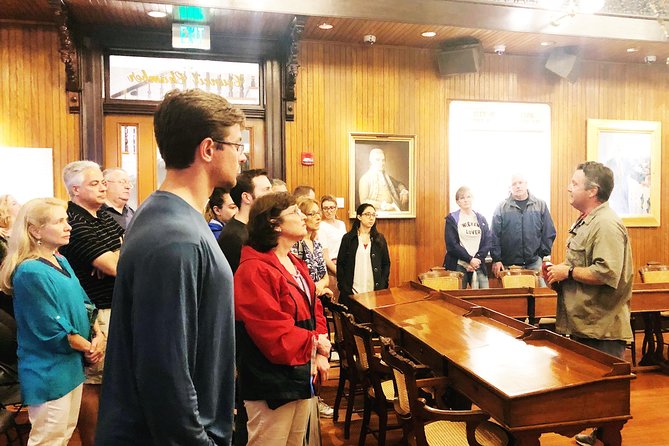
The tour is educational, but it is not presented as a dry lecture. Guides such as Al and Duggard are praised for mixing facts with humor, while Dennis is known for pacing the walk carefully and making time for comfort stops. Evans is especially noted for bringing local stories and personal enthusiasm to the route. Your exact guide will shape the experience, but the format gives each guide room to explain the city in a conversational way.
At 4.9 out of 5 from 267 ratings, with 98 percent recommending the experience, the tour has a strong record. Still, the most useful point is not the number. It is the repeated pattern of praise for clear explanations, good pacing, local anecdotes, and the ability to make architectural details easier to notice.
More architecture walks in the USA:
- The Official Art Deco Walking Tour by The Miami Design Preservation League
★ 5.0 · 1,580 reviews - Chicago in a Day: Food, History & Architecture Walking Tour
★ 5.0 · 1,153 reviews - Miami South Beach Art Deco Walking Tour
★ 5.0 · 1,039 reviews
City Hall and Washington Square set the scene
At City Hall, you begin with Charleston’s public identity rather than its postcard views. The stop lasts about 10 minutes, and admission is free. Your guide explains the Four Corners of Law and uses the setting to introduce how Charleston developed as a civic center.
This is a good place to begin because it helps you read the city as more than a collection of old buildings. You get a sense of how religion, government, and law occupied the same small downtown area. Look around as the guide talks, since the nearby streets provide an early taste of Charleston’s historic scale.
The next stop is Washington Square, where you spend about five minutes learning about the park. This is a short stop, but it breaks up the walk and keeps the route moving. Do not expect a long visit here. Its purpose is to add another piece to the city’s civic story before the tour turns toward the church and residential streets.
The route is generally gentle in pace, but it is still a walking tour. You will be outside for much of the two hours, and the tour runs in all weather conditions according to the practical information provided. The cancellation terms also allow for a full refund or another date if poor weather causes the tour to be canceled, so check the status if the forecast looks uncertain.
St. Michael’s Church connects Charleston to early America
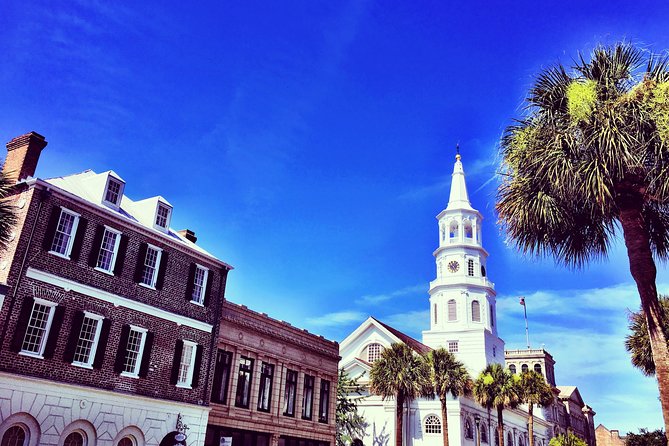
St. Michael’s Episcopal Church receives about 10 minutes of attention. The church is one of Charleston’s best-known landmarks and is described as the oldest surviving religious structure in the city. George Washington once worshipped here, a detail that gives the building a direct connection to the early United States.
This stop works well for visitors who want more than dates and names. The church helps you see how religion, status, and public life were tied together in historic Charleston. Your guide also points out the architectural character of the building and explains why it matters within the city.
You should not assume that every stop means a long interior visit. Much of this experience is an outdoor walking tour, with the guide explaining what you are seeing from the street. The attraction is the interpretation: a good guide helps you notice proportions, materials, street placement, and the people connected with the site.
This is also where the tour’s broader treatment of Charleston’s past matters. The city’s story includes the Revolution, the Civil War, and slavery. The best guides handle those subjects with care, and the available feedback repeatedly praises explanations of Charleston’s role in the Revolution and Civil War, along with respectful treatment of its history of slavery.
Rainbow Row reveals Charleston’s love of color and proportion
Rainbow Row is the most immediately visual stop. The group pauses for about 10 minutes to learn about the colorful Georgian houses along East Bay Street. Their bright facades make this one of Charleston’s easiest places for photographs, but the architecture gives you reasons to look beyond the colors.
Your guide can help you notice the arrangement of the houses, their proportions, and how they fit into the narrow urban street. This is where the tour’s architecture focus pays off. Without explanation, Rainbow Row can become a quick photo stop. With context, it becomes part of a larger lesson about Charleston’s homes and commercial streets.
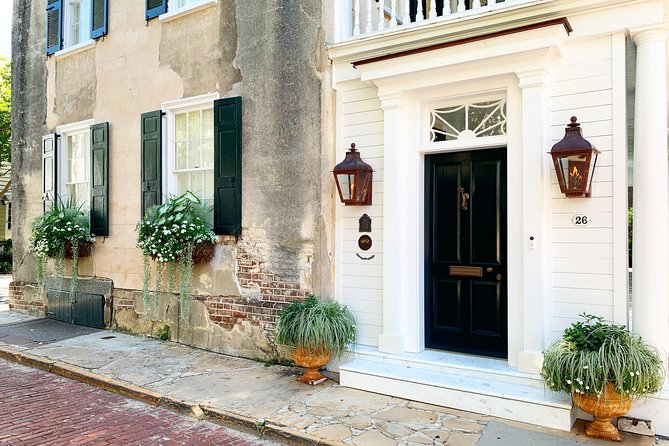
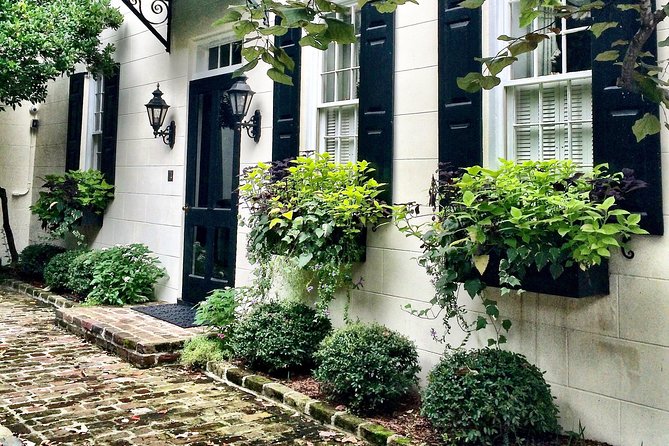
The homes along the route also make the walk appealing for anyone interested in design. You move through streets where decorative details, shutters, porches, and varying facades reward close attention. Several guides are praised for pointing out features that are easy to miss when you walk alone.
I would place this tour early in your Charleston visit if architecture interests you. After the walk, you will have a better sense of what to look for in the French Quarter and South of Broad. The tour does not require you to memorize every date. It gives you useful visual clues for independent exploring later.
More history tours in the USA:
- Charleston’s Best Highlights: History, Culture & Architecture
★ 5.0 · 422 reviews - Palm Springs Modernism Architecture & History Bike Tour
★ 5.0 · 359 reviews - Charleston: History and Architecture Guided Walking Tour
★ 4.8 · 349 reviews - Historic Georgetown: History, Gossip, & Architecture Walking Tour
★ 5.0 · 321 reviews
The Old Exchange and Provost Dungeon adds the darker history
The Old Exchange and Provost Dungeon is another important stop, with about five minutes listed for the explanation. The building is described as South Carolina’s most historic building, with a 300-year story involving pirates, patriots, and presidents.
That short stop tells you something about the tour’s structure. This is a broad orientation rather than a lengthy museum visit at every site. Your guide gives you the historical background and helps you understand why the building matters, but the schedule does not leave room for an extended examination of every interior.
The name Provost Dungeon points to the less polished side of Charleston’s past. That is valuable because the city’s beauty can easily soften the realities behind its wealth and power. The guide’s discussion of pirates, patriots, presidents, war, and slavery helps balance the elegant streets with the conflicts and injustices that shaped them.
If you want a highly detailed visit inside the Old Exchange, plan separate time for it. This walking tour introduces the building and its place in the city’s story. Its value is the connection between the site and the wider route, not a full museum visit.
The Battery and White Point Gardens bring the walk outdoors
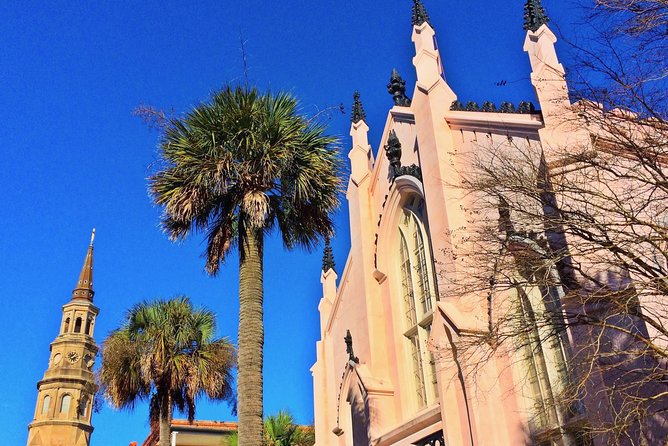
The final major stop is the Battery and White Point Gardens, where you spend about 15 minutes. Here, the route follows the seawall and turns toward the stately mansions along the Battery.
This is a satisfying ending because the setting opens up after the tighter downtown streets. You can look across the water, study the grand homes, and hear about the people who lived in this part of Charleston. The tour ends at or near 94 Battery Place, though the exact endpoint can vary with the guide and route.
The Battery is also a good place to think about the contrast running through the whole walk. Elegant houses sit beside stories of war, commerce, slavery, and political change. The best part of this stop is not simply admiring the mansions. It is learning how architecture reflects wealth, position, and the city’s changing fortunes.
Because the tour ends a few blocks from its starting point, you should not need complicated transport at the finish. If you prefer, the guide will walk you back to the starting point when requested. That is useful if you left a car, have another appointment near City Hall, or simply want to avoid finding your way through unfamiliar streets.
Powder Magazine gives you an extra historic stop
Admission to the Powder Magazine Museum is included, and you can explore it at your leisure. It is not listed as one of the timed walking stops, so think of it as an added benefit rather than part of the two-hour route itself.
That distinction matters when planning your day. The guided walk gives you a set schedule and an overview of downtown. The Powder Magazine ticket gives you another opportunity to spend time with Charleston’s past at your own pace.
The available information does not specify how long you should allow for the museum, so do not build a tight appointment immediately after the tour unless you are comfortable adjusting your schedule. If you enjoy military history or want a more focused indoor stop, the included entry improves the overall value of the $28 price.
What the guide style adds
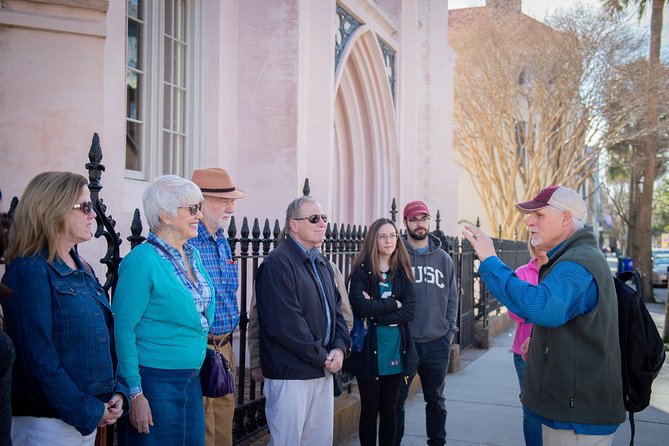
The guide makes a real difference on a historical walking tour. Named guides praised for this experience include Dennis, Al, Duggard, Evans, Lawrence, Mark Jones, and Captain Bobby. You cannot choose every guide from the information provided, but these names give you an idea of the local, personality-led style the company aims for.
Dennis is often associated with a comfortable pace, careful attention to shade and rest stops, and strong local knowledge. Al is praised for explaining Charleston with warmth and humor. Duggard is noted for enthusiasm, personal details, and keeping groups engaged even on hot days. Evans is known for passionate storytelling and useful suggestions for what to see next.
The tone can vary. One rating noted that some stories ran a little long, while another raised a concern about a few historical details possibly being incorrect. Those are fair considerations for any live history tour. You are getting a person’s guided interpretation, not a scholarly lecture with footnotes.
For most people, that tradeoff is worthwhile. A good guide can point out details you would walk past and explain why a plain-looking corner matters. If exact historical precision on every point is your top priority, you may want to cross-check important claims later. If you want a lively introduction that helps Charleston make sense, the format is a strong fit.
Price, group size, and practical comfort
At $28 per person, this is reasonably priced for a two-hour guided walk with a licensed local guide and Powder Magazine admission included. You are paying less for transportation or formal attractions and more for interpretation, route planning, and access to local context.
The maximum group size is 20. That is large enough to create a social tour but small enough that you should usually be able to hear the guide. Arrive 15 minutes before the scheduled departure. The tour begins promptly, and the operator may leave once the introduction and first stop are underway.
Morning and afternoon departures give you some flexibility. A morning departure may be easier in warm weather, while an afternoon walk can fit well after other downtown plans. No matter which time you choose, bring water and wear comfortable shoes. Charleston’s streets and sidewalks can make poor footwear tiresome long before the two hours are over.
Children must be accompanied by an adult. Service animals are allowed, and the activity is near public transportation. The information says most people can participate, but anyone concerned about extended walking should consider the route length and outdoor conditions before booking.
Free cancellation is available up to 24 hours before the start time for a full refund. Changes or cancellations inside that window are not refunded. Since weather can affect operations, check the local forecast and the provider’s instructions before setting out.
Who should book this Charleston walking tour?
I would recommend it to first-time visitors who want a solid introduction before exploring independently. It also suits families, couples, and friends who enjoy history but prefer stories and buildings over a long museum visit.
Architecture fans should find plenty to appreciate, especially at Rainbow Row, the Battery, St. Michael’s Church, and the residential streets of South of Broad. The tour is also a good choice if you want Charleston’s difficult subjects included in the story rather than left aside.
You may want a different experience if you dislike group walking tours, need a fully private itinerary, or want lengthy interior visits at each building. The Old Exchange, St. Michael’s Church, and other sites receive explanations within a moving route, not extended guided admissions at every stop.
Should you book it?
Book this tour if you want to understand Charleston’s center quickly and at a fair price. The strongest reasons are the compact route, the mix of architecture and serious history, the included Powder Magazine entry, and guides who bring local personality to the walk.
Arrive early, bring water, and keep your schedule loose enough to enjoy the museum afterward. If you treat the tour as your Charleston orientation rather than the final word on every building, it should give you a useful map of the city and plenty of ideas for what to see next.
FAQ
Where does the Charleston walking tour begin?
It begins outside Charleston City Hall at 80 Broad Street, Charleston, South Carolina.
Where does the tour end?
The listed endpoint is 94 Battery Place, though the exact ending can vary with the guide and route. The guide will walk you back to the starting point if you request it.
How long does the tour last?
The guided walking tour lasts approximately two hours.
What sights are included on the route?
The route includes City Hall, Washington Square, St. Michael’s Episcopal Church, Rainbow Row, the Old Exchange and Provost Dungeon, the Battery, and White Point Gardens. It also explores parts of the French Quarter and South of Broad.
Is admission to the Powder Magazine Museum included?
Yes. Admission to the Powder Magazine Museum is included, and you can explore it at your leisure.
How much does the tour cost?
The listed price is $28 per person.
What should I bring?
Bring a water bottle and wear comfortable shoes. Dress appropriately for the weather because the experience operates outdoors in all weather conditions unless poor weather causes a cancellation.
Can I cancel for a refund?
Yes. You can cancel at least 24 hours before the start time for a full refund. Cancellations or changes made less than 24 hours before the start time are not refunded.
Just added around the USA
- Wilmington History and Architecture Tour★ 4.8 · 18 reviews
- Washington, DC: Georgetown Architecture Walking Tour★ 5.0 · 8 reviews
- New Orleans : Garden District Architecture Walking tour★ 4.8 · 5 reviews
- Washington DC: Dupont Circle & Embassy Row Architecture Tour★ 5.0 · 6 reviews
- Tulsa: Art Deco Walking Tour of Tulsa★ 5.0 · 8 reviews
- Castle to Capitol: Museums of the National Mall Architecture Tour★ 4.5 · 9 reviews
- Private Colonial Williamsburg Architectural Tour★ 5.0 · 5 reviews
- Iconic Capitol Hill Architectural Walking Tour★ 5.0 · 21 reviews
Walking Tours, compared.

The Official Art Deco Walking Tour by The Miami Design Preservation League
Read our review →
Barcelona: Gothic Quarter Ghosts and Legends Walking Tour
Read our review →
Barcelona: Old Town and Gothic Quarter Walking Tour
Read our review →
Lecce: Baroque Architecture and Underground Walking Tour
Read our review →
Chicago in a Day: Food, History & Architecture Walking Tour
Read our review →

Ramblas, Old Town, Gothic and Gaudi Architecture Walking Tour
Read our review →
Chicago’s Secret Interiors Architectural Walking Tour
Read our review →Browse the lists this tour appears in