

Review · CHARLESTON
Charleston History and Architecture Walking Tour
Charleston’s story is written into its streets, churches, pastel houses, and narrow alleys. This two-hour walking tour brings those details together, from the Pineapple Fountain to Rainbow Row, the Unitarian Church, Philadelphia Alley, and the Old Exchange.
I like the efficient route and the guide’s focus on architecture, not just dates. I also like that guides such as Emerson and Paige add human stories, scary tales, and local context that can make familiar sights easier to understand.
The main drawback is simple: you walk outdoors for about two hours, sometimes over cobblestones, and the tour requires good weather. A rainy day can still work, but bad weather may lead to a new date or a full refund.
Key points to know before you book
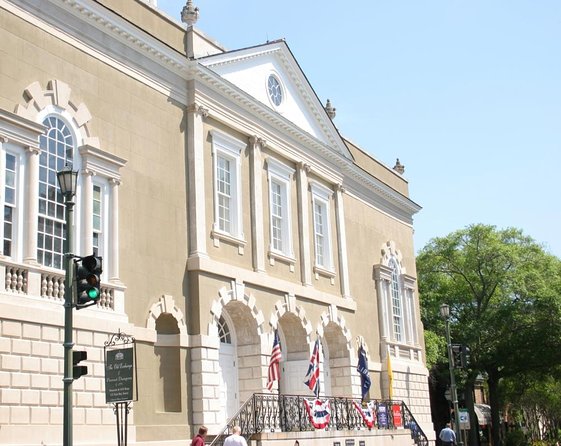
- The route covers six major sights: Pineapple Fountain, Rainbow Row, the Unitarian Church, Twenty-one Magazine, the Old Exchange and Provost Dungeon, and Philadelphia Alley.
- The tour begins at 195 East Bay Street and ends near Waterfront Park on Vendue Range and Concord Street.
- Architecture is the main lens: You learn how buildings, churches, streets, and public spaces connect to Charleston’s past.
- Guides make a difference: Emerson and Paige are specifically praised for lively storytelling, clear explanations, and an easy manner.
- The $27 price is strong value: You get about two hours of guided sightseeing, orientation, and local history without an admission fee for the listed stops.
- The group can include up to 20 people: That keeps the tour more manageable than a large coach outing, though it is not a private walk.
Why this walking tour works well in Charleston
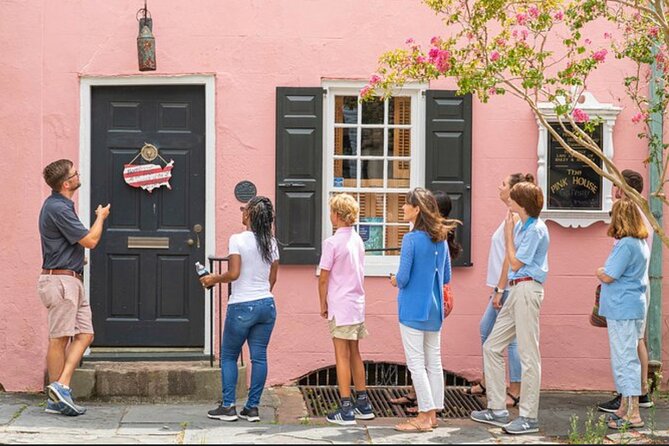
Charleston is easy to admire and surprisingly easy to misunderstand. You can stroll past a painted house, an old church, or a small alley without knowing why it matters. A good guide gives those sights a place in the larger story.
That is the strength of this tour. It does not keep you inside one museum or focus on a single building. Instead, it uses the city itself as the exhibit. You move through several parts of the historic center while learning about Charleston’s culture, architecture, colonial period, and the people connected to its streets.
I especially like this approach for a first visit. The route gives you a map in your head, along with a short list of places worth revisiting later. You finish near Waterfront Park, so the walk also works as a useful introduction to the area around the waterfront.
The tour lasts about two hours. That is long enough to cover a lot without taking over your day. At $27, the value comes from the guide’s interpretation rather than paid entry. The listed stops do not require admission tickets, so you are paying for context, navigation, and storytelling.
More architecture walks in the USA:
- The Official Art Deco Walking Tour by The Miami Design Preservation League
★ 5.0 · 1,580 reviews - Chicago in a Day: Food, History & Architecture Walking Tour
★ 5.0 · 1,153 reviews - Miami South Beach Art Deco Walking Tour
★ 5.0 · 1,039 reviews
Pineapple Fountain: an easy start near the water
The meeting point is at 195 East Bay Street, close to the waterfront. The first stop is the Pineapple Fountain, a cheerful landmark and a natural place to begin with photographs.
You have about 10 minutes here. That is enough time to take pictures and get oriented before the walk gathers pace. The fountain is visually simple, but it also sets the tone for Charleston’s fondness for distinctive public symbols and decorative details.
This opening stop is practical. If you have just arrived in town, you are not being asked to find a remote doorway or complicated meeting point. The tour begins in a recognizable part of the city and then moves into the historic streets.
Do not expect a long lecture at the fountain. Its role is mainly to start the walk, give you a photo opportunity, and place you near the city’s waterfront.
Rainbow Row: Charleston’s best-known colorful address
Rainbow Row receives about 20 minutes, and it deserves the pause. This famous stretch contains 13 privately owned Antebellum homes painted in pastel colors. Together, the houses make one of Charleston’s most recognizable streetscapes.
The value here is not only the color. Your guide can help you look at the row as architecture rather than a backdrop for photographs. Notice the way a group of homes creates a single visual impression, even though the properties are privately owned and individually maintained.
This is also one of the busiest photo stops on the route. You should expect to share the street with other people taking pictures. A guide helps by keeping the stop focused and showing you the details you might otherwise pass without a second glance.
Rainbow Row is a good example of why a walking tour helps. A quick photograph gives you the image. The guide adds the setting, the age of the buildings, and the connection between Charleston’s private homes and public identity.
The Unitarian Church: details worth slowing down for
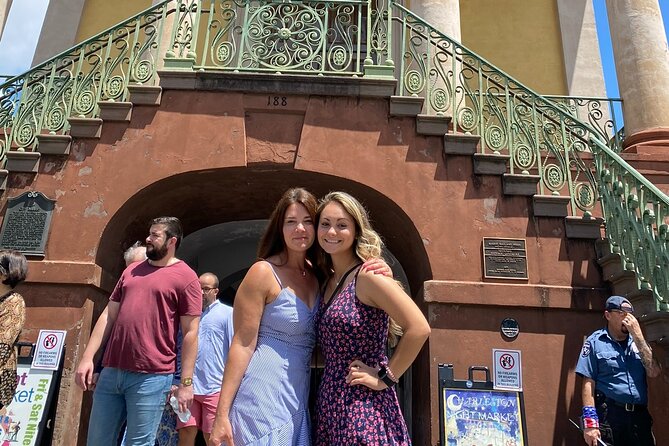
The Unitarian Church is scheduled for about 20 minutes. The stop focuses on its architecture and history, with another chance for photographs. The church is one of the route’s strongest architecture stops because it gives the guide a substantial building to explain in place.
Several people specifically praised the chance to go inside a church, including one comment about beautiful Tiffany windows. Access can depend on the conditions of the day, so you should not treat an interior visit as guaranteed. Still, the possibility adds real value to this portion of the walk.
I would pay attention here to the contrast between seeing a church from the sidewalk and understanding how its design works. Architectural details can disappear when you are walking alone. A guide can direct your eye toward windows, proportions, materials, and decorative features.
This is also where the tour seems to benefit most from a strong presenter. Paige is described as enthusiastic and entertaining, while Emerson is praised for making Charleston’s past feel immediate. Their style matters because church architecture can become dry if it is reduced to dates and labels.
More history tours in the USA:
- Charleston’s Best Highlights: History, Culture & Architecture
★ 5.0 · 422 reviews - Palm Springs Modernism Architecture & History Bike Tour
★ 5.0 · 359 reviews - Charleston: History and Architecture Guided Walking Tour
★ 4.8 · 349 reviews - Historic Georgetown: History, Gossip, & Architecture Walking Tour
★ 5.0 · 321 reviews
Twenty-one Magazine: stories beyond the postcard view
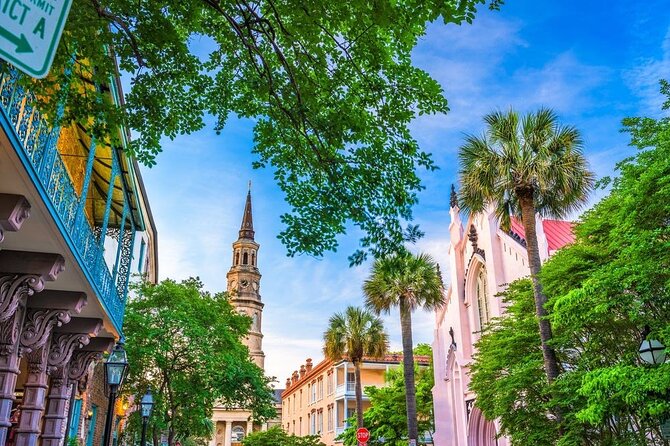
The Twenty-one Magazine stop lasts about 20 minutes and adds a different mood. Here, the focus includes scary stories, history, and architecture.
That mix is useful. Charleston’s past is not only a sequence of grand houses and attractive streets. Stories with a darker edge can help you understand how old buildings acquire reputations and how local memory shapes the way a place is seen.
The information provided does not specify an interior visit or a particular building activity at this stop. Think of it as a street-based storytelling pause, with the guide connecting the setting to Charleston’s past.
This is likely a good point in the walk for listeners who prefer stories to a formal architecture lecture. Emerson, in particular, is praised for entertaining descriptions of Charleston’s history. Paige is also credited with sharing unusual facts in a lively way.
Old Exchange and Provost Dungeon: colonial Charleston in one stop
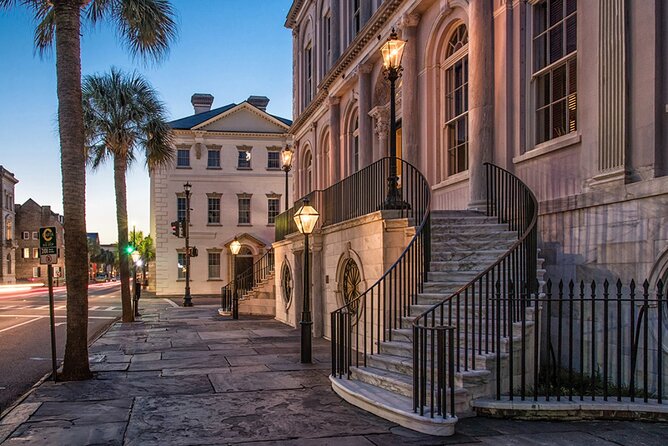
The Old Exchange and Provost Dungeon gets another 20 minutes. This stop turns toward Charleston’s colonial period and architecture, giving the route a stronger historical anchor.
The title can sound like a promise of an underground visit, but the supplied details only confirm that you learn about the site’s colonial history and architecture. Admission is listed as free for the stop, yet an interior tour is not guaranteed. If entering the building is important to you, check the details when booking.
Even from the outside, this is a useful place for explanation. A historic building is easier to appreciate when you understand its role in the city and the period in which it was built. The guide can also help connect this stop with the homes, churches, and public spaces seen earlier.
I like the balance here. The tour is not only about pretty facades. It gives you a chance to think about government, trade, confinement, and the physical structures that supported colonial Charleston. The history becomes more grounded because you are standing where it happened.
Philadelphia Alley: a narrow finish with a memorable name

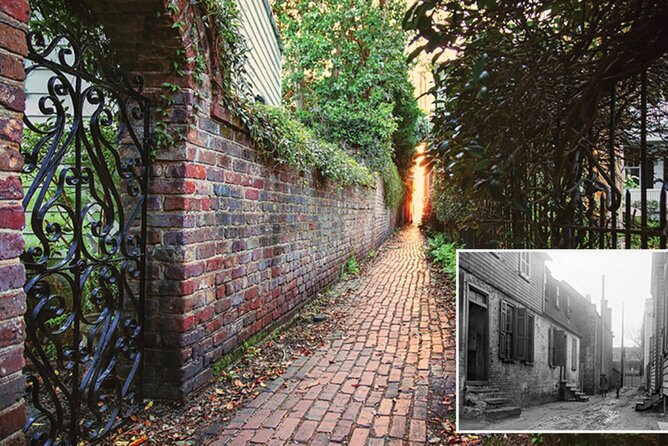
Philadelphia Alley, also known as Duelers Alley, receives about 20 minutes. It is a smaller and more intimate stop than Rainbow Row or the church, but that is exactly why it works near the end of the route.
Narrow passages can be easy to miss when you are walking without a guide. Here, the alley becomes a lesson in how Charleston’s street plan creates moments of surprise. You leave a broader street, enter a tight passage, and suddenly the city feels more enclosed and personal.
The nickname also gives the guide room for memorable stories. The supplied information points to architecture, photographs, and the alley’s connection with dueling. You should expect a storytelling stop rather than a major monument.
This is another place where walking beats riding. A vehicle cannot give you the same sense of scale. On foot, you notice the width of the passage, the walls around you, and how quickly the mood changes from one street to the next.
Finishing at Waterfront Park
The tour ends at Waterfront Park, near Vendue Range and Concord Street. That is helpful for planning the rest of your day. You are not returned to the starting point, so plan to continue from the waterfront rather than expecting a loop.
The end point also gives the route a clear shape. You begin near the waterfront, move through historic streets and landmarks, then finish in the same general part of town. You can use the walk as an orientation tool and decide what deserves a second look later.
Because the route ends outdoors, you can also keep your plans flexible. The tour does not lock you into a museum schedule or a meal reservation immediately afterward. Still, allow a little room around the two-hour estimate, since walking pace and group size can affect timing.
What the guides add to the experience
The strongest part of this tour is the guide. Emerson is praised for being personable, entertaining, and deeply informed about Charleston’s history and architecture. Paige is described as enthusiastic, fun, and skilled at explaining unusual facts about the city and even the ground on which Charleston sits.
Those comments point to the kind of guide you want on a city walk. You need someone who can explain a building without making every stop sound like a textbook. You also want a person who can handle weather, questions, and the changing pace of a group.
One visitor found the guide too apologetic about the sun and cobblestones. That is a small criticism, but it offers a useful reminder: the tone may vary by guide. The content appears to be the main strength, while the delivery may feel more relaxed or more cautious depending on who leads your walk.
The tour has a maximum of 20 people. That is not a private experience, but it is modest enough to keep the group together in city streets. If you want a completely personal pace, this is not the right format. If you want structure without a huge crowd, it is a sensible middle ground.
Price, timing, and practical comfort
At $27, this is one of the easier Charleston activities to justify. You get about two hours with an architectural historian guide, six planned stops, and a route through some of the city’s most photogenic and historically important areas.
The price is especially fair if you are new to Charleston. A self-guided walk costs less, but you must research the route, identify the buildings, and supply the stories yourself. This tour handles that work while keeping you outdoors and moving.
Wear comfortable shoes. The tour is on foot, and cobblestone streets are specifically noted as a possible consideration. You should also prepare for sun or rain. The experience requires good weather, and if poor conditions force cancellation, you can choose another date or receive a full refund.
A mobile ticket makes entry simple. Confirmation arrives at booking, and service animals are allowed. The tour is near public transportation, and most people can participate.
Free cancellation is available if you cancel at least 24 hours before the start time. Cancellations inside that window are not refunded, and changes are not accepted. The cut-off follows Charleston local time.
Who should book this Charleston walk?
I would choose this tour for a first day in Charleston, especially if you want a clear introduction before exploring on your own. It suits people who enjoy buildings, local stories, photographs, and a steady route through the city.
It is also a good fit for travelers who want history without spending two hours inside a museum. You get colonial context, architecture, church details, local legends, and public spaces in one outing.
Families and mixed-age groups may find the variety helpful. A colorful street, a fountain, a church, a dungeon, and a narrow alley offer more change than a single-site tour. The scary stories may also keep younger listeners interested, though the provided details do not specify an age recommendation.
I would think twice if you dislike outdoor walks, need a fully private pace, or want guaranteed interior access. The tour includes the Unitarian Church and Old Exchange as key stops, but the available details do not promise entry at every location.
Should you book the Charleston History and Architecture Walking Tour?
Book it if you want a well-priced introduction to Charleston that combines architecture with human stories. The route is efficient, the stops are varied, and the guides most often singled out, Emerson and Paige, bring clear energy to the walk.
Skip it if you already know the historic center well or prefer to explore entirely at your own speed. For most first-time visitors, though, the $27 fee buys useful orientation, strong photo stops, and the kind of context that makes a later solo stroll much more rewarding.
FAQ
How much does the Charleston History and Architecture Walking Tour cost?
The tour costs $27.
How long does the tour last?
It lasts approximately two hours.
Where does the tour begin?
The meeting point is 195 East Bay Street, Charleston, South Carolina 29401.
Where does the tour end?
The tour ends at Waterfront Park, near Vendue Range and Concord Street in Charleston.
Which sights are included?
The route includes Pineapple Fountain, Rainbow Row, the Unitarian Church in Charleston, Twenty-one Magazine, the Old Exchange and Provost Dungeon, and Philadelphia Alley.
Is the tour conducted on foot?
Yes. The experience is a walking tour through Charleston’s historic streets.
How large can the group be?
The maximum group size is 20 travelers.
Is a mobile ticket available?
Yes. The experience includes a mobile ticket, and confirmation is provided at booking.
Are service animals allowed?
Yes. Service animals are allowed.
Can I cancel for a full refund?
Yes, if you cancel at least 24 hours before the experience start time. Cancellations made less than 24 hours before the start time are not refunded.
What happens if bad weather cancels the tour?
If poor weather causes cancellation, you will be offered another date or a full refund.
Just added around the USA
- Wilmington History and Architecture Tour★ 4.8 · 18 reviews
- Washington, DC: Georgetown Architecture Walking Tour★ 5.0 · 8 reviews
- New Orleans : Garden District Architecture Walking tour★ 4.8 · 5 reviews
- Washington DC: Dupont Circle & Embassy Row Architecture Tour★ 5.0 · 6 reviews
- Tulsa: Art Deco Walking Tour of Tulsa★ 5.0 · 8 reviews
- Castle to Capitol: Museums of the National Mall Architecture Tour★ 4.5 · 9 reviews
- Private Colonial Williamsburg Architectural Tour★ 5.0 · 5 reviews
- Iconic Capitol Hill Architectural Walking Tour★ 5.0 · 21 reviews
Walking Tours, compared.
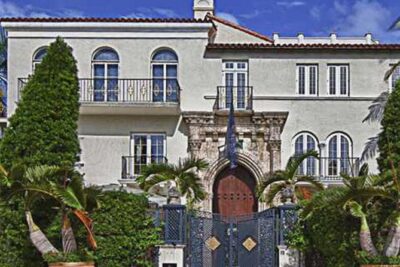
The Official Art Deco Walking Tour by The Miami Design Preservation League
Read our review →
Barcelona: Gothic Quarter Ghosts and Legends Walking Tour
Read our review →
Barcelona: Old Town and Gothic Quarter Walking Tour
Read our review →
Lecce: Baroque Architecture and Underground Walking Tour
Read our review →
Chicago in a Day: Food, History & Architecture Walking Tour
Read our review →

Ramblas, Old Town, Gothic and Gaudi Architecture Walking Tour
Read our review →
Chicago’s Secret Interiors Architectural Walking Tour
Read our review →Browse the lists this tour appears in