
Review · BUDAPEST
Architectural Budapest: Private Tour with a Local Expert
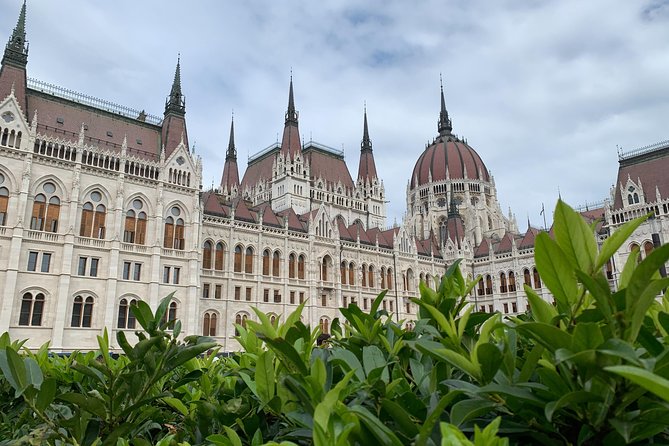
Budapest’s best architectural lesson is the contrast between its grand old center and its more playful modern buildings. This private tour links St. Stephen’s Basilica, the Opera House, Parliament, and Castle Hill, then brings in Art Nouveau and modernist design so you can see how the city changed over time.
I like the private format, since your guide can focus on what catches your eye rather than follow a fixed group script. I also like the flexible route: guide Beata, named in one detailed account of the experience, brought in subjects ranging from the Opera House to Szimpla Bar and adjusted the focus to parts of the city her group had barely seen. The main drawback is price. At $578.41 for up to two people, this is a costly two-hour outing, and transport, museum entry, and monument tickets are not included.
Key points to know before booking
- Two hours, private for up to two people: You get a personal guide rather than a large group, but the short length limits how much time you can spend inside or at each stop.
- A strong mix of styles: The route covers Neoclassical, Neo-Renaissance, Art Nouveau, Gothic Revival, medieval, and modernist design.
- Starts at St. Stephen’s Basilica: The tour begins in central Pest and ends in the Buda district, giving the route a useful cross-city shape.
- The route can fit your interests: You can ask for more history, more design, or more attention to areas you have not yet explored.
- Transport and entry fees are extra: Check the route with your guide, since getting between distant areas may require a separate ticket.
- Mobility needs matter: The experience is not recommended for people with impaired mobility, and stops may change with the weather.
Why this two-hour route works for architecture fans
A city can be difficult to understand when you see its buildings one at a time. Budapest is easier to read when you compare styles side by side. This tour gives you that comparison in a compact format, moving from a grand church and opera house to an Art Nouveau bank, a Gothic Revival parliament building, a medieval hilltop district, and a modern cylindrical hotel.
You will not simply be looking at pretty facades. The guide is meant to explain what each building says about Budapest at a particular moment. The route touches religious life, national politics, royal power, urban growth, decorative design, and the city’s modern expansion.
That makes this a good first or second-day activity if you want a framework for the rest of your visit. You can use the guide’s recommendations later when you decide which buildings deserve a longer look, which districts merit a return visit, and where to spend your limited sightseeing time.
The private setup is important here. Architecture tours work best when you can stop to ask why a facade looks a certain way, how one style differs from another, or what a building meant when it was built. With only your group participating, you can set that rhythm yourself.
The tradeoff is time. Two hours is enough for an intelligent introduction, but not enough for a slow architectural study of every stop. The tour is mainly about seeing, comparing, and discussing the city from the outside. Entry tickets for transportation, museums, and monuments are excluded, so you should not expect a string of long interior visits within the standard time.
More private architecture tours in the world:
- Best of Chicago: Architecture & Highlights City Private Tour
★ 5.0 · 94 reviews - Private Harajuku Omotesando Architecture Walking Tour
★ 5.0 · 67 reviews - Private Santa Barbara History and Architecture Walking Tour
★ 5.0 · 56 reviews
St. Stephen’s Basilica begins the story
The tour starts at St. Stephen’s Basilica on Szent István tér. This is a fitting place to begin because the building offers the grand scale many people associate with Budapest: a large Neoclassical church, a major dome, and a central religious role.
Your guide can use the basilica to explain how religious buildings shaped the city’s public spaces and skyline. The broad setting also gives you a clear starting point before the route moves toward Andrássy Avenue.
The basilica is listed as a stop, but the tour details do not promise an interior visit or an included admission ticket. If seeing inside matters to you, ask your guide whether the schedule and ticket arrangements allow it. Since the tour lasts about two hours, even a short interior visit could affect time at later stops.
This opening stop is especially useful for first-time visitors. You get an immediate sense of Budapest’s scale, then begin to notice how the city’s architecture changes as the route continues.
Andrássy Avenue and the Opera House
From the basilica, the experience turns toward Andrássy Avenue, one of Budapest’s best-known historic boulevards. Its importance is not just visual. The avenue links impressive buildings, urban planning, luxury shops, and cultural institutions in one long city corridor.
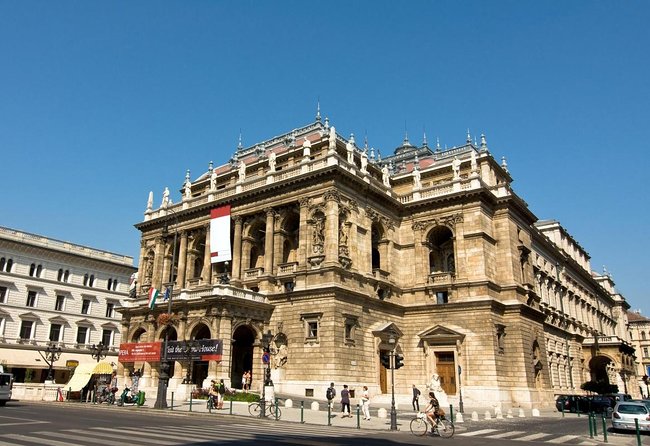
The Hungarian State Opera House is the major architectural highlight here. Its Neo-Renaissance design gives the guide a chance to talk about ornament, cultural ambition, and the role of performance spaces in Budapest’s public life.
I like this part of the route because it connects a single building to the street around it. You are not looking at the Opera House as an isolated monument. You are seeing how it fits into a planned avenue lined with other substantial buildings.
The tour information does not include a performance or an interior visit. You should treat the Opera House as an architectural stop unless your guide confirms otherwise. If you are especially interested in opera, ask about the building’s design and whether a separate visit would be worthwhile during your stay.
The detailed account of a tour led by Beata also points to a broader strength of this experience: the discussion can move beyond official landmarks. Subjects such as Szimpla Bar were included alongside the Opera House, showing how the guide may connect formal architecture with Budapest’s newer cultural life when that suits your group.
The Postal Savings Bank shows Budapest at play
The Postal Savings Bank is one of the more distinctive stops because it moves away from the solemn grandeur of churches, opera houses, and government buildings. Its early 20th-century Art Nouveau design combines practical purpose with decorative detail.
This is the kind of building that rewards a guide’s explanation. Without context, you might simply notice unusual ornament. With context, you can look for the way function and decoration were brought together in Budapest’s architecture.
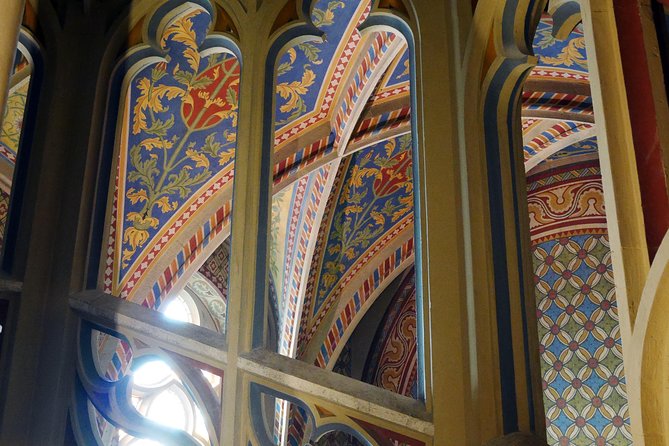
The building represents a period when new construction did not have to imitate only classical models. Designers could use color, pattern, and organic forms while still creating a working civic building. That makes it a useful counterpoint to the basilica and Opera House.
For you, the value is in the comparison. The guide can help you see why Art Nouveau feels different from Neo-Renaissance design, even when both appear in the same city. This is also one of the stops where a private tour can be more useful than a basic sightseeing walk, since you can ask your own questions about details you might otherwise miss.
A few more architecture tours around the world worth a look
- Chicago Architecture River Cruise
★ 5.0 · 15,756 reviews - Chicago River 90-Minute Architecture Tour
★ 4.5 · 9,629 reviews - Chicago River: 1.5-Hour Guided Architecture Cruise
★ 4.8 · 8,046 reviews - Chicago Architecture Center River Cruise aboard First Lady
★ 5.0 · 5,536 reviews
Parliament and the Danube setting
The Hungarian Parliament Building brings the route back to national identity and political power. Along the Danube, its Gothic Revival design is one of Budapest’s most recognizable architectural statements.
The building’s importance is not only its size or riverside location. It represents the political heart of Hungary and gives the guide a way to connect architecture with the country’s history and changing sense of independence. One detailed account especially valued learning more about what it meant for Hungary to regain independence. That theme adds weight to what might otherwise be a quick photo stop.
This part of the tour should appeal to anyone who wants more than a checklist of landmarks. You can ask how the building’s style supports its role, how it relates to the river, and why it became such a strong symbol of the country.
Again, admission is not included. The tour description does not promise entry to Parliament, and a two-hour route covering several districts is more suited to exterior viewing and explanation. If you want a full interior visit, plan that separately and do not assume it will fit into this experience.
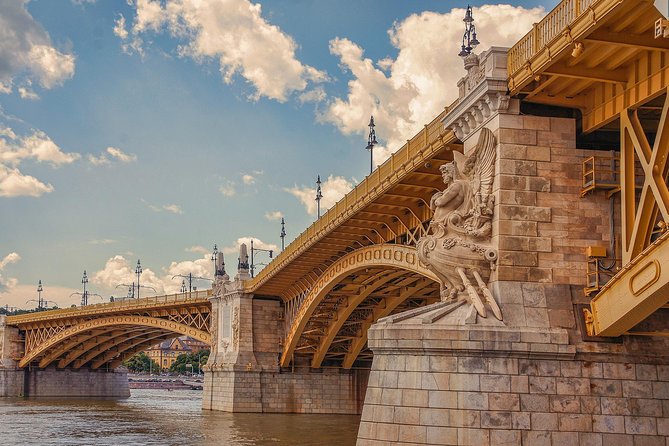
The riverside setting also helps you understand Budapest as a city shaped by the Danube. The tour does not present the buildings as unrelated sights. It links them to the city’s political center, major avenues, and two-part urban identity.
Castle Hill and Budapest’s medieval core
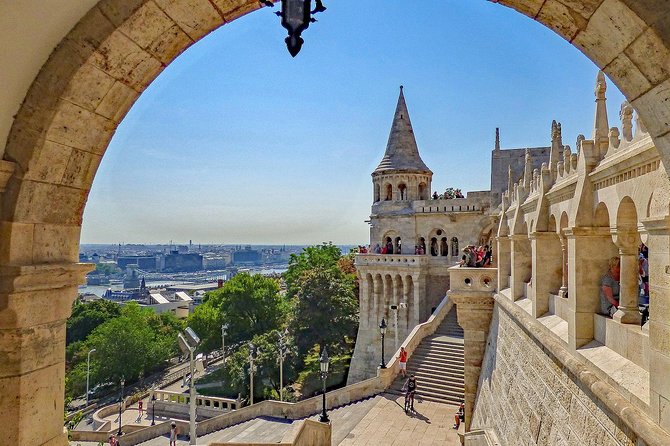
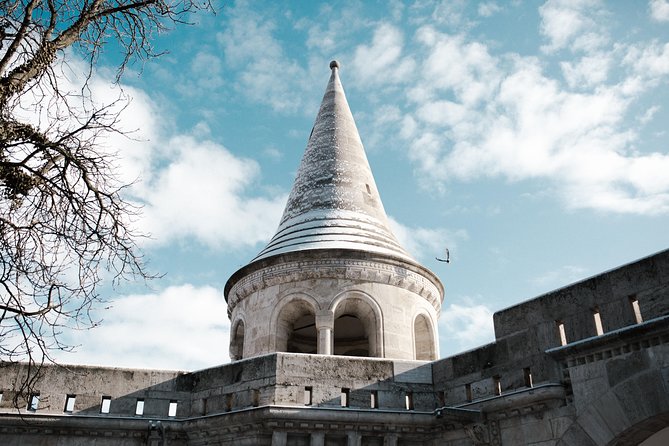
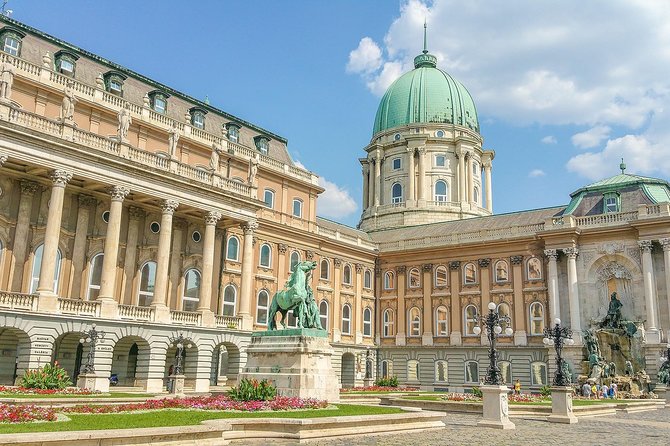
The route then reaches Castle Hill, the most historically layered part of the experience. This district includes Buda Castle, Matthias Church, and Fisherman’s Bastion, bringing medieval and later architectural styles into the same compact area.
Buda Castle matters because it has helped shape Budapest’s skyline. Your guide can explain how the hill’s buildings, position, and long political importance affected the way the city is viewed from both Buda and Pest.
Matthias Church brings a different character, with its place in the old district and its strong visual presence. Fisherman’s Bastion adds terraces and viewpoints to the group of landmarks. Together, these sites show why Castle Hill is more than a single monument. It is a historic district where religious, royal, defensive, and scenic purposes overlap.
You should allow for uneven walking and changes in pace here. The tour is not recommended for people with impaired mobility, and the route ends in the Buda district rather than returning to the starting point. The meeting information gives the final location as Szilágyi Erzsébet fasor 47, so you should be ready to arrange your own onward travel.
Castle Hill may also receive less time than you expect. With only two hours and several other stops, the guide cannot provide a full tour of every major building in the district. If Castle Hill is your main interest, tell the guide before the tour begins and ask for a route that gives it more attention.
Hotel Budapest adds a modern jolt
Hotel Budapest is a useful final contrast. Its cylindrical modernist form looks very different from the classical, Baroque, Gothic Revival, and Art Nouveau buildings seen earlier.
That contrast is the point. A city tour focused only on historic monuments can make Budapest seem frozen in the past. This stop shows a later phase of urban development and reminds you that the city continued to experiment with form and materials.
The building may appeal most to people who enjoy 20th-century design, but it is also useful for anyone trying to understand Budapest as a changing city. You can compare its simple geometric shape with the ornament of the Postal Savings Bank or the historic authority of Parliament.
The tour ends nearby in Buda, at Szilágyi Erzsébet fasor 47. Since the route crosses different parts of Budapest, ask your guide how the group will move between stops. Public transportation is nearby, but transportation tickets are not included in the price.
What the private format is worth
The $578.41 price covers a private group of up to two people, which works out to about $289 per person if two people share the cost. That is expensive for two hours, especially because transport and admission fees are extra.
Still, the price buys more than a standard group walk. You get a Local Expert, an itinerary that can adapt to your interests, and the chance to keep the conversation focused on your questions. If you and a companion care deeply about architecture and want personal attention, that may justify the cost.
The value is weaker if you mainly want to see Budapest’s headline sights quickly. Many of the buildings can be viewed on your own, and the short duration limits the number of interiors or lengthy stops. You may get better value from this experience if you use it as an orientation tour, then follow the guide’s recommendations for independent visits later.
The private format also suits mixed-interest groups. One person can ask about political history, another about decorative details, and another about modern design. The guide can adjust the emphasis instead of giving everyone the same fixed speech.
A detailed account of the experience praised the way Beata adjusted the route toward parts of the city the group had barely seen and included subjects that worked for different age groups. That is the strongest reason to book this rather than a broad public walking tour: your interests can shape the discussion.
Practical details that affect your day
Confirmation is provided when you book, and the experience uses a mobile ticket. The starting point is St. Stephen’s Basilica, Budapest, Szent István tér 1, 1051 Hungary.
The endpoint is in Buda at Szilágyi Erzsébet fasor 47, 1026 Hungary. Do not plan another fixed appointment immediately afterward unless you have allowed time for the route to finish and for your onward transportation.
The itinerary can change with weather conditions. It also adapts to your walking pace and interests, which is helpful, but it means you should confirm the final route with the guide at the start.
Most people can participate, and service animals are allowed. The tour is near public transportation, but tickets for transportation, museums, and monuments are not included. Personal expenses are also your responsibility.
You can cancel for a full refund if you do so at least 24 hours before the local start time. Cancellations or changes made within 24 hours are not accepted for a refund.
Who should book this Budapest architecture tour?
I would recommend it most to a couple or pair of friends who want a focused introduction to Budapest’s buildings and are willing to pay for a private guide. It also suits anyone who enjoys comparing styles rather than simply collecting landmark photos.
It is a good match if you want to discuss the city’s political past, religious buildings, urban planning, and modern design in one short session. The flexible route is useful if you have already seen the main sights and want attention on less familiar areas.
I would think twice if you need step-free, low-effort sightseeing, since the tour is not recommended for people with impaired mobility. I would also skip it if your budget is tight or if you want extensive interior access. In that case, a self-guided route through the central sights may give you more time for less money.
Should you book it?
Book this private tour if you want Budapest explained through its buildings, not just photographed. The best features are the small group size, the broad mix of architectural periods, and the ability to guide the conversation toward your interests.
The price is high for two hours, so book only if personal attention matters to you. Ask at the start to focus on your priorities, confirm how the group will move between Pest and Buda, and remember that the tour ends away from the basilica. Used that way, it can give you a useful reading of Budapest’s past and present in a compact afternoon.
FAQ
How long is the architectural tour?
The experience lasts approximately two hours.
How many people can join the private tour?
The price is for a private group of up to two people. Only your group participates.
Where does the tour begin?
It begins at St. Stephen’s Basilica, Budapest, Szent István tér 1, 1051 Hungary.
Where does the tour end?
It ends at Budapest, Szilágyi Erzsébet fasor 47, 1026 Hungary, in the Buda district.
Which buildings and areas are included?
The listed stops include St. Stephen’s Basilica, the Opera House, Andrássy Avenue, the Postal Savings Bank, the Hungarian Parliament Building, Castle Hill, and Hotel Budapest.
Can the itinerary change?
Yes. The route adapts to your interests and walking pace, and stops may vary with weather conditions.
Are transportation and entry tickets included?
No. Tickets for transportation, museums, and monuments are not included.
Is the tour suitable for people with impaired mobility?
It is not recommended for people with impaired mobility.
Is a mobile ticket available?
Yes. The experience includes a mobile ticket, and confirmation is provided at the time of booking.
What is the cancellation policy?
You can cancel at least 24 hours before the local start time for a full refund. Cancellations or changes made less than 24 hours before the start are not accepted for a refund.
Just added around the world
- Wilmington History and Architecture Tour★ 4.8 · 18 reviews
- Washington, DC: Georgetown Architecture Walking Tour★ 5.0 · 8 reviews
- New Orleans : Garden District Architecture Walking tour★ 4.8 · 5 reviews
- Washington DC: Dupont Circle & Embassy Row Architecture Tour★ 5.0 · 6 reviews
- Vicenza: discovering the city of Palladio by e-bike★ 5.0 · 4 reviews
- Vicenza: Palladian Architecture Private Walking Tour★ 3.3 · 3 reviews
- Walk & Discover KL’s Architectural and Heritage Gems★ 5.0 · 7 reviews
- Unveiling Brno: History, Culture & Architectural Delights★ 5.0 · 2 reviews
Budapest Architecture Tours, compared.
Art Nouveau Tour in Budapest: 3-Hour Private Tour
Read our review →
Art Nouveau Treasures of Budapest – Exclusive Private Tour
Read our review →
Browse the lists this tour appears in