
Review · THE USA
Downtown Freedom Trail Walking Tour – History & Architecture
Boston’s Freedom Trail is easy to follow on your own, but the stones and red line do not explain themselves. This walking tour adds the stories behind Faneuil Hall, the Boston Massacre site, King’s Chapel, and Boston Common, while also pointing out the city’s changing architecture.
I like the short 70-minute format, which gives you a useful first look without eating half your day. I also like the focus on both buildings and people, from Paul Revere and Samuel Adams to Boston’s first public school and the city’s Irish famine memorial. The main drawback is that guide quality can vary, and some people have found the narration hard to hear.
Key points to know before you book
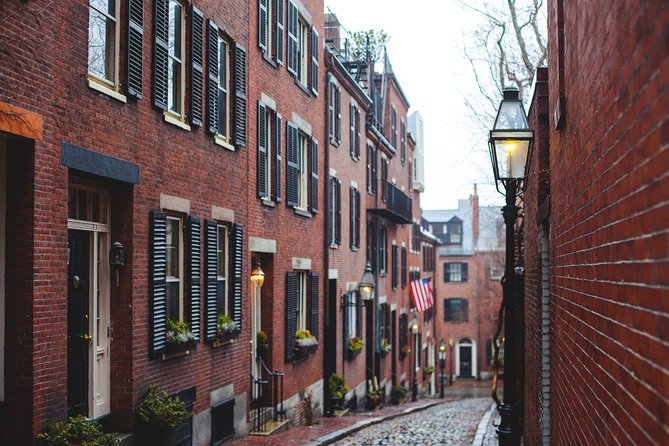
- The route links Faneuil Hall with Boston Common, covering a dense collection of Boston landmarks in about 70 minutes.
- Architecture matters here, not just Revolutionary War dates. You’ll see colonial, Federal, Gothic, French Second Empire, and modern government design.
- Alan and Andrew receive especially warm praise, with past groups enjoying their humor, clear explanations, and ability to involve children.
- The tour is limited to 20 people, a useful size for a busy downtown route, though no microphone is provided.
- The $45 price is reasonable for a guided introduction, especially if this is your first visit and you want context before exploring alone.
- You finish at Boston Common, making it easy to continue toward Beacon Hill, the Public Garden, or other downtown sights.
Why this short Freedom Trail walk works well
The best thing about this tour is its concentration. In just over an hour, you move through the heart of old Boston, from the commercial center around Faneuil Hall to the green expanse of Boston Common. You are not spending the morning walking long distances between scattered sights. Instead, the route packs major events, old buildings, cemeteries, churches, and public spaces into one compact lesson.
That makes it a good first activity in Boston. You can get your bearings fast, learn which places deserve a longer visit, then return to them later. The tour is also useful for families because the guide can turn dry dates into stories about protests, fires, politics, religion, immigration, and daily life.
The route begins at State Street and Congress Street at 10:00 am. You should arrive ready to walk outdoors and keep close enough to hear the guide. The end point is Brewer Fountain beside Boston Common, so you are not returned to the starting point. Plan your next stop from there.
The group can include up to 20 people. That is small enough to feel more personal than a large bus tour, though the busy streets and traffic noise can still make it difficult to hear at times. A few people specifically wished the guide had used a microphone. If hearing every word matters to you, stay near the front and ask the guide to speak up before the group gets moving.
More architecture walks in the USA:
- The Official Art Deco Walking Tour by The Miami Design Preservation League
★ 5.0 · 1,580 reviews - Chicago in a Day: Food, History & Architecture Walking Tour
★ 5.0 · 1,153 reviews - Miami South Beach Art Deco Walking Tour
★ 5.0 · 1,039 reviews
Faneuil Hall and Quincy Market: Boston’s political marketplace
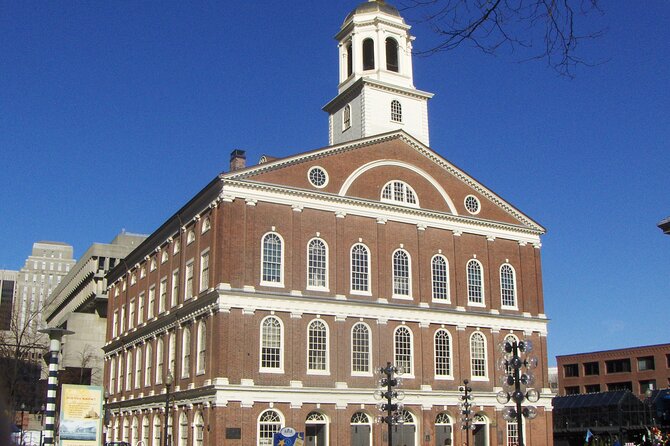
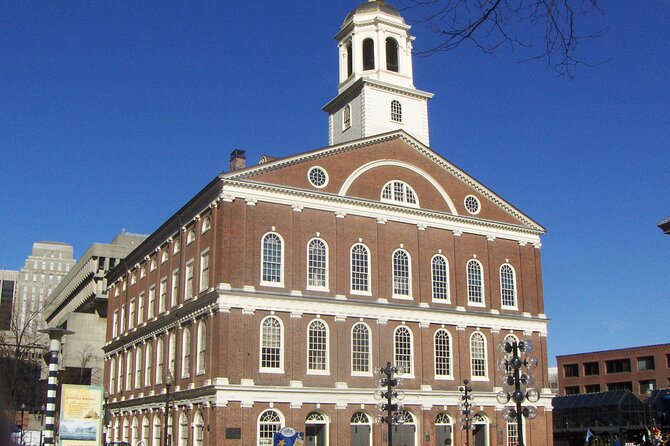
Faneuil Hall is the natural opening for a tour about Boston’s role in the American Revolution. The building is often called the Cradle of Liberty because speeches and protests held here helped create the political pressure that led to independence.
Look up at the grasshopper weathervane. It is one of Boston’s classic small details, easy to miss when you are watching the crowd or looking at the brickwork. The nearby Quincy Market adds another layer. This was and remains a place of trade and public life, so the area gives you a feel for Boston as a working city rather than just a collection of monuments.
The tour passes these locations rather than functioning as a full indoor museum visit. That is important when setting expectations. You receive explanation and context, but you should not book this walk if your main goal is extended time inside every building.
The Old State House and the Boston Massacre site
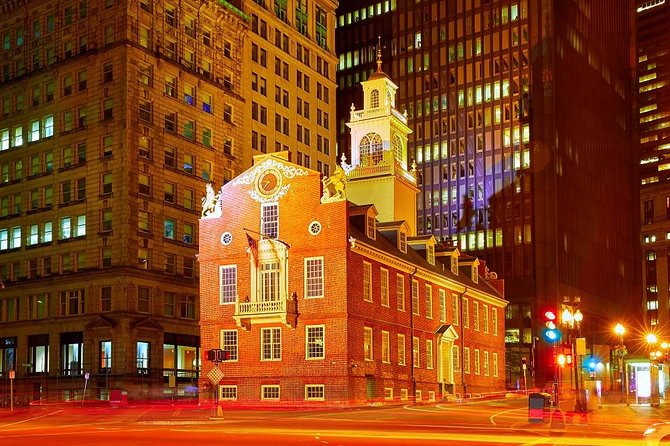
The Old State House, built in 1713, was the center of British colonial government in Boston. Its balcony later became the place where the Declaration of Independence was first read publicly to Bostonians. That single building helps you picture the city before and during the break with Britain.
Just outside is the Boston Massacre site, marked by a cobblestone ring in the pavement. The event in 1770 was a small clash in physical size but enormous in political effect. The guide can help you separate the actual scene from the powerful language used afterward to rally colonial opposition.
This is one of the places where a guide adds real value. Without context, you may walk across the marker in seconds. With a clear explanation, the pavement becomes a place where competing accounts, public anger, and political strategy came together.
Old South Meeting House and the city’s revolutionary signals
The Old South Meeting House is a massive brick church with a key connection to the Boston Tea Party. Signals connected with the protest were given here in 1773, when the building became a gathering place for colonists opposed to British taxation.
The stop also reminds you that the Revolution did not happen only in government offices. Churches, meeting halls, markets, and streets were where people argued, organized, and made decisions. That public side of the story is one of the stronger features of this route.
The tour also includes the Old Corner Bookstore, a building dating to 1718. It began as a residence and apothecary shop before becoming a bookstore in 1828. Ralph Waldo Emerson, Charles Dickens, and other writers gathered here, giving the stop a literary connection that broadens the tour beyond war and politics.
You might find the pace quick around Washington Street. This is a busy part of downtown, and the Old Corner Bookstore is best appreciated from the outside unless you return on your own. Still, it is a fine example of how Boston’s old buildings have served several lives over the centuries.
More history tours in the USA:
- Charleston’s Best Highlights: History, Culture & Architecture
★ 5.0 · 422 reviews - Palm Springs Modernism Architecture & History Bike Tour
★ 5.0 · 359 reviews - Charleston: History and Architecture Guided Walking Tour
★ 4.8 · 349 reviews - Historic Georgetown: History, Gossip, & Architecture Walking Tour
★ 5.0 · 321 reviews
Old City Hall, Boston Latin School, and changing Boston
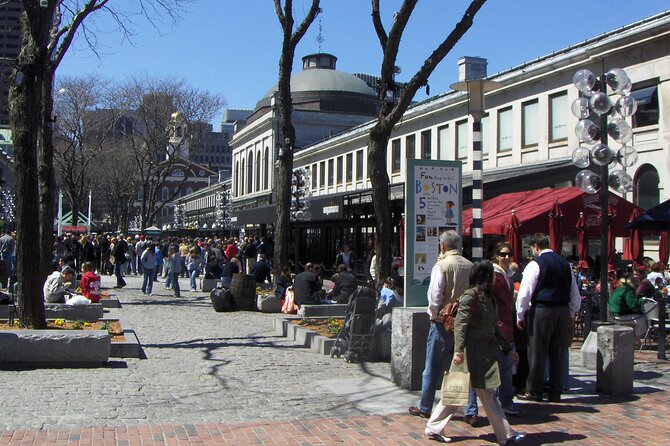
Old City Hall at 45 School Street was built in the French Second Empire style and housed Boston’s city council from 1865 to 1969. Its design looks very different from the nearby colonial structures. That contrast is exactly why the architecture angle works: Boston’s story is visible in its buildings, not only in plaques.
A short distance away, the Boston Latin School site marks the country’s first public school, founded in 1635. The original school building is gone, but a Benjamin Franklin statue and a sidewalk mosaic identify the location.
This is a useful stop for families with school-age children. It connects a familiar idea, public education, with the priorities of Puritan Boston. It also shows how little of the old city survives in its original form. Some important sites are buildings. Others are only markers, paving, or fragments in the modern street.
The tour includes the Boston Irish Famine Memorial as well. The memorial contrasts an Irish family suffering during the Great Famine of 1845 to 1852 with a prosperous family that had immigrated to the United States. It adds immigration and hardship to a route often dominated by the Revolution.
That range is a strength, though it can also create a slightly scattered feel. If you want only military and political events from 1770 to 1783, the stops on education, architecture, and immigration may feel like side trips. If you want a broader picture of Boston, they give the walk more depth.
King’s Chapel and the Omni Parker House
King’s Chapel has more than 330 years of history, reaching from its founding in 1686 through the Revolution and the creation of the United States. The church is one of the Freedom Trail’s major landmarks, but the value of the stop is not just its age. It represents the religious and political tensions of colonial Boston and the changes that followed independence.
The nearby Omni Parker House adds a lighter, more social note. Founded in 1855, it is the oldest continuously operating hotel in the United States. It has hosted every American president since Ulysses S. Grant and is associated with Boston Cream Pie, Parker House Rolls, and the word scrod.
This is a good example of the guide’s role in tying official history to ordinary city life. You move from churches and cemeteries to a hotel where politics, food, and famous visitors shaped Boston’s public identity. It also gives you a useful downtown landmark for later.
Tremont Temple and a wider American story
Tremont Temple began as the Free Baptist Church in 1839. Its founder, Timothy Gilbert, objected when his church disapproved of him inviting a Black family into his pew. He later purchased the Tremont Theater, and the congregation developed a policy of open attendance without charge.
The church is remembered as the first integrated church in the United States. Its halls also hosted public events, including an 1850 display of an Egyptian mummy and speeches against slavery by figures such as Frederick Douglass and Sam Houston.
This stop is important because it shows that Boston’s public history is not limited to white colonial leaders. It brings race, religion, abolition, and civic life into the same downtown route. The tour’s attention to Black history has not pleased every participant, but that is not a sound reason to expect the guide to leave it out. It is part of Boston’s story, and the subject belongs on a serious city walk.
At the same time, the exact balance depends on the guide. Some people wanted more information about buildings, while others wanted more about historical figures. Guides such as Alan and Andrew have received especially positive feedback for joining the two subjects with humor and simple explanations.
Old Granary Cemetery and Boston Common
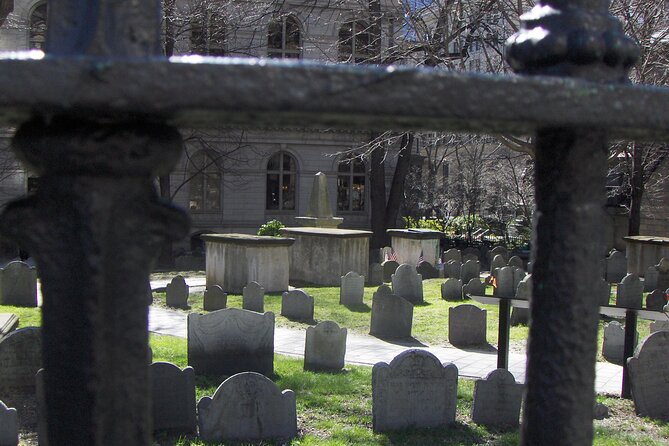
Old Granary Cemetery is one of the most recognizable burial grounds in Boston. Paul Revere, Samuel Adams, and John Hancock are buried here, along with other important figures from the city’s early years.
The cemetery can feel crowded, especially when several walking groups arrive together. You should not expect a quiet, reflective visit during this short tour. Instead, the guide helps you locate the major graves and understand why the cemetery matters.
The walk ends at Boston Common, the oldest city park in the United States. Its 50 acres are bordered by Tremont, Park, Beacon, Charles, and Boylston streets. Brewer Fountain provides the official finishing point.
Boston Common is a practical ending. You can rest, continue into Beacon Hill, walk toward the Public Garden, or use the park to orient yourself for the rest of the day. Keep in mind that protests or public events can occasionally affect the final portion of the route. That is outside the guide’s control, but it may make the ending noisier or less relaxed.
The New State House and the architecture focus
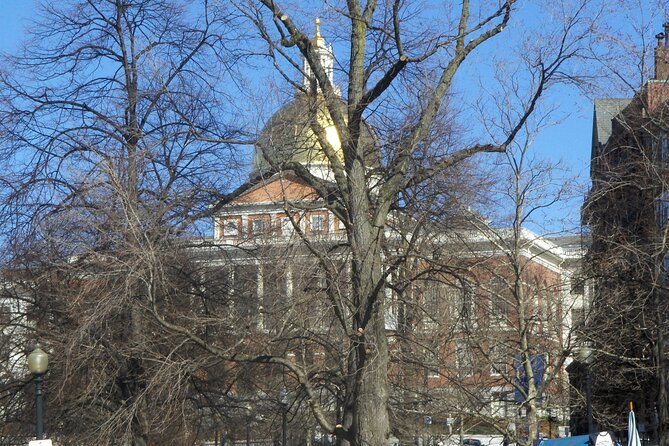
The New State House overlooks Boston Common and is easy to recognize by its 23-karat gold dome. Built in 1798, it remains the seat of Massachusetts government.
The contrast between the New State House and the Old State House gives the tour a clear visual thread. One represents colonial power and the early crisis with Britain. The other represents the new state government that followed independence.
Architecture is not decoration here. The style, materials, age, and use of each building help explain who had power and how Boston changed. The tour also points out French Second Empire design at Old City Hall, church architecture at King’s Chapel and Park Street Church, and the brick buildings associated with colonial Boston.
Some people will want more political detail and less discussion of façades. Others will appreciate learning how the city’s built environment reflects its past. The title of the experience makes the emphasis clear: this is a history and architecture walk, not only a chronological account of the Revolution.
Guide style, group size, and what the feedback means
Guide quality is the largest variable. Alan is repeatedly praised for humor, clarity, and personal attention. Andrew also receives strong marks for making the tour educational and fun. Several groups found the walk especially effective when the guide connected historical facts to modern Boston and invited children into the conversation.
The small-group format helps. A limit of 20 people allows the guide to answer questions and notice when someone has fallen behind. One family even received help after getting lost on the way to the meeting point. That kind of flexibility is useful in a city where the old streets can be confusing.
There are clear limits. One guide was criticized for speaking too softly and giving too little information. Another person wanted more history of the buildings, while others expected more detail about the Freedom Trail itself. You can improve your odds by staying near the guide, speaking up if you cannot hear, and asking early about the subjects that interest you most.
The overall rating is 4.6 from 194 reviews, which points to a generally strong experience but not a uniform one. The range from one to five stars is a reminder that this is a guide-led activity. The route is fixed, but the storytelling style is not.
Is $45 a fair price for 70 minutes?
At $45 per person, this is not the cheapest way to walk the Freedom Trail. You can follow much of the route independently for free. The question is what you want from your first hour in Boston.
I think the price is fair if you want a structured introduction, especially on a first visit. You are paying for a guide who can explain why a marker matters, connect several centuries of history, and keep the route moving. The walk covers a lot of downtown in a short time, and the group size is capped at 20.
The value is weaker if you already know Boston well or prefer to read plaques at your own pace. It is also less attractive if you expect entry into every landmark. This is primarily an outdoor orientation walk with commentary, not a series of interior tours.
Some people continue beyond Boston Common toward Beacon Hill and pay an additional $15 for a longer experience. That continuation is separate from the 70-minute tour, so confirm what you have booked before you arrive.
Practical advice for a smoother walk
Wear comfortable shoes. The route is short by sightseeing standards, but it is still a city walk with pavement, crowds, and frequent stops.
Dress for the forecast. The tour operates in all weather conditions, and rain has made the experience less comfortable for some groups. The guide may look for shelter when possible, but you should bring suitable clothing rather than depend on indoor cover.
The tour is offered in English, and confirmation is provided when you book. It is near public transportation, children must be accompanied by an adult, and most people can participate. Free cancellation is available up to 24 hours before the start time. Cancellations within 24 hours are not refunded, and a poor-weather or minimum-group cancellation may result in a new date or a full refund.
Should you book the Downtown Freedom Trail Walking Tour?
Book it if you are visiting Boston for the first time, enjoy American history, or want a quick overview before exploring the city on your own. The combination of Faneuil Hall, the Boston Massacre site, King’s Chapel, Old Granary Cemetery, the New State House, and Boston Common gives you a strong introduction to central Boston.
Choose it with realistic expectations. You will not receive a long indoor visit at every landmark, and the storytelling can depend on whether you get a guide such as Alan or Andrew. If you stay close, ask questions, and accept the architecture and social history alongside the Revolution, the $45 fee buys a useful and lively start to Boston.
FAQ
How long is the Downtown Freedom Trail Walking Tour?
The tour lasts approximately 1 hour and 10 minutes, or 70 minutes.
Where does the tour start?
The meeting point is State Street at Congress Street in Boston, Massachusetts.
Where does the tour end?
The tour ends at Brewer Fountain on the Freedom Trail beside Boston Common.
What time does the tour begin?
The stated start time is 10:00 am.
What landmarks are included?
The route includes Faneuil Hall, Quincy Market, the Old State House, the Boston Massacre site, Old South Meeting House, Old Corner Bookstore, Old City Hall, the Boston Latin School site, King’s Chapel, Tremont Temple, Old Granary Cemetery, Park Street Church, the New State House, and Boston Common.
Is admission to the attractions included?
The tour includes a professional guide and passes the listed attractions and landmarks. The supplied details do not state that indoor admission to each attraction is included.
How many people can join the tour?
The maximum group size is 20 people.
Is the tour offered in English?
Yes. The experience is offered in English.
Can children join the tour?
Yes. Children can participate, but they must be accompanied by an adult.
What happens if the weather is poor?
The tour operates in all weather conditions, so you should dress appropriately. If the experience is canceled because of poor weather, you will be offered another date or a full refund.
Can I cancel for a refund?
You can cancel at least 24 hours before the start time for a full refund. Cancellations or changes made within 24 hours are not accepted for a refund.
Just added around the USA
- Wilmington History and Architecture Tour★ 4.8 · 18 reviews
- Washington, DC: Georgetown Architecture Walking Tour★ 5.0 · 8 reviews
- New Orleans : Garden District Architecture Walking tour★ 4.8 · 5 reviews
- Washington DC: Dupont Circle & Embassy Row Architecture Tour★ 5.0 · 6 reviews
- Tulsa: Art Deco Walking Tour of Tulsa★ 5.0 · 8 reviews
- Castle to Capitol: Museums of the National Mall Architecture Tour★ 4.5 · 9 reviews
- Private Colonial Williamsburg Architectural Tour★ 5.0 · 5 reviews
- Iconic Capitol Hill Architectural Walking Tour★ 5.0 · 21 reviews
Walking Tours, compared.
The Official Art Deco Walking Tour by The Miami Design Preservation League
Read our review →
Barcelona: Gothic Quarter Ghosts and Legends Walking Tour
Read our review →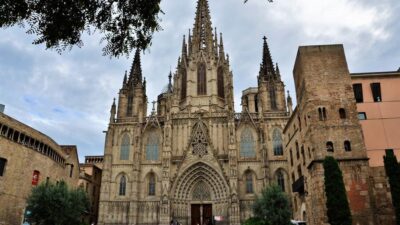
Barcelona: Old Town and Gothic Quarter Walking Tour
Read our review →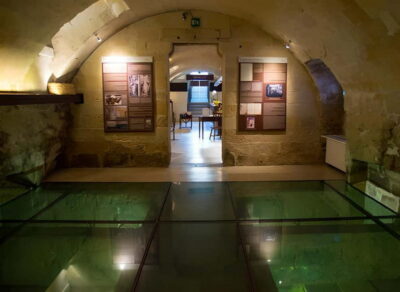
Lecce: Baroque Architecture and Underground Walking Tour
Read our review →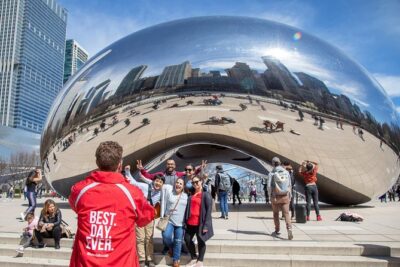
Chicago in a Day: Food, History & Architecture Walking Tour
Read our review →

Ramblas, Old Town, Gothic and Gaudi Architecture Walking Tour
Read our review →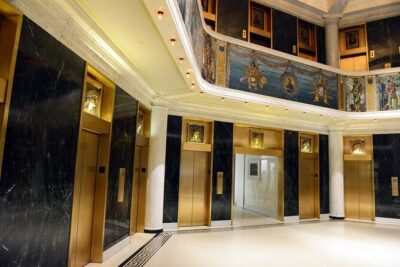
Chicago’s Secret Interiors Architectural Walking Tour
Read our review →Browse the lists this tour appears in