
Review · GERMANY
Lübeck: Architecture and Local Craft Private Guided Tour
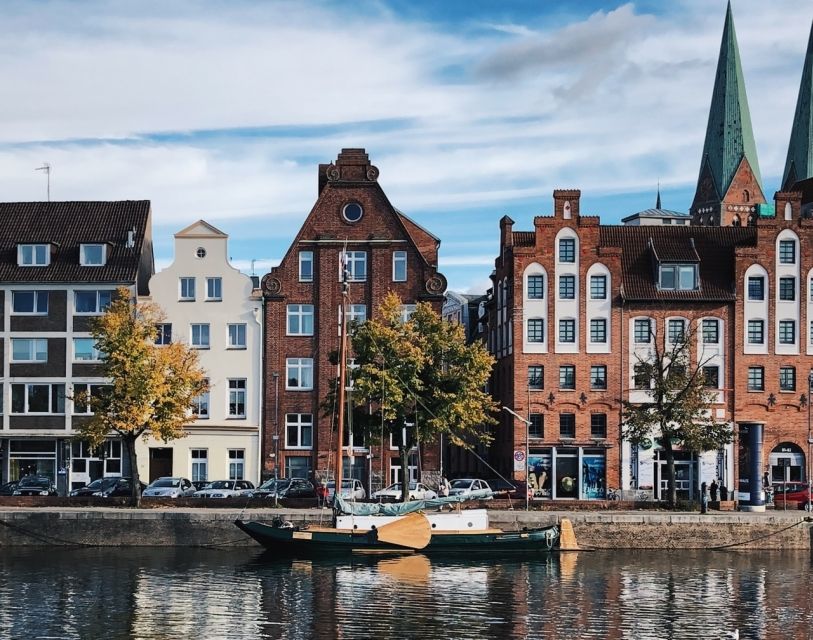
Lübeck’s old town is a lesson in how a building material can shape an entire city. On this private walk, you’ll follow the story of Hanseatic brick architecture, from grand churches and town halls to crooked homes, narrow passages, and tucked-away courtyards.
I like the personal format, which lets you ask questions as the guide explains Lübeck’s street plan and the practical problems behind its pretty facades. I also like the focus on local craft, especially the explanation of brick-making and why it mattered to merchants and residents. The main limitation is the short 90-minute length: you’ll get a lively introduction, not a full tour of every major sight.
Key points to know
- Start at the Holstentor: Meet directly at the entrance to Lübeck’s famous medieval gate.
- Private group format: Your group can include up to eight people, with the guide’s attention focused on you.
- Brick architecture in context: Learn why brick was so important in a city shaped by trade, building limits, and artificial land expansion.
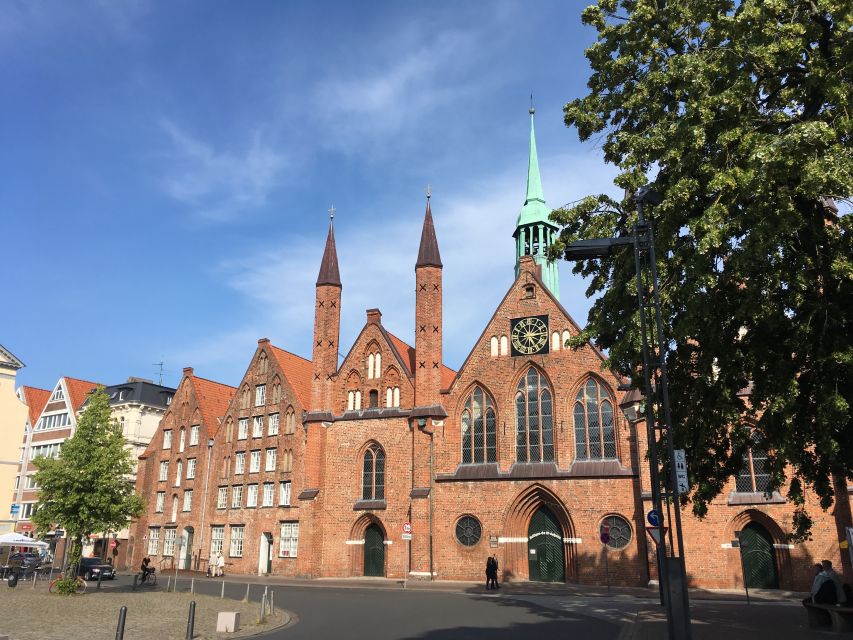
- Historic interiors and lanes: See passages, courtyards, a merchant’s house, and the Baroque Buddenbrockhaus area.
- Churches and civic power: Visit the market square, town hall, and St. Mary’s Church, known locally as the Ratskirche.
- Flexible scheduling: The walk can begin at a preferred time between 9 a.m. and 7 p.m., after the guide contacts you.
Why Lübeck’s brick buildings tell a bigger story
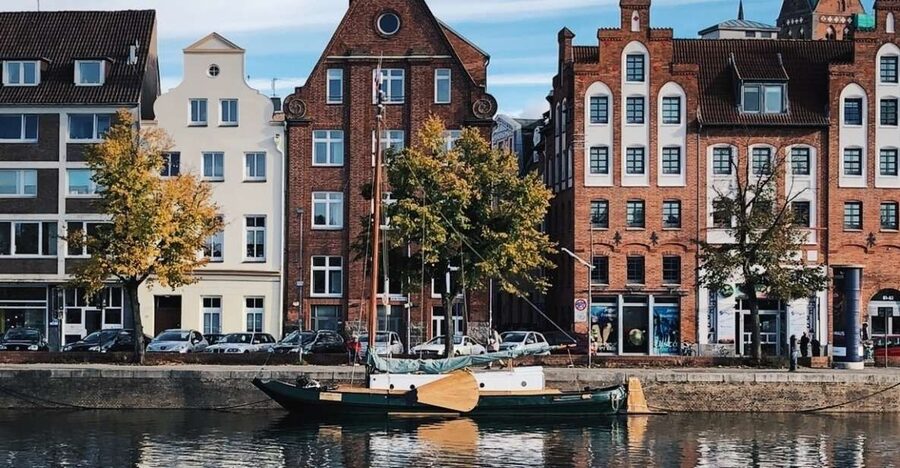
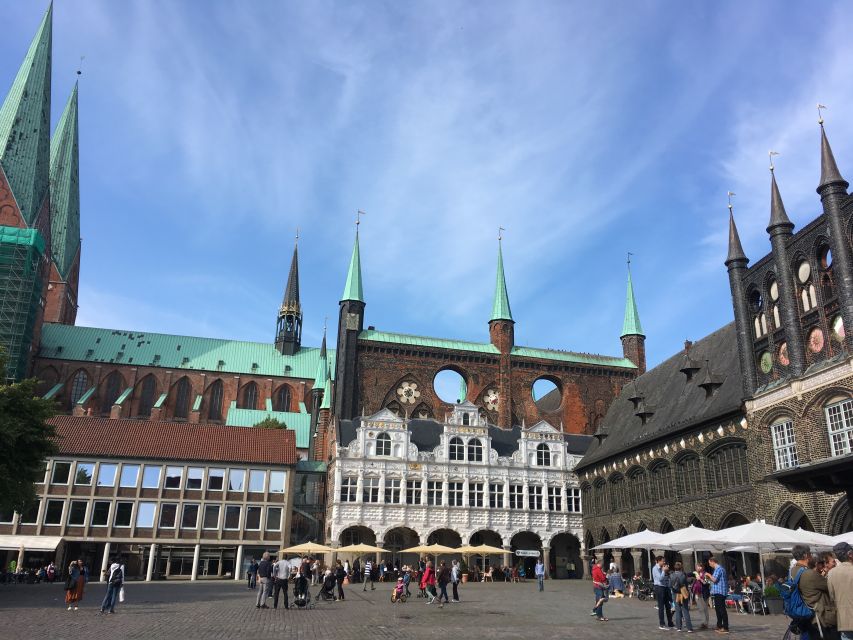
Lübeck is one of northern Germany’s great Hanseatic cities, and its old town is recognized as a UNESCO World Heritage Site. The reason becomes clear quickly. Instead of the pale stone or plastered facades you may expect in other European centers, Lübeck presents a strong, warm display of Gothic brick.
Brick was not simply a decorative choice. It was a practical material for a northern trading city where suitable building stone was not always easy to obtain. On this tour, the material becomes the main thread connecting churches, townhouses, merchant homes, and civic buildings.
I like that the guide does not treat architecture as a parade of dates and names. You’ll hear about how Lübeck’s original street system worked, how construction areas were expanded artificially during the Middle Ages, and why some houses now sag or lean. Those details help you read the city as you walk, rather than simply glance at attractive fronts.
The tour also looks at later changes, including modern alterations to old gables. That is useful because Lübeck is not a frozen medieval model. Its buildings have been repaired, adapted, and changed over time. A good guide can show you where the old design ends and later work begins.
More private architecture tours in Germany:
- Private Taxi Tour City East & West History and Architecture 3-4h
★ 5.0 · 42 reviews - Private walking Tour: Berlin Architecture Tour
★ 5.0 · 14 reviews - Lübeck: Private Historical and Architectural Walking Tour
★ 4.5 · 6 reviews
Beginning at the Holstentor
The meeting point is the Holstentor, Lübeck’s best-known landmark. You should wait directly at the entrance to the gate, rather than somewhere nearby in the surrounding area. That simple instruction matters, since a busy city-center meeting can otherwise become a hunt through streets and plazas.
The Holstentor gives the walk a strong opening. It is a powerful example of the city’s defensive and civic image, with thick brick construction and a shape that has become closely linked with Lübeck. The tour returns to the Holstentor at the end, so you get a chance to place it in a wider story after seeing the old town.
Because the tour is private, you can use the opening minutes to tell the guide what interests you most. You may want more church architecture, more everyday housing, or more about the merchants who drove Lübeck’s growth. The available guide languages are English and German.
The guide’s name is not provided before booking. After you reserve, the guide contacts you to arrange the start time. That gives you useful flexibility, especially if you are fitting Lübeck between other plans. Start times can be arranged from 9 a.m. to 7 p.m.
Reading the old town street by street
Once you leave the Holstentor, the walk heads into Lübeck’s old town streets. The value here is not only seeing old facades. It is learning why the streets and blocks look the way they do.
The guide explains Lübeck’s original street system and the medieval expansion of building areas. The reference to artificial expansion is especially interesting because it shows that the city’s form was shaped by deliberate engineering and planning, not just by gradual growth.
You’ll also hear about sagging houses. These uneven buildings are easy to photograph, but the story behind them is more useful than the picture alone. Changes to foundations, cramped construction conditions, and centuries of repairs can all affect an old building. The guide connects those visible quirks to the way the city developed.
The discussion of modern gable alterations adds another practical layer. Old buildings are often adjusted to suit later needs, and a changed gable can reveal how a house moved through different periods. You do not need to be an architecture specialist to enjoy this. The guide’s job is to give you enough context to notice details you would otherwise pass by.
The market, town hall, and St. Mary’s Church
A major stop is Lübeck’s town market, where you can see the town hall and the famous St. Mary’s Church, also called the Ratskirche. This is one of the clearest places to understand how religious and civic power shared the heart of the city.
The town hall represents the city’s government and commercial importance. St. Mary’s Church adds the religious side of that picture. Together, they create a useful snapshot of Lübeck as a powerful Hanseatic center.
The church is one of the tour’s major architectural sights. Its brick Gothic design shows how a material associated with practical construction could be used on a huge and ambitious scale. You’ll have a chance to admire the building from the outside as part of the walk.
Church entry fees are not included. If the guide takes you inside a church, the optional entrance fee is 2 euros. Since the tour itself lasts only 90 minutes, ask about the interior visit if that is important to you. The published information does not promise extended indoor time, so the main focus remains the streets, exteriors, and urban details.
More guided tours in Germany:
- Düsseldorf: Guided City Architecture Walking Tour
★ 4.6 · 61 reviews - Potsdam: Guided Walking Tour of UNESCO Site and Architecture
★ 4.7 · 49 reviews - Berlin: Guided Architectural Walking Tour of Hansaviertel
★ 4.9 · 5 reviews - Beautiful Baroque Potsdam: A Self-Guided Audio Tour
★ 4.5 · 4 reviews
Buddenbrockhaus and the route to Glockengießerstraße
The route passes through the Baroque Buddenbrockhaus before continuing toward Glockengießerstraße. This section adds variety to the Gothic brick theme. You are not looking at one single period or one uniform architectural style.
The Buddenbrockhaus area helps show how Lübeck’s old town changed over time. A Baroque building among medieval streets makes the city feel more layered and lived-in. The tour does not simply present Lübeck as a medieval set piece. It points out the later additions and changes that shaped the town residents see today.
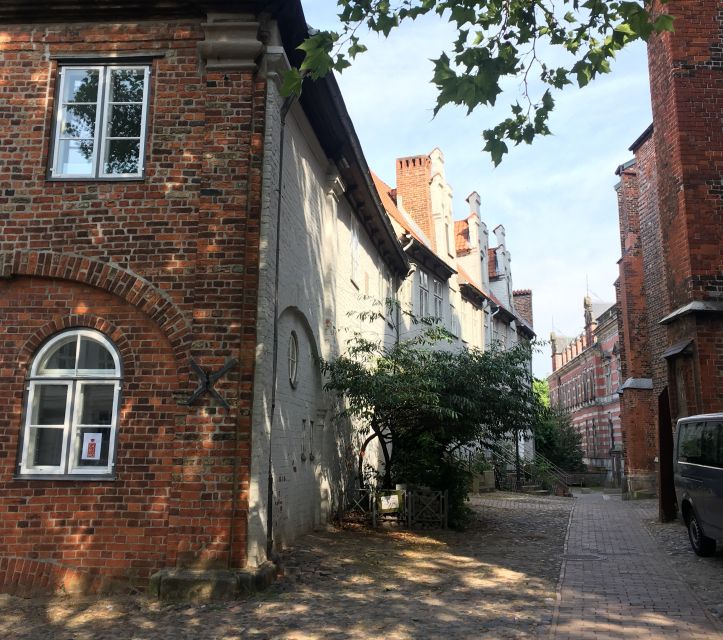
Glockengießerstraße is especially valuable for visitors who enjoy small-scale urban details. Here, the guide points out several passages and courtyards, explaining how they were built and how they fit into the old city.
These spaces can tell you more about ordinary urban life than a grand facade can. Passages and courtyards were tied to the way people lived and worked behind the street front. Their construction also reflects the pressure to use limited space efficiently.
This is one reason I prefer a small private walk to a large sightseeing group for Lübeck. You can stop when a doorway or courtyard catches your eye, ask for clarification, and keep the pace comfortable. The tradeoff is that the exact route can depend on the guide and the agreed schedule, so you should not expect a fixed museum-style sequence.
A merchant’s house and the craft of brick-making
The visit to a local merchant’s house brings the city’s commercial past into sharper focus. Lübeck’s trade created wealth, but that wealth had to be expressed in buildings, streets, churches, and homes.
Here you’ll hear about brick-making and why mastering the craft mattered to Lübeck and its inhabitants. That is an excellent fit for the tour’s theme. Brick is not just a background color in Lübeck. It affected what the city could build, how large it could build, and how it presented itself.
The merchant’s house also gives you a way to connect public architecture with private life. The town hall and church show civic ambition. A merchant’s home shows how commercial success appeared at street level.
The supplied ratings give the guide high marks for historical knowledge, clear answers, enthusiasm, and competence. One Danish-language comment specifically praises how well the guide knew the subject, while German-language comments describe the tour as informative and engaging. The overall published score is 4 out of 5 from six ratings, so the feedback is positive but based on a fairly small sample.
The guides’ individual names are not supplied, so I would not book expecting a particular person. Instead, book for the private format and the subject matter. The guide is available in English or German, and you can raise your own questions throughout the walk.
Why the private format changes the value
The price is $277 per group of up to eight people. That can feel steep for a 90-minute walking tour if you are traveling alone or as a couple. For a full group, however, the cost works out to about $34.63 per person when eight people share it.
That calculation changes the value. A private guide can adjust explanations to your interests, answer questions without a large group waiting, and keep the walk at your pace. Families, couples traveling with friends, and small groups who want a focused introduction may find the price reasonable.
For one or two people, the value depends on how much you care about architecture and personal attention. If you only want a quick orientation, a group walk or self-guided route may cost less. If you want to understand why Lübeck’s streets, courtyards, churches, and houses look the way they do, the private format makes more sense.
Food and drinks are not included, but that is not a serious concern on a 90-minute city walk. Entrance fees are also separate, with optional church entry listed at 2 euros. Plan for comfortable walking shoes and keep the schedule clear enough to avoid rushing the final stops.
Who will enjoy this Lübeck walk most
This tour suits you best if you like buildings with a story behind them. It is a good match for travelers who want more than landmark photos and enjoy learning how cities were planned, repaired, and adapted.
It also works well for small private groups. With room for up to eight people, families or friends can share the cost and keep the conversation personal. The flexible starting window, from 9 a.m. to 7 p.m., helps you fit the walk around other plans.
You should consider another option if you want long interior visits, food tasting, or a broad tour of every major attraction in Lübeck. The focus here is architecture, local craft, urban design, and stories about residents. At 90 minutes, the tour offers a concentrated introduction rather than an entire day of sightseeing.
I would also treat the walk as a starting point. Afterward, you may want to return to St. Mary’s Church, spend more time around the market, or explore the passages and courtyards at a slower pace. The guide gives you a framework, then you can follow the details that caught your attention.
Booking advice for your day in Lübeck
The tour offers free cancellation up to 24 hours before the scheduled start, and you can reserve now while paying later. The guide contacts you after booking to set the exact time, so watch for that message and confirm the meeting details.
Arrive at the Holstentor entrance a little early. Since the meeting point is specific, waiting directly at the entrance is safer than standing in a nearby square.
If you want an English tour, select or request English when arranging the time. German is also available. Tell the guide at the start if you have a strong interest in churches, merchant life, building techniques, or unusual houses. The private setup makes those preferences useful.
Should you book this private architecture tour?
Book it if you want Lübeck explained through its brickwork, street plan, churches, merchant homes, and small courtyards. The strongest parts are the private questions and the way local craft connects grand landmarks with everyday buildings.
Skip it if you need a low-cost introduction, a food-focused outing, or several hours inside museums and churches. At $277 per group, it makes the most sense for a small group that can share the cost. For the right audience, this is a focused and flexible way to see why Lübeck’s old town feels so distinctive.
FAQ
Where does the Lübeck architecture tour begin?
The guide meets you at the Holstentor. You should wait directly at the entrance to the Holstentor.
How long does the tour last?
The walking tour lasts 90 minutes.
What languages are available?
The live guide can lead the tour in English or German.
Is this a private tour?
Yes. It is a private group tour for up to eight people.
When can the tour start?
The tour can begin at a preferred time between 9 a.m. and 7 p.m. The guide contacts you after booking to arrange the time.
What buildings and areas are included?
The route includes the Holstentor, Lübeck’s streets and old town buildings, the town market, the town hall, St. Mary’s Church, the Buddenbrockhaus area, Glockengießerstraße, historic passages and courtyards, and a local merchant’s house.
Does the tour include church entrance fees?
No. Church entrance fees are not included. Optional entry is listed at 2 euros.
Are food and drinks included?
No. Food and drinks are not included in the tour price.
How much does the private tour cost?
The price is $277 for a group of up to eight people.
Can I cancel the booking?
Yes. You can cancel up to 24 hours in advance for a full refund. You can also reserve now and pay later.
Just added around Germany
- Beautiful Baroque Potsdam: A Self-Guided Audio Tour★ 4.5 · 4 reviews
- Munich Your Way: Private Tour with Architect & Guide★ 5.0 · 2 reviews
- Private Munich Tour for History Buffs with Architectural Gems and WWII sites★ 5.0 · 3 reviews
- Art Nouveau Meets Street Art in Munich (Max. 12 guests)★ 5.0 · 3 reviews
- Hidden Architectural Gems of Munich (Max. 16 guests)★ 5.0 · 2 reviews
- Architectural Frankfurt: Private Tour with a Local Expert★ 5.0 · 2 reviews
- Private Taxi Tour of City East History and Architecture 2-3h★ 5.0 · 2 reviews
- Berlin Architecture/River Spree Full Day Photography Tour★ 5.0 · 2 reviews
Germany Architecture Tours, compared.
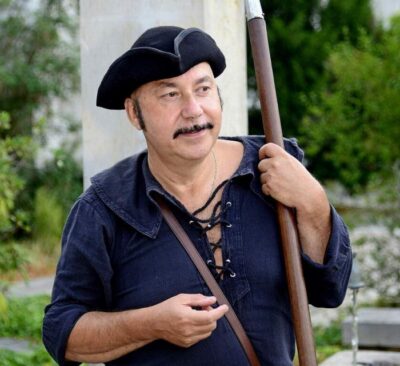
Dresden: Tour of the Baroque Quarter with a Night Watchman
Read our review →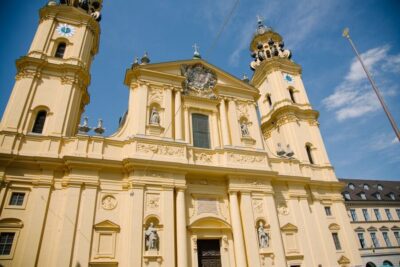
Munich 3-Hour Segway Tour: Nazi Munich & Royal Architecture
Read our review →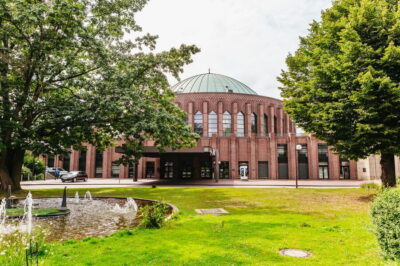
Düsseldorf: Guided City Architecture Walking Tour
Read our review →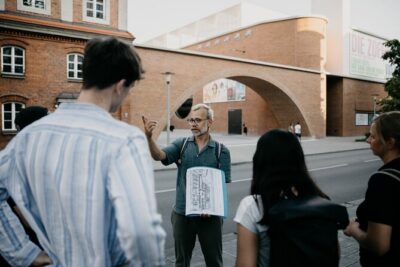
Hidden Architectural Gems of Munich (Max. 16 guests)
Read our review →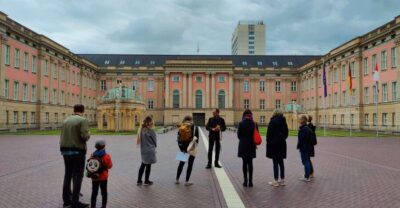
Potsdam: Guided Walking Tour of UNESCO Site and Architecture
Read our review →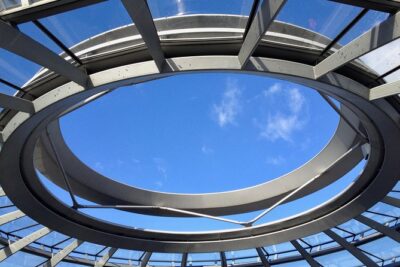
Private Taxi Tour City East & West History and Architecture 3-4h
Read our review →
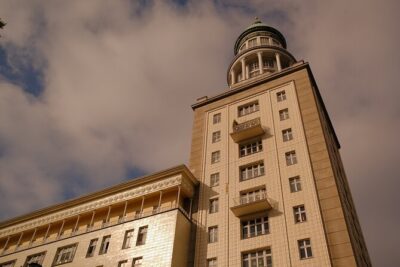
Karl-Marx-Allee Tour: Life and Architecture in East Berlin
Read our review →Browse the lists this tour appears in