
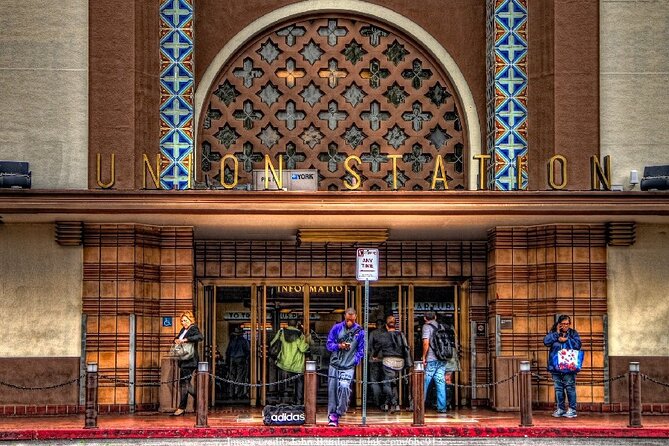
Review · LOS ANGELES
LA’s Art Deco & Beaux Art Architecture: Private Walking Tour
Downtown Los Angeles can feel like a jumble of towers, old theaters, civic buildings, and traffic. This private walk gives the area a clear visual thread: Art Deco and Beaux-Arts design, from the 1925 Biltmore hotel to the green terra-cotta clock tower of the Eastern Columbia Building. You finish knowing why downtown looks the way it does.
I like the small private format, which lets your guide adjust the pace and linger over the buildings that catch your eye. I also like the chance for extra discoveries. Sam, one guide named in the feedback, added several lesser-seen architectural details and arranged a surprise rooftop view.
The main drawback is the price: $175 per person is a serious spend for a three-hour walk, especially since no food, drinks, or transportation are included. You are paying for a private guide and focused access to the city’s design story, not for tickets or a packed sightseeing package.
Key points to know before you book
- City Hall to Eastern Columbia: The route crosses downtown from 200 N Spring Street to 849 S Broadway.
- Eight architectural stops: You’ll see civic buildings, former offices, apartments, a library, and grand commercial landmarks.
- Private group experience: Only your party takes part, so the guide can answer questions and set the walking pace.
- Photo-friendly timing: About three hours are planned, with room to stop and photograph details.
- Possible extra views: A rooftop viewing may be available, though it is not listed as a guaranteed feature.
- Easy to reach: The start and finish are near public transportation, with taxi links at the end.
Why this downtown architecture walk works
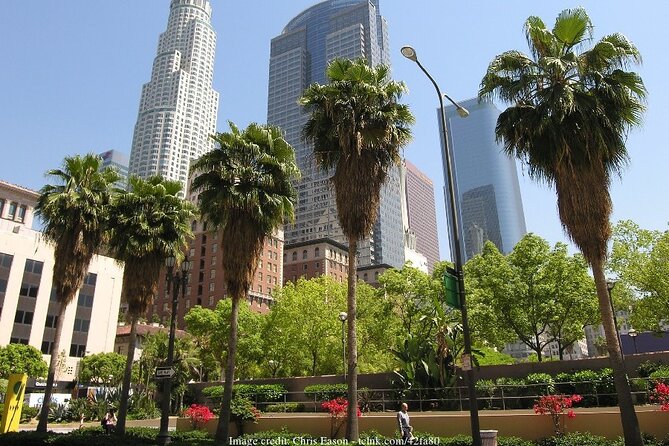
The best part of this experience is its simple idea. Instead of treating downtown LA as a string of unrelated sights, it shows you how architectural styles changed over time.
You begin with civic buildings and early twentieth-century design, then move through Beaux-Arts forms, Art Moderne lines, and the decorative verticality of Art Deco. By the time you reach the Eastern Columbia Building, details such as terra-cotta color, geometric decoration, setbacks, and clock towers make much more sense.
A guide matters here. Many of these buildings are easy to pass without looking up. You might notice a grand entrance, but miss the marble, lettering, columns, or changes made during later remodels. Your guide handles the navigation and supplies the context while you concentrate on the streetscape and photographs.
The route also gives you a useful look at downtown’s changing purpose. Former offices now contain loft-style apartments. Department-store buildings have become luxury condominiums. A library once threatened with demolition was saved and remains part of the city’s daily life.
This is not a museum tour with long indoor visits. Several stops are viewed from the street, and interior access can depend on the day. That makes the walk flexible, but it also means you should book it for the buildings and the guide’s interpretation, not for guaranteed entry to every site.
More Art Deco tours in the USA:
- The Official Art Deco Walking Tour by The Miami Design Preservation League
★ 5.0 · 1,580 reviews - Miami South Beach Art Deco Walking Tour
★ 5.0 · 1,039 reviews - Miami Beach Food and Art Deco Walking Tour
★ 4.5 · 245 reviews
City Hall and the Los Angeles Courthouse
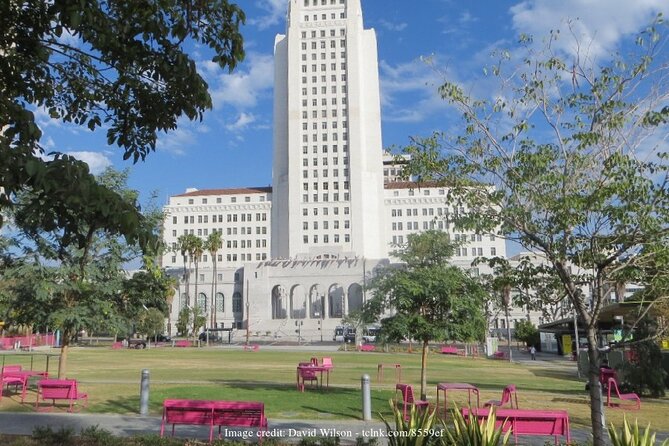
Start at Los Angeles City Hall, 200 N Spring Street. The building is one of the city’s most recognizable landmarks, and its appearance has made it useful to the film industry.
Your guide begins by pointing out its eclectic character before leading you toward the Los Angeles Courthouse. The courthouse provides a useful contrast, with its Art Moderne architecture and cleaner, more streamlined look.
I like this opening because it gives you a visual lesson right away. You are not simply told that one building is older or newer. You can compare different approaches to civic design within a short walk.
Plan on about 30 minutes here. That is enough time for photographs and an introduction to the architectural language used throughout the rest of the route. If you want exterior shots, this is a good place to take your time before the walk becomes more concentrated around Broadway and Pershing Square.
The Bradbury Building and its Beaux-Arts character
The Bradbury Building is one of downtown’s best-known architectural landmarks and one of the oldest surviving Beaux-Arts buildings in the area.
Even if you already know the building from film or television, seeing it in person helps explain its reputation. The attraction is not only its age. It is the sense of detail and the way the building differs from the more forceful Art Deco structures later in the walk.
The planned stop lasts about 30 minutes. That suggests a proper look rather than a quick photograph from the pavement. Ask your guide which parts are open to view on the day, since the information provided does not promise full interior access.
This is one of the tour’s strongest stops for anyone who enjoys architectural texture. You get a chance to compare Beaux-Arts decoration with the sharper geometry that appears later. Keep your camera ready, but listen closely too. The point is not just to collect another famous downtown image.
The Title Guarantee Building and the rise of Art Deco
The 1930 Title Guarantee Building began as an office building and now contains loft-style apartments. Its importance on this walk comes from its vertical emphasis, a key part of Art Deco design.
You will spend about 15 minutes here. That is enough for a focused explanation and a few photographs, but not a long visit. Look for the way the building directs your eye upward. Art Deco often turns height into decoration, using repeated lines and stepped forms to make a structure feel taller and more dramatic.
The building’s change from office use to residential lofts also gives your guide a chance to explain how downtown buildings are reused. You see architecture not as a frozen relic, but as part of an active neighborhood.
More architecture walks in the USA:
- Chicago in a Day: Food, History & Architecture Walking Tour
★ 5.0 · 1,153 reviews - Chicago’s Secret Interiors Architectural Walking Tour
★ 5.0 · 635 reviews - Chicago: Secret Interiors Architecture Walking Tour
★ 4.9 · 498 reviews - Charleston: History and Architecture Guided Walking Tour
★ 4.8 · 349 reviews
Pershing Square and the Biltmore comparison
Pershing Square is a shorter stop, about 15 minutes, but it helps connect the styles together. Here, your guide explains Art Deco and the Beaux-Arts design that came before it.
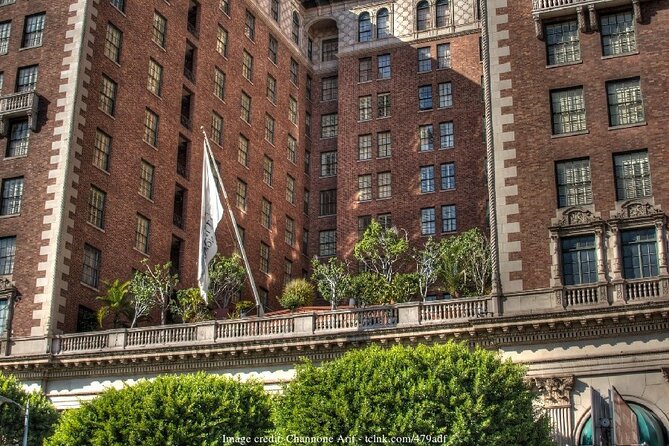
The nearby 1925 Biltmore hotel supplies the Beaux-Arts example. This is useful because the tour does not treat Art Deco as an isolated fashion. You get a sense of what came before, then see how later designers favored more streamlined and geometric forms.
Pershing Square can also serve as a natural breathing point. You have already covered several buildings, and the route continues through a busy downtown district. Use this pause to ask questions or review photographs while the guide explains the contrast between the two styles.
The short stop also shows one limitation of the experience. This is a walking architecture lesson, not a leisurely park visit or hotel tour. If you want extended time inside the Biltmore, that is not part of the stated plan.
Marble details inside the CalEdison
The CalEdison building, dating from 1931, occupies a prominent corner and receives about 30 minutes on the route. Its exterior is worth seeing, but the possible interior glimpse is the real bonus.
If entry is available, you may see striking marble on the floors and columns. That kind of material detail can be hard to appreciate from a sidewalk. It also shows how Art Deco design worked through surfaces and finishes, not only through a building’s outline.
I would treat interior access as a possibility rather than a promise. The tour information says you might be able to enter, so conditions can vary. If you do get inside, take a moment to look down and around. The floor pattern and columns may tell you as much as the facade.
This is a good place to ask the guide about materials. A private tour gives you more room for questions than a large group walk, and the visual evidence is right in front of you.
Los Angeles Central Library, saved from demolition
The Central Library dates from 1926 and is described as an early example of Art Deco. It was saved from demolition in 1978 by the Los Angeles Conservancy, a fact that adds an important preservation lesson to the route.
You will have about 30 minutes here. That is long enough to examine the design, hear how the building survived a serious threat, and take photographs.
I find this stop especially valuable because it changes the tone of the tour. You are no longer looking only at attractive old buildings. You are also considering how easily important structures can disappear when a city values new construction over older design.
The library offers a strong example of how public architecture can remain useful while preserving its original identity. If you are interested in preservation, ask your guide about the building’s rescue and the broader role of local conservation efforts.
The Oviatt Building and PacMutual
The Oviatt Building brings together several design stories. Parts of it were built in the Romanesque Revival style, while other sections were changed to look more like Art Deco after the owner visited the 1925 Paris exposition.
That personal connection gives the building a memorable explanation. Styles do not always change because of a single official plan. Sometimes an owner sees something abroad, returns with new ideas, and remodels an existing building to match the latest fashion.
The stop lasts about 15 minutes. Look for the contrast between the older Romanesque Revival elements and the later Art Deco treatment. It is a compact lesson in how buildings can be updated instead of replaced.
You also pass PacMutual, originally built in 1908 with a form resembling a Greek temple. It was remodeled in the 1930s to give it an Art Deco appearance. This is another reminder that downtown architecture often contains several periods at once.
For me, these buildings make the walk more interesting than a simple parade of untouched landmarks. You learn to spot layers, alterations, and changing tastes.
Ending at the Eastern Columbia Building
The final stop is the Eastern Columbia Building at 849 S Broadway. Its greenish terra-cotta exterior and iconic clock tower make it the route’s natural closing image.
The building was originally a department store and is now home to luxury condominiums. The change in use gives you one last example of downtown adaptation. The building still carries the bold commercial identity of its original period, even though the people using it today may have very different reasons for being there.
One detail included in the tour information is that one condominium was once owned by Johnny Depp. That may interest film fans, but the building’s architectural value does not depend on celebrity ownership. The clock tower and colored terra cotta are the real reasons to save time for this stop.
About 15 minutes are planned here. You finish close to public transportation and taxi links, and the guide can help you work out the next part of your journey.
What $175 per person buys you
At $175 per person, this is not a low-cost introduction to downtown LA. There are no admission tickets, meals, drinks, hotel pickup, or transportation included. The value comes from the private format, the guide’s time, and the organized architectural story.
That price makes more sense if you are traveling with a small group that wants a custom pace. A private guide can spend longer at the Bradbury Building, answer a child’s detailed architecture questions, or point out extra sites that are easy to miss. One particularly positive experience involved Sam, who shared several lesser-seen downtown details and included a surprise rooftop view.
Group discounts are available, though the exact discount is not specified. If you are booking for several people, check the final rate before deciding. The cost may feel easier to justify when shared among a private party rather than paid by one person alone.
I would not choose this tour if you want a broad survey of all Los Angeles attractions. It focuses tightly on downtown buildings. I would choose it if architecture is a main reason you are visiting the area, or if you want a guide to make sense of places you might otherwise pass without noticing.
Pace, access, and practical planning
Allow the full three hours. The stop times add up to roughly three hours, and the route includes walking between buildings. Wear shoes you can use comfortably on city streets, and bring water, since food and drinks are not provided.
The experience is wheelchair accessible and near public transportation. That is helpful, though a moderate level of physical fitness is still requested. Ask about your specific needs when booking if you are concerned about the walking distance or street conditions.
The tour starts at City Hall and ends at the Eastern Columbia Building. There is no hotel pickup or drop-off, so plan your route to the first meeting point. At the finish, public transport and taxis are nearby, and the guide can advise you on getting onward.
The tour is offered in English and uses a mobile ticket. Confirmation arrives when you book. Free cancellation is available up to 24 hours before the start time. Changes or cancellations inside that window are not refunded, and poor weather can lead to a new date or a full refund.
Who will enjoy this private walk
I would recommend it most strongly to:
- Architecture fans who want to compare Beaux-Arts, Art Moderne, and Art Deco in one route.
- Film and design enthusiasts interested in recognizable downtown locations.
- Families with a curious older child or teenager who enjoys buildings and city stories.
- Visitors who prefer a private guide instead of a large group.
- Repeat LA visitors looking for a focused downtown subject rather than another general city tour.
The route may be less suitable if you dislike walking, want extensive interior access, or prefer a tour packed with ticketed attractions. The experience is strongest outdoors, with the guide helping you read the details around you.
Should you book LA’s Art Deco and Beaux-Arts tour?
Book it if you want to understand downtown LA through its buildings rather than simply photograph them. The private setting, clear route, and mix of famous and less obvious architecture give the experience real purpose.
The price is high for a three-hour walk with no included admissions, so compare it with your interests and group size. If you are excited by the Bradbury Building, the Central Library, the CalEdison marble, and the Eastern Columbia clock tower, the focused guide service may be worth it. If those names mean little to you, spend your money on a broader city experience instead.
FAQ
How long does the walking tour last?
The experience lasts approximately three hours.
Where does the tour start?
It starts at Los Angeles City Hall, 200 N Spring St, Los Angeles, California 90012.
Where does the tour finish?
It finishes at the Eastern Columbia Building, 849 S Broadway, Los Angeles, California 90014.
Is the tour private?
Yes. Only your group participates in the private tour.
Is the tour wheelchair accessible?
Yes, the tour is wheelchair accessible.
Is transportation included?
No. Hotel pickup, hotel drop-off, and transportation during the tour are not included. The start and finish are near public transportation, and taxi links are available at the end.
Are admission tickets required?
No tickets are required for the experience.
What happens if the weather is poor?
The experience requires good weather. If it is canceled because of poor weather, you will be offered another date or a full refund.
Just added around the USA
- Wilmington History and Architecture Tour★ 4.8 · 18 reviews
- Washington, DC: Georgetown Architecture Walking Tour★ 5.0 · 8 reviews
- New Orleans : Garden District Architecture Walking tour★ 4.8 · 5 reviews
- Washington DC: Dupont Circle & Embassy Row Architecture Tour★ 5.0 · 6 reviews
- Tulsa: Art Deco Walking Tour of Tulsa★ 5.0 · 8 reviews
- Private Colonial Williamsburg Architectural Tour★ 5.0 · 5 reviews
- Castle to Capitol: Museums of the National Mall Architecture Tour★ 4.5 · 9 reviews
- Iconic Capitol Hill Architectural Walking Tour★ 5.0 · 21 reviews
Art Deco Tours, compared.
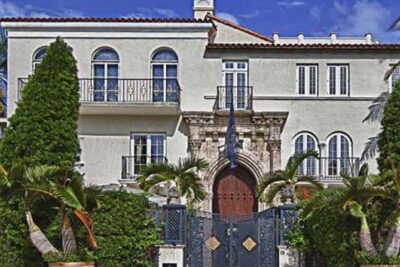
The Official Art Deco Walking Tour by The Miami Design Preservation League
Read our review →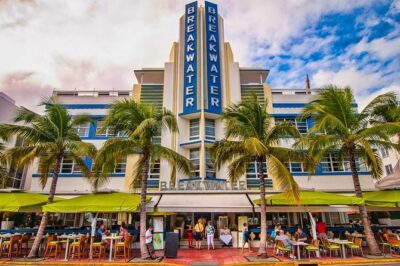
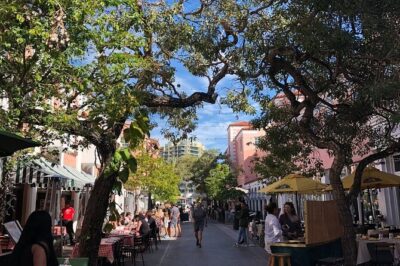
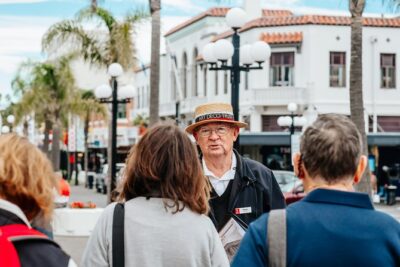
Guided 10am Morning Art Deco Walk From Napier Art Deco Trust
Read our review →
Award-winning Art Deco & Neon Lights Walking Tour in Miami Beach
Read our review →
Browse the lists this tour appears in