
Review · CHARLESTON
Historic Charleston: The Battery, Rainbow Row, St. Michael Church
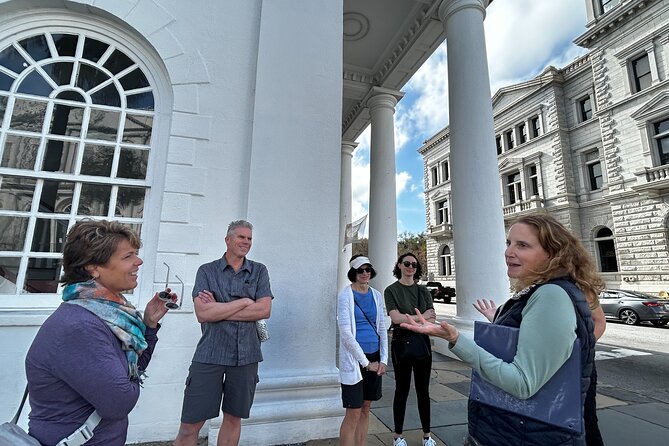
Charleston’s old center packs a remarkable amount into two hours. This walk links grand churches, pastel houses, harbor views, civic landmarks, and the painful history of slavery without forcing you to piece the city together on your own. The strongest part is the live storytelling, especially when a guide such as Eric or Erik connects one event to another.
I like the small group limit of 20, which gives you a better chance to ask questions than a huge street procession. I also like the relaxed pace reported by past participants, though you still need good walking shoes. The main catch is that church interiors depend on congregation schedules, so you may see the buildings only from outside.
Key points to know before you book
- Two hours on foot: The route covers Charleston’s historic center at a steady, leisurely pace.
- Church access can change: St. Philip’s and St. Michael’s are working churches, so entry is not guaranteed.
- The guide makes the difference: Eric and Erik are praised for clear explanations, patience, local knowledge, and tailoring the talk to group interests.
- Major sights come fast: You see Rainbow Row, the Four Corners of Law, Dock Street Theater, Washington Square, The Battery, and the Old Slave Mart area.
- A thoughtful history lesson: The route includes Charleston’s beauty and architecture, but also addresses slavery and the city’s role in American history.
- Simple logistics: Meet at Washington Square at 10:00 a.m. and finish back at the same point.
Why this Charleston walk works well
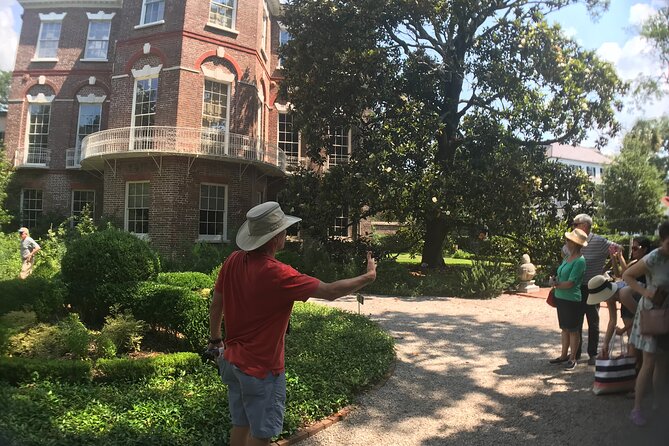
I like this tour because it gives you a useful first map of Charleston rather than isolating one attraction. You move from Church Street to Broad Street, along the waterfront, and through several squares and civic landmarks. In two hours, you get enough architecture and history to decide where you want to return later.
The walk also avoids a common problem with city tours: too much time on one topic. Churches receive attention, but so do government buildings, theater, gardens, waterfront defenses, mansions, and the legacy of the slave trade. You get a broad introduction, with a guide there to explain why each place matters.
The small-group limit helps. A maximum of 20 people is not private touring, but it is manageable. You can usually hear a live guide more easily than you would in a large crowd, and there is room for questions. The strongest praise goes to the guides’ storytelling and their ability to adjust the discussion to the group.
This is not a bus tour. You will walk for about two hours, stop often, and spend time on city sidewalks and public spaces. One person specifically advised bringing good walking shoes, and that is sensible. Rain does not necessarily ruin the experience, but wet weather makes footwear and a light rain layer more important.
More history tours in the USA:
- Chicago in a Day: Food, History & Architecture Walking Tour
★ 5.0 · 1,153 reviews - Charleston’s Best Highlights: History, Culture & Architecture
★ 5.0 · 422 reviews - Palm Springs Modernism Architecture & History Bike Tour
★ 5.0 · 359 reviews
Meeting at Washington Square
The walk begins at Washington Square, at 80 Broad Street, at 10:00 a.m. This is a good starting point because the square gives you immediate context. Live oaks, statues, plaques, and open paths create a calm opening before the route moves into Charleston’s denser streets.
Washington Square also helps you get oriented. Charleston’s old center can feel like a series of attractive streets with no clear order. Starting here lets your guide explain how the city’s civic, religious, commercial, and residential areas fit together.
The tour returns to this same meeting point. That makes planning easier if you have a later reservation or want to continue exploring on your own. Still, allow a little breathing room after the tour rather than scheduling something immediately. Walking tours can run close to their stated length, and questions may add a few minutes.
St. Philip’s Church and St. Michael’s Church
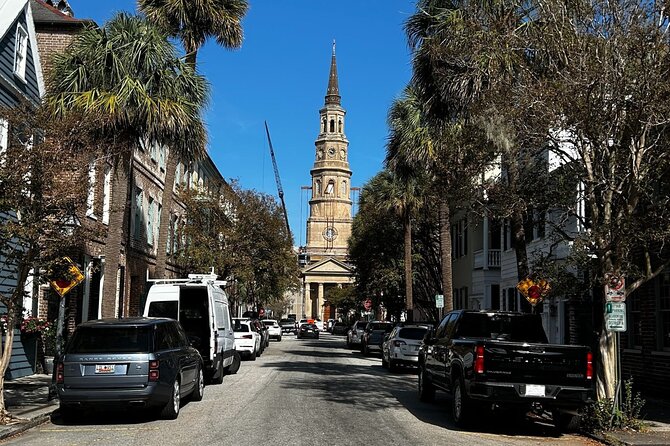
The first church stop is St. Philip’s Church on Church Street. The current building was completed in 1836, and its steeple can be seen from far across the city. The stop is brief, about five minutes, but the churchyard and its connections to important Charleston figures give your guide plenty to point out.
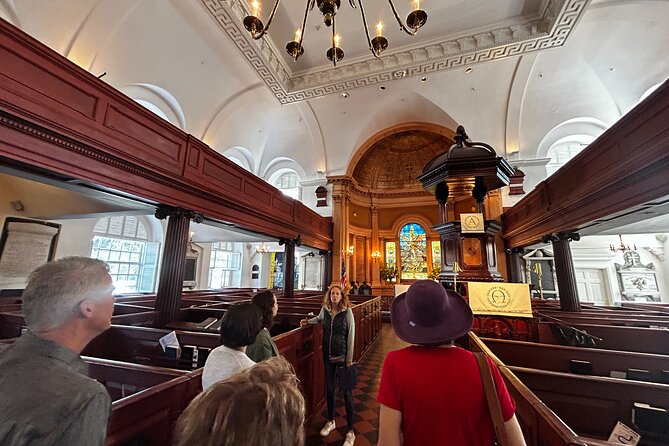
If the interior is open, you may see the grand room and its historic organ. The graveyard adds another layer. This is not simply a photo stop for a pretty facade. It helps show how religion, public life, and burial customs occupied the same tight urban space.
St. Michael’s Church follows. Built in 1752, it is described as Charleston’s oldest surviving religious structure. Its tall spire is one of the city’s best-known markers, while Tiffany stained-glass windows add interest inside.
The church also has links to major figures, including George Washington and Robert E. Lee. Those connections can help place Charleston within the larger story of the United States, though the value of the stop depends on the guide’s explanation rather than on simply taking a picture of the steeple.
Both churches are active places of worship. That matters. You cannot assume the doors will be open just because they appear on the route, and access may change around services or congregation needs. Entrance into one to three historic sites is included when available, but the tour does not promise entry to every church.
The Four Corners of Law
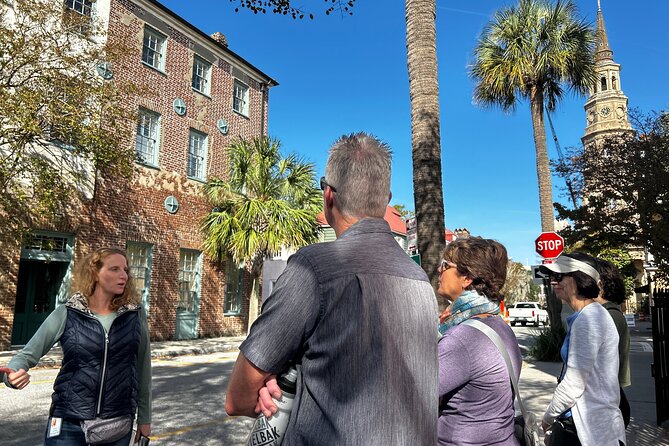
At the Four Corners of Law, four buildings represent city, county, state, and federal authority, along with the church. It is an unusual urban intersection and a useful place to think about how power was organized in Charleston.
The stop lasts about five minutes, so expect an explanation rather than a long architectural visit. The interest comes from the relationship among the buildings. You are looking at a compact civic diagram, not just another street corner.
This is also where a good guide earns the fee. A quick list of buildings would be forgettable. A clear explanation of what each form of authority meant gives the location a purpose.
Same city, a completely different century:
- Chicago Architecture River Cruise
★ 5.0 · 15,756 reviews - Chicago River 90-Minute Architecture Tour
★ 4.5 · 9,629 reviews - Chicago River: 1.5-Hour Guided Architecture Cruise
★ 4.8 · 8,046 reviews - Chicago Architecture Center River Cruise aboard First Lady
★ 5.0 · 5,536 reviews
Rainbow Row and Charleston’s painted facades
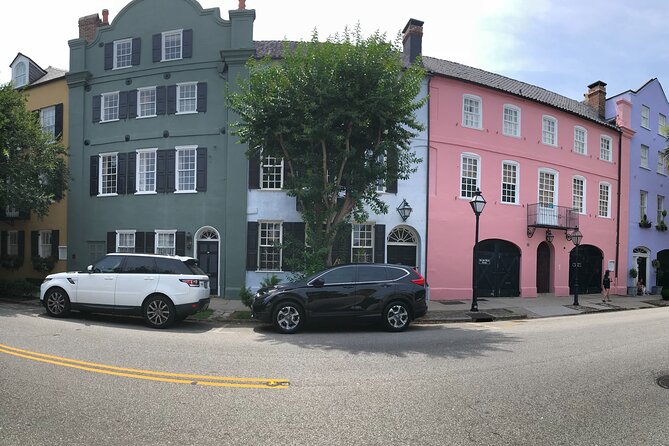
Rainbow Row is one of the easiest places to recognize in Charleston. The pastel-colored historic homes form a bright run of facades that rewards a camera, but the guide can add more than a quick photo opportunity.
You will have about five minutes here, which is enough to admire the row and hear its basic story. It is not enough for a detailed architectural study, so manage your expectations. This is a snapshot within a larger walk.
I like the contrast between Rainbow Row and the churches. The churches show Charleston’s formal public face, while these narrow homes offer a more intimate view of the old city. Together, the stops make the walk feel varied.
The pastel colors can also distract from the history around them. This is still a working urban neighborhood, not a staged set. Listen for the details about the buildings rather than treating the stop as only a photo break.
Dock Street Theater and a short step into performance history
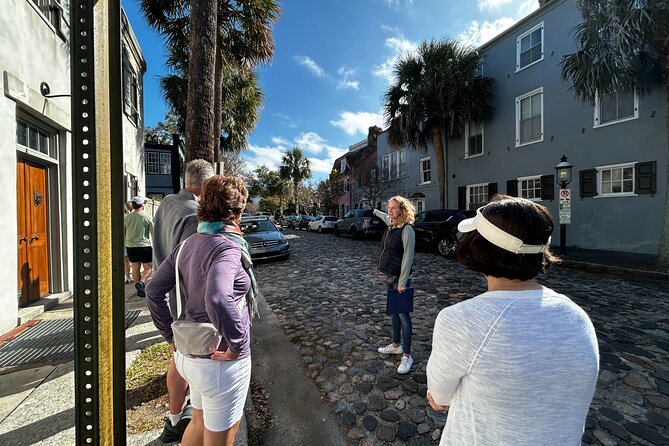
Dock Street Theater receives about ten minutes, making it one of the longer stops. It is described as America’s first building designed specifically for theatrical performances. That gives the site a place in the story of American entertainment and city life.
Admission is included, but entrance depends on availability. If you can go inside, you may get a stronger sense of the building as a performance space. If not, the exterior and the guide’s account still make it a worthwhile stop.
The tour information includes an additional line about stepping back in time inside a major American building, but it does not specify a separate location or duration. I would treat that as part of the Dock Street Theater portion rather than expect another full attraction.
Washington Square’s oaks, statues, and plaques
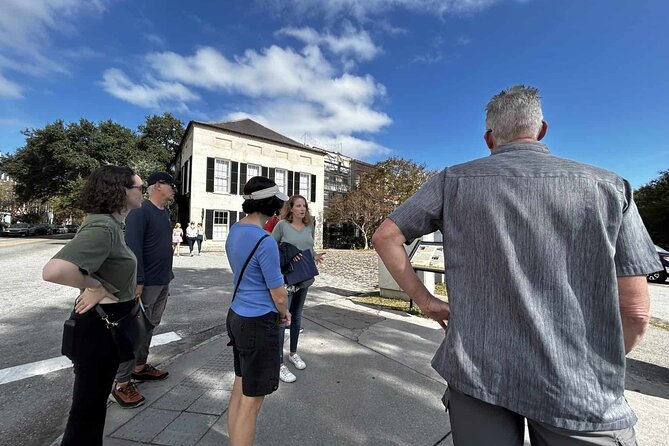
The tour returns to Washington Square for a longer look, about ten minutes. This is more than a meeting point. The square offers live oaks, statues, and plaques that connect the city’s public spaces to its past.
I appreciate the pause here because it breaks up the street walking. You can look around, catch your breath, and listen without standing in front of a busy facade. The square also shows how Charleston uses small green spaces to preserve memory in the middle of the old center.
The guide’s role is important. Plaques can be easy to ignore when you are sightseeing, but a story gives them meaning. You may come away with a better sense of how Charleston remembers its public figures and major events.
The Battery and Charleston Harbor views
The Battery is the scenic payoff. The waterfront promenade offers views across Charleston Harbor, historic artillery, and grand homes. The route gives this area about ten minutes, enough for photographs and a brief look at the relationship between the city and the water.
The harbor views are especially useful after the tighter streets downtown. You can see how Charleston’s position on the water shaped its defense, trade, architecture, and public identity. The old artillery along the promenade makes that military past visible.
The homes provide another kind of history. Their scale and placement show the wealth and status associated with this part of town. A guide can help you read the street instead of simply admiring the facades.
Do not expect a long waterfront stroll. Ten minutes passes quickly, and the tour still has to return to the starting point. If The Battery interests you, note it as a place to revisit after the walk when you can set your own pace.
The Old Slave Mart and the harder story of Charleston
The route also points you toward the Old Slave Mart Museum, a necessary part of understanding Charleston. The site addresses the lives of enslaved people, their endurance, and the way slavery shaped the city and the wider United States.
This is where the tour becomes more than an attractive architecture walk. Churches, pastel homes, squares, and harbor mansions can create a pleasant picture of Charleston, but that picture is incomplete without the history of forced labor and human suffering.
The information provided does not give a separate stop length or confirm museum admission as part of the walking tour. You should not assume that the tour includes a full museum visit. Instead, expect the guide to identify the site and explain its importance within the route.
I value that this subject is included rather than left out. You may prefer to return to the museum independently if you want more time with its exhibits. The tour gives you the context to make that choice.
What the guide adds to the two-hour route
The clearest strength of this experience is the guide. Eric and Erik are named in the available feedback, and both are described as friendly, patient, and strong storytellers. The most useful trait is not memorizing dates. It is the ability to connect architecture, local events, national figures, and difficult subjects into one understandable story.
One account describes the guide tailoring the walk to the group’s interests. That matters in Charleston, where you can easily spend an hour on architecture, religion, military history, theater, or slavery alone. A flexible guide can give more time to the subjects you care about without losing the shape of the route.
The tone also seems personal rather than stiff. A small group under 20 can develop an easy rhythm, with questions and conversation along the way. You should not expect a private tour, but you are less likely to feel anonymous than in a very large group.
The pace is another plus. It is described as leisurely, and that suits this route. Charleston rewards looking up at steeples, noticing plaques, and comparing doorways. A rushed walk would turn the experience into a checklist.
Value, timing, and practical limits
No tour price is provided here, so I cannot judge the exact cost in dollars. The value depends on how much you want from a guide. If you are comfortable reading signs and walking independently, you can see many of these exterior sights without paying for a tour.
The fee becomes easier to justify if you want a clear narrative, live commentary, and the chance to enter available historic sites without arranging each one separately. You are also paying for route planning and local interpretation, not just admission.
The tour lasts about two hours and starts at 10:00 a.m. That timing works well as a first activity of the day. You can use the guide to get oriented, then return later to the Battery, the churches, the theater, or the Old Slave Mart Museum.
A mobile ticket keeps the booking simple. Confirmation is provided at booking, and free cancellation is available if you cancel at least 24 hours before the start time. Cancellations within 24 hours are not refunded, and changes in that final window are not accepted.
Most people can participate, and service animals are allowed. The meeting point is near public transportation. The main physical demand is walking for two hours, so choose shoes for comfort rather than style.
Who will get the most from this tour
I would recommend this walk to a first-time Charleston visitor who wants a useful overview before exploring alone. It is also a good fit if you enjoy architecture but want the social and political story behind the buildings.
History-minded families may like the range of subjects, though the route includes serious material about slavery that parents may want to discuss with younger children. The small group and question-friendly format also suit people who prefer conversation over an audio guide.
This is less suitable if you want long indoor visits at every church or museum. Church entry is subject to availability, Dock Street Theater access can also vary, and several stops are brief. You are buying a guided city walk, not a series of full attraction tours.
It may also disappoint anyone who dislikes walking or wants a completely private experience. The group can include up to 20 people, and the tour follows a set route. You get flexibility in the discussion, not a custom itinerary from start to finish.
Should you book Historic Charleston?
Book it if you want Charleston explained as a connected place rather than a collection of pretty streets. The combination of St. Michael’s Church, Rainbow Row, The Battery, and the Old Slave Mart gives you both postcard views and harder truths.
The best reason to choose it is the guide-led format. Eric and Erik receive particular praise for clear stories, patience, warmth, and adapting the talk to group interests. Bring good walking shoes, keep your schedule flexible around church access, and expect a broad introduction rather than long visits inside each site.
Skip it if you only want guaranteed indoor admission or prefer exploring at your own pace. Otherwise, this two-hour walk offers a practical first look at Charleston, with enough range to help you plan the rest of your stay.
FAQ
How long does the Charleston walking tour last?
The tour lasts approximately two hours.
Where does the tour begin and end?
It begins at Washington Square, 80 Broad Street, Charleston, South Carolina, at 10:00 a.m. The tour ends back at the same meeting point.
Is the tour offered in English?
Yes. The experience is offered in English.
Are church interiors guaranteed to be open?
No. St. Philip’s Church and St. Michael’s Church are active churches, so entrance depends on availability and congregation use.
What is included with the tour?
The experience includes a professional licensed guide, live commentary, the two-hour guided walk, and entrance into one to three historic sites when available.
What is the cancellation policy?
You can cancel at least 24 hours before the start time for a full refund. Cancellations or changes made within 24 hours are not accepted for a refund.
Just added around the USA
- Wilmington History and Architecture Tour★ 4.8 · 18 reviews
- Washington, DC: Georgetown Architecture Walking Tour★ 5.0 · 8 reviews
- New Orleans : Garden District Architecture Walking tour★ 4.8 · 5 reviews
- Washington DC: Dupont Circle & Embassy Row Architecture Tour★ 5.0 · 6 reviews
- Tulsa: Art Deco Walking Tour of Tulsa★ 5.0 · 8 reviews
- Castle to Capitol: Museums of the National Mall Architecture Tour★ 4.5 · 9 reviews
- Private Colonial Williamsburg Architectural Tour★ 5.0 · 5 reviews
- Iconic Capitol Hill Architectural Walking Tour★ 5.0 · 21 reviews
Historical Tours, compared.
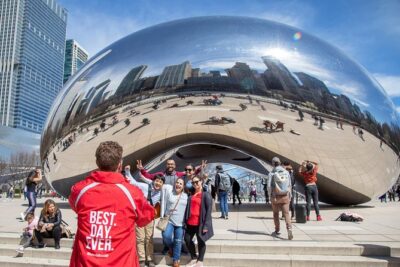
Chicago in a Day: Food, History & Architecture Walking Tour
Read our review →
Kuala Lumpur: Batu Caves & Historic Buildings Tour
Read our review →
Charleston’s Best Highlights: History, Culture & Architecture
Read our review →
Palm Springs Modernism Architecture & History Bike Tour
Read our review →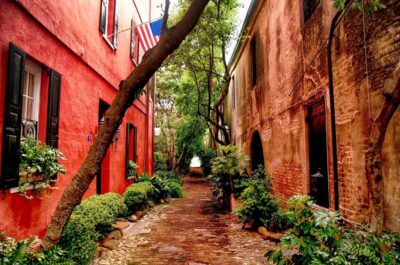
Charleston: History and Architecture Guided Walking Tour
Read our review →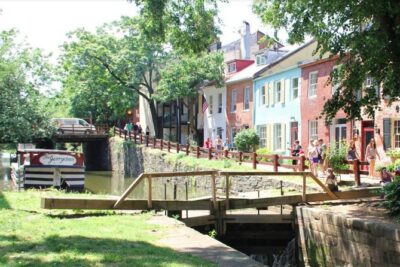
Historic Georgetown: History, Gossip, & Architecture Walking Tour
Read our review →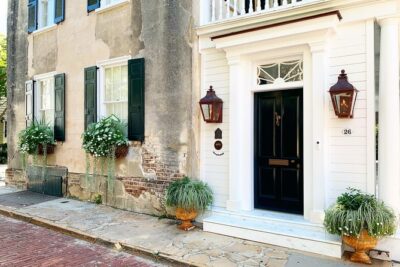
Charleston History, Homes, and Architecture Guided Walking Tour
Read our review →
Browse the lists this tour appears in