Review · ARCHITECTURE TOURS
Hangzhou Private Architecture Day Tour
Hangzhou’s story makes most sense when you see its old gardens, tea hills, merchant mansions, imperial streets, and modern towers in one day. This private tour links those pieces neatly, with Guo’s Villa and Hu Xueyan’s former residence offering especially fine examples of traditional design. I also like the stop at Meijiawu Tea Culture Village, where the famous Longjing tea is grown rather than simply sold in a shop. The main drawback is pace: seven hours covers a lot, so some stops may feel more like an introduction than a slow architectural study.
The private car and hotel or train-station pickup make the day easy to manage, and the guide can explain the imperial customs, tea traditions, and business culture behind each place. Guide Jill is specifically praised in the available feedback, which is useful if you are hoping for a personal, well-organized experience. Lunch is not included, so you should plan for that cost and timing yourself.
Key points to know before booking
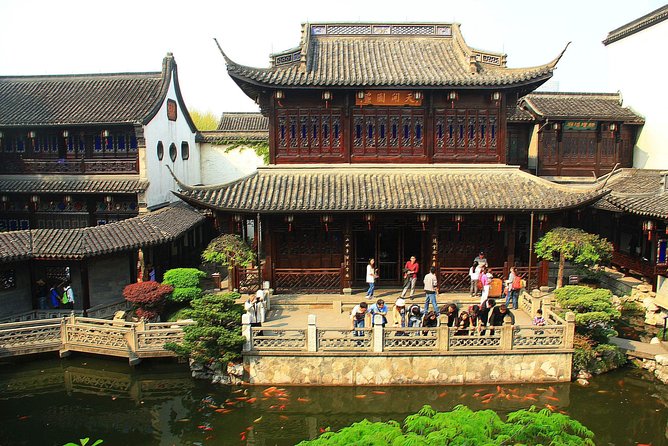
- Guo’s Villa offers quiet Qing Dynasty garden design: You see courtyards, pavilions, water views, and two distinct sections in about 40 minutes.
- Meijiawu gives tea its proper setting: The village has more than 600 years of tea-growing history and produces West Lake Dragon Well Tea.
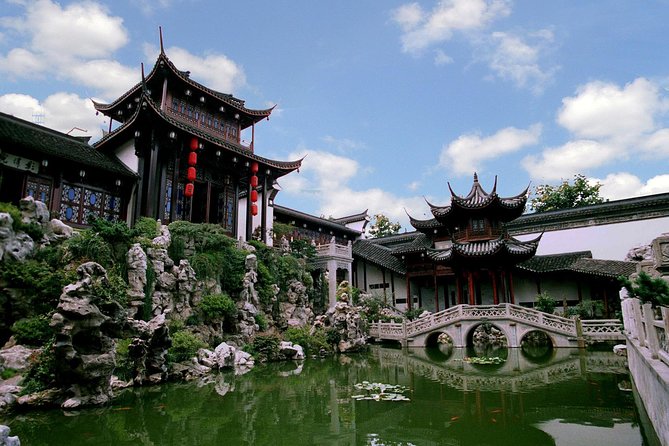
- Hu Xueyan’s residence is the architectural centerpiece: Its halls, bridges, gardens, towers, and living quarters reveal the lifestyle of a wealthy Qing Dynasty merchant.
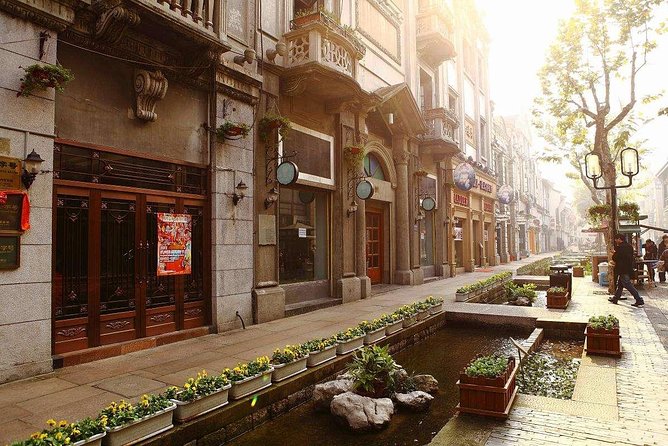
- Southern Song Imperial Street adds urban history: The old route once formed the central axis of Hangzhou, with historic buildings including Phoenix Temple.
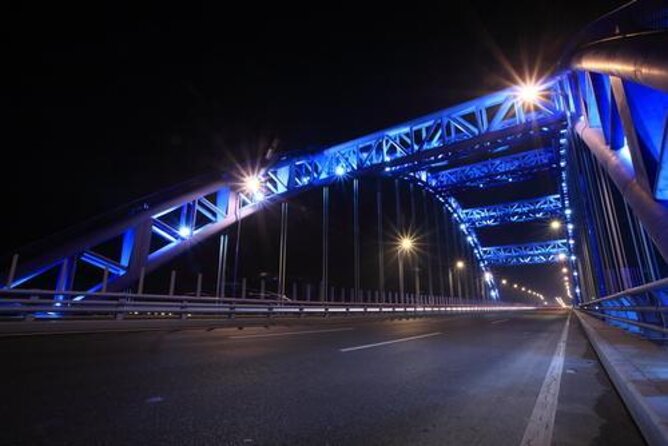
- The final stop shifts to modern Hangzhou: City Balcony looks across the Qiantang River toward high-rise Qianjiang New City.
- Private transport saves time: Pickup and return are available from a downtown Hangzhou hotel or Hangzhou train station.
Why this Hangzhou architecture tour works
I like this tour because it does not treat Hangzhou as only a lake-and-tea destination. It shows how the city moved from imperial capital to merchant center to modern financial hub. You begin with a private garden, visit the tea country west of West Lake, inspect a grand merchant home, walk an old ceremonial street, and finish among high-rise buildings by the Qiantang River.
That range gives you useful context. Traditional Chinese architecture can seem confusing when you see one courtyard after another without knowing who lived there or why the spaces were arranged in a certain way. Here, the guide can connect garden design with status, tea with rural life, commerce with Qing Dynasty wealth, and the modern skyline with Hangzhou’s present-day economy.
The tour costs $113.37 per person. That is not the cheapest way to see Hangzhou, but the price includes a private air-conditioned vehicle, an English-speaking guide, bottled water, private transfers, and admission to Guo’s Villa and Hu Xueyan’s residence. If you are traveling with family or a small group, the value improves because group discounts are available and the vehicle is reserved for your party.
You are paying for convenience as much as for sightseeing. A public bus or taxi-based day would likely require more planning and waiting. Here, pickup starts at 9:00 a.m., and the same private vehicle returns you to your hotel or the train station at the end.
More private architecture tours in the world:
- Best of Chicago: Architecture & Highlights City Private Tour
★ 5.0 · 94 reviews - Private Harajuku Omotesando Architecture Walking Tour
★ 5.0 · 67 reviews - Private Santa Barbara History and Architecture Walking Tour
★ 5.0 · 56 reviews
Guo’s Villa and the art of quiet space
The first stop is Guo’s Villa, a Qing Dynasty garden residence dating back nearly 140 years. It covers about 9,800 square meters and is divided into two parts: a garden section called Sky in the Mirror and a residential section called Living in Quietness.
The names give you a good sense of the place. This is not a fortress or a huge imperial palace. It is a refined private setting built around calm, controlled views. You can expect pavilion-style buildings, courtyards, and garden spaces arranged to create a feeling of privacy and balance.
The 40-minute visit is short, but it gives you a clear introduction to the architecture that shaped wealthy Jiangnan homes. The Jiangnan region, the lands south of the Yangtze River, became known for water towns, gardens, scholar culture, and comfortable private estates. Guo’s Villa shows that polished side of the region.
I would pay attention to how the house and garden work together. The residential section tells you where daily life took place, while the garden section shows how leisure and beauty were part of elite life. Your guide can add the human story behind the Guo family and point out features that are easy to miss if you simply stroll through on your own.
The limitation is time. Forty minutes is enough to see the main spaces, but not enough for a slow architectural sketching session or a long garden walk. If classical gardens are your main reason for coming to Hangzhou, you may want a separate visit to another garden rather than expecting this tour to cover every detail.
Meijiawu Tea Culture Village and Longjing tea
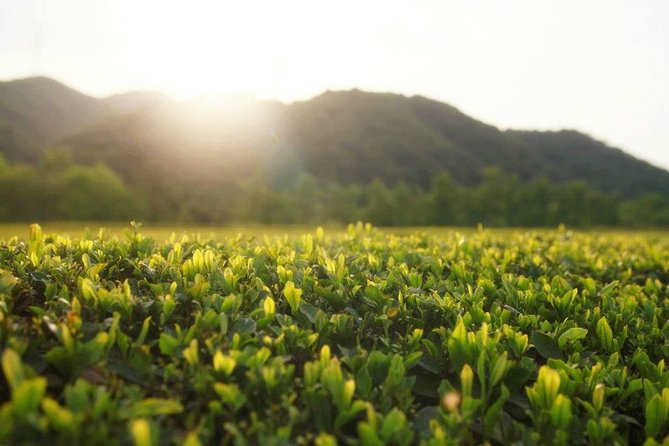
The tour then heads to Meijiawu, a tea-growing village west of the West Lake Scenic Area. The village has more than 600 years of history and is known as the largest natural village producing West Lake Dragon Well Tea, also called Longjing tea.
This stop changes the mood. Guo’s Villa is formal and enclosed. Meijiawu is rural, open, and tied to agriculture. You see the setting where one of China’s best-known teas is produced, rather than encountering Longjing only as a packaged souvenir.
The visit lasts about an hour. Meijiawu includes eight tourism sections, including a tea culture center, a rural leisure area, and a fishing village. The exact focus of your visit will depend on the guide and the day, but the point is to connect the tea with its growing area and local traditions.
I like this stop because it adds a working village to an otherwise architectural day. Tea is a major part of Hangzhou’s identity, and Meijiawu gives you a clearer sense of why. The village also offers a break from downtown streets and historic interiors.
Do not expect a full tea course or a dedicated tasting program unless your guide arranges one. The tour description promises a visit to the village and its tea culture, but it does not include a meal or specify a formal tasting. If you have dietary needs, vegetarian food can be arranged when booking, but lunch itself is not included.
The one-hour visit is also brief if you want to explore all eight sections. Think of Meijiawu as a well-chosen introduction to the tea country. You will see the setting and learn about Longjing, but a tea specialist may want a separate, slower visit.
Hu Xueyan’s former residence and Qing merchant wealth
After lunch, the route turns back toward central Hangzhou for the Former Residence of Hu Xueyan. Hu Xueyan lived from 1823 to 1885 and became one of the wealthiest and best-known businessmen of the Qing Dynasty.
His former home is more than a simple historic house. It is a large compound of halls, terraces, pavilions, arched bridges, gardens, towers, and private living quarters. The 50-minute visit lets you see how wealth was expressed through space, decoration, movement, and separation between public and private life.
This is likely the strongest stop for understanding the relationship between architecture and social rank. A merchant might not have been an emperor, but a successful Qing businessman could still create a residence with formal halls for business and ceremony, private areas for family life, and carefully planned gardens for rest and display.
The compound is described as a maze, and that is a useful expectation. You may pass from open courtyards into quieter rooms, then across bridges or beside garden features. The design is not just decorative. It controls who sees whom, where visitors are received, and how the household moves through the property.
Your guide matters here. Without context, the residence can look like a series of attractive rooms. With an English-speaking guide, you can ask about Hu Xueyan’s business career, Qing customs, household arrangements, and the symbolism found in the design.
The 50-minute schedule is practical but tight. You will see the main character of the residence, yet you may not have time to study every detail. Comfortable walking shoes are sensible because the compound includes several connected areas, though the supplied information does not specify accessibility conditions.
A few more architecture tours around the world worth a look
- Chicago Architecture River Cruise
★ 5.0 · 15,756 reviews - Chicago River 90-Minute Architecture Tour
★ 4.5 · 9,629 reviews - Chicago River: 1.5-Hour Guided Architecture Cruise
★ 4.8 · 8,046 reviews - Chicago Architecture Center River Cruise aboard First Lady
★ 5.0 · 5,536 reviews
Southern Song Imperial Street in central Hangzhou
Southern Song Imperial Street provides a different kind of history. It was once the main avenue of Lin’an, the Southern Song capital, and extended about 4,185 meters. Historical records say more than 10,000 flagstones were used in its construction.
The street was once the central axis of the city. That detail changes how you look at it. You are not simply walking along an old commercial road. You are following the route that helped organize the imperial capital.
The area includes 13 historical and cultural relics and buildings. Phoenix Temple is identified as a key national cultural relic protection unit. The one-hour visit gives you time to see the street and its surviving historic elements, though the tour does not specify a guided interior visit at each site.
I find this stop useful because it places architecture in an urban setting. Guo’s Villa and Hu Xueyan’s residence show private power. Southern Song Imperial Street shows public order, ceremony, religion, and commerce. Together, the stops help you see how Hangzhou functioned at different points in its history.
The street is also a good place to ask your guide questions. You can learn how the Southern Song period shaped Hangzhou and how the old city relates to the modern one. Since the tour is private, you are not locked into a fixed group discussion. If you want more time for photographs or a closer look at one building, tell the guide early.
City Balcony and the Qiantang River skyline
The last stop is Hangzhou City Balcony, in the Qianjiang New City central business district. The area brings the tour into present-day Hangzhou, with high-rise offices and residential towers beside the Qiantang River. The tallest building in the area rises more than 300 meters.
This final view is a useful counterpoint to the gardens and historic residences. Hangzhou is not only an old cultural center. Qianjiang New City has grown around business, finance, trade, tourism, and modern city planning.
You have about 30 minutes here. That is enough to take in the riverfront setting and the towers, but not enough for an extended visit to the whole district. The stop is best treated as a closing viewpoint and a chance to see the scale of modern Hangzhou.
The itinerary labels this part with the Qiantang River Bridge, but the detailed description focuses on City Balcony and the central business district. If the bridge itself is important to you, ask the guide to clarify the exact viewing point before the day begins.
I like ending here because it keeps the tour from becoming a history lesson frozen in the past. You see the old city, then finish with the new one. The contrast is the point.
Transport, timing, and what the price includes
Pickup is available from a hotel in downtown Hangzhou or Hangzhou train station. If you need train-station pickup, provide your round-trip train itinerary in the special requirements section when booking. A welcome sign is arranged for station pickup.
The start time is 9:00 a.m., and the total duration is about seven hours. The schedule includes roughly 40 minutes at Guo’s Villa, one hour in Meijiawu, 50 minutes at Hu Xueyan’s former residence, one hour on Southern Song Imperial Street, and 30 minutes at City Balcony, with driving time and lunch fitting between those stops.
The private vehicle is one of the tour’s strongest practical features. Hangzhou’s sights are spread across different parts of the city, from the West Lake area to the tea village, central historic neighborhoods, and Qianjiang New City. Having one vehicle means you do not need to arrange separate taxis or work out several public transport connections.
Bottled water is included. Lunch is not. Since the schedule says the Hu Xueyan visit and Southern Song Imperial Street take place after lunch, you should confirm where and when lunch will happen with your guide. Vegetarian food can be requested, as can other dietary requirements, but make the request at booking time.
The activity is private, meaning only your group participates. That matters if you want to ask many questions, adjust the pace, or avoid spending the day waiting for a large group. It also means the per-person price may make more sense for couples, families, or friends traveling together than for a solo visitor.
The tour has a five-star rating based on three available reviews. The most specific praise names Jill as an excellent guide and recommends her highly. That is a small sample, so I would not treat it as a guarantee, but it does point to the value of a strong guide on a tour built around cultural explanation.
Who should book this Hangzhou day tour?
I would choose this tour if you want a broad, organized look at Hangzhou and prefer architecture, history, tea, and city development over a day focused only on West Lake. It is particularly useful for first-time visitors who want several parts of the city without managing transport themselves.
Families may appreciate the private vehicle and direct pickup. The tour also suits visitors arriving by train, since pickup and return to Hangzhou train station are available. Children must be accompanied by an adult.
You should think twice if you want a slow, highly specialized architecture tour. The day covers five major stops, and several visits are under an hour. You will gain range and context, but not unlimited time at each building.
The tour is also less suitable if you want every meal and entrance included in one price. Two admissions are included, three stops have no admission charge listed, and lunch remains your responsibility. Ask about the meal plan before setting out.
Free cancellation is available if you cancel at least 24 hours before the local start time. Changes or cancellations inside that window are not accepted for a refund.
Should you book it?
Book this Hangzhou Private Architecture Day Tour if you want private transport, a personal guide, and a wide view of the city’s past and present in one manageable day. Guo’s Villa, Meijiawu, Hu Xueyan’s residence, Southern Song Imperial Street, and City Balcony each show a different side of Hangzhou.
The best reason to book is the combination. You do not just see attractive buildings. You learn how gardens, tea, imperial planning, merchant wealth, and modern finance fit into the city’s story.
Skip it if you prefer to linger at one garden, spend a full day tasting tea, or explore historic streets at your own pace. For most first-time visitors with limited time, though, the private car and guide make the $113.37 price reasonable, especially when shared by a small group.
FAQ
How long does the Hangzhou architecture tour last?
The tour lasts approximately seven hours.
What time does the tour begin?
The scheduled start time is 9:00 a.m.
Where can pickup and drop-off be arranged?
Pickup and drop-off can be arranged at a hotel in downtown Hangzhou or at Hangzhou train station.
Is the tour private?
Yes. Only your group participates in the activity.
Is an English-speaking guide included?
Yes. A professional English-speaking guide is included.
Is lunch included?
No. Lunch is not included in the tour price.
Can vegetarian food be arranged?
Yes. A vegetarian option is available, but you should advise the provider at booking. You can also provide other dietary requirements at that time.
What does the tour price include?
The price includes downtown hotel or train-station pickup and drop-off, bottled water, a professional English-speaking guide, an air-conditioned private vehicle, private city transfers, and admission to Guo’s Villa and Hu Xueyan’s former residence.
Just added around the world
- Wilmington History and Architecture Tour★ 4.8 · 18 reviews
- Washington, DC: Georgetown Architecture Walking Tour★ 5.0 · 8 reviews
- New Orleans : Garden District Architecture Walking tour★ 4.8 · 5 reviews
- Washington DC: Dupont Circle & Embassy Row Architecture Tour★ 5.0 · 6 reviews
- Vicenza: discovering the city of Palladio by e-bike★ 5.0 · 4 reviews
- Vicenza: Palladian Architecture Private Walking Tour★ 3.3 · 3 reviews
- Walk & Discover KL’s Architectural and Heritage Gems★ 5.0 · 7 reviews
- Unveiling Brno: History, Culture & Architectural Delights★ 5.0 · 2 reviews
Private, compared.

Sagrada Familia & Gaudi Tour Private or Small Group with Tickets
Read our review →
Barcelona: Sagrada Familia, Park Guell & Tapas Private Tour
Read our review →
Park Guell and Sagrada Familia Private Tour with Hotel pick-up
Read our review →
Barcelona 1.5h Private Old Town, Gothic & Ramblas Walking Tour
Read our review →
Sagrada Familia Evening Private Tour with Expert Guide
Read our review →

Sagrada Familia & Montserrat Private Tour with Hotel pick-up
Read our review →