
Review · NEW ORLEANS
Garden District Architecture Walking Tour in New Orleans
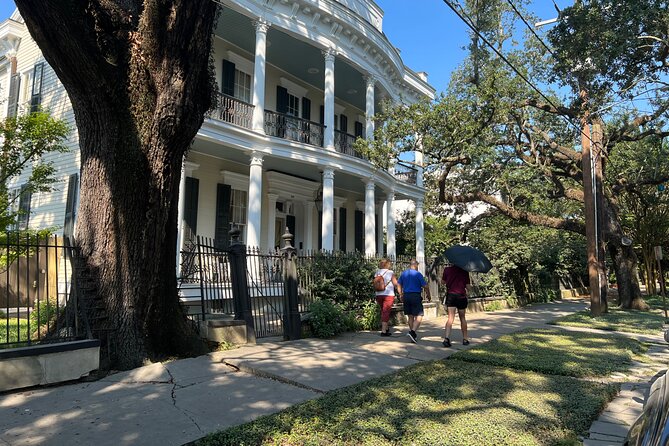
New Orleans’ Garden District is best understood on foot, where grand Greek Revival and Italianate homes sit close together behind iron fences and old trees. This two-hour walk pairs the neighborhood’s architecture with the difficult stories behind its wealth, including slavery, segregation, the Civil War, and abolition.
I like the clear focus on history and architecture, and the stop at Lafayette Cemetery No. 1 adds a distinctly New Orleans look at above-ground burial. At $20, the tour offers solid value. The main concern is guide quality: most feedback praises Keynin, also spelled Keynon, but one guest reported repeated information and historical errors.
Key points at a glance

- Two hours on foot: Spend about 90 minutes in the Garden District and 30 minutes at Lafayette Cemetery No. 1.
- Meet at 2727 Prytania Street: The tour begins and ends at the same location at 10 a.m.
- Architecture with context: Look beyond pretty facades to learn how planter families, slavery, and the old Southern social order shaped the district.
- Celebrity and film connections: Hear about Anne Rice’s nearby Brevard House and productions filmed at Lafayette Cemetery.
- Small enough to manage: The group can include up to 30 people, so expect a public walking tour rather than a private outing.
- Good cancellation terms: Cancel at least 24 hours before the start for a full refund.
Why the Garden District deserves a guided walk
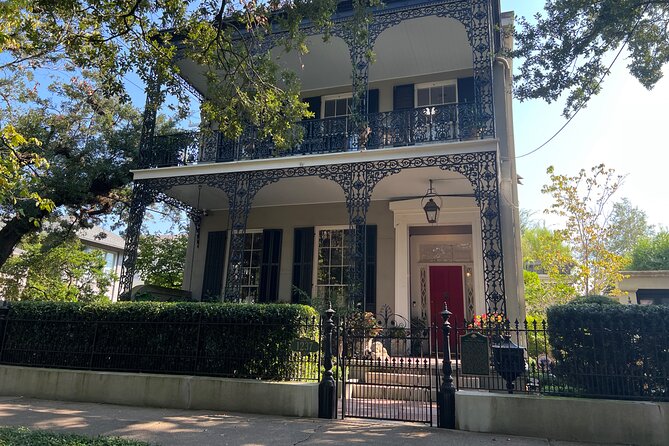
The Garden District can look simple at first glance: large homes, tidy gardens, ironwork, and broad streets. A guide gives those scenes a sharper meaning. These houses were not just handsome city residences. They reflected the money, status, and ambitions of Louisiana’s planter families.
The tour frames the district through the seasonal life of wealthy plantation owners. People such as the fictional Scarlett O’Hara are useful shorthand for that world: plantation life in the summer, then a grand New Orleans address during the cooler months. The buildings let you picture the social world, but the tour also points toward the people whose labor made that world possible.
That balance matters. It is easy to romanticize old Southern architecture when you only look at columns, balconies, and shutters. Here, the story is tied to masters and slaves, segregation, the Civil War, and emancipation. You get the beauty of the neighborhood without being asked to ignore the cruel system that paid for much of it.
The Garden District is also a good area for a walking tour because its appeal is spread across streets rather than concentrated inside one building. You are not simply entering a museum, reading labels, and leaving. You are moving through a living neighborhood and comparing one facade with the next.
More architecture walks in the USA:
- The Official Art Deco Walking Tour by The Miami Design Preservation League
★ 5.0 · 1,580 reviews - Chicago in a Day: Food, History & Architecture Walking Tour
★ 5.0 · 1,153 reviews - Miami South Beach Art Deco Walking Tour
★ 5.0 · 1,039 reviews
Meeting at 2727 Prytania Street at 10 a.m.
Your meeting point is 2727 Prytania Street, and the tour begins at 10 a.m. The activity returns to this same point, which makes planning easier if you have another New Orleans activity later in the day.
Transportation is not included, so you need to arrange your own way to Prytania Street. The mobile ticket is convenient, especially if you prefer not to print anything, but keep your phone charged and make sure you can display the booking confirmation.
The timing is practical. A morning walk gives you a useful first look at the Garden District before spending the afternoon elsewhere in New Orleans. Two hours is long enough for explanation without turning the outing into an all-day commitment.
You should still prepare for ordinary walking-tour conditions. The supplied details do not specify the distance, pace, shade, seating, or restroom access. Wear comfortable shoes and plan around the fact that the tour is outdoors. Service animals are allowed, and most people can take part.
The group may reach 30 participants. That is not a tiny, private walk, but it is still a manageable size for a guide-led neighborhood tour. Arrive ready to stay close enough to hear, especially when the group gathers near busy streets or narrow sidewalks.
Mansion fronts, garden walls, and planter-family power
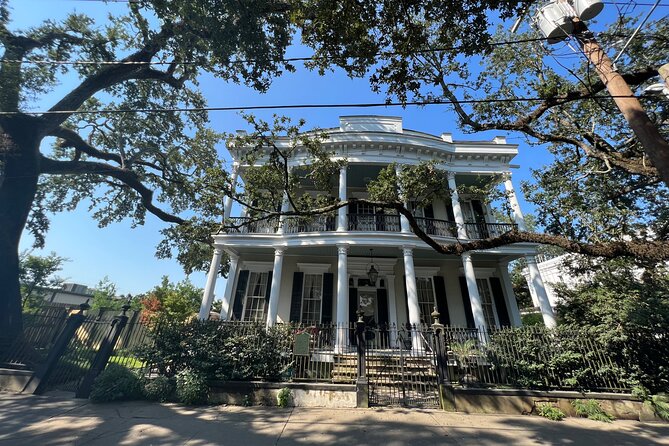
The first part lasts about 90 minutes and centers on the Garden District. The houses are the obvious attraction, but the better reason to join is the connection between architectural style and social rank.
You will see the kind of homes that made the district a symbol of success. Their scale and decorative details helped wealthy families announce their place in New Orleans society. A guide can point out architectural elements that are easy to miss when you walk alone, then explain how the homes fit into the city’s wider past.
The tour is not limited to a list of famous addresses. Its subject matter includes legends, tragedy, epidemics, lost causes, movie stars, celebrity chefs, and haunted spirits. That mix gives the walk a broad New Orleans flavor. You may move from formal architecture to a story about illness, then from local folklore to the people who later made the area famous.
That variety is useful for couples or families with different interests. One person can focus on columns, porches, and gardens while another listens for film, literary, or ghost stories. Still, anyone seeking a strictly technical architecture lesson may find the subject matter wider and more anecdotal than expected.
The homes are private residences, so the experience is mainly about exteriors and the street setting. You are not paying for entry into mansions or a tour of furnished rooms. The value comes from the guide’s interpretation, the district itself, and the connections between buildings and events.
The darker story behind the beautiful homes
A strong version of this tour should keep the romantic image of the Garden District in check. The old houses are attractive, but their history is not gentle. The tour addresses the era of masters and slaves, the segregation of the South, the Civil War, and the abolition of slavery.
That subject is not an optional side note. It explains why these families had the money to build large homes and why the district became a symbol of a particular social order. You will get more from the architecture when you understand the human cost behind the wealth.
The description also refers to romantic impulses against cruel historical reality. That contrast is central to New Orleans. Stories of aristocratic life, haunted houses, and lost causes can be entertaining, but they need to be set beside the reality of slavery and racial separation. I value that the walk promises to address both sides rather than offering only a polished old-South fantasy.
One caution: the quality of this part depends heavily on the guide. Most of the available feedback praises Keynin, also written as Keynon, for explaining the history of the Garden District and New Orleans and for identifying architectural features. One critical account describes repeated talking points, incorrect claims, and an unpleasant exchange with the guide. With only four ratings, that complaint should not be ignored, even though the overall score is 4 out of 5.
A few more architecture tours around the USA worth a look
- Chicago Architecture River Cruise
★ 5.0 · 15,756 reviews - Chicago River 90-Minute Architecture Tour
★ 4.5 · 9,629 reviews - Chicago River: 1.5-Hour Guided Architecture Cruise
★ 4.8 · 8,046 reviews - Chicago Architecture Center River Cruise aboard First Lady
★ 5.0 · 5,536 reviews
Anne Rice, Scarlett O’Hara, and the district’s popular image
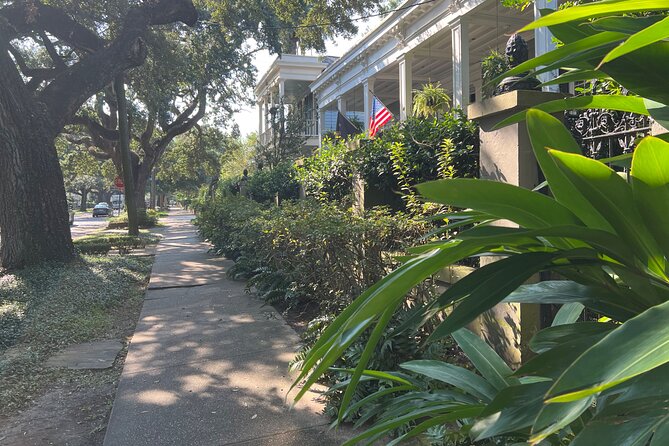
The Garden District has a strong literary and screen identity. The tour connects the area with Anne Rice, author of Interview with the Vampire, who lived nearby at the Brevard House at 1239 1st Street.
That detail gives the walk a modern hook, but it also fits the mood of the neighborhood. Imposing homes, old cemeteries, family secrets, and supernatural stories have helped make New Orleans famous far beyond its architecture.
Scarlett O’Hara is another reference point. She is a fictional character, but the seasonal pattern associated with her, a plantation in the summer and a city residence in winter, helps explain the role New Orleans played for wealthy Louisiana families.
These connections make the tour easier to place in the city’s wider culture. You are not just looking at old houses in isolation. You are seeing the setting that inspired novels, attracted film crews, and helped shape the city’s image as a place where history and mystery sit side by side.
Lafayette Cemetery No. 1 and above-ground burial
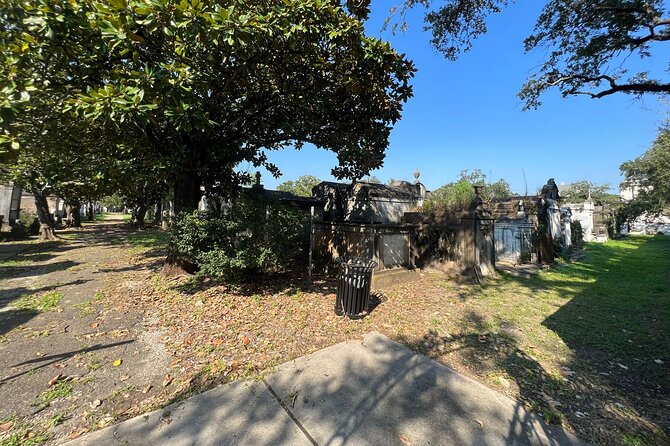
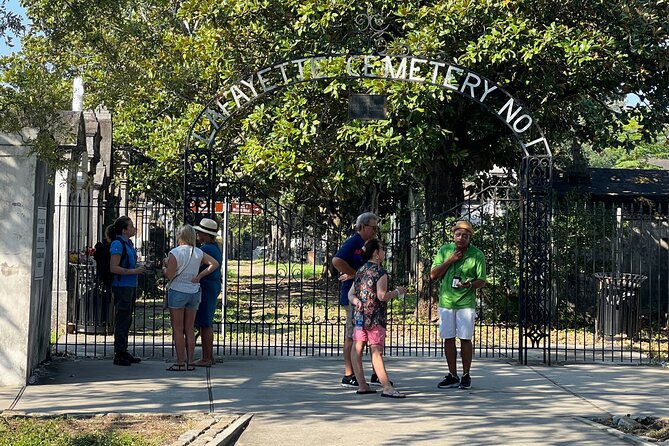
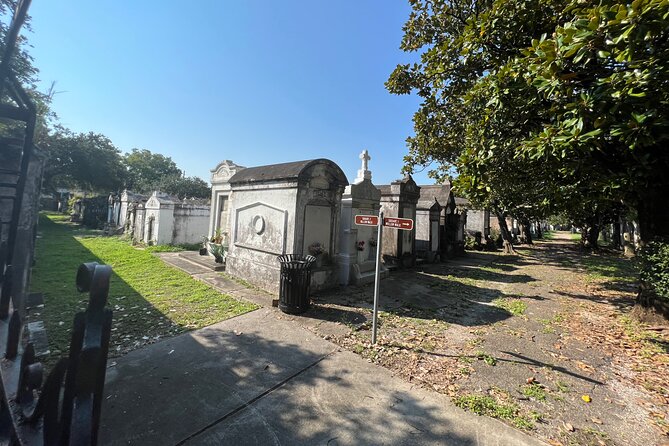
The final 30 minutes focus on Lafayette Cemetery No. 1. The cemetery is described as one of Louisiana’s oldest museums and has served as a filming location for Interview with the Vampire and The Vampire Diaries.
Its importance goes beyond screen appearances. The guide explains local burial rites, especially the practice of placing the dead in above-ground tombs. That gives you a practical way to understand why New Orleans cemeteries look different from many burial grounds elsewhere in the United States.
The cemetery also ties together several themes from the walk: disease, family, religion, architecture, folklore, and the city’s relationship with death. You can expect stories and explanations about the cemetery rather than a long stop for private reflection.
Because the cemetery portion lasts only 30 minutes, it works best as part of the larger tour. If cemeteries are your main interest, you may want a longer cemetery-focused activity. If you want a compact introduction to New Orleans burial customs alongside a neighborhood walk, this balance makes sense.
The film references may appeal to fans of vampire stories, but you do not need to know the productions to appreciate the site. The more lasting value is the explanation of why burial above ground became part of New Orleans’ visual identity.
Is $20 a fair price?
At $20 per person, this is a modestly priced guided activity for a two-hour experience. You are paying for a live guide, not transportation, food, or entry into private houses. The Garden District and cemetery themselves are the setting, so the fee mainly reflects the guide’s time and interpretation.
I consider that fair if you want context. You can walk these streets on your own for free, but you may miss the connections between architecture, planter families, slavery, literature, film, and burial customs. The guide turns a pleasant stroll into a more coherent lesson about the city.
The value drops if the guide repeats information or gives claims you cannot trust. One critical account raises exactly that concern. The other three ratings are strongly positive, especially about the history, architecture, and welcome provided by the guide, but the small number of ratings means you should keep expectations sensible.
This is not a luxury tour with private access. It is an affordable public walk that gives you a framework for seeing one of New Orleans’ most famous districts. For many visitors, that is enough.
Who should book this New Orleans walk?
I would recommend it to first-time visitors who want an introduction to the Garden District without spending half a day on a formal excursion. It also suits readers, film fans, architecture lovers, and anyone curious about how New Orleans handles its past.
The tour is a good fit if you enjoy stories as much as buildings. The subject range includes planter families, epidemics, lost causes, movie stars, celebrity chefs, haunted spirits, and cemetery customs. That makes it more varied than a narrow architecture lecture.
Families may appreciate the short two-hour format, though the historical subjects include slavery, segregation, death, and disease. You should decide if that tone fits the younger members of your group.
I would hesitate if you need guaranteed private attention, highly technical architectural detail, or extensive interior access. The group can reach 30 people, and the homes are viewed from public streets.
Plan ahead if your New Orleans schedule is tight. The activity is booked, on average, 22 days before the date, suggesting that popular times may fill well before arrival. You can cancel for a full refund up to 24 hours before the start, but changes or cancellations inside that window are not accepted. If the minimum group size is not reached and the tour is canceled, you are offered another date or experience, or a full refund.
Should you book the Garden District Architecture Walking Tour?
Book it if you want a low-cost, story-driven introduction to one of New Orleans’ most famous neighborhoods. The best parts are the combination of grand homes and difficult history, the architectural explanations, the Anne Rice connection, and the short visit to Lafayette Cemetery No. 1.
Go in knowing what you are buying. This is an outdoor public walk with no transportation, food, or mansion interiors. Guide quality matters, and the small number of ratings includes one serious complaint about repetition and accuracy.
For most visitors, the price and two-hour format make it an easy addition to a New Orleans itinerary. If the guide delivers the strong history and architecture explanation described by most of the feedback, you will leave with more than photographs of pretty houses. You will have a clearer sense of who built the district, what made that wealth possible, and why New Orleans turns even its cemeteries into part of the city’s story.
FAQ
How long does the Garden District walking tour last?
The tour lasts approximately two hours. About 90 minutes are spent in the Garden District, followed by about 30 minutes at Lafayette Cemetery No. 1.
Where does the tour begin?
It begins at 2727 Prytania Street, New Orleans, Louisiana 70130.
What time does the tour start?
The scheduled start time is 10 a.m.
Where does the tour end?
The activity ends back at the meeting point.
Is transportation included?
No. Transportation to and from the meeting point is not included.
Are food and drinks included?
No. Food and drinks are not included.
Is there a live guide?
Yes. A live tour guide leads the experience. The guide identified in the available feedback is Keynin, also written as Keynon.
How many people can join the tour?
The maximum group size is 30 people.
Are service animals allowed?
Yes. Service animals are allowed.
Can I cancel for a full refund?
Yes, if you cancel at least 24 hours before the scheduled start time. Cancellations made less than 24 hours before the start are not refunded.
What happens if the tour does not reach its minimum group size?
If the experience is canceled because the minimum number of participants is not met, you are offered a different date or experience, or a full refund.
Just added around the USA
- Wilmington History and Architecture Tour★ 4.8 · 18 reviews
- Washington, DC: Georgetown Architecture Walking Tour★ 5.0 · 8 reviews
- New Orleans : Garden District Architecture Walking tour★ 4.8 · 5 reviews
- Washington DC: Dupont Circle & Embassy Row Architecture Tour★ 5.0 · 6 reviews
- Tulsa: Art Deco Walking Tour of Tulsa★ 5.0 · 8 reviews
- Castle to Capitol: Museums of the National Mall Architecture Tour★ 4.5 · 9 reviews
- Private Colonial Williamsburg Architectural Tour★ 5.0 · 5 reviews
- Iconic Capitol Hill Architectural Walking Tour★ 5.0 · 21 reviews
Walking Tours, compared.

The Official Art Deco Walking Tour by The Miami Design Preservation League
Read our review →
Barcelona: Gothic Quarter Ghosts and Legends Walking Tour
Read our review →
Barcelona: Old Town and Gothic Quarter Walking Tour
Read our review →
Lecce: Baroque Architecture and Underground Walking Tour
Read our review →
Chicago in a Day: Food, History & Architecture Walking Tour
Read our review →

Ramblas, Old Town, Gothic and Gaudi Architecture Walking Tour
Read our review →
Chicago’s Secret Interiors Architectural Walking Tour
Read our review →Browse the lists this tour appears in