
Review · NEW YORK CITY
Financial District NYC Architecture Walking Tour
Lower Manhattan packs centuries of American history and some of New York’s boldest architecture into a compact walk. This tour moves from Battery Park and Federal Hall to Ground Zero and the Oculus, showing you how old stone churches, glass towers, memorial spaces, and daring modern buildings share a few downtown blocks.
I like the small group limit of 15 and the individual headsets, which should make it easier to follow the guide on busy streets. I also like the route’s broad mix: you get American history, public art, 9/11 memorial spaces, and recent architecture rather than one narrow theme.
The main drawback is the walking. Two hours brings a lot of stops, but several are brief, and the route is not recommended if you have trouble walking. You’ll also see most buildings from outside, with no promise of interior access.
Key points at a glance
- From Castle Clinton to the Oculus: The route crosses Lower Manhattan from Battery Park to the World Trade Center.
- A 15-person maximum: The small group helps keep questions and explanations manageable.
- Architecture across nearly two centuries: You’ll see Federal Hall from 1842, Trinity Church from 1846, the Woolworth Building from 1912, and recent works by Santiago Calatrava and REX.
- Ground Zero is central to the route: The 9/11 Memorial, Museum, Saint Nicholas Shrine, Liberty Park, and surrounding World Trade Center buildings all feature.
- A practical two-hour format: The walk gives you a useful introduction without taking up a full morning or afternoon.
- A helpful finishing point: Ending inside the Oculus puts you near the World Trade Center PATH station and Lower Manhattan subway connections.
Why this Lower Manhattan walk works
I like tours that use a city’s streets as a timeline, and this one does that well. You begin at the southern tip of Manhattan, where Battery Park gives you a clear starting point, then move through early American institutions, Wall Street architecture, postwar modernism, and the rebuilt World Trade Center.
The route is not just a parade of famous facades. It asks you to compare different ideas about what a city should look like. Trinity Church and Federal Hall use older architectural language tied to religion and government. The Chase Manhattan building reflects the clean lines of the 1960s. The Oculus and Perelman Performing Arts Center use sculptural forms that would have been hard to imagine in the 19th century.
At $59 per person, the value depends on how much context you want. You are paying for roughly two hours with a licensed guide, a small group, headsets, taxes, and a professional individual photo. If you already know Lower Manhattan well, the price may feel high for an exterior-focused walk. If you want a clear introduction to the district and prefer asking questions as you go, the small group and guide commentary make the cost easier to justify.
The tour is booked an average of 27 days ahead, so I would not treat it as a last-minute activity if your dates are fixed. Confirmation arrives at booking, and free cancellation is available until 24 hours before the start time.
More architecture walks in New York City:
- Tribeca Architecture And History Walking Tour
★ 5.0 · 141 reviews - TriBeCa Architecture & History Walking Tour
★ 5.0 · 37 reviews - Midtown Manhattan Art and Architecture Walking Tour
★ 5.0 · 32 reviews
Battery Park begins the story
Meet at the Glass Carousel in Battery Park, near Castle Clinton National Monument. The first stop lasts about 10 minutes and has no admission charge.
This is a sensible place to begin. Battery Park gives you the southern edge of Manhattan and a physical sense of where the financial district starts. From here, the route moves north into streets shaped by government, commerce, religion, and memorials.
Dr. Ivan Shumkov is listed as the licensed guide who meets the group here. Individual headsets are included, an especially useful feature on a city walk where traffic, construction, and street noise can easily swallow a quiet explanation.
The meeting point is near public transportation, but you should allow time to find the Glass Carousel and Castle Clinton area. The route ends at a different location, so plan your return trip from the Oculus rather than back at Battery Park.
Trinity Church and Federal Hall
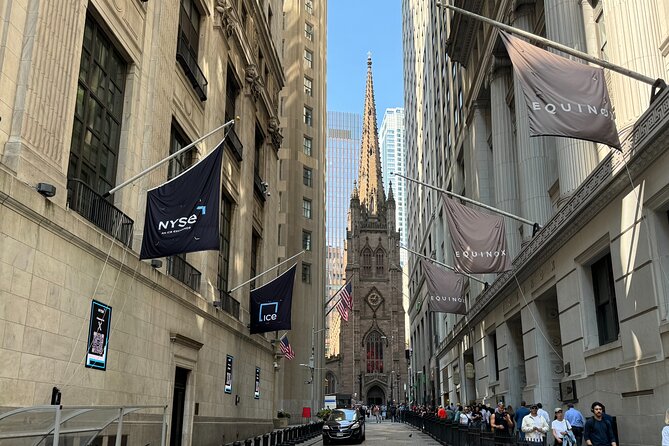
The stop at Trinity Church is brief, about five minutes, but it gives the walk an important early anchor. The church is identified as the historic 1846 building, and its presence helps show how much older Lower Manhattan’s institutions are than the glass towers around them.
Next comes the Federal Reserve building by York and Sawyer, dating from 1924. The tour description highlights its gold reserves, noting that it stores most of the gold in the world. That detail adds a strong financial dimension to the route, although you should expect to view the building as part of the street walk rather than take a vault tour.
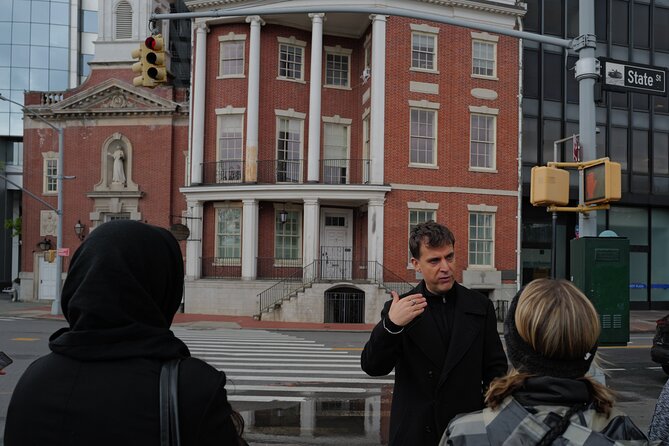
Federal Hall follows, with about five minutes at the 1842 building by Town and Davis. This is one of the most useful stops for connecting architecture with the founding of the United States. The tour’s format gives you a quick look rather than an extended museum visit, so people who want extensive political history may need a separate visit.
Still, the sequence works. You move from a church to a central financial institution and then to a building tied to the early federal government. In just a few blocks, the tour shows why Lower Manhattan feels older and more layered than much of the rest of New York.
The Woolworth Building and Chase Manhattan Plaza
The Woolworth Building, designed by Cass Gilbert and completed in 1912, is one of the route’s major visual moments. The itinerary lists it as a sight rather than a timed admission stop, so you’ll see the extraordinary exterior as you continue through downtown.
The building represents the era when commercial towers were becoming symbols of power and ambition. Its ornate appearance also creates a sharp contrast with the modern structures later in the walk. I would pay close attention here to the change in scale and decoration, since the route is designed around those comparisons.
At One Chase Manhattan Plaza, you spend about 10 minutes seeing the 1960 building by Gordon Bunshaft of SOM. This stop brings postwar modernism into the picture. The tour also points out the building’s public art and architecture, giving you more to consider than the shape of the tower alone.
This is where the guide’s local perspective can add real value. A photo alone cannot explain why the building looks so different from the Woolworth Building, or how its public space fits into the financial district. The small group gives you a better chance to ask those questions than a large bus tour would.
A few more architecture tours around New York City worth a look
- Manhattan Architecture Yacht Cruise
★ 5.0 · 1,395 reviews - NYC: Around Manhattan Official NYC Architecture Cruise
★ 4.8 · 402 reviews - Art Deco and Architecture Midtown Landmarks Tour
★ 5.0 · 142 reviews - 3 Hour Midtown Manhattan Architectural Tour
★ 5.0 · 81 reviews
Fulton Center and Frank Gehry’s 8 Spruce Street
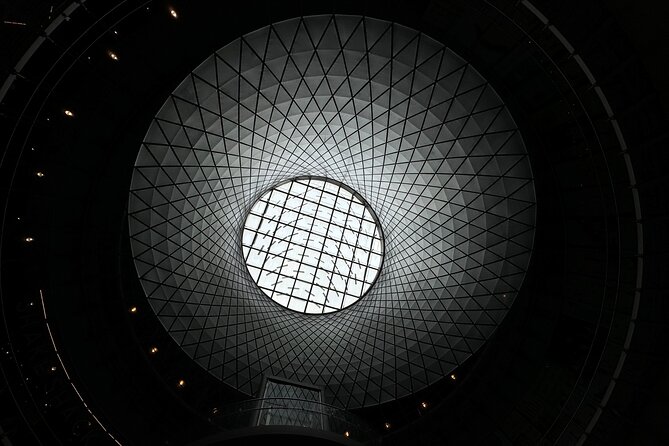
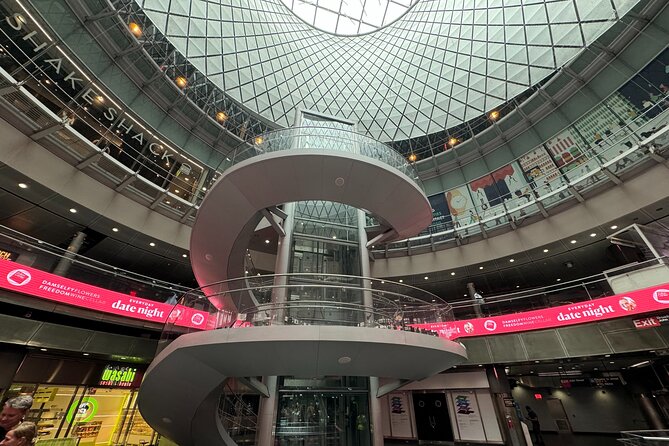
Fulton Center, designed by Grimshaw and completed in 2015, represents the practical side of new downtown construction. It is a major transit building, but the tour treats it as architecture as well as infrastructure.
You spend about five minutes here. That is enough for an introduction, but not enough for a long inspection of the station or its connections. If you are curious about the building, make a note of your questions and ask the guide while the group is nearby.
The route also points out 8 Spruce Street, designed by Frank Gehry and completed in 2010. Its unusual exterior gives you another strong contrast with the straight-edged Chase Manhattan building and the older landmarks farther south.
These stops help prevent the tour from becoming only a history lesson. You are seeing Lower Manhattan as an active part of present-day New York, where transportation, housing, offices, and public spaces all compete for room.
The 9/11 Memorial and Museum
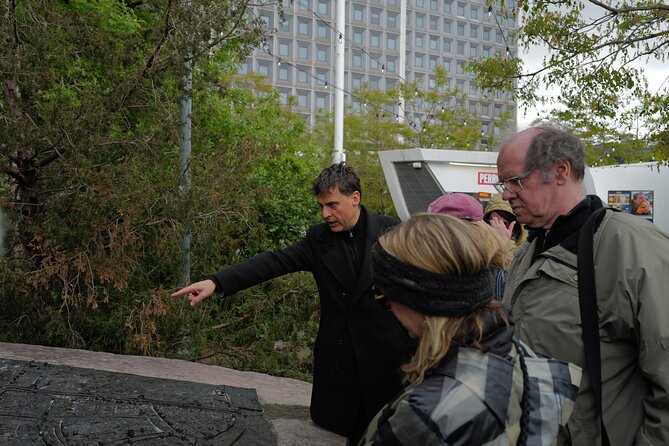
The National 9/11 Memorial and Museum receives about 10 minutes on the route. The memorial and museum are identified with designers including Snohetta, Michael Arad, and Peter Walker, with the memorial dating to 2011.
This is the emotional center of the walk, and the short stop calls for a respectful pace. You will visit the memorial area as part of the tour, but the experience does not include admission to the museum. If you want the full museum visit, set aside separate time and purchase that entry independently.
The guide’s role matters here. The site carries personal and national meaning, and a good explanation can help you understand the design without turning the stop into a rushed photo opportunity. The included professional photo may be taken during the experience, but the supplied details do not specify the exact location or timing.
You should also expect the area to feel different from the commercial streets earlier in the route. The memorial spaces ask for quiet attention, while the surrounding World Trade Center district shows how New York rebuilt and continues to change.
Saint Nicholas Shrine and Perelman Performing Arts Center
The Saint Nicholas Greek Orthodox Church and National Shrine is another short stop, about five minutes. Designed by Santiago Calatrava and completed in 2020, it brings a strong religious and symbolic presence to the World Trade Center site.
Its modern form connects it visually to the Oculus, also designed by Calatrava, but the buildings serve different purposes. Here, the tour gives you a chance to see how a place of worship was designed within a district shaped by tragedy, reconstruction, transit, and commerce.
The Perelman Performing Arts Center, designed by REX and completed in 2023, follows as another recent addition. The route highlights it as a sight rather than a scheduled admission stop. You’ll get a useful look at the expanding cultural side of the World Trade Center district, though you should not expect a performance or interior tour as part of the $59 fee.
These stops are especially useful if you want to understand the area beyond the memorial itself. The World Trade Center is not only a place of remembrance. It is also a working district with religious, artistic, transit, and business functions.
Liberty Park and the World Trade Center buildings
At World Trade Center Liberty Park, the walk takes in the wider group of towers and public spaces. The route identifies:
- One World Trade Center, designed by David Childs of SOM and completed in 2015
- Two World Trade Center, listed as in process
- Three World Trade Center, designed by Richard Rogers and completed in 2018
- Four World Trade Center, designed by Fumihiko Maki and completed in 2015
- Five World Trade Center, listed as in process
- Seven World Trade Center, designed by David Childs of SOM and completed in 2015
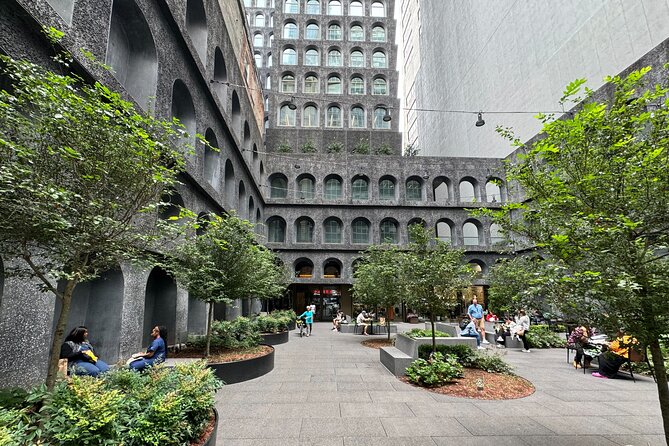
This section gives you the clearest view of the World Trade Center as a planned district rather than a single famous tower. You can compare different architects and building dates while seeing how construction continues to shape the area.
The scheduled time here is about 10 minutes. That is enough to orient yourself and hear the basic design story, but not enough to study every tower in detail. I would treat this as a guided overview, then return on your own if you want more time for photographs or a closer look at the public spaces.
The tour is strongest when it explains relationships between buildings. You are not simply ticking off One World Trade Center, Three World Trade Center, and Four World Trade Center. You are watching a district take form around the memorial, transit hub, church, performing arts center, and public park.
Finishing inside the Oculus
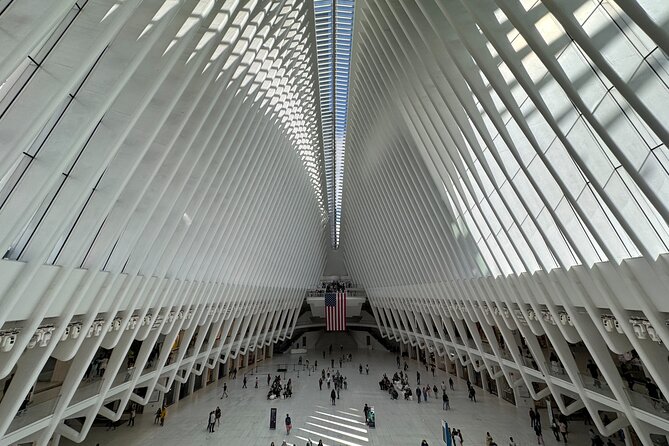
The final stop is the Oculus PATH station, designed by Santiago Calatrava and completed in 2015. You spend about 10 minutes here before the tour ends inside the building at 185 Greenwich Street.
The Oculus is a fitting finish because it brings together several themes from the walk: transportation, public architecture, symbolism, and the rebuilding of Lower Manhattan. Its white interior and ribbed form create a sharp change from the tight streets around Wall Street.
Ending here is practical. You are near the World Trade Center PATH station and public transportation, and the route does not require you to retrace your steps to Battery Park. The ending also makes it easy to continue exploring the memorial, nearby buildings, or Lower Manhattan on your own.
A useful detail from the experience is that guide William helped one group reach a lunch reservation after the walk. That is not a promised service, but it suggests you can ask for practical neighborhood help at the end. I would still build in extra time before any fixed reservation, since walking tours can run slightly over.
What the two-hour format really means
The schedule includes many stops, but most are short. Trinity Church, Federal Hall, Fulton Center, Saint Nicholas Church, and the Oculus each receive about five to 10 minutes, while several other buildings are viewed in passing.
That format suits you if you want orientation and strong highlights in a limited window. It is less suited to you if you prefer long museum visits, interior access, or detailed architectural study at every building.
Good footwear matters. The activity is not recommended for people who have problems walking, and the group moves through a dense downtown route for about two hours. Service animals are allowed, and most people can participate, but the walking requirement should guide your decision.
The tour requires good weather and a minimum number of participants. If poor weather or low enrollment cancels it, you are offered another date or experience, or a full refund. You can cancel for a full refund up to 24 hours before the start time. Within 24 hours, the payment is not refunded, and changes are not accepted.
Who should book this tour?
I would choose this walk if you are visiting New York for the first time, want a compact introduction to Lower Manhattan, or care about architecture as much as famous history. It also fits families with older children and teens, since the mix of towers, memorial spaces, transit design, and city stories gives the walk several points of interest. One group found that even its teenagers enjoyed the experience, and the guide helped them get to lunch afterward.
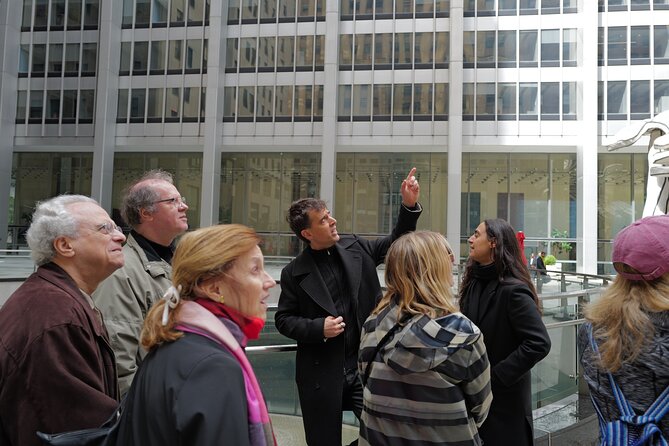
The 15-person maximum is a real advantage if you like asking questions. The professional headsets should also help you hear the guide without standing shoulder to shoulder around a single speaker.
I would think twice if you dislike walking, need frequent long breaks, or want guaranteed building interiors. You should also compare the price with a self-guided route if you are comfortable researching the architecture on your own.
For me, the best reason to book is the route itself. Few short walks link Federal Hall, the Woolworth Building, Chase Manhattan Plaza, the 9/11 Memorial, the World Trade Center towers, and the Oculus so directly. If that combination sounds useful, $59 is a fair price for a focused introduction with a guide. If you mainly want the memorial museum or an indoor architecture tour, choose a different plan and allow more time at individual sites.
FAQ
Where does the tour start?
It starts at the Glass Carousel near Castle Clinton National Monument in Battery Park, New York, NY 10004.
Where does the tour end?
It ends inside the Oculus PATH station at the World Trade Center, 185 Greenwich Street, New York, NY 10006.
How long is the tour?
The walk lasts approximately two hours.
How much does the tour cost?
The listed price is $59 per person.
How large is the group?
The tour has a maximum of 15 people.
Are admission fees included?
All fees and taxes are included. The listed stops are presented as free admission visits or exterior sights, and museum admission is not listed as an included item.
Are headsets provided?
Yes. Each person receives a professional individual headset.
Can I cancel for a full refund?
Yes, if you cancel at least 24 hours before the experience start time. Cancellations made within 24 hours are not refunded.
Just added around New York City
- Race to the Sky: NYC Architecture Tour With SUMMIT One Ticket★ 5.0 · 3 reviews
- New York Upper West Side Art and Architecture Tour★ 5.0 · 4 reviews
- Private Flatiron Food, History and Architecture Tour★ 5.0 · 8 reviews
- New York Upper East Side Art and Architecture Tour★ 5.0 · 3 reviews
- Custom Private New York Architecture, Art and City Tour★ 5.0 · 3 reviews
- Chelsea and the High Line NYC Architecture Walking Tour★ 5.0 · 6 reviews
- Midtown North NYC Architecture Walking Tour★ 5.0 · 28 reviews
- New York Midtown South Art and Architecture Tour★ 5.0 · 2 reviews
Walking Tours, compared.
The Official Art Deco Walking Tour by The Miami Design Preservation League
Read our review →
Barcelona: Gothic Quarter Ghosts and Legends Walking Tour
Read our review →
Barcelona: Old Town and Gothic Quarter Walking Tour
Read our review →
Lecce: Baroque Architecture and Underground Walking Tour
Read our review →
Chicago in a Day: Food, History & Architecture Walking Tour
Read our review →
Ramblas, Old Town, Gothic and Gaudi Architecture Walking Tour
Read our review →
Chicago’s Secret Interiors Architectural Walking Tour
Read our review →Browse the lists this tour appears in