
Review · NEW YORK CITY
Tribeca Architecture And History Walking Tour
Tribeca’s best stories are written into its buildings. On this 2.5-hour walking tour, you’ll see how farmland became a wealthy downtown address, with cast-iron warehouses, landmark buildings, old streets, and the famous Ghostbusters firehouse along the way.
I like the small group limit of 15, which makes it easier to hear the guide and ask questions. I also like the mix of architecture, local history, pop culture, and practical restaurant suggestions. The main drawback is the weather: this is an outdoor walking tour, and poor conditions can lead to cancellation or a rescheduled date.
Key points to know before booking
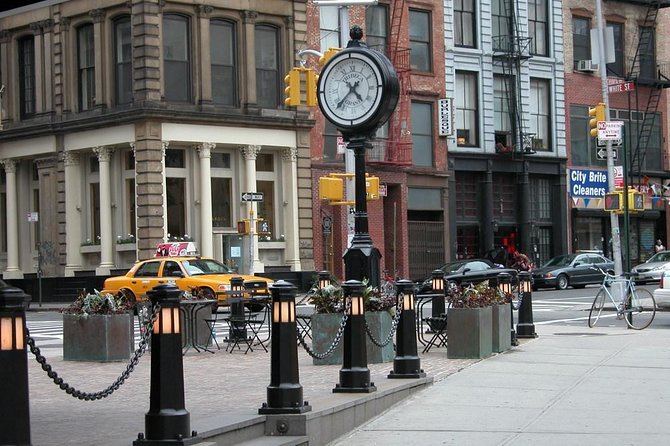
- More than 15 Tribeca locations: The route covers historic buildings, streets, public spaces, and architectural details you could easily miss alone.
- Ghostbusters firehouse stop: Firehouse Company 8 offers a fun photo opportunity, with context about its real role beyond the movie.
- Guides with personality: Meghan Sara receives especially strong praise for her animated storytelling, humor, and eye for small details.
- A good introduction to Tribeca: The tour connects farmland, industry, wealth, preservation, film, and modern city life in one neighborhood.
- Useful early-trip choice: Food and café recommendations can help you plan the rest of your time downtown.
- Bring weather-ready shoes and clothing: The tour lasts about two and a half hours and requires steady walking outdoors.
Why Tribeca works so well as a walking tour
Tribeca can look polished and quiet at first glance. Its streets have expensive apartments, fashionable businesses, and carefully restored facades. But look closer and you find a neighborhood built in layers: colonial-era farmland, warehouses, factories, artists’ lofts, preservation battles, celebrity homes, and movie history.
That layered past is what makes the area worth exploring on foot. You are not simply looking at pretty buildings. You are learning why they look the way they do, what businesses once used them, and how the neighborhood changed from an industrial district into one of Manhattan’s most sought-after addresses.
The tour begins at Tweed Courthouse at 52 Chambers Street, just outside Tribeca’s northern edge. This is a useful meeting point because it places you near some of Lower Manhattan’s oldest civic and commercial history. From there, the route moves south toward 8 Beach Street and Tribeca Park.
You should expect more than 15 locations during the walk. Some stops are likely brief, while others allow time for pictures and explanation. That rhythm works well in New York, where a short pause at a doorway or upper-story detail can reveal more than a long lecture in one place.
More architecture walks in New York City:
- TriBeCa Architecture & History Walking Tour
★ 5.0 · 37 reviews - Midtown Manhattan Art and Architecture Walking Tour
★ 5.0 · 32 reviews - Holdouts: A NYC Architecture Walking Tour
★ 5.0 · 31 reviews
From farmland to Manhattan wealth
One of the strongest parts of the tour is the basic question it answers: how did this area become Tribeca?
The name refers to the Triangle Below Canal Street. That simple label tells you something about New York’s habit of turning geography into neighborhood identity. But the name alone does not explain the area’s past. The guide connects the present-day district to the much older story of Manhattan’s growth.
You’ll hear how land that was once farmland became part of an expanding city. As Manhattan grew, the area took on commercial and industrial uses. Warehouses and factories shaped its buildings, streets, and working identity. Later, old industrial spaces became attractive to artists and residents looking for large rooms and distinctive architecture.
That change helps explain Tribeca today. The neighborhood’s high prices are not only about location or celebrity residents. They are tied to the scale and character of its old buildings, many of which offer something newer construction cannot easily copy.
I especially like this kind of context because it keeps the tour from becoming a parade of facades. You learn to see a building as evidence of a past economic system. A broad warehouse front, a loading area, or a cast-iron detail can tell you what the neighborhood needed before it became a residential district.
Reading Tribeca’s cast-iron architecture
You do not need an architecture background to enjoy this experience. The guide explains what to look for in plain language, then gives you time to inspect the details yourself.
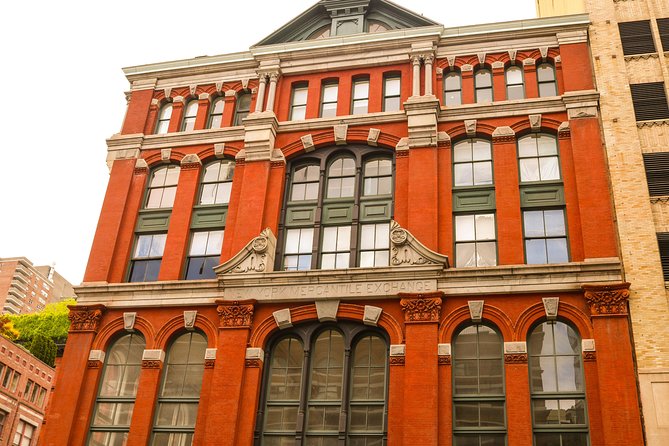
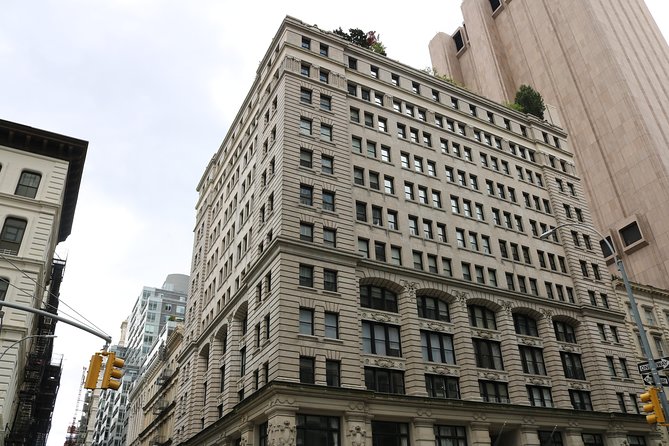
Cast-iron buildings are a major part of the visual appeal. Their fronts often include repeated columns, decorative panels, and large windows. These buildings were practical as well as handsome. Their design helped create broad, flexible interiors suited to commercial use, while the decorated exteriors gave businesses a more polished public face.
On your own, it is easy to walk past such details without noticing. With a guide pointing them out, you begin to see how different buildings use similar materials and patterns in different ways. You may also learn to look upward, where cornices, window surrounds, and upper-floor details can be more revealing than the storefronts at street level.
The architecture portion is not presented as a technical class. That is an advantage for most people. You get enough information to understand the buildings without being buried in terminology.
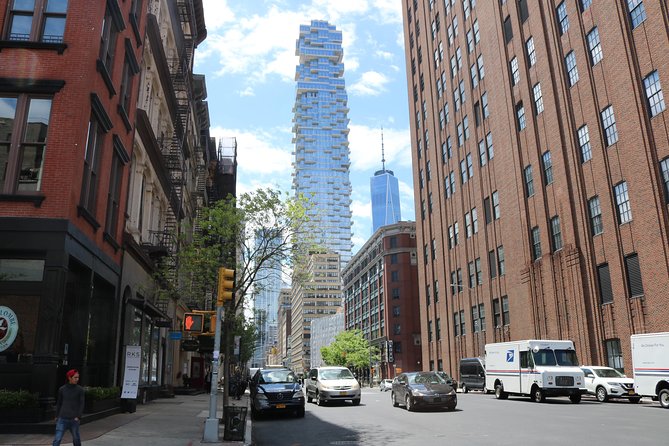
The tour also includes newer architectural work and what the company describes as brave architectural feats. That contrast matters. Tribeca is not only a preserved old district. It is a place where historic structures and modern design share a limited amount of space, sometimes comfortably and sometimes with clear tension.
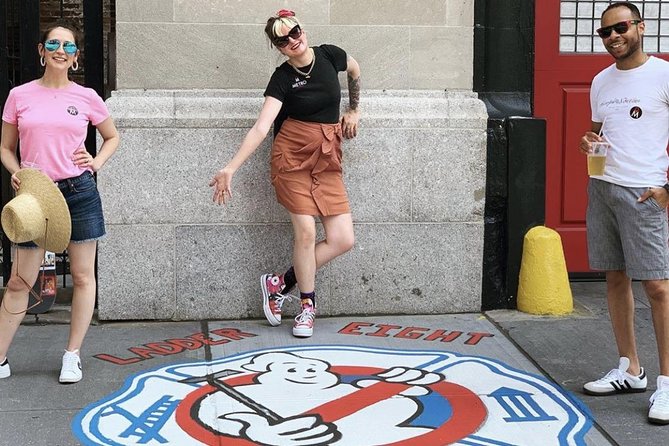
The Ghostbusters firehouse at Company 8
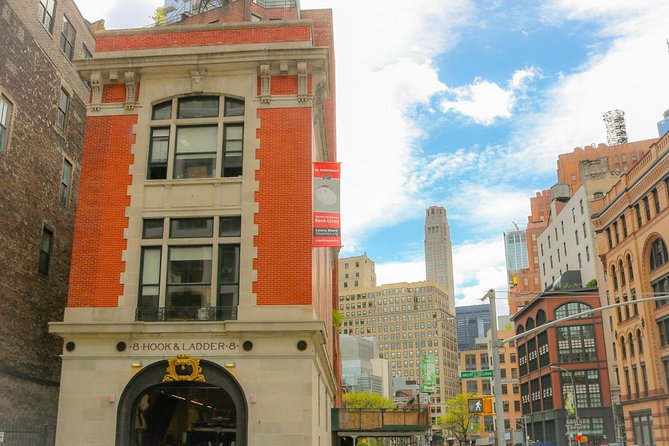
The Ghostbusters firehouse is the route’s most obvious pop-culture stop. Firehouse Company 8 at 14 North Moore Street became famous after appearing as the exterior of the Ghostbusters headquarters.
It is an easy photo opportunity, but the better part is the reminder that this is a working firehouse, not just a movie set. The tour gives the building a real-world context and explains why it matters beyond its Hollywood connection.
This stop should please film fans, families, and anyone who enjoys seeing familiar screen locations in their actual city setting. It also gives the tour a change of pace after the architectural discussion. You move from cornices and building materials to the way movies turn ordinary urban places into part of popular memory.
Do not expect a long studio-style film presentation. The stop is listed at about 10 minutes, so think of it as a focused visit with time for photos and explanation. That is enough for most people, especially on a walking route with many other locations.
More history tours in New York City:
- New York City: Flatiron Food, History, and Architecture Tour
★ 4.8 · 43 reviews - The Story Behind NY’s Evolving Skyline An Architectural Journey Through History
★ 5.0 · 18 reviews - Chelsea Galleries and High Line; Art, Architecture and History
★ 5.0 · 14 reviews - Private Flatiron Food, History and Architecture Tour
★ 5.0 · 8 reviews
A guide-led walk with room for questions
The guide makes a major difference here. Meghan Sara is repeatedly singled out for her enthusiasm, humor, strong command of the subject, and ability to make small details memorable. Her approach seems to combine architecture with stories about local life, art, food, and New York oddities.
That combination is important. A purely architectural tour can become tiring if every stop asks you to focus on another facade. A purely historical tour can leave you looking at buildings without knowing why they matter visually. This route aims to connect the two, then adds pop culture and neighborhood advice.
You may hear unusual side stories, including the much-mentioned tale of New York’s beavers. That kind of odd detail can help keep a long walking tour lively. The guide also appears willing to adjust the emphasis to the group’s interests, with one reported example of the route being customized around what participants most wanted to see.
The small group size helps. With a maximum of 15 people, you are not trying to keep up with a large crowd gathered around a guide’s raised umbrella or sign. You have a better chance of asking about a building, taking a photo, or hearing a follow-up explanation.
The tradeoff is that the experience depends on the individual guide assigned to your date. Meghan Sara is frequently named in the available feedback, but you should not assume she will lead every departure. The format remains useful, but the personality and emphasis can vary with the guide.
The practical rhythm of two and a half hours
Two and a half hours is a sensible length for Tribeca. A shorter tour could introduce the neighborhood, but it would have less time for the historical connections that make the route worthwhile. A much longer tour might feel heavy, especially when you are walking on hard city pavement.
The pace is described as comfortable, with stops for photographs and occasional breaks. One guide is praised for planning places to warm up and use the toilet, which is especially helpful in cold weather. Another tour participant appreciated the guide finding lemonade on a hot day.
Those details tell you something useful about the experience. The route is not treated as a race from one address to the next. Still, you should wear comfortable shoes and dress for the forecast. You will be outside for most of the tour, and there is no promise of indoor shelter throughout the route.
The meeting time is 11 a.m. That timing works well if you want to explore Lower Manhattan in the morning and have lunch in Tribeca afterward. It also leaves time to continue toward other downtown sights once the walk ends.
The final stop is Tribeca Park at 8 Beach Street. The park has a history dating back about 300 years, linking the end of the route to the neighborhood’s earliest period. Ending there also puts you in a useful position for finding food and continuing your own walk through Tribeca.
What you get for $50
At $50 per person, this is not the cheapest way to walk around Lower Manhattan. You can see the streets and many facades for free. The value comes from having someone explain what you are seeing, organize the route, and connect scattered facts into one clear story.
I think the price makes the most sense if you are interested in architecture or if Tribeca is unfamiliar to you. A guide can save you the work of researching more than 15 places and help you notice details that would otherwise pass unnoticed.
The included Manhattan recommendation guides add some practical value, especially if this is your first visit. Food and café suggestions are useful because Tribeca can feel less straightforward than a single attraction with a clear entrance and exit.
The tour is less useful if you want a fast celebrity-spotting walk or a deep interior tour of private buildings. Much of the experience is about exterior architecture, streets, stories, and observation. The Ghostbusters firehouse is a highlight, but it is one stop within a broader neighborhood tour.
Who should book this Tribeca walk
I would recommend this tour to first-time visitors who want a clear introduction to downtown Manhattan beyond the major landmarks. It also suits architecture fans who enjoy cast-iron buildings but do not want a formal lecture.
Families can make good use of it, particularly if the Ghostbusters connection will keep younger participants interested. The friendly mix of film, strange local facts, and visual details gives the walk more variety than a standard history tour.
It can also work for New Yorkers. Tribeca is the sort of neighborhood many locals cross without studying. One of the strongest pieces of feedback comes from a local family who had lived in the city for 20 years and still found new material in the tour, including a teenager who remained engaged.
Food-focused visitors should consider taking it early in their stay. The route ends around lunchtime, and the guide’s restaurant, bakery, café, and dinner suggestions can help you turn the tour into a wider neighborhood visit.
You should think twice if your mobility is limited or if you dislike outdoor walking, since the experience lasts about 150 minutes and covers multiple locations. Service animals are allowed, and most people can participate, but the tour is still built around walking through city streets.
Booking, weather, and cancellation details
The tour uses a mobile ticket, and confirmation is provided when you book. It runs with a maximum of 15 people, though it requires a minimum number to operate.
You can cancel for a full refund up to 24 hours before the 11 a.m. start time. Changes or cancellations made less than 24 hours ahead are not accepted for a refund. The cut-off follows New York local time.
Weather matters. If poor conditions cause the company to cancel, you will be offered another date or a full refund. That policy is fair for an outdoor walk, but I would avoid scheduling it as your only fixed plan on a very tight New York itinerary.
Should you book the Tribeca Architecture and History Walking Tour?
Book it if you want to understand why Tribeca looks the way it does, not just take a quick picture of the Ghostbusters firehouse. The strongest reasons are the small group, the mix of architecture and storytelling, and guides such as Meghan Sara who bring humor and sharp observation to the route.
Skip it if you only want a short photo stop or prefer to explore at your own pace without a set schedule. At $50, you are paying for interpretation rather than admission to a building.
For most visitors, I think the tour is a good use of a morning, especially early in a New York stay. You leave with a better eye for cast-iron architecture, a clearer sense of Tribeca’s long change from farmland to luxury neighborhood, and a list of places to eat after the walk.
FAQ
How long does the Tribeca Architecture and History Walking Tour last?
The tour lasts approximately two hours and 30 minutes.
Where does the tour begin?
It begins at Tweed Courthouse, 52 Chambers Street, New York, NY 10007.
Where does the tour end?
The tour ends at 8 Beach Street in Tribeca Park.
What time does the tour start?
The scheduled start time is 11 a.m.
Is the Ghostbusters firehouse included?
Yes. The route includes Firehouse Company 8, known for its appearance in Ghostbusters. The stop lasts about 10 minutes and includes time for a photo opportunity and information about the firehouse.
How many people can join the tour?
The tour has a maximum group size of 15 travelers.
What happens if the weather is poor?
The experience may be canceled in poor weather. You will then be offered a different date or a full refund.
What is the cancellation policy?
You can cancel at least 24 hours before the start time for a full refund. Cancellations or changes made less than 24 hours before the start time are not accepted for a refund.
Just added around New York City
- Race to the Sky: NYC Architecture Tour With SUMMIT One Ticket★ 5.0 · 3 reviews
- New York Upper West Side Art and Architecture Tour★ 5.0 · 4 reviews
- Private Flatiron Food, History and Architecture Tour★ 5.0 · 8 reviews
- New York Upper East Side Art and Architecture Tour★ 5.0 · 3 reviews
- Custom Private New York Architecture, Art and City Tour★ 5.0 · 3 reviews
- Chelsea and the High Line NYC Architecture Walking Tour★ 5.0 · 6 reviews
- Midtown North NYC Architecture Walking Tour★ 5.0 · 28 reviews
- New York Midtown South Art and Architecture Tour★ 5.0 · 2 reviews
Walking Tours, compared.
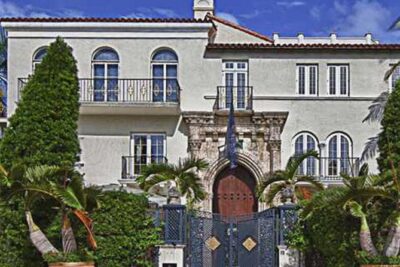
The Official Art Deco Walking Tour by The Miami Design Preservation League
Read our review →
Barcelona: Gothic Quarter Ghosts and Legends Walking Tour
Read our review →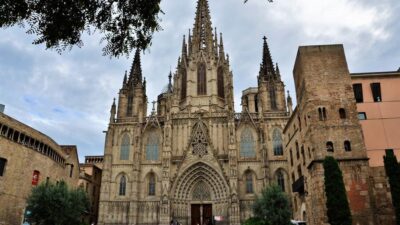
Barcelona: Old Town and Gothic Quarter Walking Tour
Read our review →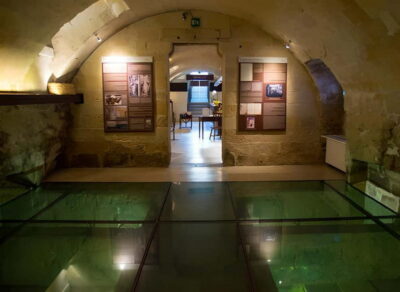
Lecce: Baroque Architecture and Underground Walking Tour
Read our review →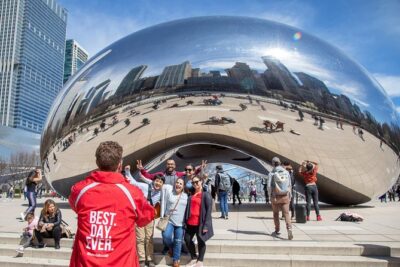
Chicago in a Day: Food, History & Architecture Walking Tour
Read our review →
Ramblas, Old Town, Gothic and Gaudi Architecture Walking Tour
Read our review →
Chicago’s Secret Interiors Architectural Walking Tour
Read our review →Browse the lists this tour appears in