
Review · NEW YORK CITY
Chelsea and the High Line NYC Architecture Walking Tour
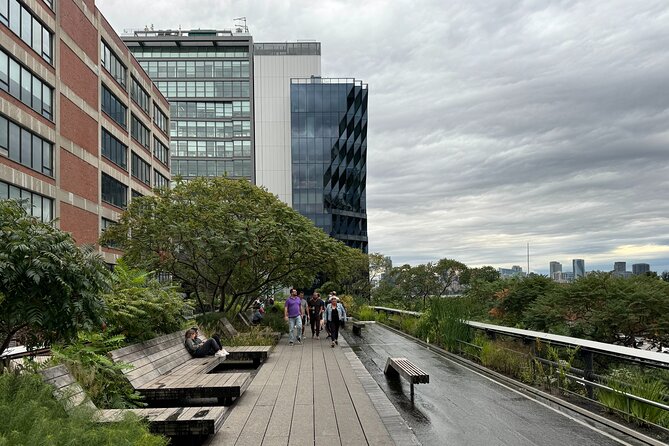
The best part of this tour is the way it connects the High Line’s old railroad story with Chelsea’s bold new buildings. In about two hours, you walk from the Whitney Museum to Hudson Yards, seeing how public space, private development, and architectural ambition have reshaped this slice of Manhattan. The High Line is the main event, but the buildings around it give the walk its real depth.
I like the small maximum of 15 people, which makes it easier to ask questions and keep up with the guide. I also like the individual headsets, especially on a busy city street where a normal walking-tour voice can get lost. Guide Ivan Shumkov is praised for explaining air rights, public-space planning, and the design ideas behind nearly every building along the route.
The main drawback is pace. Two hours is useful for a busy New York schedule, but the walk includes many stops between the High Line and Hudson Yards. Most visits are brief exterior looks, not museum or building interiors, so you should book this for architecture and city planning rather than a slow park stroll.
Key Points Before You Book
- The walk links three major projects: the High Line, Little Island, and Hudson Yards, giving you a clear picture of Chelsea’s transformation.
- Ivan Shumkov leads the tour: his commentary covers architecture, public spaces, urban renewal, and the financial role of air rights.
- You see major contemporary buildings: look for work by Zaha Hadid Architects, Jean Nouvel, BIG, Diller Scofidio + Renfro, and other leading firms.
- The group is capped at 15 people: that is small enough for personal attention without making the tour feel private or costly.
- The route takes about two hours: it fits well before or after another Manhattan activity, though the schedule is fairly brisk.
- The price is $49 per person: a reasonable fee if you want interpretation, not just a walk through the park.
Why This Chelsea Walk Is More Than a High Line Stroll
The High Line is easy to visit on your own. You can enter, walk a section, take photos, and move on. What you cannot easily get on your own is the connection between the park, the surrounding towers, the old industrial district, and the development deals that helped pay for the transformation.
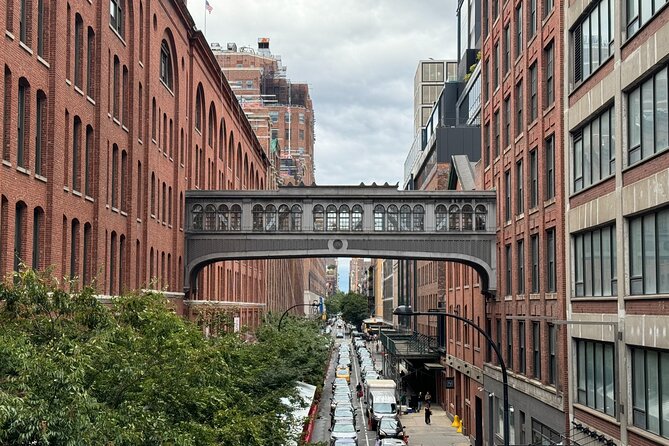
That is where this tour earns its keep. The guide does not treat the High Line as an isolated green path. Instead, you look at it as part of a much larger change in western Manhattan. The route shows how an abandoned elevated rail line became a public park, how nearby property gained value, and how that value helped shape the buildings you see today.
Ivan Shumkov’s explanations are especially useful for this subject. His commentary includes the role of air rights in funding and development, along with the architectural vision behind the structures on the route. If you enjoy understanding why a city looks the way it does, you will get more from this walk than from a basic sightseeing loop.
The individual headsets are a practical touch. You can hear the guide while walking, even when the street is noisy or the group spreads out slightly. They also allow the guide to speak at a normal volume instead of shouting, which makes the experience calmer for everyone.
More architecture walks in New York City:
- Tribeca Architecture And History Walking Tour
★ 5.0 · 141 reviews - TriBeCa Architecture & History Walking Tour
★ 5.0 · 37 reviews - Midtown Manhattan Art and Architecture Walking Tour
★ 5.0 · 32 reviews
Starting at the Whitney Museum on Gansevoort Street
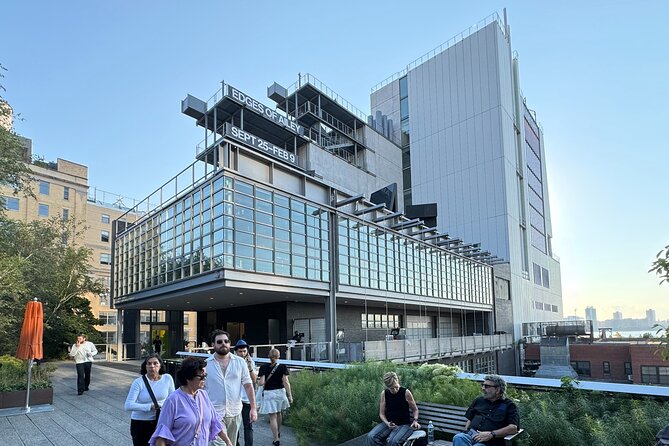
The tour begins at the Whitney Museum of American Art, at 99 Gansevoort Street. This is a strong starting point because the Whitney itself is part of the neighborhood’s architectural story, and its location places you at the southern end of the High Line.
You see the museum during a brief stop rather than taking an interior visit. The focus is on the building and its place beside the park, so do not arrive expecting museum admission to be part of the $49 price.
From here, the group moves toward the High Line. The starting point is near public transportation, which makes it a practical meeting place if you are coming from another part of Manhattan. The listed start time is 2:00 p.m., giving you the morning for another activity and leaving the evening open for dinner or a show.
One Hour on the High Line
The tour allows about an hour for the High Line, the longest single portion of the route. That is enough time to understand the park’s design and walk a meaningful section, though it is not enough for a leisurely exploration of every portion.
The High Line’s appeal comes from its unusual setting. You are walking above city streets on a former elevated rail corridor, with plantings, views, and architecture close around you. The tour places the park in its historical and urban context instead of presenting it as simply a pleasant place for a walk.
The guide’s discussion of the High Line’s past and the way air rights affected its funding gives you a useful frame for the rest of the tour. You begin to see the park not only as a public amenity, but also as a force that changed development patterns nearby.
This section is the most pleasant part of the walk, but it can also be the busiest. The tour does not promise a quiet or private experience. You are in a famous public park, and the group must keep moving to cover the route. Wear comfortable shoes and expect to be on your feet for the full two hours.
Chelsea’s Big Architectural Names
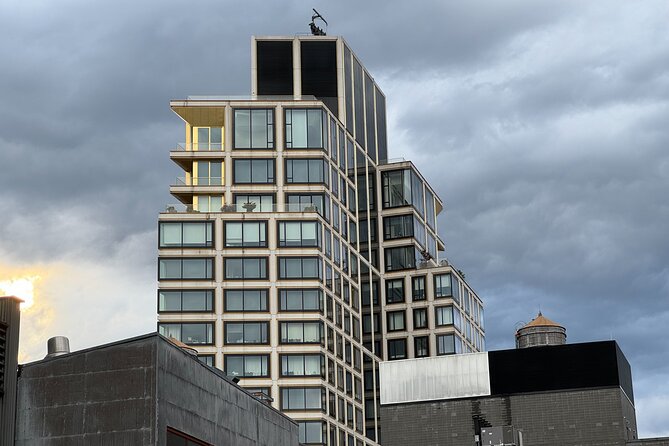
After the High Line, the tour moves through a concentration of major contemporary buildings. These stops are brief, often about five minutes, so the guide’s explanations matter. You get enough time to look, photograph, and understand the basic design idea, but not enough to study every detail at length.
The Standard, High Line is one of the early exterior stops. Its position beside the park makes it a useful example of how buildings respond to the elevated public walkway. The tour also includes 100 11th Avenue by Jean Nouvel, another major work in the area.
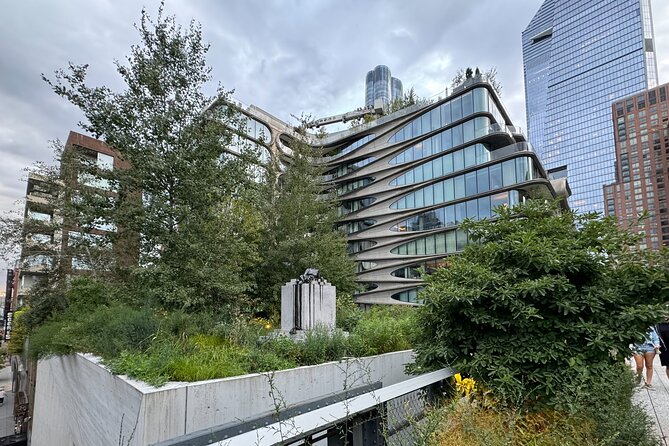
The stop at 520 West 28th Street is especially appealing to architecture fans. Designed by Zaha Hadid Architects, the building has a distinctive sculptural character that is difficult to miss from the High Line. The tour gives you a chance to consider how its form, exterior, and relationship to the park differ from the more traditional buildings nearby.
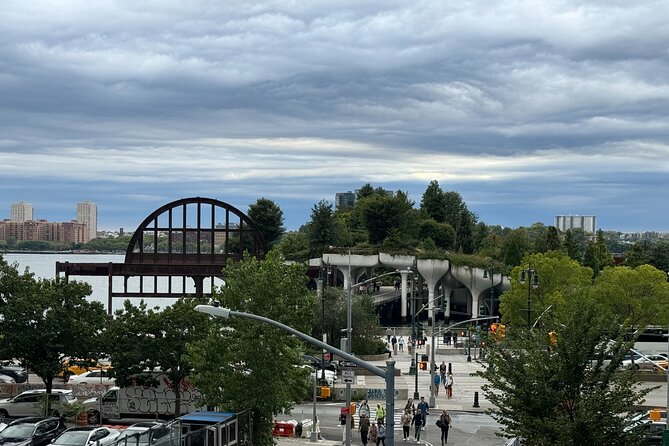
You also see Little Island, the public park built in the Hudson River. The tour does not list an interior admission or an extended visit, so expect to view and discuss it rather than spend a long time exploring the park itself. Its unusual form makes it an important part of the public-space story along the waterfront.
These stops work best when you are interested in design choices. The guide can point out what makes each project different, but you should not expect a full architectural lecture on every building. The short schedule favors range over depth.
A few more architecture tours around New York City worth a look
- Manhattan Architecture Yacht Cruise
★ 5.0 · 1,395 reviews - NYC: Around Manhattan Official NYC Architecture Cruise
★ 4.8 · 402 reviews - Art Deco and Architecture Midtown Landmarks Tour
★ 5.0 · 142 reviews - 3 Hour Midtown Manhattan Architectural Tour
★ 5.0 · 81 reviews
From Chelsea to Hudson Yards
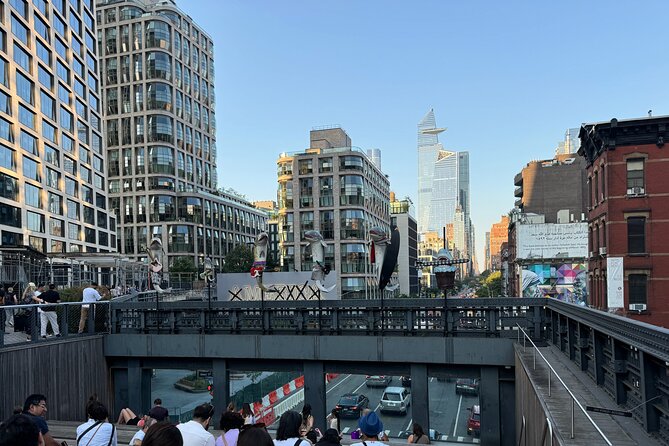
The route finishes in Hudson Yards, where the scale shifts from neighborhood redevelopment to a large, planned district. The tour includes The Shed, a flexible cultural building designed to support different types of performances and exhibitions. You see the building from the outside during a short stop.
The Vessel is another major landmark on the route. Its repeating stair structure gives you one of the most recognizable sights in Hudson Yards, though the tour does not include admission inside. Again, the value is in understanding the building’s role in the district and seeing how it relates to the surrounding towers.
The group spends about 10 minutes in Hudson Yards itself, followed by stops at 15 Hudson Yards and The Spiral. Fifteen Hudson Yards is associated with Diller Scofidio + Renfro, while The Spiral was designed by BIG, or Bjarke Ingels Group, and dates from 2021.
These buildings show several different approaches to modern commercial architecture. The guide’s comments help you compare their shapes, public spaces, and relationship to the larger development. If you are interested in how new districts are assembled, this final section is likely to be as useful as the High Line itself.
The tour ends at 20 Hudson Yards. That is convenient if you plan to continue shopping, dining, or sightseeing in the district, though the tour does not include any of those activities. You finish in a location with plenty of options, but you will need to arrange your own next stop.
What You Get for $49
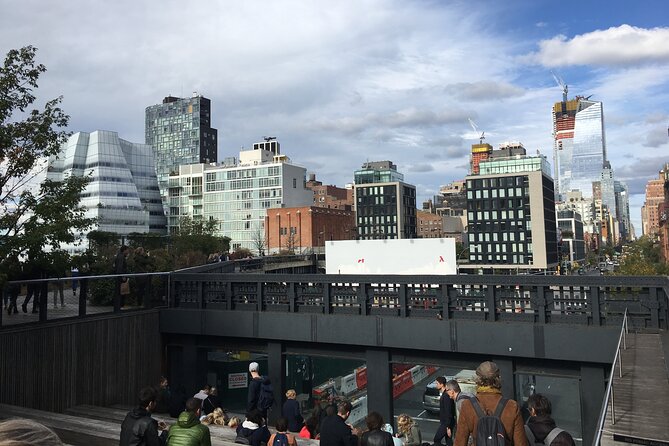
At $49 per person, this is not the cheapest way to walk the High Line. The park itself is free, and you can see many of the buildings from public streets without paying an admission fee.
The price makes more sense if you want an expert framework. You are paying for about two hours of guided interpretation, a small group, professional headsets, and the convenience of having the route organized from the Whitney to Hudson Yards. There are no separate entrance fees built into the tour because the stops are exterior visits and public spaces.
I would consider it good value for architecture students, designers, urban planners, photographers, and curious visitors who want more than a photo walk. It is less compelling if you already know the High Line well or prefer to move at your own pace.
The small group helps justify the cost. With a maximum of 15 people, the guide can give more personal attention than a large bus-style outing. The headsets add another practical benefit, since you do not have to cluster tightly around the guide to hear the explanation.
Tips are not included. You should also remember that the price does not cover food, museum admission, or access inside the featured buildings.
Who Will Enjoy This Tour Most
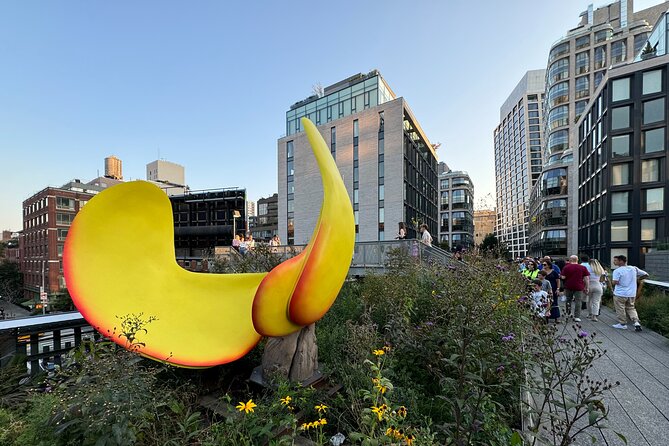
This is a good fit if you like architecture but do not want a formal classroom lecture. The walking format keeps the subject connected to real streets, public spaces, and buildings you can see from several angles.
It also suits anyone who wants to understand urban renewal. The tour brings together a former rail line, a public park in the Hudson River, a gallery district, and a new commercial neighborhood. That combination gives you a useful look at how New York adds new uses to old spaces.
Families with older children may enjoy it, especially if they like striking buildings and unusual public places. The tour is not described as child-focused, so younger children may find the steady commentary and walking less engaging.
You should have no trouble participating if you can manage a two-hour city walk. Most people can take part, and service animals are allowed. The experience requires good weather, so rain or other poor conditions can lead to a different date or a full refund.
Practical Details That Affect Your Day
Plan to arrive at the Whitney Museum before the 2:00 p.m. start. Your mobile ticket and booking confirmation should be available, and the meeting point is clearly listed at 99 Gansevoort Street.
The route is linear rather than circular. You begin in Chelsea and end at 20 Hudson Yards, so do not leave a bag or other belongings at the starting point. The one-way design is useful because you finish near a major destination instead of retracing your steps.
Comfortable shoes matter more than fancy clothing. You will spend the entire tour walking and standing, with the High Line taking about an hour and the remaining time divided among several short stops.
Book at least a few weeks ahead if your schedule is fixed. The experience is commonly reserved about 30 days in advance, which suggests that popular dates can fill before your trip.
Free cancellation is available if you cancel at least 24 hours before the start time. Changes or cancellations inside that window are not accepted for a refund. The tour also requires a minimum number of participants, so a cancellation by the operator can result in another date, another experience, or a full refund.
Final Verdict: Is the Chelsea and High Line Tour Worth It?
Book this tour if you want the High Line explained through architecture, public policy, and urban change. The strongest feature is not simply the route. It is the way the guide connects the park to air rights, surrounding development, and the new buildings stretching toward Hudson Yards.
I especially recommend it if you appreciate names such as Zaha Hadid, Jean Nouvel, BIG, and Diller Scofidio + Renfro, or if you want to understand why this part of Manhattan looks so different from the rest of the city.
Skip it if you want long visits inside museums or buildings, a slow photography walk, or a tour focused mainly on Chelsea’s art galleries. The schedule is brisk, and most architectural stops last only a few minutes.
For $49, you get a focused introduction to one of New York’s most dramatic urban changes, led by Ivan Shumkov and supported by clear headsets in a small group. That is a fair deal for a visitor who wants context along with the views.
FAQ
How long is the Chelsea and High Line NYC Architecture Walking Tour?
The tour lasts approximately two hours.
Where does the tour begin?
It begins at the Whitney Museum of American Art, 99 Gansevoort Street, New York, NY 10014.
Where does the tour end?
The tour ends at 20 Hudson Yards, New York, NY 10001.
What time does the tour start?
The listed start time is 2:00 p.m.
How many people can join the tour?
The group has a maximum of 15 participants.
Are admission fees included?
All fees and taxes are included, and the listed stops do not require separate admission. Tips are not included.
What happens if the weather is poor?
The experience requires good weather. If it is canceled because of poor weather, you will be offered another date or a full refund.
Just added around New York City
- Race to the Sky: NYC Architecture Tour With SUMMIT One Ticket★ 5.0 · 3 reviews
- New York Upper West Side Art and Architecture Tour★ 5.0 · 4 reviews
- Private Flatiron Food, History and Architecture Tour★ 5.0 · 8 reviews
- New York Upper East Side Art and Architecture Tour★ 5.0 · 3 reviews
- Custom Private New York Architecture, Art and City Tour★ 5.0 · 3 reviews
- Midtown North NYC Architecture Walking Tour★ 5.0 · 28 reviews
- New York Midtown South Art and Architecture Tour★ 5.0 · 2 reviews
- New York Soho and the Village Art and Architecture Tour★ 5.0 · 4 reviews
Walking Tours, compared.

The Official Art Deco Walking Tour by The Miami Design Preservation League
Read our review →
Barcelona: Gothic Quarter Ghosts and Legends Walking Tour
Read our review →
Barcelona: Old Town and Gothic Quarter Walking Tour
Read our review →
Lecce: Baroque Architecture and Underground Walking Tour
Read our review →
Chicago in a Day: Food, History & Architecture Walking Tour
Read our review →

Ramblas, Old Town, Gothic and Gaudi Architecture Walking Tour
Read our review →
Chicago’s Secret Interiors Architectural Walking Tour
Read our review →Browse the lists this tour appears in