
Review · NEW YORK CITY
TriBeCa Architecture & History Walking Tour
TriBeCa’s best stories are written into its brick warehouses, narrow streets, and odd bits of old New York that you could easily miss alone. This 2.5-hour walking tour follows the neighborhood from south to north, linking architectural firsts with the people and businesses that changed the city.
I like the focus on buildings such as the A. T. Stewart Building and the Frederick Hotel, and I like that the tour goes beyond movie landmarks to cover TriBeCa’s role in the fight against slavery. The main drawback is simple: you’ll be on your feet for most of the morning, and rain will not automatically cancel the outing.
Key points at a glance
- See TriBeCa’s full transformation: Follow the neighborhood from farmland to a 19th-century industrial district and then to one of New York’s most expensive residential areas.
- Meet the guide at the black Metro Tours umbrella: The meeting point is near several subway stations, including Brooklyn Bridge City Hall and City Hall.
- Look for major architectural firsts: The route includes the A. T. Stewart Building, Frederick Hotel, former warehouses, and newer buildings.
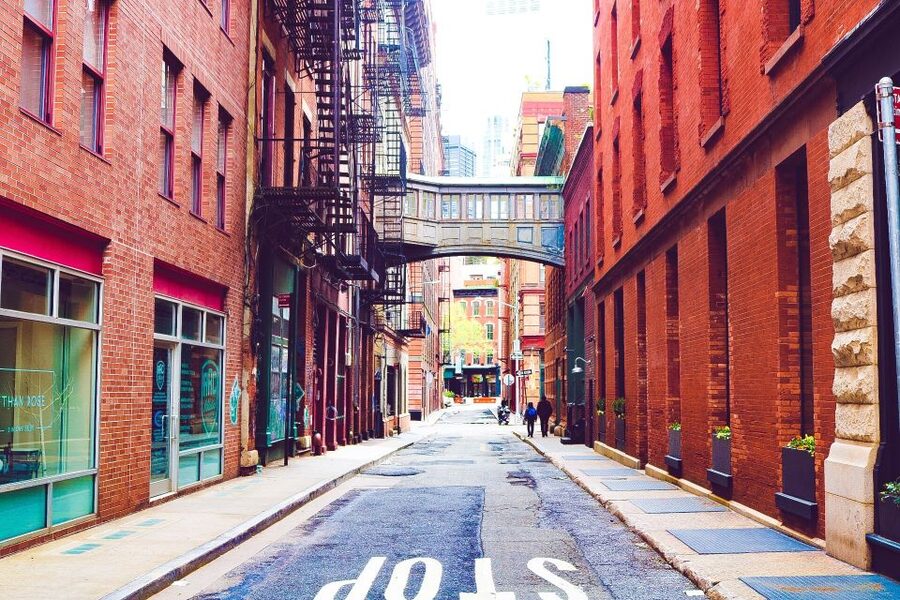
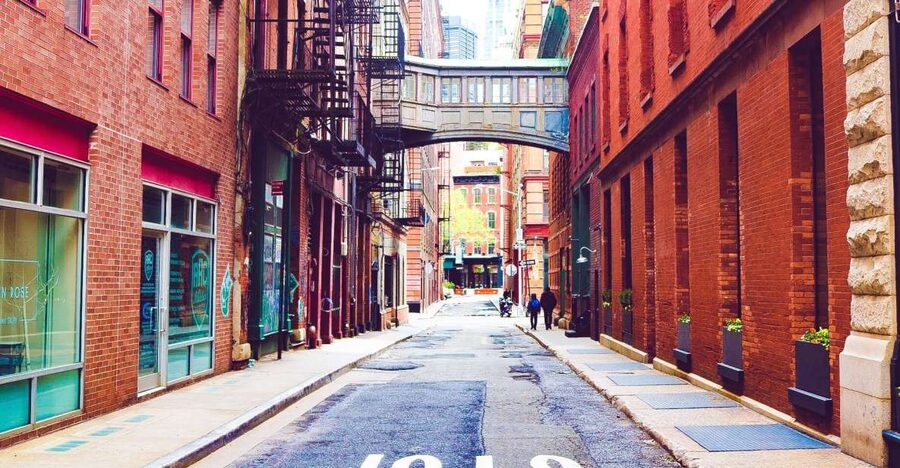
- Find the Staple Street sky bridge: This hard-to-spot feature is one of the tour’s most unusual photo stops.
- Hear TriBeCa’s less visible story: The tour explains the neighborhood’s connection to the 19th-century fight against slavery.
- Get useful neighborhood tips: Your guide can suggest affordable brunch spots, hidden speakeasies, and good places for photographs.
Why TriBeCa works so well on foot
TriBeCa can feel quiet at street level, especially compared with nearby Lower Manhattan. That calm can hide the neighborhood’s past. Before warehouses and lofts filled the district, this was farmland on the edge of a growing city. Later, its streets became part of New York’s industrial engine.
Walking is the right way to read that change. You can look up at old brick facades, compare restored warehouses with modern residences, and notice how buildings were reused rather than simply replaced. A bus or taxi can carry you through TriBeCa, but it will not give you time to connect one block to the next.
The tour begins at the southernmost point of TriBeCa and heads north. That direction gives the outing a clear shape. You are not just hopping between unrelated sights. You are watching the neighborhood change as the guide explains why each stage happened.
This is also a good choice if you have already seen the major Lower Manhattan memorials and observation decks. The tour offers a slower, more local-scale look at the city, with architecture doing much of the talking.
More architecture walks in New York City:
- Tribeca Architecture And History Walking Tour
★ 5.0 · 141 reviews - Midtown Manhattan Art and Architecture Walking Tour
★ 5.0 · 32 reviews - Holdouts: A NYC Architecture Walking Tour
★ 5.0 · 31 reviews
Meeting at the southern edge of TriBeCa
The meeting point is marked by a black Metro Tours umbrella. That is the detail to keep in mind, since the streets around City Hall and Lower Manhattan can be busy and the meeting area has several subway exits.
The nearest subway options are 4, 5, and 6 at Brooklyn Bridge City Hall, the R and W at City Hall, and the 2 and 3 at Park Place. You have several ways to reach the start, though New York subway exits can put you on different corners than expected. Give yourself a few extra minutes and look for the umbrella rather than relying only on a street address.
The tour is usually offered in the morning. That timing makes sense for a walking route. You can explore TriBeCa before the day becomes too hot or crowded, then use the guide’s food suggestions for lunch or brunch afterward.
Wear comfortable shoes. You will be walking for two and a half hours, with two short breaks included according to the tour details. Bring clothing suited to the forecast, since the tour runs in rain or shine.
From farmland to an industrial district
The first major idea is TriBeCa’s unlikely beginning. The neighborhood was once countryside, not the polished residential quarter you see today. As New York expanded, the area was drawn into the city’s trade and manufacturing network.
The guide explains how TriBeCa became a 19th-century industrial hub. Its large buildings were practical spaces for storage, production, and commerce. Those structures helped shape the neighborhood’s unusual look: broad old facades, tall windows, strong masonry, and generous floor plans built for business rather than private living.
This is where the tour’s architecture focus pays off. You are not simply told that an old building is historic. You get a reason for its shape and a sense of what its original use demanded. The result is a better way to read the street.
For me, this is more useful than a list of dates. Once you understand why warehouses were built as they were, the district begins to make sense. You can see why these buildings later became attractive to artists, residents, and developers.
The A. T. Stewart Building and New York’s early firsts
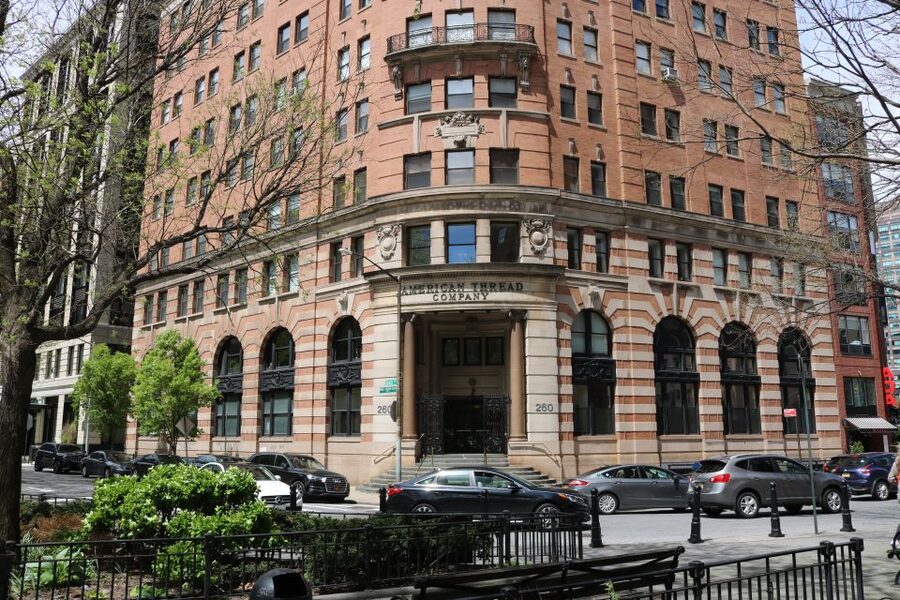
The route includes the A. T. Stewart Building, one of the tour’s key architectural stops. It forms part of the story of New York’s early commercial ambition and the city’s habit of trying something new before the rest of the country catches up.
The guide also discusses the firsts connected with TriBeCa and the Frederick Hotel. The supplied information does not give a complete list of each first, so you should expect the guide to explain these details on site rather than arrive with a fixed checklist.
That is a strength of a live walking tour. The guide can point to specific details, answer questions, and explain how a building fits into the wider city. Meghan Sara, also referred to as Meghan in the tour information, is the guide most often associated with this experience. Her style is described as energetic, funny, patient, and full of small architectural details.
Several past participants singled out her explanations of air rights, historic events, and architectural styles. Air rights can sound dry in a book, but on a street corner they help explain why one building rises above another and why development in New York often takes unusual forms.
More history tours in New York City:
- New York City: Flatiron Food, History, and Architecture Tour
★ 4.8 · 43 reviews - The Story Behind NY’s Evolving Skyline An Architectural Journey Through History
★ 5.0 · 18 reviews - Chelsea Galleries and High Line; Art, Architecture and History
★ 5.0 · 14 reviews - Private Flatiron Food, History and Architecture Tour
★ 5.0 · 8 reviews
Old warehouses with new lives
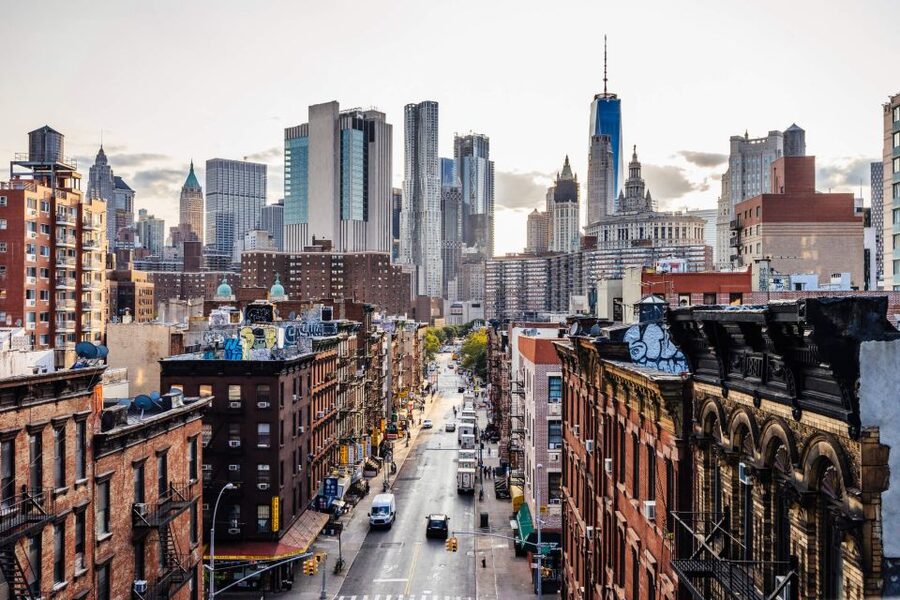
One of TriBeCa’s most interesting changes is the reuse of its old commercial buildings. Former dry goods warehouses have been converted into luxury residences, giving you a close look at how the neighborhood changed without losing all of its older building stock.
The tour treats this as part of a larger urban story. A warehouse designed for goods is not automatically a good home. Its windows, interior height, loading arrangements, and floor plans were created for work. Turning it into housing required money, imagination, and changes to the way the street was valued.
That conversion also explains TriBeCa’s present-day identity. The neighborhood’s expensive image did not come from nowhere. It grew from the combination of historic buildings, central location, and a new demand for large residential spaces.
You should keep your expectations realistic. This is not an interior architecture tour, and the description does not promise entry into private residences. The value comes from seeing the exteriors and understanding the changes they represent.
Modern buildings and the new TriBeCa
The walk also includes modern buildings that helped move TriBeCa from industrial district to high-end residential neighborhood. This contrast matters. If the tour discussed only old brick warehouses, you would get a charming but incomplete picture.
Newer construction shows how the area continued to change. The guide connects modern buildings to the district’s current status as the wealthiest zip code in the United States, while still tying that status to the earlier industrial story.
I appreciate that the route does not treat old buildings as automatically good and new buildings as automatically bad. The point is to see how both periods shaped TriBeCa. You can compare materials, scale, and purpose while learning how the city decides what to preserve and what to replace.
If architecture is your main interest, this may be the most satisfying part of the tour. You get the older commercial fabric and the newer residential response in one compact walk.
The Ghostbusters firehouse and movie fame
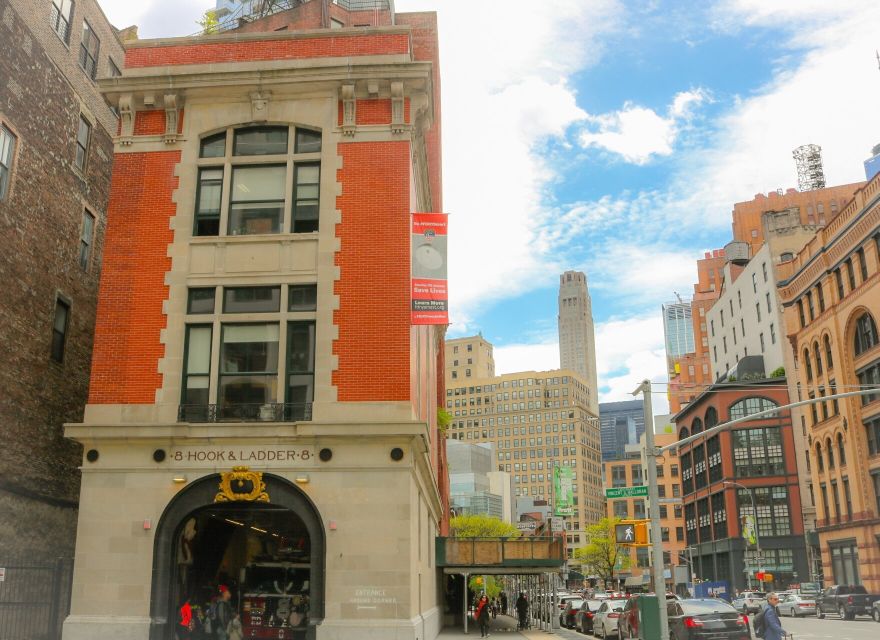
TriBeCa has one of New York’s most recognizable film locations: the firehouse associated with Ghostbusters. The tour explains the story behind this world-famous attraction rather than treating it as a quick photo stop.
This is a useful balance. Movie locations can be fun, but they are often disconnected from the real neighborhood. Here, the firehouse is one piece of a larger discussion about TriBeCa’s buildings and public identity.
The stop will appeal most to visitors who enjoy film history, but you do not need to be a major Ghostbusters fan to get something from it. The firehouse also shows how a working-looking building can become part of the city’s popular image while remaining part of an actual street.
Expect this to be an exterior visit. The supplied tour details do not promise entry into the firehouse, so plan on seeing and discussing it from the street.
Finding the Staple Street sky bridge
The Staple Street sky bridge is one of the tour’s most appealing discoveries. It is described as one of the hardest attractions in New York City to find, which makes a guided visit especially useful.
The bridge connects buildings above the street and gives TriBeCa a bit of architectural drama that is easy to miss if you are simply walking toward a restaurant. Your guide can show you where to look and explain how the structure fits into the surrounding buildings.
This is also a strong photo stop, though you should be ready to share the space with other people using the same public view. The value is not just the picture. The sky bridge helps you notice how TriBeCa’s buildings relate to one another above street level.
It is a good example of what this tour does best: point out something unusual, then connect it to the neighborhood’s development instead of leaving it as a random curiosity.
TriBeCa’s role in the fight against slavery
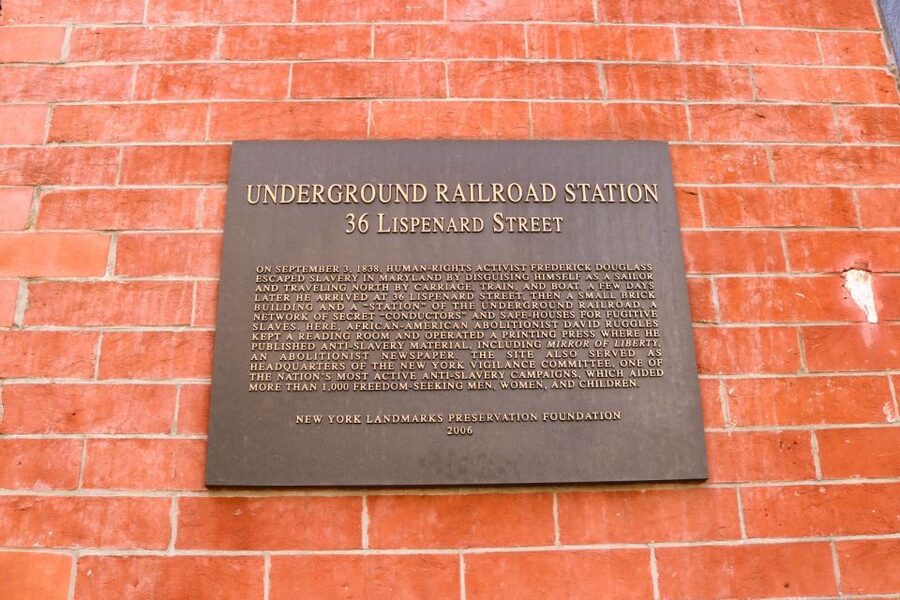
The final historical thread is one many visitors would not expect. The tour explores TriBeCa’s invisible history and explains the neighborhood’s role in the 19th-century fight against slavery.
This gives the walk more weight than an architecture-only outing. Buildings are not just design objects. Streets can also be places where political struggles, business interests, and personal acts of courage met.
The information provided does not name every person or site connected with this story, so the guide’s explanation will be important. If this subject matters to you, ask questions during the walk. A live guide is better suited to explaining connections and context than a plaque viewed in passing.
I especially like that this topic is included alongside wealthy residences and movie landmarks. It keeps TriBeCa from becoming only a story about expensive real estate and attractive old buildings.
The guide and the pace
The strongest praise for this tour centers on the guide, especially Meghan Sara. Her approach combines architecture, history, humor, and practical answers. The descriptions emphasize that she points out details people might otherwise miss and keeps the walk lively without losing substance.
The pace appears steady rather than rushed. Two short breaks are included, which matters on a 2.5-hour route. Still, you should be comfortable walking outdoors for most of the morning.
A possible issue is that some people may want more time. One participant felt the subject was so engaging that the tour could have lasted longer. That is a compliment, but it also tells you the experience is information-heavy. If you prefer a quick photo walk with only a few facts, this may feel too detailed.
The guide speaks English, and the tour is wheelchair accessible. Since the route covers public streets and the tour operates rain or shine, it is sensible to check the forecast and bring sunscreen, an umbrella, or other suitable items.
Is $40 a fair price?
At $40 per person, the tour sits in a reasonable range for a guided New York walking experience. You are paying for two and a half hours with a live, certified guide, not for admission to a museum or a viewing platform.
The value depends on how you like to see a city. If you would wander through TriBeCa on your own and read up on its buildings beforehand, you can spend less. But you may miss the connections between farmland, industry, warehouse conversion, modern development, and the fight against slavery.
The included neighborhood recommendations add practical value. You can ask about affordable brunch, hidden speakeasies, and photo spots while you are in town. Those suggestions are especially useful if you want to continue exploring after the tour rather than return straight to the major attractions.
Free cancellation up to 24 hours before the start and the option to reserve now and pay later also make planning easier. If bad weather becomes too severe, you can be notified by email, phone, or text and offered a rebooking or full refund.
Who should book this walk?
I would choose this tour if you enjoy architecture, city history, or walking tours that explain how neighborhoods change. It suits first-time New York visitors who want something beyond the usual observation decks, as well as repeat visitors who have already covered the big sights.
It is also a good fit for movie fans who want to see the Ghostbusters firehouse, provided they are happy to place that stop in a wider historical setting. Families with older children may enjoy the mix of film, buildings, and surprising city stories, though the walk requires attention and comfortable shoes.
I would think twice if you dislike outdoor walking, want interior access to historic buildings, or prefer a tour built around a single famous attraction. The route is about connections and context, not a long list of ticketed entrances.
Should you book the TriBeCa Architecture & History Walking Tour?
Book it if you want to understand why TriBeCa looks the way it does today. The strongest reasons are the clear northbound route, the mix of old warehouses and modern buildings, the Staple Street sky bridge, and the less familiar story of TriBeCa’s anti-slavery activity.
The Ghostbusters firehouse adds a fun touch, but it is not the main reason to go. The real value is having Meghan Sara or another New York City certified guide show you how a former rural district became an industrial center and then a very expensive residential neighborhood.
For $40, this is a solid choice for a curious walker who wants more than photographs. Bring good shoes, dress for the weather, arrive looking for the black umbrella, and leave room afterward for brunch or more exploring.
FAQ
Where does the TriBeCa walking tour meet?
Meet at the black Metro Tours umbrella. The nearest subway stations are Brooklyn Bridge City Hall on the 4, 5, and 6 lines, City Hall on the R and W lines, and Park Place on the 2 and 3 lines.
How long does the tour last?
The walking tour lasts 2.5 hours and is usually available in the morning.
What language is the tour in?
The live tour guide speaks English.
Is the tour wheelchair accessible?
Yes, the tour is listed as wheelchair accessible.
Does the tour run in bad weather?
Tours operate rain or shine. If conditions become too severe, you will be notified by email, phone, or text and offered the chance to rebook or receive a full refund.
What should I bring?
Bring comfortable shoes and weather-appropriate clothing. Depending on the forecast, you may also need sunscreen or an umbrella.
What sights are included?
The route includes the A. T. Stewart Building, the Frederick Hotel, former dry goods warehouses converted into residences, modern buildings, the Ghostbusters firehouse, and the Staple Street sky bridge.
Can I cancel for a refund?
Yes. You can cancel up to 24 hours in advance for a full refund. You can also reserve now and pay later.
Just added around New York City
- Race to the Sky: NYC Architecture Tour With SUMMIT One Ticket★ 5.0 · 3 reviews
- New York Upper West Side Art and Architecture Tour★ 5.0 · 4 reviews
- Private Flatiron Food, History and Architecture Tour★ 5.0 · 8 reviews
- Chelsea and the High Line NYC Architecture Walking Tour★ 5.0 · 6 reviews
- New York Upper East Side Art and Architecture Tour★ 5.0 · 3 reviews
- Custom Private New York Architecture, Art and City Tour★ 5.0 · 3 reviews
- Midtown North NYC Architecture Walking Tour★ 5.0 · 28 reviews
- New York Midtown South Art and Architecture Tour★ 5.0 · 2 reviews
Walking Tours, compared.

The Official Art Deco Walking Tour by The Miami Design Preservation League
Read our review →
Barcelona: Gothic Quarter Ghosts and Legends Walking Tour
Read our review →
Barcelona: Old Town and Gothic Quarter Walking Tour
Read our review →
Lecce: Baroque Architecture and Underground Walking Tour
Read our review →
Chicago in a Day: Food, History & Architecture Walking Tour
Read our review →
Ramblas, Old Town, Gothic and Gaudi Architecture Walking Tour
Read our review →
Chicago’s Secret Interiors Architectural Walking Tour
Read our review →Browse the lists this tour appears in