

Review · ARCHITECTURE TOURS
Dubai: Walking, Architecture and History Tour of Dubai Opera
Dubai Opera is more than a handsome building beside the Burj Khalifa. Its clever design lets one venue shift between an opera house, concert hall, theatre, and flat-floor event space. This tour takes you past the public glamour and into the working parts, including backstage areas, dressing rooms, the trap room, and seat storage.
I like the way the tour explains architecture through practical use, not just grand words. I also like the chance to see sculptures and artworks made specifically for the venue. The main consideration is time: one hour goes quickly, and access can change when the building is preparing for an event.
- See how the auditorium changes shape: Learn where the seats go when the hall becomes a flat-floor venue.
- Go backstage: Visit working areas that ordinary ticket holders may never see.
- Spot the trap room: This unusual theater feature is one of the tour’s more memorable stops.
- Study the design: Your guide explains the building’s architecture, sculptures, mirrors, and artworks.
- Meet at the Plaza Box Office: The tour begins at a clear, central point inside Dubai Opera.
- Expect a personal guiding style: Richard is specifically praised for his entertaining presentations, sometimes supported by videos.
Dubai Opera’s Shape-Shifting Design
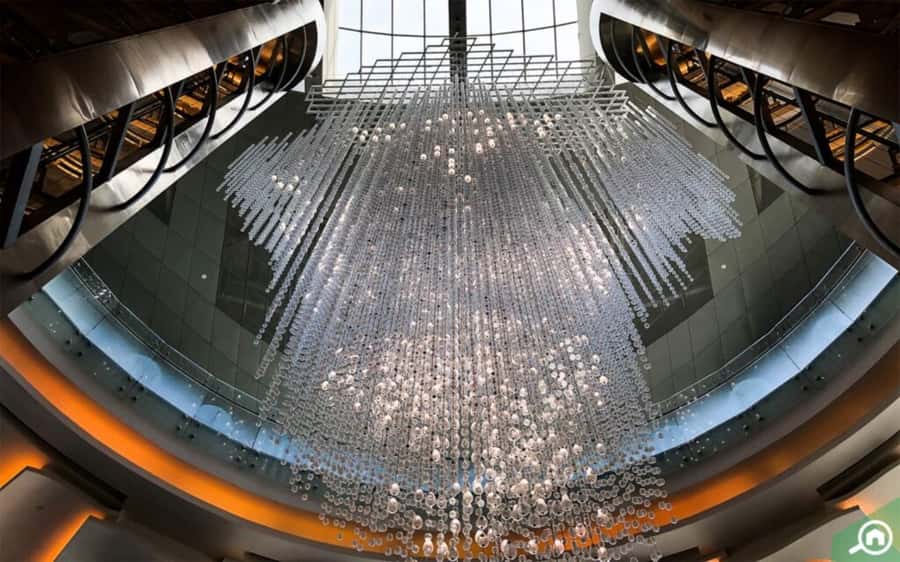
The best reason to take this tour is that Dubai Opera is built to change. It is not limited to one kind of performance. The auditorium can function as a traditional theater and can also be converted into a flat-floor space, with the seats stored away when needed.
That practical trick gives the architecture a purpose. You are not simply looking at curves, glass, polished surfaces, and dramatic forms. You are learning how the building supports opera, music, theater, and other performing arts.
Dubai Opera opened in 2016 and is the only opera house in the United Arab Emirates. Since then, it has drawn large numbers of visitors and hosted major names in music, theater, and performance. A walking tour helps you understand the building before, or instead of, attending a show.
I especially like tours that explain what a place does when the public is not watching. Here, the machinery of performance becomes part of the story. You see how a grand cultural venue must also work as a very large, carefully organized machine.
Starting at the Plaza Box Office
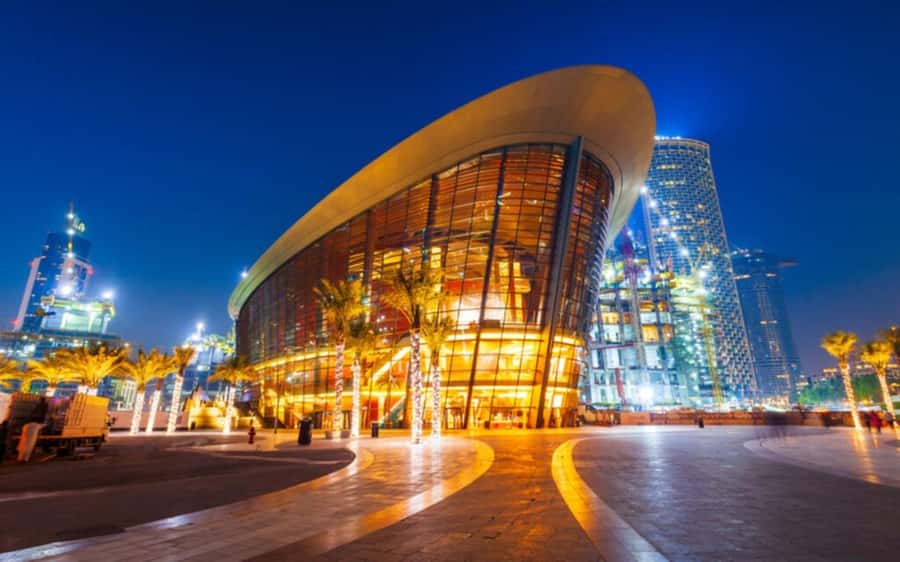
You meet your guide at the Plaza Box Office. This is an easy place to identify, but give yourself enough time to reach Dubai Opera and find the meeting point without rushing.
The tour is offered in English and Arabic. The guide leads the walk and fills in the architectural and historical background as you move through the building. That format works well for Dubai Opera because much of its character is in the details around you, rather than in a single exhibit or display.
The group may be small on some departures. One booking had only two participants, which allowed the guide to give extra attention and explain things at a comfortable pace. You cannot count on having a private tour, but a small group would be useful if you want to ask questions or need a slower explanation in English.
Richard is one guide whose name comes through clearly in the feedback. He is described as friendly and entertaining, and one tour used short videos to explain backstage processes. That is a helpful touch. A video can show the building in motion when the relevant equipment is not operating during your visit.
More architecture walks in the world:
- Lecce: Baroque Architecture and Underground Walking Tour
★ 4.6 · 1,248 reviews - Chicago in a Day: Food, History & Architecture Walking Tour
★ 5.0 · 1,153 reviews - Ramblas, Old Town, Gothic and Gaudi Architecture Walking Tour
★ 5.0 · 723 reviews
Looking Closely at the Architecture
The tour begins with the building itself. Dubai Opera’s design is meant to recall a traditional dhow, the sailing boat associated with the Gulf. The supplied details focus on its unique form and design rather than giving a room-by-room architectural lecture, so expect the guide to connect the building’s appearance with its role as a modern arts venue.
This is where your attention matters. Look for the way the exterior and interior guide movement, frame the auditorium, and create a formal setting before a performance even begins. The tour also points out sculptures and artworks made exclusively for Dubai Opera.
Those pieces are worth more than a quick photograph. They were created for this building, so they help establish its identity as a cultural venue rather than a generic event hall. Your guide explains the stories and design choices behind them, giving you a reason to look twice at details you might otherwise pass on the way to a seat.
I like this part for visitors who enjoy design but do not want a full museum tour. You get architecture, art, and theater operations in one short visit. The tradeoff is that the tour’s exact route and commentary can vary, so the amount of time spent on a particular sculpture or architectural feature is not fixed.
Backstage at the Dressing Rooms
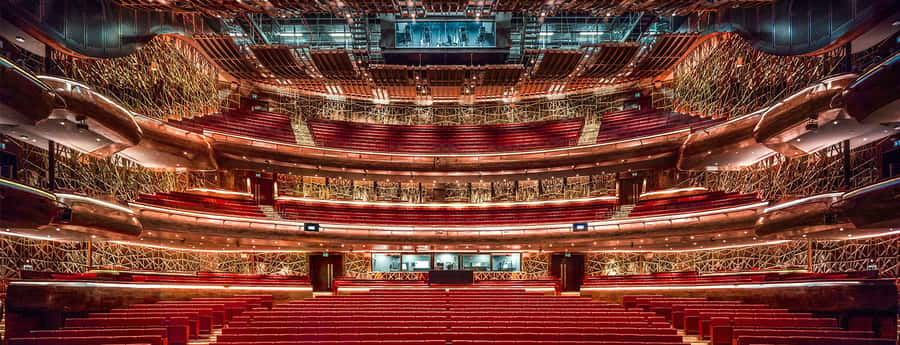
The backstage portion is the tour’s strongest feature. Ordinary audience members usually enter through the public areas, find their seats, watch the performance, and leave. This walk shows you part of the venue that supports the people on stage.
You may see the dressing rooms, including their mirrors. That detail sounds simple, but it gives the tour a human scale. A large performance venue can feel remote and polished from the audience, while dressing rooms remind you that actors, musicians, and performers prepare there before appearing under the lights.
Your guide may also use video to explain how various backstage processes work. The building is a working venue, so some equipment or rooms may not be active during your visit. Still, the combination of physical access and visual explanation gives you a better sense of the labor behind a performance.
This section suits anyone interested in theater, stagecraft, music, or venue design. It also gives children and teenagers a useful answer to a basic question: what actually happens behind the curtain? Children under 16 must be accompanied by an adult, so this can be a good family activity for older children who can manage a walking tour.
The Trap Room and Other Working Spaces
The trap room is one of the more unusual places included in the route. In a theater, a trap room forms part of the stage machinery and can support changes in scenery, performers, or equipment. The available information does not promise a specific demonstration, so think of this as a chance to see an important working space rather than a special effects show.
That distinction matters. Dubai Opera is still being used for events, rehearsals, and performances. You are visiting a functioning building, not a preserved museum. Some areas can be closed or restricted when an event requires privacy, safety controls, or a different setup.
I consider that a fair trade. A fixed museum route might be more predictable, but it would not show you a venue that is still doing its job. If the trap room or another area is unavailable, the guide may adjust the route and focus on accessible parts of the building.
You should also expect to walk, stand, and use stairs. The tour is only one hour, but it is not a seated presentation. Wear sensible footwear and let the activity provider know in advance if you use a wheelchair or have mobility restrictions.
More history tours in the world:
- Kuala Lumpur: Batu Caves & Historic Buildings Tour
★ 4.7 · 539 reviews - Charleston’s Best Highlights: History, Culture & Architecture
★ 5.0 · 422 reviews - Palm Springs Modernism Architecture & History Bike Tour
★ 5.0 · 359 reviews - Charleston: History and Architecture Guided Walking Tour
★ 4.8 · 349 reviews
How the Auditorium Becomes a Flat Floor
The seat storage area explains one of Dubai Opera’s most practical features. The auditorium can transform into a flat-floor venue, and the seats are stored when that change takes place.
For you, this is more interesting than simply seeing rows of seats. It shows how the same room can serve different purposes. An opera or theatrical performance needs a raked seating arrangement and a clear stage view. A concert, exhibition, or other event may need open floor space instead.
The seat storage area also adds a dose of reality to the glamour. Cultural buildings depend on logistics: seats must be moved, stored, protected, and put back in place. That process takes planning and space, and this tour lets you see part of that system.
Do not expect the auditorium to be transformed during your visit. The tour gives you access to the storage area and explains the system. If the building is preparing for an event, the route or the amount of access may change.
Art, Mirrors, and the Human Side of the Venue
The tour is not only about technical rooms. Dubai Opera was designed to feel special before the performance starts, and the guide draws attention to its artworks, sculptures, and interior details.
The dressing-room mirrors are a particularly nice contrast to the large public spaces. They connect the building’s grand architecture with the small routines of performance. A performer needs a place to prepare, a technician needs a place to work, and an audience needs a place to sit. The tour brings all three sides together.
I would pay close attention to how your guide tells the story. One reported tour used videos to illustrate processes, and that can make an unfamiliar backstage system much easier to understand. If English is not your first language, a small group and visual material may also help, although the tour is not advertised as multilingual beyond English and Arabic.
Is the One-Hour Length Enough?
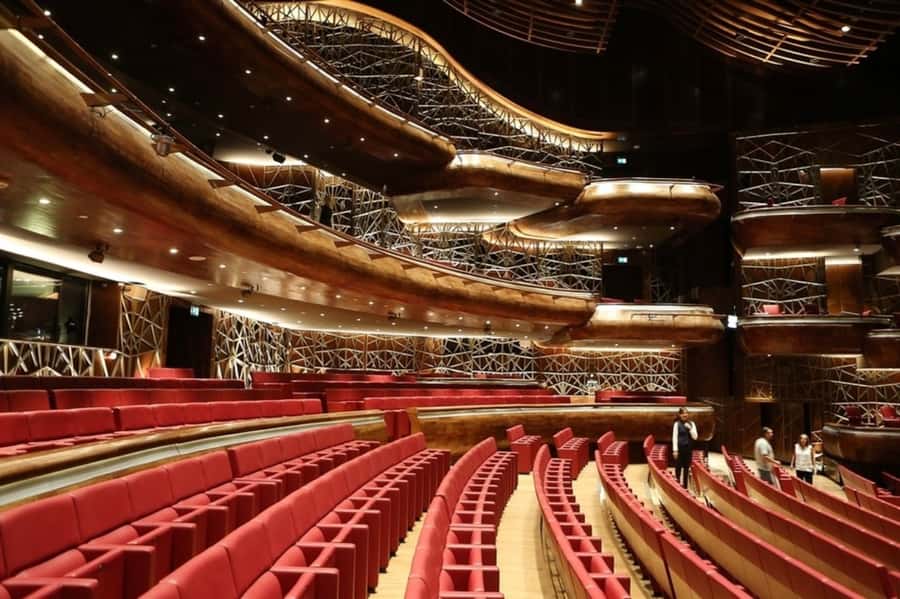
For a first look, yes. One hour is long enough to see several important areas without turning the visit into a half-day commitment. It fits neatly before a meal, a performance, or another stop in central Dubai.
The short length also keeps the tour focused. You get the architecture, backstage areas, dressing rooms, trap room, seat storage, and selected artworks without needing to remember a long list of facts.
The limitation is that you will not have unlimited time for photographs, questions, or lingering in each space. If you enjoy detailed architecture tours, you may wish the visit lasted longer. The tour is best viewed as an introduction to Dubai Opera and its working systems, not an exhaustive study of every room.
Because event schedules affect the building, the route may not be identical on every departure. That is worth accepting before you book. The more important parts of the venue are explained through a live guide, but exact access depends on what is happening at Dubai Opera that day.
Is $27 a Fair Price?
At $27 per person, I see this as a reasonable price for a specialized one-hour visit. You are paying for access to a functioning cultural building, a live guide, and areas that are not part of a normal performance ticket.
The value is strongest if you care about architecture, theater, or the mechanics of live events. The tour gives you more than a photo stop outside Dubai Opera. You learn why the building is shaped as it is and how it changes to support different events.
The value is weaker if you only want to see the main auditorium or take a few pictures. A one-hour guided walk may feel too detailed for someone who has little interest in theater operations. In that case, attending a performance might be a better use of your time, though it would not provide the same backstage access.
The high rating of 4.9 from 40 reviews fits the tour’s strongest points: friendly guiding, an impressive venue, and access to areas many people would not otherwise see. Richard receives particular praise for his entertaining style, while another guide used videos to make the technical explanations clearer.
Who Should Book This Dubai Opera Tour?
I would recommend it to first-time Dubai visitors who want more than skyscrapers and shopping. Dubai Opera offers a look at the city’s cultural side, and the tour shows how that culture is supported behind the scenes.
It is also a good fit for:
- People interested in theater, opera, concerts, and stage production
- Architecture fans who enjoy seeing how design serves a practical purpose
- Families with children over 2, provided younger visitors can manage walking and standing
- Visitors attending an evening performance who want context before taking their seats
- Anyone who prefers a short, guided activity over a long museum visit
- English or Arabic speakers who want a live explanation rather than a self-guided walk
I would be more cautious if stairs, standing, or walking are difficult for you. Dubai Opera is described as wheelchair accessible, but the tour includes stairs and the provider asks people with mobility restrictions to make contact before attending. That advance check is important.
Cancellation is flexible enough for most plans: you can cancel up to three days before the tour for a full refund. Children under 2 enter free, while anyone under 16 must be accompanied by an adult.
Should You Book It?
Book this tour if you want to understand how Dubai Opera works, not just admire it from the outside. The trap room, dressing rooms, backstage areas, artworks, and seat storage system give the visit real substance, while the one-hour length makes it easy to fit into a day.
Skip it if you want a long, leisurely architecture study or a guaranteed route through every room. Dubai Opera is a working building, so access can change. For most people with an interest in design or performance, though, $27 buys a useful look behind the polished public spaces and a clearer sense of what makes this venue unusual.
FAQ
Where does the Dubai Opera tour begin?
Meet your guide at the Plaza Box Office.
How long does the tour last?
The guided walking tour lasts one hour.
What languages are available?
The live tour guide is available in English and Arabic.
What areas can I see?
The tour can include backstage areas, dressing rooms, the trap room, the seat storage area, architectural features, sculptures, and artworks created for Dubai Opera.
Can I see how Dubai Opera changes into a flat-floor venue?
You can see the seat storage area and learn how the auditorium transforms into flat-floor mode. The information does not promise that a transformation will take place during your visit.
Is the tour wheelchair accessible?
Dubai Opera is wheelchair accessible, but the tour includes walking, standing, and stairs. People with mobility restrictions or wheelchair users should contact the activity provider before attending.
Can children join the tour?
Yes. Children under 16 must be accompanied by an adult, and infants under 2 years old are free of charge.
Can parts of the tour be closed?
Yes. Dubai Opera is a working building, so some areas may occasionally be closed or access may be restricted because of events.
Just added around the world
- Wilmington History and Architecture Tour★ 4.8 · 18 reviews
- Washington, DC: Georgetown Architecture Walking Tour★ 5.0 · 8 reviews
- New Orleans : Garden District Architecture Walking tour★ 4.8 · 5 reviews
- Washington DC: Dupont Circle & Embassy Row Architecture Tour★ 5.0 · 6 reviews
- Vicenza: discovering the city of Palladio by e-bike★ 5.0 · 4 reviews
- Vicenza: Palladian Architecture Private Walking Tour★ 3.3 · 3 reviews
- Walk & Discover KL’s Architectural and Heritage Gems★ 5.0 · 7 reviews
- Unveiling Brno: History, Culture & Architectural Delights★ 5.0 · 2 reviews
Walking Tours, compared.

The Official Art Deco Walking Tour by The Miami Design Preservation League
Read our review →
Barcelona: Gothic Quarter Ghosts and Legends Walking Tour
Read our review →
Barcelona: Old Town and Gothic Quarter Walking Tour
Read our review →
Lecce: Baroque Architecture and Underground Walking Tour
Read our review →
Chicago in a Day: Food, History & Architecture Walking Tour
Read our review →
Ramblas, Old Town, Gothic and Gaudi Architecture Walking Tour
Read our review →
Chicago’s Secret Interiors Architectural Walking Tour
Read our review →Browse the lists this tour appears in