
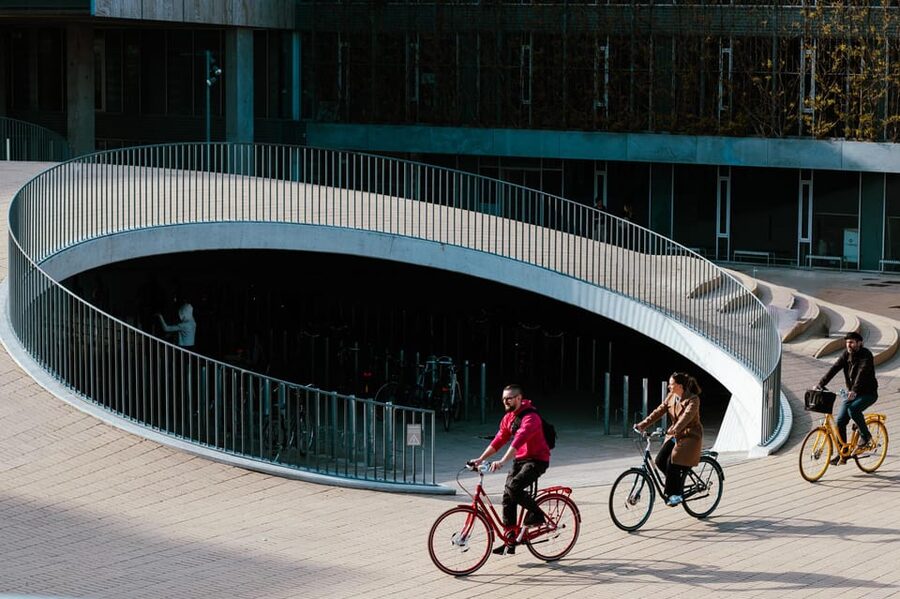
Review · COPENHAGEN
Copenhagen: Guided Architecture and Sustainability Tour
Copenhagen’s best architecture tour may be the one that gets you out of the postcard center. Over three hours and roughly 17km, you pedal from the harbour to Ørestad, along bike bridges and past housing projects, public spaces, and old industrial districts given new life. The subject is not just beautiful buildings, but how design affects daily life.
I like two things right away: the bike is your transport, not a quick add-on, and the route shows places you might never reach on foot. I also like the practical focus on sustainability, from public swimming areas to cycle infrastructure and housing. Guides such as René, Jörn, and Josephine bring their own stories and explanations.
The main caution is simple: this is a real ride, not a gentle sightseeing loop. You cover about 17km in three hours, and one June booking reported that some riders became separated from the group. Stay alert, keep the guide in sight, and choose an upgraded bike if you need extra help.
What makes this Copenhagen bike tour worth your time
- A 17km route beyond the inner city: You see harbour districts, Ørestad, Amager Fælled, Vesterbro, and central public squares.
- Architecture tied to daily life: The guide explains how buildings, bridges, swimming spots, housing, and public areas support Copenhagen’s goals.
- A close look at modern Copenhagen: Tietgen Residence Hall, Gemini Residence, Kaktus Towers, and Cykelslangen give the ride a strong contemporary focus.
- Local guides with different personalities: René, Jörn, Josephine, and John have been praised for clear explanations, humour, safety advice, and personal insight.
- Useful bike support: Helmets, different adult frame sizes, children’s bikes by advance request, rain ponchos, luggage storage, and a lounge with toilets are included.
- Flexible booking: You can cancel up to 24 hours ahead for a full refund and reserve now while paying later.
Why cycling gives Copenhagen’s architecture more meaning
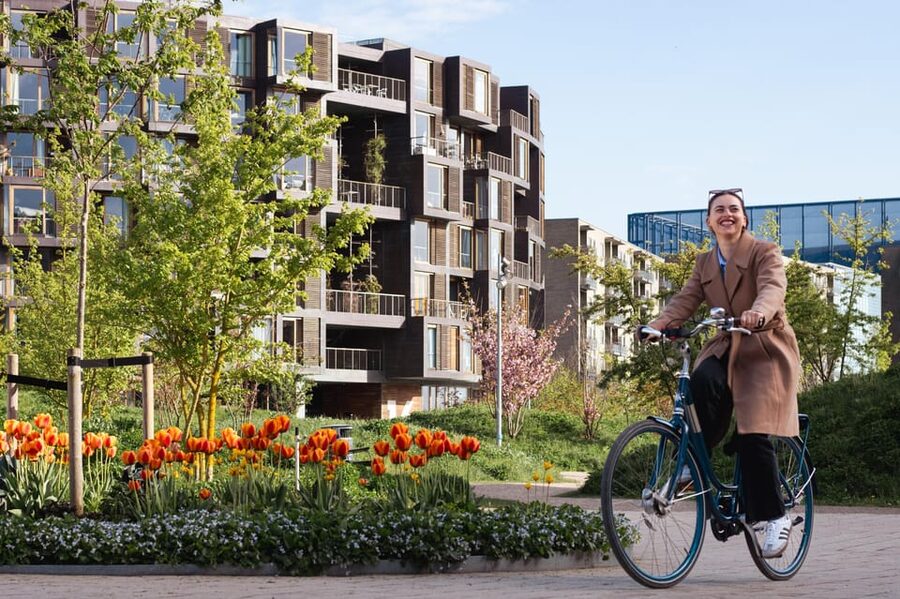
Copenhagen’s buildings make more sense when you move through the city as residents do. From a car or tour bus, a striking apartment block is simply something to photograph. On a bike, you notice how it meets a bridge, a public square, a harbour path, or a shared outdoor space.
That is the strength of this experience. The guide is not simply pointing out famous designers or asking you to admire unusual shapes. You learn how the city has made choices about cycling, public access, housing, former industrial land, and environmental goals.
I especially like the contrast between old and new. Copenhagen does not erase its past every time it builds. Areas connected with industry and food production sit beside newer housing and public facilities. The result is a city that keeps changing without losing every trace of what came before.
The route also gives you a break from the most familiar sights. You will not spend the entire morning circling Nyhavn and the usual central attractions. Instead, you get a broader look at how Copenhagen works outside its most photographed streets.
More guided tours in the world:
- Chicago River: 1.5-Hour Guided Architecture Cruise
★ 4.8 · 8,046 reviews - Charleston: History and Architecture Guided Walking Tour
★ 4.8 · 349 reviews - Vienna: Spanish Riding School Guided Architectural Tour
★ 4.8 · 333 reviews
Starting at Tropical Bikes and settling into the ride
The usual meeting point is Tropical Bikes at Vester Voldgade 2A, though the exact starting point depends on the option booked. Arrive ready to ride, not dressed for a slow museum visit. Comfortable shoes and clothing suited to the weather matter because the tour runs in all conditions.
The operator provides bikes in 48cm, 51cm, and 56cm adult frame sizes. Children’s bikes with 24 and 26 inch frames are available, but you need to reserve them in advance. Helmets and rain ponchos are included, along with luggage storage and a comfortable lounge with toilets before and after the ride.
A basket and phone holder cost 49 DKK each on site. That is worth considering before you leave your hotel. A phone holder can help if you need directions before or after the tour, but the guide should handle the route during the ride.
You can also reserve a cargo bike, tandem, e-bike, e-cargo bike, or child seat for an added fee. The listed prices are 449 DKK for a cargo or tandem bike, 249 DKK for an e-bike, 649 DKK for an e-cargo bike, and 119 DKK for a child seat. If you need one, arrange it ahead of time rather than hoping it will be available.
Blox, Lille Langebro, and the harbour connection
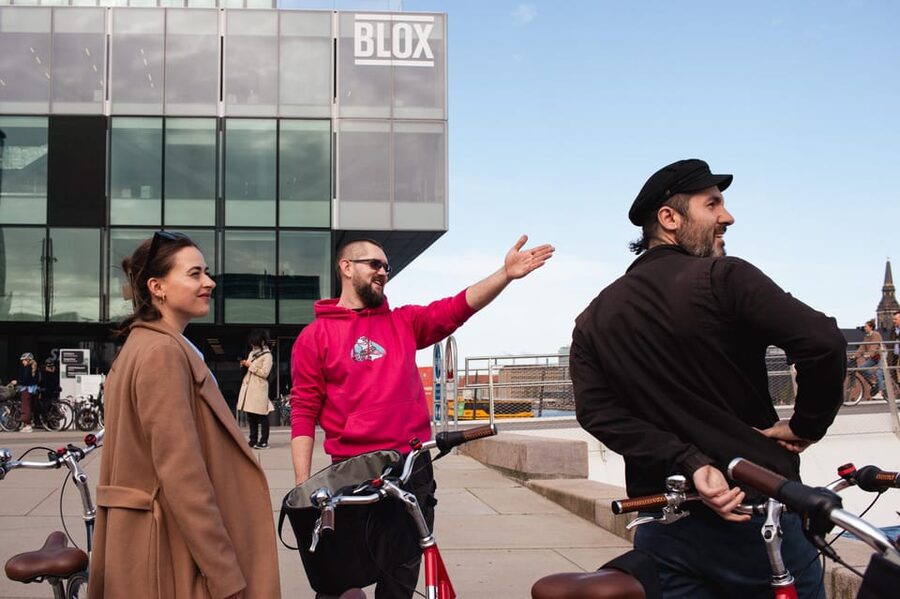
The first stops at Blox and Lille Langebro introduce the tour’s central idea: architecture is tied to movement and public life. Blox is part of Copenhagen’s modern waterfront development, while Lille Langebro gives you a direct look at how a bridge can serve cyclists and pedestrians as well as other city traffic.
The guide spends about 10 minutes at Blox and five minutes at Lille Langebro. Those short stops are useful because you are not standing still for long. You get enough time to hear the main point, look closely, and then continue riding.
The bridge section also helps explain why a cycling tour works here. Copenhagen’s bike routes are not just painted lines squeezed beside cars. Bridges, paths, and public spaces are part of a larger system that makes cycling practical. You see that system from the saddle rather than as an abstract planning idea.
Islands Brygge and a public swimming spot
At Havnebadet Islands Brygge, the route reaches one of Copenhagen’s most telling examples of waterfront change. A harbour area once associated mainly with work and transport now includes a place where people can use the water for leisure.
The stop lasts about 10 minutes. It is a good moment to consider how access to the harbour changes the meaning of a city waterfront. The water is not treated only as a scenic backdrop or private development opportunity. It becomes part of public life.
This is also one of the places where the tour’s sustainability theme becomes tangible. The point is not simply that Copenhagen has attractive waterfront views. It is that planning decisions can make former industrial areas more useful to residents.
A few more architecture tours around the world worth a look
- Chicago Architecture River Cruise
★ 5.0 · 15,756 reviews - Chicago River 90-Minute Architecture Tour
★ 4.5 · 9,629 reviews - Chicago Architecture Center River Cruise aboard First Lady
★ 5.0 · 5,536 reviews - Chicago: Architecture River Cruise Skip-the-Ticket Line
★ 4.8 · 4,325 reviews
Karen Blixens Plads and the ride toward Ørestad
Karen Blixens Plads adds a public-space angle before the route heads toward Ørestad. The stop lasts around 10 minutes, followed by scenic riding through the newer district.
Ørestad is where the tour turns firmly toward modern urban planning. You see large contemporary buildings, open spaces, and housing designed for a city that is still expanding. The guide explains how modern design connects with sustainable living, though you should expect more attention to recent architecture than to Copenhagen’s older buildings.
One past booking specifically found the tour strongest on 21st-century architecture and urban design, with less detail about earlier periods. That is useful to know. If your main interest is medieval Copenhagen, royal history, or historic facades, this is not the right tour. If you want to understand newer Copenhagen, the route is much better suited.
Tietgen Residence Hall and the human side of design
The Tietgen Residence Hall is one of the tour’s major architectural stops. You spend about 10 minutes here, looking at a building that treats student housing as something more than a row of identical rooms.
The circular form makes the building memorable, but the guide’s explanation is more important than the shape itself. This stop asks how shared housing can create a sense of community while still giving residents private space.
That is a recurring theme throughout the ride. Copenhagen’s architecture is presented as a tool for improving daily life, not simply as a contest for unusual forms. You may find yourself paying as much attention to courtyards, entrances, shared areas, and the relationship between buildings as to the facades.
Amager Fælled and a change of pace
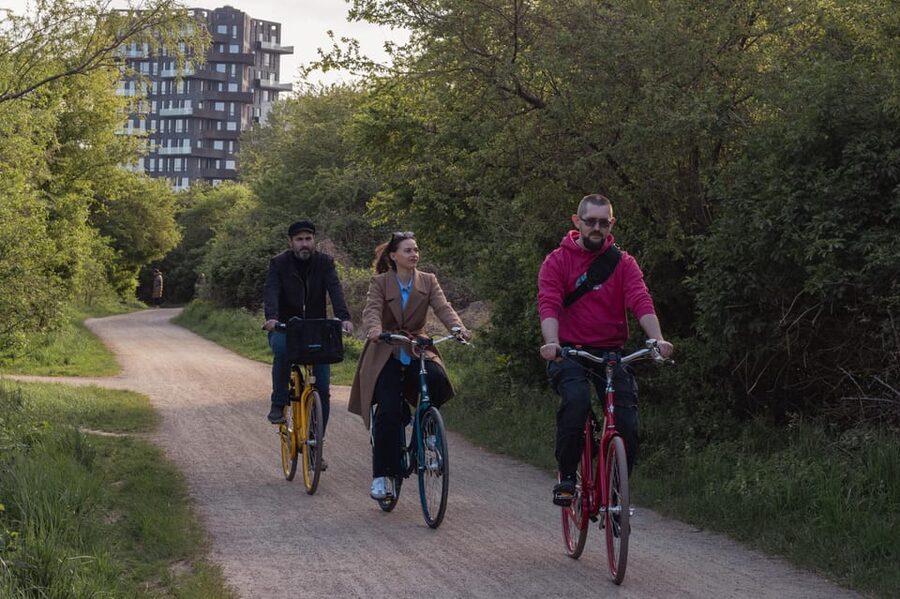
After the dense modern districts, the route reaches Amager Fælled for another guided stop of about 10 minutes. This change of setting matters. The tour is not only a parade of apartment blocks and bridges. It also shows how open land fits into the city’s plans.
The stop gives you a chance to compare built-up Ørestad with a more open setting. It also keeps the sustainability discussion from becoming limited to energy-efficient buildings or attractive cycle paths. Land, recreation, and the limits of development are part of the conversation too.
The ride between stops is part of the experience. You are not transferred from one architectural object to another. You move through the spaces in between, which helps you judge the scale and connections for yourself.
Gemini Residence and Cykelslangen
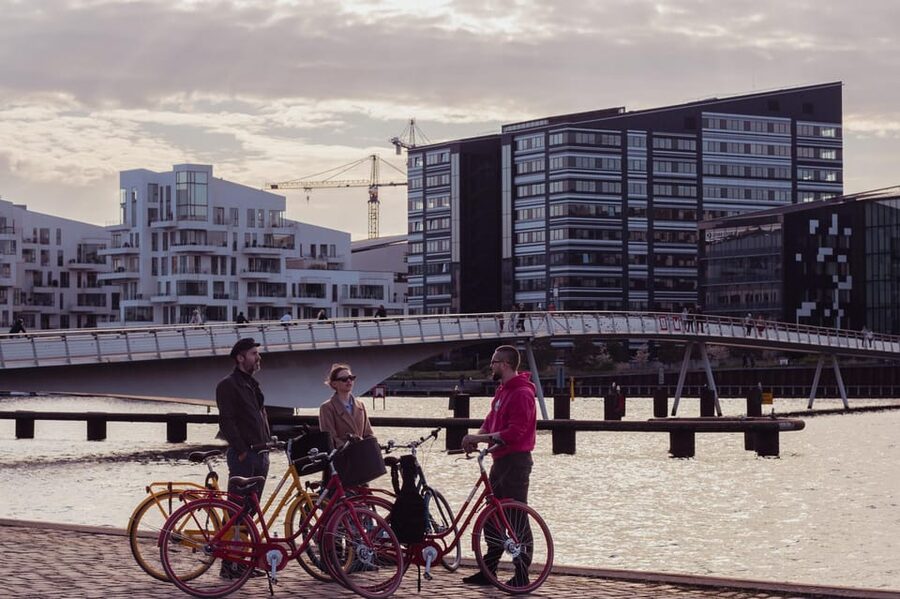
E/F Gemini Residence is another strong example of Copenhagen turning former industrial structures into housing. The guide spends around 10 minutes here, explaining how the building’s unusual form relates to the harbour and to the city’s changing use of old industrial areas.
This stop is especially useful if you enjoy adaptive reuse. The point is not only that the building looks different. It shows how existing structures can be given a new purpose as the city changes.
Next comes Cykelslangen, the famous cycling bridge, where the group gets about five minutes of scenic riding. This is one of the clearest moments when the bicycle itself becomes the subject. The route lets you experience a piece of cycle infrastructure as a real user, not just view it from below.
Keep your attention on the ride here. The route is designed for cycling, and it is easy to focus on photographs or surrounding buildings. Follow the guide’s pace and instructions, especially if the group is spread out.
Kaktus Towers and Copenhagen’s changing skyline
The Kaktus Towers provide another 10-minute architecture stop. Their distinctive forms show how Copenhagen’s newer residential buildings are willing to experiment with height, shape, and the use of limited urban space.
The guide places this architecture within the wider issue of growth. New housing can make a city more compact, but compact development also raises questions about cost, public space, and how comfortable a district feels at street level.
This is where a good guide adds value. René has been praised for combining safety with clear explanations, while Jörn has been singled out for sharing more background than you might find through a quick online search. Josephine has been noted for making architectural ideas accessible with humour. The exact guide varies, but the experience depends heavily on who leads your group.
Enghave Plads and Israels Plads
The final major stops are Enghave Plads and Israels Plads, each with about 10 minutes of guided discussion. Both help bring the tour back toward the central city and show how public spaces can be reshaped for present-day use.
Enghave Plads is part of the Vesterbro area, where an older urban setting meets newer ideas about streets, gathering places, and public use. Israels Plads offers another example of a city square adapted for activity and environmental goals while keeping its place in the historic center.
These final stops make a useful counterpoint to Ørestad. Earlier, you saw new districts being planned from the ground up. Here, the question is how existing city spaces can change without losing their identity.
The ride ends back at Tropical Bikes on Vester Voldgade 2A, unless your booked option uses a different drop-off point. Having the lounge and toilets available afterward is a small but welcome detail after 17km.
What $70 gets you, and where the value lies
At $70 per person, this is not the cheapest way to see Copenhagen. You could rent a bike independently for less and visit several districts on your own.
The value comes from the route and the interpretation. A self-guided ride might get you to Cykelslangen, Ørestad, or Islands Brygge, but you would need to research the buildings and work out an efficient route. Here, the guide links the stops into a story about planning, sustainability, and everyday life.
The price also includes the bike, helmet, rain poncho, luggage storage, and guide. For a first visit, I think that makes the cost reasonable, particularly if you want more than a standard central-city ride.
The value is weaker if you already know Copenhagen’s modern districts well or mainly want a historic architecture tour. The route is focused on recent development and urban design, with less attention to earlier periods.
Who should book this three-hour ride?
I would choose this tour if you enjoy buildings, public spaces, cycling, or the practical side of environmental planning. It is also a good pick if you have already seen the central sights and want a different view of Copenhagen.
The tour suits confident cyclists who can handle a 17km route in changing weather. Families can join if children’s bikes are reserved ahead of time, and riders who need extra support can ask about an e-bike, cargo bike, tandem, or child seat.
I would be more cautious if you are not comfortable on a bike, since people who cannot ride are not suitable for the experience. I would also think twice if you want a slow, stop-and-photograph-everything outing. The ride covers a lot of ground, and the short stops keep the group moving.
Tours are available in English and German, and private groups can be arranged. The guides named in past bookings include René, Jörn, Josephine, and John. Their strongest qualities appear to be personal explanation, humour, safety awareness, and a clear interest in how Copenhagen has developed.
Should you book it?
Book this tour if you want to understand why Copenhagen works so well for bikes and how its newer buildings fit into that system. The best parts are the harbour transformations, Ørestad, Tietgen Residence Hall, Gemini Residence, Cykelslangen, and the chance to connect them by bicycle.
Skip it if you want castles, old churches, or a short ride through the postcard center. For everyone else, $70 buys a useful three-hour introduction to the city beyond its familiar sights. Reserve children’s bikes and special upgrades early, dress for the weather, and keep the guide in view. With those points handled, this is a smart way to see Copenhagen as a living city rather than a collection of monuments.
FAQ
How long is the Copenhagen architecture and sustainability tour?
The tour lasts three hours and covers roughly 17km by bicycle.
What languages are available?
The tour is offered in English and German.
Where does the tour meet?
The meeting point depends on the option booked. Tropical Bikes at Vester Voldgade 2A is listed as a starting and drop-off location.
Are bikes included in the price?
Yes. Adult bikes in 48cm, 51cm, and 56cm frame sizes are included, along with a helmet.
Are children’s bikes available?
Yes. Children’s bikes with 24 and 26 inch frames are available, but you must reserve them in advance.
What happens if it rains?
The tour runs in all weather. Rain ponchos are included, and you should wear suitable clothing and comfortable shoes.
Can I reserve an e-bike or child seat?
Yes. E-bikes, cargo bikes, tandem bikes, e-cargo bikes, and child seats are available for an extra charge and should be reserved ahead of time.
Can I cancel the booking?
You can cancel up to 24 hours before the tour for a full refund. Reserve now and pay later is also available.
Just added around the world
- Wilmington History and Architecture Tour★ 4.8 · 18 reviews
- New Orleans : Garden District Architecture Walking tour★ 4.8 · 5 reviews
- Washington, DC: Georgetown Architecture Walking Tour★ 5.0 · 8 reviews
- Washington DC: Dupont Circle & Embassy Row Architecture Tour★ 5.0 · 6 reviews
- Vicenza: discovering the city of Palladio by e-bike★ 5.0 · 4 reviews
- Vicenza: Palladian Architecture Private Walking Tour★ 3.3 · 3 reviews
- Walk & Discover KL’s Architectural and Heritage Gems★ 5.0 · 7 reviews
- Unveiling Brno: History, Culture & Architectural Delights★ 5.0 · 2 reviews
Copenhagen Architecture Tours, compared.
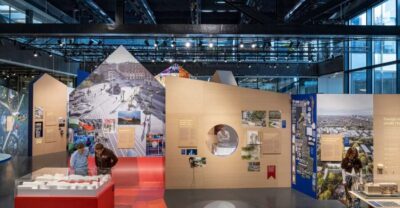
Copenhagen: Danish Architecture Center Entrance Ticket
Read our review →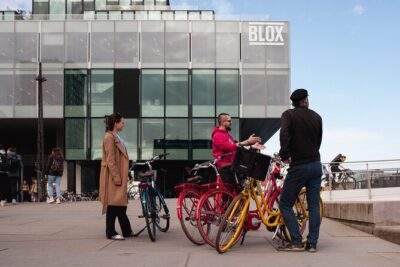
Copenhagen Architecture and Sustainability Tour with local Guide
Read our review →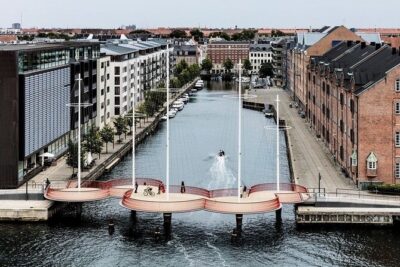
Copenhagen City, Old Town, Nyhavn, Architecture Walking Tour
Read our review →Copenhagen City, Old Town, Nyhavn, Architecture Walking Tour
Read our review →
Copenhagen: Danish Design and Architecture Walking Tour
Read our review →Browse the lists this tour appears in