
Review · LOS ANGELES
The History and Architecture of Downtown Los Angeles
Downtown Los Angeles makes more sense when you see it on foot. This three-hour route links the city’s grandest buildings with its older neighborhoods, from a ride on the 1901 Angels Flight to mochi at a 1903 Japanese confectionery. Guide Chris brings the buildings, courtrooms, movie sets, and street corners into one clear story.
I like the way the tour connects architecture with daily life, rather than treating each building as an isolated photo stop. I also like the practical finish: you get food advice for Grand Central Market and a better sense of where to return in Little Tokyo. The main drawback is simple: this is a long walking tour, close to five miles according to one itinerary experience, with slight slopes and limited restroom chances.
Key points to know before booking
- Ride the 1901 Angels Flight: Your ticket is included, and the short funicular ride sets up the story of Bunker Hill.
- See major modern architecture: The Walt Disney Concert Hall, The Broad, MOCA, and the Music Center anchor the first part of the walk.
- Connect buildings with film history: City Hall, Angels Flight, and the Bradbury Building have appeared in films and television shows including Batman, La La Land, Bosch, and Blade Runner.
- Taste mochi in Little Tokyo: Fugetsu-Do, founded in 1903, provides the included local snack.
- Finish among historic interiors: The Bradbury Building, Biddy Mason Memorial Park, The Last Bookstore, and Grand Central Market give the final hour plenty of variety.
- Plan for several miles on foot: Comfortable shoes, water, and good walking ability matter more here than a packed camera bag.
Why Downtown Los Angeles is the right place to start
Los Angeles often gets introduced through Hollywood, beaches, or celebrity homes. Downtown gives you a different beginning. The city started here with 44 people, and this route shows how a small settlement became a major American city through civic buildings, rail lines, immigrant communities, courts, shops, and grand cultural projects.
That mix is the tour’s real strength. You are not only looking at façades. You are learning why a hill was reshaped, why a funicular was built, how Little Tokyo endured major changes, and why certain downtown addresses keep returning in films.
Chris is the tour’s creator and guide. He has led tours for KTLA, Spectrum News1, and NHK Japan, and his style is clearly designed for conversation rather than a fixed script. The many positive comments about his humor, patience, and ability to answer questions make him a particularly good match if you want more than a list of dates and architects.
More history tours in the USA:
- Chicago in a Day: Food, History & Architecture Walking Tour
★ 5.0 · 1,153 reviews - Charleston’s Best Highlights: History, Culture & Architecture
★ 5.0 · 422 reviews - Palm Springs Modernism Architecture & History Bike Tour
★ 5.0 · 359 reviews
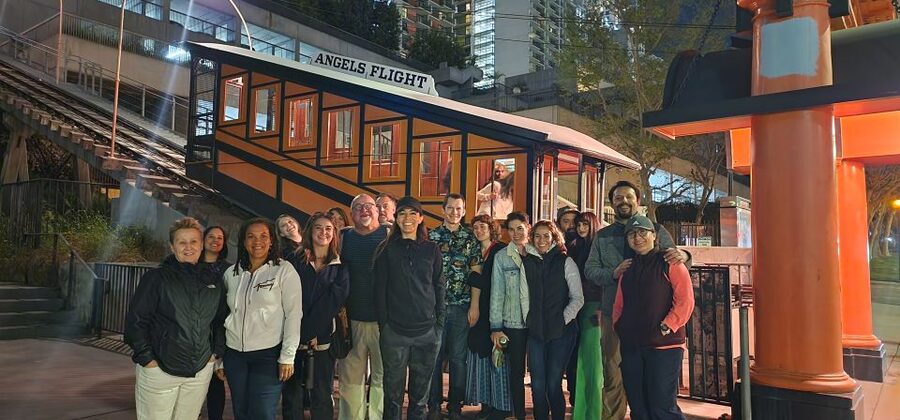
Angels Flight and the old Bunker Hill
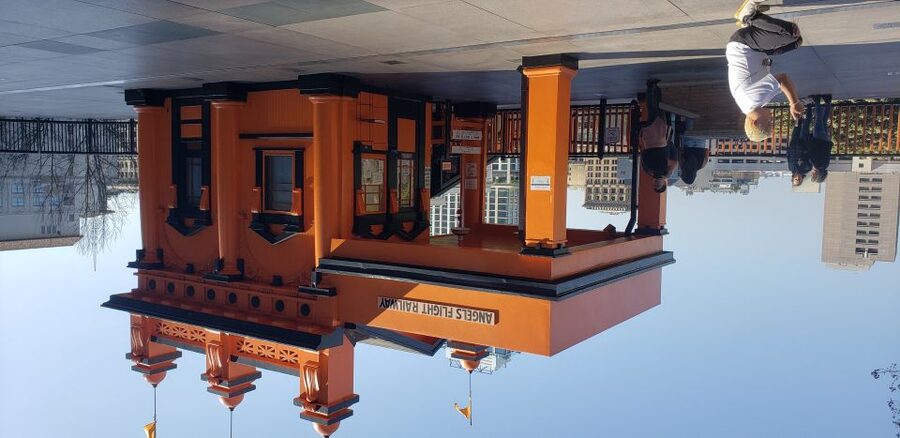
The meeting point is at the lower end of Angels Flight, at 341 South Hill Street. Look for the stairs to the left of the railway. It is worth arriving with enough time to find this spot, since the lower station sits right beside Grand Central Market and the surrounding downtown streets can feel confusing at first.
The railway opened in 1901 and climbs Bunker Hill in a short, memorable ride. The ticket is included, which is a small but useful value at a $39 tour price. More important, the ride gives the tour a strong opening image: you move from the older commercial streets up toward the civic and cultural center of modern Downtown LA.
At the top, Chris explains the neighborhood that once depended on Angels Flight. Bunker Hill was not always lined with museums and concert halls. The funicular served people moving between homes and businesses on the hill and the streets below. That change from residential district to cultural center is one of the clearest examples of how the city has remade itself.
You will have a photo stop and about ten minutes around Angels Flight. The ride is brief, so do not expect a long railway excursion. Its value is the setting and the story around it.
Gehry, Isozaki, and Downtown’s modern cultural center
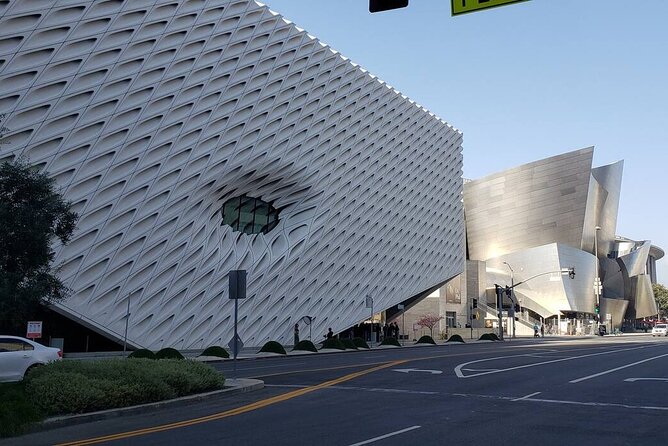
The route then moves through Bunker Hill and past several of Los Angeles’s major cultural buildings. You see MOCA, The Broad, the Walt Disney Concert Hall, and the Music Center. The exact time at each stop varies, but the route allows a few minutes for the first two, about fifteen minutes at Disney Concert Hall, and a short look at the Music Center.
Architecture fans will get the most from this section. Frank Gehry’s Walt Disney Concert Hall has the sweeping metal forms that made it one of the city’s most recognizable buildings. The Broad brings a different kind of modern design, while Arata Isozaki’s work adds another important architectural voice to the area. Chris places those buildings within the larger development of Bunker Hill, so you get a sense of how the district was planned rather than simply photographed.
I like that the tour treats architecture as part of public life. These buildings are not just objects for specialists. They house music, art, performance, and civic activity, and they helped reshape how people use downtown.
Still, keep your expectations realistic. This is an outdoor walking tour, not an interior museum tour. The itinerary lists visits, guided sightseeing, and pass-bys, but you should not expect a full concert hall or museum admission. The appeal is the exterior design, the urban setting, and Chris’s explanation of how each project fits into the city.
If the day is hot, this part may feel demanding. One account of the experience notes that Chris made a point of finding shade and encouraging hydration, but you should bring your own water and wear a hat if needed.
City Hall, Civic Center, and famous courtrooms
City Hall gives the walk another change of mood. After the polished cultural buildings of Bunker Hill, you enter the Civic Center, where government and law take center stage. The building is one of Los Angeles’s most recognizable landmarks, and the tour uses its long screen career to make the subject approachable.
City Hall has appeared in Batman, Superman, War of the Worlds, The Lincoln Lawyer, Rookie, Dragnet, and other productions. Fans of film locations will enjoy seeing how a working civic building can become a police headquarters, government office, or dramatic backdrop with only a change of camera angle.
The Civic Center portion lasts about twenty-five minutes, making it one of the longer stops. That matters because the tour is not rushing from one postcard view to another. You have time to understand the area and hear about people who went to court there, including OJ Simpson, the Night Stalker, Bugsy Siegel, and Charles Manson.
This is a useful part of the route even if true crime is not your main interest. The stories show how courts, celebrity culture, crime, and public life overlap in Los Angeles. If you prefer architecture and urban history, Chris also keeps the focus on the buildings and the role of the Civic Center.
A few more architecture tours around the USA worth a look
- Chicago Architecture River Cruise
★ 5.0 · 15,756 reviews - Chicago River 90-Minute Architecture Tour
★ 4.5 · 9,629 reviews - Chicago River: 1.5-Hour Guided Architecture Cruise
★ 4.8 · 8,046 reviews - Chicago Architecture Center River Cruise aboard First Lady
★ 5.0 · 5,536 reviews
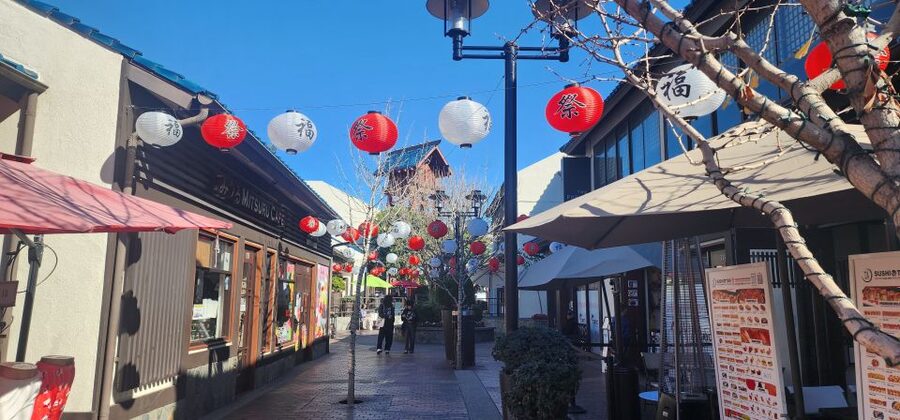
Little Tokyo and mochi at Fugetsu-Do
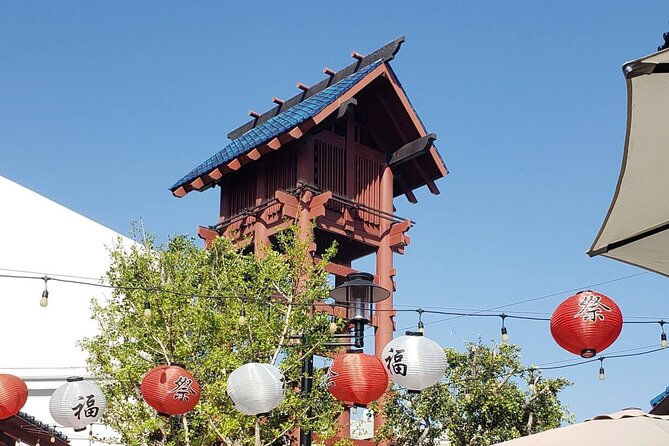
The walk continues into Little Tokyo, one of the most enjoyable parts of the experience. The route includes Japanese Village Plaza, Astronaut Ellison S. Onizuka Street, and a stop at Fugetsu-Do Bakery Shop.
Fugetsu-Do dates to 1903 and is identified here as Los Angeles’s oldest confectionery. You receive a mochi sample, giving the tour a small but meaningful food stop rather than a generic break at a chain café. The tasting takes about ten minutes.
I like this because the food is tied to place. Little Tokyo is not presented only as a shopping district. Chris explains its changes and difficult periods, while the group supports a long-running local business. The stop also gives you a reason to return later for more sweets, meals, and shopping.
Japanese Village Plaza gets roughly twenty minutes, and Onizuka Street another ten. That gives you time to look around without turning the tour into a full food crawl. Drinks are not included, so bring water. There are only a couple of restroom opportunities once the tour is underway, and the most convenient facilities are across from the starting area in Grand Central Market.
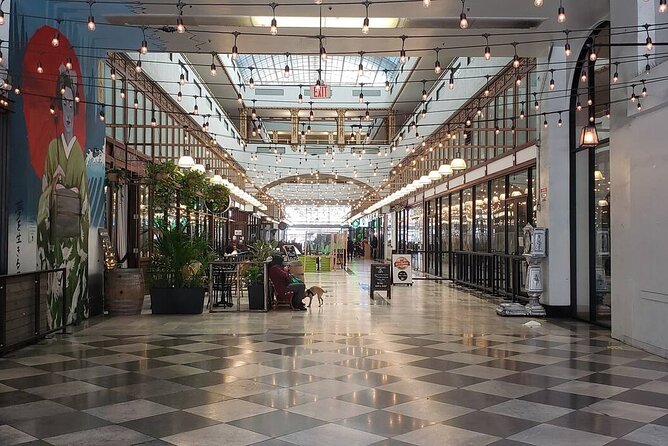
The Historic Core: Bradbury Building and Biddy Mason
The final section shifts into the Historic Core, where the city’s older commercial architecture becomes the focus. The Bradbury Building is the major showstopper. Its interior feels unlike the glass and metal buildings seen earlier, with an old-fashioned design that has made it a favorite location for film and television.
Blade Runner fans will recognize the building’s connection to the science-fiction classic. The tour also uses it to show how a historic interior can remain useful long after the original era that shaped it. You get a photo stop and guided visit lasting about ten minutes.
The Bradbury Building is especially valuable for people who enjoy seeing real places behind familiar scenes. You are not simply told that a movie used the building. You get to stand inside the setting and then look at the structure as architecture in its own right.
Biddy Mason Memorial Park follows, with about ten minutes of sightseeing and explanation. The stop adds a personal and social story to a route that could otherwise lean heavily toward famous architects and movie locations. That variety keeps the final stretch from becoming a parade of façades.
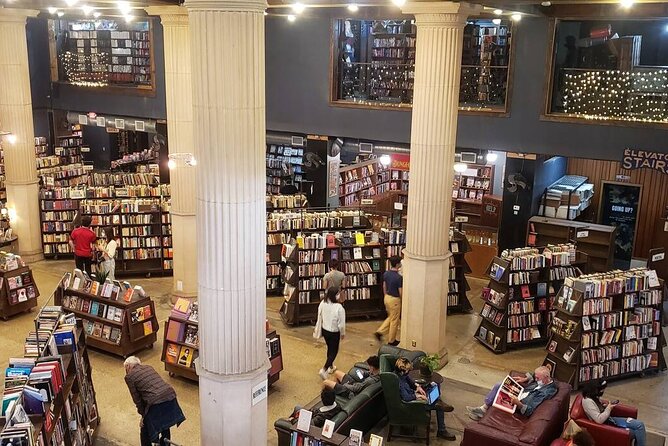
The Last Bookstore and Grand Central Market
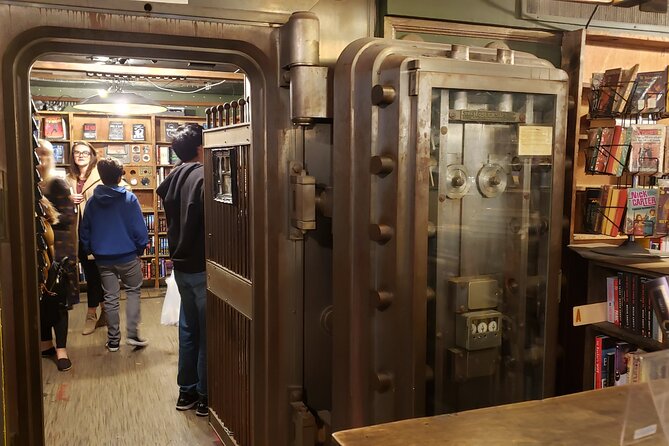
The Last Bookstore occupies a 1915 bank and is one of the route’s most distinctive stops. It is Los Angeles’s largest new and used bookstore, and the old banking space gives the visit a memorable sense of place. You get about ten minutes there, enough to look around and understand why it has become such a downtown landmark.
You may want to return on your own if you enjoy browsing. The tour gives you an introduction rather than an extended shopping session, so budget extra time another day if the books, interior details, or reading areas catch your attention.
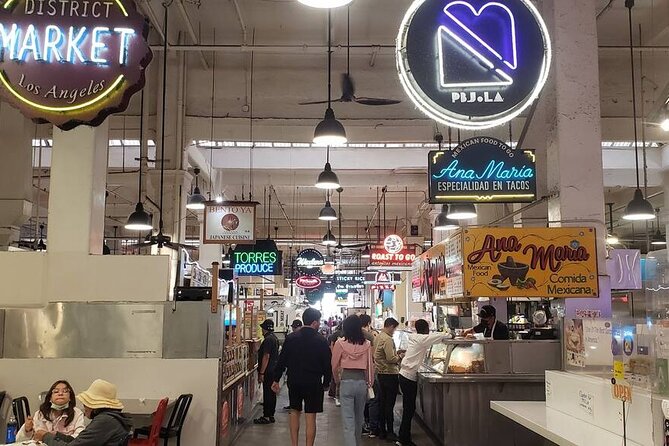
The tour ends at Grand Central Market, near the original meeting point. Chris offers recommendations for the best meal options there, but food and drinks beyond the mochi sample are not included. This is a useful way to finish because Grand Central Market lets you turn the walking tour into lunch or dinner without making another trip across town.
Parking is available at Grand Central Market and in nearby lots, commonly around $10 to $20 per day. Public transportation is also practical, with the downtown area reachable by bus and Metro. If you drive, allow time to park before the start. If you use transit, the meeting point is close enough to the market to find basic facilities before setting off.
What $39 gets you
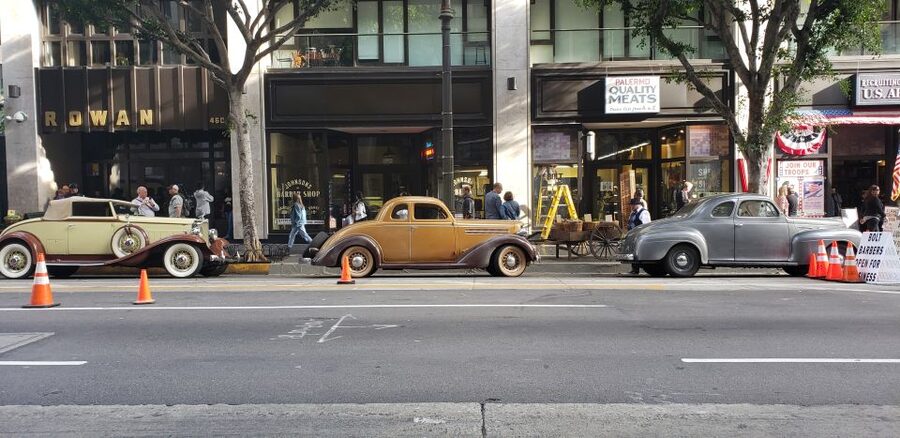
At $39 per person, this tour offers good value if you want a guided overview of Downtown LA rather than separate visits to each sight. The included Angels Flight ticket and mochi sample are modest extras, but the bigger value is the route. You cover Bunker Hill, Civic Center, Little Tokyo, the Historic Core, and several major buildings in three hours.
You also avoid the work of building your own route. Downtown’s sights are fairly close together, but the history is not always obvious from the sidewalk. A guide can explain why the neighborhoods changed and point out film locations you might otherwise walk past.
The price is less compelling if you want long interior visits, museum entry, or a relaxed food tour. The schedule moves steadily, and the main benefit is Chris’s interpretation of the city. I would choose it early in a Los Angeles stay, then use the final recommendations to plan a return to Little Tokyo, The Last Bookstore, or Grand Central Market.
Walking conditions and who should book
Treat this as a proper walking tour, not a gentle sightseeing stroll. One account puts the distance at about five miles, and the route includes slight slopes. Comfortable shoes are essential. Water, a camera, and sun protection are sensible additions.
The experience is not suitable for people with mobility impairments. You should also use the restroom before the start, since opportunities become less frequent after the tour leaves Grand Central Market.
This tour suits you best if you enjoy:
- Architecture and city planning
- Film and television locations
- Los Angeles history told through real streets and buildings
- Small local food stops
- Walking several miles at a steady pace
- Asking questions and hearing stories beyond a prepared script
It is less suitable if you need frequent sitting breaks, want a private vehicle, or prefer to spend most of the day inside museums. The tour is in English only.
Should you book this Downtown LA tour?
Book it if you want to understand why Downtown Los Angeles matters. The route has strong variety: Angels Flight, major modern architecture, City Hall, courtroom stories, Little Tokyo, mochi, the Bradbury Building, a bookstore in a former bank, and Grand Central Market.
I would especially recommend it for a first visit to Downtown LA, for architecture fans, and for people who have already seen Hollywood and want a more substantial sense of the city. Chris’s enthusiasm and wide range of information are central to the experience, so this is a good choice if you prefer a lively guide who can move between history, buildings, movies, and local recommendations.
Skip it if five miles of walking sounds tiring or if you want admission-based visits rather than an outdoor overview. For most able walkers, though, $39 is a fair price for a well-planned introduction to the city’s original center.
FAQ
How long is the Downtown Los Angeles tour?
The tour lasts three hours.
What is the price?
The cost is $39 per person.
Where does the tour meet?
You meet at the lower part of Angels Flight at 341 South Hill Street. Look for the area with stairs to the left of the railway.
Is the Angels Flight ticket included?
Yes. The Angels Flight ride is included in the tour price.
Is food included?
A mochi sample at Fugetsu-Do Bakery Shop in Little Tokyo is included. Drinks and other food are not included.
What language is the tour offered in?
The tour is offered in English with a live guide.
Who leads the tour?
Chris is the tour creator and guide. The experience information identifies him as the guide you should expect when booking.
How much walking is involved?
This is a longer walking tour covering several miles. One description of the route puts the distance at about five miles, with a couple of slight slopes.
Is parking available?
Yes. Parking is available at Grand Central Market and nearby lots, usually for about $10 to $20 per day.
What should I bring?
Bring comfortable shoes, water, and a camera. Use the restroom before the tour, since there are only a few opportunities once the walk begins.
Just added around the USA
- Wilmington History and Architecture Tour★ 4.8 · 18 reviews
- Washington, DC: Georgetown Architecture Walking Tour★ 5.0 · 8 reviews
- New Orleans : Garden District Architecture Walking tour★ 4.8 · 5 reviews
- Washington DC: Dupont Circle & Embassy Row Architecture Tour★ 5.0 · 6 reviews
- Tulsa: Art Deco Walking Tour of Tulsa★ 5.0 · 8 reviews
- Castle to Capitol: Museums of the National Mall Architecture Tour★ 4.5 · 9 reviews
- Private Colonial Williamsburg Architectural Tour★ 5.0 · 5 reviews
- Monuments and Memorials Architectural Walking Tour★ 5.0 · 17 reviews
Historical Tours, compared.
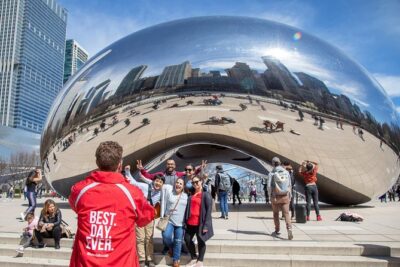
Chicago in a Day: Food, History & Architecture Walking Tour
Read our review →
Kuala Lumpur: Batu Caves & Historic Buildings Tour
Read our review →
Charleston’s Best Highlights: History, Culture & Architecture
Read our review →
Palm Springs Modernism Architecture & History Bike Tour
Read our review →
Charleston: History and Architecture Guided Walking Tour
Read our review →
Historic Georgetown: History, Gossip, & Architecture Walking Tour
Read our review →
Charleston History, Homes, and Architecture Guided Walking Tour
Read our review →
Browse the lists this tour appears in