
Review · NEW ORLEANS
New Orleans: History, Culture & Architecture Guided Tour
New Orleans reveals itself in layers: French Quarter streets, oak-lined Esplanade avenues, above-ground tombs, and the African American roots of Faubourg Treme. This three-hour minibus tour gives you a useful first look at all of them without asking you to cross the city on foot in the heat.
I like the wide range of neighborhoods and the chance to stop at the Besthoff Sculpture Garden or Morning Call Cafe. I also like that the commentary reaches beyond the usual French, English, and jazz shorthand, with room for subjects such as Hurricane Katrina and the city’s burial customs.
The drawback is simple: three hours moves quickly. You will see many places, but only a few get a proper stop, and the tour is conducted in English. Hotel pickup is limited to selected downtown and French Quarter hotels, so check that detail before booking.
Key points to know before booking
- A citywide introduction in three hours: The route links the French Quarter, Treme, Esplanade, Garden District, City Park, Warehouse District, and Metairie Cemetery.
- Comfortable transport matters: You travel in an air-conditioned minibus, a welcome break from New Orleans heat and long street crossings.
- Two different City Park options: You may visit the Besthoff Sculpture Garden or stop for coffee and beignets at Morning Call Cafe.
- Treme adds essential context: The route passes through one of the oldest African American neighborhoods in the United States.
- Guides shape the experience: Joseph and Bob have been singled out for clear, engaging commentary, with Joseph praised for covering present-day issues as well as the past.
- Good value for first-time visitors: At $55, hotel pickup, transport, and live commentary make this a practical orientation tour, though food and drinks cost extra.
A useful first look at New Orleans
I see this tour as an orientation rather than a deep examination of any one district. You get the city’s main themes in one outing: colonial beginnings, African American culture, grand residential streets, public art, modern museums, storm damage, and distinctive cemeteries.
That broad route is its main strength. New Orleans is spread beyond the postcard version of Bourbon Street, and a short ride lets you understand how its neighborhoods connect. You can note the places you want to revisit later, perhaps with more time on foot.
The air-conditioned minibus is not just a convenience. New Orleans can be hot, humid, and tiring, especially when you are walking on hard pavement. Having a cool seat between stops lets you cover more ground without using up half your day.
The tradeoff is depth. You should not expect long guided walks through the French Quarter or Garden District. The emphasis is on seeing, listening, and getting geographic context. If you already know New Orleans well, the appeal will depend heavily on the guide and on how much you enjoy commentary from the road.
More history tours in the USA:
- Chicago in a Day: Food, History & Architecture Walking Tour
★ 5.0 · 1,153 reviews - Charleston’s Best Highlights: History, Culture & Architecture
★ 5.0 · 422 reviews - Palm Springs Modernism Architecture & History Bike Tour
★ 5.0 · 359 reviews
Starting with hotel pickup and an expert guide
Pickup and drop-off are included, but only from selected hotels in downtown New Orleans and the French Quarter. Pickup times change according to the number and location of stops, so you need to be curbside 30 minutes before the scheduled departure.
That early waiting time may feel excessive, but it allows for a practical pickup route. Confirm your hotel qualifies, then keep your morning free rather than planning a tight reservation immediately afterward.
The guide is central to this experience. Joseph has been praised for explaining architecture, culture, and city history, while also connecting past events to current New Orleans. Bob has been described as funny and highly informed about the city. You may have one of them or another English-speaking guide, so treat those names as examples, not a guarantee.
A good guide can turn a drive past an ordinary-looking block into a lesson about migration, class, race, religion, or flood protection. That is especially important here, since many of the city’s most meaningful stories are not obvious from a passing glance.
The French Quarter and the Mississippi River
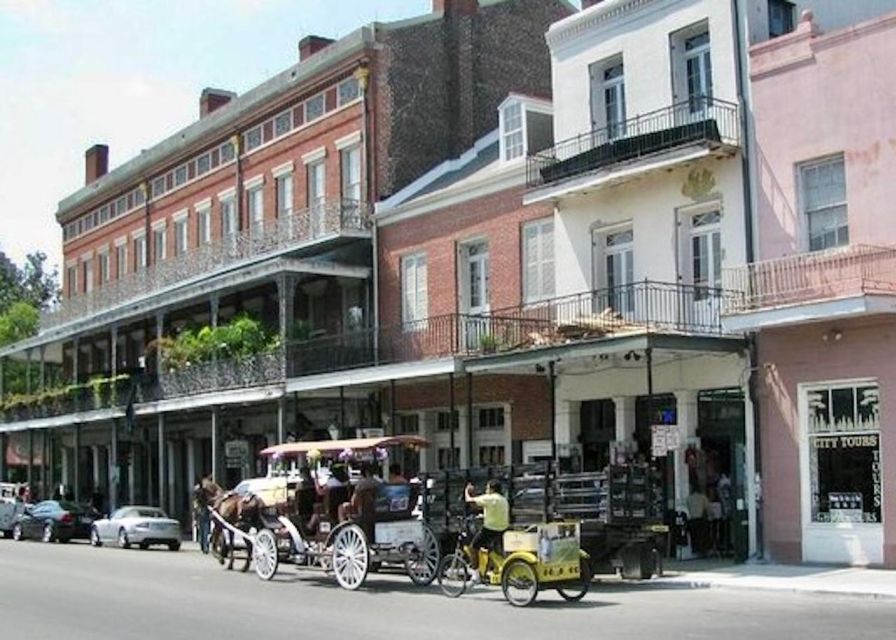
The French Quarter is the natural opening chapter. You pass through the city’s most famous district, with its compact streets and old buildings, before seeing St. Louis Cathedral beside the Mississippi River.
The cathedral’s roots reach back to 1720, making it one of the oldest cathedral sites in North America. You may not have time for an interior visit, but seeing it in relation to Jackson Square and the river helps place New Orleans in its early colonial setting.
The French Quarter can be noisy and crowded, and a minibus view is different from walking its streets. You will not get the same close look at balconies, courtyards, ironwork, or small restaurants that you would on foot. Still, the vehicle gives you an efficient first pass and helps you decide where to return later.
I recommend paying attention to the guide’s explanation of how the Quarter fits into the wider city. The point is not simply to tick off a famous district. It is to understand that New Orleans is more than its best-known nightlife zone.
Along Esplanade Avenue toward City Park
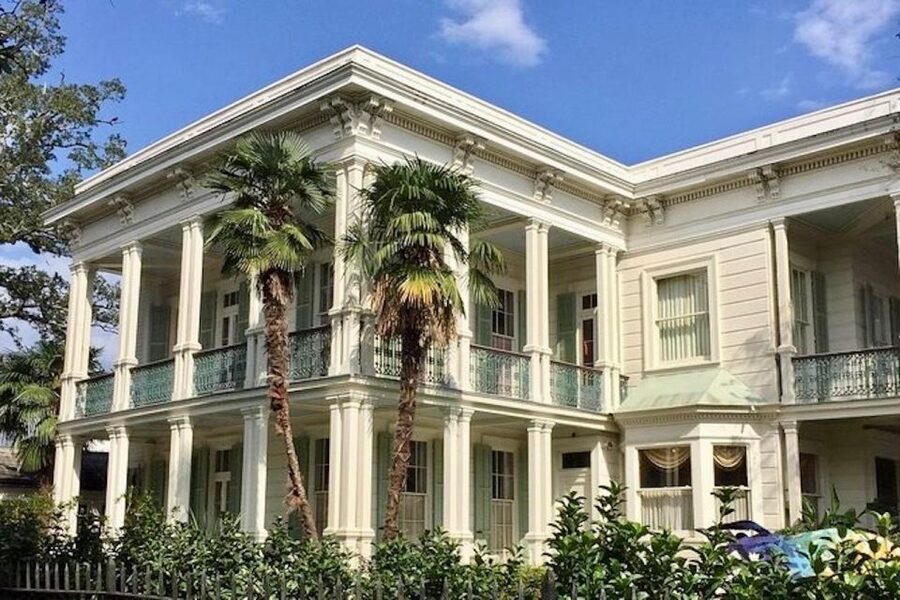
From the Quarter, the route follows Esplanade Avenue, known for its oak trees and grand homes. This part of the ride shifts the mood from dense historic streets to broad avenues lined with older residences.
The buildings offer a useful lesson in New Orleans architecture and wealth. Your guide explains the people and social forces behind these homes, along with the design details that make the area recognizable. You may see the outside of stately houses rather than enter them, so this portion works best for architecture fans who enjoy hearing the story behind a streetscape.
The route continues toward City Park, where you have a choice. You may visit the Besthoff Sculpture Garden or stop at Morning Call Cafe for coffee and beignets. That choice adds a personal touch, but it also means the exact experience may vary from one departure to another.
The sculpture garden is the better fit if you want art and a quiet outdoor stop. Morning Call suits you if a traditional New Orleans snack sounds more appealing. Food and drinks are not included in the $55 price, so plan to pay separately if you choose coffee and beignets.
Because the schedule is only three hours, do not expect a full tour of City Park. You get a taste of the setting and one selected stop, not an afternoon in the park.
More guided tours in the USA:
- Chicago River: 1.5-Hour Guided Architecture Cruise
★ 4.8 · 8,046 reviews - Charleston: History and Architecture Guided Walking Tour
★ 4.8 · 349 reviews - Charleston History, Homes, and Architecture Guided Walking Tour
★ 5.0 · 267 reviews - Chicago River: Guided Sunset Cocktail & Architecture Tour
★ 4.6 · 203 reviews
Faubourg Treme and the city’s African American story
The passage through Faubourg Treme is one of the most important parts of the route. Treme dates back to the 1700s and is one of the oldest African American neighborhoods in the United States.
This matters because a tour of New Orleans can easily become a narrow tale of French buildings, jazz clubs, and old families. Treme widens the picture. It points to the people, traditions, and struggles that shaped the city’s music, food, religion, and public life.
You should listen closely here, since the bus may pass through more of the neighborhood than it stops in. The value comes from the guide’s explanation of what you are seeing and why it matters. A passing street can carry more meaning when you understand its place in the city’s African American story.
The strongest commentary also avoids treating Treme as a museum piece. New Orleans has changed, and the tour’s focus on both past and present helps keep the neighborhood connected to the living city.
The Garden District and the American Sector
The Garden District brings another change of pace. Expect Victorian mansions, leafy avenues, and landscaped residential streets. This is the New Orleans of grand homes and formal beauty, a useful contrast with the French Quarter’s tighter blocks and more commercial energy.
Again, the tour is primarily a drive-by experience in this section. You can see the scale and style of the district, but you will not have time to examine every house or wander through its streets. If you know you want detailed architecture photography, plan a separate walking visit.
The route also passes through the Warehouse District, where old commercial buildings meet museums, galleries, and newer cultural uses. This area helps explain how New Orleans has adapted older parts of the city for art and public institutions.
The former American Sector is home to the National World War II Museum and the Contemporary Arts Center, described as one of the nation’s first art institutions. The tour does not include admission to either museum, so think of this as an introduction. You will see where they are and can return later if one fits your interests.
A short stop at Metairie Cemetery
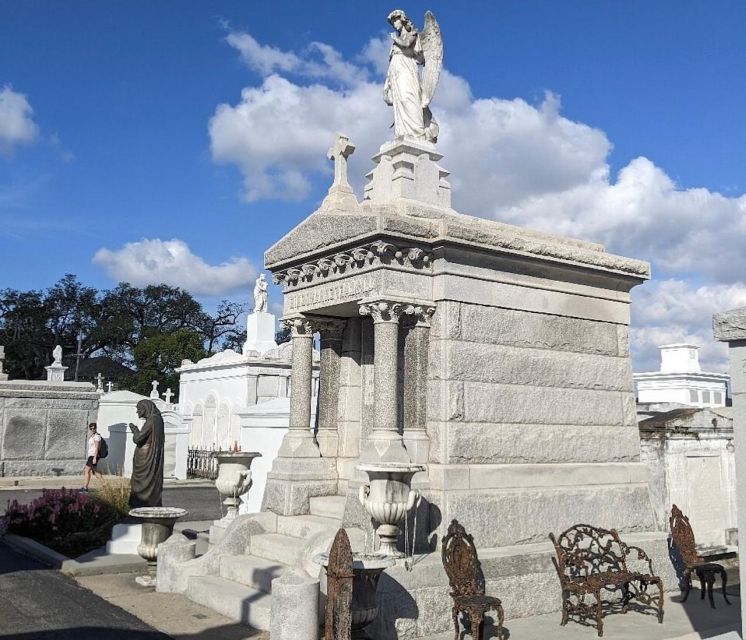
Metairie Cemetery offers one of the tour’s most distinctive stops. New Orleans is famous for above-ground tombs, a response to local ground conditions and the practical problems of burying people in a wet environment.
At first glance, the tombs may look like rows of small stone buildings. Your guide helps explain the burial customs and the blend of function, family memory, and design. This is not simply a quick cemetery photo stop. It shows how New Orleans adapted European traditions to local conditions.
The stop is brief, so you should not expect a full cemetery walk or a detailed account of every notable tomb. Still, it adds something that a standard French Quarter tour often misses. The city’s relationship with water shapes not only its streets and drainage systems, but also the way it buries its dead.
The cemetery visit also gives the route a welcome change of subject. After mansions, museums, and neighborhoods, you get a quieter look at how local life and death have been handled over time.
Hurricane Katrina and stories beyond the postcard
One of the more useful touches in the commentary is attention to Hurricane Katrina and its effects. A guide may use a visible site as a case study, helping you connect the storm to actual streets and neighborhoods rather than treating it as a distant event.
That makes the tour feel more current. New Orleans is often presented through old architecture and music, but the city’s recent past remains essential to understanding its population, infrastructure, and ongoing changes.
This is also where the guide’s skill matters most. The route can show you a place, but the explanation gives it meaning. Joseph, in particular, has been praised for including present-day events alongside older stories and for pointing out details that are easy to miss from online videos or social media clips.
You should keep your expectations realistic. No three-hour tour can explain Katrina, recovery, housing, and city government in full. What you get is a useful starting point and a reason to ask better questions during the rest of your visit.
Is $55 a fair price?
At $55 per person, the tour offers solid value if you want a broad city introduction. Hotel pickup and drop-off, a three-hour route, air-conditioned transport, and a live guide are all included. You avoid arranging several separate rides, and you cover districts that are far apart.
The value is strongest for first-time visitors, people with limited time, and anyone who prefers not to navigate unfamiliar streets in hot weather. It can also work well near the beginning of a longer stay, when you want to learn the city’s layout before choosing where to spend your own time.
The price is less compelling if you mainly want a slow French Quarter walk. You can explore parts of that district independently, and this tour gives you only a short look at each major area. Food, drinks, and museum admissions are extra, so add those costs if you choose Morning Call or plan to visit a museum afterward.
The 4.6 rating from 38 ratings suggests a strong overall experience, but the smaller number means you should still judge the tour by its format. It is a broad, guided survey, not a private custom tour.
Who should book this New Orleans tour?
I would recommend it to you if:
- You are visiting New Orleans for the first time.
- You want to see more than the French Quarter.
- You prefer a vehicle to long walks in hot or humid weather.
- You enjoy local history, architecture, cemeteries, and cultural context.
- You have only a few days and want help choosing where to return.
- You appreciate live explanation rather than sightseeing alone.
I would hesitate if you want a highly focused tour of one neighborhood, a long walking route, or time inside several museums. The vehicle covers ground, but the schedule limits extended stops.
The English-only format is another practical consideration. If you are comfortable following an English-speaking guide, the commentary should be easy to use as a city introduction. If not, you may miss much of what makes the route worthwhile.
Should you book it?
Book this tour if you want a comfortable overview that reaches well beyond the usual Bourbon Street circuit. The combination of Treme, Esplanade, City Park, the Garden District, Metairie Cemetery, and the Warehouse District gives you a better sense of New Orleans as a whole.
Go in expecting a guided survey, not a series of long visits. Keep your afternoon flexible, arrive curbside early, and bring money for coffee, beignets, or any later museum admission.
For most first-time visitors, the $55 price is reasonable because you are paying for both transport and interpretation. The best reason to book is not one landmark. It is the chance to connect many parts of New Orleans in a single morning, then return on your own to the places that catch your interest.
FAQ
How long does the New Orleans guided tour last?
The tour lasts three hours.
What neighborhoods and areas does the tour visit?
The route includes the French Quarter, Esplanade Avenue, City Park, the Garden District, the Warehouse District, Faubourg Treme, the former American Sector, and Metairie Cemetery.
Is hotel pickup included?
Yes. Hotel pickup and drop-off are included for selected hotels in downtown New Orleans and the French Quarter.
What type of transportation is used?
You travel in an air-conditioned minibus or mini-coach.
Is the tour offered in English?
Yes. The tour has a live English-speaking guide.
Are food and drinks included?
No. Food and drinks are not included. You may have the option to buy coffee and beignets at Morning Call Cafe.
Can I visit the Besthoff Sculpture Garden?
The route includes a stop at City Park, where you may visit the Besthoff Sculpture Garden or choose coffee and beignets at Morning Call Cafe.
Does the tour include museum admission?
No. The route passes the World War II Museum and the Contemporary Arts Center, but admission is not listed as included.
What happens if the weather is poor or the tour does not reach its minimum number of participants?
The tour requires good weather and a minimum number of participants. If it is canceled for either reason, you can choose another date or experience, or receive a full refund. You can also cancel up to 24 hours in advance for a full refund.
Just added around the USA
- Wilmington History and Architecture Tour★ 4.8 · 18 reviews
- Washington, DC: Georgetown Architecture Walking Tour★ 5.0 · 8 reviews
- New Orleans : Garden District Architecture Walking tour★ 4.8 · 5 reviews
- Washington DC: Dupont Circle & Embassy Row Architecture Tour★ 5.0 · 6 reviews
- Tulsa: Art Deco Walking Tour of Tulsa★ 5.0 · 8 reviews
- Castle to Capitol: Museums of the National Mall Architecture Tour★ 4.5 · 9 reviews
- Private Colonial Williamsburg Architectural Tour★ 5.0 · 5 reviews
- Iconic Capitol Hill Architectural Walking Tour★ 5.0 · 21 reviews
Historical Tours, compared.
Chicago in a Day: Food, History & Architecture Walking Tour
Read our review →
Kuala Lumpur: Batu Caves & Historic Buildings Tour
Read our review →
Charleston’s Best Highlights: History, Culture & Architecture
Read our review →
Palm Springs Modernism Architecture & History Bike Tour
Read our review →
Charleston: History and Architecture Guided Walking Tour
Read our review →
Historic Georgetown: History, Gossip, & Architecture Walking Tour
Read our review →
Charleston History, Homes, and Architecture Guided Walking Tour
Read our review →
Browse the lists this tour appears in