
Review · INDIA
Mumbai: Story of Mumbai through its architecture
Mumbai’s architecture tells the story of the city better than any single museum. On this walk, Chhatrapati Shivaji Maharaj Terminus gives you soaring Gothic stonework, while the Art Deco buildings around the Oval Maidan show how Indian merchants later embraced a modern style with a sharper edge. The route ends at the Gateway of India, where British ceremony gives way to the final departure of imperial troops.
I like the clear contrast between Gothic and Art Deco, and I like that the guide connects buildings to people, politics, and daily life. Guide Pankaj has been especially praised for making the architecture feel alive and for explaining how Indian and European motifs meet at CST. The main drawback is that most sites are viewed from the street, so this is an architecture walk, not a series of interior visits.
Key points to know before you book
- CST is the visual high point: See one of India’s grandest railway stations, a UNESCO-listed Gothic Revival building still used by more than 6 million commuters each day.
- The Oval Maidan makes the styles easy to compare: Gothic buildings line one side, while Art Deco buildings face them across the open ground.
- Rajabai Tower has an unusual personal story: The tower was funded by Jewish banker David Sassoon as a reading room and library, with maternal love at the heart of its story.
- The route links architecture with independence: Flora Fountain, the Gateway of India, and the last British troop departure all add political context.
- It is mainly an exterior walking tour: CST and the Gateway of India are the exceptions, while other buildings are seen from outside.
- The tour suits a small group or private booking: The experience is offered in English and lasts about 2.5 to 3 hours.
Why Mumbai’s buildings make such a good walking tour

Mumbai can look like a jumble of traffic, offices, cinemas, stations, and grand public buildings. A guide helps you read the city in layers. Gothic architecture points to British institutions and Victorian ambition. Art Deco reflects a later period when Indian business leaders adopted a clean, modern style that did not simply copy Britain.
I like this walk because the buildings are close enough to connect on foot. You are not spending the whole experience in a vehicle, watching landmarks slide past a window. You move from one architectural idea to another, with streets, cricket grounds, cinemas, libraries, and working public buildings filling in the gaps.
The walk lasts 2.5 to 3 hours, which is long enough to give the major buildings proper attention without taking over your day. At $32 per person, the value depends on what you want from a city tour. If you only need a list of photo stops, it may feel costly. If you want the design explained and the colonial period placed in a wider Indian story, the price is reasonable, especially for a private or small-group format with entrance charges included.
The guide speaks English. Pankaj is the guide specifically praised for his storytelling, but guide assignments can vary, so I would not book on the assumption that he will lead every departure.
A few more architecture tours around India worth a look
- British Architecture Walk, an immersive walking tour in Chennai
★ 5.0 · 60 reviews - The Hipster Chandigarh Architecture History Tour
★ 5.0 · 54 reviews - Mumbai heritage walk- Story of Gothic and Art Deco buildings
★ 5.0 · 33 reviews
Starting at Chhatrapati Shivaji Maharaj Terminus
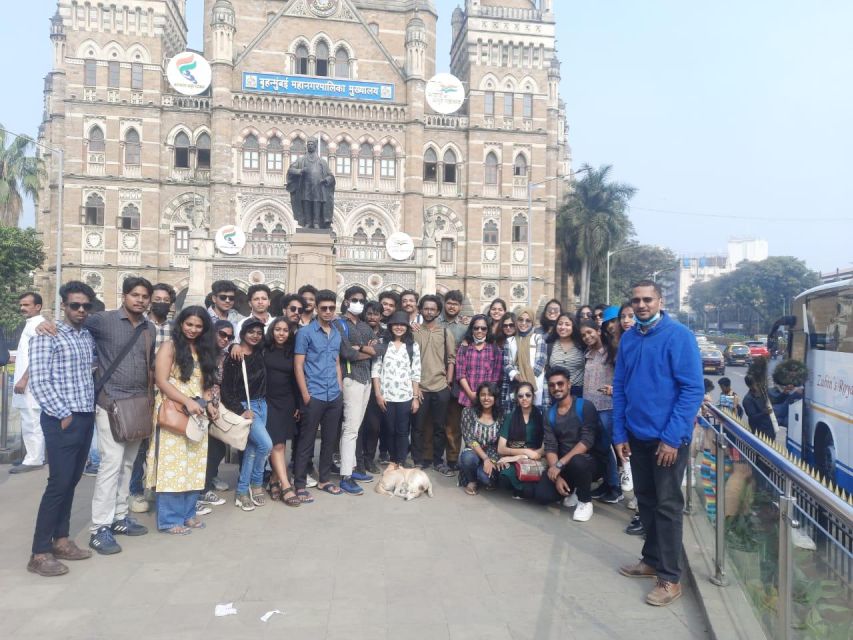
The walk begins around Chhatrapati Shivaji Maharaj Terminus, usually called CST, and formerly known as Victoria Terminus. This is the building that sets the tone for the entire experience.
CST is a major example of Victorian Gothic Revival architecture, but it is not simply a European building transplanted to India. Its Gothic forms are combined with details drawn from Indian architectural traditions. That mixture is the key point to watch for as you look up at the stonework, towers, ornament, and dramatic roofline.
The station is also a working transport hub, not a quiet monument. More than 6 million daily commuters use it, so the building has a useful tension between grand civic design and ordinary city life. I like that combination. You are seeing a historic structure in its original public role, with trains and commuters moving through the same place that once symbolized imperial power.
CST is one of the stops where entrance charges are included, although the experience is not presented as a long indoor station tour. Expect the guide to focus on the building’s exterior and key architectural features before the walk continues.
For photography, give yourself time to look above street level. The busiest parts of Mumbai can pull your eyes downward, but CST rewards attention to its upper sections and decorative details. The tour’s first stop is also its most elaborate Gothic example, so it gives you a reference point for the High Court, Elphinstone College, Rajabai Tower, and the other buildings ahead.
From Sterling Cinema and Azad Maidan to Flora Fountain

The route continues on foot past Sterling Cinema and Azad Maidan. These stops help place the architecture in everyday Mumbai rather than treating each landmark as a separate postcard.
Azad Maidan is known for memorable inter-school cricket matches. That detail matters because it shows how open public spaces function in the city. You are not just walking past another historic façade. You are moving through an area where sport, education, and city life meet.
Flora Fountain is Mumbai’s best-known fountain, made from Portland stone and topped by a statue of Flora, the Roman goddess of flowers. It was dedicated to people who died while fighting for an independent state of Maharashtra. The monument therefore carries two identities: a decorative Victorian-era feature and a marker of regional political memory.
This is one of the moments when the tour moves beyond style. A fountain may seem like a quick photo stop, but its dedication gives you a reason to ask who public monuments were built for, and who later gave them a new meaning.
Eros Cinema and Mumbai’s Art Deco turn

Eros Cinema was built in 1938 by architect Sorabji Keikhushru Bhedwar, with interior decoration by Fritz von Dreiberg. Its exterior rises in tiers and finishes with a semi-circular tower, giving the building the shape of a wedding cake.
That description is useful because Art Deco can otherwise sound abstract. Look for the stepped massing and rounded forms rather than expecting Gothic arches or heavy stone decoration. Eros was a cinema, so its design was meant to signal modern entertainment and urban confidence.
The stop also helps explain why Mumbai has so much Art Deco architecture. The style arrived after the grand Gothic buildings had already shaped the city center. It offered a newer visual language, one associated with cinema, technology, speed, and modern life.
You will see Eros from outside, so the guide’s explanation is especially important. Without context, it is easy to photograph the rounded tower and move on. With a guide, you can place it in the period when cinema buildings became major public landmarks.
Same city, a completely different century:
- Delhi Hidden Gems: Mehrauli, Lodhi Art & Sunder Nursery
★ 5.0 · 108 reviews - Jaipur City Heritage and Architecture Tour
★ 5.0 · 32 reviews - Le Corbusier’s Chandigarh : A Complete Architecture Tour
★ 4.7 · 25 reviews - Day trip from Bangalore to Lepakshi for Temple architecture & paintings
★ 5.0 · 15 reviews
Empress Court and the social meaning of Art Deco

Empress Court is an impressive residential Art Deco building and one of the best-preserved examples on the walk. Unlike a cinema or railway station, it was built for private domestic life. That difference gives you a useful look at how architectural fashion moved into Mumbai homes.
Living in these Art Deco buildings once signaled status and wealth. The style was not only about decoration. It said something about modern taste, money, and a new urban identity.
I particularly like this stop because it brings the conversation down to a human scale. CST represents a huge public institution. Empress Court shows how style entered the lives of residents and became part of the city’s residential streets.
The building is seen from outside, and you should respect that it remains a residential property. The point is to understand the façade and its place in Mumbai’s architectural story, not to expect access to private interiors.
The Oval Maidan’s sharp architectural contrast
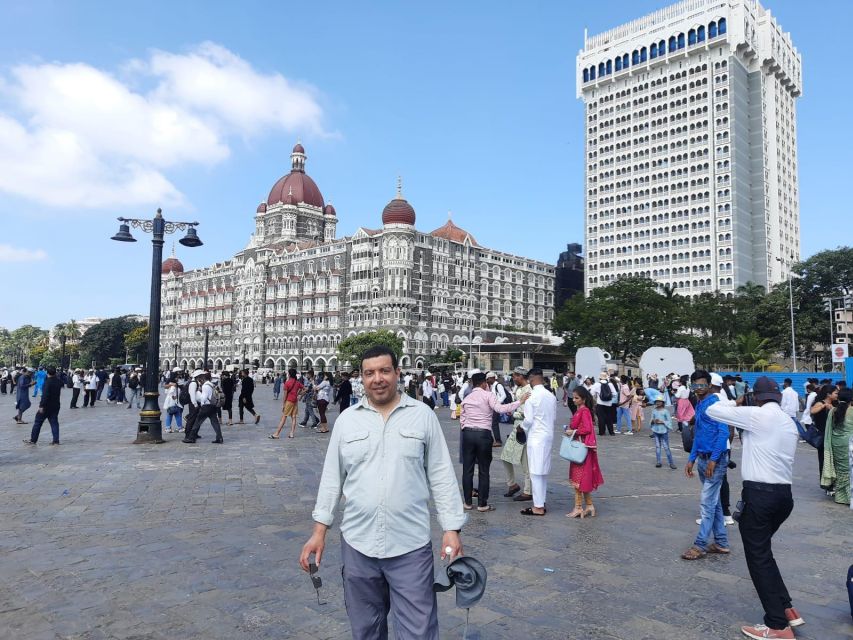
The Oval Maidan is one of the strongest teaching points on the walk. On one side, you see a line of Gothic buildings. On the other, Art Deco buildings face the open ground.
You can understand the change in architectural taste almost at a glance. Gothic structures tend to look formal, weighty, and tied to public institutions. Art Deco presents a cleaner, more geometric image. The open maidan gives you distance, which is rare in central Mumbai, and that makes the contrast easier to see than it would be on a narrow street.
The tour also explains the political edge behind this change. Indian merchants supported Art Deco in part as a way to express modernity on their own terms and mock the British establishment. That makes the style more than a design trend. It becomes part of a changing balance of power.
This is a good place to pause and take wide photographs rather than only close-ups. The full value of the Oval Maidan is in the relationship between the open ground and the two architectural rows.
Bombay High Court and the language of Gothic power
The High Court building is another strong Gothic example, designed by Colonel J. A. Fuller. Huge towers and broad staircases give it a formal, imposing appearance.
Look toward the top for statues representing Justice and Mercy. They are not random decoration. They reflect the ideals that a court wanted to project, at least in architectural form.
The building is seen from outside, so you will not be touring the courtrooms or interiors. That limitation is worth knowing before you book. Still, the exterior tells you plenty about how colonial institutions used architecture to communicate authority.
The High Court works well after CST because you can compare two large Gothic public buildings without confusing their purposes. CST served transport and commerce. The High Court represented law. Both used scale and ornament to make institutions feel permanent and powerful.
Rajabai Tower and the story of maternal love

Rajabai Tower is often called the Big Ben of Mumbai. It sits within the University of Mumbai complex and is a UNESCO heritage site, making it one of the most recognizable Gothic landmarks on the walk.
The tower is more than a clock tower. Its story centers on Jewish banker David Sassoon, who funded a reading room and library in 1862. The story of maternal love behind the tower gives the building an emotional connection that its dramatic stonework alone could not provide.
The structure is described as a blend of Revival-Gothic and Art Deco elements, and it is more than 125 years old. This is a useful reminder that architectural labels can overlap. Buildings change over time, and cities often adapt styles rather than following a neat textbook sequence.
The library holds about 70,000 rare books. You should not expect a long interior visit, since the building is viewed from outside on this walk, but the collection gives the site a purpose beyond its clock and tower. It was created as a place for reading and study, not just as a decorative landmark.
This is one of the stops where the guide’s storytelling matters most. The maternal story, the Jewish connection, the library, and the tower’s nickname give you several ways into the building.
David Sassoon Library and Elphinstone College
David Sassoon Library was built in 1862 as a Gothic reading room and library. It remains one of the area’s most appealing historic buildings, with a collection of approximately 70,000 rare books.
The library makes a good afternoon stop in its own right, but on this walk you should expect to see it from outside unless entrance arrangements say otherwise. Take time to notice how a building designed for quiet study differs from the larger institutional structures around it.
Elphinstone College adds another layer. Established in 1856, it has links to major Indian figures including Bal Gangadhar Tilak, Dr. B. R. Ambedkar, and Jamshedji Tata. The college is another Gothic structure, but its importance comes as much from education and public life as from its façade.
Together, the library and college show how Mumbai’s Gothic quarter was tied to learning. These were not only colonial offices and ceremonial buildings. They were places where reading, education, and political ideas shaped generations.
Regal Cinema and the road to the Gateway
Regal Cinema was Mumbai’s first Art Deco-style cinema hall, built in 1933. It was designed by Charles Stevens, whose father, Frederick William Stevens, designed Victoria Terminus, now CST.
That family connection gives the route a satisfying architectural link. You begin with Frederick Stevens’s great railway station and later encounter his son’s cinema. The two buildings belong to different styles and different eras, but they are joined by the Stevens name.
Regal also helps you see how Art Deco became part of public entertainment. Eros Cinema and Regal were not quiet residences or government offices. They were designed to attract attention and shape the experience of going out to watch a film.
Like most stops, Regal is seen from outside. That is fine for understanding its exterior design, but anyone hoping to inspect old cinema interiors should adjust expectations.
Gateway of India and the end of British rule
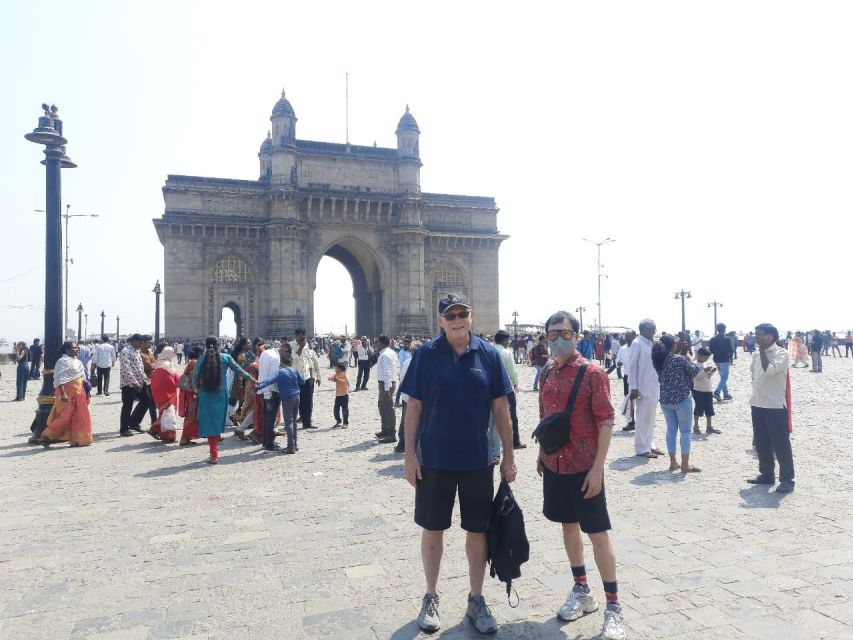
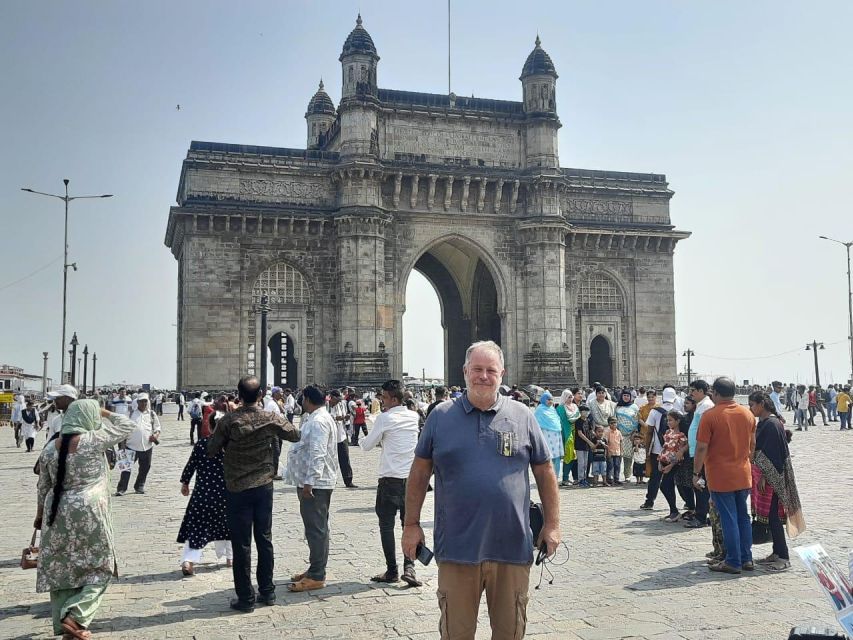
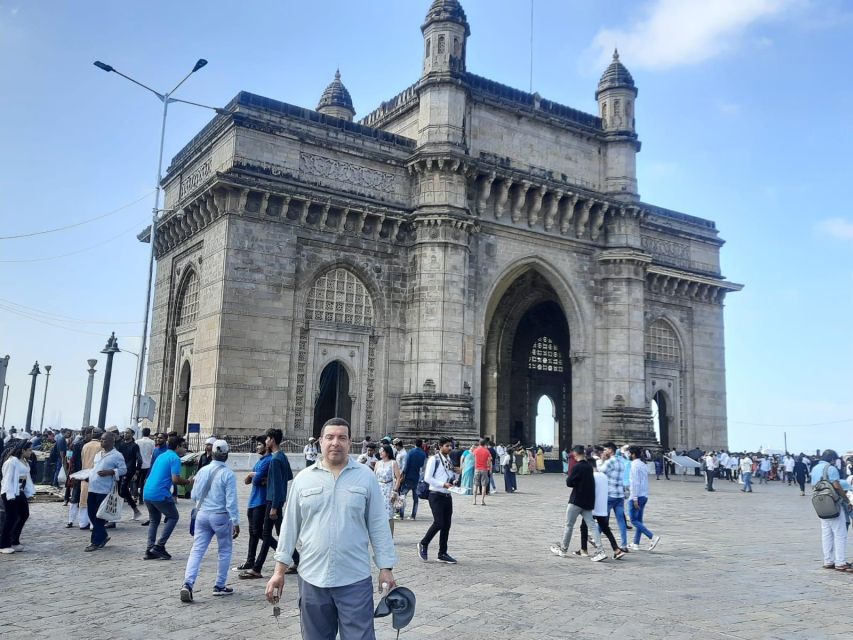
The walk finishes at the Gateway of India, where the architectural and political story comes together.
The gateway was built to mark the arrival of King George V and Queen Mary in 1911. Its form is a triumphal arch in the Indo-Saracenic style, with Muslim elements included in the design. The result is a building that combines imperial ceremony with architectural references drawn from India.
The final historical detail gives the monument a very different meaning. On February 28, 1948, the last British troops passed through the Gateway of India in a ceremony marking the end of British rule in India.
That makes the Gateway an effective final stop. You begin at a railway station built during the height of British power and finish at a ceremonial arch linked to the end of that rule. Between them, the route passes courts, colleges, libraries, cinemas, residences, and public spaces that show how Mumbai grew and changed.
The Gateway is one of the places where entrance charges are included, although the experience still centers on the monument and its setting rather than a long indoor visit. It is also the stated drop-off area, so the ending is convenient if you want to continue exploring that part of Mumbai afterward.
Timing, meeting point, and practical details
The tour lasts about 2.5 to 3 hours and is offered with a live English-speaking guide. Private and small-group options are available, which matters on a walking tour because a smaller group makes it easier to hear explanations and ask questions.
The meeting point is at the entrance of McDonald’s, where the guide will meet you. The starting or pickup location can depend on the option you select, so confirm the exact meeting details when booking rather than assuming every departure begins at the same place.
Pick-up and drop-off transportation are not included. This is a walking experience, and the listed route finishes at the Gateway of India.
Most sites are viewed from outside. CST and the Gateway of India are the exceptions listed for entrance access. If your priority is interior architecture, this may not be the right tour. If you want to understand the streets, façades, public spaces, and links between styles, the format works well.
Free cancellation is available up to 24 hours before the start time, and you can reserve now and pay later. Those terms are useful if your Mumbai schedule is still shifting.
Who should book this Mumbai architecture walk
I would choose this tour if you enjoy architecture but do not want a lecture disconnected from the city. The best parts are the links between buildings: Gothic and Indian motifs at CST, Art Deco and public entertainment at Eros and Regal, education at Elphinstone College, and political change at the Gateway of India.
It also suits first-time visitors who want a strong introduction to Mumbai’s historic center. The route gives you major landmarks, but it also explains why they look the way they do.
You should think twice if you dislike walking in busy city streets, need extensive indoor access, or want a relaxed sightseeing trip with long stops inside each building. The tour is better for looking, listening, and comparing façades than for museum-style exploration.
Should you book it?
Book it if you want Mumbai’s architecture explained as a story of power, education, commerce, entertainment, and independence. The contrast between CST’s Gothic grandeur and the Oval Maidan’s Art Deco row is the strongest reason to go, while Rajabai Tower and the Gateway of India add memorable personal and political stories.
At $32, the tour offers good value for a 2.5 to 3-hour guided walk, especially in a private or small group. Just remember that most sites are exterior views, and confirm the meeting point and start location before setting out.
FAQ
How long does the Mumbai architecture tour last?
The tour lasts approximately 2.5 to 3 hours.
What language is the tour conducted in?
The live tour guide speaks English.
Where does the tour meet?
You should wait at the entrance of McDonald’s, where the guide will meet you. The exact starting or pickup location depends on the option selected.
Is transportation included?
No. Pick-up and drop-off transportation are not included. The experience is a walking tour.
Which sites can I enter?
Chhatrapati Shivaji Maharaj Terminus and the Gateway of India are the sites listed with entrance access. All other sites are seen from outside.
Is this a private tour or a group tour?
You can choose between a private tour and a small-group option.
Does the tour include a guide and entrance charges?
Yes. A guide and entrance charges are included.
Can I cancel for a full refund?
Yes. You can cancel up to 24 hours in advance for a full refund.
Just added around India
- Victorian Gothic Heritage Quarter and Art Deco Walking Tour★ 4.9 · 14 reviews
- New Delhi: Mughal’s architecture tour with transfers★ 4.0 · 7 reviews
- Victorian Gothic Heritage Quarter and Art Deco Walking Tour★ 4.5 · 13 reviews
- 2 day tour from Mumbai to architectural wonder of Mandu★ 5.0 · 2 reviews
- Goa Walking tour: History, Culture, Art and architecture★ 4.5 · 2 reviews
- British Architecture Walk in Chennai by Wonder tours★ 5.0 · 10 reviews
- South India Tour- Temple Architecture and Backwaters★ 5.0 · 7 reviews
- Day trip from Bangalore to Lepakshi for Temple architecture & paintings★ 5.0 · 15 reviews
India Architecture Tours, compared.

Delhi Hidden Gems: Mehrauli, Lodhi Art & Sunder Nursery
Read our review →
British Architecture Walk, an immersive walking tour in Chennai
Read our review →
The Hipster Chandigarh Architecture History Tour
Read our review →
Mumbai heritage walk- Story of Gothic and Art Deco buildings
Read our review →
Le Corbusier’s Chandigarh : A Complete Architecture Tour
Read our review →
Day trip from Bangalore to Lepakshi for Temple architecture & paintings
Read our review →
Victorian Gothic Heritage Quarter and Art Deco Walking Tour
Read our review →Browse the lists this tour appears in