
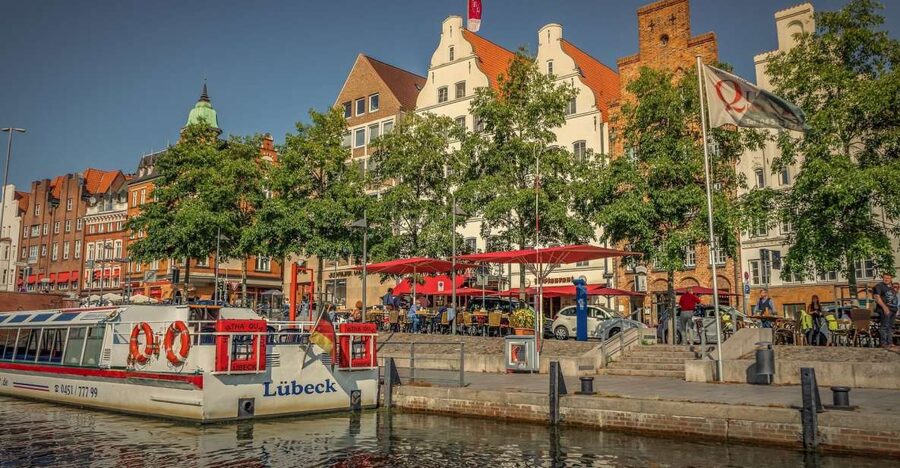
Review · GERMANY
Lübeck: Private Historical and Architectural Walking Tour
Lübeck’s story comes alive through its brick buildings, narrow lanes, and Baltic Sea trading past. This 90-minute private walk links the Holsten Gate, St. Mary’s Church, Buddenbrook House, and Town Hall, so you get a useful first look at the old city without spending half a day on your feet.
I like two things right away: the guide can shape the pace for your private group, and the marzipan tasting adds a tasty bit of local culture rather than another round of dates and architectural names. The main consideration is that entry tickets are not included, and the short duration means several sites are viewed from outside or discussed briefly rather than explored at length.
Key points at a glance
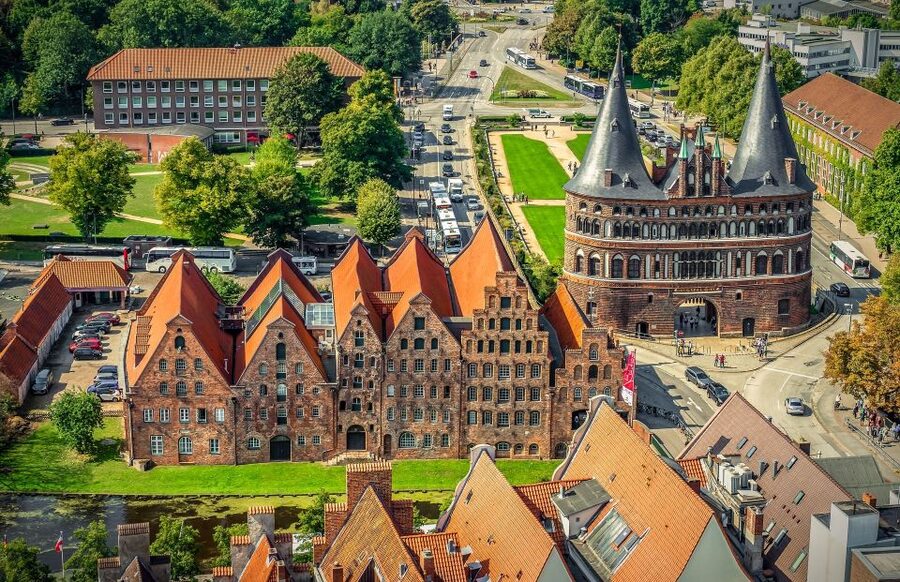
- Holsten Gate begins the story: Meet by Lübeck’s best-known medieval city gate, built in 1464.
- A private group of up to 15: You can ask questions and keep the walk focused on your interests.
- Marzipan is part of the tour: Taste different varieties while learning why the sweet became linked with Lübeck.
- Brick Gothic architecture takes center stage: See St. Mary’s Church, five church towers, salt storehouses, and merchant homes.
- Thomas and Heinrich Mann are included: The route stops at Buddenbrook House, connected with the two German writers.
- A compact old-town introduction: In 90 minutes, you cover major sights, but you will need extra time for paid interiors.
Starting at the Holsten Gate in 1464
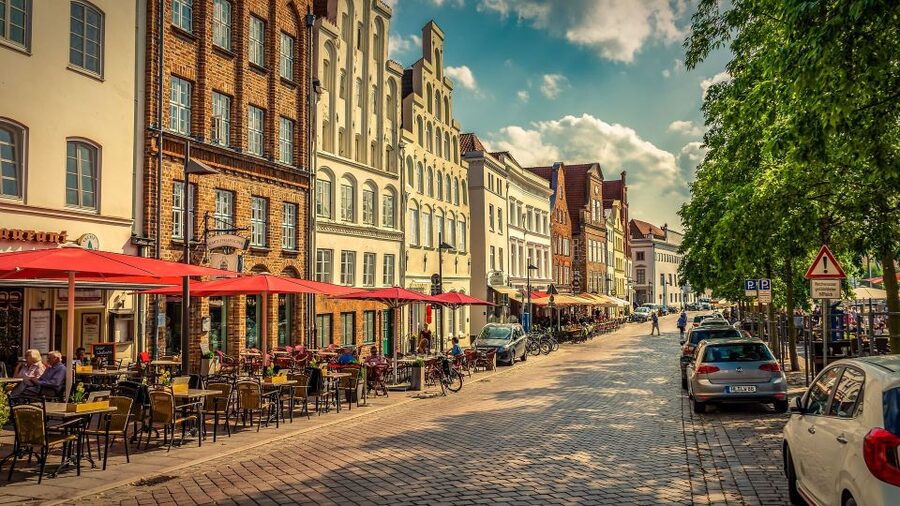
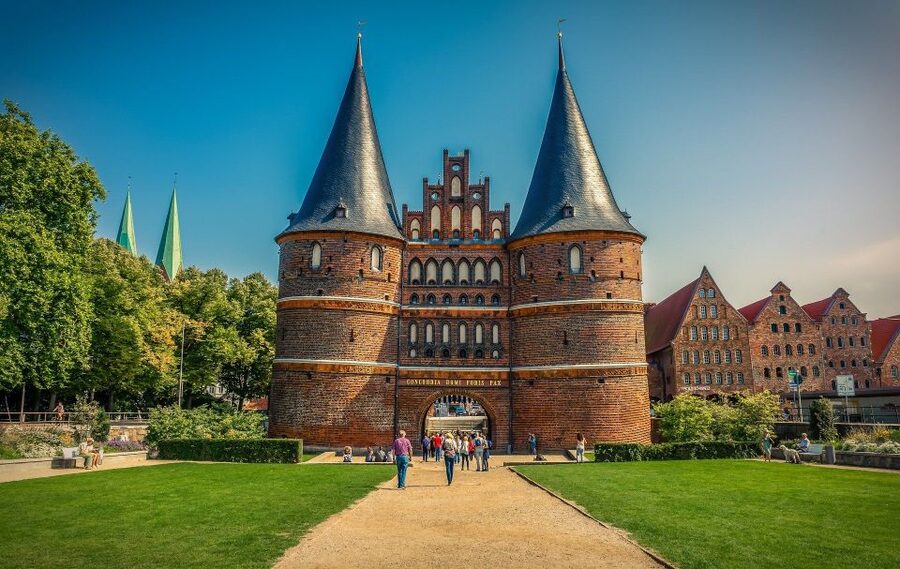
Your meeting point is in front of the Holsten Gate, near Museum Holstentor. That makes practical sense. The gate is easy to identify, and it gives your guide a strong opening image of Lübeck’s past.
Built in 1464, the Holsten Gate is one of the last surviving Gothic remnants of the city’s medieval fortifications. Lübeck has only two remaining city gates, so this is not just a photogenic entrance. It marks the defensive edge of the old town and hints at the power the city once held in Baltic Sea trade.
The gate’s heavy brick construction also introduces the building style you will see throughout the walk. Lübeck is known for brick Gothic architecture, a northern European form shaped by the local supply of building materials and the wealth of merchants who financed churches, homes, warehouses, and civic buildings.
Your guide explains why the gate was linked with freedom. That idea matters because Lübeck was not simply a walled settlement. It became an important trading center whose influence reached along the Baltic Sea. The gate made that wealth visible, but it also protected the city and controlled movement in and out.
The meeting point is convenient, though you should arrive with a little time to spare. The tour begins outdoors, so comfortable shoes and weather-appropriate comfortable clothing are sensible. The route is on cobbled streets, and the experience is not suitable for wheelchair users or people with mobility impairments.
More architecture walks in Germany:
- Düsseldorf: Guided City Architecture Walking Tour
★ 4.6 · 61 reviews - Potsdam: Guided Walking Tour of UNESCO Site and Architecture
★ 4.7 · 49 reviews - Private walking Tour: Berlin Architecture Tour
★ 5.0 · 14 reviews
Lübeck’s skyline and the Merchants’ Quarter
As you move farther into the old city, your guide points out views across Lübeck’s historic skyline. The city is often called the City of Seven Spires, a nickname tied to the tall church towers that rise above the old town.
The walk includes views of five churches, salt storehouses, and large brick homes built by wealthy merchants in the late 1700s. These sights help explain how trade shaped the city. The Baltic Sea routes brought money, goods, and influence, and the merchants put that success into visible form.
I like this part of the tour because it connects architecture with everyday economics. You are not just looking at handsome facades. You are learning why Lübeck’s merchants needed large homes, why warehouses mattered, and how trading routes helped shape the city’s public buildings.
The Merchants’ Quarter near St. Mary’s Church adds another layer. This was an area linked with the men who controlled much of Lübeck’s commercial life. Your guide discusses their role in the city’s economic development, giving the streets a human angle. The buildings become reminders of business decisions, trade links, and social status.
The drawback is time. Ninety minutes is enough for an overview, not a full architectural study. If you want to examine every facade or stop for photographs at each viewpoint, you may need to choose between listening and lingering. On a private tour, you can ask the guide to pause, but the route still has several major stops to cover.
Buddenbrook House and the Mann family
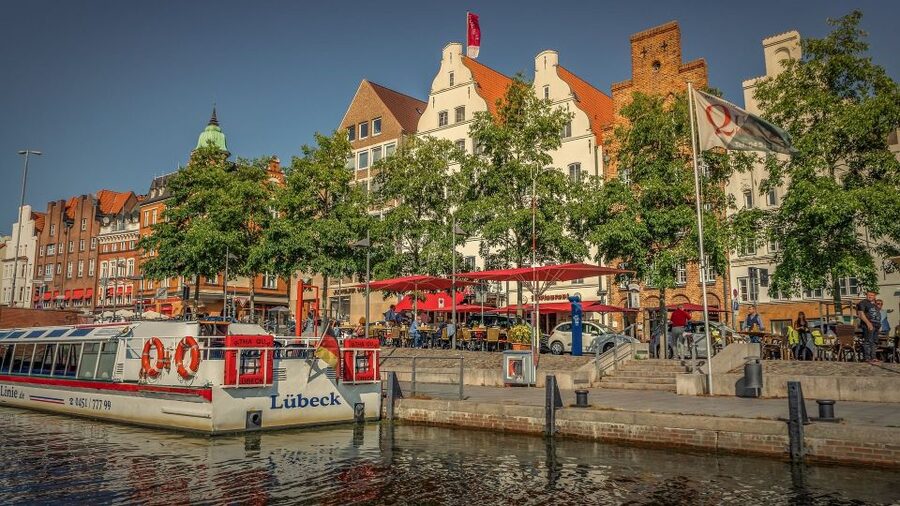
The tour continues to Buddenbrook House, associated with German writers Thomas Mann and Heinrich Mann. The stop gives the walk a literary turn after its focus on trade, fortifications, and religious buildings.
Thomas Mann’s novel Buddenbrooks is closely linked with Lübeck and with the city’s merchant world. The connection makes sense within this tour because the earlier stops show you the kind of prosperous commercial society that shaped the Mann family’s setting.
Your guide follows the footsteps of Thomas and Heinrich Mann and explains their connection with the house. This is a useful stop even if you are not a dedicated reader of German literature. It shows how Lübeck’s old buildings served not only as homes and businesses, but also as material for art and memory.
Keep in mind that entry tickets are not included in the tour price. You should treat the stop as an important point on the walking route and ask the guide what can be seen during the tour itself. If you want to explore an interior museum, plan for a separate admission and additional time beyond the 90 minutes.
The private format helps here. You can ask for more context about the Mann family, the novel, or Lübeck’s merchant class without worrying about a large public group moving on before your question is answered.
St. Mary’s Church and the little devil
St. Mary’s Church is one of the tour’s main architectural stops. It is described as the third-largest brick Gothic church in Germany, and its scale helps you understand the confidence of medieval Lübeck.
The church also brings religious life into the story. After seeing the commercial strength of the Merchants’ Quarter, you encounter the grand civic and spiritual building that merchants helped support. The church is part of the same urban story as the gates, homes, and storehouses: trade created wealth, and wealth helped shape the skyline.
Your guide also tells the entertaining story of the little devil outside the church. It is a small detail, but this is exactly the kind of local tale that can make a walking tour stick in your mind. You may forget a date, but you are more likely to remember a mischievous figure connected with a huge Gothic church.
Admission is not included, so do not assume the tour price covers entry inside St. Mary’s. The details supplied for the experience focus on the church’s history and exterior visit. If you want to see the interior, confirm the current admission arrangements and opening conditions before booking or arriving.
The church is also a good place to appreciate Lübeck’s brick style. Rather than relying on pale stone, northern builders used brick to create tall walls, pointed forms, and elaborate detail. Across the tour, the repeated use of brick gives the old town a look that feels distinct from many southern German cities.
More history tours in Germany:
- Private Taxi Tour City East & West History and Architecture 3-4h
★ 5.0 · 42 reviews - Private Munich Tour for History Buffs with Architectural Gems and WWII sites
★ 5.0 · 3 reviews - Private Taxi Tour of City East History and Architecture 2-3h
★ 5.0 · 2 reviews - Chicago in a Day: Food, History & Architecture Walking Tour
★ 5.0 · 1,153 reviews
Marzipan, baked fresh and tied to Lübeck
The marzipan stop gives the tour a welcome change of pace. At a traditional bakery, you taste different varieties of freshly baked marzipan and learn about the sweet’s importance in Lübeck.
This is more than a snack break. Marzipan is one of the city’s best-known food traditions, and the guide explains its mouthwatering history and significance. The tasting helps connect Lübeck to a form of local culture that you can experience with your senses rather than only through dates and buildings.
You will taste-test several varieties, though the supplied details do not specify which flavors or how much is included. If you have allergies or dietary restrictions, ask before tasting. The experience information does not provide ingredient or allergen details.
I especially like the balance this stop brings to the route. A private walking tour can sometimes become a parade of churches and facades. A bakery visit gives you a practical memory of Lübeck and a chance to ask about a product you may want to buy later.
The stop also fits the wider theme of trade. Marzipan became important in Lübeck partly because the city’s commercial links brought goods and ingredients through the Baltic trading network. Your guide can connect the treat to the same commercial world introduced at the Holsten Gate and in the Merchants’ Quarter.
Town Hall and Lübeck’s civic power
Before the tour ends, you stop at Lübeck’s Town Hall. It is considered one of the most beautiful town halls in Germany and forms a fitting final chapter to the walk.
The Town Hall shifts the focus from private merchant wealth to public authority. After seeing the defenses, churches, homes, and literary connections of the old city, you finish with the building where civic decisions were made.
The Town Hall is also part of Lübeck’s UNESCO World Heritage Site. The designation covers the character of the old town, including its historic street pattern, church towers, merchant houses, and distinctive brick buildings. A UNESCO label alone does not tell you what to notice, but this tour gives the label useful context by showing the parts that make the old town important.
The stop is also a natural place to review the city’s development. Lübeck grew through trade, invested in defenses, built impressive religious structures, and created civic spaces that reflected its influence. In a short walk, you see how those pieces fit together.
Again, do not confuse a stop at the Town Hall with an included interior visit. Entry tickets are not included, and the tour details do not promise admission to any attraction. The guide’s value is the explanation and the route, not bundled museum access.
How the private format affects the experience
The tour costs $265 per group of up to 15 people. That is a high total if you are traveling alone or as a couple, but it can be fair for a larger family or group because the price is not charged per person.
For example, a group of 10 pays about $26.50 per person. A full group of 15 pays about $17.67 per person. A smaller group pays more per person, so the value depends heavily on how many people share the booking.
You also get a private guide rather than a standard public group. That means you can ask about the Mann family, Baltic trade, church architecture, or marzipan without competing for attention. It also makes the walk more useful for families or friends who want a shared introduction to Lübeck at their own pace.
The trade-off is the short running time. At 90 minutes, you are buying a focused orientation rather than a full day of sightseeing. I see the tour working best at the beginning of your stay. You can learn the shape of the old town, mark the places you want to revisit, and then return to the church, museum, or Town Hall with more time.
The guides speak German and English. The guide’s name is not provided before booking, so you cannot select a particular person in advance. One recent German-language evaluation praised the guide’s strong personal connection with Lübeck and ability to explain the city down to individual bricks. Another praised the guide as friendly and capable, but noted that the guide could have made their identity easier to spot at the meeting point.
That last point is useful. Look carefully for the guide near the Holsten Gate and Museum Holstentor, and confirm the meeting details before the start. The experience information does not provide a guide uniform, sign, or other identifying feature.
Who should book this Lübeck walk?
I would recommend it to a first-time visitor who wants a clear introduction to Lübeck’s old town without joining a large group. It also suits families, private groups, and anyone who enjoys connecting buildings with trade, literature, and local food.
The tour is a good match if you value conversation. The private setup gives you room to ask questions and request more attention to the subjects that interest you most. It is also useful for a group with mixed interests because the route includes architecture, history, literature, religion, and food.
You may want something else if you prefer long interior visits. The price does not include entry tickets, and the 90-minute route covers several major sights. You will see and discuss more than you can fully explore.
It is also not suitable for wheelchair users or people with mobility impairments. Cobblestones, walking distance, and the historic character of the old town can make the route difficult for anyone who needs step-free access or a more accessible surface.
Free cancellation is available up to 24 hours in advance, and you can reserve now and pay later. Those terms offer useful flexibility, but they do not change the need to check the physical demands of the route before booking.
Should you book this private Lübeck tour?
Book it if you want a compact, personal introduction to Lübeck and your group can share the $265 cost. The strongest reasons are the private guide, the smart mix of major sights, and the marzipan tasting, which keeps the experience from feeling like a string of facades.
I would be especially inclined to book it early in a Lübeck visit. Use the walk to understand the old town, then return on your own to spend more time inside Buddenbrook House, St. Mary’s Church, or another site if admission and opening hours allow.
Skip it if you want extensive museum time, need wheelchair access, or are traveling alone and find the group price too high. For a larger group seeking a friendly, story-led walk, the price becomes much easier to justify.
FAQ
How long is the Lübeck walking tour?
The tour lasts 90 minutes.
Where does the tour meet?
You meet in front of the Holsten Gate near Museum Holstentor.
Is the tour private?
Yes. It is a private group experience for up to 15 people.
Which languages are available?
The live guide speaks German or English.
Are entry tickets included?
No. Entry tickets are not included in the tour price.
Is the tour suitable for wheelchair users?
No. The experience is not suitable for wheelchair users or people with mobility impairments. Comfortable shoes and comfortable clothing are recommended.
Just added around Germany
- Beautiful Baroque Potsdam: A Self-Guided Audio Tour★ 4.5 · 4 reviews
- Munich Your Way: Private Tour with Architect & Guide★ 5.0 · 2 reviews
- Private Munich Tour for History Buffs with Architectural Gems and WWII sites★ 5.0 · 3 reviews
- Art Nouveau Meets Street Art in Munich (Max. 12 guests)★ 5.0 · 3 reviews
- Hidden Architectural Gems of Munich (Max. 16 guests)★ 5.0 · 2 reviews
- Architectural Frankfurt: Private Tour with a Local Expert★ 5.0 · 2 reviews
- Private Taxi Tour of City East History and Architecture 2-3h★ 5.0 · 2 reviews
- Architectural Berlin: Private Tour with a Local Expert★ 4.0 · 3 reviews
Walking Tours, compared.
The Official Art Deco Walking Tour by The Miami Design Preservation League
Read our review →
Barcelona: Gothic Quarter Ghosts and Legends Walking Tour
Read our review →
Barcelona: Old Town and Gothic Quarter Walking Tour
Read our review →
Lecce: Baroque Architecture and Underground Walking Tour
Read our review →
Chicago in a Day: Food, History & Architecture Walking Tour
Read our review →
Ramblas, Old Town, Gothic and Gaudi Architecture Walking Tour
Read our review →
Chicago’s Secret Interiors Architectural Walking Tour
Read our review →Browse the lists this tour appears in