
Review · WASHINGTON DC
Embassy Row: Architecture, Mansions & International Intrigue
Embassy Row is where Washington’s polished public face meets its old-money past. In two hours, you’ll walk from the Dupont Circle fountain past more than 20 embassies, grand mansions, diplomatic residences, and the quiet streets of Kalorama. The stories reach from Gilded Age fortunes to international scandals, giving the buildings some human drama.
I like the strong architectural focus and the route’s mix of grand Massachusetts Avenue, leafy Kalorama, and the Spanish Steps. I also like that guides such as Dan and Eli have been praised for being fun and easy to follow. The main drawback is value: at $49 per person, this is a story-led walk, not an entry-heavy sightseeing tour, and the promised embassy visit is only occasional.
Key points to know before you book
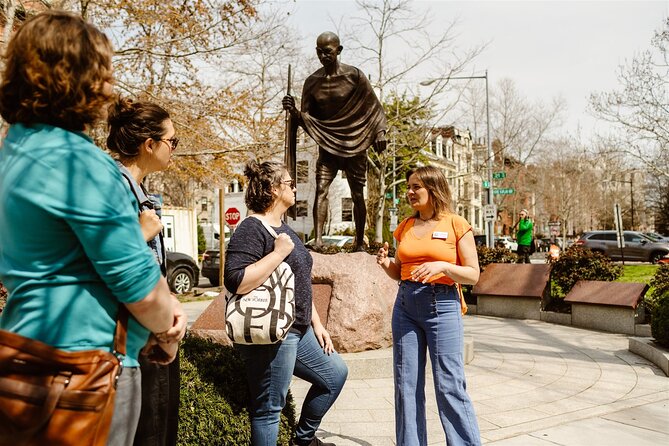
- Dupont Circle is both the meeting point and the natural opening scene, with the 1921 fountain, park paths, cafés, markets, and street activity.
- More than 20 embassies and residences appear along the route, but you do not enter them as a normal part of the tour.
- The mansions are the star attraction, with Beaux-Arts and Italian Renaissance Revival details linked to Washington’s wealthy families.
- The route includes Sheridan Circle, Kalorama, the Spanish Steps, and Woodrow Wilson House, giving the walk more variety than a straight avenue stroll.
- A two-hour morning format keeps the tour manageable, but you should expect a fair amount of walking outdoors.
- The price pays mainly for interpretation and access to a well-planned route, not museum admissions or guaranteed interior visits.
Why Embassy Row makes a good walking tour
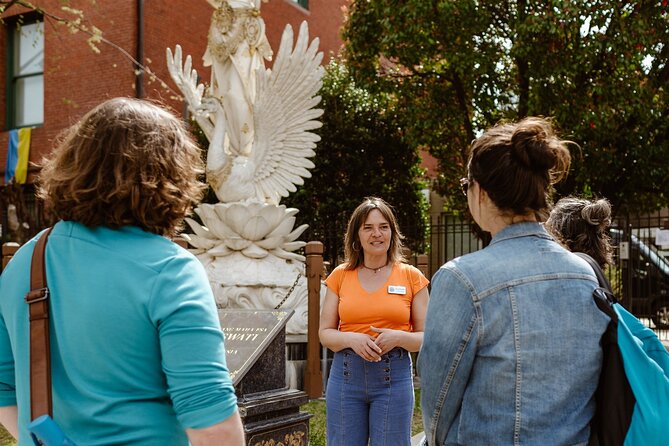
Washington is often presented through monuments, presidents, and federal buildings. Embassy Row offers a different city. Here, power hides behind gates, flags, old stone façades, and carefully maintained residences. The tour helps you read that private-looking world from the sidewalk.
I like this area because the buildings are not just pretty backdrops. Their former owners, present diplomatic roles, and changing uses give the walk a plot. One house may point to a millionaire’s taste, another to a foreign government’s public presence, and another to an old club for scholars and artists.
The route also avoids the feeling of a single-purpose architecture lesson. You begin in a social neighborhood, move along a formal avenue, pass grand homes and embassies, then turn into quieter Kalorama. That change of pace matters. It keeps the two hours from becoming a long row of façades.
Still, you should set your expectations correctly. This is not a tour of embassy interiors. The stated plan is to view the embassies from outside, with more than 20 missions and residences included along the way. On occasion, the group may be invited inside an embassy or residence, but that cannot be counted on when deciding if the $49 price works for you.
A few more architecture tours around the USA worth a look
- Chicago Architecture River Cruise
★ 5.0 · 15,756 reviews - Chicago River 90-Minute Architecture Tour
★ 4.5 · 9,629 reviews - Chicago River: 1.5-Hour Guided Architecture Cruise
★ 4.8 · 8,046 reviews
Starting at the Dupont Circle fountain
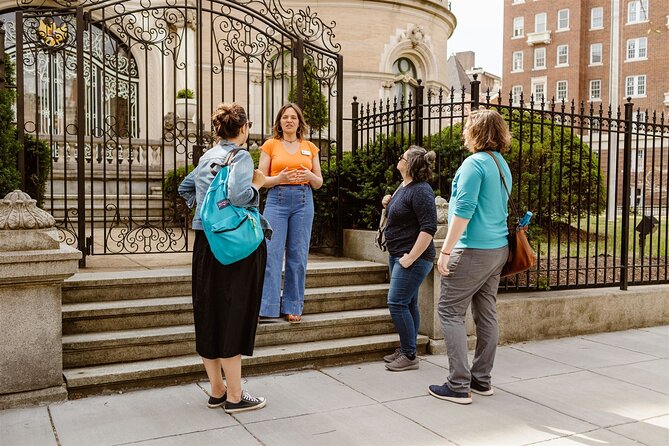
Meet at the fountain in the center of Dupont Circle and look for the guide in orange. This is a practical meeting point because the circle is easy to recognize, and the fountain gives the guide a clear place to gather the group.
The fountain dates to 1921 and was designed by Daniel Chester French and Henry Bacon. The names matter because French also created major American public sculpture, while Bacon is closely linked with the Lincoln Memorial. Here, their work is more relaxed: a decorative centerpiece for a neighborhood park rather than a solemn national monument.
Dupont Circle gives you a useful introduction to the area’s character. The park is surrounded by cafés, local markets, street performers, and busy city streets. It is not simply a photo stop. It shows why this part of Washington has long worked as a place for meetings, conversation, and public life.
This opening also helps you notice the contrast ahead. Dupont Circle feels open and social. Embassy Row quickly becomes more formal, with larger lots, guarded entrances, flags, and residences designed to project status.
Massachusetts Avenue and the old Millionaire’s Row

The walk then follows Massachusetts Avenue, the backbone of Embassy Row. This stretch was once known as the Gilded Age’s Millionaire’s Row, and the nickname tells you what to look for: scale, decoration, imported styles, and the confidence of families who wanted their homes to make an impression.
The mansions represent several architectural tastes, including Beaux-Arts and Italian Renaissance Revival. You’ll see grand façades, formal entrances, carved details, and the kind of proportions that make an ordinary city house look modest by comparison.
The useful part of a guided walk is learning to connect design with ambition. A mansion’s size can suggest wealth, but its style can also hint at the owner’s taste and the era’s love of European references. Your guide’s commentary is meant to turn a series of impressive fronts into a story about Washington’s social world.
You should bring a camera, but do not expect every building to offer a clear, close view. Embassy Row is an active city street, and many properties are private or protected. The best photographs often come from the broader composition: a mansion, its gate, a flag, and the avenue stretching past it.
The route includes international diplomatic missions as well as former private homes. Embassies are working places, not museums, so the experience is mainly visual from the sidewalk. Their flags and façades offer small clues about national identity, while the guide explains how the avenue became a center for diplomacy.
Diplomatic stories behind the gates
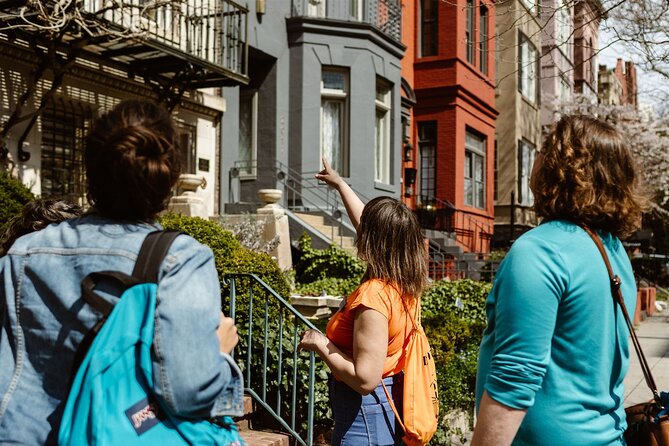
Architecture gives you the first layer, but the tour’s real personality comes from its stories of power, scandal, and millionaire whims. The exact balance may depend on the guide. Dan and Eli have both received especially warm comments for making the walk fun, relatable, and easy to follow.
That personal delivery matters here. Without commentary, Embassy Row can become a procession of impressive doors. With a good guide, you get reasons to pause, compare, and wonder who lived in each house, why a diplomatic mission occupies a particular building, and how Washington’s elite once used architecture to display influence.
The tour is presented as a look at people and places that shaped the neighborhood. That makes it a better fit for you if you enjoy social history and political anecdotes, not just architectural labels. If you want a long list of dates or detailed embassy policy, this may feel lighter than a formal academic lecture.
There is also a useful limit to the intrigue. The supplied descriptions promise stories of diplomatic scandals and wealthy owners, but they do not promise a fixed list of incidents. The guide’s personality will shape how much detail you hear. One past participant found the stories interesting but felt there were not enough of them for the price, so story depth is the main variable to consider.
Same city, a completely different century:
- Chicago Architecture Center River Cruise aboard First Lady
★ 5.0 · 5,536 reviews - Chicago: Architecture River Cruise Skip-the-Ticket Line
★ 4.8 · 4,325 reviews - Chicago River 45-Minute Architecture Tour from Magnificent Mile
★ 4.5 · 2,924 reviews - Chicago Lake and River Architecture Tour
★ 4.5 · 2,308 reviews
The Cosmos Club and Washington’s intellectual side

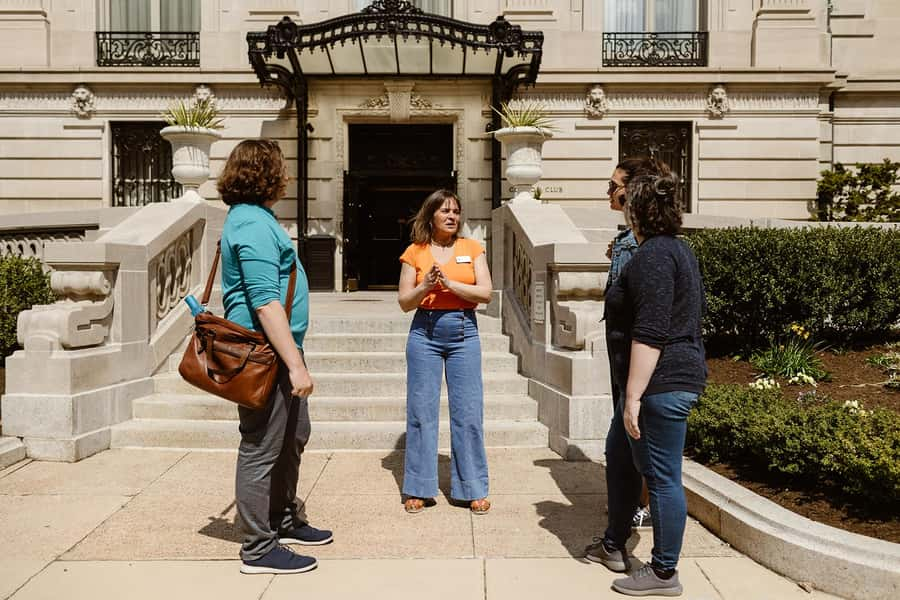
One notable stop is the Cosmos Club, a private club founded in 1878. It occupies a mansion with a grand façade and richly decorated interiors, though the normal tour does not include entry.
The club is associated with intellectuals, dignitaries, and people from the arts and sciences. That gives the route a useful counterpoint to the stories of inherited money and diplomatic power. Embassy Row was not only a street of wealthy households. It also became a place where people connected to scholarship, culture, and public service gathered.
From outside, you can appreciate the building’s scale and setting. The more important point is what it represents: private institutions helped shape Washington’s social and cultural life alongside government offices and foreign missions.
Do not treat this as a guaranteed interior visit. The included experience lists outside views of the mansions and embassies, not regular admission to the Cosmos Club. The guide’s explanation is the reason to stop.
Anderson House and the Andersons’ world travels
Anderson House offers another strong architectural moment. It was the winter home of Larz and Isabel Anderson and is now the headquarters of the Society of the Cincinnati.
The house reflects the Andersons’ travels and taste through Italian murals, carved woodwork, and ornate decoration. Even if you only see the exterior during this walk, the story helps you understand how Washington’s richest residents used their homes as displays of education, travel, and social position.
This is one of the stops where a little context adds a lot. The building is not simply an old mansion preserved for its looks. It shows how early 20th-century Washington families borrowed European art and design to create a sense of refinement at home.
If you are especially interested in interiors, note that this tour is not built around house entry. Anderson House has more to offer inside than you can normally experience on this walking route. You may want to treat the outside visit as a preview rather than a complete museum visit.
Sheridan Circle and the change into Kalorama
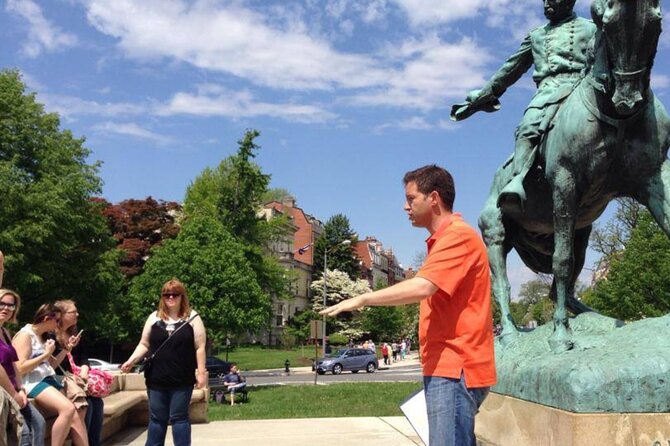
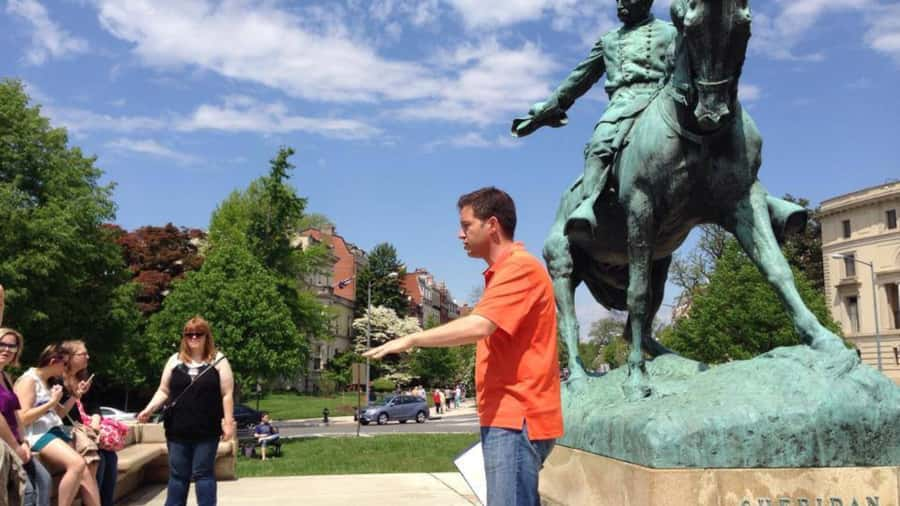
As the walk continues toward Sheridan Circle, the mood shifts. Massachusetts Avenue has the broad presence of a major diplomatic corridor. Sheridan Circle and the surrounding streets feel more residential, with a calmer rhythm and grand homes set among trees.
This section gives your legs a small break from the visual repetition of embassy façades. You continue walking, but the route starts to feel more like a neighborhood stroll than an avenue tour.
From there, the group heads into Kalorama. The area is included because it adds a quieter residential setting and connects the diplomatic story to Washington’s private life. The tour is still focused on buildings and people, but the streets feel less public and formal than Embassy Row.
I like this route design. A two-hour walk needs variety, and the move from Dupont Circle to Massachusetts Avenue, then Sheridan Circle and Kalorama, provides it. You get busy public space, grand architecture, and quieter residential streets without needing a vehicle between stops.
The Spanish Steps, a small pause in the city
The Spanish Steps offer one of the route’s more picturesque pauses. They were modeled after the famous steps in Rome and sit among greenery and historic homes.
This is not the largest or most important site on the tour, but that is part of its appeal. The steps provide a change from mansions and embassies, giving you a small urban scene that feels tucked away from the avenue.
You should not expect a major landmark experience on the scale of Washington’s monuments. The Spanish Steps work better as a short scenic stop and photo opportunity. Their value comes from atmosphere and contrast, especially after the formal grandeur of Embassy Row.
Woodrow Wilson House and the final stretch
The tour reaches the historic Woodrow Wilson House in Kalorama before returning to the Dupont Circle Metro. The house is preserved with period furnishings, personal artifacts, and displays about Wilson’s presidency and legacy.
Again, the key distinction is between seeing a historic house from the route and taking a full interior tour. The experience description identifies the house as a stop, but it does not promise admission inside. You should confirm the day’s plan if entry is especially important to you.
Even from the outside, the Woodrow Wilson House gives the walk a strong ending. The earlier stops focus on wealthy families, clubs, and diplomatic missions. This house brings the story back to a former president and the way political figures also shaped the neighborhood’s identity.
The route concludes back near the Dupont Circle Metro. That is convenient for continuing your day in Washington, and the morning schedule leaves time for museums, lunch, or another part of the city.
Is $49 a fair price?
At $49, this is not the cheapest way to see Embassy Row. You can walk along Massachusetts Avenue on your own for free. You can also look up the basic facts about Dupont Circle, Anderson House, the Cosmos Club, and Woodrow Wilson House before you go.
The tour earns its price only if you value the guide’s interpretation. You are paying for a planned route, live English commentary, the best photo stops, and stories that connect architecture with Washington’s social and diplomatic life. There are no stated admission tickets included, and gratuity is extra.
For me, the value depends on your interest. If you enjoy architecture but want a human story attached to it, $49 can be reasonable. If you mainly want to photograph embassies or hope to enter several buildings, the price may feel high.
One past participant specifically felt the cost was more than the number of stories justified. That is a fair caution. The strongest reports praise guides such as Dan and Eli, so the quality of the commentary matters a great deal. I would book this for the guide-led experience, not for guaranteed access.
Who should take this walk?
I would recommend it to first-time Washington visitors who have already planned the main monuments and want a different side of the city. It also suits local residents who know Dupont Circle but have never paid close attention to the mansions, clubs, and embassies along Massachusetts Avenue.
Architecture fans will get the most from the route, especially if Beaux-Arts and Italian Renaissance Revival design appeal to you. The tour also works for anyone who likes political gossip, old-money stories, and the way private buildings reveal public ambition.
You should be comfortable walking outdoors for two hours. The experience is usually offered in the morning, is conducted in English, and includes live commentary from a licensed guide. Wear practical shoes and plan around the weather, since the main attraction is the route itself.
Free cancellation is available up to 24 hours before the tour, and you can reserve now and pay later. Those policies make it easier to fit the walk into a changing Washington schedule, but they do not change the main question: do you want stories and context, or only a self-guided look at the buildings?
Should you book Embassy Row?
Book it if you want to see Washington beyond the Mall and prefer a guide to explain the people behind the façades. The route is well chosen, the architecture is unusually grand, and the shift from Dupont Circle to Kalorama gives the experience a pleasant sense of movement.
Skip it if your main goal is to enter embassies, visit several house museums, or get a dense stream of historical facts. Embassy entry is not guaranteed, and the number of stories may feel limited for $49 if the guide’s style does not click with you.
My practical advice is simple: choose this tour for the combination of mansions, diplomacy, and neighborhood character. Go in expecting a polished outdoor walking tour with occasional surprises, not a ticketed interior tour. That expectation gives you the best chance of finding the price worthwhile.
FAQ
Where does the Embassy Row tour meet?
Meet at the fountain in the center of Dupont Circle. Look for the guide wearing orange.
How long does the tour last?
The guided walking tour lasts two hours.
What language is the tour conducted in?
The live tour is conducted in English.
What areas does the route visit?
The route begins at Dupont Circle, follows Embassy Row along Massachusetts Avenue, continues to Sheridan Circle and Kalorama, visits the Spanish Steps and Woodrow Wilson House, and returns to the Dupont Circle Metro area.
How many embassies can I see?
The walk includes views of more than 20 embassies and ambassador residences.
Do I enter the embassies?
Embassy entry is not part of the normal guaranteed experience. On occasion, the group may be invited into an embassy or residence, but this is not promised.
What is included in the price?
The price includes a two-hour small-group walking tour, live commentary from a licensed guide, and photo opportunities at historic 20th-century mansions. Gratuity is not included.
Can I cancel the tour?
You can cancel up to 24 hours in advance for a full refund. Reserve now and pay later is also available.
Just added around the USA
- Wilmington History and Architecture Tour★ 4.8 · 18 reviews
- Washington, DC: Georgetown Architecture Walking Tour★ 5.0 · 8 reviews
- New Orleans : Garden District Architecture Walking tour★ 4.8 · 5 reviews
- Washington DC: Dupont Circle & Embassy Row Architecture Tour★ 5.0 · 6 reviews
- Tulsa: Art Deco Walking Tour of Tulsa★ 5.0 · 8 reviews
- Castle to Capitol: Museums of the National Mall Architecture Tour★ 4.5 · 9 reviews
- Private Colonial Williamsburg Architectural Tour★ 5.0 · 5 reviews
- Iconic Capitol Hill Architectural Walking Tour★ 5.0 · 21 reviews
Washington DC Architecture Tours, compared.
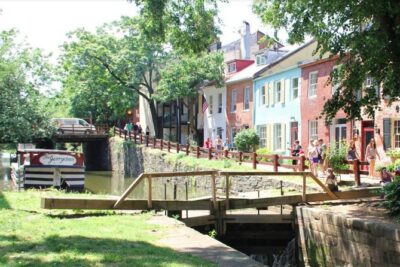
Historic Georgetown: History, Gossip, & Architecture Walking Tour
Read our review →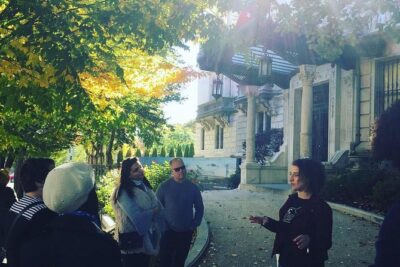
Dupont Circle and Embassy Row Architectural Walking Tour
Read our review →
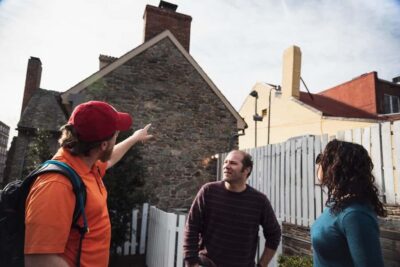
DC: Georgetown History & Architecture Tour with Local Guide
Read our review →
Embassy Row: Architecture, Mansions & International Intrigue
Read our review →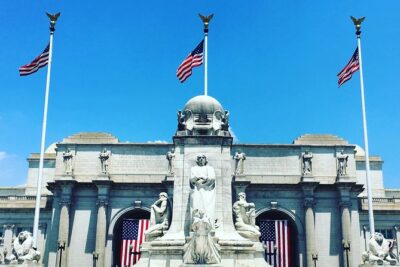
Monuments and Memorials Architectural Walking Tour
Read our review →
Castle to Capitol: Museums of the National Mall Architecture Tour
Read our review →Browse the lists this tour appears in