
Review · WASHINGTON DC
Embassy Row: Architecture, Mansions & International Intrigue
Washington’s Embassy Row is not just a pretty street lined with flags. It is a long-running Washington drama about Gilded Age fortunes, diplomatic power, old mansions, political scandal, and the people who once built grand homes for themselves. This two-hour walk turns that polished avenue into a readable story.
I like the small maximum of 15 people, which makes it easier to hear a guide and ask questions. I also like the mix of grand architecture and lesser-seen corners, including the Spanish Steps and the Society of the Cincinnati. The main drawback is that the route covers a lot in two hours, so you will see many buildings from outside rather than explore their interiors.
- Gilded Age mansions now serving as embassies: See how private homes built by wealthy Americans became diplomatic offices.
- A small group with named local guides: Becca, Mark, Tyler, Dan, John, and Eli have led this walk, with particular praise for clear storytelling and helpful directions.
- More than a parade of embassy facades: The walk includes Dupont Circle, Gandhi and Saraswati statues, Sheridan Circle, Woodrow Wilson’s home, and the Spanish Steps.
- A shaded, easy-paced neighborhood walk: The route is long but not described as strenuous, and one account specifically noted plenty of shade.
- A useful introduction to Dupont Circle: Your guide can point out places to eat and shop after the tour.
- A strong choice for architecture and political history: You get Washington’s social history alongside its international connections.
Why Embassy Row tells Washington’s private story
Many Washington tours focus on presidents, monuments, and government buildings. This one shifts your attention to the city’s wealthy residential past. Along Massachusetts Avenue and nearby streets, mansions built for millionaires now house ambassadors, diplomatic staff, and cultural offices.
That change of ownership gives the walk its main hook. You are not simply looking at attractive stone buildings. You are considering how Washington’s social elite once lived, and how foreign governments later made use of those same houses.
The tour begins at Dupont Circle at 10:00 am, beside the fountain. That is a useful starting point because your guide first explains the neighborhood before moving toward Embassy Row. You also get recommendations for food and shopping, which helps you make practical use of the area after the walk.
I like this opening because it gives the buildings a local setting. Without it, Embassy Row can feel like a string of impressive addresses. With a short introduction to Dupont Circle, you have a better sense of the neighborhood that grew around them.
Dupont Circle sets the tone in 10 minutes
The first stop lasts about 10 minutes and costs nothing beyond the tour price. Your guide meets you by the Dupont Circle fountain, an easy landmark in a neighborhood served by public transportation.
This is a short introduction, not a full neighborhood tour. Expect enough background to frame the walk, plus suggestions for what to do afterward. If you are staying nearby, listen closely to the food and shopping advice. The tour ends in or near this same neighborhood, so those suggestions can help you plan the rest of your morning.
Guides have been praised for keeping the pace comfortable and explaining transportation directions. That matters in Dupont Circle, where you may want to continue to another part of Washington after the walk.
A few more architecture tours around the USA worth a look
- Chicago Architecture River Cruise
★ 5.0 · 15,756 reviews - Chicago River 90-Minute Architecture Tour
★ 4.5 · 9,629 reviews - Chicago River: 1.5-Hour Guided Architecture Cruise
★ 4.8 · 8,046 reviews
Embassy Row reveals a new use for old mansions
The main portion of the tour spends about 30 minutes exploring Embassy Row. This is where the experience earns its price.
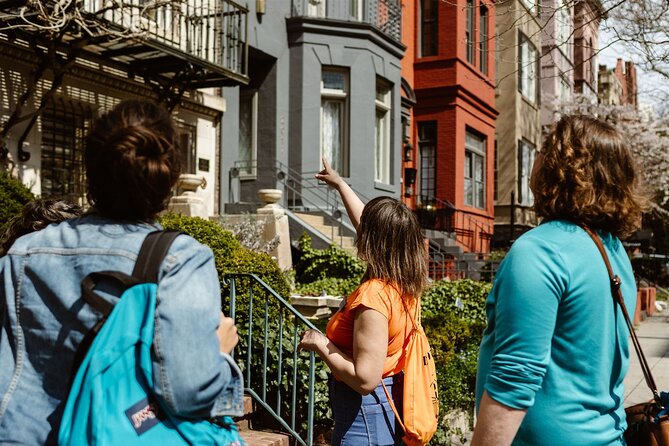
The key idea is simple: many of the grand homes were built by wealthy Americans during the Gilded Age, then purchased or adapted by foreign governments. Your guide connects architecture with money, status, international diplomacy, and the personalities attached to the houses.
You should expect stories rather than interior access. The buildings serve active diplomatic purposes, so the experience is about reading the exteriors, listening to the history, and noticing how each mansion fits into the avenue.
The strongest guides make this kind of walk feel like a series of short human stories. Becca has been singled out for making the architecture and scandalous tales lively. Mark is praised for his warmth, enthusiasm, and love of history. Tyler is noted for a comfortable pace and for answering questions easily. Dan is described as a strong storyteller who kept the group engaged.
Those different names matter because a walking tour depends heavily on the person holding the group together. The overall rating is 4.7 from 27 ratings, and the comments repeatedly point to clear narration, personal warmth, and useful background. One critical account questioned historical accuracy, so I would keep a sensible habit of listening closely and asking questions if a detail interests you.
Saraswati and Gandhi add cultural context
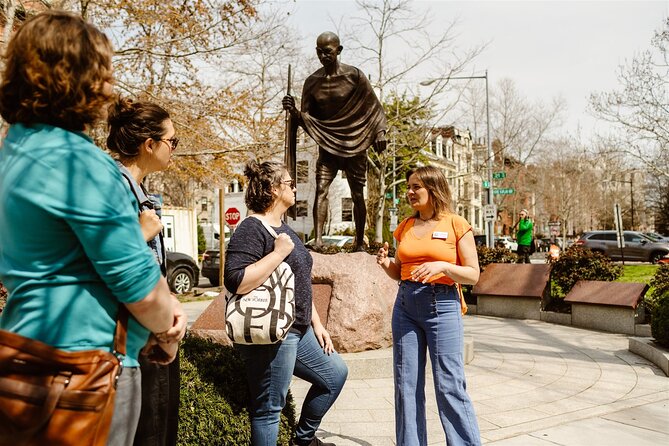
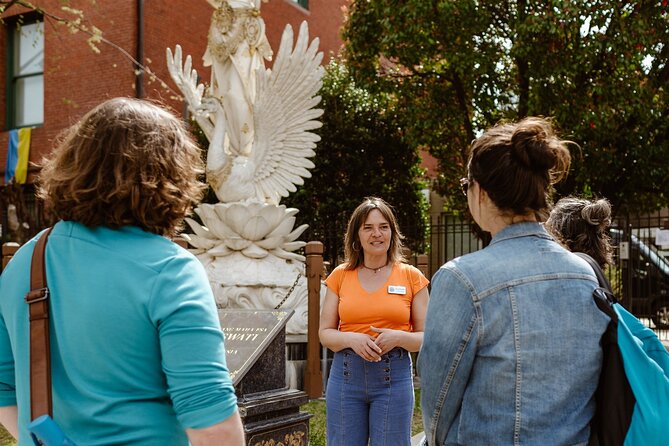
The Statue of Goddess Dewi Saraswati receives about five minutes. Located near the Indian Embassy, it honors Saraswati, the Hindu goddess associated with knowledge, music, and the arts.
This is a welcome pause from the mansion stories. The statue gives the avenue a cultural and diplomatic dimension, showing how Embassy Row is not only about old American wealth. It also reflects how countries present their heritage in Washington.
The Indian Embassy is another five-minute stop. You learn about the building’s role in relations between India and the United States, and you see the nearby Gandhi statue on Massachusetts Avenue. Gandhi’s connection with peace and nonviolence gives this section a different tone from the stories of millionaires and social ambition.
I like the contrast. One part of the walk is about private fortunes and grand houses. This part is about public ideals, cultural exchange, and the way a diplomatic neighborhood communicates national identity through buildings and monuments.
The Society of the Cincinnati connects wealth and inheritance

The Society of the Cincinnati takes about 10 minutes. Here, your guide discusses the millionaires who built the home and the society that inherited it.
This stop helps explain why these houses matter beyond their facades. A mansion is also evidence of who had money, how that money was displayed, and what happened to private wealth after its original owners were gone.
The subject fits the tour’s central theme well. Embassy Row is full of buildings that changed function over time. The Society of the Cincinnati gives you another example of how Washington’s grand homes passed into the hands of institutions.
The tour does not promise entry into this building, so think of the stop as an exterior history lesson. If you enjoy architecture, ask your guide to point out design details and explain how the house fits the surrounding row.
Same city, a completely different century:
- Chicago Architecture Center River Cruise aboard First Lady
★ 5.0 · 5,536 reviews - Chicago: Architecture River Cruise Skip-the-Ticket Line
★ 4.8 · 4,325 reviews - Chicago River 45-Minute Architecture Tour from Magnificent Mile
★ 4.5 · 2,924 reviews - Chicago Lake and River Architecture Tour
★ 4.5 · 2,308 reviews
Ireland and Sheridan Circle keep the walk moving
The Irish Embassy is a brief five-minute stop. Your guide discusses the building as a symbol of Irish culture and diplomacy in Washington. It is another chance to see how a country uses a prominent city address to maintain ties with the United States and present its heritage.
The stop at Sheridan Circle lasts about five minutes. Its centerpiece is the equestrian statue of General Philip Sheridan. The guide poses a question about Sheridan’s connection to Mount Rushmore, giving the group a small historical puzzle rather than another standard monument explanation.
That sort of question is useful on a walking tour. It encourages you to look at a familiar statue with more curiosity. You are not just passing through a circle on the way to the next mansion. You are learning why a particular person and monument belong in the story.
Woodrow Wilson House brings presidential history home

The President Woodrow Wilson House receives about 10 minutes, from the outside. Your guide discusses the former president’s home and the unusual fact that Wilson lived in Washington after leaving office, apart from Barack Obama in more recent times.
This stop adds a political layer to the neighborhood. Instead of seeing presidents only in official buildings or national memorials, you consider one in a residential setting.
Again, the value is in the explanation rather than entry. The house makes a useful counterpoint to the embassies because it reminds you that Embassy Row is also part of a lived-in city neighborhood. Diplomacy, wealth, and presidential history all occupy the same streets.
The Spanish Steps offer a quieter final stop
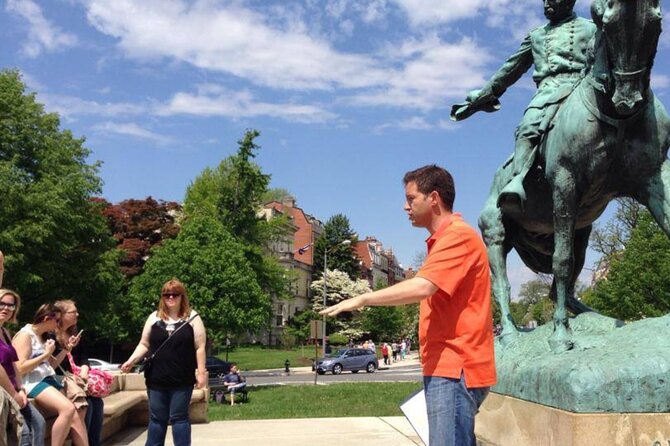
The Spanish Steps take about five minutes. Inspired by Rome’s famous staircase, this Washington landmark is a small, picturesque break surrounded by greenery and historic homes.
It is not the grandest sight on the route, but that is part of its appeal. After the large mansions, flags, statues, and political stories, the steps provide a quieter finish.
The route is described as an easy but fairly long walk. One person specifically noted that much of it is shaded, which is helpful in Washington’s warmer months. You should still wear comfortable shoes and bring water, since two hours on city sidewalks can feel longer than the distance suggests.
What the $49 price includes
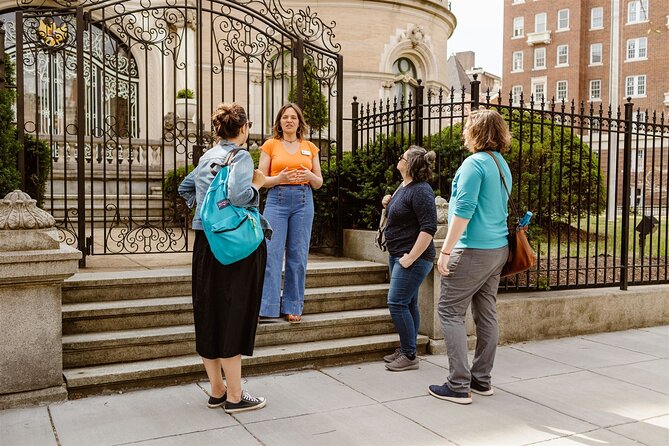
The cost is $49 per person. That includes a licensed professional guide and a two-hour small-group walk.
I see the value in the guide’s interpretation. You can walk along Embassy Row on your own, search for information on your phone, and look up each embassy as you go. That approach costs less, but it also leaves you to connect the buildings, people, and institutions yourself.
The paid experience makes more sense if you enjoy stories about architecture, politics, and social history. It is less compelling if you only want to photograph embassies or move quickly through the neighborhood.
The group cap of 15 is a real advantage. You are not likely to be lost in a large crowd, and the guide can respond to questions. Several guides have been praised for creating a friendly, personal experience, with Becca receiving particular praise for clarity and energy, including speaking clearly enough for a person who was hard of hearing.
The tour is also offered in English and uses a mobile ticket. Confirmation arrives at booking, and service animals are allowed. Most people can participate, but the route is still a walking tour, so comfortable footwear is a smart choice.
Timing, meeting point, and the ending
You meet at the Dupont Circle fountain at 10:00 am. The location is near public transportation, and the fountain provides a clear place to gather.
The listed plan says the activity ends back at the meeting point. A practical note from the operator explains that the walk may finish within sight of both the starting spot and a Metro station rather than at the exact fountain. That is not a major problem, but you should avoid scheduling a tight connection immediately afterward.
The walk’s location is one of its strengths. You finish in a neighborhood with places to eat, shop, and continue sightseeing. It is less convenient if you expected a formal loop with an exact return to the fountain, so ask your guide early where the group will finish that day.
Cancellation is flexible up to 24 hours before the experience for a full refund. The tour is often reserved about 23 days ahead, which suggests planning early if your Washington dates are fixed.
Who will enjoy this walk most
I would choose this tour if you like:
- Grand homes with a story behind them
- Washington’s social and political past
- Diplomacy and cultural representation
- Small groups rather than large coach tours
- Walking at a steady pace while asking questions
- A neighborhood experience beyond the main monuments
It suits first-time visitors who want a readable introduction to Dupont Circle and Embassy Row. It also works for repeat visitors who have seen the Capitol, White House, and National Mall and want a different side of Washington.
Families can enjoy it, especially if children like unusual houses, statues, and scandalous stories. Still, the experience is mainly verbal, so younger children may lose interest during the longer explanations.
I would be less likely to book it if your priority is going inside diplomatic buildings. This is an exterior walking tour. You see the architecture and hear the stories, but entry is not part of the plan.
Should you book Embassy Row: Architecture, Mansions & International Intrigue?
Book it if you want context, not just sightseeing. At $49, the tour is a fair buy for two hours of guided history in a beautiful and central neighborhood, especially with a maximum of 15 people.
The best reason to go is the combination of old mansions, active embassies, statues, presidential history, and local stories. Guides such as Becca, Mark, Tyler, and Dan have been praised for making that mix clear and entertaining.
Skip it if you prefer to explore at your own speed, dislike outdoor walking, or mainly want interior visits. Otherwise, this is a smart way to understand why Embassy Row looks the way it does and how Washington’s private wealth became part of its international identity.
FAQ
How long is the Embassy Row tour?
The guided walk lasts about two hours.
Where does the tour begin?
It begins at the Dupont Circle fountain in Washington, DC, at 10:00 am.
Where does the tour end?
The activity is listed as ending back at the meeting point. Practical information also notes that the group may finish within sight of the starting place and a Metro station.
How many people can join the tour?
The maximum group size is 15 people.
Is the tour offered in English?
Yes. The tour is offered in English.
Can I cancel for a full refund?
Yes. You can cancel up to 24 hours before the experience for a full refund.
Just added around the USA
- Wilmington History and Architecture Tour★ 4.8 · 18 reviews
- Washington, DC: Georgetown Architecture Walking Tour★ 5.0 · 8 reviews
- New Orleans : Garden District Architecture Walking tour★ 4.8 · 5 reviews
- Washington DC: Dupont Circle & Embassy Row Architecture Tour★ 5.0 · 6 reviews
- Tulsa: Art Deco Walking Tour of Tulsa★ 5.0 · 8 reviews
- Private Colonial Williamsburg Architectural Tour★ 5.0 · 5 reviews
- Castle to Capitol: Museums of the National Mall Architecture Tour★ 4.5 · 9 reviews
- Iconic Capitol Hill Architectural Walking Tour★ 5.0 · 21 reviews
Washington DC Architecture Tours, compared.
Historic Georgetown: History, Gossip, & Architecture Walking Tour
Read our review →
Dupont Circle and Embassy Row Architectural Walking Tour
Read our review →
DC: Georgetown History & Architecture Tour with Local Guide
Read our review →
Monuments and Memorials Architectural Walking Tour
Read our review →
Castle to Capitol: Museums of the National Mall Architecture Tour
Read our review →
Embassy Row: Architecture, Mansions & International Intrigue
Read our review →Browse the lists this tour appears in