
Review · GERMANY
Dessau: Radtour Bauhaus – Junkers – Gartenreich
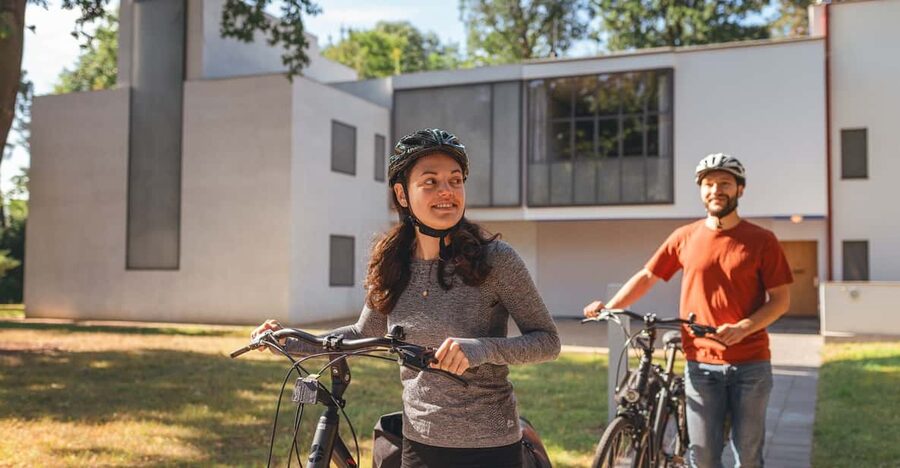
Dessau’s story makes more sense from a bicycle. The city’s gardens, industrial ambition, Junkers aircraft legacy, and Bauhaus design were not separate chapters. They grew from the same belief that progress should improve daily life. This tour links those ideas on a 2.5-hour ride.
I like the wide reach you get by bike, since you can move between nature, industry, and architecture instead of seeing only the center. I also like the human touch: the guide adds anecdotes and can shape the route to the group.
The main drawback is simple: the tour is conducted in German. You also need to arrange a bike separately if you do not bring one, at an additional €10 per bike per day.
Key points at a glance
- A bike tour with a clear theme: Follow the connection between Prince Franz, Hugo Junkers, and Walter Gropius.
- Three sides of Dessau: See Garden Kingdom scenery, industrial history, and Bauhaus architecture in one outing.
- A broad sightseeing range: Cycling gives the group a larger reach than a walking tour.
- A flexible route: The guide can adjust the route to the group, according to the experience details.
- A German-speaking guide: The tour is best suited to visitors comfortable listening in German.
- A useful price point: The tour costs $23 per person, with bike rental available separately for €10 per bike per day.
Why Dessau is best understood on two wheels
Dessau is often reduced to one word: Bauhaus. That is too narrow. The city’s importance comes from the way art, technology, public planning, and nature developed side by side.
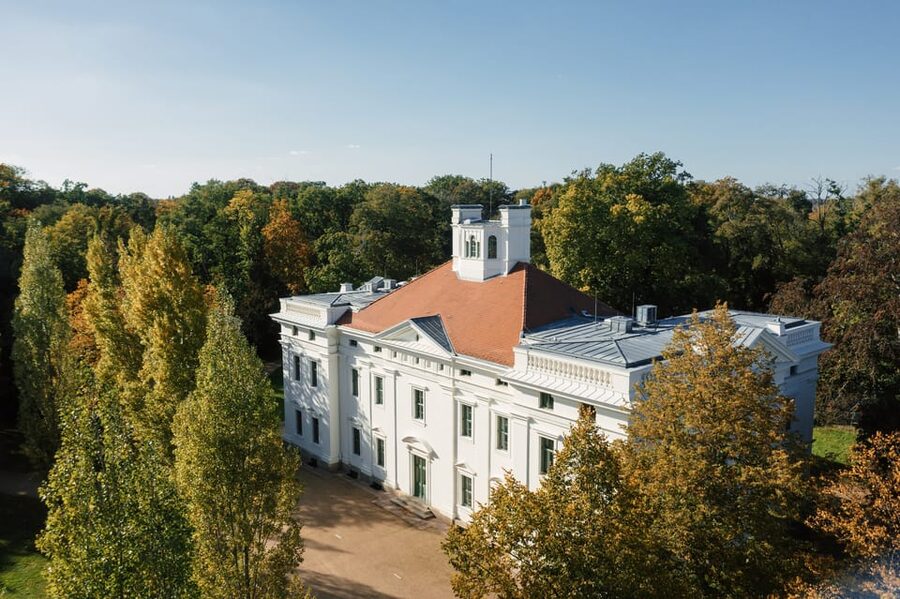
This tour begins with the Garden Kingdom of Dessau-Wörlitz. Prince Franz of Anhalt-Dessau used the gardens as part of a broad reform program. The point was not simply to create pretty grounds for court life. His plans helped set conditions for industrial growth in Dessau.
That connection gives the ride its backbone. You are not just pedaling from one sightseeing stop to another. You are following a chain of ideas: improve the land, improve the city, use technology to solve practical problems, and make good design part of ordinary life.
I find that approach more useful than a standard list of monuments. It gives you a way to read Dessau. The gardens represent planning and reform. Hugo Junkers represents technical invention and industry. Walter Gropius and the Bauhaus represent a new approach to design, where art and technology were meant to work together.
More Bauhaus and Brutalist tours in Germany:
- Vienna: Tickets for Kunst Haus Wien: Museum Hundertwasser
★ 4.6 · 651 reviews - Frank Lloyd Wright’s Home & Studio Tour Ticket
★ 4.5 · 133 reviews - Frank Lloyd Wright Robie House Admission
★ 4.0 · 130 reviews
Starting at Tourist Information
Your guide meets you in front of the Tourist Information office. This is also the place to pick up a rental bicycle if you need one, so the start is straightforward.
Bike rental is not included in the tour price. The listed cost is €10 per bike per day, while the guided experience itself is priced at $23 per person. Because the currencies differ, check the final booking total carefully before you commit.
The meeting point matters for another reason. You are not being collected at a remote attraction or asked to find an obscure street corner. The tour begins from a central visitor-services location, then moves outward into Dessau’s connected story.
Allow a little time before departure to get settled on the bicycle. The tour lasts 2.5 hours, so it is long enough to cover ground but short enough to fit around another major visit. You should be comfortable cycling for that length of time, since the bicycle is the main way the tour links its different subjects.
The Garden Kingdom connection
The first major idea is the role of the Dessau-Wörlitz Garden Kingdom in the city’s development. The tour uses this setting to show how Prince Franz’s reforms reached beyond gardening and decoration.
The natural scenery is one of the pleasures of the ride. One recent participant described the route as moving from the charming nature of the Garden Kingdom through history and on to the plain architecture of the Bauhaus. That sequence is important. It lets you see Dessau as a place shaped by both open space and practical construction.
Do not expect the Garden Kingdom portion to be a separate garden visit with a long stop at every feature. The information describes a bicycle tour through Dessau’s changing history, so the guide’s job is to connect the scenery with the city’s larger development. You will likely get the most from this section if you listen for the links between land reform, planning, and later industry.
The garden setting also gives the tour breathing room. Bauhaus buildings can be studied closely, but the ride is not locked into streets and facades. You get a change of pace, and the bicycle makes the transition part of the experience.
From reform to industrial ambition
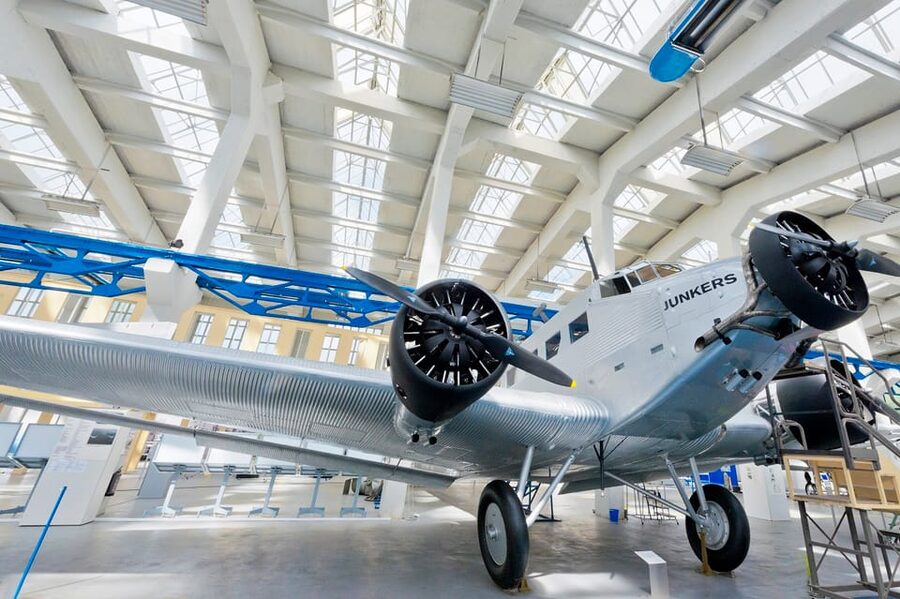
The route then turns toward Dessau’s industrial story. The key figure here is Hugo Junkers, whose work helped make the city a major name in engineering and aviation.
The tour does not present Junkers as an isolated inventor. Instead, it places him within the same local culture of progress that began with Prince Franz’s reform program. That is a helpful distinction. You are not just collecting facts about a famous industrialist. You are seeing how a city’s earlier plans helped create an environment where new technology could take root.
The exact stops and time spent at each point can vary because the guide shapes the route around the group. That flexibility is a plus for repeat visitors and anyone who prefers a live explanation to a fixed audio script. It also means you should not expect a rigid checklist of named buildings.
The stories are a central part of the ride. The experience promises numerous anecdotes, and the personal approach was singled out in the available feedback. One participant praised the explanations, the friendly and capable guest service, and the individual route design. That tells you what kind of tour this is: less like a timed transport loop, more like a guided conversation carried along by bicycle.
Same city, a completely different century:
- Dresden: Tour of the Baroque Quarter with a Night Watchman
★ 4.7 · 681 reviews - Munich 3-Hour Segway Tour: Nazi Munich & Royal Architecture
★ 4.9 · 194 reviews - Düsseldorf: Guided City Architecture Walking Tour
★ 4.6 · 61 reviews - Hidden Architectural Gems of Munich (Max. 16 guests)
★ 4.9 · 52 reviews
Seeing Bauhaus as part of the same story
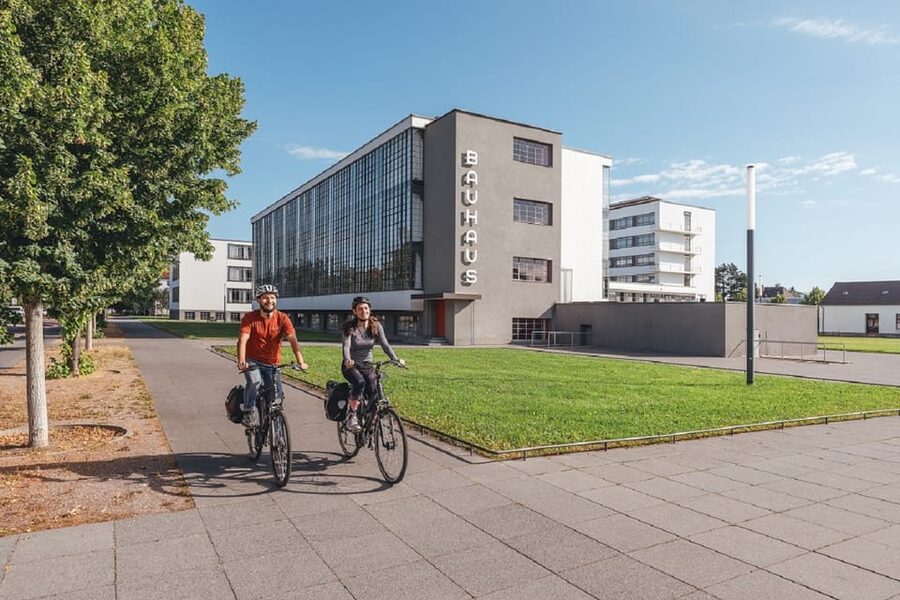
The final major theme is Bauhaus, especially the work connected with Walter Gropius. Dessau is one of the key places to see how the school’s ideas moved from theory into the city.
The architecture may look spare at first glance. That is part of the point. Bauhaus design often favors clear forms, practical use, and an absence of decorative fuss. The tour helps place that plain appearance within the wider argument that art and technology should form a single working whole.
I like seeing the Bauhaus through the Junkers connection. It prevents the architecture from becoming a collection of white walls and clever angles. Instead, the buildings belong to a city that was already thinking about machines, production, reform, and modern life.
The tour description does not promise entry into specific Bauhaus buildings, so you should plan on an outdoor, city-based introduction rather than a full museum visit. If you want detailed interiors or extended architectural study, set aside extra time elsewhere in Dessau. This ride gives you context, movement, and an overview of how the city’s ideas fit together.
One recent participant summed up the coverage as nature, history, and simple Bauhaus architecture. That is a good description of the balance. You will not spend the whole time looking at famous design. The Bauhaus section works best because it arrives after the garden and industrial themes.
A route shaped by the group
A useful feature is the possibility of individual route design. The guide can adjust the ride to the group rather than treating every departure as a fixed performance.
That does not mean you should expect a private tour. The activity is presented as a guided bicycle tour, and one participant specifically described a very pleasant group. The practical point is that the guide appears able to respond to the people present, their interests, and the time available.
This can make a real difference in Dessau. Some people want more architecture. Others are more interested in Junkers and the city’s industrial past. Some will remember the greenery and open spaces most clearly. A flexible route lets the guide give the group a better balance.
The tradeoff is predictability. If you have your heart set on one precise stop, ask about it when booking or at the meeting point. The available information confirms the themes and endpoint, but not a fixed sequence of every location.
Ending at the Historic Employment Office
The ride ends at the Historic Employment Office. That final stop is a useful choice because it keeps the tour’s focus on social progress and practical design.
The end point is not just a random place to finish the cycling loop. It fits the tour’s interest in the way modern ideas affected everyday life. After gardens, industry, and Bauhaus architecture, an employment office brings the story back to public services and ordinary citizens.
Since the tour ends there rather than returning to Tourist Information, think ahead about what you want to do next. The activity details do not state the distance between the endpoint and the starting point, nor do they promise return transport. If you rent a bicycle through the operator, confirm where and when it should be returned.
That one-way finish can be useful if the Historic Employment Office is near your next destination. It is less convenient if you need to retrieve belongings or return immediately to the starting point. This is a small point, but it matters on a short city visit.
What the $23 price really buys you
At $23 per person, the tour is priced as an accessible introduction rather than a full-day specialist excursion. The value comes from the guide’s interpretation and the distance covered by bicycle.
A walking tour could explain Dessau’s history, but it would likely reach fewer parts of the city in the same 2.5-hour period. A self-guided ride would give you freedom, but not the connections between Prince Franz, Junkers, and Gropius, or the local anecdotes that make those links stick.
The bicycle rental is extra at €10 per bike per day. That remains reasonable if you plan to use the bicycle before or after the tour, but less so if you need it only for the guided ride. If you already have a bicycle, the separate rental charge disappears.
The strongest value comes for first-time visitors who want an overview before exploring individual sites on their own. You receive a city orientation, a historical framework, and a practical sense of how far the main themes are spread out.
Who will enjoy this ride most
I would recommend this tour to you if you like cities that mix design, industry, and public planning. It is also a good match if you prefer learning through stories rather than reading every detail from a sign.
You should be comfortable with a 2.5-hour bicycle outing. The activity is not described as strenuous, but cycling remains the core of it, and the larger sightseeing range is one of its main benefits.
The German-only format is the biggest limit for international visitors. A live guide can explain more than a booklet, but only if you can follow the language. If your German is limited, you may get more from the scenery and buildings than from the historical detail.
The tour also suits repeat visitors who want a different angle on Dessau. The flexible route and broad themes can make the city feel less like a set of isolated attractions.
Practical details before you book
The tour is conducted in German by a live guide. The available information does not provide the guide’s name, so you should not count on a named specialist when booking.
The experience lasts 2.5 hours and begins in front of the Tourist Information office. It ends at the Historic Employment Office, so plan your next stop from that location rather than assuming you will finish where you began.
Bike rental is possible for €10 per bike per day and is not included. The guided tour price is $23 per person.
You can cancel up to 24 hours before the start for a full refund, and the reserve-now, pay-later option keeps payment until later. Starting times depend on availability, so check the date you want before making other plans.
Should you book the Dessau bicycle tour?
Book it if you want a compact, story-led introduction to Dessau and like the idea of covering Garden Kingdom scenery, Junkers history, and Bauhaus architecture in one ride. The flexible route, broad reach, and strong attention to anecdotes are the best reasons to choose it.
Think twice if you need an English tour, want entry into specific museums, or prefer a fixed itinerary with every stop guaranteed. Also factor in the separate bicycle rental fee.
For German-speaking visitors, especially those interested in how design and technology shaped a city, this is a smart-value outing. It gives Dessau a clear human story rather than treating Bauhaus as an isolated style.
FAQ
Where does the bicycle tour begin?
The tour begins in front of the Tourist Information office in Dessau. This is also where you can pick up a rental bicycle if needed.
Where does the tour end?
The guide’s tour ends at the Historic Employment Office.
How long does the tour last?
The tour lasts 2.5 hours.
Is bicycle rental included?
No. Bike rental is available separately for €10 per bike per day.
What language is the tour conducted in?
The live guided tour is conducted in German.
What subjects does the tour cover?
The route covers the Dessau-Wörlitz Garden Kingdom, the industrial development linked with Hugo Junkers, and Bauhaus history connected with Walter Gropius.
Can I cancel the booking?
Yes. You can cancel up to 24 hours in advance for a full refund. A reserve-now, pay-later option is also available.
Just added around Germany
- Beautiful Baroque Potsdam: A Self-Guided Audio Tour★ 4.5 · 4 reviews
- Munich Your Way: Private Tour with Architect & Guide★ 5.0 · 2 reviews
- Private Munich Tour for History Buffs with Architectural Gems and WWII sites★ 5.0 · 3 reviews
- Art Nouveau Meets Street Art in Munich (Max. 12 guests)★ 5.0 · 3 reviews
- Hidden Architectural Gems of Munich (Max. 16 guests)★ 5.0 · 2 reviews
- Architectural Frankfurt: Private Tour with a Local Expert★ 5.0 · 2 reviews
- Private Taxi Tour of City East History and Architecture 2-3h★ 5.0 · 2 reviews
- Architectural Berlin: Private Tour with a Local Expert★ 4.0 · 3 reviews
Bauhaus and Brutalist Architecture Tours, compared.
Vienna: Tickets for Kunst Haus Wien: Museum Hundertwasser
Read our review →
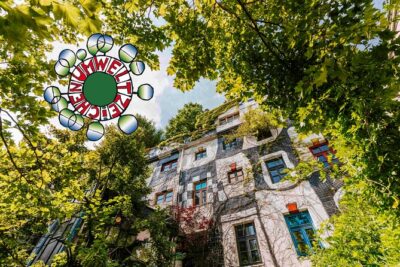
Entrance tickets for the KunstHausWien. Museum Hundertwasser
Read our review →
Brutalist Tbilisi: Urban exploration and untold stories
Read our review →
London: Brutalist Architecture & History Walking Tour
Read our review →
FALLINGWATER – America’s UNESCO World Heritage Masterpiece!
Read our review →
Le Corbusier’s Chandigarh : A Complete Architecture Tour
Read our review →Browse the lists this tour appears in