
Review · WASHINGTON DC
DC: Georgetown History & Architecture Tour with Local Guide
Georgetown is older than Washington, DC, and this two-hour walk shows you the difference. You move from the working waterfront and C&O Canal to quiet lanes lined with grand homes, churches, ironwork, gas lanterns, and old coal chutes. It is a fine way to see the capital’s polished southern side without spending the whole day in a museum.
I like the tour’s local focus and its manageable pace. Guides such as Vicky, Wesley, Becca, Ingeborg, Georgia, and Wayne bring different personalities to the walk, but the best feedback consistently praises their stories, humor, and practical dining tips. I also like that the route includes both famous names and less polished subjects, including Black Georgetown, immigrants, and women who pushed against the rules of their time.
The main consideration is the balance between architecture and storytelling. You will see plenty of historic buildings, but this is not a technical architecture lecture. One previous participant wanted more architectural detail and less gossip, while others loved the mix of politics, celebrities, and local tales. If you want a close study of building styles, you may find the treatment light.
Key points to know before you book
- Georgetown predates Washington, DC: The neighborhood’s colonial past gives the walk a different feel from the monumental core.
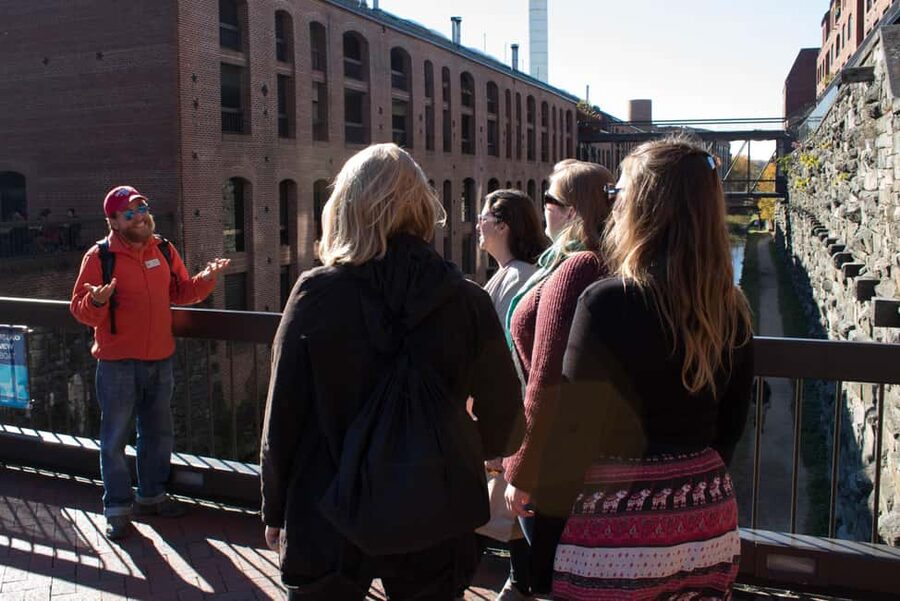
- The route moves from canal to university: You begin at C&O Canal Lock 3 and finish at Georgetown University.
- Old Stone House is a major stop: You visit the yard of one of Georgetown’s oldest surviving homes.
- Politics and pop culture share the pavement: Stories include John and Jackie Kennedy, President Lincoln, local politicians, celebrities, and Taylor Swift’s connection to Georgetown.
- Guides shape the experience: Vicky, Wesley, Becca, Ingeborg, Georgia, Catherine, and Wayne have all led highly praised walks.
- The pace is generally gentle: The tour lasts two hours, and guides have been praised for accommodating people who walk more slowly.
Why Georgetown feels different from central Washington

Washington is often pictured as grand avenues, white marble, and national monuments. Georgetown gives you something smaller and more human. Its streets curve and narrow, its buildings sit close to the pavement, and its history is tied to trade, churches, family homes, student life, and local businesses.
The neighborhood was established before the capital city, so you are walking through a place with its own identity. The tour explains how Georgetown developed before it became part of Washington, and how its position along the Potomac and the C&O Canal helped shape its working life.
I find that context useful because it keeps the walk from becoming a parade of pretty facades. The homes matter, but so do the people who lived in them, the goods that moved along the canal, and the communities that built their lives here.
The route is also a good choice if you have already seen the National Mall. You will hear about President Lincoln and his grand memorial, but the main subject is Georgetown itself. This gives you a more intimate side of the capital, away from the formal national stage.
More history tours in the USA:
- Chicago in a Day: Food, History & Architecture Walking Tour
★ 5.0 · 1,153 reviews - Charleston’s Best Highlights: History, Culture & Architecture
★ 5.0 · 422 reviews - Palm Springs Modernism Architecture & History Bike Tour
★ 5.0 · 359 reviews
Starting at C&O Canal Lock 3
The tour begins beside the Chesapeake and Ohio Canal Historic Park at Lock 3, between Thomas Jefferson Street and 30th Street Northwest. There is a large park on the north side of the canal, but the location does not have a standard street address.
This is the one practical detail you should take seriously. If you use a taxi or rideshare, enter Baked & Wired at 1052 Thomas Jefferson Street Northwest. The start is about a two-minute walk away, and the bridge in front of the bakery gives you a clear view of the meeting area.
The canal is a smart starting point because it introduces Georgetown as a working neighborhood, not just a place for expensive shops and handsome houses. You spend about 15 minutes here with a guide, hearing about the waterway and its role in the industrial side of the district.
You also have time for photos. The canal offers a change of mood from the streets ahead, with water, stone, and the remains of an old transportation system setting the scene.
Old Stone House and Georgetown’s early homes
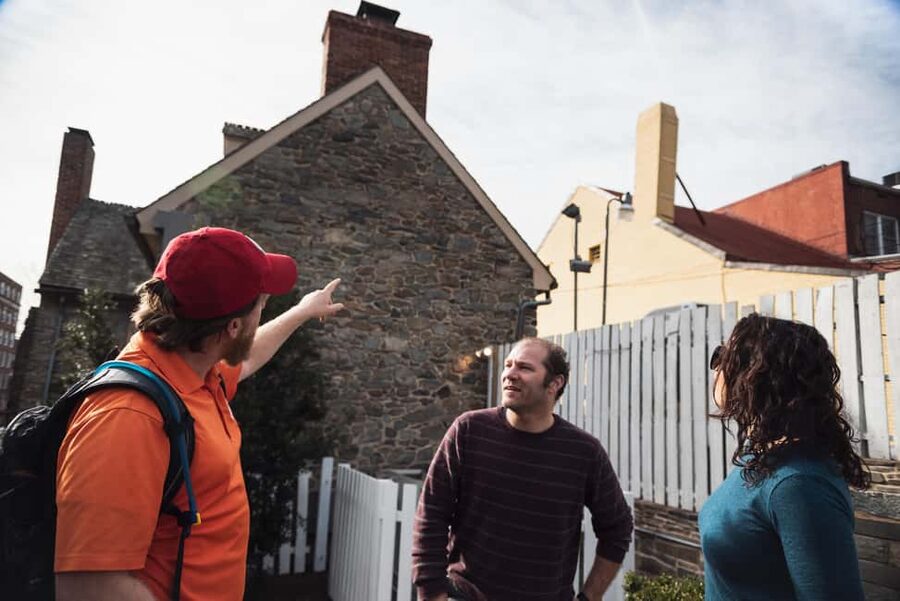
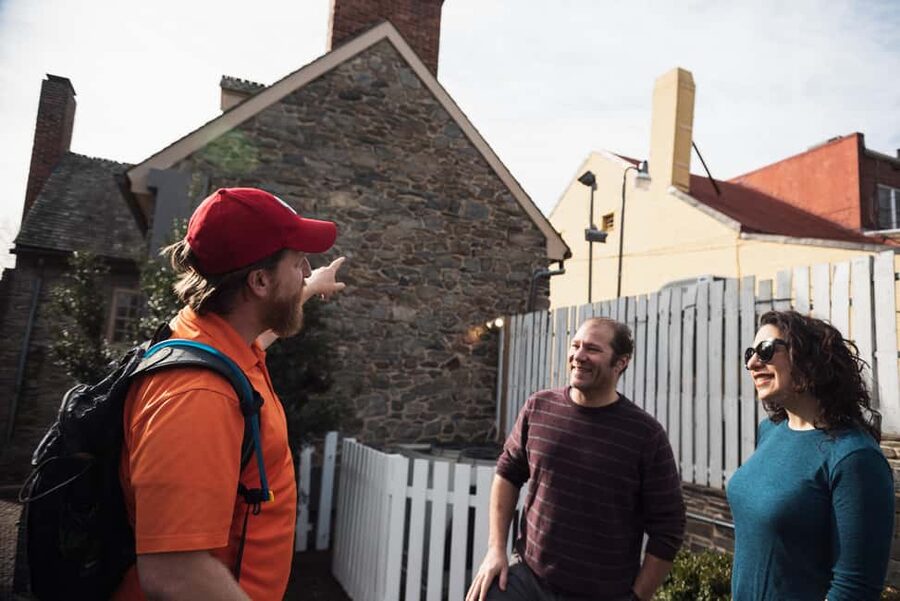
From the canal, the walk continues to the Old Stone House. This is described as the oldest residential building in the District, and the tour includes access to its yard. You have roughly 10 minutes here, enough for a visit and photos rather than an extended interior study.
That distinction matters. The tour is a walking overview, not a house museum visit with a long indoor program. The Old Stone House works best as a physical link to Georgetown’s early years, giving you something tangible to stand beside while the guide explains how the neighborhood grew.
After that, the route turns toward M Street Northwest. M Street is one of Georgetown’s busiest and most recognizable corridors, but the guide uses it as a bridge between the commercial neighborhood you see today and the older residential streets nearby.
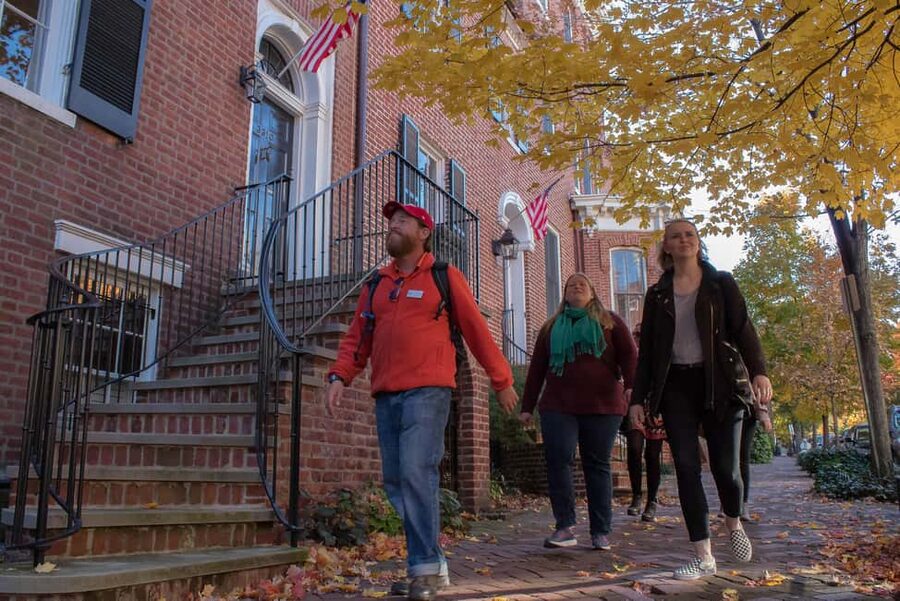
The appeal is in the contrast. You can look at the shops and traffic, then turn toward a quieter block where an 18th or 19th-century house still carries traces of earlier life. Along the way, watch for original firemarks, coal chutes, ironwork, and gas lanterns. These small features reward slow looking more than quick sightseeing.
Historic houses, political families, and local detail

The central 45-minute portion takes you through Georgetown itself. This is the longest part of the walk and the section where the guides have the most room to mix architecture, residents, and neighborhood stories.
The houses are not presented as a single perfect style. You will see varied 18th- and 19th-century buildings, Victorian homes, historic churches, and streets with cobblestones and mature shade. The tour helps you notice practical details that are easy to miss, such as coal access points and old fire insurance marks.
I like this approach because it turns a simple stroll into a kind of visual scavenger hunt. Instead of only photographing an attractive doorway, you begin asking what the building tells you about heating, fire protection, status, and daily life.
The stories also widen beyond presidents and wealthy families. The tour covers the Black Georgetown community, immigrants who shaped the area, and women who challenged the limits placed on them. That makes the neighborhood feel less like a display of old houses and more like a place where different groups made and remade Georgetown.
Politics remains part of the fun. You hear about the homes of John and Jackie Kennedy and their time in Georgetown before and after his assassination. You also get stories involving local politicians, famous residents, and Taylor Swift’s connection to the neighborhood. The exact mix depends on your guide, but the route clearly aims to connect past residents with the Georgetown you see now.
This is where guides such as Vicky and Georgia have received especially strong praise for making history vivid. Wayne is noted for adding jokes, while Wesley is praised for combining information with dining advice. Those details may sound minor, but a good guide can make two hours feel brisk rather than crowded with facts.
More guided tours in the USA:
- Chicago River: 1.5-Hour Guided Architecture Cruise
★ 4.8 · 8,046 reviews - Charleston: History and Architecture Guided Walking Tour
★ 4.8 · 349 reviews - Charleston History, Homes, and Architecture Guided Walking Tour
★ 5.0 · 267 reviews - Chicago River: Guided Sunset Cocktail & Architecture Tour
★ 4.6 · 203 reviews
Newton D. Baker House and the art of looking up
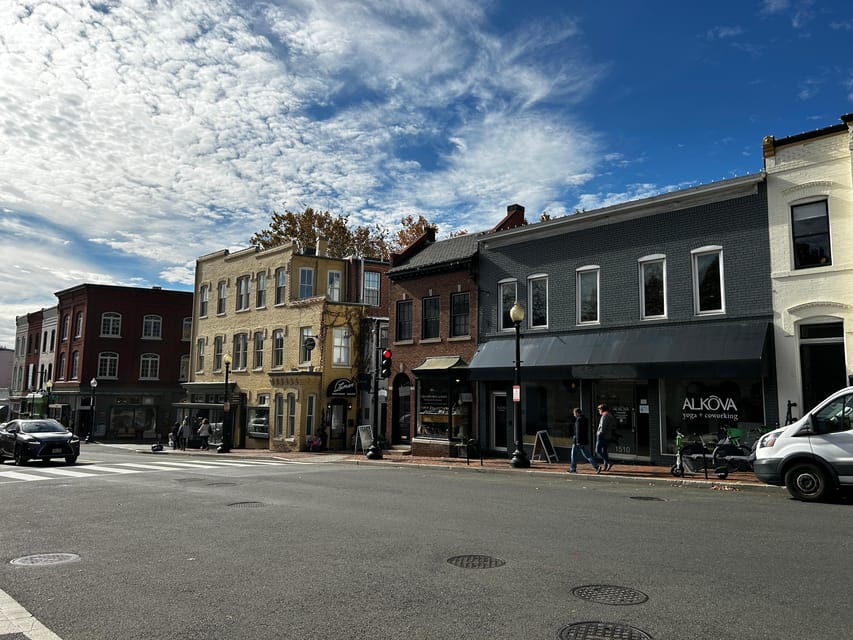
The Newton D. Baker House is a short five-minute photo and storytelling stop. It is not a long visit, but it adds another named address to the walk and gives the guide a chance to connect a particular building with a person and period.
Short stops like this are useful on a walking tour because they prevent the route from becoming one long lecture. You pause, look at a facade, hear why it matters, and then keep moving.
Georgetown rewards this rhythm. Some of the best details are above eye level, around doorways, or tucked into the edge of a building. If you spend the entire walk looking straight ahead, you will miss much of what the guide is pointing out.
Martin’s Tavern and Georgetown’s famous stories

Martin’s Tavern receives about five minutes as a photo stop. It is one of the places where Georgetown’s political and social stories come together, and it fits the tour’s interest in famous residents and public figures.
Do not expect a full meal stop. The time is brief, and gratuity is not included. Still, the tavern adds a useful sense of place. You are not hearing about history in an abstract setting. You are standing in a neighborhood where restaurants, homes, churches, students, politicians, and long-time residents share the same few blocks.
This is also the sort of stop where the guide’s style matters. Some guides lean toward historical explanation, while others add more local gossip and celebrity connections. The tour’s strongest feedback praises that personal delivery, but the two four-star ratings point to a fair limitation: some people may want a more even balance between documented history and entertaining stories.
The Wave Wall and the route to Georgetown University
The Wave Wall is another short stop, about five minutes, with time for a visit, photos, and explanation. It gives the walk a modern visual note amid the older homes and streets.
The final major stop is Georgetown University. You spend about 10 minutes here with photo time and some free time before the tour ends. The guide explains how the neighborhood influenced the university and gives you a look at the campus.
Finishing here makes practical sense. Georgetown University is a clear endpoint, and the university adds another layer to the neighborhood’s identity. Georgetown is not only a colonial district and a political address. It is also a place shaped by student life and an institution that has been part of the area for generations.
One useful detail comes from a participant who had attended Georgetown University and still learned new things about both the wider neighborhood and the school. That suggests the university portion is not merely a quick photo opportunity, even if it is shorter than the main Georgetown walking section.
Guide style, pace, and group experience
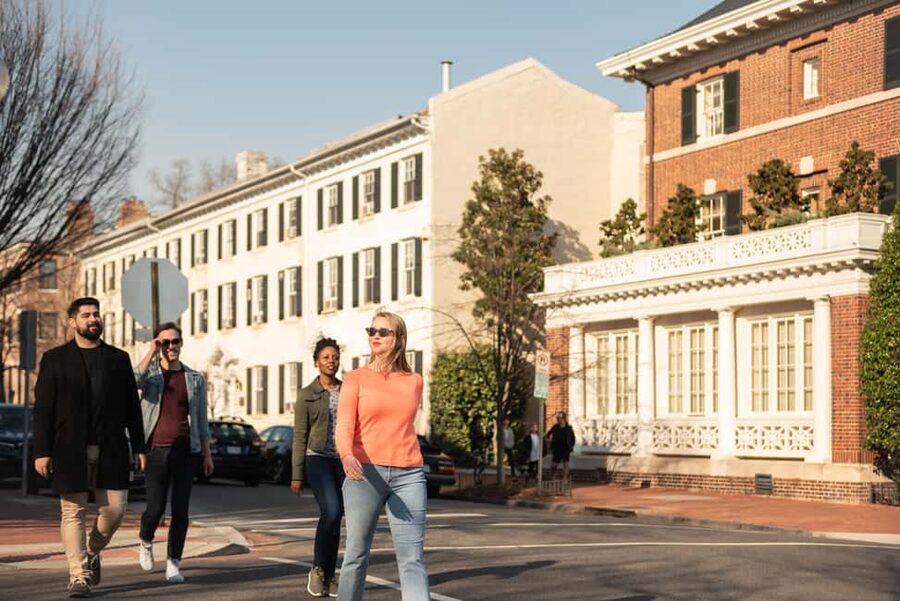
The experience is led in English by a professional licensed guide who is also described as a local expert and published author on Georgetown history. Guide names associated with the walk include Vicky, Wesley, Becca, Ingeborg, Georgia, Catherine, Katherine, and Wayne.
You should not expect every guide to tell the same tour in exactly the same voice. Vicky is repeatedly praised for warmth, strong local knowledge, and helpful recommendations. Becca is described as informative and engaging. Ingeborg is praised for bringing the neighborhood to life, while Catherine and Georgia are noted for keeping the group involved.
The group size can vary. One participant described a group of eight as just right, while another ended up on a private tour. That flexibility can make the walk feel personal, though you cannot assume every departure will be private or especially small.
The pace appears suited to a broad range of walkers. The route lasts two hours, and a guide was specifically praised for being considerate toward older people who could not move quickly. Another participant described the pace as neither too fast nor too slow and suitable for people who are not especially fit.
You should still expect a real walking tour over cobblestones and ordinary city streets. Comfortable shoes are sensible, and Georgetown’s uneven surfaces are worth keeping in mind. The shade is welcome, but weather can affect your comfort.
Is $39 a fair price?

At $39 per person, the tour sits in a reasonable range for a two-hour guided walk in Washington. The price includes a licensed guide, the guided route, access to the yard of one of Georgetown’s oldest houses, and a visit to Georgetown University.
The value comes less from the number of stops than from the explanation between them. You can walk M Street and photograph old homes on your own, but you are unlikely to notice every coal chute, firemark, social connection, or political story without help.
The tour is also efficient. In two hours, you cover the canal, Old Stone House, M Street, historic homes, Martin’s Tavern, the Wave Wall, and Georgetown University. That makes it useful early in a DC visit, when you want an overview before returning to the places that interest you most.
It is less valuable if you want lengthy interior visits or a specialist study of architectural styles. The Old Stone House visit is short, and several stops are mainly photo and explanation points. Think of the fee as paying for a well-shaped introduction, not a series of in-depth museum admissions.
Free cancellation up to 24 hours before the tour and the option to reserve now and pay later add useful flexibility. Gratuity is not included, so plan for that separately if your guide provides the kind of service you value.
Who should take this Georgetown walk?
I would recommend it to first-time DC visitors who want a break from monuments and museums. It also suits repeat visitors who have seen the National Mall but have not spent much time in Georgetown.
Families and mixed-age groups may appreciate the moderate pace and frequent stops. People interested in political history, famous residents, local architecture, urban development, or food recommendations should find plenty to take away.
It is also a good pick if you like stories more than statistics. Guides add humor, personal delivery, and neighborhood suggestions, including places to eat and shop. If your ideal tour is a formal examination of architectural periods, you may want something more specialized.
Allow a little extra time before the meeting point if you want to stop at Baked & Wired. The bakery is not part of the tour, but its location makes it a handy landmark and a practical place to arrive early.
Should you book it?
Book this tour if you want Georgetown explained through people, houses, politics, and small physical details. The strongest reason to go is the guide-led storytelling, especially if you enjoy local gossip alongside solid historical background.
Skip it if you want a long indoor house tour, a detailed architectural course, or a route focused mainly on the Lincoln Memorial. The tour mentions Lincoln and the grand memorial, but its real subject is Georgetown.
For $39, two hours, and a route that begins at the C&O Canal and ends at Georgetown University, I think it is a sound introduction. You will leave with a better sense of why this neighborhood feels separate from the rest of Washington, and you will know which streets and buildings deserve a second look.
FAQ
How long is the Georgetown history and architecture tour?
The guided walking tour lasts two hours.
Where does the tour begin?
It begins at C&O Canal Lock 3 in Chesapeake and Ohio Canal Historic Park, between Thomas Jefferson Street and 30th Street Northwest.
How can I find the meeting point by taxi or rideshare?
Give the driver the address for Baked & Wired at 1052 Thomas Jefferson Street Northwest, Washington, DC 20007. The tour meeting point is about a two-minute walk away, and you can see it from the bridge in front of the bakery.
Where does the tour finish?
The tour finishes at Georgetown University.
What language is the tour conducted in?
The live guided tour is conducted in English.
What is included in the $39 price?
The price includes a professional licensed guide, a two-hour guided walk with a local expert, access to the yard of one of Georgetown’s oldest houses, and a visit to Georgetown University.
Is gratuity included?
No. Gratuity is not included in the tour price.
Can I cancel or pay later?
You can cancel up to 24 hours in advance for a full refund. You can also reserve your place and pay later.
Just added around the USA
- Wilmington History and Architecture Tour★ 4.8 · 18 reviews
- Washington, DC: Georgetown Architecture Walking Tour★ 5.0 · 8 reviews
- New Orleans : Garden District Architecture Walking tour★ 4.8 · 5 reviews
- Washington DC: Dupont Circle & Embassy Row Architecture Tour★ 5.0 · 6 reviews
- Tulsa: Art Deco Walking Tour of Tulsa★ 5.0 · 8 reviews
- Castle to Capitol: Museums of the National Mall Architecture Tour★ 4.5 · 9 reviews
- Private Colonial Williamsburg Architectural Tour★ 5.0 · 5 reviews
- Iconic Capitol Hill Architectural Walking Tour★ 5.0 · 21 reviews
Historical Tours, compared.
Chicago in a Day: Food, History & Architecture Walking Tour
Read our review →
Kuala Lumpur: Batu Caves & Historic Buildings Tour
Read our review →
Charleston’s Best Highlights: History, Culture & Architecture
Read our review →
Palm Springs Modernism Architecture & History Bike Tour
Read our review →
Charleston: History and Architecture Guided Walking Tour
Read our review →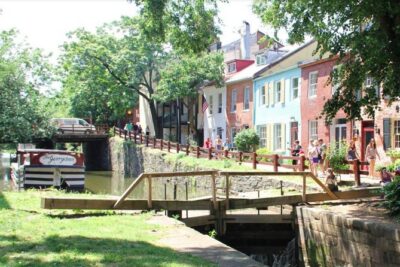
Historic Georgetown: History, Gossip, & Architecture Walking Tour
Read our review →
Charleston History, Homes, and Architecture Guided Walking Tour
Read our review →
Browse the lists this tour appears in