
Review · WASHINGTON DC
Dupont Circle and Embassy Row Architectural Walking Tour
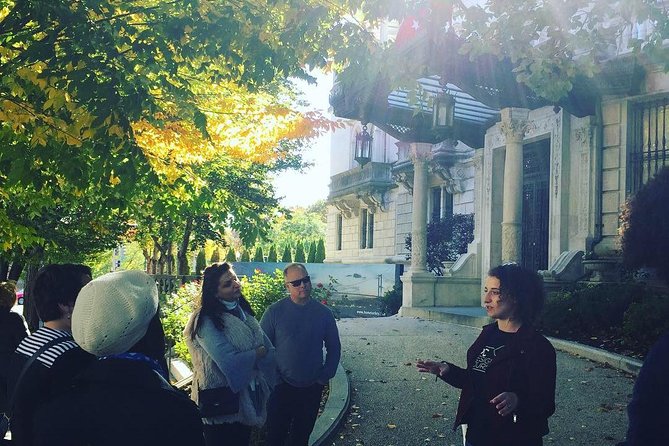
Washington’s old money is written in stone along Massachusetts Avenue. On this two-hour walk through Dupont Circle and Embassy Row, private mansions become embassies, social clubs, museums, and reminders of the city’s Gilded Age power brokers.
I like the mix of architecture and personal stories, from Alice Roosevelt Longworth to the Hope Diamond. I also like the small-group format, capped at 20 people, which gives guides such as Sam, Natalie, Mark, and Christine room to answer questions and keep the pace lively.
The main drawback is simple: you see the outside of most buildings, not their interiors. You should also allow a little extra time, since one recent outing ran about 20 minutes beyond the advertised two hours.
Key points to know before you go
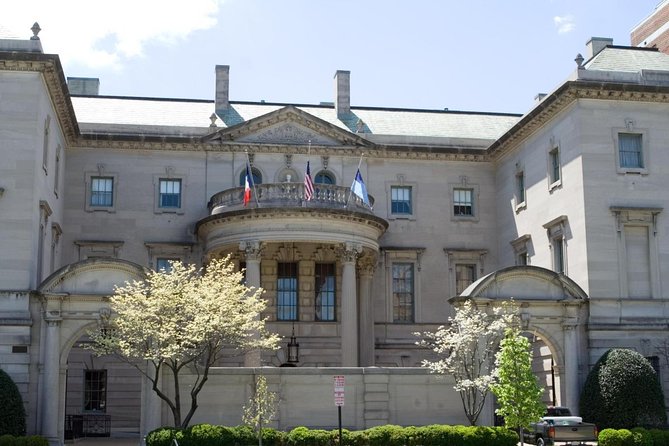
- See a rare concentration of architectural styles: Neo-classical, Beaux-Arts, Queen Anne, and grand domestic designs line the route.
- Follow Washington’s social history: The tour connects mansions with heiresses, politicians, industrialists, diplomats, and eccentric residents.
- Walk beyond the usual monuments: The route includes the Spanish Steps, Mitchell Park, Kalorama, and the former home of Woodrow Wilson.
- Expect strong storytelling: Guides use humor, family histories, old residents, and political anecdotes rather than giving you a dry building survey.
- Plan for outdoor viewing: The tour passes embassies and historic homes, but admission to the Woodrow Wilson House is not included.
- Budget $48 for a guided neighborhood walk: The value comes from the interpretation and route, not from entry tickets or indoor access.
Why Dupont Circle makes a smart starting point
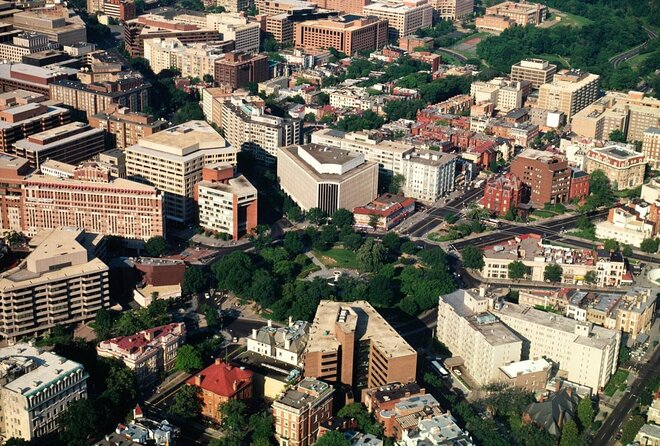
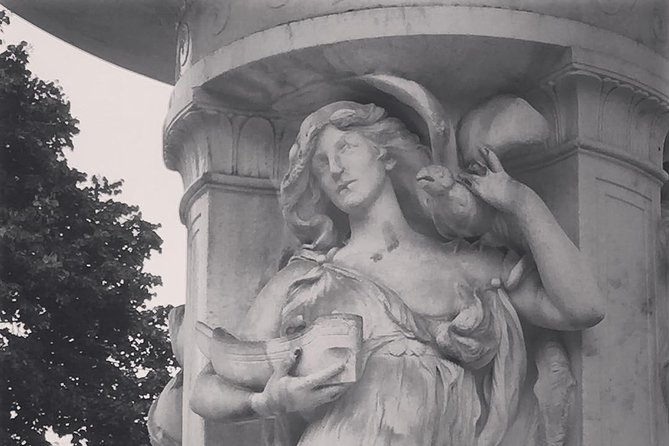
The tour begins at Dupont Circle, one of Washington’s most recognizable urban spaces. A fountain sits at its center, designed by the same sculptor associated with the Lincoln Memorial, and the circle provides an easy visual introduction to the neighborhood.
You spend roughly 10 minutes here before setting off. That may sound brief, but it gives your guide time to explain why the circle was created and how the area grew into one of Washington’s most fashionable addresses.
I like this opening because it gives the rest of the walk a clear frame. You are not just looking at attractive houses. You are seeing a neighborhood shaped by wealth, politics, diplomacy, and changing tastes.
The tour is conducted in English and uses a mobile ticket. The meeting point is in Dupont Circle, Washington, DC 20036, an area served by public transportation. Wear shoes suited to city walking, and check the forecast carefully. The route is outdoors, and heat, humidity, rain, or winter cold can affect your comfort.
More architecture walks in the USA:
- The Official Art Deco Walking Tour by The Miami Design Preservation League
★ 5.0 · 1,580 reviews - Chicago in a Day: Food, History & Architecture Walking Tour
★ 5.0 · 1,153 reviews - Miami South Beach Art Deco Walking Tour
★ 5.0 · 1,039 reviews
Massachusetts Avenue and the age of grand homes
The longest section follows Embassy Row, where Washington’s grandest residential architecture appears in quick succession. The road once attracted industrial fortunes, newspaper owners, heiresses, and political families who wanted homes that announced their rank.
Your guide explains how many of these private residences later became embassies, clubs, and offices. That change is one of the most useful ideas on the tour. It lets you read the buildings in two ways: first as homes built for display, then as institutions representing nations and civic organizations.
The architecture changes from block to block. You may see formal Neo-classical lines, ornate Beaux-Arts details, Queen Anne flourishes, and other styles that reflect the ambitions of the original owners. You do not need a background in architecture to follow the discussion. The strongest part of the experience is the way design connects to the people who commissioned it.
This is also where the tour picks up its social stories. Alice Roosevelt Longworth, Evalyn Walsh McLean, and other well-connected residents help put faces to the polished facades. Washington’s elite did not simply build houses. They built settings for parties, influence, rivalries, and public display.
The Indonesian Embassy and the Hope Diamond connection
The Indonesian Embassy is one of the first major stops. Your guide tells the story of the opulent building and its connection to the Hope Diamond, one of Washington’s most famous pieces of jewelry.
You spend about five minutes here, so do not expect an extended architectural lecture. The stop works best as a compact story that links a diplomatic building to American wealth, high society, and one of the world’s best-known diamonds.
That kind of connection is typical of the tour. A facade becomes more memorable when you know who lived there, what they wanted to project, and what later happened to the property.
Anderson House and the city’s patriotic elite
Anderson House is another imposing mansion on the route. It was once the home of one of Washington’s wealthiest couples and now serves as the headquarters of the nation’s oldest patriotic organization, the Society of the Cincinnati.
The stop lasts about five minutes, with attention split between the building and the people who occupied it. This is a good place to watch for the tour’s larger theme: Washington’s grand residences were never only about comfort. They were statements about family, status, national identity, and access to power.
You pass other notable sites as well, including the James Blaine Mansion and the Cosmos Club. The precise amount of time at each building can vary with the group and guide, but the route keeps moving rather than turning into a series of long lectures.
A few more architecture tours around the USA worth a look
- Chicago Architecture River Cruise
★ 5.0 · 15,756 reviews - Chicago River 90-Minute Architecture Tour
★ 4.5 · 9,629 reviews - Chicago River: 1.5-Hour Guided Architecture Cruise
★ 4.8 · 8,046 reviews - Chicago Architecture Center River Cruise aboard First Lady
★ 5.0 · 5,536 reviews
Embassy of Turkey and Sheridan Circle
The residence of the Turkish ambassador sits near Sheridan Circle in a handsome Beaux-Arts mansion. The guide connects the building with music executive and cultural figure Ahmet Ertegun, who got his start there.
This stop shows how Embassy Row can link international diplomacy with American cultural life. It also reinforces the value of having a guide. Without context, the building is simply an impressive private-looking mansion. With context, it becomes part of a much larger story about Washington careers and social networks.
Sheridan Circle brings a different mood. Here you see a Civil War monument with an unusual backstory, designed by the sculptor of Mount Rushmore. The monument is a short stop, but its odd history helps break up the formal procession of houses and embassies.
The route includes the Embassy of Cameroon and the embassies of Latvia and Turkey. You should remember that embassy access is not guaranteed. The tour is mainly an outdoor architectural and historical walk, although special access may occasionally occur and should never be assumed when booking.
Kalorama, Woodrow Wilson, and a quieter Washington
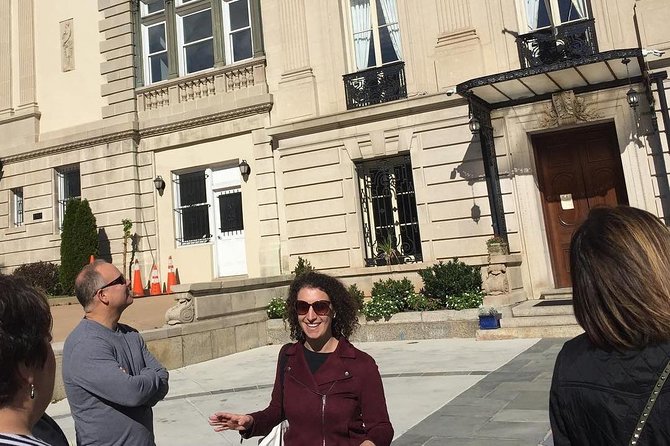
After the more ceremonial stretch of Embassy Row, the walk continues into Kalorama. The neighborhood’s name means beautiful view in Greek, and its quieter streets feel more residential than the broad avenue you have just followed.
You spend about 15 minutes in this part of the route. The guide points out homes associated with influential Washington figures and explains how Kalorama became a favored address for people near the center of national life.
The former home of President Woodrow Wilson is another stop. The house is tied to Wilson’s post-presidency years, and its presence adds a personal chapter to a route otherwise filled with embassies and public institutions.
Admission to the Woodrow Wilson House is not included. The listed stop is an exterior visit, so you should not book this walk expecting a museum tour inside. If you want to explore the house itself, you would need to arrange that separately, but no additional admission details are provided here.
The Spanish Steps and Mitchell Park
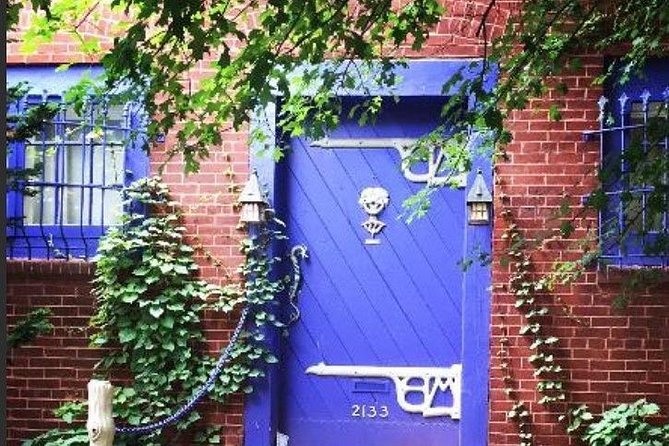
Washington’s Spanish Steps are a pleasant surprise for many people. They are a modest local version of the famous steps in Rome, set in a quieter residential pocket rather than on a major ceremonial avenue.
You spend about five minutes here. The scale is smaller than the European original, but that is part of its charm. This stop gives your legs a pause and offers a different kind of city scene, with landscaping and steps replacing formal embassy facades.
Mitchell Park and the spot known as The Hobbitt House add more local color. The Hobbitt House is connected with Edward Lind Morse, who painted his inventor father. The story provides another reminder that the neighborhood’s past includes artists, inventors, and private family dramas, not just presidents and diplomats.
These smaller stops are valuable because they keep the walk from becoming a parade of official buildings. You get glimpses of the neighborhood’s quieter corners and the odd details that are easy to miss on your own.
Finishing at The Phillips Collection
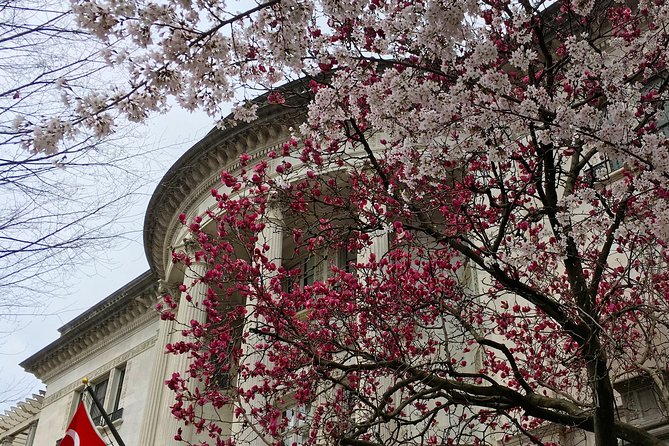
The tour concludes near The Phillips Collection at 1600 21st Street NW. The museum is known as the first modern art museum in the United States, and its red brick exterior makes a fitting final sight after so much discussion of historic homes.
The tour does not include museum admission. Still, the ending works well if you want to continue your afternoon with art, a meal, or more time in Dupont Circle.
Because the walk starts and ends in different parts of the neighborhood, think of it as a point-to-point outing rather than a loop. That is useful if you already have plans near The Phillips Collection, but less convenient if you need to return immediately to Dupont Circle.
How the guides shape the experience
The guide matters a great deal on this tour. The strongest comments focus on clear explanations, humor, good pacing, and stories that make architectural details easier to remember.
Sam is praised for keeping the group engaged in cold weather and for mixing history, architecture, humor, and present-day observations. Natalie is noted for using supplementary pictures of former residents, which can help you picture the people behind the buildings. Mark is described as considerate and engaging, while Christine brings humor and a strong grasp of the neighborhood.
Ellery is also associated with a good balance between architecture and the history of the mansions before they became embassies. Carolyn is noted for combining building details with stories about former residents.
You cannot choose your guide from the information provided, so expect some variation in style. That is not a major concern here because the format allows room for questions and conversation, and the group maximum is 20 people.
What $48 gets you
At $48 per person, this is not a bargain sightseeing loop in the sense of a free self-guided walk. You are paying for a local guide, a planned route, and two hours of interpretation.
The price makes sense if you want the stories behind the buildings. On your own, you can walk Massachusetts Avenue at no cost, but you may miss the links between the homes, embassies, clubs, monuments, and former residents. The tour also saves you the work of researching the architecture before you arrive.
The value is weaker if you mainly want indoor access or a long stop at each site. Admission is not included, and most of the experience involves exterior viewing. I would choose it for context and storytelling, not for entry tickets.
The tour is often booked about 22 days ahead, which suggests planning early if your Washington dates are fixed. Free cancellation is available until 24 hours before the start time. If the minimum number of participants is not reached, the operator offers another date or experience, or a full refund.
Who should book this walk
I would recommend this experience to first-time Washington visitors who want something beyond the National Mall. It also suits repeat visitors, couples, families with older children, and local residents who know Dupont Circle but have never learned the stories behind its houses.
It is especially good for anyone who enjoys architecture without wanting a technical class. You get enough design vocabulary to notice details, but the focus stays on people, politics, money, and unusual events.
The walk can also work well after a morning of museums or brunch, since it gives you a structured way to stretch your legs. Just leave room in your schedule at the end. The route may run longer than two hours, and the finish is near The Phillips Collection rather than back at the starting point.
People with limited walking ability should note that this is a two-hour outdoor tour. Most people can participate, and service animals are allowed, but no detailed information is provided about step-free access, seating, or the exact walking distance.
Should you book the Dupont Circle and Embassy Row tour?
Book it if you want Washington’s grand houses to make sense as part of the city’s social and political story. The mix of architectural styles, eccentric residents, embassy lore, and quieter spots such as the Spanish Steps gives the walk more character than a simple facade-by-facade survey.
Skip it if you need extensive interior visits, a self-paced schedule, or a tour limited strictly to two hours. For most people who enjoy stories and city walking, the $48 fee is fair, especially with a strong guide such as Sam, Natalie, Mark, Christine, or Ellery. Bring comfortable shoes, prepare for the weather, and keep your afternoon flexible.
FAQ
How long is the Dupont Circle and Embassy Row tour?
The tour lasts approximately two hours, though you should allow extra time because the walk can run about 20 minutes longer.
Where does the tour begin?
The tour begins at Dupont Circle in Washington, DC 20036.
Where does the tour end?
The tour ends at The Phillips Collection, 1600 21st Street NW, Washington, DC 20009.
What is the price?
The listed price is $48 per person.
Is the tour offered in English?
Yes. The tour is offered in English.
Is the tour guided?
Yes. A local guide leads and narrates the walk.
How large is the group?
The maximum group size is 20 people.
Does the tour include admission to the Woodrow Wilson House?
No. Admission to the Woodrow Wilson House is not included.
Do you enter the embassies?
The tour mainly provides exterior views and stories about the buildings. Entry to embassy interiors is not guaranteed.
Can I cancel for a full refund?
Yes. You can cancel at least 24 hours before the experience begins for a full refund. Changes or cancellations made less than 24 hours before the start time are not accepted for a refund.
Just added around the USA
- Wilmington History and Architecture Tour★ 4.8 · 18 reviews
- Washington, DC: Georgetown Architecture Walking Tour★ 5.0 · 8 reviews
- New Orleans : Garden District Architecture Walking tour★ 4.8 · 5 reviews
- Washington DC: Dupont Circle & Embassy Row Architecture Tour★ 5.0 · 6 reviews
- Tulsa: Art Deco Walking Tour of Tulsa★ 5.0 · 8 reviews
- Castle to Capitol: Museums of the National Mall Architecture Tour★ 4.5 · 9 reviews
- Private Colonial Williamsburg Architectural Tour★ 5.0 · 5 reviews
- Iconic Capitol Hill Architectural Walking Tour★ 5.0 · 21 reviews
Walking Tours, compared.
The Official Art Deco Walking Tour by The Miami Design Preservation League
Read our review →
Barcelona: Gothic Quarter Ghosts and Legends Walking Tour
Read our review →
Barcelona: Old Town and Gothic Quarter Walking Tour
Read our review →
Lecce: Baroque Architecture and Underground Walking Tour
Read our review →
Chicago in a Day: Food, History & Architecture Walking Tour
Read our review →

Ramblas, Old Town, Gothic and Gaudi Architecture Walking Tour
Read our review →
Chicago’s Secret Interiors Architectural Walking Tour
Read our review →Browse the lists this tour appears in