
Review · THE USA
Santa Fe Architectural Walking Tour
Santa Fe’s architecture is not just a pretty backdrop. It tells the story of Indigenous building traditions, Spanish settlement, territorial-era design, and the city’s modern identity. This walking tour makes those details easier to see, moving beyond postcard views to courtyards, older buildings, and less obvious corners of town. I especially like the small group of no more than eight people and the way guides such as Sandy, Ed, Mickey, Mary, and Daniel connect buildings to local history. The Gruet tasting at the end is another smart touch, giving you a relaxed place to sit and talk after the walk.
The main drawback is physical rather than cultural. Santa Fe streets and sidewalks can be uneven, and the tour requires a moderate fitness level. A hot day can make the walk feel harder, especially before the tasting, so bring water, a hat, and sunscreen. Also note that the experience is for adults age 21 and older.
Key points to know before booking
- Three architectural traditions: Learn to recognize Pueblo, Spanish Territorial, and Northern New Mexican design.
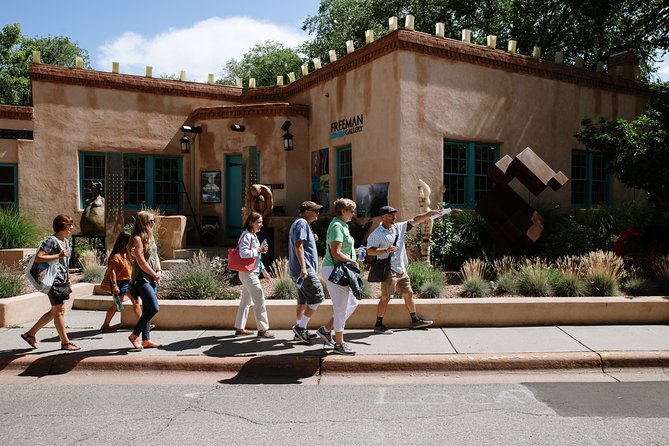
- A genuinely small group: The tour has a maximum of eight people, allowing room for questions and personal interests.
- A guide-led look at Santa Fe: Sandy, Ed, Mickey, Ed, Mary, Doug, and Daniel have all led tours, with the exact guide assigned by date.
- Courtyards and older buildings: The route includes a traditional courtyard and one of Santa Fe’s oldest hotels.
- Gruet tasting finish: The walk ends at the Gruet Winery Santa Fe Tasting Room inside Hotel St. Francis.
- Plan for sun and uneven pavement: Comfortable walking shoes, water, sunscreen, and a hat are sensible choices.
Why Santa Fe architecture deserves a dedicated walk

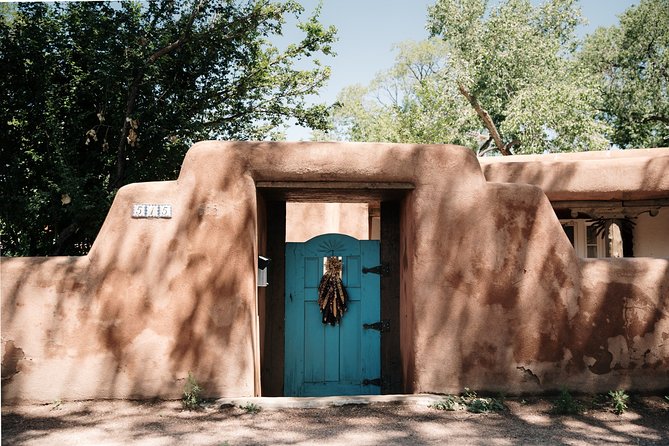
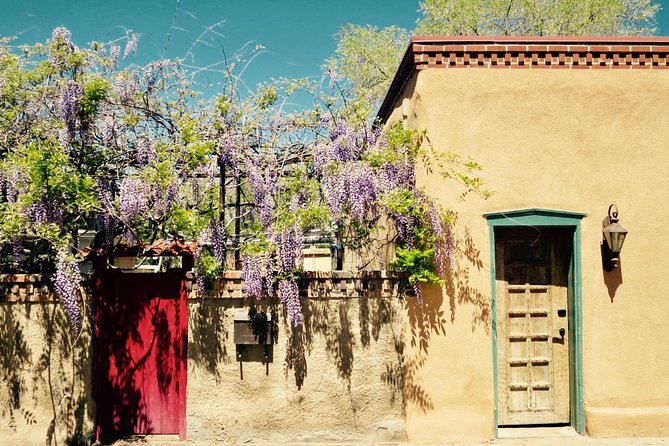
Santa Fe can look simple at first glance. Earth-colored walls, flat roofs, wooden beams, and narrow streets create a unified appearance, but the details are not all from the same period or tradition. This experience gives you a way to separate three major styles: Pueblo, Spanish Territorial, and Northern New Mexican.
That distinction matters because Santa Fe’s look developed through several cultures and eras. The tour connects architectural choices with the people and events that shaped the city, rather than treating adobe walls as mere decoration.
You will likely notice features you would otherwise walk past. A courtyard may appear private and quiet, yet its layout can reveal how homes were organized. A doorway, roofline, balcony, or plastered wall can point to a particular design tradition. The guide’s job is to explain what you are seeing and why it matters.
This is also a useful first-day activity. The route gives you a working sense of Santa Fe’s center, and the guide can help you decide what deserves a longer visit later. Several guides are also happy to suggest food, galleries, activities, and other places in New Mexico, which adds practical value beyond the scheduled walk.
More architecture walks in the USA:
- The Official Art Deco Walking Tour by The Miami Design Preservation League
★ 5.0 · 1,580 reviews - Chicago in a Day: Food, History & Architecture Walking Tour
★ 5.0 · 1,153 reviews - Miami South Beach Art Deco Walking Tour
★ 5.0 · 1,039 reviews
Starting at Old Santa Fe Trail at 9:30 a.m.
The meeting point is Heritage Inspirations Santa Fe Tours & E-Bike Rentals at 211 Old Santa Fe Trail. The tour begins at 9:30 a.m., a sensible time for a walking experience in a sunny high-desert city.
You will need to make your own way there. Hotel pickup and drop-off are not included, so check the location before booking and allow enough time to arrive without rushing. A mobile ticket is provided, and the tour is offered in English.
The morning start has two advantages. You can learn your bearings early in the day, then use the rest of your visit to return to buildings, streets, galleries, or neighborhoods that caught your eye. It also gets much of the walking done before the afternoon heat.
Wear shoes that can handle uneven pavement. Santa Fe is pleasant to walk, but this is not a smooth, flat promenade. The route involves standing and moving for an extended period, so this may be a poor choice if you have serious mobility limits.
Learning the three styles of Santa Fe design
The heart of the experience is the architecture lesson. You are introduced to Pueblo, Spanish Territorial, and Northern New Mexican styles, with the guide explaining how each contributes to the city’s appearance.
Pueblo design is associated with rounded adobe forms, earth tones, and an overall sense of mass. Spanish Territorial architecture often has more formal lines and details. Northern New Mexican design brings its own regional character, shaped by local building methods and the conditions of northern New Mexico.
You do not need an architecture background. The guide breaks the subject into things you can actually spot: roof shapes, wall finishes, windows, wooden details, courtyards, and the arrangement of buildings. The best part is that these ideas stay useful after the tour. Once you learn what to look for, you can examine Santa Fe on your own with a sharper eye.
The tour also puts architecture beside social and cultural history. You may hear about DeVargas Street, the division between the north and south sides of the river, and the ways different communities shaped the city. That broader context keeps the experience from becoming a string of design terms.
Several guides have been praised for adjusting the discussion to individual interests. If you care most about history, food, gardens, art, or local culture, say so at the start. A small group makes that sort of conversation easier than it would be on a large bus tour.
Courtyards, older hotels, and the less obvious city
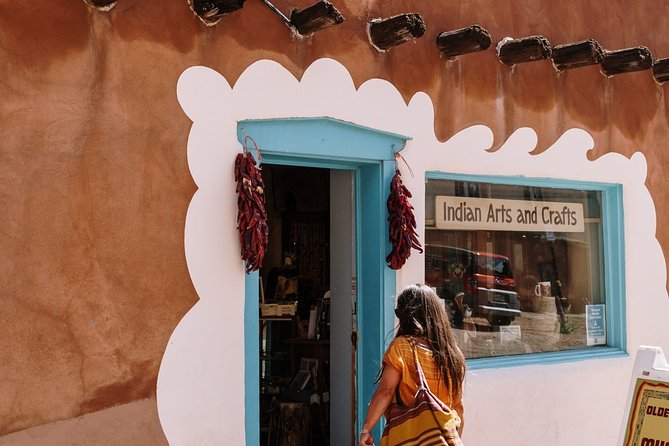
One of the strengths of this experience is that it does not rely only on Santa Fe’s famous facades. The route includes a traditional courtyard, a useful stop because courtyards show how architecture works in daily life, not just how it photographs.
Courtyards can shape privacy, shade, movement, and social space. In a city where sun and heat matter, the arrangement of a building can be as important as its decorative details. Your guide can help you connect those practical choices to the city’s architectural traditions.
The route also includes one of Santa Fe’s oldest hotels. That stop gives you a chance to see how historic design survives in a working building rather than behind a museum barrier. It also helps explain how Santa Fe presents its past to people arriving from elsewhere.
The walk may include places that are easy to miss if you simply follow a sightseeing map. One guide, Doug, has been noted for pointing out less obvious details in familiar places. That is exactly the sort of service I want from a city walk: not just a list of major sights, but a better way to read the streets.
A few more architecture tours around the USA worth a look
- Chicago Architecture River Cruise
★ 5.0 · 15,756 reviews - Chicago River 90-Minute Architecture Tour
★ 4.5 · 9,629 reviews - Chicago River: 1.5-Hour Guided Architecture Cruise
★ 4.8 · 8,046 reviews - Chicago Architecture Center River Cruise aboard First Lady
★ 5.0 · 5,536 reviews
What the guides add to the experience
The exact guide can shape the tone of the morning. Sandy is frequently described as animated, warm, and highly prepared, with a particular talent for making Santa Fe’s past easy to follow. She has also led people who have visited Santa Fe for decades and still found new details to share.
Ed, also referred to as Edward Miller, brings strong knowledge of local history, art, architecture, and the communities that shaped the region. He has adjusted tours around interests such as gardening, food, and history, which is useful if you want more than a standard script.
Mickey, sometimes spelled Micky in tour information, has been praised for her broad grasp of architecture and local history. Mary brings an art background that can help if you are planning to visit Canyon Road galleries after the tour. Daniel and Doug have also led engaging walks, with Daniel especially noted for connecting stories to the city’s architecture.
Travis has accompanied Sandy while training as a guide. That detail suggests an active local operation rather than a single-person show, though you should not assume a particular guide unless the company confirms it.
The common thread is conversation. The guides do not simply point at walls and recite dates. They explain how architecture reflects the city’s people, culture, and past. Ask questions. This is where a small group of eight has a real advantage.
The Gruet tasting at Hotel St. Francis
The tour finishes at the Gruet Winery Santa Fe Tasting Room inside Hotel St. Francis at 210 Don Gaspar Avenue. The tasting is scheduled for about 30 minutes and includes alcoholic beverages, taxes, fees, and handling charges.
This is a pleasant way to finish a morning walk. You move from an outdoor lesson about buildings and streets into a more relaxed indoor setting, where you can continue talking about what you have seen. The tasting also gives the tour a distinct local-food-and-drink angle without turning the whole experience into a restaurant outing.
The wording around the finish is important. The tasting is presented as an option, so you do not have to take part if you prefer not to drink. You can also arrange to do it later in the day, according to the tour information.
One practical caution: if the day is hot, you may not want to go straight from several hours of walking into alcohol. Drink the bottled water provided, use sun protection, and pace yourself. One person found the tasting less appealing after a hot walk, which is a fair point. The wine finish works best when you treat it as an optional bonus, not as the reason to book the architecture tour.
Is $145 a fair price?
At $145 per person, this is not a bargain walk. You are paying for a private-feeling small group, a local guide, a focused architecture lesson, bottled water, and the Gruet tasting. The value depends on how much you want interpretation rather than simple sightseeing.
A self-guided walk costs less, of course. Santa Fe’s streets are open to everyone, and you can photograph adobe buildings without paying an admission fee. But a map will not necessarily explain the differences between the three styles, point out the social history connected to DeVargas Street, or tailor the route to your interests.
The group limit is important here. With only eight people, you have a better chance to ask questions and hear the guide clearly. That matters when the subject is architectural detail, since small features can be hard to see or discuss in a large crowd.
I would consider the price worthwhile for a first visit, for anyone with a strong interest in architecture or history, and for repeat visitors who want a new angle on Santa Fe. If you mainly want a quick orientation or dislike paying for a long walk, the cost may feel high.
The tasting adds some value, but I would not calculate the whole price around the wine. The main purchase is the guide’s interpretation and the access to a carefully chosen route.
Timing, fitness, and what to bring
The walking portion is described as about three hours, with a 30-minute tasting at the end. Since the schedule presents the walk and tasting separately, I would keep at least three and a half hours open, even though the overall experience is also described as approximately three hours.
Bring:
- Comfortable walking shoes
- A hat and sunscreen
- Water, even though bottled water is included
- Clothing suited to strong sun
- A mobile ticket for check-in
The tour requires a moderate fitness level. Streets and sidewalks may be uneven, and the walk is not designed for someone who needs frequent seating or a smooth, step-free route. Service animals are allowed, and the meeting area is near public transportation.
The minimum age is 21 because alcohol is part of the experience. If you do not want the tasting, you can skip it, but the age requirement still applies according to the tour conditions.
Free cancellation is available if you cancel at least 24 hours before the start time. Changes or cancellations inside that window are not accepted for a refund.
Who will enjoy this Santa Fe walk most?
I would choose this experience if you like cities that reveal themselves slowly. It suits you if you want to understand why Santa Fe looks the way it does, rather than simply collect photographs of adobe buildings.
It is especially good for:
- First-time visitors who want a useful city orientation
- Repeat visitors ready to see familiar streets differently
- Couples and friends who enjoy architecture, history, art, and wine
- Solo visitors who prefer a small group and an easy way to ask questions
- People planning to visit Canyon Road and wanting context before browsing galleries
- Anyone who appreciates a guide willing to follow personal interests
It may not suit you if you want a fast, vehicle-based overview, dislike walking in sun, or have difficulty with uneven pavement. It is also not the best fit if you want a full meal, since lunch is not included.
Should you book the Santa Fe Architectural Walking Tour?
Book it if you want Santa Fe to make more sense by the end of your morning. The strongest part is the guide-led explanation of Pueblo, Spanish Territorial, and Northern New Mexican design, supported by local stories, courtyards, historic buildings, and less obvious details.
I would book early, since the tour is often reserved about 28 days ahead and the group is limited to eight people. If Sandy, Ed, Mickey, Mary, Doug, or Daniel is available on your date, you may have a particularly engaging guide, but the specific assignment can vary.
Skip it if three hours of walking sounds tiring or if $145 feels too high for a guided city experience. Otherwise, this is a thoughtful introduction to Santa Fe, with enough history and architectural detail to improve the rest of your stay. Treat the Gruet tasting as a flexible extra, wear good shoes, and let the walk do the work.
FAQ
Where does the Santa Fe Architectural Walking Tour start?
It starts at Heritage Inspirations Santa Fe Tours & E-Bike Rentals, 211 Old Santa Fe Trail, Santa Fe, New Mexico 87501.
What time does the tour begin?
The scheduled start time is 9:30 a.m.
Where does the tour end?
It ends at the Gruet Winery Santa Fe Tasting Room inside Hotel St. Francis, 210 Don Gaspar Avenue, Santa Fe.
Is the Gruet tasting included?
Yes. A Gruet tasting and alcoholic beverages are included. The tasting is optional, and you can coordinate it for later in the day if you prefer.
How many people can join the tour?
The tour has a maximum of eight travelers.
What should I wear and bring?
Wear comfortable walking shoes and bring sunscreen, a hat, and sun protection. The tour requires moderate fitness, and Santa Fe streets and sidewalks can be uneven.
Just added around the USA
- Wilmington History and Architecture Tour★ 4.8 · 18 reviews
- Washington, DC: Georgetown Architecture Walking Tour★ 5.0 · 8 reviews
- New Orleans : Garden District Architecture Walking tour★ 4.8 · 5 reviews
- Washington DC: Dupont Circle & Embassy Row Architecture Tour★ 5.0 · 6 reviews
- Tulsa: Art Deco Walking Tour of Tulsa★ 5.0 · 8 reviews
- Castle to Capitol: Museums of the National Mall Architecture Tour★ 4.5 · 9 reviews
- Private Colonial Williamsburg Architectural Tour★ 5.0 · 5 reviews
- Iconic Capitol Hill Architectural Walking Tour★ 5.0 · 21 reviews
Walking Tours, compared.
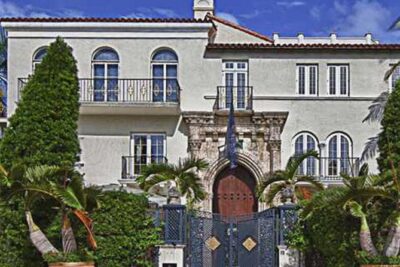
The Official Art Deco Walking Tour by The Miami Design Preservation League
Read our review →
Barcelona: Gothic Quarter Ghosts and Legends Walking Tour
Read our review →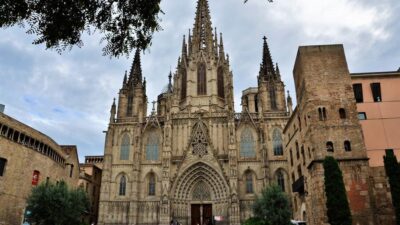
Barcelona: Old Town and Gothic Quarter Walking Tour
Read our review →
Lecce: Baroque Architecture and Underground Walking Tour
Read our review →
Chicago in a Day: Food, History & Architecture Walking Tour
Read our review →
Ramblas, Old Town, Gothic and Gaudi Architecture Walking Tour
Read our review →
Chicago’s Secret Interiors Architectural Walking Tour
Read our review →Browse the lists this tour appears in