
Review · LATVIA
Explore Riga’s Art Nouveau district with a Local
Riga’s best architectural walk links several of the city center’s key sights in just 90 minutes. You’ll move from a quiet garden and a golden-domed Orthodox cathedral into the Art Nouveau district, then finish near the Freedom Monument with Old Town spread below.
I like the small group limit of eight, which should make it easier to ask questions and keep a steady pace. I also like the route’s mix of architecture and green space, especially the canal parks and the final view from the Freedom Monument. The main concern is value: at $107.63 per person, this is a costly short walk, and one poor review said the guide offered too little useful detail about the buildings.
Key points to know before booking
- The route covers Riga’s major central sights in about 90 minutes, with no meal stop or paid attraction included.
- Art Nouveau is the main event, but the walk also includes cathedral domes, historic parks, the opera house, and the Freedom Monument.
- The group is limited to eight people, a useful feature for a city walk where questions and conversation matter.
- English is the only listed language, and the ticket can be shown on your mobile device.
- The tour begins near Tērbatas iela and ends at the Freedom Monument, so you finish in a central spot rather than returning to the starting point.
- The guide’s storytelling is important here, since the experience is strongest when the striking buildings are explained rather than simply pointed out.
Why this short Riga walk works
Riga rewards visitors who look up. Its center is packed with decorated facades, formal public buildings, leafy paths, and monuments that can seem disconnected when seen on your own. This walk gives you a simple route through several of those areas without asking you to plan every turn.
The experience is not built around entering museums or touring rooms inside the buildings. Instead, you walk through central Riga with a local who is meant to explain what you are seeing and help connect the city’s architectural styles.
That distinction matters. If you want interiors, exhibits, or a long historical lecture, this is not the right format. If you want a compact introduction before exploring Riga on your own, the route has a sensible shape.
The start point is the monument to Mikhail Tal on Tērbatas iela 2C. The tour then works toward the Freedom Monument, so you should think of it as a one-way walk. Wear comfortable shoes and avoid scheduling a tight appointment immediately afterward, since the stated duration is approximate.
More Art Nouveau tours in Riga:
- Riga: Old Town Walking Tour with Art Nouveau Highlights
★ 4.7 · 332 reviews - Riga: 2-Hour History of Art Nouveau Walking Tour
★ 4.8 · 118 reviews - Riga Art Nouveau walking tour
★ 4.0 · 27 reviews
A calm start in Riga’s central garden
The first stop is a serene garden in the middle of the city. This gives the walk a softer opening than beginning directly among traffic and large buildings.
A garden stop can also help you get your bearings. You have a moment to settle into the group, meet the local guide, and see how central Riga combines public green space with dense historic streets.
The supplied details do not name the garden, so you should not book this expecting a particular famous park or a scheduled garden visit. The value is mainly in the setting and in the transition it creates before the architectural sights begin.
The golden domes of the Orthodox cathedral
One of the strongest visual moments comes at the fully renovated 19th-century Orthodox cathedral, with its bright golden domes. Even if you are mainly interested in Art Nouveau, this building gives the walk a useful change of mood and style.
The cathedral is described as striking and imposing, so this is a stop where you will want time to look at the overall form rather than focus only on small decorative details. The renovation is also worth noting because it helps explain the polished appearance of the building today.
The tour information does not promise entry inside the cathedral. Plan on seeing it from the outside and hearing about it during the walk. If religious interiors are a priority for you, check separately before booking because no interior visit is included in the stated program.
A grand Baroque and classicist facade
The next architectural stop is an imposing building with a Baroque and classicist-style facade. The building is not identified by name in the available details, so the guide’s explanation becomes especially important here.
This is a good example of why a local-led walk can be more useful than simply following a map. A facade may look impressive, but you also want to know what period it represents, why it was built, and how it fits into Riga’s central streets.
At the same time, the tour’s value depends on how well the guide handles these stops. One rating of the experience was poor because the local guide did not provide enough interesting information about the sights. That criticism is worth taking seriously, especially at this price.
Same city, a completely different century:
- Walking Tour of Riga’s Beautiful Art Nouveau Architecture
★ 4.8 · 20 reviews - Old Town And Art Nouveau Walking Tour Of Riga
★ 4.0 · 15 reviews - Big Riga: Old Town & Art Nouveau quarter
★ 5.0 · 15 reviews - Riga’s Old Center and Art Nouveau Tour
★ 4.9 · 11 reviews
Riga’s Art Nouveau district takes center stage
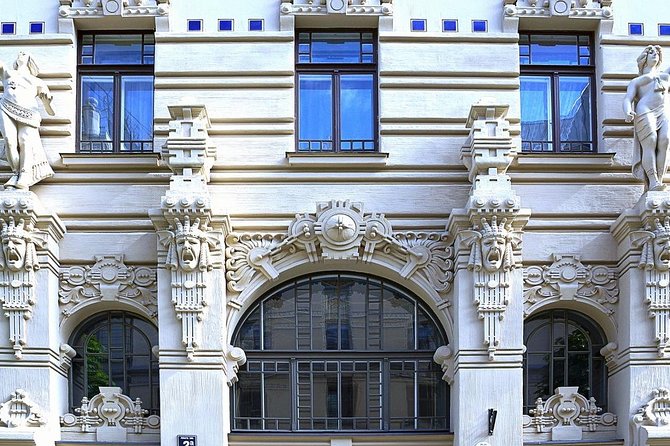
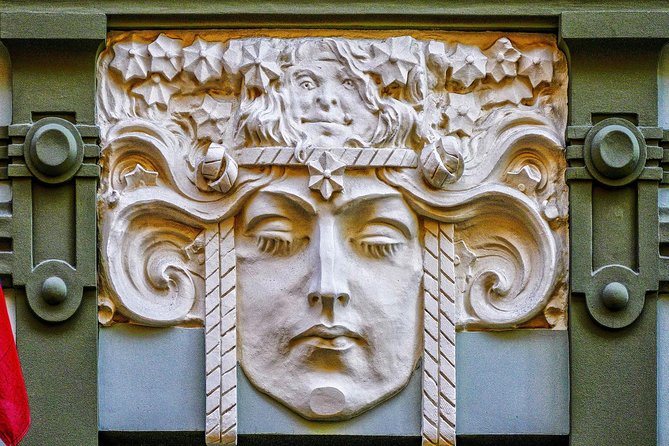
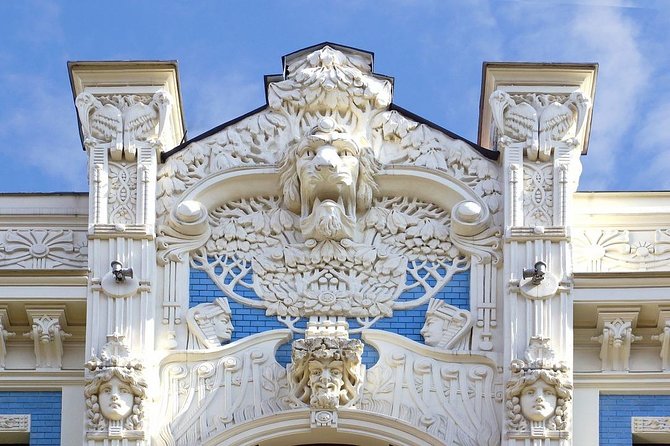
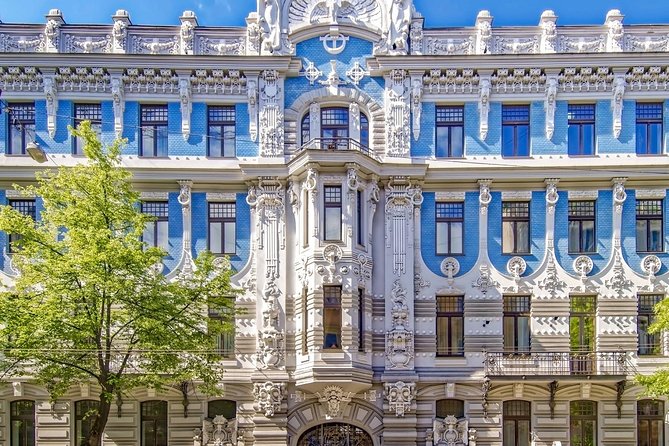
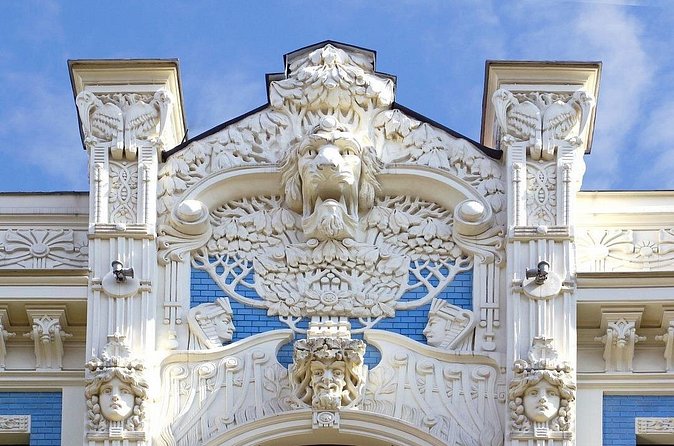
The main reason to book this experience is the Art Nouveau district. Riga is known for its concentration of Art Nouveau buildings, and the walk gives this architectural style the largest share of attention.
Expect to see decorated urban facades and carefully designed details as you move through the district. The available description does not name particular streets, architects, or buildings, so you should not expect a fixed list of famous addresses from the booking information alone.
That missing detail is both a limitation and a practical question to ask before you go. If you are passionate about architecture, you may want to confirm which streets and buildings the route covers. If you are new to the subject, the broad introduction may be enough to help you recognize the style during the rest of your stay.
I like that the Art Nouveau section is placed within a wider city walk rather than treated as an isolated photo stop. You get to see how this part of Riga relates to parks, public monuments, the cathedral, and the central city around it.
Still, this is not advertised as a specialist architectural seminar. The guide’s quality matters more than the route map here. A good explanation can turn decorative facades into a readable story. A weak explanation can leave you admiring the buildings without learning much.
Canal parks and historic gardens
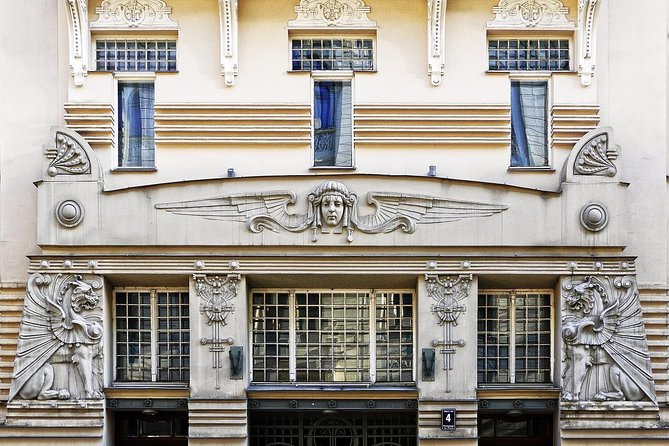
The walk continues through the historical parks and gardens around Riga’s City Canal. This section offers a welcome change from the close-up view of building facades.
The canal area also helps show how the center is organized. You are not simply moving from one building to another. You are seeing the relationship between formal public spaces, paths, water, and the grand architecture nearby.
The word lush is used to describe these parks, but no seasonal details are provided. Their appearance will naturally depend on the time of year. The main benefit is the setting and the slower rhythm, not a promise of a particular flower display or garden event.
For you, this may be one of the most pleasant parts of the route if you want a break from city streets. It also makes the walk more varied, which is useful during a short experience.
A classic meeting spot for couples
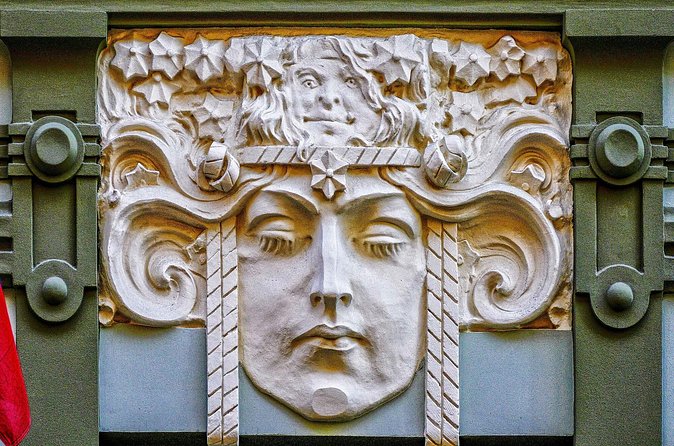
Another stop introduces a classic meeting place for lovers of all ages. The exact name is not provided, so the guide will need to supply the local context and explain why this spot became associated with romance and rendezvous.
This kind of stop can add personality to a city walk. Architecture tells you how a city was built, while a meeting place hints at how people use it. You get a small piece of everyday urban life rather than another grand facade.
Do not expect a long stop devoted only to romance. The route has several major sights to cover, and the total time is about an hour and a half. Think of this as a brief local story along the way.
The neo-classical opera building
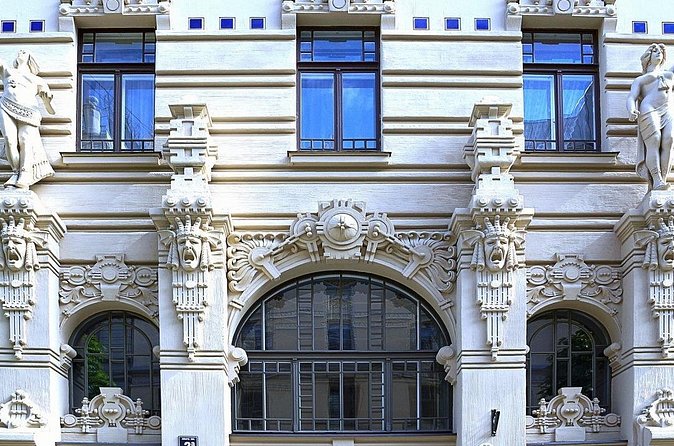
The route then reaches a breathtaking neo-classical opera building. Its formal design gives you another clear contrast with the more decorative Art Nouveau streets.
This stop should appeal to anyone who enjoys the way public buildings use symmetry, scale, and ceremony. The building’s role as an opera house also adds a cultural layer to the walk, even though no performance or interior visit is included.
The available details do not state the opera house’s name or offer tickets inside. You will be viewing the exterior as part of the walking route. If you want to attend a performance, you will need to arrange that separately.
I like the placement of this stop near the end. After seeing residential and civic architecture, you finish with a building designed to announce its importance.
Ending at the Freedom Monument
The tour concludes at the Freedom Monument in central Riga. This is a practical finish because the monument is an important city landmark and a useful point from which to continue exploring.
The final position also gives you a view toward Riga’s Old Town. The description presents the Old Town as being right at your feet, so this is a good moment to pause, take photographs, and decide where to walk next.
Because the experience ends here, you are not returned to the start point. That is convenient if you plan to continue toward Old Town, but less convenient if you left belongings or arranged transport near Tērbatas iela. Plan your day around the one-way route.
The Freedom Monument is also a fitting final stop because it gathers many of the walk’s themes in one place: public space, national identity, architecture, and the connection between Riga’s newer central districts and its older core.
What $107.63 buys you
At $107.63 per person, this is expensive for a 90-minute walking experience. The listed price does not include food, drinks, snacks, entry tickets, or personal expenses. The included service is the local guide and the walking tour itself.
The case for the price is the small group. A maximum of eight people can make a major difference if the guide welcomes questions and gives useful explanations. You are paying for personal attention and local interpretation, not for admissions or transport.
There are also group discounts, though the amount and conditions are not provided. Check the final booking price carefully if you are traveling with several people, since that may improve the value.
The weaker case is the short duration. If the guide gives only broad comments, you may feel you paid a high rate for a route you could partly follow on your own. One low rating specifically criticized the lack of interesting information about the sights, while still acknowledging that the Art Nouveau architecture itself was impressive.
My advice is simple: book this for the guide’s perspective, not just for access to the buildings. If you mainly want photographs and a route through central Riga, you can likely see many of these areas without a paid tour. If you want a local to explain the city as you walk, the small group may justify the cost, but the guide’s performance is the key variable.
Who should choose this experience
This walk suits a first-time visitor who wants a quick introduction to Riga’s central architecture. It is also useful for someone with limited time who wants to cover several different areas without building a route from scratch.
You may like it if you enjoy:
- Art Nouveau facades and historic public buildings
- Short walking tours rather than long museum visits
- Green spaces mixed with city architecture
- Small groups capped at eight people
- Ending near the Freedom Monument and Old Town
It may not suit you if you want a specialist architecture tour with named buildings and detailed design analysis. It may also disappoint you if you expect cathedral or opera-house interiors, because no interior access is included.
The activity is offered in English. Confirmation arrives at booking, and you can use a mobile ticket. It is near public transportation, service animals are allowed, and most people can take part. The information does not describe the exact walking surface, step-free route, or distance, so contact the provider if those points matter to you.
Timing, meeting point, and practical planning
Meet at the monument to Mikhail Tal, at Tērbatas iela 2C in Riga’s Centra district. The endpoint is the Freedom Monument in the Central District.
Allow about 90 minutes, but keep a little flexibility because the stated duration is approximate. The route is a walk, so comfortable footwear is sensible even though the total distance is not supplied.
No food or drink is included. Carry what you need for the short outing, especially if you are joining at a busy point in your day. The tour does not appear to include a formal refreshment stop.
Free cancellation is available if you cancel at least 24 hours before the local start time. Inside that window, the amount paid is not refunded, and changes are not accepted. The provider is LocalBini, a platform for local experiences in Europe.
Should you book this Riga walk?
Book it if you want a compact route through Riga’s Art Nouveau district with several worthwhile architectural and public-space stops around it. The golden-domed cathedral, canal parks, neo-classical opera building, and Freedom Monument give the experience more range than an Art Nouveau-only walk.
I would be more cautious if you are paying the full $107.63 and expect a detailed architecture lesson. The single low rating points to the central risk: impressive buildings are not enough if the guide does not explain them well.
For the best chance of value, confirm what buildings and streets are covered, then treat the tour as an orientation walk rather than a complete study of Riga’s architecture. The small group and one-way finish are real advantages. The price and uncertain level of commentary are the points to weigh most carefully.
FAQ
How long does the Riga Art Nouveau tour last?
The experience lasts approximately 1 hour and 30 minutes.
What language is the tour offered in?
The tour is offered in English.
How much does the experience cost?
The listed price is $107.63 per person. Group discounts are available, but the discount amount is not specified.
Where does the tour begin?
It begins at the monument to Mikhail Tal, Tērbatas iela 2C, Centra District, Riga.
Where does the tour end?
It ends at the Freedom Monument in Riga’s Central District.
What sights are included on the route?
The route includes a central garden, a renovated 19th-century Orthodox cathedral with golden domes, a Baroque and classicist facade, Riga’s Art Nouveau district, parks around the City Canal, a classic meeting place for couples, a neo-classical opera building, and the Freedom Monument.
Is food or drink included?
No. Food, drinks, snacks, and personal expenses are not included.
Can I cancel for a full refund?
Yes, if you cancel at least 24 hours before the experience’s start time. Cancellations made less than 24 hours in advance are not refunded.
Just added around Riga
- Riga Old Town, C Market & Art Nouveau Guided Walking Tour★ 5.0 · 2 reviews
- Ultimate Art Nouveau Experience in Riga – Private Tour★ 5.0 · 4 reviews
- Private Riga Art Nouveau Tour★ 5.0 · 5 reviews
- Riga’s Architecture: A self-guided audio tour of the city’s art nouveau history★ 5.0 · 3 reviews
- Riga Art Nouveau Secrets: Self-Guided Puzzle Walk★ 5.0 · 6 reviews
- Old Town And Art Nouveau Walking Tour Of Riga★ 4.0 · 15 reviews
- Riga’s Old Center and Art Nouveau Tour★ 4.9 · 11 reviews
- Riga: Art Nouveau Walking Tour with Welcome Drink★ 5.0 · 2 reviews
Art Nouveau Tours, compared.
Riga: Old Town Walking Tour with Art Nouveau Highlights
Read our review →
Riga: 2-Hour History of Art Nouveau Walking Tour
Read our review →
Brussels: Art Nouveau Pass – Entry to Three Locations
Read our review →
Small Group Tour in Ålesund: Art Nouveau, Sea Views & Insider Tips
Read our review →
Browse the lists this tour appears in