
Review · LATVIA
Private Riga Art Nouveau Tour
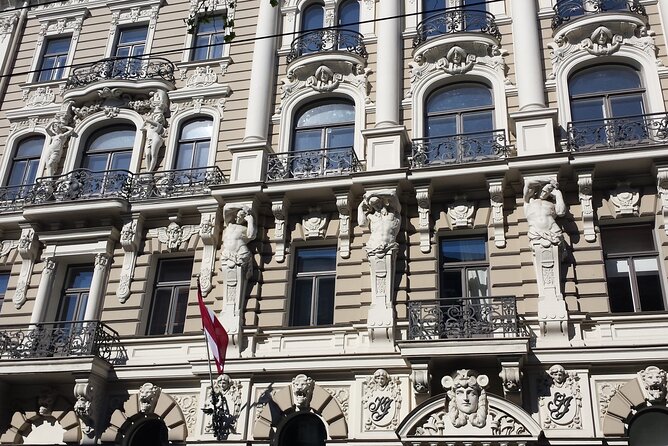
Riga’s Art Nouveau story unfolds best outside the medieval center, where grand early-20th-century buildings line streets such as Alberta iela. This private walk links several neighborhoods and styles, showing how Riga moved from vertical Art Nouveau to National Romanticism, eclectic decoration, and the dramatic facades that made the city famous.
I like the flexible private format and the guide’s focus on more than pretty doorways. Guides such as Emils, who studied art history, and Eduards bring a personal interest to the subject, with room for questions and practical tips on food and shops. The main drawback is simple: two hours goes quickly, and this is a walking tour with a moderate fitness requirement.
Key points before you book
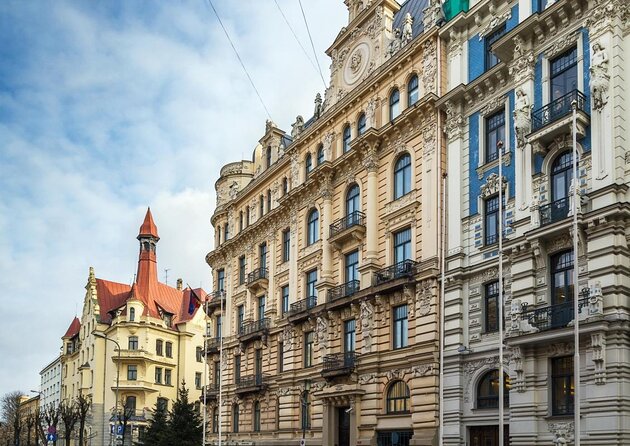
- A broader route than Alberta Street alone: You begin at the Latvian National Opera and finish near the Riga Art Nouveau Center.
- Several Art Nouveau styles: Expect vertical forms, National Romanticism, Neo-Classicism, and eclectic decorativism.
- Private attention: Your group has the guide to itself, with a maximum group size of 15.
- Useful architectural context: The walk covers apartment layouts, building practices, conservation, and the role of architecture in Latvian identity.
- Good value for a group: The price is $178.71 per group, not per person, so the cost works best when shared.
- Fixed meeting points: The stated start is at the Opera House, and the finish is on the corner of Alberta and Strelnieku streets.
Why Riga is the right city for an Art Nouveau walk
Riga experienced major growth in the late 19th and early 20th centuries. As the city expanded beyond its older center, architects had space to experiment with new facades, new decorative ideas, and new apartment buildings for a growing urban population.
That timing explains why Riga has such a strong concentration of Art Nouveau architecture. You are not simply looking at one famous building. You are following a period of city growth, changing taste, and national ambition.
The opening discussion at the Latvian National Opera gives you that useful frame. The building itself is not presented as an Art Nouveau stop in the same way as Alberta iela, but it is a sensible place to begin a story about Riga’s development. You start near the edge of the Old Town, then move into the newer parts of the city where the architectural change becomes easy to see.
I find this approach more useful than racing straight to the most photographed street. Once you understand why Riga expanded and why Art Nouveau became prominent here, the details on each facade make more sense.
More Art Nouveau tours in Riga:
- Riga: Old Town Walking Tour with Art Nouveau Highlights
★ 4.7 · 332 reviews - Riga: 2-Hour History of Art Nouveau Walking Tour
★ 4.8 · 118 reviews - Riga Art Nouveau walking tour
★ 4.0 · 27 reviews
Starting at the Latvian National Opera
The walk begins at the Latvian National Opera, at Aspazijas bulvāris 3. The meeting point is central and easy to identify, but you should pay attention to the exact location because the tour does not begin at Alberta Street.
The first 15 minutes cover Riga’s growth, the development of Art Nouveau, and the reasons the style became so common in the city. This short introduction matters. Art Nouveau was not one fixed look. It changed over time, and Riga’s buildings reflect that progression.
You will not need an admission ticket for this stop. The tour is built around exterior visits and guide commentary, so the value comes from learning how to read the city rather than entering a series of museums.
This is also a good point to ask your guide what your group wants from the walk. The private format allows the route and conversation to respond to your interests, within the time available. If you care most about facades, national identity, apartment interiors, or photography, say so early.
Tērbatas iela and the shift toward vertical design
At Tērbatas iela, the focus turns to vertical Art Nouveau and National Romanticism. The stop lasts about 20 minutes, giving you time to compare buildings rather than glance at one facade and move on.
Vertical Art Nouveau often draws the eye upward. Tall lines, narrow proportions, and strong arrangements can make a building feel higher and more formal than the neighboring structures. Your guide explains how these choices fit into the larger development of the style.
The point is not to memorize labels. You are learning to notice how architects used height, surface decoration, and the outline of a building to create a particular mood. Once someone points out the vertical emphasis, you can begin spotting it yourself on the next streets.
Tērbatas iela also introduces National Romanticism. This style is important because it connects architecture with Latvian identity. The tour does not treat Art Nouveau as decoration alone. It shows how buildings could express ideas about culture and nationhood at a time when independence was becoming an increasingly important subject.
For visitors interested in architecture, this is one of the most useful parts of the walk. You see the style changing instead of receiving a single, simplified definition of Art Nouveau.
Riga Secondary School No. 40 and national identity
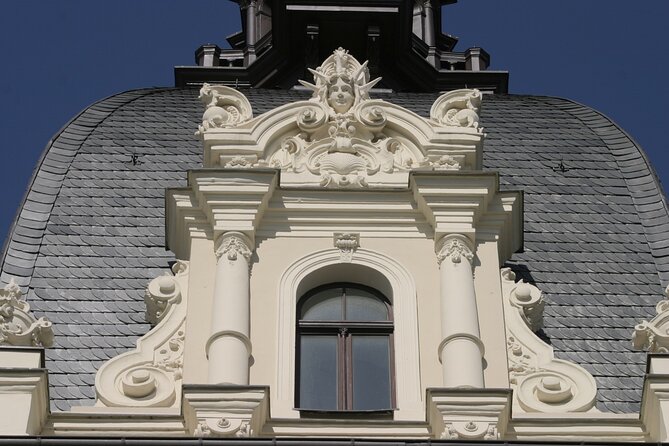
The stop at Riga Secondary School No. 40 lasts around 10 minutes. The building is presented as an excellent example of National Romanticism, and the discussion turns to the role of architecture in building national identity before Latvian independence.
A school is a particularly helpful example. It is not just a private residence or a decorative commercial building. It is a public structure, tied to education and community life. Its design can say something about the people it was built to serve.
Your guide connects the building to the political and cultural setting of the period. That gives this walk more substance than a list of famous architects and ornamental details. You get a sense of why the style mattered to people living in Riga, not only why it looks attractive in photographs.
The stop is short, so do not expect a lengthy visit inside. The value is in the exterior and the explanation. If National Romanticism interests you, this is a good place to ask for comparisons with the buildings seen at Tērbatas iela.
More private architecture tours in Riga:
- Ultimate Art Nouveau Experience in Riga – Private Tour
★ 5.0 · 4 reviews - Sagrada Familia & Gaudi Tour Private or Small Group with Tickets
★ 4.5 · 1,188 reviews - Barcelona: Sagrada Familia, Park Guell & Tapas Private Tour
★ 5.0 · 903 reviews - Park Guell and Sagrada Familia Private Tour with Hotel pick-up
★ 5.0 · 760 reviews
The Jewish Museum and Riga’s German influence
The Jewish Museum, also identified as the Museum Jews in Latvia, is the next stop, with about 15 minutes devoted to the area. Here the conversation turns to the meeting point between Art Nouveau and Neo-Classicism.
That comparison helps you see that architectural styles did not replace one another overnight. Buildings can carry older classical ideas while adopting newer Art Nouveau details. Looking at the transition between styles is often more revealing than looking at a single building in isolation.
This stop also covers the influence of Riga’s German community on the city’s development across the decades. That context is important because Riga’s architecture grew from several cultural and social forces. The city’s built environment cannot be explained by one national story alone.
You should treat this as an exterior architecture stop, not as a full museum visit. The supplied tour details list no admission charge, and the two-hour schedule leaves limited time for indoor collections. If the museum itself is a priority, plan a separate visit rather than expecting this walk to cover it in depth.
Ministry of Economics and the practical side of Art Nouveau
At the Ministry of Economics of the Republic of Latvia, the tour examines eclectic decorativism. This is a useful change of pace after the stronger vertical and national styles discussed earlier.
Eclectic decorativism can sound like a technical term, but the idea is practical: architects and builders drew from several decorative traditions and combined them in one design. Your guide explains how this worked and how building practices shaped the finished result.
The discussion also moves indoors in concept, covering the layout of Art Nouveau apartments. That is one of the best details in the tour because facades tell only half the story. A beautiful exterior was connected to everyday questions of rooms, movement, light, and urban living.
You will also hear about modern conservation efforts. This brings the story into the present and helps you understand that old buildings need ongoing care. The tour is not only about admiring decoration. It considers how Riga protects and maintains its architectural inheritance.
Again, no admission ticket is listed for the stop. The emphasis is on observation and commentary from the street.
Alberta iela, Riga’s grand finale
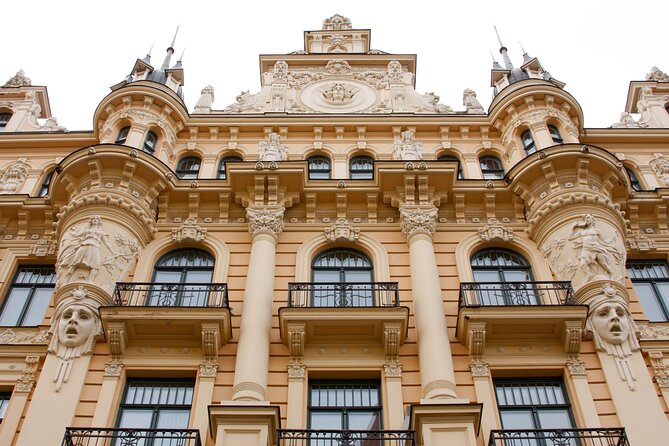
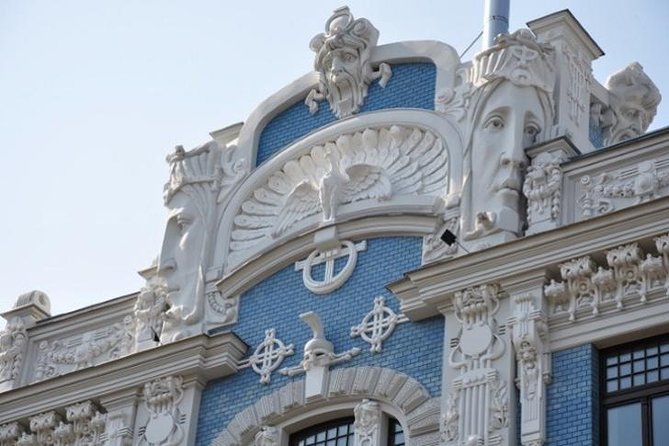
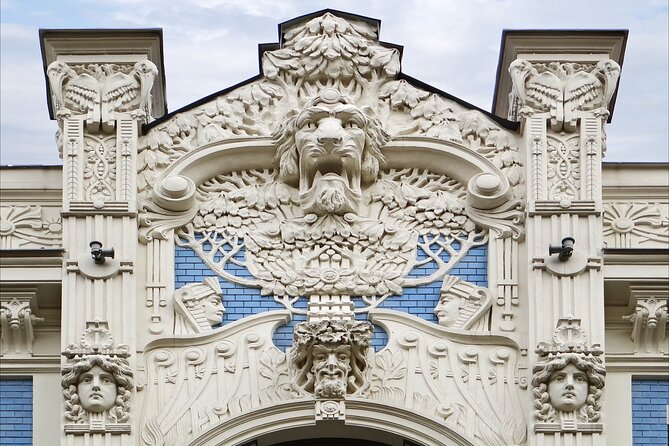
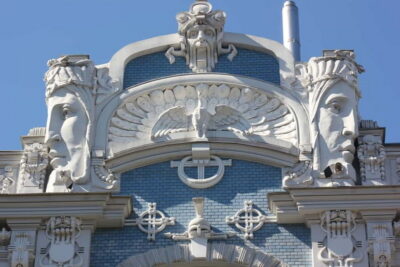
The final stop is Alberta iela, where the tour spends about 40 minutes. This is the longest stop, and rightly so. Alberta Street is Riga’s most famous Art Nouveau district, with a dense collection of ornate buildings, elaborate facades, flowing curves, floral details, and symbolic decoration.
This is where the ideas from earlier stops come together. You can compare the restrained and vertical forms seen elsewhere with the more theatrical buildings associated with Riga’s Art Nouveau reputation. The street gives you a concentrated display, but the guide helps prevent it from becoming a blur of similar-looking details.
Look closely at the upper floors, entrances, balconies, decorative panels, and changes in facade rhythm. The appeal is often above eye level. A guide’s commentary helps you notice features you might otherwise walk past while trying to frame a photograph.
The tour ends near the Riga Art Nouveau Center at Alberta iela 12, on the corner of Alberta and Strelnieku streets. This is a useful finish because you are left in the main Art Nouveau district rather than returned to the Opera House.
The location also gives you flexibility after the walk. You can continue exploring the area, visit the Art Nouveau Center separately, or use the guide’s local suggestions for food and shops. The guide may be able to point you toward places that fit your interests, as Emils has done for past groups.
What the private format adds
A private tour changes the pace. You are not trying to keep up with a large public group, and the guide can spend more time on the styles your party finds interesting.
The tour accepts up to 15 people, so it can work well for a family, group of friends, or small organization. At $178.71 per group, the price is especially reasonable when divided among several people. For 10 people, it works out to about $17.87 each. For 15, it is about $11.91 each.
For one or two people, the value is less obvious. You are paying for a private guide and a tailored route, not simply for access to buildings. If you care about architecture or want a focused introduction to Riga, that personal attention may justify the cost. If you only want to see Alberta iela and take photographs, a self-guided walk costs less.
The guide is the main variable in the experience. Emils is described as having studied art history and bringing real enthusiasm to the subject. Eduards is also described as an enthusiastic guide to Art Nouveau Riga. You should expect an informed, personal conversation rather than a rigid script, though the exact guide depends on availability.
Timing, walking, and practical details
The scheduled duration is about two hours, with roughly 115 minutes assigned across the six stops. The route is outdoors and spread across central Riga, so wear shoes suited to city walking.
A moderate level of physical fitness is recommended. No difficult hike is involved, but you should be comfortable walking between stops and standing while listening. People with limited walking ability should ask about arrangements before booking.
The tour is offered in English and uses a mobile ticket. Service animals are allowed. Admission tickets are listed as free for the stops, so the quoted price covers the private tour and guide rather than entry fees.
There is one important point to clear up before booking. The highlights mention hotel or port pickup and drop-off, but the included and meeting-point details say hotel pickup and drop-off are not included. The published start is the Latvian National Opera, and the published end is near Alberta and Strelnieku streets. I would plan on using those meeting points unless the provider confirms a separate transfer arrangement.
Confirmation is sent within 48 hours of booking, subject to availability. Free cancellation is available up to 24 hours before the start time. Changes or cancellations inside that window are not accepted for a refund.
Who will get the most from this walk
I would choose this tour if you want architecture explained in plain terms, with enough historical context to make the streets easier to understand. It suits first-time visitors who want an introduction, as well as architecture fans who want more than the usual Alberta Street photo stop.
It is also a good choice for a group with mixed interests. You do not need to be an architecture specialist. The walk connects design to city growth, public buildings, national identity, community history, apartment life, and conservation.
The tour may be less suitable if you want long museum visits, indoor access, or a slow photography session at every building. The schedule is compact, and the route covers several districts before finishing at Alberta iela.
Should you book the Private Riga Art Nouveau Tour?
Book it if you want to understand Riga’s Art Nouveau rather than simply photograph it. The strongest features are the private format, the range of styles, the discussion of National Romanticism and Latvian identity, and the extended finish at Alberta iela.
The price is fair for a group, especially with up to 15 people sharing the fee. Solo visitors and couples should weigh the cost against the value of a private guide. Before paying, confirm the pickup question and be ready for a two-hour city walk.
For an architecture-focused visit to Riga, this is a focused and well-shaped introduction. It starts with the city’s growth, follows the changing styles through central streets, and ends where Riga’s Art Nouveau reputation is at its strongest.
FAQ
How long does the Private Riga Art Nouveau Tour last?
The tour lasts approximately two hours.
Where does the tour begin?
It begins at the Latvian National Opera, Aspazijas bulvāris 3, Riga.
Where does the tour end?
It ends in Riga’s Art Nouveau district, on the corner of Alberta and Strelnieku streets, near the Riga Art Nouveau Center at Alberta iela 12.
How many people can join the private tour?
The tour is private for your group and allows up to 15 people.
Is hotel or port pickup included?
The supplied details are inconsistent. The highlights mention hotel or port pickup and drop-off, but the included services and meeting-point information say hotel pickup and drop-off are not included. Confirm this with the provider before booking.
Can I cancel for a full refund?
Yes. You can cancel at least 24 hours before the experience start time for a full refund. Cancellations or changes made less than 24 hours before the start time are not accepted for a refund.
Just added around Riga
- Riga Old Town, C Market & Art Nouveau Guided Walking Tour★ 5.0 · 2 reviews
- Ultimate Art Nouveau Experience in Riga – Private Tour★ 5.0 · 4 reviews
- Explore Riga’s Art Nouveau district with a Local★ 3.0 · 2 reviews
- Riga’s Architecture: A self-guided audio tour of the city’s art nouveau history★ 5.0 · 3 reviews
- Riga Art Nouveau Secrets: Self-Guided Puzzle Walk★ 5.0 · 6 reviews
- Old Town And Art Nouveau Walking Tour Of Riga★ 4.0 · 15 reviews
- Riga’s Old Center and Art Nouveau Tour★ 4.9 · 11 reviews
- Riga: Art Nouveau Walking Tour with Welcome Drink★ 5.0 · 2 reviews
Art Nouveau Tours, compared.
Riga: Old Town Walking Tour with Art Nouveau Highlights
Read our review →
Riga: 2-Hour History of Art Nouveau Walking Tour
Read our review →
Brussels: Art Nouveau Pass – Entry to Three Locations
Read our review →
Small Group Tour in Ålesund: Art Nouveau, Sea Views & Insider Tips
Read our review →
Browse the lists this tour appears in