
Review · LATVIA
Big Riga: Old Town & Art Nouveau quarter
Riga’s past comes at you in quick, engaging chapters on this three-hour walk, from medieval Vecriga and Hanseatic trade to Soviet-era memories and modern European Riga. The clever part is the jump across centuries without leaving the city center. You may even solve the playful clue about where Albert meets Antony, who lost Miss Jones.
I like the small group of up to 10 people, which should make it easier to ask questions and keep close on narrow streets. I also like the final panoramic view, plus Nelli Saraceno’s ability to explain Riga in Italian, English, or Russian, and to adjust her storytelling for families.
The main consideration is pace. One hour is allocated to the Freedom Monument, one to Old Town, and one to the walk toward the Art Nouveau area and finish. That gives you a useful first look, but not time for every museum, church, or richly decorated street.
Key points to know before booking
- Seven Riga symbols: Look for the city’s main symbols and choose the one that means the most to you.
- A cross-century route: The walk connects medieval Vecriga with Swedish, Polish, Imperial, Soviet, and modern Latvian chapters.
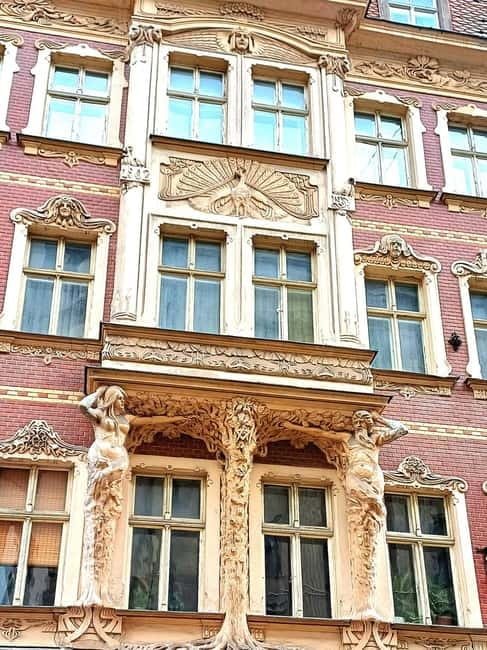
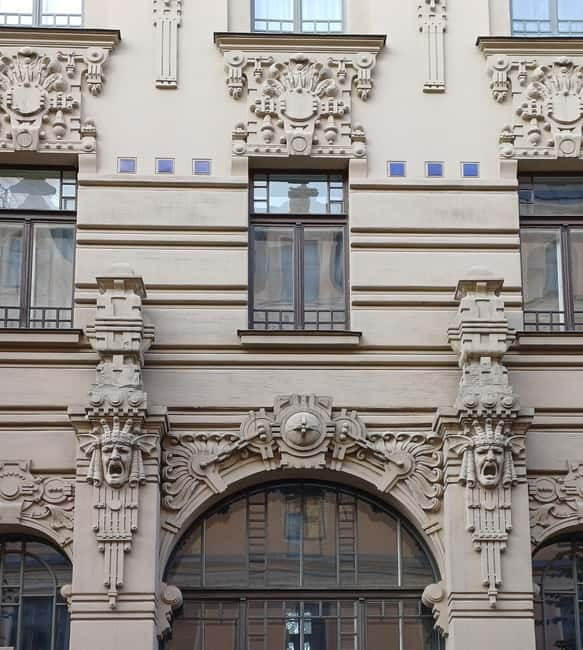
- Art Nouveau explained: You’ll get a clear comparison between Art Nouveau and Art Deco, along with the meaning of symbols on Riga’s façades.
- A guide who works with families: Nelli Saraceno has been praised for keeping an 11-year-old interested with stories and a route adapted for children.
- A strong finish: The tour ends near the Radisson Blu Latvija Conference & Spa Hotel, with a panoramic city view.
- Flexible booking: You can cancel up to 24 hours before the activity for a full refund, and reserve now while paying later.
Why this Riga walking tour works as a first orientation
Riga can feel like several cities placed on top of one another. The Old Town carries medieval street patterns and church towers. Nearby, the Freedom Monument speaks to Latvian independence. A short walk farther brings you to the grand façades of the Art Nouveau quarter.
This tour is built around that contrast. Instead of treating Old Town and Art Nouveau as separate sightseeing tasks, it links them through the changing story of Riga. I like that approach because the buildings make more sense when you know why the city grew, changed hands, industrialized, and later became part of the Soviet Union and the European Union.
The route is also compact. You are not sent across the wider city by bus or asked to spend time finding separate meeting points. The walk stays in central Riga and shifts from the 13th to the 21st century through streets, squares, façades, monuments, and views.
That makes the experience especially useful on your first day. You’ll collect a basic map in your head, learn which areas deserve a longer return visit, and get practical suggestions for the rest of your stay.
More Art Nouveau tours in Riga:
- Riga: Old Town Walking Tour with Art Nouveau Highlights
★ 4.7 · 332 reviews - Riga: 2-Hour History of Art Nouveau Walking Tour
★ 4.8 · 118 reviews - Riga Art Nouveau walking tour
★ 4.0 · 27 reviews
Meeting at Town Hall Square
The practical meeting point is a small metallic Christmas tree on Town Hall Square, or Ratslaukums, close to the left corner of the House of Blackheads. That detail matters because large squares can be confusing when several groups are gathering at once.
The booking information also names Dzenis Amber as the starting location. Since the detailed meeting instruction points to the Christmas tree by the House of Blackheads, check your confirmation for the latest wording and arrive a few minutes early.
Town Hall Square is a fitting place to begin. It puts you directly in the heart of the old city, with important façades around you before the walking even starts. You are not wasting the opening minutes on a distant pickup or a long transfer.
Wear shoes that can handle cobblestones. The route is listed as wheelchair accessible, but Old Town streets can still require attention because of their historic paving. The walk lasts three hours, so plan for steady movement rather than a series of long seated stops.
The Freedom Monument and Latvia’s public story
The Freedom Monument receives about an hour of the itinerary, including a photo stop. It gives the tour a strong political and emotional center before the route turns to architecture.
Here, the guide places Riga within the story of Latvian freedom. That is important because the city’s built environment reflects many outside powers, including German, Swedish, Polish, Imperial, and Soviet rule. The monument offers a Latvian point of view within that long sequence.
I would not think of this as an hour spent simply waiting for a photograph. The value comes from the explanation around the monument and the way it connects to the larger city story. Ask Nelli about the symbols you see and how the monument fits into Latvia’s modern identity.
The one limitation is that the schedule calls this a photo stop, so your time here may feel generous if you want only a quick picture. If you enjoy public monuments, national stories, and political context, the hour should be useful. If you prefer interiors and detailed architecture, you may find this part less rewarding than the Old Town and Art Nouveau sections.
Walking through medieval Vecriga
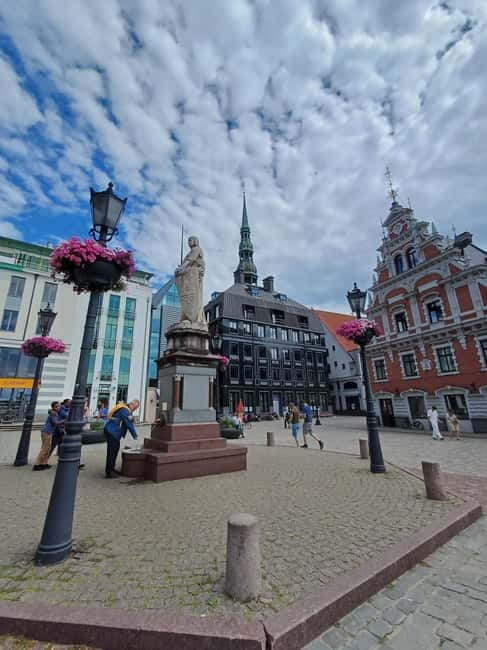
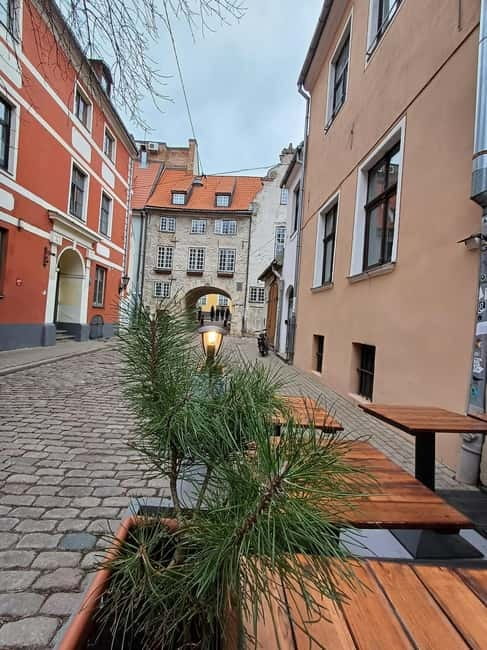
The Old Town section lasts about an hour and focuses on narrow cobbled streets, main squares, quiet guards, and tall towers. Vecriga is the part of Riga where the medieval city is easiest to read through its street plan and surviving landmarks.
The guide’s job here is not only to point at old buildings. You’ll hear how Riga developed from a Livonian city-fortress into a Hanseatic city and later into an economic and industrial center. That sequence gives purpose to what you are seeing.
I like tours that explain a city as a working place, not just a collection of pretty façades. Riga’s central streets have carried merchants, officials, soldiers, residents, and visitors through very different periods. The tour aims to show those layers without forcing you to leave the center.
The seven Riga symbols are another useful thread. The exact symbols are not listed in the tour details, so you should treat this as a visual challenge rather than a fixed checklist you can study in advance. Keep an eye out as you walk, then choose your favorite at the end or ask the guide which ones matter most.
The playful reference to where Albert meets Antony, who lost Miss Jones, adds a light touch to the historical material. It is not simply a lecture about dates and rulers. You’ll be given clues and small stories that help the streets stick in your memory.
More old town architecture walks in Riga:
- Old Town And Art Nouveau Walking Tour Of Riga
★ 4.0 · 15 reviews - Riga Old Town, C Market & Art Nouveau Guided Walking Tour
★ 5.0 · 2 reviews - Riga Old Town, C Market & Art Nouveau Guided Walking Tour
★ 5.0 · 2 reviews - Barcelona in 1 Day: Sagrada Familia, Park Guell,Old Town & Pickup
★ 5.0 · 13,541 reviews
Art Nouveau details beyond pretty façades
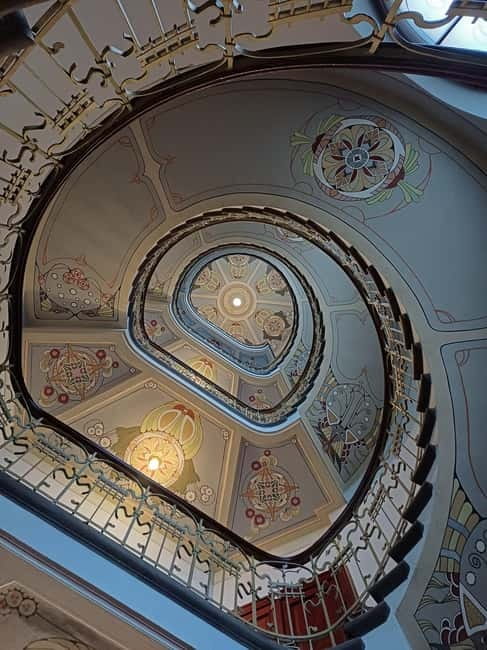
The Art Nouveau section is the tour’s main architectural draw. Riga is known for its Jugendstil buildings, and the walk helps you read their details instead of treating them as a backdrop for photographs.
You’ll look at symbols on the façades and hear about the lives of famous Riga residents. That human angle matters. Architecture can become tiring when every stop is only a list of construction dates, but stories about the people who lived in or shaped the city give the buildings a reason to matter.
The tour also promises to explain the difference between Art Nouveau and Art Deco. That is a useful distinction for anyone who likes architecture but does not already know the vocabulary. You should come away with a better sense of why a building looks decorative, geometric, organic, dramatic, or restrained.
The information provided does not name each building on the route, so I would not book this expecting a full catalogue of Riga’s Art Nouveau addresses. Think of it as a guided introduction to the quarter, with enough context to help you decide which streets and buildings deserve a second look.
The three-hour limit also shapes the experience. You will see a selection of buildings, not every important example. If Art Nouveau is your main reason for visiting Riga, use this walk as an orientation and return later with more time for close inspection.
What Nelli Saraceno adds to the walk
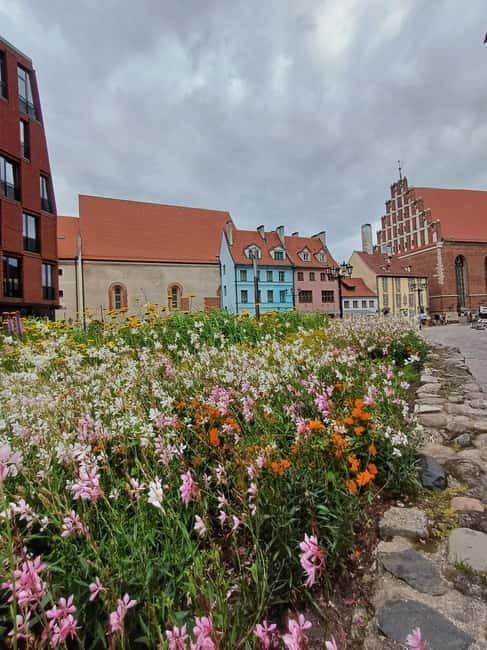
The guide can make or break a city walk, and Nelli Saraceno is the named guide connected with the experience. Her strongest feature is her range across languages and ages. The tour is offered in English, Italian, and Russian, and several comments describe her explanations as clear, enthusiastic, and easy to follow.
Italian-speaking visitors have a particular reason to consider this tour. Nelli has led the walk in fluent Italian and connected ancient and modern Riga without making the material feel heavy. That can be a real advantage in a city where architectural and political terms may otherwise get lost in translation.
Families also appear to be well served. The route has been adapted for children, and one 11-year-old was kept interested through stories rather than a stream of dry facts. That does not mean every child will enjoy three hours of walking, but it suggests that Nelli knows how to vary her delivery.
I also value the practical side of a good guide. Nelli has offered advice on getting around Riga and on what to see during the following days. That turns the tour into more than a fixed route. You can use it to plan the rest of your visit, especially if Riga is one stop on a wider trip.
The final walk and panoramic view
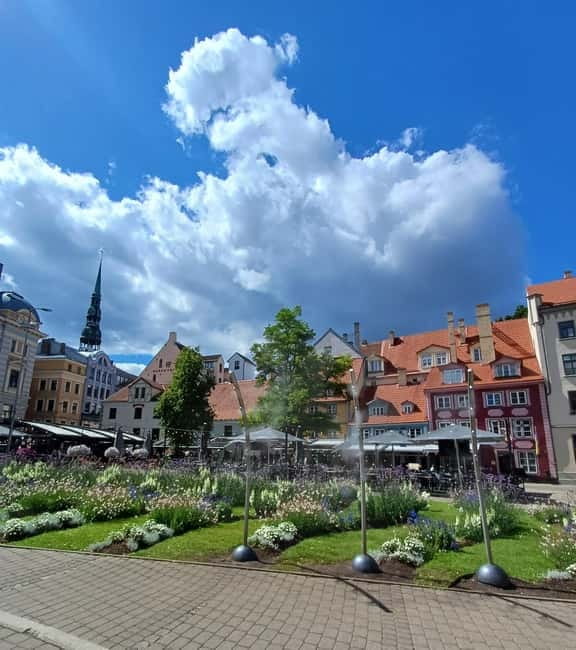
The last hour leads toward the central part of the city, including a walk associated with Luxobaltic, SIA, before finishing at the Radisson Blu Latvija Conference & Spa Hotel. The end point gives the tour a clear sense of movement: you begin in the medieval center and finish looking across modern Riga from above.
The panoramic view is one of the best reasons to keep this tour in mind. After hearing about the city’s separate periods, you can see how the central districts fit together. The view helps turn a list of neighborhoods into a city you can navigate.
It is also a smart ending for a walking tour. You finish with a broad perspective rather than simply stopping beside another street corner. Bring your camera, but do not let the view distract you from asking for final tips about where to go next.
The exact viewpoint details are not specified, so do not assume this includes a separate ticketed observation-deck visit or a long stay inside the hotel. The supplied information describes an unforgettable panoramic view at the finish, which is best treated as the closing feature of the walk.
Is $35 a fair price?
At $35 per person, the tour sits in a sensible range for a three-hour guided city walk, especially with a live guide, a small group, several central districts, and a panoramic ending. The value is not in admission tickets or transport. It is in the interpretation, route planning, and time saved figuring out how Old Town connects to the Art Nouveau quarter.
A private guide would usually cost more, while a very large group might offer less room for questions. With a maximum of 10 participants, you have a better chance of hearing the guide clearly and asking about details that catch your eye.
The price makes the most sense if you want a structured introduction to Riga. If you already know Vecriga well and plan to spend hours inside museums or churches, you may prefer a more specialized architecture tour. If you are arriving with little background, $35 buys a useful framework for the rest of your stay.
The tour includes the guide, but the details do not list entrance fees to specific attractions. Plan on a walking experience focused on exterior sights, streets, monuments, stories, and the final view.
Who should book this Riga experience?
I would recommend it to first-time visitors who want to understand Riga quickly without giving up the pleasure of walking. It is also a good match for anyone who likes architecture but wants historical context along with photographs.
Families may appreciate the story-led style and the route’s stated flexibility for children. Italian and Russian speakers have the advantage of choosing a language that feels natural, while English-speaking visitors can expect the same central route and guide-led commentary.
This is less suitable if you want a slow, highly specialized study of one building or a museum-heavy afternoon. Three hours is enough to connect the major themes, but not enough to explore every stop at length.
The small-group format helps, though the walk still covers cobbled streets and several districts. If you need frequent rests, ask about the pace before setting out. The experience is wheelchair accessible, but the historic paving is worth keeping in mind.
Practical details that affect your decision
The tour runs for three hours, with availability depending on the selected starting time. It is offered in English, Italian, and Russian, and the group is limited to 10 participants.
You can cancel up to 24 hours in advance for a full refund. Reserve now and pay later if you want to hold a place while keeping your plans flexible.
Start at the small metallic Christmas tree on Town Hall Square, near the left corner of the House of Blackheads. Since the starting-location field also refers to Dzenis Amber, use the confirmation details to resolve any difference before the day of the tour.
Bring comfortable footwear and a camera. Most of the value comes from looking closely at streets, symbols, monuments, and façades, so give yourself enough attention for the details.
Should you book Big Riga: Old Town and Art Nouveau quarter?
Book it if you want a three-hour introduction that connects Riga’s major eras, rather than a narrow tour of one subject. The combination of Vecriga, the Freedom Monument, Art Nouveau architecture, seven city symbols, and a panoramic finish gives you a useful first map of the capital.
I would be especially inclined to book with Nelli if you prefer Italian or Russian, are traveling with a child, or want practical advice for the days after the tour. Skip it only if you already have a firm plan for Riga’s central sights and would rather spend the same time inside one museum or on a specialist architecture walk.
FAQ
How long does the Big Riga tour last?
The experience lasts three hours.
Where does the tour meet?
Meet at the small metallic Christmas tree on Town Hall Square, or Ratslaukums, close to the left corner of the House of Blackheads.
What languages are available?
The live tour guide is available in English, Italian, and Russian.
How large is the group?
The tour is limited to 10 participants.
Is the tour wheelchair accessible?
Yes, the activity is listed as wheelchair accessible.
Where does the tour finish?
The tour finishes at the Radisson Blu Latvija Conference & Spa Hotel in central Riga, with a panoramic view.
Can I cancel the booking?
Yes. You can cancel up to 24 hours in advance for a full refund. You can also reserve now and pay later.
Just added around Riga
- Riga Old Town, C Market & Art Nouveau Guided Walking Tour★ 5.0 · 2 reviews
- Ultimate Art Nouveau Experience in Riga – Private Tour★ 5.0 · 4 reviews
- Explore Riga’s Art Nouveau district with a Local★ 3.0 · 2 reviews
- Private Riga Art Nouveau Tour★ 5.0 · 5 reviews
- Riga’s Architecture: A self-guided audio tour of the city’s art nouveau history★ 5.0 · 3 reviews
- Riga Art Nouveau Secrets: Self-Guided Puzzle Walk★ 5.0 · 6 reviews
- Old Town And Art Nouveau Walking Tour Of Riga★ 4.0 · 15 reviews
- Riga’s Old Center and Art Nouveau Tour★ 4.9 · 11 reviews
Art Nouveau Tours, compared.
Riga: Old Town Walking Tour with Art Nouveau Highlights
Read our review →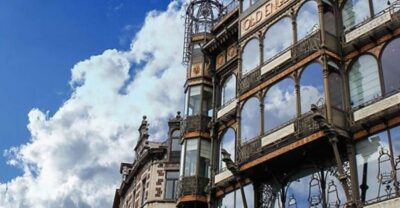
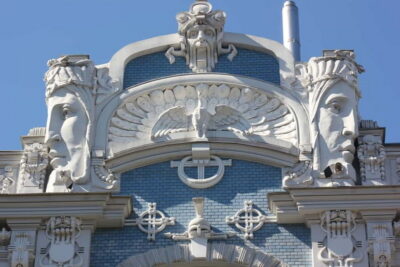
Riga: 2-Hour History of Art Nouveau Walking Tour
Read our review →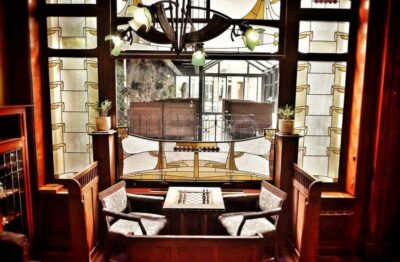
Brussels: Art Nouveau Pass – Entry to Three Locations
Read our review →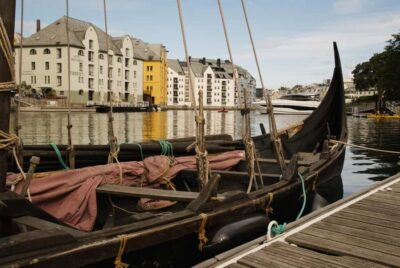
Small Group Tour in Ålesund: Art Nouveau, Sea Views & Insider Tips
Read our review →
Browse the lists this tour appears in