
Review · NEW YORK CITY
New York Upper West Side Art and Architecture Tour
New York’s Upper West Side is easier to appreciate when someone points out how its buildings, plazas, theaters, and public spaces fit together. This two-hour walk links Columbus Circle, Lincoln Center, and Hearst Tower, with guide Ivan explaining the architecture and city planning along the way.
I like the small maximum of 15 people, which makes it easier to ask questions, and the individual headsets, a useful touch beside busy streets. I also like the route’s range, from Central Park and the Time Warner Center to the Metropolitan Opera and the bold Hearst Tower. The drawback is that this is mainly an outdoor, look-and-listen tour, not an inside visit to the major buildings.
Key points at a glance
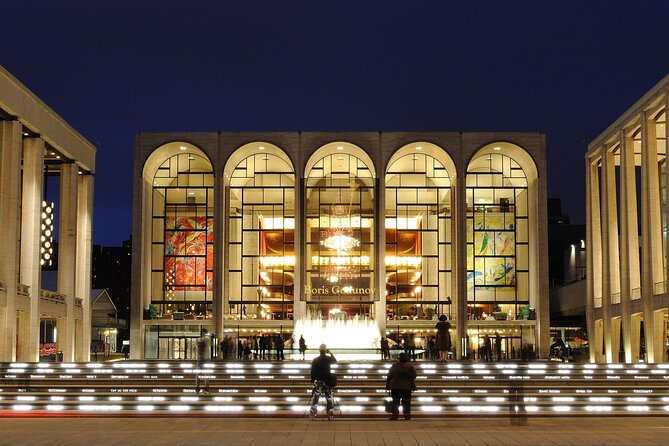
- A close look at Lincoln Center: Spend time with David Geffen Hall, the Metropolitan Opera, Juilliard, Alice Tully Hall, and the Vivian Beaumont Theater.
- Architecture by major names: Discuss work by Norman Foster, Pietro Belluschi, and Diller Scofidio + Renfro.
- A compact two-hour route: The schedule fits neatly into a day of sightseeing, though walking and travel time are included.
- Personal headsets for every person: You can hear the guide without crowding around him on noisy Midtown streets.
- A small-group setting: The tour accepts no more than 15 people, with English, Spanish, French, and Italian available.
- An easy transport finish: The walk ends at Hearst Tower on West 57th Street, near subway and other transport options.
Why this walking tour gives Midtown a clearer shape
At first glance, this route might seem like a tour of famous buildings. Its real value is the connection between them. You begin at Columbus Circle, move past Central Park and the Museum of Arts and Design, then spend a large part of the walk at Lincoln Center before finishing with Hearst Tower.
That sequence lets you compare very different ideas about city design. You see grand civic architecture, modern commercial towers, performing-arts buildings, and public spaces built around movement and gathering. The guide also discusses how the buildings fit into New York rather than treating each one as an isolated object.
I especially like the urban-planning angle. One person who took the walk was an architect with many questions, while another participant had no professional background in design. The tour can work for both. You do not need to know architectural terms before arriving, and the information can still hold your attention if you already know the city well.
The personal headset matters more than it may sound. Midtown traffic, pedestrians, and construction can swallow a quiet explanation. With a headset, you can keep looking at the building instead of leaning toward the guide. The format also helps a small group keep moving.
A few more architecture tours around New York City worth a look
- Manhattan Architecture Yacht Cruise
★ 5.0 · 1,395 reviews - NYC: Around Manhattan Official NYC Architecture Cruise
★ 4.8 · 402 reviews - Art Deco and Architecture Midtown Landmarks Tour
★ 5.0 · 142 reviews
Columbus Circle and the first views of Central Park
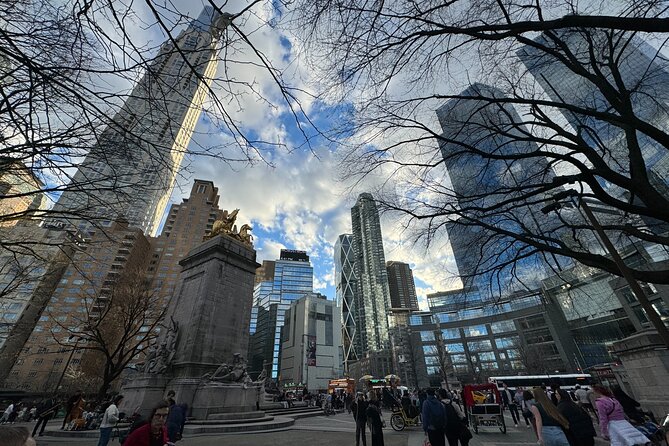
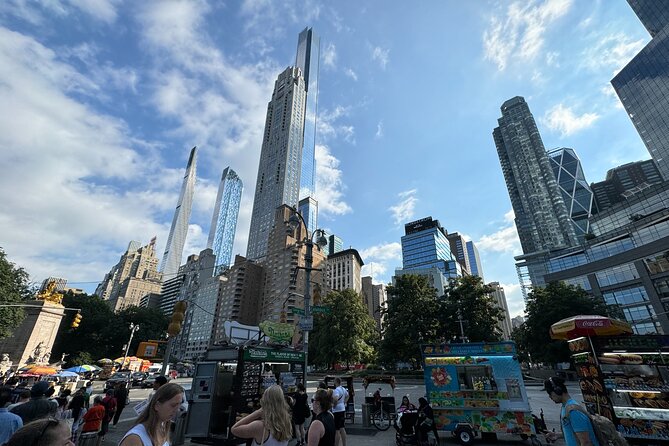
The meeting point is Columbus Circle, at the southwest corner of Central Park. The opening stop includes the statue of Christopher Columbus, the Time Warner Center, and Central Park Tower, with about 15 minutes for discussion.
This is a useful starting point because several types of New York architecture meet in one place. You can look from the monument to tall modern construction and then toward the park. The guide uses the area to set up the larger conversation about scale, public space, and the way New York places new buildings beside older landmarks.
The stop is outdoors and admission is free. You should arrive ready to walk rather than expecting a formal museum introduction. Columbus Circle is also a practical meeting point, but it can be crowded, so the headset and small group are helpful from the first few minutes.
Time Warner Center and the Museum of Arts and Design
The group then discusses the Time Warner Center, listed as a 10-minute stop. The building is part of the Columbus Circle view and gives the tour a chance to examine a major contemporary complex in relation to the park and nearby streets.
The Museum of Arts and Design is also included along this part of the route. The supplied schedule does not assign a separate time to it, so treat it as a discussion and exterior viewing point rather than a museum visit. No museum admission is included, and the tour does not promise time inside.
That distinction matters. If you want to see the museum’s exhibitions, plan a separate visit. This walk is about understanding the building and its place in the city, not touring every interior along the way.
Central Park as architecture’s counterpoint
The Central Park stop lasts about 10 minutes. You will walk by the park while the guide explains its role in the surrounding city.
This is not a nature walk, and the itinerary does not offer an extended park visit. Its purpose is to give you a change in scale. After discussing towers and large commercial buildings, you can look across an open public space that has shaped the development of Manhattan around it.
I find this part useful because architecture makes more sense when you consider what it faces. The park is not just scenery behind the buildings. It helps explain why this part of Manhattan feels different from a block of tightly packed streets.
Same city, a completely different century:
- Tribeca Architecture And History Walking Tour
★ 5.0 · 141 reviews - New York City The Official Rockefeller Center Tour
★ 4.5 · 119 reviews - 3 Hour Midtown Manhattan Architectural Tour
★ 5.0 · 81 reviews - New York City: Art Deco and Architecture Landmarks Tour
★ 5.0 · 76 reviews
Lincoln Center, where the tour reaches its core
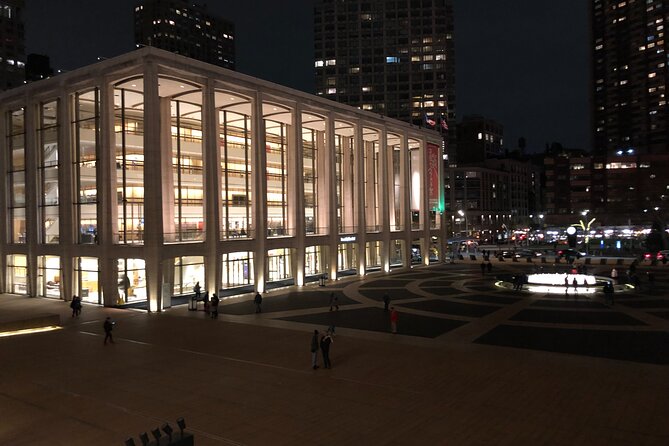
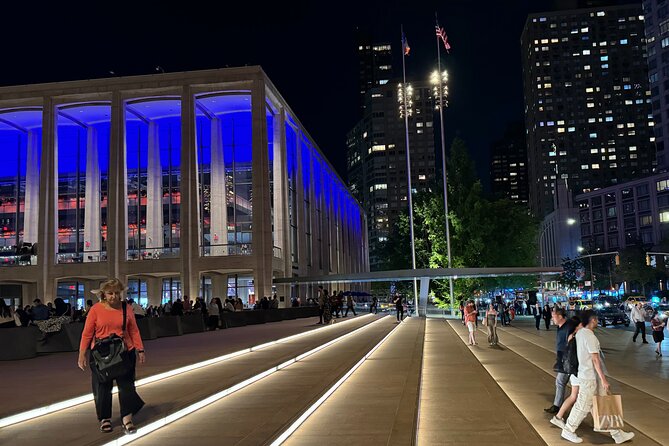
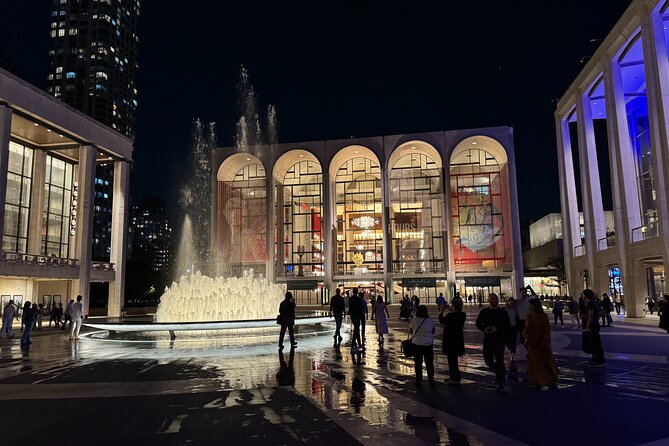
Lincoln Center is the heart of the walk. The schedule gives about 10 minutes to the complex itself, followed by shorter stops at its principal performance venues. The guide discusses the institution and the buildings as a group, so you can consider how the plaza and separate halls work together.
The route includes David Geffen Hall, the New York City Ballet, the Metropolitan Opera House, the Vivian Beaumont Theater, the Juilliard School, and Alice Tully Hall. The short timing at each venue means you will not get a long architectural lecture on every building. Instead, the tour gives you a concentrated reading of the complex.
David Geffen Hall receives about five minutes. The point is to identify the hall and discuss its place within Lincoln Center rather than attend a performance or go on a full interior tour.
The New York City Ballet stop also lasts about five minutes. The itinerary names the institution, but it does not promise a performance, rehearsal, or ticketed entry. You will want to think of this as an architectural and cultural landmark stop.
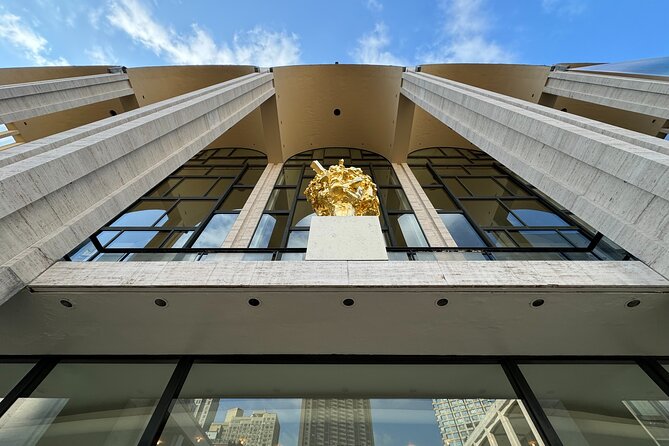
The Metropolitan Opera House gets another five minutes. Even a short explanation can help you notice how the opera house relates to the rest of the center, but do not expect to enter for a backstage look. Admission to each stop is listed as free because the tour is conducted from public areas.
The Vivian Beaumont Theater is another brief stop. Its inclusion shows that the route is not limited to the most instantly recognizable Lincoln Center buildings. You get a sense of the complex’s variety, from large performance halls to different theater forms.
Juilliard and Alice Tully Hall
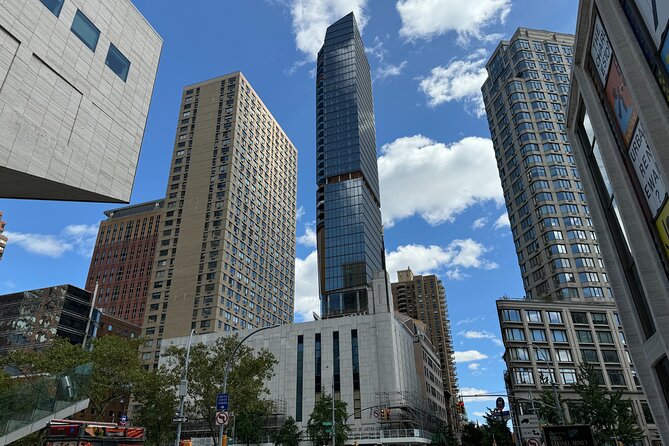
The Juilliard School receives about 15 minutes, one of the longer stops on the route. That extra time is useful because the discussion includes Pietro Belluschi’s original work and the later extension by Diller Scofidio + Renfro.
This is one of the clearest moments to compare architectural periods and design approaches. You can consider how a newer addition responds to an established building, rather than looking at the school as a single, finished object. If modern additions and changes to famous institutions interest you, this is likely one of the most rewarding parts of the tour.
Alice Tully Hall gets about five minutes. As with the other performance venues, the experience is an exterior discussion rather than a ticketed concert visit. You can expect the guide to place the hall within the wider Lincoln Center plan.
The schedule here is brisk. You will see several major buildings in a short span, but you will not spend equal time at all of them. If you prefer one building examined in great depth, a specialized architecture lecture or interior tour may suit you better.
Passing Fordham University and reaching Hearst Tower
The route passes Fordham University before continuing to Hearst Tower. Fordham is listed as a pass-by point, not a dedicated stop, so expect only a brief reference as the walk moves toward its final destination.
Hearst Tower receives about 10 minutes and serves as the endpoint at 300 West 57th Street. The building is associated with architect Norman Foster, giving the tour a strong modern finish after the older and mid-century work around Lincoln Center.
Ending here is practical. You finish close to subway and other transportation options, rather than having to return to Columbus Circle. If you have an afternoon plan elsewhere in Manhattan, this location makes it easier to continue without losing much time.
The end point also gives the tour a useful visual conclusion. You have moved from monuments and park-edge buildings to a later tower that reflects another phase of New York construction. The contrast helps tie together the discussion of old, new, civic, cultural, and commercial architecture.
What the two-hour format means for you
The advertised duration is about two hours, and travel time is included. That makes the tour easy to add to a busy schedule, but it also means the pace may feel quick if you stop often to take photographs.
The route has many named stops, including several Lincoln Center venues. Some receive 10 or 15 minutes, while others receive only five. You should expect short explanations and steady movement, not long periods of sitting or extended time inside one building.
The tour begins at noon. A midday start can fit well between morning sightseeing and an evening performance, though the experience requires good weather. If poor weather cancels the walk, you are offered a different date or a full refund.
Wear comfortable walking shoes and bring a weather-appropriate layer. The supplied information does not give an exact distance, so I would not treat this as a strenuous hike, but it is still a city walk with multiple stops and outdoor listening.
The value of the $49 price
At $49 per person, the tour is not the cheapest way to walk around the Upper West Side. You could pass many of these buildings on your own for free. The price pays for interpretation, route planning, a small group, and a headset that makes the guide easier to follow.
That value depends on your interest. If you already know the buildings and prefer wandering at your own speed, the cost may feel hard to justify. If you often look at New York architecture and wonder what you are seeing, the guide can turn a familiar walk into a more focused experience.
The small-group limit of 15 is important here. A larger group would make questions harder and reduce the personal feel. The available feedback gives particular weight to Ivan’s ability to handle detailed questions, including questions from an architect, while still keeping the tour accessible to people without a design background.
The price does not include tips. There are no separate admission fees listed for the stops, but you should not read that as free entry into every building or performance venue. The route is built around public outdoor areas and discussion.
Who will get the most from this experience
I would choose this tour if you enjoy buildings, city planning, public spaces, or the way modern design changes an older city. It is also a good fit if you want more context than a standard sightseeing loop but do not want to spend half a day in a classroom.
It suits first-time visitors who want a guided introduction to this part of Manhattan, as well as long-time New Yorkers who have seen these buildings but never studied them closely. The feedback includes a long-time New Yorker who found that familiar places looked different after the tour.
You do not need architectural training. The guide can answer technical questions, but the route also works for people who simply want to understand why the buildings look and function as they do.
This is less suitable if you want indoor access, museum entry, a relaxed café break, or a slow photography walk. It is also not the right choice if poor weather would spoil your day, since the experience depends on suitable conditions.
The tour is accessible to most people according to the supplied information, and service animals are allowed. It is near public transportation. Still, because the experience involves walking between several outdoor points, contact the provider if you have specific mobility needs that are not answered by the general participation information.
Booking, cancellation, and language choices
Confirmation is provided at booking, and the experience is commonly reserved about 13 days ahead. That advance pattern is worth noting if your New York dates are fixed, especially because the group is capped at 15 people.
You can cancel for a full refund up to 24 hours before the start time. Cancellations or changes made less than 24 hours before the tour are not refunded or accepted. The cut-off uses local New York time.
The in-person guide is offered in English, Spanish, French, and Italian. The available tour information associates Ivan with the experience, so you may encounter his conversational, question-friendly approach, but you should confirm the language and guide at booking if that matters to you.
Should you book the Upper West Side architecture tour?
Book it if you want the buildings around Columbus Circle and Lincoln Center explained by someone who can connect design with New York’s city plan. The combination of a 15-person limit, personal headsets, multiple Lincoln Center venues, and a finish at Hearst Tower gives the walk more substance than a simple list of famous facades.
Skip it if you mainly want interior visits or a completely self-guided stroll. For $49, you are paying for the guide’s interpretation, not admissions or a performance.
For architecture fans, curious first-time visitors, and even locals who want to see familiar streets with fresher eyes, this is a focused and practical two-hour choice. Plan for outdoor walking, keep your expectations clear, and you should get the most from the route.
FAQ
Where does the tour begin?
The tour begins at Columbus Circle in New York City.
Where does the tour end?
It ends at Hearst Tower, 300 West 57th Street. The endpoint is close to subway and other transportation options.
How long is the tour?
The tour lasts about two hours, and travel time is included in that duration.
What time does the tour start?
The scheduled start time is 12:00 pm.
How many people can join the tour?
The tour has a maximum group size of 15 people.
Is the tour offered in languages other than English?
Yes. In-person guiding is available in English, Spanish, French, and Italian.
What happens if bad weather cancels the tour?
You will be offered another date or a full refund if the experience is canceled because of poor weather. You can also cancel for a full refund up to 24 hours before the start time.
Just added around New York City
- Race to the Sky: NYC Architecture Tour With SUMMIT One Ticket★ 5.0 · 3 reviews
- Private Flatiron Food, History and Architecture Tour★ 5.0 · 8 reviews
- New York Upper East Side Art and Architecture Tour★ 5.0 · 3 reviews
- Custom Private New York Architecture, Art and City Tour★ 5.0 · 3 reviews
- Chelsea and the High Line NYC Architecture Walking Tour★ 5.0 · 6 reviews
- Midtown North NYC Architecture Walking Tour★ 5.0 · 28 reviews
- New York Midtown South Art and Architecture Tour★ 5.0 · 2 reviews
- New York Soho and the Village Art and Architecture Tour★ 5.0 · 4 reviews
New York City Architecture Tours, compared.

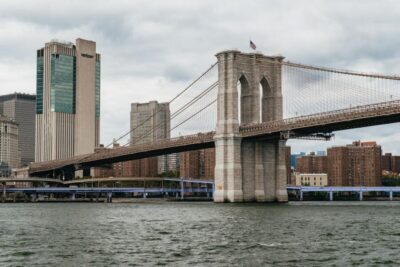
NYC: Around Manhattan Official NYC Architecture Cruise
Read our review →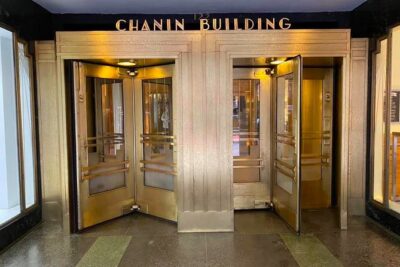
Art Deco and Architecture Midtown Landmarks Tour
Read our review →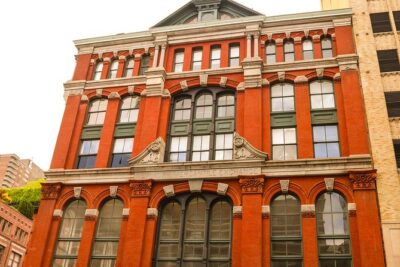

New York City The Official Rockefeller Center Tour
Read our review →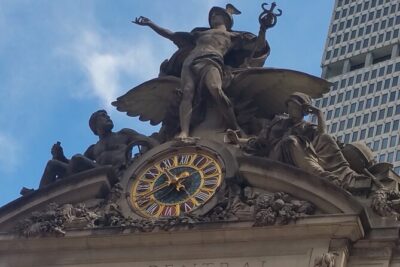
New York City: Art Deco and Architecture Landmarks Tour
Read our review →
New York City: Flatiron Food, History, and Architecture Tour
Read our review →Browse the lists this tour appears in