
Review · NEW YORK CITY
Midtown North NYC Architecture Walking Tour
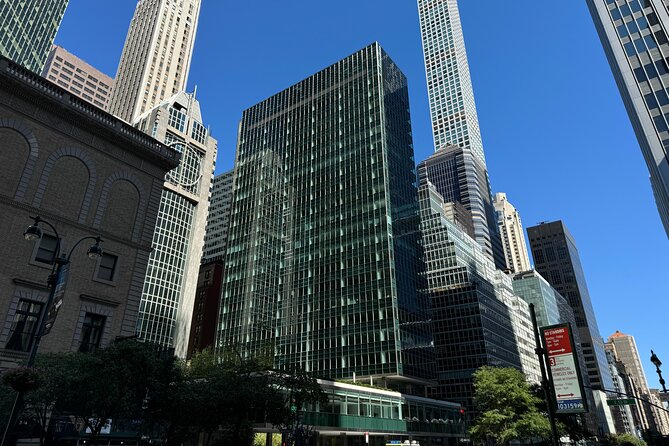
Midtown North is where New York architecture shifts from grand Beaux-Arts entrances to polished modern towers and daring new skyscrapers. This two-hour walking tour connects those pieces, explaining not only what you are looking at, but why the buildings took the shapes they did.
I like the small maximum of 15 people and the individual headsets, which matter on noisy Manhattan streets. I also like the chance to walk with guides such as Ivan, an architect and urban planning professor, or William, a retired architect and city employee. The main drawback is that the talk can become quite technical, especially if your interest in architecture is casual.
I also love the route itself. You begin near the Harvard Club and finish at Apple Fifth Avenue, passing major buildings on Park, Madison, and Fifth avenues. The tour does not include interior admission, so its value depends on how much you want expert explanation rather than entry to attractions.
Key points to know before booking
- A crash course in New York architecture: The route moves from Grand Central’s early twentieth-century grandeur to modernist landmarks and very recent skyscrapers.
- Guides who can handle serious questions: Ivan and William are described as architects or architecture specialists, not simply landmark narrators.
- Small groups make the discussion easier: Up to 15 people can ask questions without the guide disappearing into a crowd.
- Clear audio in Manhattan noise: Each person receives an individual headset, useful beside traffic and busy sidewalks.
- Mostly an outdoor experience: You see and discuss the buildings, but admission to the sites is not included.
- Good value for architecture fans: At $59, the tour costs less than many ticketed attractions, but it asks you to value expert interpretation and careful observation.
Why Midtown North works as an architecture classroom
Midtown can feel like a wall of stone, glass, steel, signs, and traffic when you first arrive. This walk gives that visual overload a clear order. You move through several important periods of New York building design in a compact area, so the city becomes easier to read.
The route includes landmarks by major names such as William Van Alen, Ludwig Mies van der Rohe, Skidmore, Owings & Merrill, the Architects Collaborative, and SHoP Architects. You also see buildings shaped by changing zoning rules, corporate ambitions, religious tradition, preservation concerns, and new ideas about height.
That mix is the tour’s strongest feature. You are not simply ticking off the Chrysler Building and Rockefeller Center. You are comparing how each building meets the street, how it uses materials, and how it fits into the larger city.
The guides appear to be strongest when questions take the conversation beyond dates and names. Ivan is identified in the experience material as a PhD in architecture, Harvard graduate, architect, urban planner, and Columbia professor. William is described as a retired architect and current city employee. Those backgrounds help explain why the tour can suit someone with a serious interest in structure and design.
At the same time, you do not need an architecture degree to join. The guide is expected to explain complex ideas in accessible language. Still, one clear caution is worth noting: some of the discussion may be more technical than expected. If you prefer a light sightseeing walk with only a few fun facts, this may feel like homework with skyscrapers.
More architecture walks in New York City:
- Tribeca Architecture And History Walking Tour
★ 5.0 · 141 reviews - TriBeCa Architecture & History Walking Tour
★ 5.0 · 37 reviews - Midtown Manhattan Art and Architecture Walking Tour
★ 5.0 · 32 reviews
Starting at the Harvard Club and Grand Central
The meeting point is the Harvard Club of New York City at 35 West 44th Street. This gives the tour an unusual beginning, since the group starts near a private club rather than a major subway entrance or a standard tourist landmark.
The first listed stop is Grand Central Terminal, with about 10 minutes for discussion. Even if you have visited before, an architectural guide can shift your attention away from the famous clock and toward the building’s organization, details, and place in Midtown.
Grand Central is a useful opening because it establishes the scale of the city before the route moves into office towers. You begin with a transportation building designed for public movement, then compare it with corporate buildings designed for work, prestige, and commercial identity.
The stop is brief, so do not expect an interior tour or a long architectural lecture inside the terminal. You will get more from it if you arrive ready to look up, notice materials, and ask questions.
Seagram Building and the changing corporate ideal
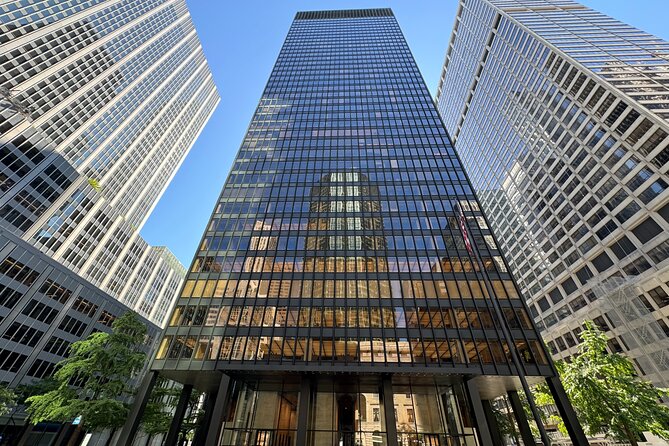
The Seagram Building receives about 10 minutes. It is one of the key stops for understanding modern architecture in New York, and its clean design offers a sharp contrast to the ornamented buildings nearby.
The discussion here can help you notice the building’s relationship to its plaza and street frontage. This is the sort of detail easy to miss when you are hurrying through Midtown. A guide can explain how a tower is not only a vertical object, but also part of the public space around it.
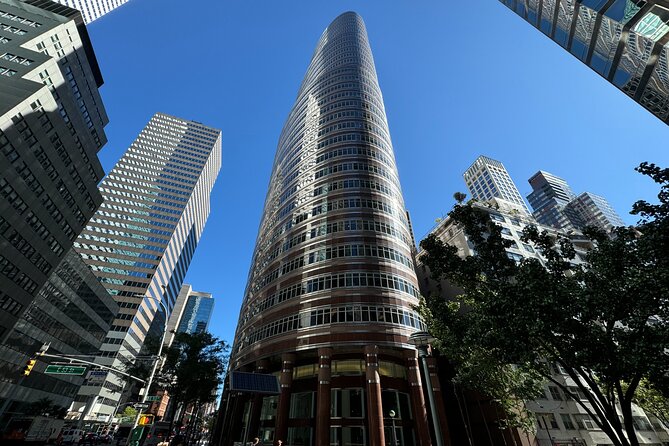
The walk then reaches the new JPMorgan Chase office tower between Vanderbilt Avenue and Park Avenue, with about five minutes devoted to the building. This pairing is useful. You see an influential mid-century modern building, then consider a much newer office tower created for a different era of business and construction.
The short stop means the newer tower is more of a focused exterior discussion than a full study. Still, it adds a current chapter to a route otherwise packed with famous twentieth-century work.
The Chrysler Building and Midtown’s Art Deco drama
The Chrysler Building gets about five minutes, but its profile needs little introduction. Designed by William Van Alen and completed in 1930, it is one of the clearest symbols of New York’s Art Deco period.
A guide can make you look past the famous crown. The building’s decorative language, vertical emphasis, and relationship to the competition for height all matter. This is a good place to ask about how technology, corporate ambition, and style came together in the skyscraper race.
Five minutes is enough for an exterior explanation, not enough for a full architectural study. If the Chrysler Building is your main reason for booking, keep your expectations realistic. The tour gives you context and a strong view, but it does not provide interior access.
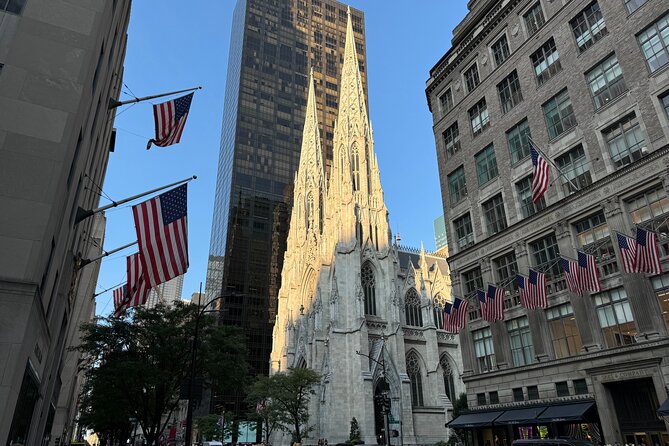
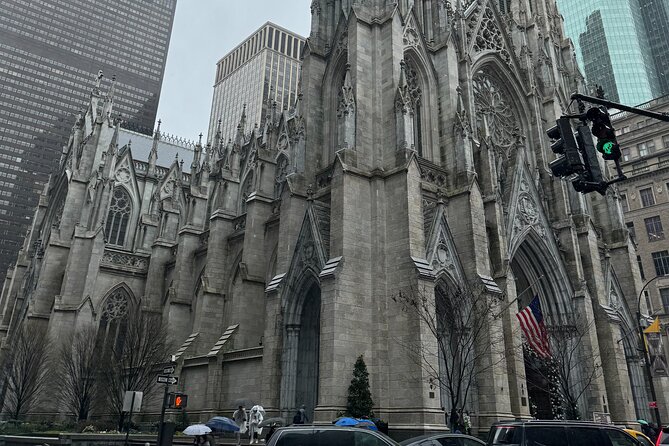
Nearby, you pass St. Patrick’s Cathedral, New York’s Catholic cathedral, for about five minutes. Its presence adds another useful comparison. The cathedral speaks in the language of religious architecture, while the surrounding office towers speak in the language of commerce and modern engineering.
That contrast is part of what makes Midtown interesting. Historic religious design, private clubs, corporate offices, and public plazas sit within a short walk of one another.
A few more architecture tours around New York City worth a look
- Manhattan Architecture Yacht Cruise
★ 5.0 · 1,395 reviews - NYC: Around Manhattan Official NYC Architecture Cruise
★ 4.8 · 402 reviews - Art Deco and Architecture Midtown Landmarks Tour
★ 5.0 · 142 reviews - 3 Hour Midtown Manhattan Architectural Tour
★ 5.0 · 81 reviews
Lever House and the MetLife Building
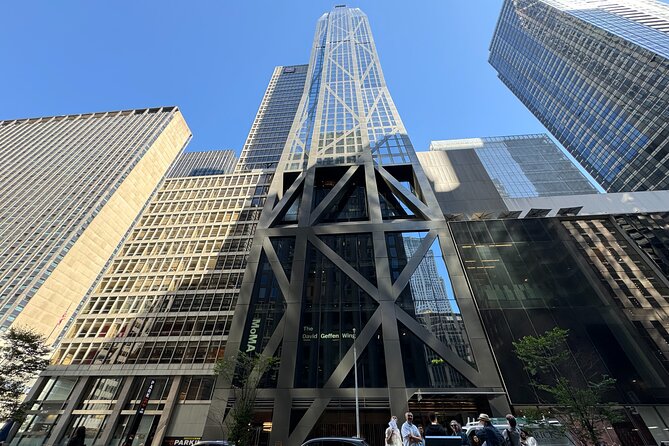
The route continues to Lever House, designed by Skidmore, Owings & Merrill and completed in 1953. The discussion lasts about five minutes. Lever House is valuable in this itinerary because it helps show how postwar office design changed the look of Park Avenue.
You can compare its materials and clean lines with the masonry and ornament found elsewhere in Midtown. The guide may also help you think about what the building presents at street level, not just what it looks like from a distance.
The MetLife Building follows, with about five minutes of discussion. Designed by the Architects Collaborative and completed in 1962, it brings another version of large-scale corporate modernism into view.
This part of the walk is not about isolated masterpieces. It is about a sequence. One tower changes the street, another responds to new office needs, and later buildings add their own ideas about scale and public space. The guide’s role is to connect those buildings so you can see the conversation between them.
MoMA and the art of seeing from outside
The tour pauses outside the Museum of Modern Art for about 10 minutes. There is no museum admission included, and the stop is specifically an exterior discussion.
That may sound modest, but it fits the tour’s method. You are learning how to examine a building from the sidewalk, where most city architecture is actually experienced. A museum’s facade, entrance, neighboring buildings, and position on the block all say something about its role in Midtown.
If you want to visit the galleries, plan a separate visit. The walking tour does not replace museum time. Instead, it can give you a better set of questions to carry inside later.
This stop also suits anyone interested in the relationship between art and construction. One couple booked the tour with that connection in mind, and the guide shaped the discussion around their interests. That kind of adjustment is more likely in a small group than on a large scheduled walk.
Rockefeller Center and the city as a planned composition

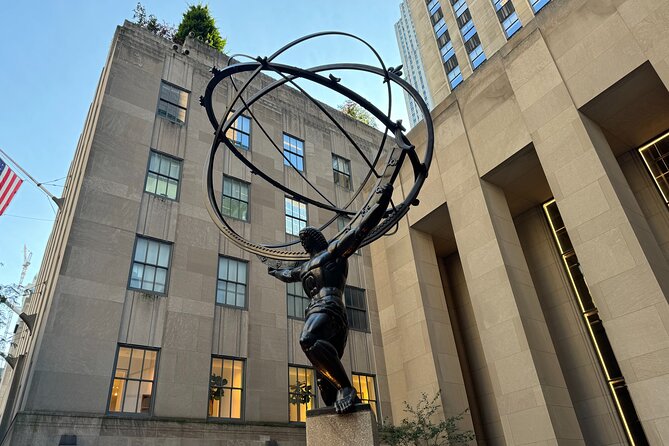
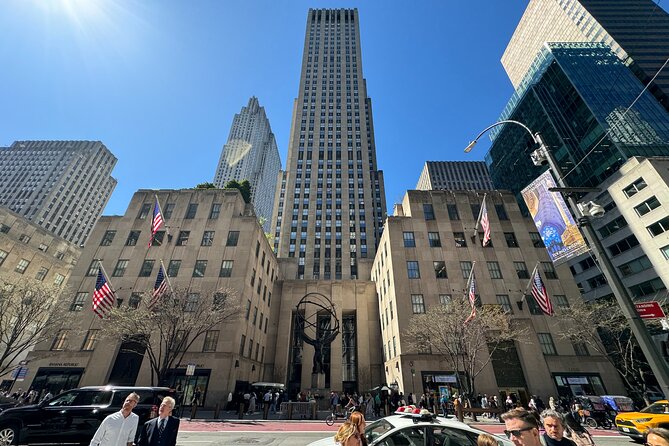
Rockefeller Center receives about 10 minutes, making it one of the longer stops. It deserves the time. This is not merely a collection of famous buildings, but a planned complex with a strong sense of movement, proportion, and public space.
You can expect the guide to discuss the center’s design and the decisions that shaped its plazas and buildings. The route also gives you a chance to look at details many people rush past, including sculpture and the visual relationship between the complex and surrounding streets.
The guide’s approach appears especially useful here because Rockefeller Center invites questions. Why is the Atlas statue so stern? How does the complex manage such a large number of people? What makes its spaces feel different from an ordinary office block?
The stop is still fairly short. If you want every detail of Rockefeller Center, book extra time before or after the walk. On the tour, the goal is to understand the center as part of Midtown’s broader architectural story.
Steinway Hall, Central Park Tower, and the newest skyline
The walk passes Steinway Hall and Steinway Tower, designed by SHoP Architects and completed in 2022. This is a quick pass-by rather than a full scheduled stop, but it introduces one of the newest buildings on the route.
Central Park Tower, designed by Adrian Smith and Gordon Gill Architecture and completed in 2023, receives about five minutes. Its inclusion gives the tour a contemporary endpoint before you finish at Apple Fifth Avenue.
These new towers are important because they show how Midtown continues to change. The route does not treat architecture as something that ended with Art Deco or mid-century modernism. You see new questions about height, slenderness, luxury development, and the relationship between a tall building and the street.
Five minutes does not allow a technical study of either tower. Instead, the guide can place them within the longer sequence you have already seen. After Grand Central, the Seagram Building, the Chrysler Building, Lever House, and Rockefeller Center, the newer towers become part of a larger story about how New York keeps rebuilding itself.
What the headsets and small group change
Each person receives a professional individual headset. This is more than a minor convenience. Midtown traffic, buses, construction noise, and sidewalk crowds can swallow a guide’s voice. With an earpiece, you can keep walking, look at the building, and still follow the explanation.
The maximum group size is 15. That is small enough for questions to feel natural, though the experience may be smaller or larger depending on bookings. Several people used the guides for customized conversations, including a family interested in structural engineering and a visitor who wanted to adapt the route for an older parent.
You should still expect a walking tour, not a private consultation, unless you book privately. But the format makes it easier to ask about a specific building, design detail, or technical point.
The tour is offered in English, and the included guide languages are English, Spanish, and Italian. The supplied information does not specify which language is available for every departure, so confirm your preferred language when booking.
Is $59 a fair price?
At $59 per person, this is not the cheapest way to see Midtown. You can walk past most of these buildings on your own for free. The real purchase is the guide’s interpretation, the organized route, the small group, and the audio equipment.
For an architecture fan, the price is reasonable. You cover a concentrated section of Manhattan and hear about buildings from several periods, including recent work that may not yet appear in older guidebooks. You also have someone available to answer questions rather than relying on plaques or a phone screen.
For a casual sightseer, the value is less certain. There are no included admissions, meals, or special interior access. If you mainly want photographs of the Chrysler Building and Rockefeller Center, a self-guided walk may serve you well.
I would book this for a visitor who wants to understand why Midtown looks the way it does. I would not book it expecting a relaxed stroll with little background. The guides’ passion and technical range are assets, but they can make the experience more demanding.
Practical details that affect your day
The tour lasts about two hours, and travel time between stops is included. Since it requires good weather, dress for an outdoor walk and keep the forecast in mind. If poor weather cancels the experience, you are offered another date or a full refund.
You can cancel for a full refund up to 24 hours before the start time. Cancellations inside 24 hours are not refunded, and changes inside that period are not accepted.
The tour begins at 35 West 44th Street and ends at Apple Fifth Avenue, 767 Fifth Avenue. That finish places you close to Central Park and several Midtown attractions, so it is easy to continue sightseeing afterward.
Most people can participate, and service animals are allowed. The route is near public transportation. Since the experience includes outdoor walking and time on city sidewalks, anyone concerned about pace or mobility should ask the operator for current route details before booking.
Who should book this Midtown walk?
Book it if you like buildings enough to stop and ask why they look the way they do. It is particularly well suited to architecture students, design fans, urban planners, engineers, photographers, and repeat New York visitors who want a new way to read familiar streets.
It also works well as an introduction to the city. You get a compact lesson in major architectural periods without spending a full day on a single museum or neighborhood.
Families can benefit if everyone is willing to listen and walk. The guide has tailored discussions for parents, older relatives, and people with specific interests. Still, younger children who need constant movement may find the technical explanations slow.
Should you book it?
Yes, if you want depth, questions, and a clear explanation of Midtown’s buildings. The combination of expert guides, individual headsets, a 15-person limit, and a route packed with architectural landmarks gives the $59 price a solid purpose.
Skip it if you want interior visits, a short photo stop at each landmark, or a purely entertaining sightseeing loop. For everyone else, this is a smart way to see Midtown with more attention and less guesswork. You may leave looking at ordinary office towers with a more curious eye, which is exactly what a good city walk should do.
FAQ
How long is the Midtown North NYC Architecture Walking Tour?
The tour lasts approximately two hours, including travel time between stops.
How much does the tour cost?
The listed price is $59 per person.
Where does the tour begin?
The meeting point is the Harvard Club of New York City at 35 W 44th St, New York, NY 10036.
Where does the tour end?
The tour ends at Apple Fifth Avenue at 767 5th Ave, New York, NY 10153.
What languages are offered?
The included in-person guide languages are English, Spanish, and Italian. The activity is listed as offered in English, so confirm language availability for your selected departure.
How large is the group?
The tour has a maximum of 15 travelers.
Are attraction admission tickets included?
No attraction admission is required or included for the listed stops. The experience discusses the buildings from the outside, and all fees and taxes are included.
What is the cancellation policy?
You can cancel at least 24 hours before the start time for a full refund. Cancellations or changes made less than 24 hours before the experience are not refunded or accepted. If poor weather causes cancellation, you can choose another date or receive a full refund.
Just added around New York City
- Race to the Sky: NYC Architecture Tour With SUMMIT One Ticket★ 5.0 · 3 reviews
- New York Upper West Side Art and Architecture Tour★ 5.0 · 4 reviews
- Private Flatiron Food, History and Architecture Tour★ 5.0 · 8 reviews
- New York Upper East Side Art and Architecture Tour★ 5.0 · 3 reviews
- Custom Private New York Architecture, Art and City Tour★ 5.0 · 3 reviews
- Chelsea and the High Line NYC Architecture Walking Tour★ 5.0 · 6 reviews
- New York Soho and the Village Art and Architecture Tour★ 5.0 · 4 reviews
- New York Midtown South Art and Architecture Tour★ 5.0 · 2 reviews
Walking Tours, compared.

The Official Art Deco Walking Tour by The Miami Design Preservation League
Read our review →
Barcelona: Gothic Quarter Ghosts and Legends Walking Tour
Read our review →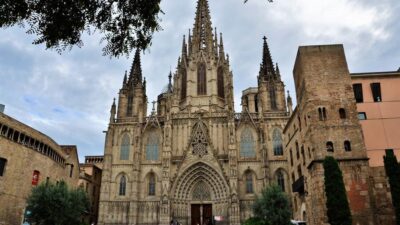
Barcelona: Old Town and Gothic Quarter Walking Tour
Read our review →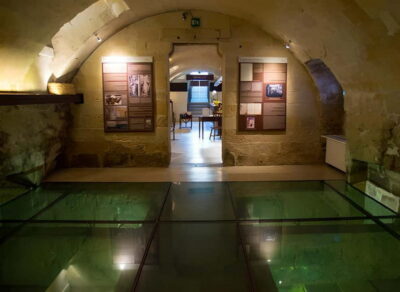
Lecce: Baroque Architecture and Underground Walking Tour
Read our review →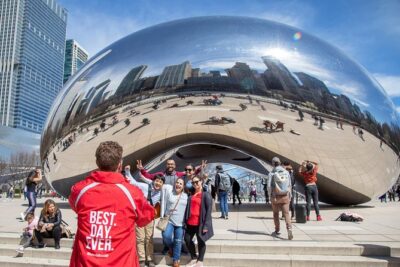
Chicago in a Day: Food, History & Architecture Walking Tour
Read our review →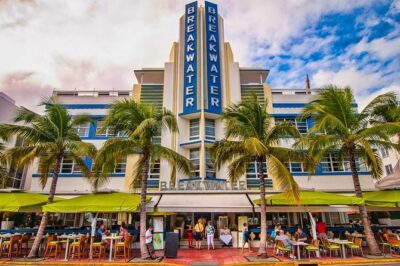
Ramblas, Old Town, Gothic and Gaudi Architecture Walking Tour
Read our review →
Chicago’s Secret Interiors Architectural Walking Tour
Read our review →Browse the lists this tour appears in