
Review · NEW YORK CITY
Holdouts: A NYC Architecture Walking Tour
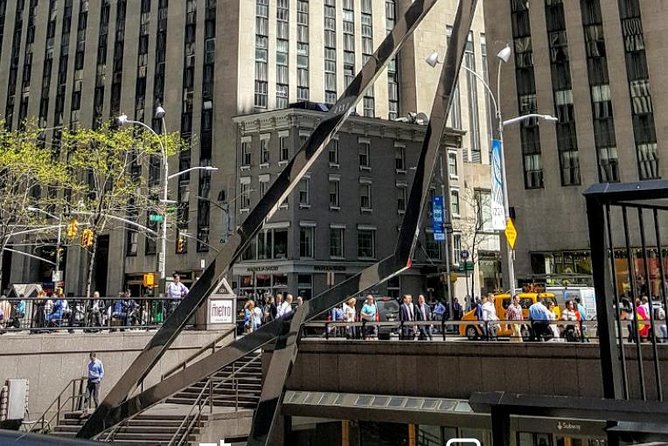
Midtown’s strangest buildings often began with a simple problem: one owner refused to sell. This walking tour follows those holdouts, the stubborn little properties that survived beside or beneath giant office towers and helped shape the city you see today. Along the way, Rob connects architecture with zoning, air rights, mob history, old hotels, and the people who changed Manhattan.
I like the small groups of no more than five, which give you room to ask questions and adjust the pace. I also like the unusual route, from a former buggy whip factory and Amster Yard to Grand Central Terminal, Rockefeller Center, and a restaurant built partly around a 19th-century brownstone. The main drawback is pace: there is a lot to cover in 2 to 3 hours, so you may want to speak up if you need more time for photos.
Key points to know before you book
- Holdouts become the main characters: See how property owners who refused to sell affected the shape of Midtown’s skyscrapers.
- Rob brings broad city-planning knowledge: The tour reaches beyond architecture into air rights, privately owned public spaces, housing, and development.
- The route links major sights with overlooked corners: Grand Central Terminal and Rockefeller Center appear alongside smaller, stranger survivors.
- Expect a brisk urban walk: Comfortable shoes matter, and one recent outing felt rushed when the group did not ask for photo breaks.
- The final stop is especially unusual: At Papillon Bistro & Bar, you can see how a restaurant negotiated space inside a newer skyscraper.
- The value comes from interpretation: You are paying for context and access to stories, not admission tickets, since the stops are viewed from public areas.
Why Midtown’s holdouts make a better story than another skyline tour
A holdout is a property owner who refuses to sell while developers assemble nearby land for a much larger project. In New York, that refusal can leave a narrow house, a small commercial building, or an oddly placed structure surrounded by towers.
This tour makes that idea practical. Instead of looking at Midtown as a wall of unrelated skyscrapers, you learn to ask why a building sits where it does, why a tower has an odd setback, or why a tiny property survived beside a project worth millions.
That is the tour’s best quality. Rob does not simply point to façades and recite dates. He explains how development decisions affect the street, how air rights allow one property to use unused building capacity from another, and how privately owned public spaces fit into the city’s planning system.
The subject also gives the walk a human scale. Grand projects usually get the attention, but one owner’s refusal can alter an entire block. Sometimes that change produces an architectural curiosity. Sometimes it leaves an inconvenient gap. Sometimes the holdout later becomes part of the new building itself.
Rob has led this route with a strong command of New York architecture and planning. Several outings were praised for his ability to answer questions, follow useful side topics, and connect individual buildings to the city’s larger development. If you enjoy urban history, this is much more than a photo walk.
More architecture walks in New York City:
- Tribeca Architecture And History Walking Tour
★ 5.0 · 141 reviews - TriBeCa Architecture & History Walking Tour
★ 5.0 · 37 reviews - Midtown Manhattan Art and Architecture Walking Tour
★ 5.0 · 32 reviews
Starting inside TPR Holdings on 3rd Avenue
The meeting point is 875 3rd Avenue, and the tour begins in the lower lobby of TPR Holdings. This is not just a place to gather. The building itself was shaped by holdouts, so you begin with a real example before heading into Midtown.
Rob uses the opening to explain the route and establish the basic idea behind the tour. He also provides background on how New York developed, why property assembly matters, and how older buildings can complicate a new skyscraper project.
This introduction is useful, but it is also where the pacing issue matters most. A recent group felt that too much time was spent looking at printed building material before the walk got moving. If you want to photograph the city or ask questions, say so early. Rob has indicated that he tries to match the pace to the group, but a small group works best when you communicate what you want.
From here, the walk moves through a series of unusual buildings. Some are official holdouts. Others are included because their construction reveals how inventive, awkward, or competitive Midtown’s building process could be.
Ego buildings and unusual structural tricks
Early in the route, you stop at what is described as a fascinating ego building. The name tells you something about the subject: this is architecture shaped not only by land values and engineering, but also by personal ambition.
The exact appeal of this stop is the story attached to the building and the character behind it. It helps set up one of the tour’s recurring ideas: Midtown is not the result of one clean master plan. It is the product of competing owners, designers, institutions, and business interests.
Another early stop is not a holdout, but it has a memorable structural detail. Its main pillar supports are not placed at the corners. Instead, they sit in the middle of the sides. That small fact changes how you look at the building, especially when Rob explains how structural choices influence the shape and use of a tower.
This is where the walk rewards anyone who likes to look up. You are not merely collecting famous buildings. You are learning to spot the evidence of engineering and property constraints in the walls around you.
Wollensky’s Grill and the old buggy whip factory
Wollensky’s Grill is a quick stop, but it carries a surprising past. The building was once a buggy whip factory and is also a holdout.
The point is not that you will spend a long time inside. Admission is not included because the tour is primarily an exterior and public-space experience. Instead, Rob uses the building to show how a structure from an earlier New York could survive into the skyscraper era.
The stop also gives the route a useful change of scale. One moment you are thinking about giant office towers, and the next you are looking at a smaller commercial property with an older industrial story. That contrast is central to the tour.
A few more architecture tours around New York City worth a look
- Manhattan Architecture Yacht Cruise
★ 5.0 · 1,395 reviews - NYC: Around Manhattan Official NYC Architecture Cruise
★ 4.8 · 402 reviews - Art Deco and Architecture Midtown Landmarks Tour
★ 5.0 · 142 reviews - 3 Hour Midtown Manhattan Architectural Tour
★ 5.0 · 81 reviews
Amster Yard, a small pocket with a different past
If Amster Yard is open when you arrive, the group pauses inside. This small oasis feels removed from the broad avenues and tall office buildings around it.
The description of Amster Yard as a time capsule is fitting. It brings together older urban and suburban ideas in a compact setting, showing that Midtown once had a very different texture. Since access depends on whether it is open, you should treat this as a possible bonus rather than a guaranteed interior visit.
The stop is short, but that is part of the route’s rhythm. You see one of Midtown’s private-feeling corners, then return to the street and continue tracing the way older properties affected newer development.
Sparks Steak House and the darker side of Midtown
Sparks Steak House is known for the site of a notorious mob hit. The tour does not use that story as a gimmick. Instead, Rob places it beside an interesting holdout, allowing the location to connect crime history with the physical development of the block.
This is one of the more useful features of the walk. New York’s buildings do not exist in isolation from the city’s social history. Restaurants, offices, clubs, families, developers, and criminal organizations all form part of the stories attached to particular corners.
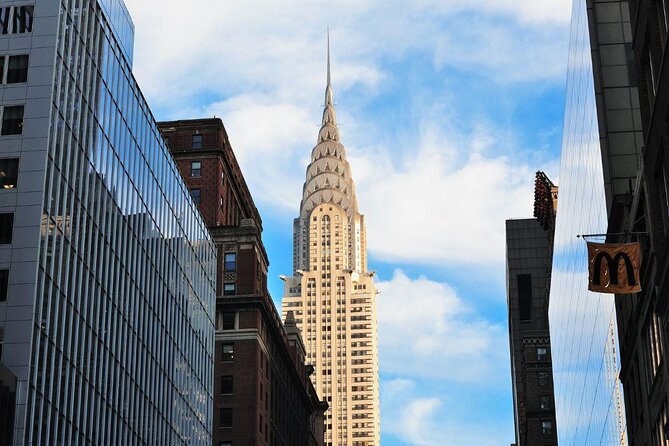
As you continue, the route offers views of an impressive landmark and passes the Secretariat Building down the block. Rob discusses other holdouts and explains how they influenced the streetscape. You may find yourself paying more attention to the gaps and side walls between buildings than to the polished façades.
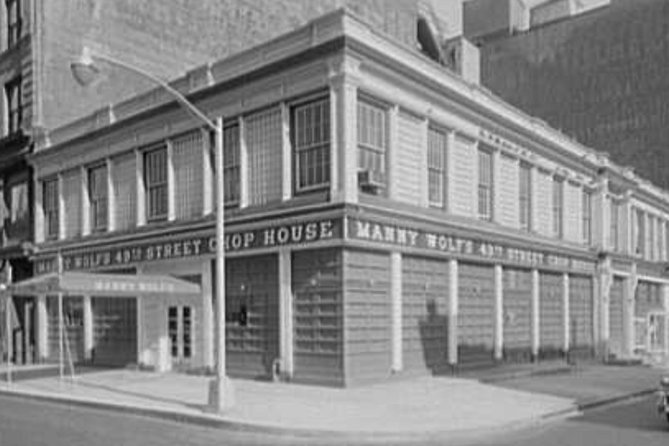
The single survivor near 42nd Street
The downtown section ends at 42nd Street, where a single holdout survived the area’s changes. This is a good point to pause and consider the tour’s central lesson.
A holdout is not always picturesque. Sometimes it is simply a small parcel that prevented a developer from creating a more uniform project. But that inconvenience can become an important clue. It shows you that Manhattan was built in pieces, and that old ownership patterns can remain visible even after the surrounding blocks change.
This part of the route also helps explain why Midtown can feel visually irregular. The variation is not always a design choice. It may be the result of a lease, a refusal to sell, an ownership dispute, or a property owner holding out for better terms.
Grand Central Terminal and the old Terminal City
The walk then heads toward the west side and uptown portion of the route, passing through Grand Central Terminal. Grand Central is not itself connected to a holdout, but Rob may give you a short tour of this famous interior.
That possible mini-tour adds value because Grand Central is more than a transit stop. It provides a clear example of how transportation projects can shape surrounding development. The old Terminal City idea linked Grand Central with nearby hotels, creating an urban district designed to receive people arriving from across the country before air travel became common.
You also pass the sole survivor of Terminal City. That building gives you a physical link to the older hotel district and to the period when long-distance rail travel defined the city’s connections.
Because Grand Central is a major public place, the stop can be busy. Keep your group together and expect the route to keep moving. The terminal is an important part of the experience, but this is not a dedicated Grand Central tour.
Brooks Brothers, crystal angles, and a city inside a building
Brooks Brothers appears because a holdout once stood beside this long-established New York institution. Again, the interest lies in the relationship between the old business, the neighboring property, and the later tower development.
The route also passes a building that looks like a crystal shard or an iceberg viewed from the side. That visual comparison helps you understand how contemporary towers respond to tight sites and complex surroundings. The building is not presented as an isolated design object. You see it as part of a street shaped by earlier decisions.
Another stop presents a city inside a building that was still under construction when the route information was prepared. This is a reminder that Midtown’s story is not finished. Land assembly, construction, leases, and redevelopment continue to change the area while older properties remain in the mix.
You also pass the block where about $440 million in diamonds are traded daily. The entrance is a block north, marked by 12-foot diamond sculptures near Fifth Avenue. This is an especially good example of how a district can hide a major business center in plain sight.
Rockefeller Center and the holdouts inside a famous complex
Rockefeller Center is the longest named stop, at about 10 minutes, and it deserves that attention. Its development involved several interesting holdouts, giving Rob a chance to explain how a major complex deals with older properties and competing interests.
You probably know Rockefeller Center for its art deco design and famous public spaces. The holdout stories add another layer. Instead of seeing the complex as a single finished statement, you begin to understand the negotiations and property problems behind it.
This is also one of the best places to compare grand planning with individual resistance. Rockefeller Center feels unified, yet its creation depended on many separate parcels, agreements, and decisions. The tour shows how a planned district can still carry traces of the smaller properties that came before it.
Papillon Bistro and the remarkable hold-in
The tour ends at Papillon Bistro & Bar, at 22 East 54th Street. This is one of the most memorable examples on the route because it reverses the usual holdout story.
Rather than simply refusing to leave, the restaurant proprietor negotiated additional square footage so the business could expand into the future skyscraper. The result is more accurately a hold-in. You can enter the skyscraper today and stand within the walls of a 19th-century brownstone.
That arrangement gives the tour a strong ending. The old building was not erased entirely, and the new tower did not simply stop at its boundary. Instead, the two were combined through negotiation. It is a neat physical example of how development can preserve part of the past while changing almost everything around it.
The end point is also practical. You finish near Fifth Avenue and 54th Street, in a central part of Midtown with plenty of options for continuing your day.
What the $59 price gets you
At $59 per person, this is not a cheap stroll if you measure value by admission tickets. Almost every stop is viewed from the street or a public area, and no major attraction entry is included.
The price makes more sense if you value interpretation. Rob supplies the connections that are difficult to get from a guidebook or a casual walk: air rights, privately owned public spaces, warehoused buildings, old leases, property assembly, structural design, and the effect of holdouts on housing and streets.
The small maximum group of five is important. You are not standing at the back of a large crowd while a guide points across an avenue. You can ask about a building that catches your eye, and the discussion can shift toward architecture, planning, or New York history.
The experience has earned a 4.8 rating from 31 reviews, with 97 percent recommending it. Those figures suggest strong satisfaction, but they do not remove the need to choose the right kind of tour. You are paying for a focused academic-style walking tour with personality, not a slow sightseeing loop with long photo stops.
Pace, shoes, weather, and group size
Plan on 2 to 3 hours of walking through Midtown. Wear comfortable shoes, since the route covers several blocks and includes an active city walk rather than a single-site visit.
The group maximum is five, which can make the outing feel conversational. It also means the guide may adjust the route’s speed based on the people present. Rob has shown a willingness to slow down, but you should ask for a pause if you want time to take photos or explore a question.
The tour is offered in English and uses a mobile ticket. Service animals are allowed, and the route is near public transportation. A moderate level of physical fitness is recommended.
Good weather is required. If poor weather cancels the tour, you are offered another date or a full refund. You can also cancel for a full refund up to 24 hours before the start time. The tour requires a minimum number of participants, so a cancellation is possible if that minimum is not reached.
Who should book this Midtown walking tour
I would choose this tour if you like architecture with a story attached. It suits people who want to understand why New York looks the way it does, rather than simply photograph famous towers.
It is especially good for anyone interested in urban planning, real estate, construction, housing, or the small decisions that shape a city. Rob’s broad subject knowledge also makes the tour useful if you enjoy asking follow-up questions and wandering into related topics.
Families can enjoy it if older children or teenagers are interested in buildings and city history. It may be less satisfying for very young children, since the tour depends on listening and following a detailed argument about property and development.
You should be comfortable with a brisk pace and with spending much of the time outdoors. If your ideal tour includes long interior visits, lots of seated breaks, or a relaxed photography schedule, this may feel too compressed.
Should you book Holdouts?
Book it if you have already seen Midtown’s famous sights and want to understand the forces behind them. The route gives you Grand Central, Rockefeller Center, Fifth Avenue, and striking skyscrapers, but its real reward is learning to read the smaller properties and awkward spaces around them.
The strongest reason to go is Rob. His years of study and his ability to follow a group’s interests turn a specialized topic into a lively city walk. Just set your expectations correctly: this is a brisk, idea-packed outing, not a leisurely stroll.
Ask for photo pauses, wear good shoes, and arrive ready to look up and ask questions. If that sounds appealing, $59 is a fair price for a small-group tour that changes the way you see Midtown.
FAQ
How long is the Holdouts tour?
The tour lasts approximately 2 to 3 hours.
Where does the tour start?
It starts at 875 3rd Avenue, New York, in the lower lobby area of TPR Holdings.
Where does the tour end?
The tour ends at Papillon Bistro & Bar, at 22 East 54th Street in New York.
How many people can join the tour?
The maximum group size is five travelers.
Is Grand Central Terminal included?
The route passes through Grand Central Terminal, and a short tour of the terminal is possible. Grand Central is not itself associated with a holdout.
What happens if the weather is poor?
The experience requires good weather. If it is canceled because of poor weather, you can receive a different date or a full refund.
Just added around New York City
- Race to the Sky: NYC Architecture Tour With SUMMIT One Ticket★ 5.0 · 3 reviews
- New York Upper West Side Art and Architecture Tour★ 5.0 · 4 reviews
- Private Flatiron Food, History and Architecture Tour★ 5.0 · 8 reviews
- New York Upper East Side Art and Architecture Tour★ 5.0 · 3 reviews
- Custom Private New York Architecture, Art and City Tour★ 5.0 · 3 reviews
- Chelsea and the High Line NYC Architecture Walking Tour★ 5.0 · 6 reviews
- Midtown North NYC Architecture Walking Tour★ 5.0 · 28 reviews
- New York Midtown South Art and Architecture Tour★ 5.0 · 2 reviews
Walking Tours, compared.
The Official Art Deco Walking Tour by The Miami Design Preservation League
Read our review →
Barcelona: Gothic Quarter Ghosts and Legends Walking Tour
Read our review →
Barcelona: Old Town and Gothic Quarter Walking Tour
Read our review →
Lecce: Baroque Architecture and Underground Walking Tour
Read our review →
Chicago in a Day: Food, History & Architecture Walking Tour
Read our review →
Ramblas, Old Town, Gothic and Gaudi Architecture Walking Tour
Read our review →
Chicago’s Secret Interiors Architectural Walking Tour
Read our review →Browse the lists this tour appears in