
Review · MUNICH
Private Munich Tour for History Buffs with Architectural Gems and WWII sites
Munich’s past is packed into a small area, from the Beer Hall Putsch at Odeonsplatz to the former Gestapo headquarters at the Residenz. This private walk gives you a shortcut through that difficult history, while also adding royal palaces, Gothic architecture, and some of the city’s best photo spots.
I like two things right away: you get a guide just for your own group, and you can adjust the route instead of following a fixed script. Guides such as Tanja bring patience and local feeling to the walk, even slowing down when your legs have had enough after several days of sightseeing. The main caution is time. Two hours is not long for five major stops, especially if you hope to enter buildings or climb the New Town Hall tower.
Key points at a glance

- A private route through Munich’s Nazi-era landmarks: See Odeonsplatz, the Residenz, and places tied to Hitler’s rise without joining a large group.
- Hotel-lobby pickup in central Munich: Your guide meets you at a centrally located hotel, hostel, or holiday rental.
- Five major stops in about two hours: The route covers the New Town Hall, Nymphenburg Palace, Residenz, Odeonsplatz, and St. Peter’s Church.
- Flexible for history lovers: You can ask to change the listed sights and focus more closely on architecture, royal Munich, or World War II.
- Useful local orientation: You receive tips on getting around Munich and on good places for photos.
- Plan for extra costs and walking: Entrance fees, food, drinks, and transport are not included, and the tour runs in all weather.
Why this private Munich walk works
This experience is best understood as an introduction rather than a full museum visit. You move through several important parts of Munich, hear the story behind each place, and leave with a clearer sense of how the city fits together.
That private format matters. A guide can answer your questions about the Nazi period, Bavarian rulers, or church architecture without stopping to manage a busload of people. You can also ask for more time at a particular site, though spending longer in one place means shortening another.
The route mixes serious history with classic sightseeing. That balance is useful because Munich is not only a World War II destination. The city’s story also includes Wittelsbach rulers, medieval churches, grand Baroque design, and the rebuilding that followed wartime destruction.
At $217 per person, the price is high for a two-hour walk if you are traveling alone or as a couple. It becomes easier to justify with a larger private group, especially since group discounts may be available. You are paying mainly for personal attention, a flexible plan, and a guide who can connect scattered sites into one story.
More history tours in Germany:
- Private Taxi Tour City East & West History and Architecture 3-4h
★ 5.0 · 42 reviews - Lübeck: Private Historical and Architectural Walking Tour
★ 4.5 · 6 reviews - Private Taxi Tour of City East History and Architecture 2-3h
★ 5.0 · 2 reviews
Starting beneath the New Town Hall
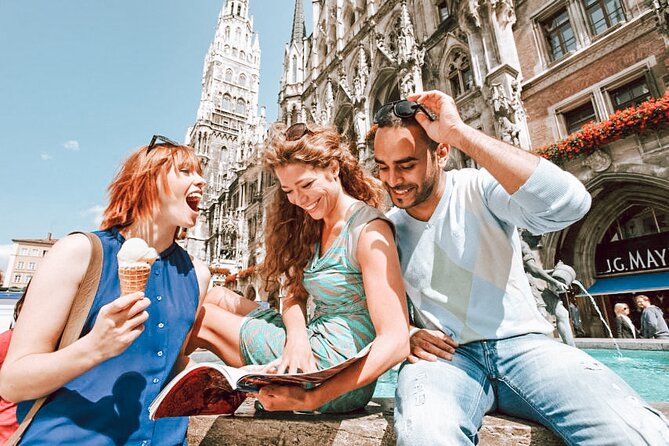
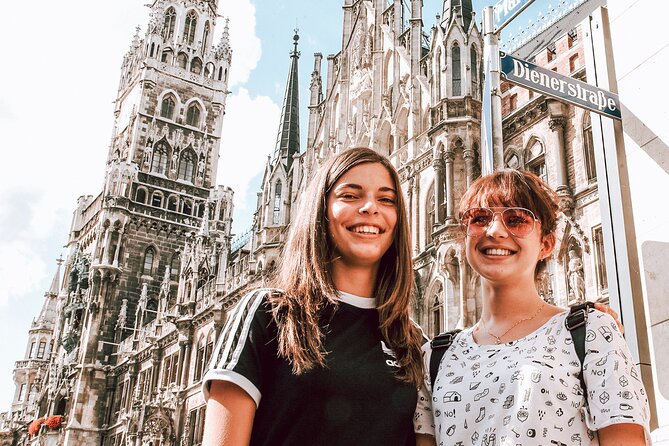
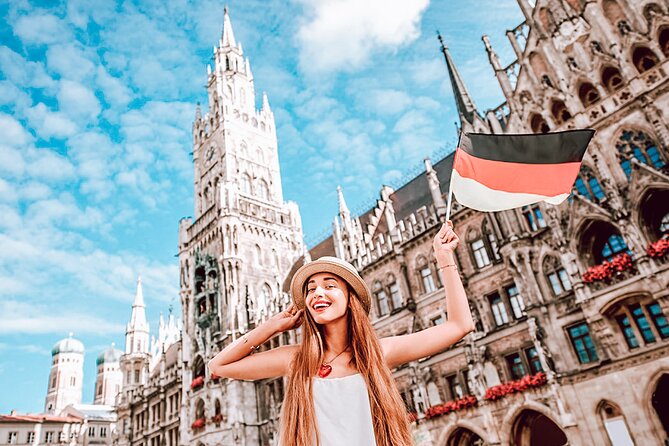
The usual beginning is the Neues Rathaus, or New Town Hall, on Marienplatz. Its neo-Gothic facade was built between 1867 and 1874 from brick and shell limestone. The building still serves as a working center of Munich government, with city administration, the city council, and the mayor’s office inside.
This is an excellent opening because it gives you an immediate sense of Munich’s scale and style. The facade has about 100 meters of detailed architectural work, with towers, carved figures, and an imposing vertical design. Your guide can point out details that are easy to miss when you are simply crossing the square to reach another sight.
The building also offers two optional experiences: a climb to the tower for views across Munich’s rooftops and a traditional restaurant in the vault, dating to 1867. Do not assume either is part of the two-hour tour or that admission is covered. Ask your guide how much time remains if you want to add the tower.
The practical issue here is crowding. Marienplatz is one of Munich’s central gathering points, so the square can feel busy. A private guide helps you find a useful viewing position, but the tour is not designed as a long architectural study. You will hear the key facts, take photographs, and move on.
Nymphenburg Palace and the Bavarian royal story
Nymphenburg Palace changes the mood completely. The grand Baroque complex was built as a summer residence for the Bavarian monarchs, beginning in 1664. Its creation was tied to a prince’s wish to honor his wife, and later generations of Wittelsbach rulers expanded and reshaped the property.
You can expect an introduction to five generations of Bavarian rulers, along with a look at the palace’s grand exterior and grounds. The palace is one of Europe’s largest royal residences, so even a short stop gives you plenty to see from the outside.
This is one of the itinerary’s biggest advantages and its biggest timing problem. Nymphenburg is not close to the compact old-town stops. If the visit is conducted as a walking tour from a central hotel, you need to clarify how the group reaches the palace. Transportation costs are not included, and the stated duration is approximately two hours.
A short stop here works if you mainly want the setting, architecture, and royal background. It does not work as well if you want to tour the interior rooms at a leisurely pace. Entrance fees are extra, and the palace can easily absorb far more than 20 minutes on its own.
Ask before booking whether Nymphenburg will be viewed from outside or entered. That single detail will shape your expectations. If your priority is World War II history, you may prefer to use the flexible format for another central site instead.
The Residenz, from dukes to Nazi headquarters
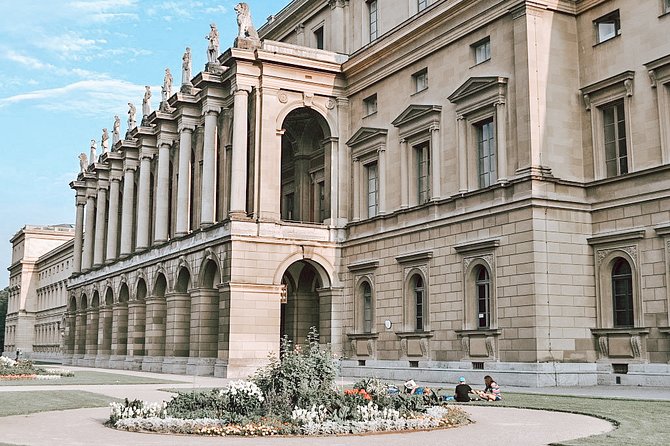
The Munich Residenz gives the tour its strongest link between royal power and twentieth-century politics. Bavarian dukes and kings began transforming the original castle in 1385. Over time, the complex grew into a major palace and is now the largest museum in Bavaria.
The wartime story is equally important. The Residenz housed former Gestapo headquarters, and it was where Hitler joined the Nazi Party. Much of the complex was demolished during World War II and rebuilt gradually from 1945 onward.
That combination makes the Residenz more than a grand palace stop. You can look at its architecture while also considering how political power occupied the same rooms and streets across very different periods. A good guide can help you connect the royal court, the Nazi regime, the damage of war, and the postwar rebuilding effort.
The main limitation is that 20 minutes is barely enough for an introduction. The museum has far more to offer than an exterior glance. Since entrance fees are not included, budget extra if you want to go inside, and understand that a museum visit may require a change to the route.
For a history-focused group, this is a strong place to request more time. You may prefer to shorten Nymphenburg or skip a second church stop so the Residenz receives proper attention.
More private architecture tours in Germany:
- Private walking Tour: Berlin Architecture Tour
★ 5.0 · 14 reviews - Lübeck: Architecture and Local Craft Private Guided Tour
★ 4.0 · 6 reviews - Architectural Berlin: Private Tour with a Local Expert
★ 4.0 · 3 reviews - Munich Your Way: Private Tour with Architect & Guide
★ 5.0 · 2 reviews
Odeonsplatz and the failed Beer Hall Putsch
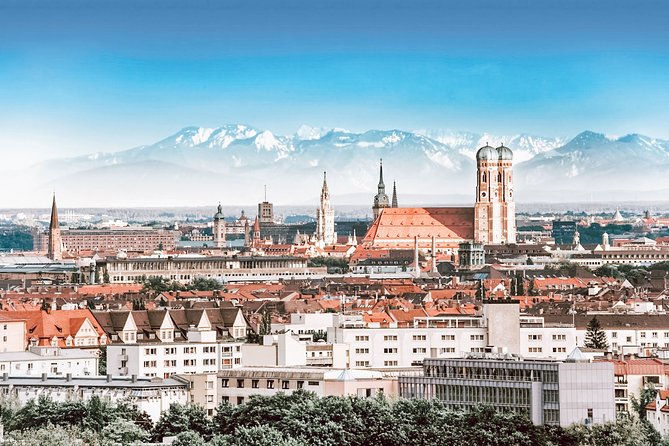
Odeonsplatz is one of the most important political stops on the route. In 1923, Hitler’s Beer Hall Putsch ended here when Bavarian police blocked the march. That failed attempt to seize power became an important part of the Nazi story.
The square also helps explain why the site had political weight. It was traditionally used for public events, demonstrations, and funerals. The Nazis’ decision to march here was not random. The location already carried public meaning.
Look around the square and you will see the Feldherrnhalle, the Baroque Theatine Church of St. Kajetan, and Munich’s oldest café. Today, Odeonsplatz is also used for open-air classical concerts. The contrast is worth noting: the same public space can carry memories of violence and political failure while functioning as an ordinary meeting place and concert setting.
This stop is especially good for photographs because the square has strong architectural lines and several major buildings close together. Your guide can also help you understand how the Nazi march moved through the city, rather than treating the event as an isolated date.
Again, the 20-minute estimate is short. You will hear the central story and see the setting, but you will not receive a long political lecture. That is probably the right approach for a compact private walk, as long as you know this is a concise overview.
St. Peter’s Church and Munich before the Nazis
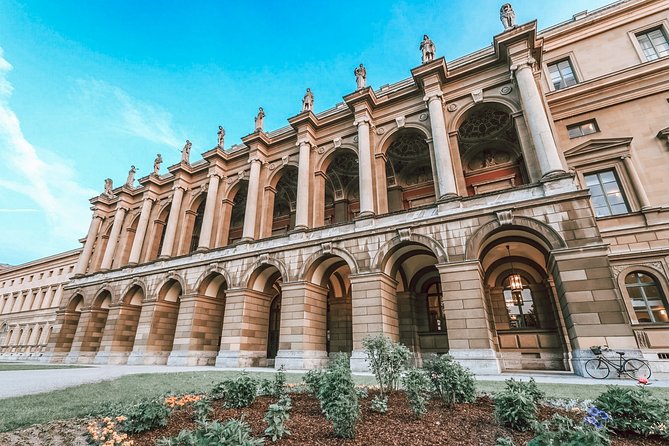
St. Peter’s Church, known locally as Old Peter, brings the route back to Munich’s older religious and civic life. The church was constructed in the 11th century and is considered the city’s oldest parish church. Its tower reaches 91 meters and sits close to Marienplatz.
The church helps keep the tour from becoming only a World War II lesson. Munich existed long before the Nazi era, and this stop gives you a sense of that longer timeline. You can hear about the original architecture and the reasons the church was rebuilt in 1327.
A tower visit can provide another fine view, but it is not listed as an included part of the tour. As with the New Town Hall tower, ask about admission, timing, and whether climbing stairs fits the schedule.
St. Peter’s is also a sensible final stop because it returns you to the center of town. If your group is tired, the church can be a calmer place to finish than another large palace complex. One past group found that the guide adjusted her pace when they began to tire after several days of walking and standing. That kind of flexibility is one of the clearest benefits of booking privately.
What the two-hour schedule really means

The listed stops allow roughly 20 minutes each. That adds up to 100 minutes, leaving only a small amount of time for meeting, moving between places, answering questions, and taking photographs.
You should not read this as five full visits. It is better viewed as five short introductions. The tour is useful for deciding which places deserve a return visit, not for replacing a morning at the Residenz or a full palace admission.
The flexible route can solve part of the problem. You might choose three stops instead of five, or ask for a route focused only on Nazi-era Munich. You might also prefer to stay in the center and leave Nymphenburg for another outing, especially if transport would take up much of your time.
If you have limited mobility, be realistic about the walking and standing involved. A moderate level of fitness is expected. The tour operates in rain or shine, so wear suitable shoes and clothing. Service animals are allowed, and the route is near public transportation.
Guide style and the human side of the tour
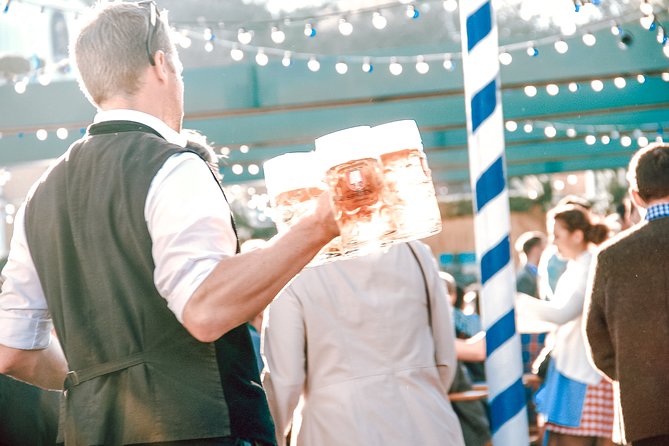
The strongest part of this experience is the guide relationship. Tanja has been described as warm, patient, and deeply connected to her city. She explains details with energy and adjusts her pace instead of treating the schedule as more important than the people in front of her.
That matters on a history tour. Munich’s Nazi-era sites can become a string of dates and names if the explanation is rushed. A guide who welcomes questions and notices when you are tired can make the material easier to absorb.
You should also expect practical help beyond formal history. The tour includes tips for getting around Munich and suggestions for strong photo locations. These small details can save time during the rest of your stay, especially if this is your first day in the city.
The guide’s exact name is not guaranteed. Tanja is one guide associated with the experience, but another local guide may lead your walk. You can still request a history-heavy route and explain your interests when arranging the tour.
Price, pickup, and planning details
The $217 per-person price needs to be judged against the private format, not against a standard group walking tour. You receive a local English-speaking guide, a customizable route, hotel-lobby pickup, and a tour limited to your own group.
For two people, the cost is a serious splurge. For a family or larger group, the per-person value may improve, particularly if a group discount applies. The best reason to pay more is not the number of sights. It is the ability to ask questions, change the pace, and focus on the history that matters most to you.
Pickup is available from a centrally located hotel, hostel, or holiday rental. You must provide the exact name and address. There is no airport pickup. You do not need to call to confirm, since the local provider contacts you by email.
Food and drinks are not included. Local transport is also not included, so clarify the plan for Nymphenburg before the day begins. Admission fees are extra, despite the fact that several stops can be viewed without paying to enter.
Multiple start times are offered, which makes it easier to fit the tour around museum visits or an evening concert. Free cancellation is available if you cancel at least 24 hours before the start time. Changes made inside that window are not accepted.
Who should book this Munich experience?
I would recommend this tour to a first-time Munich visitor who wants a clear orientation and has strong interest in history. It also suits families, couples, or friends who dislike large groups and want the freedom to ask direct questions.
It is a good match if you want to:
- Connect World War II sites with Munich’s older royal and religious history
- Get local advice on transport and photography
- Meet at your accommodation instead of finding a public meeting point
- Adjust the pace when your group is tired
- Decide which museums and monuments deserve a longer visit
I would be more cautious if you want lengthy interior visits. Two hours cannot properly cover Nymphenburg Palace, the Residenz museum, the New Town Hall tower, St. Peter’s Church, and the World War II sites all at once.
For a serious history student, the tour may work best as a private planning session. Ask to focus on the Residenz, Odeonsplatz, and other central sites, then use the guide’s advice to plan longer visits afterward.
Should you book it?
Book this private Munich tour if you value personal guidance, a flexible route, and clear links between the city’s royal past and Nazi-era history. The guide’s patience, local knowledge, and practical tips add real value, especially when you are tired or unsure where to begin.
Skip it if you want a slow palace tour, extensive museum time, or the lowest possible price. The two-hour schedule is tight, and $217 per person is a lot for a short walk.
For the best value, book it early, use the private format to narrow the route, and decide in advance which matters most: Nymphenburg’s royal architecture, the Residenz and its political past, or the central World War II sites around Odeonsplatz. That choice will turn a rushed checklist into a useful introduction to Munich.
FAQ
How long is the private Munich history tour?
The tour lasts approximately two hours.
Where does the guide meet the group?
The guide meets you in the lobby of your centrally located hotel, hostel, or vacation rental. You need to provide the exact name and address.
Is airport pickup available?
No. Airport pickup is not available.
Is the itinerary fixed?
No. Because the tour is private, you can change the listed sights and choose what you would like to experience.
Are entrance fees included?
No. Entrance fees are not included. Food, drinks, and transportation costs are also extra.
What happens if it rains?
The tour runs rain or shine. You should dress appropriately for the weather and expect a moderate level of walking and standing.
Just added around Germany
- Beautiful Baroque Potsdam: A Self-Guided Audio Tour★ 4.5 · 4 reviews
- Munich Your Way: Private Tour with Architect & Guide★ 5.0 · 2 reviews
- Art Nouveau Meets Street Art in Munich (Max. 12 guests)★ 5.0 · 3 reviews
- Hidden Architectural Gems of Munich (Max. 16 guests)★ 5.0 · 2 reviews
- Architectural Frankfurt: Private Tour with a Local Expert★ 5.0 · 2 reviews
- Private Taxi Tour of City East History and Architecture 2-3h★ 5.0 · 2 reviews
- Architectural Berlin: Private Tour with a Local Expert★ 4.0 · 3 reviews
- Berlin Architecture/River Spree Full Day Photography Tour★ 5.0 · 2 reviews
Historical Tours, compared.
Chicago in a Day: Food, History & Architecture Walking Tour
Read our review →
Kuala Lumpur: Batu Caves & Historic Buildings Tour
Read our review →
Charleston’s Best Highlights: History, Culture & Architecture
Read our review →
Palm Springs Modernism Architecture & History Bike Tour
Read our review →
Charleston: History and Architecture Guided Walking Tour
Read our review →
Historic Georgetown: History, Gossip, & Architecture Walking Tour
Read our review →
Charleston History, Homes, and Architecture Guided Walking Tour
Read our review →
Browse the lists this tour appears in