
Review · ARCHITECTURE TOURS
Plečnik’s Ljubljana -UNESCO heritage- A walk among architect Plecnik’s creations
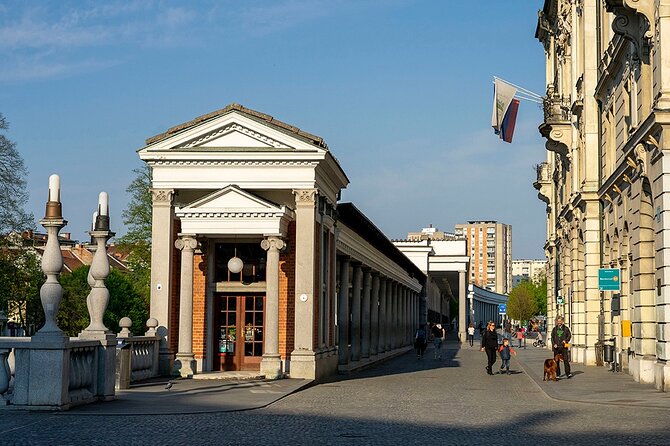
Jože Plečnik did not simply design a few handsome buildings in Ljubljana. He reshaped the city’s public spaces, bridges, market, riverfront, and squares into one connected idea. This walk lets you follow that plan on foot, from Triple Bridge to the National and University Library and Križanke.
I like the private format, which gives your group room to ask questions, and the small tastings along the way, a pleasant way to connect architecture with daily life. Guide Tjasa has been especially praised for making the subject memorable. The main drawback is the short two-hour schedule: you will see many major works, but only from the outside and at a brisk pace.
Key things to know
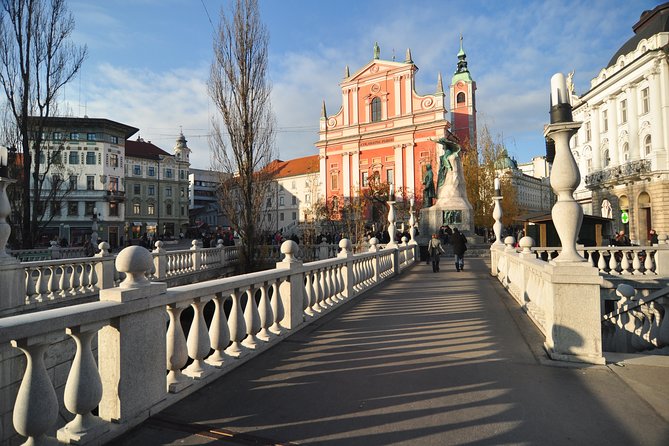
- Plečnik’s Ljubljana in one compact walk: Follow the architect’s work from Triple Bridge through the market area, river crossings, Congress Square, Križanke, and the National and University Library.
- A private group of up to six: You are not joining a large crowd, so questions and conversation should be easier.
- Guide Tjasa brings a personal touch: Her warm, energetic approach has helped make the tour memorable for families with very different interests.
- Small tastings add local flavor: Snacks are included and offer more than a quick break from walking.
- A central start and a useful finish: Begin at Krekov trg and end at Križanke, close to several important city sights.
- Good value for a small group: At $220.41 for up to six people, the cost works out to about $36.74 per person if you fill the group.
Why Plečnik is the right guide to Ljubljana
Ljubljana can feel easy to see at first. The center is compact, the river is close at hand, and many sights are within a short walk. But Plečnik’s work gives the city much of its character. Without some explanation, you may notice unusual columns, broad stairways, decorated bridges, and carefully shaped squares without seeing how they fit together.
This walk gives you that larger picture. Plečnik worked on the city as a whole, not just on isolated buildings. His ideas appear in the way the riverfront is framed, how bridges connect public spaces, and how markets and squares guide movement through the center.
I find this focus more useful than a general city tour if you already have a basic sense of Ljubljana. You are not simply ticking off landmarks. You are learning to spot the repeated design choices that make the city feel coherent.
The guide also brings the architect’s life into the story. That matters because Plečnik’s buildings are not plain functional structures. Their columns, lights, textures, and proportions invite questions. A good guide helps you understand what you are looking at instead of leaving you with a collection of attractive photographs.
More architecture walks in the world:
- Lecce: Baroque Architecture and Underground Walking Tour
★ 4.6 · 1,248 reviews - Chicago in a Day: Food, History & Architecture Walking Tour
★ 5.0 · 1,153 reviews - Ramblas, Old Town, Gothic and Gaudi Architecture Walking Tour
★ 5.0 · 723 reviews
Starting at Triple Bridge
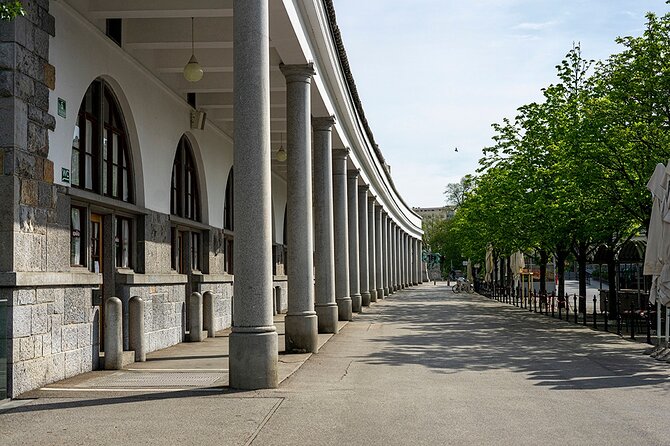
The walk begins at Krekov trg, a convenient central meeting point, and proceeds to Ljubljana’s famous Triple Bridge, or Tromostovje. This is one of the best places to begin because it immediately shows Plečnik’s habit of working with what already existed.
Only two of the three bridges were made by Plečnik. That small fact is useful: his contribution was not always about replacing everything. In this case, the bridge area became a larger public space, linking the river with the heart of the city.
You will spend about five minutes here. That sounds brief, but Triple Bridge works well as an opening stop. The point is not to linger for a long architectural inspection. It is to understand how a crossing can become a civic meeting place and to set up the design themes that appear later.
If you want time for photographs, arrive a little early or plan to return after the tour. The official stop is short, and the group will continue toward the market.
Reading the two levels of Central Market
From Triple Bridge, the route follows Plečnik’s work toward Central Market and Dragon Bridge. This section is scheduled for about ten minutes and offers a wider view of how the architect shaped the riverfront.
The market area is especially helpful for understanding Plečnik’s practical side. Markets have to serve everyday needs, yet Plečnik gave this one a strong visual identity. The route passes through two levels of market architecture, allowing the guide to explain how the spaces relate to one another.
This is also where the included tastings make the most sense. The snacks are described as small local tastings, and they are meant to tell you something about the city and its residents. They are not a full meal, so do not arrive expecting lunch. Think of them as a pleasant thread running through the walk.
The Central Market stop may be one of the most useful parts of the experience for first-time visitors. It connects architecture to daily life. You see how a market can be both a working place and part of the city’s public design.
The drawback is that the itinerary does not include a long market visit. If you want to browse stalls or shop, set aside extra time on your own.
Shoemaker’s Bridge and Plečnik’s river details
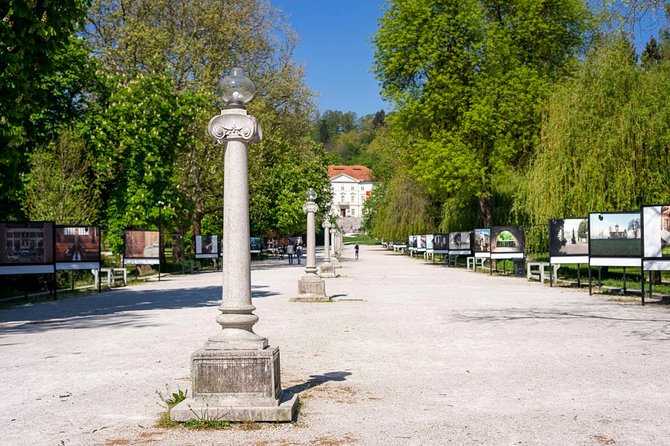
Shoemaker’s Bridge, or Cevljarski Most, is the next short stop. The bridge forms a kind of square over the river, with Plečnik’s distinctive lights and columns giving it a formal look.
This is a good place to pay attention to small details. The bridge is not presented only as a way to cross the water. Its lights and columns turn it into a defined urban room, with the river passing below.
You will spend about five minutes here. That is enough for an explanation and a quick look, but not enough for a slow study of every feature. If you enjoy architecture photography, take note of this stop and return later when you can set your own pace.
The bridge also helps explain why a Plečnik walk is different from a standard sightseeing route. Much of the interest lies in the details around you. A guide can point out features you might otherwise pass without noticing.
More history tours in the world:
- Kuala Lumpur: Batu Caves & Historic Buildings Tour
★ 4.7 · 539 reviews - Charleston’s Best Highlights: History, Culture & Architecture
★ 5.0 · 422 reviews - Palm Springs Modernism Architecture & History Bike Tour
★ 5.0 · 359 reviews - Charleston: History and Architecture Guided Walking Tour
★ 4.8 · 349 reviews
Congress Square and Ljubljana’s public life
Congress Square, or Kongresni trg, receives about ten minutes. Plečnik changed the square, which has hosted one of the largest events ever held in Ljubljana.
That detail gives the square a civic weight beyond its appearance. It is not simply an open space between buildings. It has served as a setting for major public gatherings, and the tour uses that role to connect Plečnik’s design with the life of the city.
I like this stop because it broadens the subject. Architecture is not only about materials and shapes. A square also matters because of what people do there. Congress Square shows how public design can support ceremony, gathering, and large events.
The short visit should give you a clear sense of the space and its importance. It will not provide a full history of every event held there, and the supplied information does not promise an extended historical lecture. If Congress Square interests you, ask the guide for advice about what else to see nearby.
Križanke, Plečnik’s final major Ljubljana work
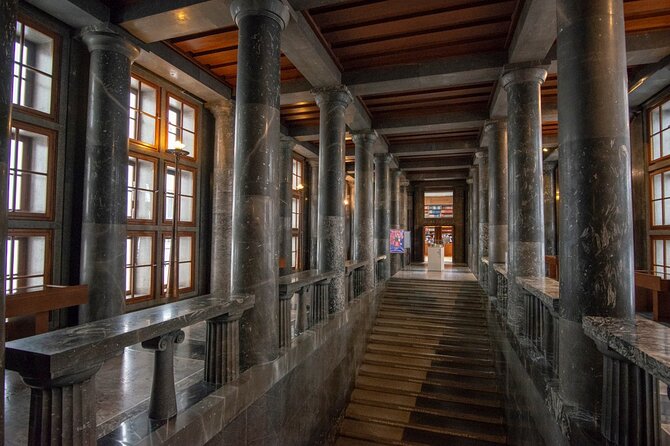
The walk continues to the Monastery of the Holy Cross Summer Theater, known as Križanke Poletno Gledališče. The stop lasts around ten minutes and ends the tour at Križanke, at Trg francoske revolucije 1.
Križanke is described as Plečnik’s last major work in Ljubljana and as the city’s best outdoor theater. That makes it a fitting late stop. By this point, you have seen bridges, market spaces, a square, and a major library. Križanke lets you consider how Plečnik worked with a different kind of setting.
The outdoor theater includes striking details, and the guide can help you notice them rather than treating the theater as a quick photo stop. Since the tour ends here, you can continue exploring after the guide departs, although the available information does not specify admission arrangements or opening hours.
This is also a practical endpoint. You are not returned to the starting point, so consider that when planning the rest of your day. The route is designed as a one-way walk through the center, not a loop.
The National and University Library
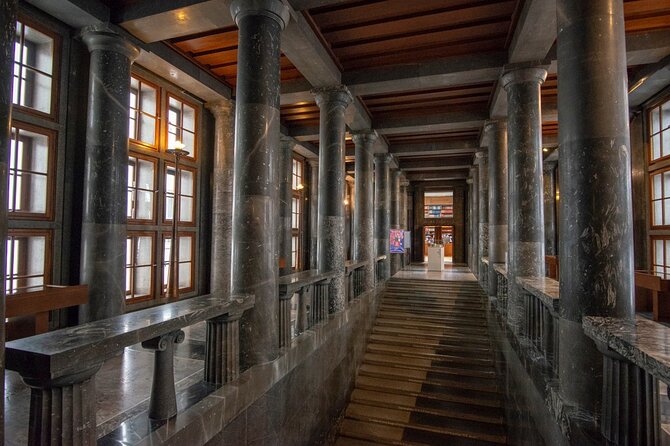
The National and University Library is one of Plečnik’s masterpieces and receives a five-minute stop. A brief visit may sound modest, but the building carries enough importance to justify its place on the route.
The stop gives you a chance to see one of the architect’s major institutional works and put it beside the more public projects seen earlier. Triple Bridge and Central Market shape everyday movement. The library represents learning and civic purpose.
Because the stop is short, you should not expect a long interior visit or extended time inside the building. The provided details identify it as a tour stop, but do not state that admission is included. Treat it as an exterior architecture visit unless your guide tells you otherwise.
For many people, this will be one of the most rewarding points on the walk. You can see how the same architect approached a serious public institution after working on bridges, markets, and squares.
What the private format is worth
The price is $220.41 per group of up to six people. That is not a budget walk for one person, but the calculation changes if you are traveling with family or friends. With six participants, it comes to about $36.74 each for two hours with a professional local guide.
The private format is the main reason to consider the cost. You are not sharing the experience with an unknown crowd, and the guide can adjust the conversation to your group. One family used the walk with people at very different stages of interest in architecture, including someone studying architecture and someone considering a different major. That kind of mixed group is a good match for a private tour because the guide can keep the discussion open rather than overly technical.
Guide Tjasa received especially strong praise for going beyond the basic route and making the visit memorable. You should not assume Tjasa will lead every departure, but her name is connected with the experience and gives you a useful sense of the guiding style offered.
The tour also includes advice on what else to do in Ljubljana or elsewhere in Slovenia. That can be valuable early in a trip, when you still have time to shape your plans.
Timing, walking, and practical details
The experience lasts about two hours. All six stops are in central Ljubljana, and the tour is conducted in English. Pickup is offered, though the listed starting point is Krekov trg, so confirm the pickup arrangement when booking if you need it.
The end point is Križanke, not the starting point. This makes the tour useful as a route through the city, but you should know that you will need to plan your next move from the theater area.
The tour is a private activity for your group only, with a maximum of six people. Mobile tickets are accepted, and the meeting point is near public transportation. Service animals are allowed, and most people can participate.
The walk requires good weather. If poor weather causes a cancellation, you will be offered another date or a full refund. You can cancel for a full refund up to 24 hours before the start time. Changes or cancellations made less than 24 hours ahead are not accepted for a refund.
The schedule is fairly tight. You will move from one stop to the next, with five to ten minutes at most locations. Wear comfortable shoes, and keep your expectations realistic: this is a focused walking introduction, not a long museum visit or a slow architectural workshop.
Who should book this Plečnik walk
I would choose this tour if you want to understand why Ljubljana looks the way it does, not just collect a list of sights. It is particularly suited to visitors interested in architecture, public spaces, urban design, or the connection between a city’s buildings and its daily life.
Families may also find it a good fit. The private format helps when one person wants technical details and another prefers stories about the city. The positive feedback connected with Tjasa suggests that the guide can make the subject accessible rather than overly academic.
It is less suitable if you want extensive time inside buildings, a full meal, or a slow market-shopping visit. The route covers a lot in two hours, and several stops are brief. You will gain a clear framework, then may want to revisit your favorite places independently.
Should you book it?
Book this walk if you are traveling with up to six people and want a focused introduction to Plečnik’s work. The price becomes reasonable when shared, and the private format, English-language guide, snacks, and practical local advice add useful value.
I would especially recommend it early in your Ljubljana stay. Once you understand Plečnik’s plan, later walks through the market, riverfront, squares, and library area will make more sense. Skip it only if you already know his work well or prefer to explore every stop at your own pace.
FAQ
Where does the tour start?
The tour starts at Krekov trg, 1000 Ljubljana, Slovenia.
Where does the tour end?
The tour ends at Križanke, Trg francoske revolucije 1, 1000 Ljubljana, Slovenia.
How long does the experience last?
The walk lasts approximately two hours.
What language is the tour offered in?
The tour is offered in English.
How many people can join the private tour?
The private group can include up to six people.
What is the price?
The price is $220.41 per group of up to six people.
Are snacks included?
Yes. Small tastings are included during the walk.
Is pickup available?
Yes. Pickup is offered, although Krekov trg is listed as the central meeting point.
What happens if the weather is poor?
The experience requires good weather. If it is canceled because of poor weather, you will be offered another date or a full refund.
Just added around the world
- Wilmington History and Architecture Tour★ 4.8 · 18 reviews
- New Orleans : Garden District Architecture Walking tour★ 4.8 · 5 reviews
- Washington, DC: Georgetown Architecture Walking Tour★ 5.0 · 8 reviews
- Washington DC: Dupont Circle & Embassy Row Architecture Tour★ 5.0 · 6 reviews
- Vicenza: discovering the city of Palladio by e-bike★ 5.0 · 4 reviews
- Vicenza: Palladian Architecture Private Walking Tour★ 3.3 · 3 reviews
- Walk & Discover KL’s Architectural and Heritage Gems★ 5.0 · 7 reviews
- Unveiling Brno: History, Culture & Architectural Delights★ 5.0 · 2 reviews
Walking Tours, compared.
The Official Art Deco Walking Tour by The Miami Design Preservation League
Read our review →
Barcelona: Gothic Quarter Ghosts and Legends Walking Tour
Read our review →
Barcelona: Old Town and Gothic Quarter Walking Tour
Read our review →
Lecce: Baroque Architecture and Underground Walking Tour
Read our review →
Chicago in a Day: Food, History & Architecture Walking Tour
Read our review →
Ramblas, Old Town, Gothic and Gaudi Architecture Walking Tour
Read our review →
Chicago’s Secret Interiors Architectural Walking Tour
Read our review →Browse the lists this tour appears in