
Review · CHARLESTON
Charleston Architectural Walking Tour
Charleston’s old center is best understood on foot, where a churchyard, a grand doorway, and a seawall reveal more than any passing carriage ride can. This two-hour architectural walk links some of the city’s most important buildings, from St. Michael’s Church to the Four Corners of Law, while keeping the group small enough for questions.
I like the small maximum of 10 people, which should make it easier to hear and ask about details. I also like the guide’s flexible approach. One review describes a friendly guide who kept returning to the subject even as the group asked plenty of questions. The main consideration is that the tour is outdoors and weather-dependent, with several stops receiving only a few minutes of formal attention.
Key Points
- St. Michael’s Church opens the story: Spend about 10 minutes discussing its design, influence, quirks, and graveyard.
- White Point Gardens connects architecture with the harbor: The walk includes about 20 minutes near the seawall and South Battery mansions.
- The Nathaniel Russell House gets a focused look: You discuss its preservation and unusual architectural features, but only for about five minutes.
- The French Huguenot Church adds a rare cultural perspective: This 1845 church is identified as the last active French Huguenot Church in the United States.
- The walk ends at the Four Corners of Law: The route begins at 18 Vendue Range and finishes at Broad Street and Meeting Street.
- The format suits curious question-askers: The guide can return to the main subject after side questions, according to the available feedback.
Charleston Architecture Makes Sense on Foot
At $50 per person, this is not the cheapest way to see downtown Charleston. But the price buys more than a list of façades. You get a planned route, a guide to explain why certain buildings matter, and a compact group that can stop without the usual scramble of a large tour.
The architectural focus is useful because Charleston can otherwise feel like a pretty collection of streets with no clear order. Here, you move from religious architecture to civic and residential design, then out toward the waterfront. The route gives you a basic framework for noticing proportions, materials, preservation work, and the way important buildings relate to public spaces.
The tour lasts about two hours. That is long enough to give the city a proper introduction without taking over your entire morning. It begins at 9:30 a.m., a sensible time for fitting another activity into the day afterward.
You should expect a walking experience rather than a building-by-building interior tour. The listed stops include free admission, but the time at several locations is short. That matters most at the Nathaniel Russell House, where five minutes allows for an exterior discussion and a few key points, not a full house visit.
More architecture walks in the USA:
- The Official Art Deco Walking Tour by The Miami Design Preservation League
★ 5.0 · 1,580 reviews - Chicago in a Day: Food, History & Architecture Walking Tour
★ 5.0 · 1,153 reviews - Miami South Beach Art Deco Walking Tour
★ 5.0 · 1,039 reviews
Start at 18 Vendue Range
Meet at 18 Vendue Range in downtown Charleston. The tour ends at Broad Street and Meeting Street, at the Four Corners of Law, so you are not returned to the starting point.
That one-way arrangement is convenient if you plan to continue sightseeing in the center. It also means you should think about your next stop before the walk begins. You will finish in a different part of downtown, rather than circling back to your original meeting point.
The experience is offered in English, and a mobile ticket is provided. Confirmation arrives at booking. The tour operates with a maximum of 10 people, which is one of its strongest practical features. Small groups are easier to manage on sidewalks and make it more realistic to ask about a detail that catches your eye.
Near public transportation and suitable for most participants, the tour is broadly accessible in the everyday sense of getting to the meeting area. Still, this is a walking route through historic streets, so anyone who has difficulty walking should consider that before booking. Service animals are allowed.
St. Michael’s Church and Its Graveyard
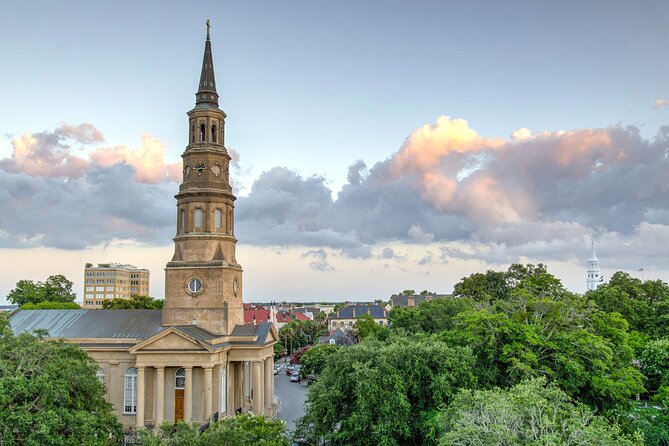
The first stop is St. Michael’s Church, with about 10 minutes set aside for its design, influence, quirks, and graveyard. That combination is a good opening because it lets you look at the building itself while also considering how the church fits into Charleston’s older civic life.
The word quirks is important here. Architecture becomes easier to remember when you are given a few distinctive details instead of a long string of dates and names. The guide’s job is to point out what makes St. Michael’s worth your attention, then connect those details to the wider city.
The graveyard adds another layer. You are not simply looking at a church from the street. You are seeing the building with the burial ground that surrounds it, a setting that can make the site feel more personal and less like a museum object.
Admission is free. The short stop means you should not expect an extended church visit or a detailed interior program. Think of it as a brisk introduction that prepares you for the architectural comparisons later in the walk.
White Point Gardens and South Battery Mansions
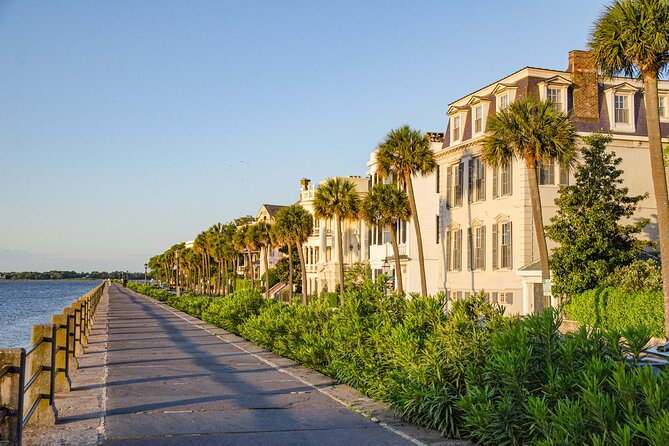
The route then reaches White Point Gardens, where about 15 minutes are devoted to the gardens and the architecture of South Battery. This is one of the places where the tour’s mix of public space and private homes works particularly well.
You can look at grand residences, but you also see how they face a shared green area and the water. The guide discusses the architecture along South Battery rather than treating each house as an isolated photograph. That helps you notice the relationship between a mansion, its street frontage, and the public setting around it.
White Point Gardens is also a useful pause in the route. After the church and graveyard, the change in setting gives the walk a different rhythm. You move from a religious landmark to open space and residential architecture.
Do not expect a long stop at every home. Fifteen minutes goes quickly, and the point is to understand the character of the area rather than inspect every detail. If you have a favorite doorway, balcony, or street view, this is a good time to ask about it.
A few more architecture tours around the USA worth a look
- Chicago Architecture River Cruise
★ 5.0 · 15,756 reviews - Chicago River 90-Minute Architecture Tour
★ 4.5 · 9,629 reviews - Chicago River: 1.5-Hour Guided Architecture Cruise
★ 4.8 · 8,046 reviews - Chicago Architecture Center River Cruise aboard First Lady
★ 5.0 · 5,536 reviews
The Nathaniel Russell House in Five Focused Minutes
The Nathaniel Russell House receives about five minutes, making it the briefest listed stop. The discussion centers on its architecture, preservation, and the features that make it unusual.
That short timing is both useful and limiting. You get a concise explanation of why the house matters, which can help you decide if you want to return for a longer visit later. But you should not book this walking tour expecting a full examination of the house or an interior tour.
The preservation angle is especially valuable. Historic architecture is not just about the original design. It is also about what has survived, what has been repaired, and how a building is presented today. A short introduction can give you a better eye for the work involved in keeping old houses intact.
If the Nathaniel Russell House is your main reason for visiting, plan separate time for it. On this tour, it serves as one carefully chosen example within a larger architectural route.
The French Huguenot Church of 1845
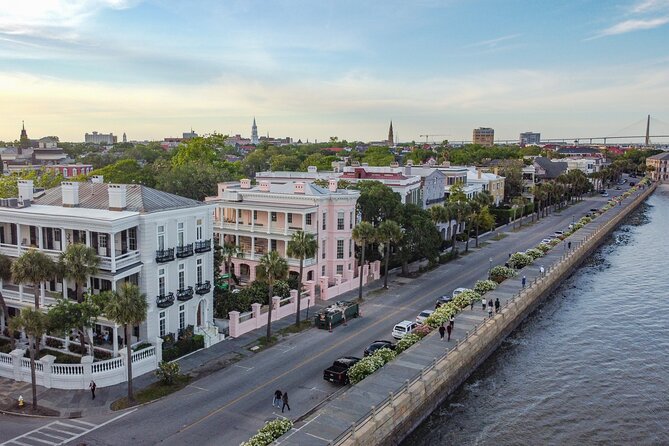
The French Huguenot Church is the final named architectural stop. The tour identifies it as the last active French Huguenot Church in the United States and dates the building to 1845.
That detail gives the stop a clear point of interest beyond its exterior appearance. You are looking at a church connected to a specific religious tradition, and the guide places it within Charleston’s broader mix of architectural and cultural influences.
The stop lasts about eight minutes. That is enough for a focused explanation and some questions, but again, it is not a lengthy inside visit. The church adds variety to the route, especially after seeing St. Michael’s earlier in the morning. Comparing the two religious buildings may help you notice differences in design and setting.
Because this is the last active church of its kind in the country, it is one of the tour’s more distinctive stops. If you enjoy places with a clear cultural identity, pay close attention here.
The Seawall and South Battery Views
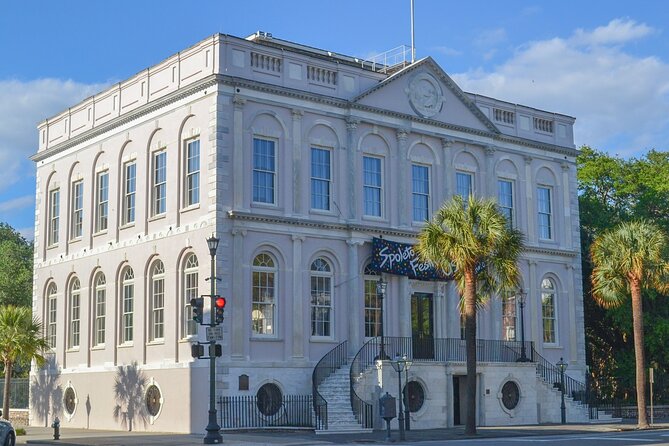
The route returns to Battery and White Point Gardens for about 20 minutes, this time emphasizing the seawall and the mansions along it. This is the longest stop listed, and it makes sense. The waterfront is not a single object to inspect. It is a stretch of views, buildings, gardens, and public space.
The seawall gives you a strong sense of how Charleston presents itself toward the water. The mansions along it provide the architectural focus, while the gardens and shoreline give you room to step back and see the area as a whole.
You will likely get some of the walk’s best photo opportunities here, though the tour remains an interpretive walk rather than a photography session. The guide’s explanation should help you look past the obvious beauty and notice the design choices that make South Battery so memorable.
This is also the part of the experience most likely to feel unhurried. Twenty minutes is enough time for the guide to explain the setting and for you to ask follow-up questions. Since the route visits this area twice in the schedule, the two entries should be understood as related parts of the Battery portion, not two entirely separate attractions.
Ending at the Four Corners of Law
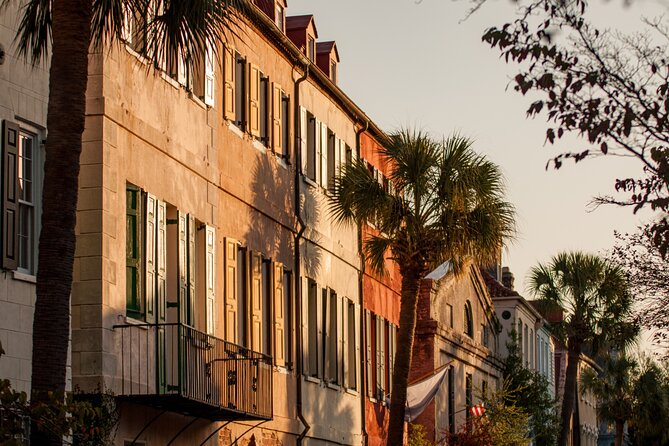
The walk ends at Broad Street and Meeting Street, known here as the Four Corners of Law. This gives the tour a useful civic finish after its churches, homes, gardens, and waterfront views.
Ending here also gives you a clear point from which to continue exploring downtown. The tour does not include a return transfer, so keep the final location in mind when planning lunch, another attraction, or your route back to your accommodation.
The finish provides a sense of structure. You begin at Vendue Range, move through Charleston’s religious and residential architecture, spend time along the Battery, and finish at a major downtown intersection. For a first look at the city, that progression is easy to follow.
How the Guide Shapes the Experience
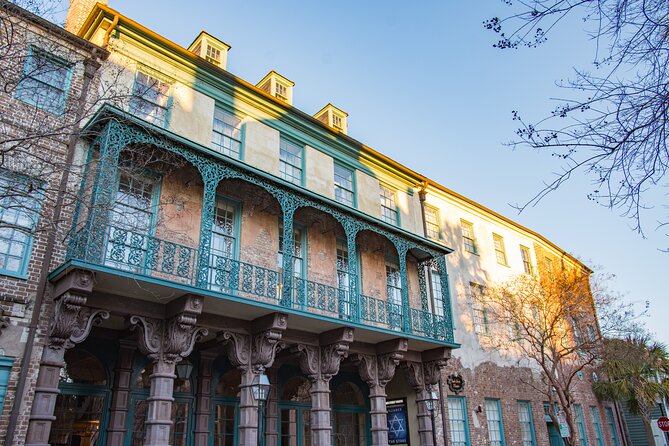
The most useful piece of feedback about the guiding style is simple: the guide was friendly, explained the subject well, and could return to the main topic after the group asked repeated questions.
That tells you something important about the tour. It is not designed only for people who want to listen quietly while facts roll past. If you notice an architectural oddity or want to understand why a building was preserved, you can ask. A guide who can answer and then bring the group back to the route is a real advantage on a short walking tour.
No guide name is provided, so you should not book expecting a particular named host. The quality of the experience will depend heavily on the guide working that day. The small group limit helps, since a group of 10 or fewer gives the guide a better chance to include questions without losing control of the timing.
Is $50 a Fair Price?
At $50, I would judge the value by the quality of the explanation, not by the number of buildings checked off. The walk includes several major Charleston sites, but much of what you see can also be viewed independently and from the outside.
The fee makes more sense if you want context, a logical route, and a chance to ask questions. It is less compelling if you prefer to wander at your own speed, spend a long time inside one house, or stop for photographs every few minutes.
The small-group format strengthens the value. A maximum of 10 is much more personal than a large street procession, and the available feedback supports the idea that questions are welcome. Since admission at the listed stops is free, the cost goes toward the guide’s time and interpretation rather than entry tickets.
I would see this as a good orientation walk for a first morning in Charleston. Afterward, you can decide which church, house, garden, or waterfront area deserves a longer visit.
Weather, Timing, and Who Should Book
The tour requires good weather. If poor weather causes cancellation, you are offered another date or a full refund. That policy is helpful, but you should still check the forecast before setting aside your morning.
Free cancellation is available up to 24 hours before the start time. Within 24 hours, cancellations and changes are not accepted for a refund. The experience also requires a minimum number of participants, and if that minimum is not met, you are offered another date or experience or a full refund.
I would recommend this walk to:
- First-time visitors who want a clear introduction to downtown Charleston architecture
- People who enjoy asking questions instead of only hearing a fixed script
- Visitors who prefer a small group
- Anyone interested in churches, historic homes, preservation, and waterfront streets
- You if you want to finish near the Four Corners of Law rather than return to the starting point
I would be more cautious if you want a full interior tour of the Nathaniel Russell House, a long visit inside the churches, or a route with no outdoor exposure. The schedule gives some stops only five to 10 minutes, so the experience favors breadth over depth.
Should You Book the Charleston Architectural Walking Tour?
Book it if you want a compact, question-friendly introduction to Charleston’s historic center, especially if the small group and one-way route suit your plans. The best parts are the contrast between St. Michael’s Church, South Battery, the French Huguenot Church, and the seawall.
Skip it if you already know Charleston well or want to explore at your own pace. The $50 fee is easiest to justify when you value interpretation and a well-shaped route. For a first morning in the city, I think it offers a practical way to get your bearings before choosing where to spend more time.
FAQ
Where does the Charleston Architectural Walking Tour begin?
The tour begins at 18 Vendue Range, Charleston, South Carolina 29401.
Where does the tour end?
It ends at Broad Street and Meeting Street, at the Four Corners of Law.
What time does the tour start?
The scheduled start time is 9:30 a.m.
How long does the tour last?
The tour lasts approximately two hours.
How much does the tour cost?
The price is $50 per person.
Is the tour offered in English?
Yes. The experience is offered in English.
How many people can join the tour?
The tour has a maximum of 10 participants.
Can I cancel for a refund?
Yes. You can cancel at least 24 hours before the start time for a full refund. Cancellations or changes made within 24 hours are not accepted for a refund.
Just added around the USA
- Wilmington History and Architecture Tour★ 4.8 · 18 reviews
- Washington, DC: Georgetown Architecture Walking Tour★ 5.0 · 8 reviews
- New Orleans : Garden District Architecture Walking tour★ 4.8 · 5 reviews
- Washington DC: Dupont Circle & Embassy Row Architecture Tour★ 5.0 · 6 reviews
- Tulsa: Art Deco Walking Tour of Tulsa★ 5.0 · 8 reviews
- Castle to Capitol: Museums of the National Mall Architecture Tour★ 4.5 · 9 reviews
- Private Colonial Williamsburg Architectural Tour★ 5.0 · 5 reviews
- Iconic Capitol Hill Architectural Walking Tour★ 5.0 · 21 reviews
Walking Tours, compared.
The Official Art Deco Walking Tour by The Miami Design Preservation League
Read our review →
Barcelona: Gothic Quarter Ghosts and Legends Walking Tour
Read our review →
Barcelona: Old Town and Gothic Quarter Walking Tour
Read our review →
Lecce: Baroque Architecture and Underground Walking Tour
Read our review →
Chicago in a Day: Food, History & Architecture Walking Tour
Read our review →
Ramblas, Old Town, Gothic and Gaudi Architecture Walking Tour
Read our review →
Chicago’s Secret Interiors Architectural Walking Tour
Read our review →Browse the lists this tour appears in