

Review · THE USA
2 Hours Savannah Architectural Tour
Savannah’s prettiest buildings are only half the story. This tour focuses on the people who designed them, the owners who commissioned them, and the preservation work that kept them standing. I like the nine-stop route and the way it moves beyond the usual square-by-square introduction. I also like the small group size, capped at 10, which makes it easier to ask questions.
The tour is especially useful if you already know Savannah’s basic history and want more detail. Guides such as Kelse, Mike, and Savannah have been praised for their command of local architecture and their willingness to explain. The main drawback is simple: this is an outdoor walking tour, and no house museums are entered, so hot, wet, or chilly weather can affect the experience.
Key points to know before booking

- Nine architectural stops in two hours: See buildings and squares tied to William Jay, John Norris, Hyman Witcover, William Gibbons Preston, and other important designers.
- A quieter side of the historic district: The route includes residential streets and sites that standard city walks often pass by.
- Strong guide-led storytelling: Kelse, Mike, and Savannah have all been praised for clear explanations, humor, and thoughtful answers.
- Optional listening equipment: Noble Jones Tours provides technology that lets you hear the guide from as far as 150 feet away.
- Outdoor sightseeing only: Museum admission is not included, and the interiors of the featured houses are not part of this experience.
- Useful follow-up map: You receive a map to continue exploring Savannah’s buildings and squares after the two-hour walk.
Why this architecture walk is different
A general Savannah tour gives you the broad outline: Oglethorpe’s plan, the squares, the old homes, and the city’s changing fortunes. This experience narrows the lens. You look at cornices, proportions, materials, façades, and building styles, then connect those details to the architects who created them.
That approach gives the city more personality. A grand house is no longer just a photogenic stop. It becomes evidence of a certain period, a client’s taste, available building materials, changing weather concerns, and the skill of the craftsmen who built it.
I also like the human scale of the subject. The tour does not focus only on famous residents. It gives attention to architects such as William Jay and John Norris, along with preservationist Jim Williams. You get a better sense of how Savannah was shaped over time, not just who lived in its most expensive houses.
The group limit of 10 matters here. Architecture tours can become frustrating when everyone is spread across a sidewalk, trying to hear a guide explain a small detail above street noise. The optional listening system helps. You can remain up to 150 feet away and still follow the talk, though staying reasonably close is still wise when the group is crossing streets or examining a façade.
A few more architecture tours around the USA worth a look
- Miami: 2-Hour Art Deco Bike Tour
★ 4.6 · 155 reviews - Barcelona 2-Hour Gothic Walking Tour
★ 4.7 · 317 reviews - Guided Gaudí Trencadís Mosaic Workshop in Barcelona 2 Hours
★ 5.0 · 176 reviews
From Juliette Gordon Low to William Jay

The walk begins at 124 Abercorn Street near the Juliette Gordon Low Birthplace Museum. The first discussion introduces William Jay, often described here as Savannah’s father of architecture.
You do not enter the birthplace museum on this tour. Instead, the building serves as a starting point for thinking about Savannah’s design traditions. The opening stop helps you look past the building’s fame and consider how its form, details, and place in the neighborhood fit into the city’s wider architectural story.
The 10-minute stop is brief, which is sensible at the beginning of a walking route. You get an introduction without using too much of the available time. If you want to visit the Juliette Gordon Low Birthplace Museum itself, you will need a separate admission.
Harper Fowlkes House and Charles Klusky
The next stop is Harper Fowlkes House, with a discussion of Charles Klusky. The house gives the guide another chance to show how individual designers shaped the historic district in different ways.
This is where the tour’s method becomes clear. You are not simply told when a building was constructed. You are encouraged to notice what makes it distinct and how its designer’s choices fit into Savannah’s collection of architectural styles.
The stop lasts about 10 minutes and remains outside. That keeps the pace moving, but it also means you will not get a room-by-room look at the house. If interiors are a priority for you, consider adding a separate house museum visit before or after the tour.
Orleans Square and the lost Bulloch House
Orleans Square offers a useful change of focus. The guide discusses Harper Fowlkes House again, along with the site of what was once the Bullochs House.
That second subject is important because cities are shaped by buildings that survive and buildings that disappear. Talking about a lost structure gives you a sharper sense of how Savannah has changed. Preservation is not only about admiring what remains. It also involves remembering what was removed, altered, or replaced.
The square itself helps you understand Savannah’s planned layout. You are not viewing architecture in isolation. The buildings, open squares, streets, and sightlines work together, and the guide connects those pieces during the walk.
Same city, a completely different century:
- Chicago Architecture River Cruise
★ 5.0 · 15,756 reviews - Chicago River 90-Minute Architecture Tour
★ 4.5 · 9,629 reviews - Chicago River: 1.5-Hour Guided Architecture Cruise
★ 4.8 · 8,046 reviews - Chicago Architecture Center River Cruise aboard First Lady
★ 5.0 · 5,536 reviews
SCADstory and Savannah’s former armory
At SCADstory, the focus shifts to Savannah’s original armory and architect William Gibbons Preston. This is one of the more unusual stops because it brings institutional architecture into the route.
A former armory tells a different story from a private mansion. Its purpose, scale, and public role affect its design. The 15-minute discussion gives the guide time to explain those differences and place the building within Savannah’s wider development.
SCADstory is also a good reminder that Savannah is not frozen in the past. Historic structures can be reused and given new roles. That idea of adaptation connects directly to the tour’s larger concern: how old buildings survive across generations.
Gryphon Tea Room and Hyman Witcover
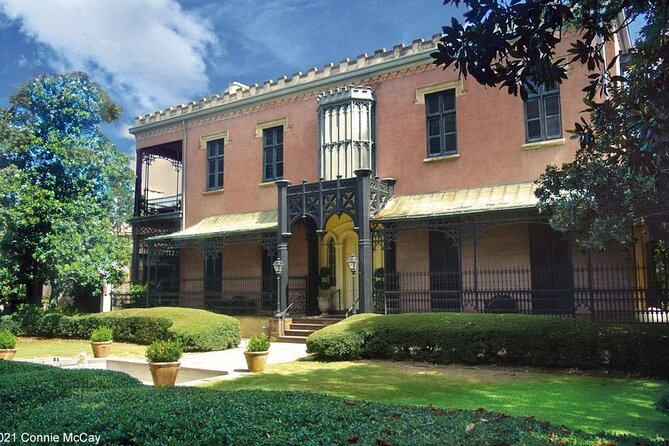
The stop at the Gryphon Tea Room looks at the Scottish Rights Temple, an appendage of the Freemasons, and architect Hyman Witcover. With 15 minutes allotted, this is one of the longer architectural discussions on the route.
The building’s original connection to the Freemasons gives you a glimpse of the organizations that invested in substantial public and semi-public structures. It also shows why Savannah’s architecture cannot be understood through private homes alone.
Again, the tour stays outdoors. The tea room may tempt you to return for a separate visit, but food, tea, and interior admission are not included in the $50 tour price.
Mercer Williams House and the preservation question
The Mercer Williams House Museum brings together architect John Norris and preservationist Jim Williams. This stop adds one of the clearest preservation stories to the walk.
The house is famous, but the tour’s emphasis is not simply on its association with a well-known name. You look at the building as a work of architecture and consider the effort required to maintain historic structures in an active city.
The 15-minute stop gives you enough time to connect design and preservation. That is one of the strongest parts of this tour for anyone who has wondered how Savannah’s old buildings made it into the present.
You do not enter Mercer Williams House Museum as part of the experience. If you want to see the rooms, furnishings, and interior details, plan a separate visit and admission.
Green-Meldrim House and the work of John Norris
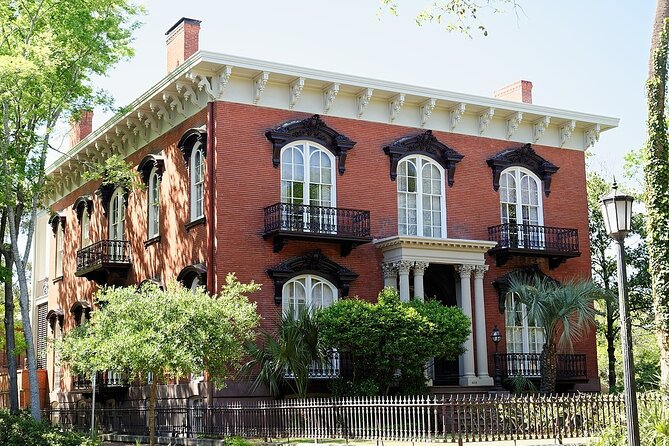
The Green-Meldrim House continues the discussion of John Norris. Seeing more than one building connected to the same architect is useful because it lets you compare his choices rather than treating each house as a one-off curiosity.
This stop lasts about 15 minutes. That extra time helps the guide explain architectural details at a slower pace. It also gives you room to ask questions, something several guides on this tour are known for handling well.
The pairing of Green-Meldrim House with the earlier stops reinforces a central lesson: Savannah’s visual character came from many architects working across different commissions, not from one uniform design plan.
Girl Scout First Headquarters and Andrew Low
The Girl Scout First Headquarters adds another layer to the route. The guide discusses Andrew Low and John Norris, linking the building to both its use and its design.
This is a good stop for visitors who want more than a list of architectural styles. Buildings carry stories about institutions, movements, and community life. The Girl Scout connection gives the route a subject that is easy to remember while still fitting the architectural theme.
The discussion lasts about 10 minutes. Because the route has nine stops, some subjects receive a brisk treatment. You should expect a well-packed overview rather than a full lecture on every building.
Lafayette Square, the cathedral, and Hamilton-Turner House
The tour ends at Lafayette Square, in front of the fountain at the center of the square. The final stop includes St. John the Baptist Cathedral and J. D. Hall’s Hamilton-Turner House.
This is a strong ending because it brings together several of the tour’s main ideas: the planned squares, landmark façades, prominent architects, and the way individual buildings shape the feel of a neighborhood.
The route ends at 330 Abercorn Street, with Lafayette Square as the practical finish point. That makes it easy to continue sightseeing on foot, stop for food, or visit another nearby attraction. The take-home map is useful here. You can use it to revisit places that caught your eye or plan your own architecture walk later.
What two hours really gets you
The official duration is about two hours, and the listed stops add up to roughly 110 minutes of guided discussion. The remaining time covers walking between sites, crossing streets, gathering the group, and handling questions.
That is a good pace for a focused introduction. You see a lot without spending half a day on one theme. Several guides have also allowed extra time when questions or the walking pace called for it, so the finish may not always be exact.
The route is not designed for a rushed checklist. The best use of your time is to listen for patterns: how architects worked with local conditions, how building materials limited choices, and how preservation changed the city’s future.
You should wear comfortable shoes and be ready to walk outdoors for the full experience. The company has supplied water and umbrellas on some outings, but those details should not be treated as guaranteed equipment for every departure. Weather remains a real consideration.
The guides make or break this experience
The strongest part of this tour is the guide’s ability to connect technical details with stories. Kelse, also referred to as Kelsey in guest comments, is praised for enthusiasm, humor, and a strong grasp of Savannah’s architects. Mike is described as patient and willing to answer questions on buildings and other Savannah subjects. Savannah, another guide, is noted for a sincere concern for the city’s past and careful explanations.
The exact guide depends on the departure, so you should not book expecting a particular person unless the operator confirms it. Still, the pattern is clear: this is a guide-dependent experience, and the company’s small groups give a good guide room to adjust the pace.
You do not need formal training in architecture. The tour suits an architecture fan, but it also works as a history walk for anyone curious about how a city’s buildings tell its story. A budding architect may appreciate the technical side most, while a first-time visitor can use the route as a strong orientation to the historic district.
Is $50 a fair price?
At $50 per person, the tour costs more than a casual self-guided walk and less than many private experiences. The value comes from the interpretation rather than admission tickets, since no house museums are included.
I think the price is fair if you want a focused subject, a small group, and access to a guide who can answer detailed questions. The map adds value because the experience continues after the walk. You can use it to see more buildings without paying for another tour.
The price is less appealing if you mainly want to enter historic homes or hear a broad introduction to Savannah. In that case, a general city tour plus separate museum admissions may suit you better. This experience earns its cost when you care about architects, preservation, design choices, and the stories behind the façades.
Booking, weather, and practical details
You receive confirmation at booking, and mobile tickets are accepted. The tour is offered in English, and service animals are allowed. It is near public transportation, and most people can participate, though you should be comfortable walking outdoors for about two hours.
Free cancellation is available until 24 hours before the start time. Cancel within 24 hours, and the payment is not refunded. The company may cancel for poor weather or if the minimum number of participants is not reached, in which case you are offered another date or experience, or a full refund.
The tour is often booked about 27 days ahead. That does not guarantee every date sells out, but it is a useful sign to reserve early if your Savannah schedule is fixed.
Who should book this Savannah walk?
Book it if you want to understand why Savannah looks the way it does, not just photograph the prettiest houses. It is a particularly good choice for architecture fans, history students, repeat visitors, locals who want a fresh angle, and anyone who likes asking questions.
I would also recommend it early in your stay. The map and the guide’s suggestions can shape the rest of your sightseeing, helping you notice details you might otherwise pass without a second thought.
Skip it if you need indoor attractions, mobility-free sightseeing, or a tour centered on entering house museums. The route is compact but full, and the outdoor format makes weather part of the decision.
FAQ
How long does the Savannah architectural tour last?
The tour lasts approximately two hours. The route includes nine stops, with time for walking between them and questions.
Where does the tour begin?
It begins at 124 Abercorn Street in Savannah, Georgia.
Where does the tour end?
The tour ends at Lafayette Square, in front of the fountain in the center of the square. The listed end address is 330 Abercorn Street.
Does the tour include entry to the house museums?
No. This is an outdoor walking tour, and admission to house museums is not included.
How many people can join the tour?
The maximum group size is 10 people.
Is listening equipment provided?
Noble Jones Tours provides listening technology that allows you to hear the guide from up to 150 feet away. Headphones are optional.
What happens if I need to cancel?
You can receive a full refund if you cancel at least 24 hours before the start time. Cancellations within 24 hours are not refunded. Weather or minimum-group cancellations may result in another date, another experience, or a full refund.
Should you book it?
Book this tour if Savannah’s buildings interest you as more than photo backdrops. The route gives you nine carefully chosen stops, a small group, optional listening equipment, and a map you can use after the guide leaves you at Lafayette Square.
For $50, you are paying for informed interpretation and a focused look at architects such as William Jay, John Norris, Hyman Witcover, and William Gibbons Preston. You are not paying for museum entry or an indoor escape from the weather. Go with comfortable shoes, an open ear, and a willingness to look closely at façades, squares, and old building details. If that sounds like your kind of sightseeing, this is a strong addition to a Savannah visit.
Just added around the USA
- Wilmington History and Architecture Tour★ 4.8 · 18 reviews
- Washington, DC: Georgetown Architecture Walking Tour★ 5.0 · 8 reviews
- New Orleans : Garden District Architecture Walking tour★ 4.8 · 5 reviews
- Washington DC: Dupont Circle & Embassy Row Architecture Tour★ 5.0 · 6 reviews
- Tulsa: Art Deco Walking Tour of Tulsa★ 5.0 · 8 reviews
- Castle to Capitol: Museums of the National Mall Architecture Tour★ 4.5 · 9 reviews
- Private Colonial Williamsburg Architectural Tour★ 5.0 · 5 reviews
- Iconic Capitol Hill Architectural Walking Tour★ 5.0 · 21 reviews
2-Hour Experiences, compared.
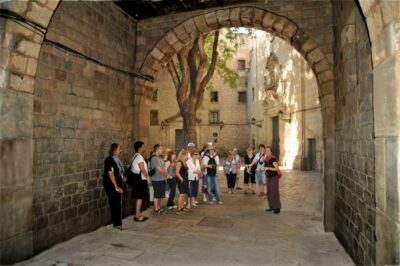
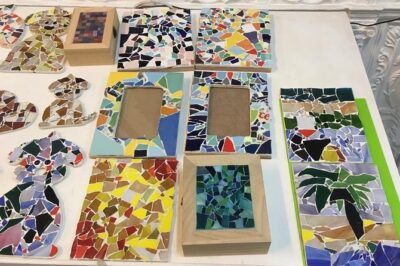
Guided Gaudí Trencadís Mosaic Workshop in Barcelona 2 Hours
Read our review →

Riga: 2-Hour History of Art Nouveau Walking Tour
Read our review →
Gaudi’s Barcelona 2-Hour Segway Tour with a Live Guide
Read our review →
Private Barcelona Walk: Roman Roots & Gothic Gems in 2 Hours
Read our review →Browse the lists this tour appears in