
Review · BARCELONA
Private Barcelona Walk: Roman Roots & Gothic Gems in 2 Hours
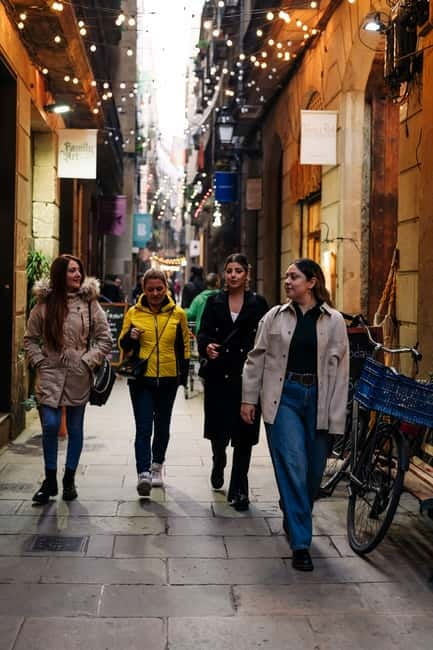
Barcelona’s oldest quarter is best understood on foot, one narrow street and weathered stone wall at a time. This private walk connects Roman ruins, medieval squares, Jewish history, Catalan politics, and grand Gothic churches in just two hours, with your guide shaping the conversation around your interests.
I especially like the private format, which gives you room to ask questions and stop for photos without holding up a large group. I also like the carefully chosen route from the Roman aqueduct remains to Santa Maria del Mar, which shows how Barcelona grew over roughly 2,000 years. The main consideration is time: two hours moves quickly, and cathedral or basilica entry is not included.
Key points to know before you book
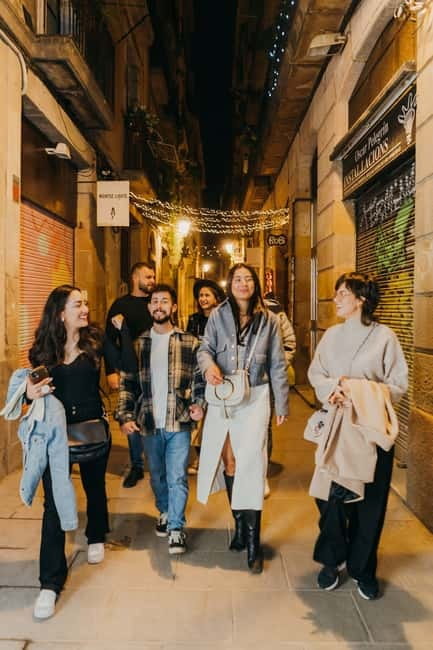
- Roman Barcelona begins at the meeting point: You start near the Barcino sculpture, Roman aqueduct remains, and Balmesiana Biblioteca Balmes.
- The route links major sights with quieter corners: Expect the Cathedral, Plaça del Rei, and Santa Maria del Mar, along with courtyards and lanes many visitors pass without noticing.
- Your guide can shape the walk: The private group format suits people who want to ask questions about architecture, religion, Catalan identity, or local stories.
- The Jewish Quarter gets real attention: MUHBA El Call adds historical context beyond the usual Gothic Quarter photo stops.
- The finish is especially well chosen: Santa Maria del Mar gives the walk a strong architectural finale in the Ribera district.
- Bring comfortable shoes and a camera: The route is entirely on foot, with frequent pauses but no included interior visits.
Starting among the Roman remains at Plaça del Vuit de Març
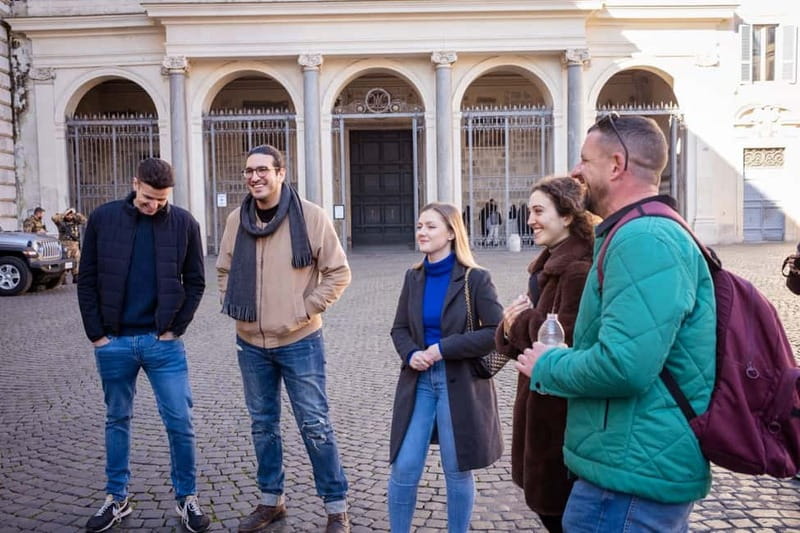
The walk begins at Plaça del Vuit de Març, inside the small park near Balmesiana Biblioteca Balmes. Look for the Roman aqueduct remains, the white van, and the yellow Carpe Diem Tours flag. Arrive 10 minutes early, since the Gothic Quarter has many similar-looking lanes and the meeting point is easier to find before the tour begins.
The nearby Barcino sculpture sets the tone. Barcino was the Roman name for Barcelona, and this opening gives you a useful frame for everything that follows. You are not simply touring old churches and attractive squares. You are following a city that changed shape from Roman settlement to medieval capital and then to modern Catalan center.
That opening also makes the walk easy to place geographically. You begin near the northern side of the old center and gradually work south and east through the Gothic Quarter before finishing at Santa Maria del Mar. Since the experience is private, your guide can spend more time on Roman engineering if that interests you, or move quickly toward medieval architecture and local stories.
The tour is offered in English with a live guide. Names associated with recent bookings include Mariah, Lindsay, and Vanesa. Mariah was praised for being warm, funny, and deeply interested in Barcelona, while Lindsay was noted for keeping people engaged and welcoming questions. Vanesa was described as courteous and attentive to individual needs. Your guide will depend on the date, but the strongest pattern is clear: personality matters here as much as factual information.
More Gothic quarter walks in Barcelona:
- Barcelona all included: Sagrada, Park Güell, Montjuic & Gothic
★ 5.0 · 2,169 reviews - Barcelona Gothic Quarter Tapas & Taverns Food & Wine Tour
★ 5.0 · 1,470 reviews - Barcelona: Old Town and Gothic Quarter Walking Tour
★ 4.8 · 1,393 reviews
Els Quatre Gats and the city’s creative side
The first listed stop is Els Quatre Gats, a famous café associated with Barcelona’s artistic life. The guided visit lasts about 10 minutes, so you should expect an explanation of its place in the city rather than a long sit-down meal or extended interior visit.
This is a smart early stop because it reminds you that Barcelona’s identity is not only Roman and medieval. The city also became a meeting place for artists and thinkers, and Els Quatre Gats helps connect the old center with the creative energy that later made Barcelona famous.
I would listen for the guide’s local context here. A good explanation can make the building feel like part of a larger story about changing Barcelona, rather than just another pretty façade. If you want more time for photographs or café atmosphere, mention that early. Two hours leaves little room for lingering at every stop.
The Kiss of Freedom and modern Catalan memory
The Kiss of Freedom follows, with around 10 minutes of guided attention. This stop brings a more recent political and social layer to the route. After Roman foundations and medieval streets, you get a reminder that Barcelona’s public spaces still carry memories of freedom, conflict, and Catalan identity.
The value of a stop like this is the connection between architecture and living culture. You are not treating the Gothic Quarter as a museum frozen in the past. Your guide can explain why certain images and public artworks matter to local people, and you can ask questions about Catalonia rather than receiving only dates and names.
Because the tour is private, this is one of the places where the format can make a real difference. If you are curious about Catalan identity, ask directly. If your interest is mainly Roman archaeology or church architecture, your guide can keep the discussion focused.
Barcelona Cathedral, La Casa de l’Ardiaca, and Carrer del Bisbe
Barcelona Cathedral receives about 10 minutes of guided attention. The exterior, surrounding square, and Gothic details are central to the walk, but entry inside is not included. That distinction matters. You can admire the building from outside, but you should not expect a ticketed cathedral visit as part of the two-hour experience.
Next comes La Casa de l’Ardiaca, a historic building beside the Cathedral. Its setting helps you see how Barcelona’s religious, civic, and residential buildings press closely together in the old center. You might find the contrasts more interesting than any single façade: narrow lanes, formal stonework, quiet courtyards, and the busy movement of modern city life all meet within a short distance.
Carrer del Bisbe is one of the most photographed streets in the Gothic Quarter. Its narrow passage and dramatic bridge make it an obvious camera stop. The guide’s role is to give the view context, since this is exactly the sort of place that can become a quick photo and nothing more if you visit alone.
Expect roughly 10 minutes at each of these listed points. That pace is enough for a clear explanation and a few photographs, but not for a detailed architectural study. If you want to linger at the Cathedral, tell your guide. The private structure gives you more flexibility than a fixed large-group route, though there is still a firm two-hour limit.
More architecture walks in Barcelona:
- Ramblas, Old Town, Gothic and Gaudi Architecture Walking Tour
★ 5.0 · 723 reviews - Kids and Family Gothic Quarter Walking Tour in Barcelona
★ 5.0 · 465 reviews - Barcelona Gothic Quarter Walking Tour
★ 4.5 · 456 reviews - Barcelona: Gothic Quarter Walking Tour
★ 4.9 · 383 reviews
Plaça Sant Felip Neri and the quieter Gothic Quarter
Plaça Sant Felip Neri is one of the most atmospheric stops. It is tucked away from the main flow of the Gothic Quarter, and the square’s quiet feel makes it a useful contrast with the better-known streets nearby.
This is where the route’s smaller-scale details come into focus. Look at the walls, the surrounding buildings, and the way the square feels enclosed. Your guide can explain the stories connected with the place, including its religious and political associations, while you take time to absorb the setting.
I like that the itinerary includes this square rather than rushing from landmark to landmark. Barcelona’s character often appears in spaces that are modest in size but heavy with memory. Still, keep expectations realistic. The tour does not promise long periods of silence or solitude. It is a working city, and conditions can change from one hour to the next.
MUHBA El Call and the story of Barcelona’s Jewish Quarter
MUHBA El Call brings the Jewish Quarter into the route. The Call is one of the most meaningful areas in the old city, and it adds a vital perspective to a tour otherwise centered on Roman and Gothic Barcelona.
The streets here are narrow and easy to pass through without understanding what you are seeing. A guide can point out how the quarter fits into the old city and explain the community that lived here. This is also a good place to ask questions, since the private format gives you time to discuss the city’s religious and social history without relying on a one-size-fits-all script.
The supplied timing does not assign a specific number of minutes to MUHBA El Call, unlike many of the other stops. That may allow your guide some breathing room, but the tour still needs to reach Santa Maria del Mar on schedule. If the Jewish Quarter is a top priority, say so when you meet your guide.
Plaça de Sant Jaume and Plaça del Rei
Plaça de Sant Jaume is Barcelona’s civic center and an important stop for understanding the city’s government and Catalan public life. It provides a useful change of mood after the narrow lanes of the Call. Here, the scale opens up, and the guide can connect the old quarter to modern civic identity.
The stop is planned for about 10 minutes. You will have time to take in the square and hear the main story, but not to visit every building. I would use this point to ask how the city’s medieval institutions connect with present-day Catalonia, especially if that subject interests you.
Plaça del Rei follows, also with about 10 minutes of guided attention. This is one of the strongest historical settings on the route, with an enclosed medieval character and a clear sense of royal Barcelona. The square works well after Plaça de Sant Jaume because the two stops show different kinds of power: civic authority in one place and royal or religious authority in the other.
Together, these squares make the route more than a collection of Gothic photo stops. They show how Barcelona was organized, who held influence, and how public spaces carried that power.
Plaça de l’Àngel and the walk toward Santa Maria del Mar

Plaça de l’Àngel marks the route’s move toward the Ribera area. The square is less likely to be the main reason you book the tour, but it helps connect the Gothic Quarter with the streets leading to Santa Maria del Mar.
This is a good moment to notice the rhythm of the walk. The route does not jump between distant attractions by bus or taxi. It builds its story through short changes in scenery, with Roman traces giving way to medieval streets, public squares, churches, and neighborhood lanes.
The route ends at Plaça de Santa Maria, 1, outside the Basilica de Santa Maria del Mar. This final stop is a strong choice. The basilica is one of Barcelona’s best-known Gothic buildings, and its broad exterior gives the walk a sense of arrival after the tighter lanes of the old quarter.
Entry into the basilica is not included, so plan a separate visit if you want to see the interior. The walk itself finishes at the church, which can be convenient if you want to continue exploring the surrounding Ribera district afterward. No transport is provided or needed during the tour.
What the private format is worth
The price is $353 per group of up to four people. For four people, that works out to $88.25 per person. For two people, it becomes $176.50 each, and for one person it is a costly private lesson in Barcelona’s old center.
That makes the tour best value for a full group of four, especially if you appreciate personal attention. You are paying for a guide’s time, a flexible pace, and the ability to ask questions rather than for admissions or transport. Since cathedral and basilica entry are excluded, add those costs separately if you want to go inside.
The private arrangement is particularly useful for families, couples with different interests, or small groups that dislike fixed commentary. You can ask for more detail about Roman remains, Jewish Barcelona, Gothic architecture, saints, monarchs, revolutions, or Catalan identity. The guide can also pause for photographs or adjust the pace within the available time.
The tradeoff is simple: you cover a lot of ground, but you do not get a long visit at every location. If you want slow interior access, extensive archaeology, or a full museum visit, choose a longer experience. If you want a well-shaped introduction to the old city, two hours is efficient.
Who will get the most from this walk
I would choose this tour if you are visiting Barcelona for the first time and want a clear framework for the old center. It is also useful early in a stay, since you can return later to the Cathedral, Plaça del Rei, MUHBA El Call, or Santa Maria del Mar with more context.
History fans will appreciate the range. You get Roman foundations, medieval religion, Jewish history, royal power, civic identity, and modern Catalan memory in one route. Architecture fans will enjoy the progression from remains and narrow lanes to major Gothic buildings.
The walk also suits people who like conversation. The strongest praise attached to the guides focuses on warmth, humor, clear explanations, enthusiasm, and an openness to questions. That suggests a tour that works best when you participate rather than simply follow silently.
The main drawback is the price for smaller parties. A solo visitor may find $353 hard to justify, while a group of four receives much stronger value. You should also be comfortable walking through the Old Town for two hours, although the experience is listed as wheelchair accessible.
Free cancellation is available up to 24 hours before the start, and you can reserve now and pay later. Starting times vary, so check availability before building the rest of your day around it.
Should you book it?
Book this private Barcelona walk if you want the Old Town explained as one connected story, not just a checklist of famous buildings. The route is especially appealing for a group of four that values a personal guide and wants both major sights and quieter corners.
Skip it if you want included church admissions, a long museum visit, or a low-cost group tour. For the right party, though, the route offers a focused introduction to Roman Barcelona, the Gothic Quarter, the Jewish Call, Catalan identity, and Santa Maria del Mar, all in a manageable two-hour walk.
FAQ
How long does the private Barcelona walk last?
The tour lasts two hours.
How much does the experience cost?
The price is $353 per group of up to four people.
What language is the tour offered in?
The live guided tour is offered in English.
Is this a private group experience?
Yes. The experience is arranged as a private group rather than a shared public tour.
Where does the tour begin?
It begins at Plaça del Vuit de Març, inside the park near Balmesiana Biblioteca Balmes and the Roman aqueduct remains.
How do I find the meeting point?
Look for the white van and the yellow Carpe Diem Tours flag. You should arrive 10 minutes early.
Where does the tour finish?
The walk finishes at the Basilica de Santa Maria del Mar, at Plaça de Santa Maria, 1.
Are cathedral and basilica entry tickets included?
No. Entry into the cathedral and basilica is not included.
Is the walking tour wheelchair accessible?
Yes. The activity is listed as wheelchair accessible.
Can I cancel for a full refund?
Yes. You can cancel up to 24 hours in advance for a full refund.
More 2-Hour Experiences in Barcelona
- Barcelona 2-Hour Gothic Walking Tour
★ 4.7 · 317 reviews - Guided Gaudí Trencadís Mosaic Workshop in Barcelona 2 Hours
★ 5.0 · 176 reviews - Gaudi’s Barcelona 2-Hour Segway Tour with a Live Guide
★ 4.9 · 67 reviews - Discover the Gothic Quarter | Walking Tour | 2h
★ 5.0 · 40 reviews
Just added around Barcelona
- Love in the Gothic Quarter Barcelona: Self-Guided Romantic Walk★ 4.5 · 9 reviews
- Walking tour of the Gothic Quarter of Barcelona + Cathedral★ 5.0 · 8 reviews
- Wine tasting with a view of the Sagrada Familia★ 4.5 · 13 reviews
- Visit to the Modernist houses of the Americans★ 5.0 · 2 reviews
- Barcelona Jewish & Gothic Tour★ 5.0 · 18 reviews
- Roman & Gotic & Gaudi in Barcelona: private walking tour★ 4.5 · 2 reviews
- Self-Guided Audio Tour-The Surrealist Barcelona of Dalí and Gaudí★ 3.5 · 8 reviews
- Barcelona Gaudi Tour: Sagrada Familia, Casa Batllo & Casa Mila★ 5.0 · 4 reviews
Gothic Quarter Tours, compared.
Barcelona all included: Sagrada, Park Güell, Montjuic & Gothic
Read our review →
Barcelona Gothic Quarter Tapas & Taverns Food & Wine Tour
Read our review →
Barcelona: Gothic Quarter Ghosts and Legends Walking Tour
Read our review →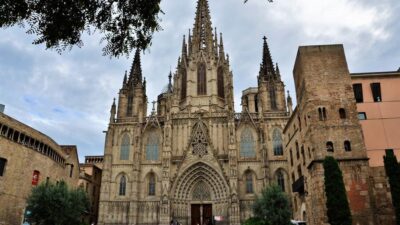
Barcelona: Old Town and Gothic Quarter Walking Tour
Read our review →
Barcelona Old Town & Gothic Quarter Small Group Tour
Read our review →
Ramblas, Old Town, Gothic and Gaudi Architecture Walking Tour
Read our review →
Barcelona: El Born and Gothic Quarter Wine & Tapas Bar Tour
Read our review →
Kids and Family Gothic Quarter Walking Tour in Barcelona
Read our review →Browse the lists this tour appears in