
Review · ARCHITECTURE TOURS
Wroclaw: University Baroque Tour
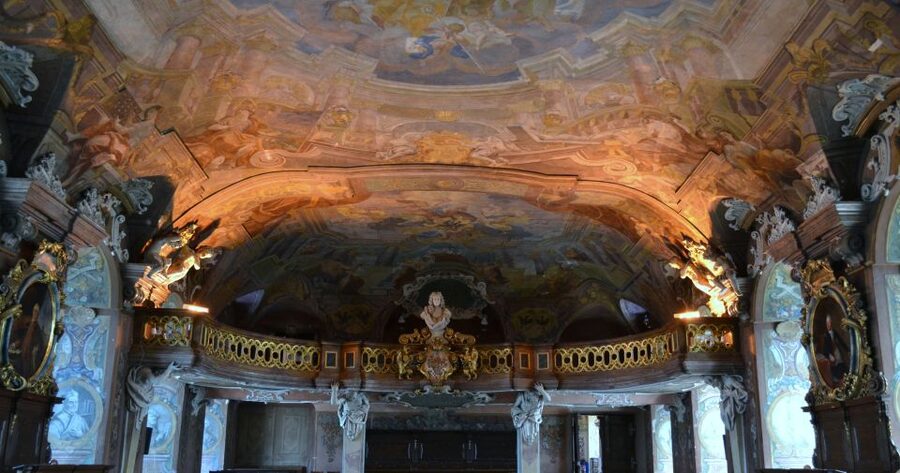
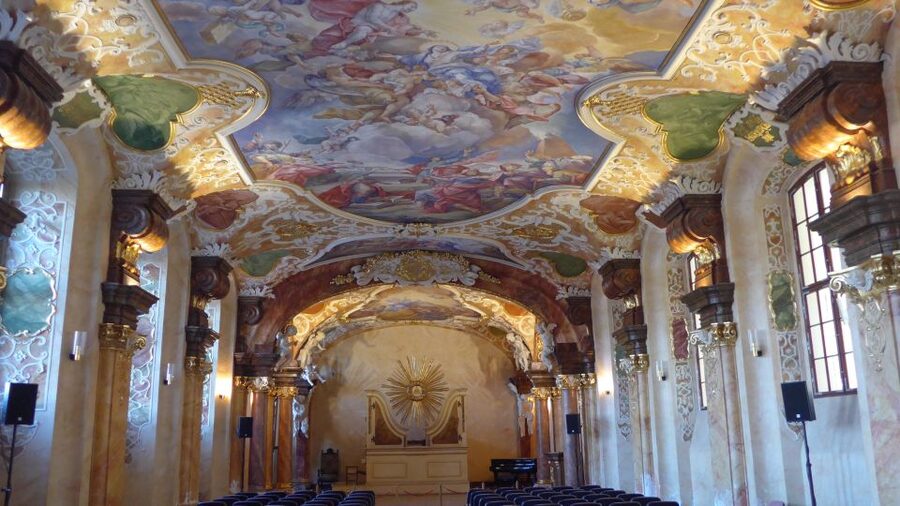
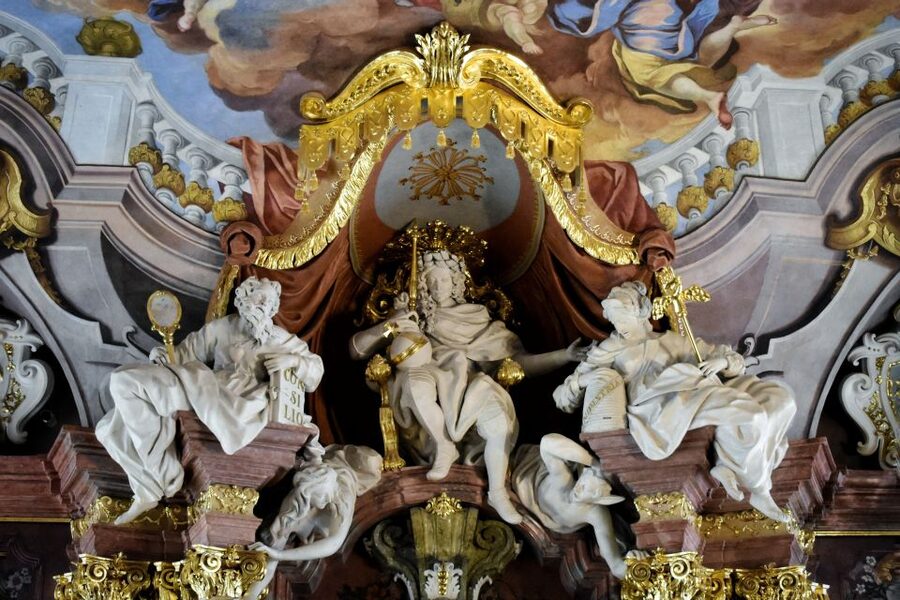
The grandest moment here is Aula Leopoldina, the University of Wroclaw’s Baroque ceremonial hall. Its painted decoration and formal design make the university feel less like a school building and more like a royal stage built for the Counter-Reformation.
I like the way this tour joins art with history, explaining why Emperor Leopold I founded the university in 1702. I also like the Mathematical Tower, where you get a high view of the Old Town and Odra River without giving up half a day.
The main drawback is the short running time. One hour is enough for the main rooms and tower, but not for a slow, detailed look at every part of the university. Some rooms may also be closed for university events, and the tour is not suitable for wheelchair users.
Key points to know before booking
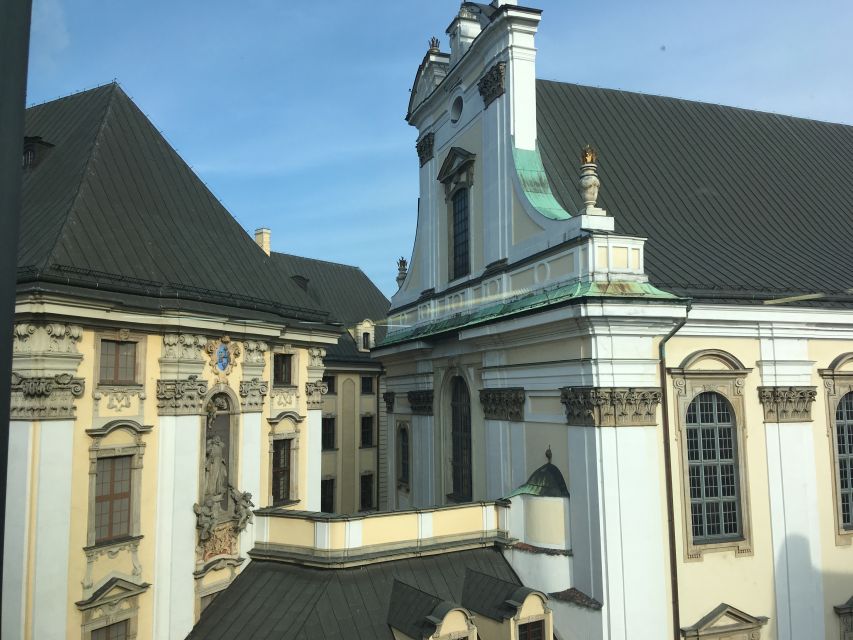
- Aula Leopoldina is the star: See the university’s grand Baroque ceremonial hall, named for its founder, Emperor Leopold I.
- The Mathematical Tower adds the view: Look across Wroclaw’s historic center and the Odra River from above.
- The history has a clear purpose: The university was founded during the Catholic Counter-Reformation, when art and architecture helped win back Protestant communities.
- The tour is tightly timed: At one hour, it works well before lunch, after a walking tour, or between other Old Town plans.
- English guidance is included: Guides such as Sean explain the setting at a comfortable pace and make the hour easy to follow.
- Check access before you go: University events can limit entry to some rooms, and the building is not suitable for wheelchair users.
Why Wroclaw University is worth an hour
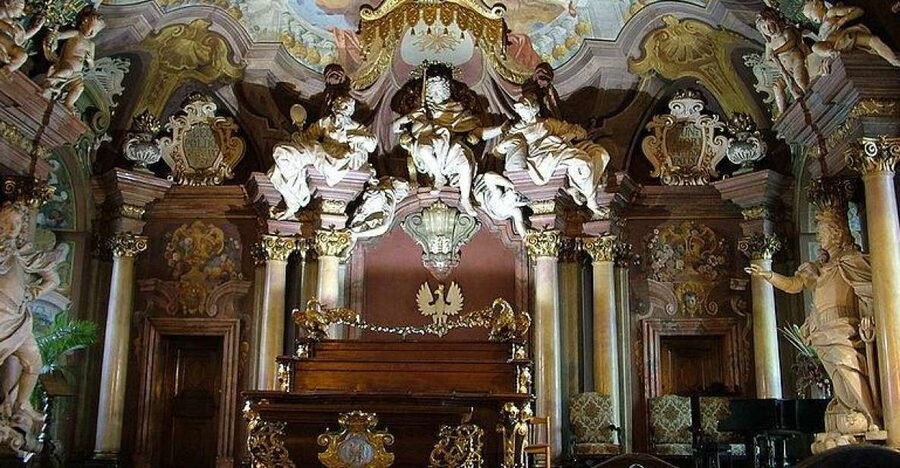
Wroclaw University is not simply a place to admire old walls. Its main building tells you how politics, religion, education, and art worked together in the early 18th century.
In 1702, Emperor Leopold I, King of Bohemia, founded the university as a school of philosophy and Catholic theology. This came during the Counter-Reformation, the Catholic Church’s effort to regain people who had adopted Protestant beliefs during the previous century.
That background gives the building a clear purpose. The decoration was not just there to look expensive. It helped present Catholic learning as powerful, orderly, and worthy of respect.
I find that context useful because it gives the Baroque details some meaning. Instead of seeing only elaborate walls and ceilings, you can read the building as a statement from the Austrian period, when religion and imperial authority were closely linked.
The university also sits beside the Odra River, near the historic center. That makes the visit easy to pair with an Old Town walk. You do not need a bus transfer or a separate trip across the city. The activity begins and ends at the same central meeting point.
More Baroque architecture tours in the world:
- Lecce: Baroque Architecture and Underground Walking Tour
★ 4.6 · 1,248 reviews - Noto: Sicilian Baroque Architecture Guided Walking Tour
★ 4.3 · 6 reviews - Martina Franca: Baroque and Rococo Architecture Walking Tour
★ 5.0 · 4 reviews
Meeting at the blue doors on plac Uniwersytecki
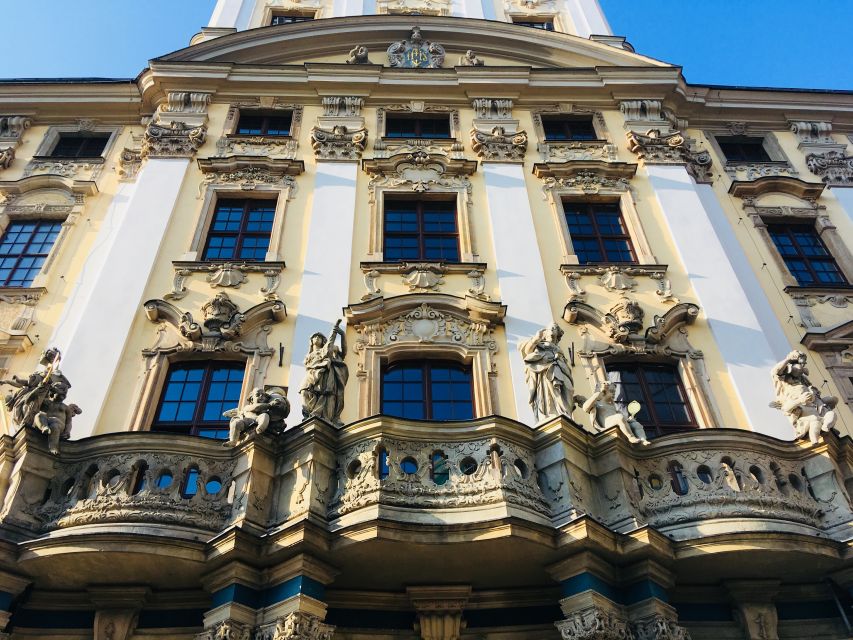
The meeting point is in front of the richly decorated blue doors at the entrance to the University Museum, at plac Uniwersytecki 1, 50-001 Wrocław. Look for the blue entrance rather than relying only on the square name, since the ornamented doors are the most useful visual marker.
This is a practical starting point for a short tour. You do not spend time traveling to a distant district, and the return to the same place makes the activity easy to fit into a day of sightseeing.
I suggest arriving with a little time to spare. The tour has only one hour, so a late arrival can cut into the parts you came to see. The included entrance fee also allows you to skip the ticket line, which matters when you have a compact schedule.
Your guide leads the tour in English. Sean is one guide associated with the experience, and the tour is designed to explain both the building and its historical setting rather than simply point out decorative features.
Entering Aula Leopoldina, Wroclaw’s Baroque showpiece
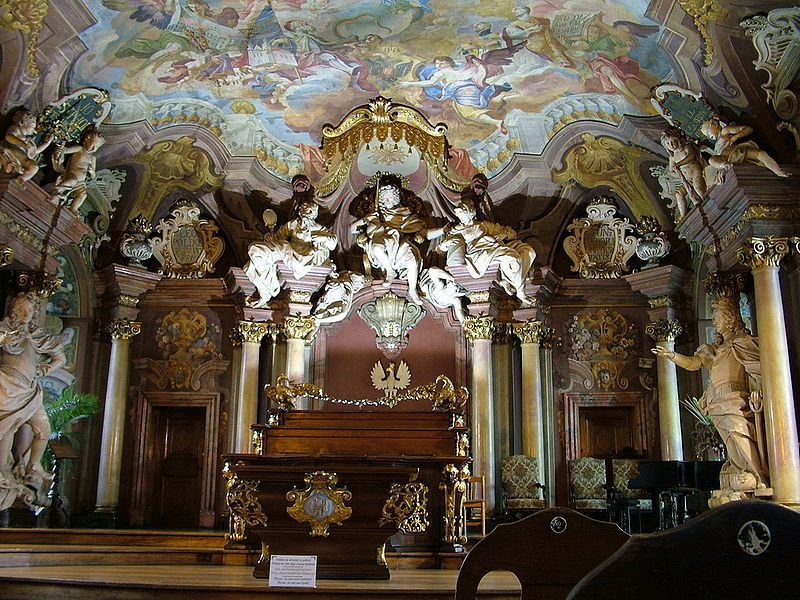
Aula Leopoldina is the heart of the experience. This is the ceremonial hall named after Emperor Leopold I, the university’s founder, and it was built to impress.
The hall reflects the Baroque taste of the period: formal, dramatic, and designed to direct attention toward learning and authority. Your visit gives you a chance to look at the room as a complete work of art, rather than as a quick photo stop on a city walk.
The value of a guide is especially clear here. A room filled with ornament can be hard to understand on your own. An English-speaking guide can explain why the university was founded, how the Catholic Counter-Reformation shaped the project, and why the hall mattered as a public ceremonial space.
The history also helps you notice the building’s connection to the Austrian period. The university was established under Leopold I, King of Bohemia, so the architecture formed part of a wider political and religious setting.
You should expect the guide to move the group through the hall at a steady pace. The tour lasts one hour in total, so this is not an appointment for sitting quietly in one room for a long time. It is better for you if you want an informed introduction to the hall, with time for the other major stop as well.
The possible limitation is access. University events can restrict entry to certain rooms. That means the exact route can change, and you should not assume every interior space will be open on every date.
The Mathematical Tower and the view over the Odra
The second major stop is the Mathematical Tower. It gives the tour a change of rhythm. After looking closely at Baroque interiors, you get an outward view over Wroclaw.
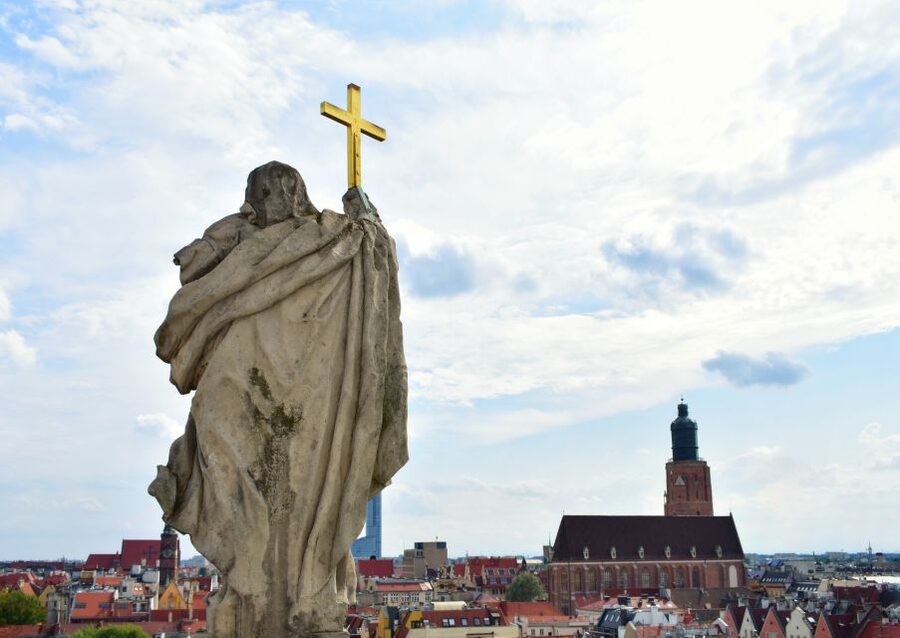
From the tower, you can see the historic Old Town and the Odra River. This view helps you understand the university’s setting in a way that ground-level sightseeing cannot. The river, rooftops, and old center become part of the story rather than a collection of separate sights.
I especially like this part for first-time visitors. You get your bearings quickly, and the view can help you plan the rest of your day. Afterward, you will have a better sense of how the university fits into the central city.
The tower is also a useful counterpoint to Aula Leopoldina. The hall draws your attention inward, toward ceremony and decoration. The tower sends your eyes outward, toward Wroclaw’s streets and river.
The experience does not promise a long tower visit, so keep your expectations sensible. You are paying for a focused sightseeing tour, not an extended observation session. The tower’s value comes from combining a clear city view with the university’s history in one compact outing.
Same city, a completely different century:
- Chicago Architecture River Cruise
★ 5.0 · 15,756 reviews - Chicago River 90-Minute Architecture Tour
★ 4.5 · 9,629 reviews - Chicago River: 1.5-Hour Guided Architecture Cruise
★ 4.8 · 8,046 reviews - Chicago Architecture Center River Cruise aboard First Lady
★ 5.0 · 5,536 reviews
How the one-hour pace works
A one-hour tour can be a strength if you plan your day carefully. You see the two main highlights without committing to a full morning, and the activity ends where it began.
The pace has received specific praise for being comfortable. Sean, in particular, has been described as informative while keeping the tour moving at a pleasant rate. That balance matters in a short visit. A guide who speaks too quickly can make historical details hard to follow, while a guide who spends too long on one room may leave no time for the tower.
You should think of the tour as an introduction rather than a specialist art lecture. It covers the university’s founding, the Counter-Reformation setting, Aula Leopoldina, and the Mathematical Tower. That is enough to give the building shape and meaning, but not enough to examine every decoration or architectural detail at length.
The format works well in several situations:
- You have only a few hours in Wroclaw.
- You want a cultural stop between Old Town sights.
- You prefer a guide to explain the building instead of exploring alone.
- You are interested in Baroque art, religious history, or the Austrian period.
- You want a city view without booking a longer excursion.
It may suit you less if you want an unhurried museum visit or several hours of architectural study. The compact schedule is part of the appeal, but it also limits the depth of the visit.
What the $68 price includes
The listed price is $68 per person. That is not a bargain-priced museum admission, so the value depends on how much you want the guided explanation.
Your fee includes an English-speaking guide, the entrance fee to Aula Leopoldina, and the entrance fee to the Mathematical Tower. It also includes skip-the-line access, which adds practical value if the entrance area is busy or you have another appointment soon afterward.
If you only want to look at the building from outside, the price will feel high. The real purchase is the combination of access, interpretation, and the tower view. You are paying for a short, organized visit that connects the university to the religious and political story of its period.
I think the price makes the most sense for someone who values context. A self-guided visitor may see a splendid hall but miss why the university appeared in Wroclaw in 1702 and why the Baroque program mattered. The guide turns the visit from decoration-spotting into a readable historical stop.
The short duration also affects the calculation. At $68 for one hour, this is not the best choice if you measure value only by time. It is more worthwhile if you have a limited schedule and want a focused experience with no need to arrange entrance details yourself.
What the guide adds to the experience
The strongest praise for this activity focuses on the guide. The English is fluent, the manner is friendly, and the explanations are clear. Those qualities are important here because the subject combines art, religion, imperial history, and university life.
You should expect a guide-led explanation rather than a silent walk through the rooms. The history is presented in a way that helps you connect the founding of the university to the Counter-Reformation. That gives you a reason for the building’s grandeur.
The guide’s role also helps with the pace. An hour can feel rushed when you try to read every sign yourself. With a live guide, you can concentrate on the room, listen for the main ideas, and move on before the visit loses momentum.
At the same time, your experience can depend on the individual guide and the condition of the building that day. Sean has been singled out for being informative and keeping a lovely pace, but the activity information does not guarantee which guide will lead your departure.
If you want a highly specialized lecture on Baroque painting, ask yourself if this format is enough. If you want a clear, friendly explanation of the university’s main highlights in English, the format is a better match.
Access, closures, and practical limits
The University of Wroclaw remains an active institution, and that matters for your visit. Events hosted by the university can limit access to certain rooms. The route may therefore vary, even though Aula Leopoldina and the Mathematical Tower are the planned highlights.
I would treat those two areas as the main goal while accepting that the exact access situation can change. This is a sensible approach for any historic building still used for public or academic functions.
The tour is not suitable for wheelchair users. The activity information does not provide a detailed breakdown of stairs or other access points, so anyone with mobility concerns should confirm suitability before booking.
The tour is offered in English, with a live guide. There is no mention of other languages, so English comprehension is important if you want to follow the historical explanation.
You can cancel up to 24 hours before the activity for a full refund. You can also reserve now and pay later, which helps if your Wroclaw schedule is still changing. These policies are useful, but the building access warning is the point I would pay closest attention to.
Who should book this university tour
I would recommend this experience to you if you enjoy architecture with a story attached. It is a good match for anyone interested in Baroque design, Catholic history, the Austrian period, or the way public buildings express power.
It also works well for first-time visitors who want a quick introduction to central Wroclaw. The tower view gives you a useful orientation, while the university interiors add something different from the usual market square and street walk.
Families with older children may find the one-hour length manageable, especially if the children are interested in decorated rooms or high city views. The tour is short enough to avoid a long attention test, though the religious and political background may be more appealing to adults and older students.
I would hesitate if you want an open-ended visit, need step-free access, or would be disappointed by a changed room route. The possible closures are not a reason to avoid the tour, but they are a reason to keep your expectations flexible.
My booking advice
Book this tour if you want a short, guided look at one of Wroclaw’s most important Baroque interiors, followed by a city view from the Mathematical Tower. The English explanations, included entrances, and central meeting point make it easy to add to a busy sightseeing day.
Skip it if you are satisfied with exterior architecture, need wheelchair access, or want a long museum visit for the $68 price. For everyone else, the hour offers a focused look at Aula Leopoldina and the university’s Counter-Reformation setting, with enough historical explanation to make the building memorable.
FAQ
How long does the Wroclaw University Baroque Tour last?
The tour lasts one hour. Check the available starting times when you book.
What language is the tour in?
The tour is conducted in English by a live English-speaking guide.
Where does the tour meet?
Meet in front of the richly ornamented blue doors at the entrance to the University Museum, plac Uniwersytecki 1, 50-001 Wrocław, Poland.
Where does the tour end?
The activity ends back at the meeting point.
What entrance fees are included?
Entrance to Aula Leopoldina and the Mathematical Tower is included in the price.
Can wheelchair users join the tour?
The activity is not suitable for wheelchair users. Certain rooms may also have limited access when university events are taking place.
Just added around the world
- Wilmington History and Architecture Tour★ 4.8 · 18 reviews
- Washington, DC: Georgetown Architecture Walking Tour★ 5.0 · 8 reviews
- New Orleans : Garden District Architecture Walking tour★ 4.8 · 5 reviews
- Washington DC: Dupont Circle & Embassy Row Architecture Tour★ 5.0 · 6 reviews
- Vicenza: discovering the city of Palladio by e-bike★ 5.0 · 4 reviews
- Vicenza: Palladian Architecture Private Walking Tour★ 3.3 · 3 reviews
- Walk & Discover KL’s Architectural and Heritage Gems★ 5.0 · 7 reviews
- Unveiling Brno: History, Culture & Architectural Delights★ 5.0 · 2 reviews
Baroque Architecture Tours, compared.
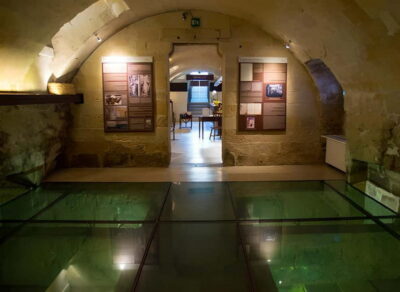
Lecce: Baroque Architecture and Underground Walking Tour
Read our review →
Train Exp. through the Alps (Royal Baroque Route from Nice)
Read our review →
Dresden: Tour of the Baroque Quarter with a Night Watchman
Read our review →
Interpreti Veneziani Ensemble Baroque Concert in Venice Ticket
Read our review →
Borghese Gallery Max 6 People Tour: Baroque & Renaissance in Rome
Read our review →
Concert at the Palais Schönborn-Batthyány by the Vienna Baroque Orchestra
Read our review →
Guided Walking Tour of Rome: Top Sights & Baroque Treasures
Read our review →
Noto, Modica and Ragusa: The Baroque Tour from Catania
Read our review →Browse the lists this tour appears in