
Review · ITALY
Martina Franca: Baroque and Rococo Architecture Walking Tour
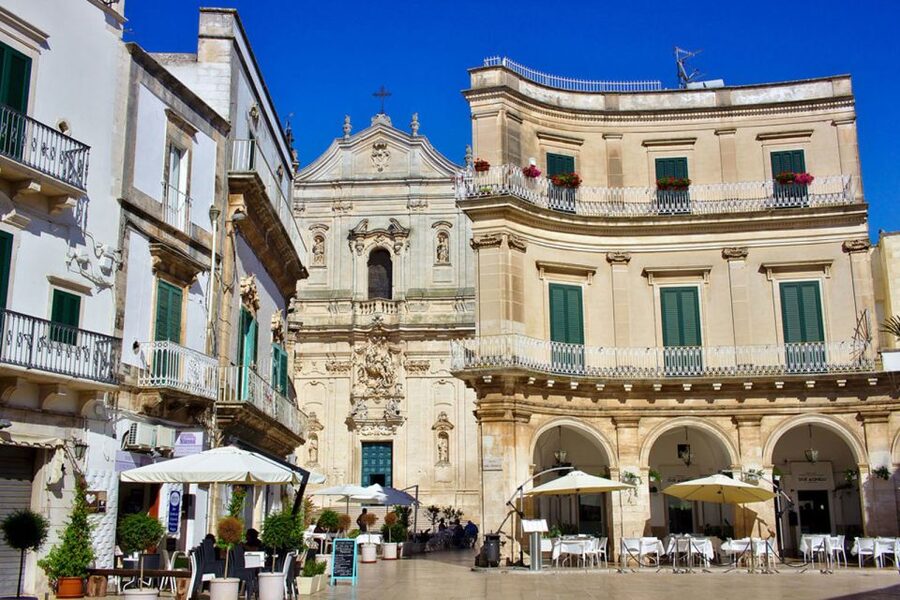
Martina Franca’s best feature is its Baroque and Rococo old town, where grand churches, palace rooms, small chapels, and narrow lanes fit into a compact walking route. This tour gives you a useful introduction to the town without asking you to spend half a day on your feet.
I like the private format, which gives your group a guide rather than a large crowd, and I like the clear route from Piazza XX Settembre through Palazzo Ducale and the main churches. Guides Lucia and Silvia have both made a strong impression, with Lucia bringing humor and perspective, and Silvia offering clear English. The main drawback is the price: $326.26 per group is a lot for two hours if you are traveling as a couple, though it becomes more reasonable when split among a larger party.
Key points at a glance
- Baroque center: See St. Martin’s Basilica, San Domenico, and other ornate churches in the heart of town.
- Palazzo Ducale: Visit an 18th-century palace with frescoes and formal rooms.
- Private group: The booking covers up to 25 people, with a licensed guide in your chosen language.
- Short walking route: Two hours is enough for the main sights without taking over your day.
- Central meeting point: Begin under the arch at Piazza XX Settembre and finish back there.
- Flexible booking: You can cancel up to 24 hours before the tour for a full refund and reserve without paying at once.
Why Martina Franca rewards a walking tour
Martina Franca is one of the main towns in the Itria Valley, an area known for its whitewashed towns and trulli. The town is not presented here as a drive-by stop. You move through its streets on foot, where the contrast between simple alleyways and elaborate church fronts becomes clear.
That contrast is the real reason to book a guide. Baroque decoration can look like a lot of curling stone, carved figures, and grand doors when you first arrive. A guide helps you connect those details from one stop to the next, so the churches and palaces feel like part of one town story rather than separate photo stops.
The route also gives you a manageable first look at Martina Franca. Two hours is long enough to cover the central monuments, but short enough to leave time for a meal, a festival event, or more wandering on your own.
More Baroque architecture tours in Italy:
- Lecce: Baroque Architecture and Underground Walking Tour
★ 4.6 · 1,248 reviews - Interpreti Veneziani Ensemble Baroque Concert in Venice Ticket
★ 4.5 · 403 reviews - Borghese Gallery Max 6 People Tour: Baroque & Renaissance in Rome
★ 5.0 · 185 reviews
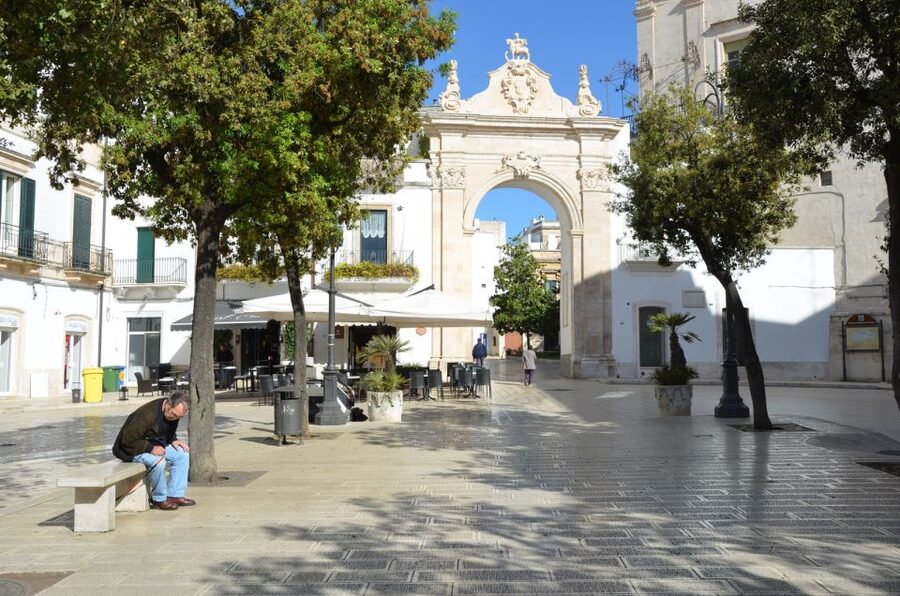
Starting under the arch at Piazza XX Settembre
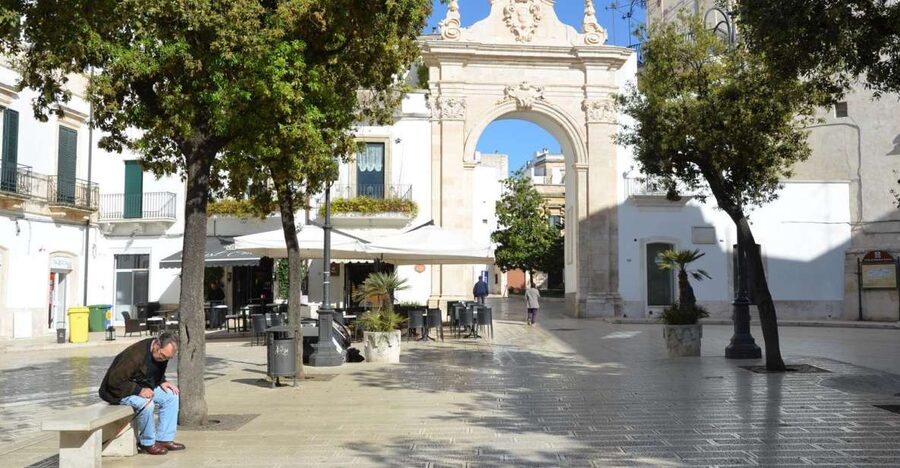
The tour begins at Piazza XX Settembre, under the arch at the Santo Stefano Gate. This is a practical meeting place because the group starts at a clear point near the edge of the old center, then moves inward toward the principal squares and buildings.
Beginning at a gate also gives the route a natural shape. You enter the old town, pass from the wider modern space into narrower streets, and gradually reach the grandest architectural stops. You do not need to arrange hotel pickup or drop-off, so plan to reach the meeting point on your own.
The meeting point matters most if you are staying outside the center. The tour price does not include transportation, and the activity ends back at the starting point. That return makes it easier to continue with your day, since you are not left at a different part of town.
Piazza Roma and the Dolphin Fountain
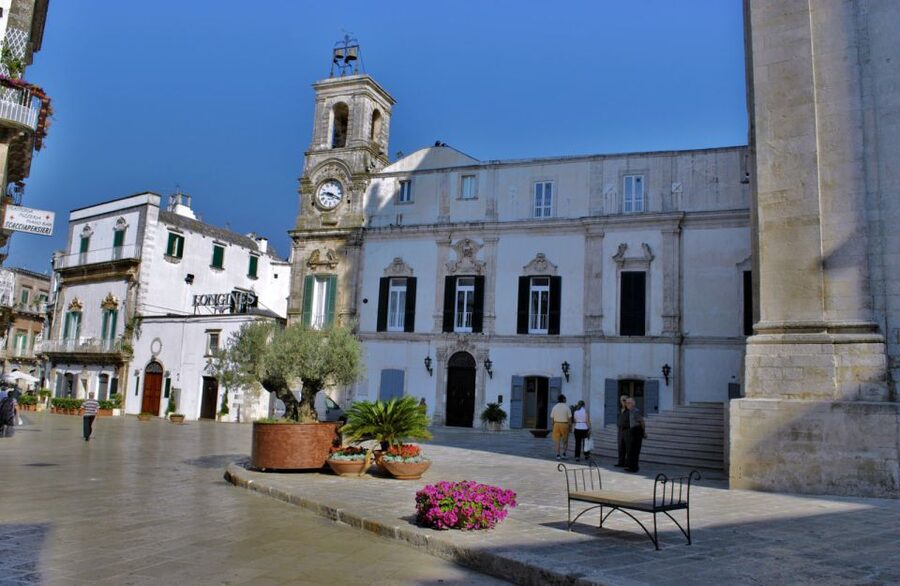
From the starting point, the walk heads toward Piazza Roma, where you see the Fountain of the Dolphins. This stop adds a public, everyday side to the tour before the focus turns fully to palaces and churches.
A fountain in a town square is easy to pass without much thought, especially when an ornate church is waiting nearby. Your guide can give this feature a place in the wider setting and point out how Martina Franca’s public spaces connect its major buildings.
This part of the route should appeal to you if you like town planning as much as individual monuments. The tour is not limited to stepping inside churches. It also shows how squares, gates, streets, and formal buildings fit together.
Palazzo Ducale and its 18th-century rooms
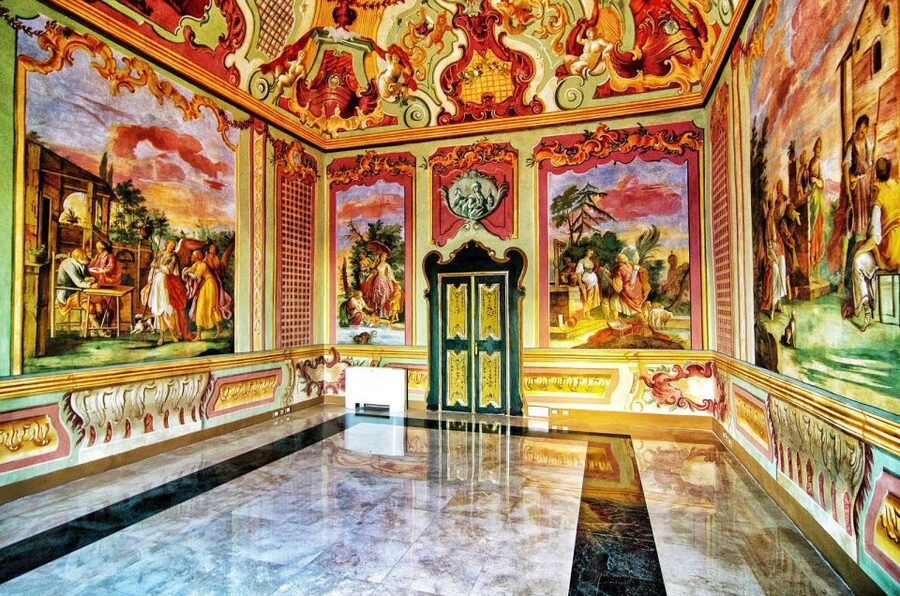
The next major stop is Palazzo Ducale, one of the tour’s strongest reasons to book. You visit the palace and see its 18th-century frescoes and stately rooms, shifting the focus from public streets to the interior world of Martina Franca’s ruling class.
The palace is valuable because it gives the architecture context. Churches show religious ceremony and public devotion. Palace rooms show status, decoration, and formal living. Seeing both during one short route makes the town’s Baroque and Rococo style easier to understand.
The supplied details do not specify how many rooms are open or how long you remain inside, so you should think of this as a guided visit rather than a full museum tour. Still, the frescoes and formal interiors add variety to a route that could otherwise become church-heavy.
If you enjoy painted ceilings, decorative interiors, and old civic buildings, this may be the stop you remember most. If you prefer street life and outdoor views, you may find the palace visit less immediately engaging than the walk through the lanes.
More architecture walks in Italy:
- Experience Florence’s Art and Architecture on a Walking Tour
★ 5.0 · 318 reviews - Guided Walking Tour of Rome: Top Sights & Baroque Treasures
★ 5.0 · 155 reviews - Palermo: Art and Architecture Walking Tour
★ 4.7 · 136 reviews - 3-hour walking tour Discovering Ragusa Baroque
★ 5.0 · 51 reviews
Old-town alleys and the approach to Piazza del Plebiscito
After Palazzo Ducale, the route continues through the alleys of the old town toward Piazza del Plebiscito. This is where the walking format earns its place. Martina Franca’s character is not found only in major monuments. It also appears in the sequence of small streets between them.
The alleys create a pause between the large palace and the town’s main basilica. You get a closer look at the scale of the center, moving from broad public spaces into more intimate passages before reaching the square.
I like this part of the tour because it keeps the experience from becoming a checklist. You are not simply transported from one building to the next. The route lets you see how the old town is experienced at street level, while your guide helps you keep track of the larger route.
St. Martin’s Basilica in Piazza del Plebiscito
In Piazza del Plebiscito, the tour visits the Basilica of St. Martin, described as an exceptional example of Baroque architecture. This is the visual centerpiece of the walk and the clearest expression of Martina Franca’s ornate style.
The basilica is especially useful for first-time visitors because it brings many of the tour’s themes together: dramatic decoration, a major religious building, and a central public square. After seeing the simpler passageways of the old town, the basilica’s scale and ornament have more impact.
Your guide can also help you notice details that are easy to miss when you look only at the front of a church. The tour information does not list individual artworks or opening conditions, so the exact interior experience may depend on access at the time of your visit. Keep that in mind if the basilica is your main reason for booking.
The square itself gives you a natural place to pause and take in the building. Since the tour lasts two hours, the visit is likely focused and purposeful rather than slow and exhaustive. That suits you if you want a strong overview, but not if you want extended time for private photography or quiet contemplation at every stop.
Immaculate Square and the Greek chapel
The route continues to Immaculate Square, followed by the Chapel of St. Nicholas of the Greeks. This smaller religious building broadens the tour beyond the largest Baroque monuments.
The chapel is an interesting inclusion because it suggests the town’s religious life was not expressed only through grand basilicas. Smaller chapels can feel more personal and local, even when the available details do not describe their interior decoration in full.
This is also a good point to listen closely to your guide. The value of a short chapel visit often comes from its setting, dedication, and connection to the surrounding streets. A licensed guide can place it within the town’s built environment instead of leaving you to guess why it matters.
The tour is conducted in English, Italian, Spanish, French, or German. Silvia’s English has been described as very clear, which is useful when a guide is explaining architectural terms or religious names in a fast-moving walk.
San Domenico brings the route to a close
The final listed stop is the Church of San Domenico. Ending with another church keeps the focus firmly on Martina Franca’s Baroque and Rococo character, while also giving you one last major building before returning to the starting point.
San Domenico is not described in detail, so you should not book this tour expecting a full architectural lecture on every feature of the church. Instead, consider it part of a carefully concentrated introduction to the town’s religious architecture.
The return to Piazza XX Settembre is useful. You finish where you began, rather than needing to work out a new meeting point or find transport from the far side of town. From there, you can continue exploring independently or use the end of the tour as a natural point to stop for food and drinks, which are not included.
What the guide adds to the experience
The guide is the main reason to choose this tour instead of walking the same streets with a map. Martina Franca’s buildings are attractive on their own, but the tour gives you an order, explanations, and a person who can connect the stops.
Lucia is praised for knowledge, insight, perspective, and humor. Those qualities matter on a two-hour tour because the time passes quickly, and a dry list of dates would make the churches blur together. A guide who adds perspective can help you see why a palace room differs from a basilica, and why a small chapel belongs on the route.
Silvia is a good choice for English-speaking visitors who want clear explanations. The activity offers five language options, so check the available guide language when choosing a time.
The private format is another plus. Your group can include up to 25 people, which is unusually generous for a private booking. For a very large family or organized group, that can make the cost far better than paying separate per-person prices. For one or two people, the same flat rate feels much heavier.
Is $326.26 good value for two hours?
At $326.26 per group, this is not a budget walking tour. The price covers the two-hour walk and licensed guide, but not food, drinks, or hotel transfers.
The value depends almost entirely on group size and how much you want personal guidance. A couple would pay a high effective per-person cost. A family, wedding group, or party of friends can spread the price across more people and gain a private route through the central sights.
You are also paying for focus. The tour covers several notable locations in a short period, including a palace, basilica, chapel, and church. If you have limited time in Martina Franca and want someone to organize the visit, that convenience may justify the rate.
If you are comfortable exploring independently, you may prefer to see the main squares and churches at your own pace. The paid tour makes the most sense when you want explanations, a planned route, and a guide in your language.
Who should book this Martina Franca walk?
I would recommend it most to:
- First-time visitors who want a clear introduction to Martina Franca
- Small groups willing to share a private guide fee
- Larger families or parties that can divide the $326.26 cost
- Architecture fans interested in Baroque and Rococo buildings
- Visitors who want a short activity rather than a full-day excursion
- English, Italian, Spanish, French, or German speakers who want a live guide
You may want to skip it if your budget is tight, you prefer unstructured wandering, or you want a longer visit inside each church. The tour is concentrated and guide-led. It is not designed as a food tour, shopping walk, or transport service.
Wear comfortable footwear for the old-town streets, and leave room in your schedule after the tour. Because it ends at the original meeting point, you can easily continue on your own, but you will need to arrange any food, drinks, or transportation separately.
Booking and timing details
The activity lasts two hours, with starting times available according to the date you choose. It is wise to check the schedule before planning meals or other timed visits.
You can cancel up to 24 hours ahead for a full refund. The reserve-now, pay-later option is useful if your Apulia plans are still shifting, since you do not need to pay at the time of booking.
The tour begins under the arch at Piazza XX Settembre and returns there. Hotel pickup and drop-off are not included, so treat the meeting point as part of your planning rather than assuming the guide will come to your accommodation.
Should you book this tour?
Book it if you want a polished introduction to Martina Franca’s churches, palace rooms, squares, and old-town lanes, especially if you can divide the private-group price among several people. Lucia’s humor and perspective, along with Silvia’s clear English, are strong reasons to value the guide rather than simply walking alone.
For a couple on a strict budget, $326.26 for two hours is hard to justify. For a larger group that wants a licensed guide and a focused route through the town’s Baroque and Rococo center, it can be a practical way to get oriented without giving up an entire day.
FAQ
Where does the Martina Franca walking tour begin?
The tour begins at Piazza XX Settembre, under the arch at the Santo Stefano Gate.
Where does the tour end?
The activity ends back at the starting point.
How long does the tour last?
The walking tour lasts two hours.
Is the tour private?
Yes. It is offered as a private group activity for up to 25 people.
What languages are available?
The live guide can conduct the tour in Spanish, English, French, German, or Italian.
What is included in the price?
The price includes the two-hour walking tour and a licensed guide.
Are food and drinks included?
No. Food and drinks are not included.
Is hotel pickup included?
No. Hotel pickup and drop-off are not included.
Can I cancel for a full refund?
Yes. You can cancel up to 24 hours in advance for a full refund.
Do I have to pay when I reserve?
No. The reserve-now, pay-later option allows you to book while paying nothing at the time of reservation.
Just added around Italy
- Vicenza: discovering the city of Palladio by e-bike★ 5.0 · 4 reviews
- Vicenza: Palladian Architecture Private Walking Tour★ 3.3 · 3 reviews
- Turin: Art Nouveau Walking Tour with Coffee★ 5.0 · 11 reviews
- Vatican: Exclusive Baroque Evening With Aperitivo & Dinner★ 3.1 · 2 reviews
- Venice Music Project – Baroque Autumn – Season 2025★ 4.5 · 7 reviews
- Walking tour in Venice with an architect★ 5.0 · 16 reviews
- Palladio. A wonderful live tale through time&soul, from Ve/Pd/Vr★ 5.0 · 7 reviews
- Turin, Art Nouveau walking tour and coffee break★ 4.0 · 7 reviews
Baroque Architecture Tours, compared.
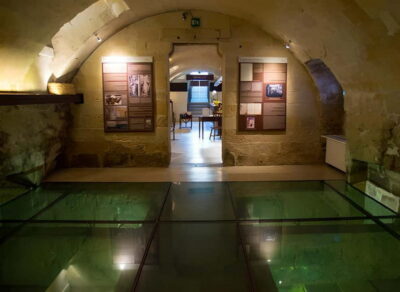
Lecce: Baroque Architecture and Underground Walking Tour
Read our review →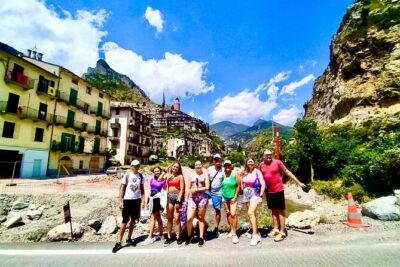
Train Exp. through the Alps (Royal Baroque Route from Nice)
Read our review →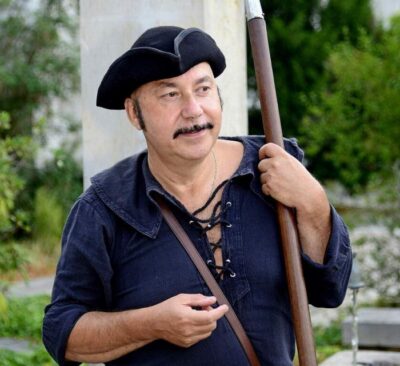
Dresden: Tour of the Baroque Quarter with a Night Watchman
Read our review →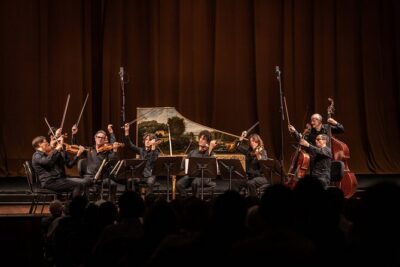
Interpreti Veneziani Ensemble Baroque Concert in Venice Ticket
Read our review →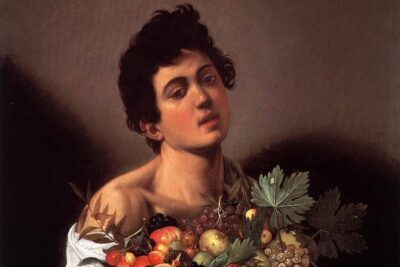
Borghese Gallery Max 6 People Tour: Baroque & Renaissance in Rome
Read our review →
Concert at the Palais Schönborn-Batthyány by the Vienna Baroque Orchestra
Read our review →
Guided Walking Tour of Rome: Top Sights & Baroque Treasures
Read our review →
Noto, Modica and Ragusa: The Baroque Tour from Catania
Read our review →Browse the lists this tour appears in