
Review · ARCHITECTURE TOURS
Sopot Private City Walking or Bike Tour with a local architect
Sopot is more than a beach stop between Gdańsk and the Baltic Sea. This private tour with architect Agnieszka Lasota follows the town’s old roads, spa villas, parks, pier, and shoreline while showing how a fishing village became the Riviera of the North. I like the use of historical pictures, and I like that the route slips into quiet streets most visitors miss.
The tour also gives you an architectural reading of Sopot without turning every building into homework. The main consideration is the price: $204.04 covers your whole group of up to nine, so it is good value for a larger party but costly for one or two people. The tour is offered in English, though you should confirm language arrangements when booking.
Key points at a glance
- See Sopot through an architect’s eyes: Agnieszka Lasota explains the town’s villas, spa buildings, streets, and changing styles.
- Monte Cassino sets the story: Learn how a route once used by fishermen became Poland’s first pedestrian street.
- Quiet architecture replaces a standard postcard route: Visit Sierakowskich Manor, Villa Tower, old villa streets, and former fishermen’s homes.
- The seaside section is full of context: The Grand Hotel, Kuracyjny Square, pier, beach, and changing rooms reveal Sopot’s resort past.
- Historic photographs make change easy to see: Images help you compare modern Sopot with its earlier days as a European spa town.
- You control part of the pace: The lighthouse climb is optional, and a private group allows questions, pauses, and possible adjustments.
Why Sopot makes a fine architecture walk
Sopot has an unusual mix of seaside fun and old-world resort design. You get a sandy beach, tennis courts, broad parks, a famous pier, and a center lined with villas from the town’s resort era. The key to understanding it is not simply looking at pretty buildings. It is seeing how the town was shaped around health, leisure, status, and the sea.
That is where a local architect can add real value. Agnieszka Lasota focuses on details you could easily pass without noticing, from the shape of a villa to the reason an Alpine-style building appeared in a Polish seaside resort. Her approach also includes the people connected with the town, including Jan Jerzy Haffner, the surgeon who served in Napoleon’s army and later chose Sopot as his home.
I would choose this tour early in a Sopot stay. A 90-minute to two-hour introduction gives you a useful map of the town, and the route passes the pier so you can return later with a better sense of what you are seeing. It also helps you decide which buildings or museums deserve a longer visit.
More segway and bike architecture tours in the world:
- Palm Springs Modernism Architecture & History Bike Tour
★ 5.0 · 359 reviews - Historical and Modernist Bike Tour Barcelona
★ 5.0 · 262 reviews - Munich 3-Hour Segway Tour: Nazi Munich & Royal Architecture
★ 4.9 · 194 reviews
Starting along Bohaterów Monte Cassino
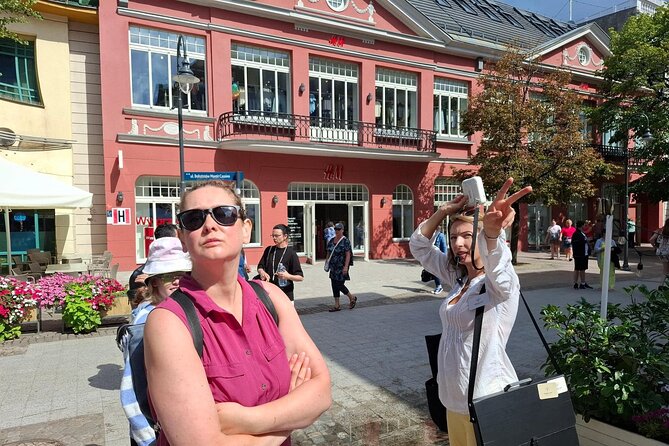
The meeting point is outside the McDonald’s at Bohaterów Monte Cassino 21. That may not sound poetic, but it is easy to find and places you directly on Sopot’s best-known pedestrian street.
The street was once the main road leading to the sea. Fishermen from the small village used it on their way to work, long before Sopot became a fashionable resort. The guide uses historic photographs here, letting you compare the present-day center with earlier views of the road and its buildings.
I like this opening because it gives the rest of the tour a clear theme: Sopot is a town that changed its purpose without losing every trace of its past. The street now feels like the social heart of the resort, but its older role was practical and local.
Plan on about 14 minutes here. That is enough time for an introduction and a few photographs, but not a full survey of every storefront. If you want to linger for shopping or a drink, save that for after the tour.
A quieter stop at Sierakowskich Manor
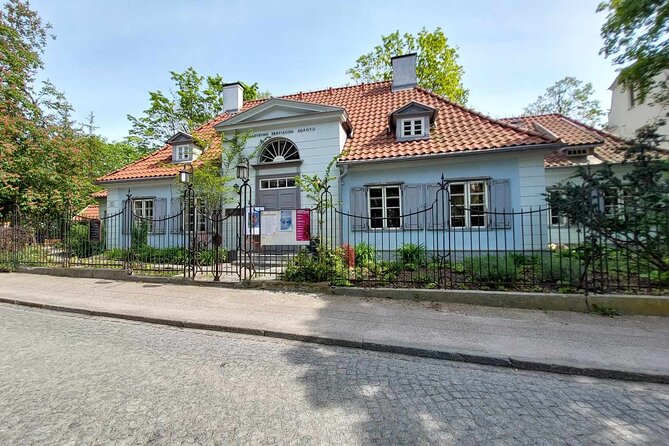
From the main pedestrian route, the tour moves to Dworek Sierakowskich, an 18th-century building that once served as a guest house for a large manor. Its appeal is not grand scale. It is the calm setting, the garden, and the sense that you have stepped away from Sopot’s busy center.
The building is linked with Fryderyk Chopin, who probably stayed there while on holiday and played the piano. A bust marks that connection. The wording matters: the association is presented as probable, not as a certainty carved in stone.
You get about six minutes here. That is a short stop, but it works as a contrast to Monte Cassino. I would pay attention to the setting rather than expect an extended interior visit. The tour enters a few buildings for free, but it is not designed as a museum program.
Villas Street and Sopot’s old private world
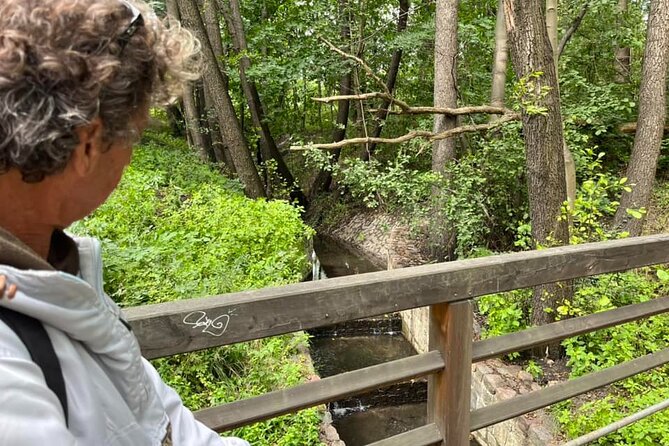
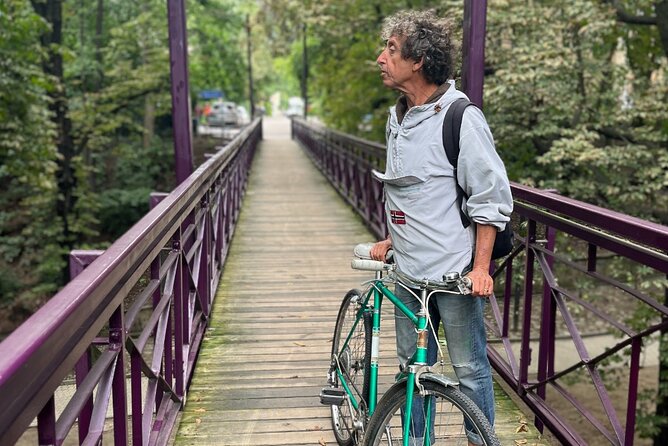
A picturesque bridge over a deep ravine leads toward a street first known as Villas Street. The oldest house mentioned along this stretch dates from 1881, and the classical architecture gives the area a different feel from the commercial center.
This is one of the portions I would value most. The tour looks at houses as clues to the people and ambitions that shaped the resort. In the second half of the 20th century, the street was nicknamed Poland’s Montmartre, a name that hints at its connection with artists and creative life.
The route does not treat the villas as isolated monuments. You hear stories tied to the buildings and the people behind their walls. That makes the architecture easier to remember. Instead of simply noting a date or style, you get a reason to care about the house.
If you like old residential districts, allow yourself some patience here. The details are on the facades, gardens, bridges, and street plan. This is also a place where the private format helps, since you can ask why one building looks different from the next.
More architecture walks in the world:
- Lecce: Baroque Architecture and Underground Walking Tour
★ 4.6 · 1,248 reviews - Chicago in a Day: Food, History & Architecture Walking Tour
★ 5.0 · 1,153 reviews - Ramblas, Old Town, Gothic and Gaudi Architecture Walking Tour
★ 5.0 · 723 reviews - Chicago’s Secret Interiors Architectural Walking Tour
★ 5.0 · 635 reviews
Goyki 3 and the mystery of Villa Tower
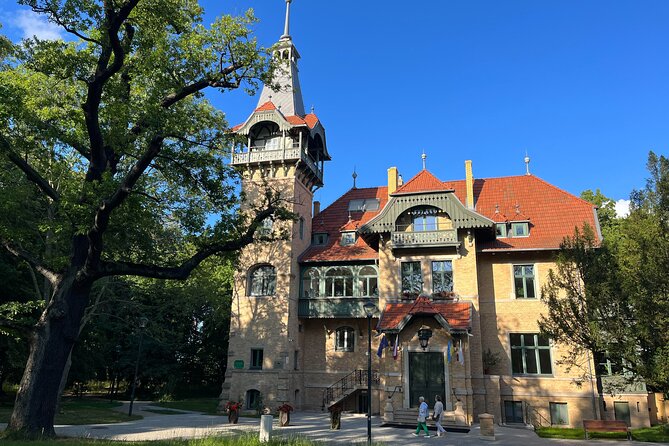
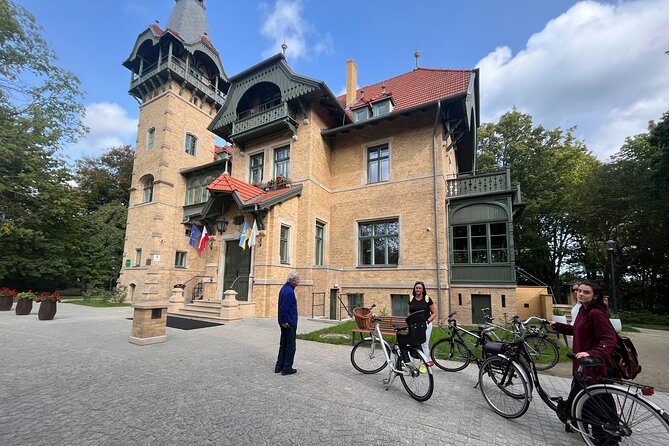
One of the most striking buildings on the route is the late-19th-century Tower Villa, now home to Goyki 3 Art Inkubator. Its Alpine Resort style seems odd at first. Why would a seaside town use a design associated with mountain resorts?
The answer leads into the wider European fashion for spa towns that began in the 18th century. Resorts borrowed styles, customs, and building ideas from one another. Sopot was not simply copying the Alps. It was presenting itself as part of a larger European culture of health, leisure, and fashionable retreat.
The villa also has a long and sad story, with music tied to its past. The tour spends about 13 minutes here, enough to explain the building’s design and its role today. I would not expect a full art-center visit during this stop. The building is mainly used as a lens for understanding Sopot’s resort architecture.
The spa architecture around the parks
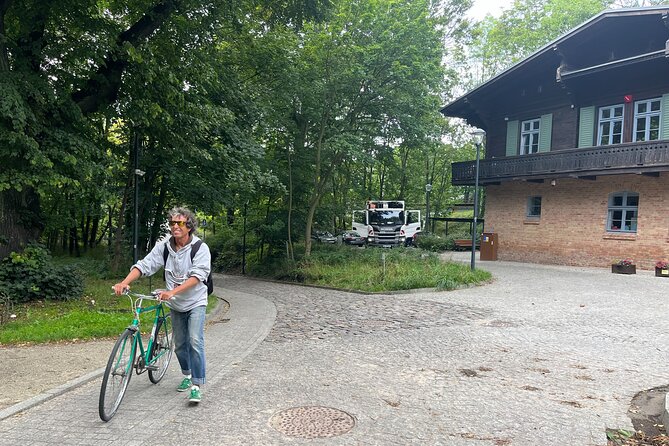
Sopot is described as having one of Europe’s largest collections of spa architecture. That claim makes more sense as you walk through the town’s parks and see how the buildings relate to open space, paths, and the coast.
The guide explains what spa architecture means in practical terms. These were places built for people who came to rest, recover, socialize, and be seen. The trees, villas, recreational facilities, and beach access were not random pieces. Together they formed a resort town designed around a particular way of life.
This section may be especially useful if you usually look at buildings one at a time. I like that the tour asks you to see the whole setting. A villa matters, but so does its garden, its distance from the water, and the kind of visitor it was meant to attract.
The neighborhood is also connected with Per Oscar Gustav Dahlberg, a Swedish artist who moved to Sopot in 1996 after falling in love with the town. His drawings inspired the design of Sopot’s famous Crooked House. If you are interested in art, you may be able to arrange a meeting at his house and studio, or purchase his graphics or an album about Sopot and Gdańsk architecture. Treat this as a possible arrangement, not a guaranteed part of the standard tour.
Meeting Jan Jerzy Haffner
The stop at the Jan Jerzy Haffner Monument is brief, about three minutes, but it adds a human figure to the town’s development. Haffner was a surgeon in Napoleon’s army before choosing Sopot as his home.
The surrounding area brings together several things that define Sopot: tennis courts, mature trees, large parks, and sandy beaches. Haffner’s story helps explain why the town became more than a fishing settlement. People with money, professional status, and a taste for seaside leisure began to see the place as somewhere to live and recover.
This is not a long monument talk. It is a quick link between one person and the resort town you see around you. I appreciate stops like this because they keep an architecture tour from becoming only a parade of facades.
The Grand Hotel beside the beach
The Sofitel Grand Sopot is one of the tour’s most impressive visual moments. It sits directly beside the beach, in a position that feels natural today but was the result of a major civic decision in the 1920s.
The important point is that Sopot itself decided to make the investment. The hotel’s location and scale show how seriously the town took its role as a resort. This was not just a private villa or a small boarding house. It was a statement about Sopot’s ambitions and the level of visitor it wanted to attract.
The stop lasts about 15 minutes. You look around the exterior and hear stories connected with the hotel’s splendor. I would use this time to notice the relationship between the building, the beach, and the rest of the resort district.
The Grand Hotel is also a good reminder that Sopot has layers of social history. The same shoreline served local fishermen, spa visitors, artists, and wealthy holidaymakers. The tour keeps those layers together rather than presenting only the glamorous version.
Kuracyjny Square and the Riviera of the North
Skwer Kuracyjny was created in 1925 and remains a central public space near the beach and pier. Here, old photographs show Sopot during its period as the Riviera of the North, when the town was known across Europe.
This is where the resort’s entertainment side comes forward. The square once offered a range of attractions, and the historic images help you picture the crowds, events, and leisure culture that made Sopot famous. You do not need to know every detail in advance. The photographs provide the visual comparison, while the guide supplies the story.
The stop takes about 12 minutes. It is also a practical orientation point. You can see why the square, beach, pier, and hotel work together as one resort center.
Expect this part to feel more public and open than the villa districts. If you prefer quiet streets, the earlier architecture sections may be your favorite. If you want to understand why Sopot became a major seaside destination, this square is essential.
The pier, changing rooms, and fishermen’s houses
The route passes by Sopot’s famous pier, but the tour does not require you to complete your pier visit during the walk. Instead, you learn its story and can return afterward. That is a sensible arrangement, since the pier deserves time of its own and conditions by the water can affect how long you want to stay.
The formal tour ends near the Southern Baths changing rooms, built in 1905. The guide connects the building with some amusing stories, giving a lighter finish after the heavier architectural and historical material.
Another possible ending is a plaza surrounded by small fishermen’s houses. These houses were gently moved from their original location in 1905. Their presence brings the story back to Sopot’s older working community, before the resort image took over.
The stop lasts about six minutes. Confirm the precise ending point before you set off, since the route description gives two possible nearby finishes. Either way, you finish close to the seafront and can continue exploring independently.
Climbing Sopot Lighthouse
The lighthouse is an optional final stop, with about 14 minutes assigned to it. You can climb the steps if you want the view, or skip the climb if your legs have had enough.
The warning about tiring steps is worth taking seriously. This is not a stop you should force if you prefer a slower finish. On the other hand, the view makes the effort worthwhile for many people, especially after the guide has explained how the resort relates to the beach, pier, parks, and town center.
Admission to the lighthouse is included. The optional climb is a nice feature because it lets you choose between a final panorama and a more relaxed end to the walk.
Walking, biking, and the private format
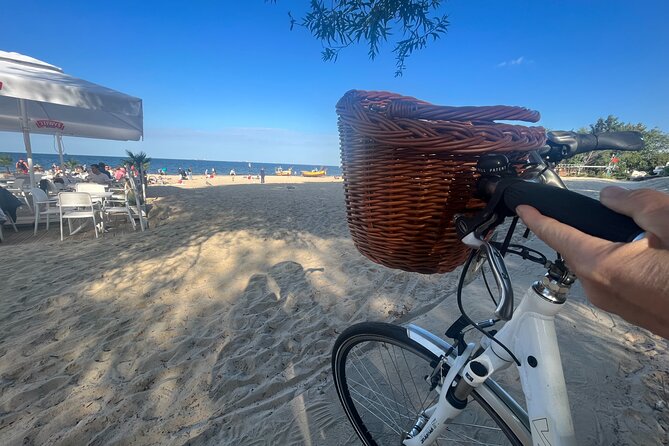
The experience is presented as a walking or bike tour. The route details describe a walk, so I would ask about the bike version before booking if cycling is important to you. The supplied duration is approximately 90 minutes to two hours, giving the guide some room to adjust the pace.
This is a private activity for your group alone, with a maximum of nine people. That changes the feel of the tour. You can ask about a building, pause for photographs, or tell Agnieszka that you want more art, more architecture, or more local stories.
Pickup is offered, while the stated meeting point is McDonald’s on Bohaterów Monte Cassino. Confirm the pickup arrangement and exact ending details in advance. The tour is near public transportation, and service animals are allowed. Most people can participate.
The tour includes a licensed guide and the historic photographs. It does not include a separate museum visit. Museums can be arranged as their own activity, while a few buildings are entered during the route without an extra charge.
Is $204.04 good value?
At $204.04 per group of up to nine, the price works best when shared. For nine people, it comes to roughly $23 per person. For four people, it is about $51 each. For one or two people, the cost is much harder to justify unless you place a high value on private guiding and architectural detail.
The price includes more than simple directions between landmarks. You are paying for a private route, an architect’s interpretation, historical photographs, and the freedom to shape the conversation. The lighthouse admission is also included.
I would compare this with the cost of booking several separate activities. The walk gives you a broad introduction to Sopot, but it does not replace a full museum visit or an extended tour of the pier. Its value is strongest as an intelligent first look at the town.
Who should book this Sopot tour?
I would recommend it to you if you enjoy architecture, local history, old photographs, and stories about how a town changes. It is also a good choice if you have already seen Sopot’s main streets and want a more personal route through villas, parks, and lesser-known corners.
Agnieszka’s style appears suited to people who want substance without being buried in facts. She can explain architectural ideas in a way that stays connected to daily life, and the private format makes it easier to ask for more or less detail.
You may prefer a shorter, cheaper group walk if your main goal is only to see the pier and beach. You should also think twice if you dislike walking, ravines, steps, or changing pace between busy public areas and quiet residential streets.
Should you book it?
Book this tour if you want to understand Sopot rather than simply photograph it. The strongest reasons are the architect-guide perspective, the historical photographs, the villa districts, and the way the route connects the fishing village, spa town, artists’ quarter, and 1920s resort.
For a large group, the price is fair. For a couple, it is a special-interest splurge. Start early in your Sopot visit, confirm the language and pickup details, and keep time afterward for the pier and any museum you want to explore separately.
FAQ
Where does the tour start?
The stated meeting point is Restauracja McDonald’s at Bohaterów Monte Cassino 21, 81-706 Sopot, Poland.
Where does the tour end?
The route ends in a different location from the meeting point, near the Southern Baths changing rooms or a plaza surrounded by relocated fishermen’s houses. Confirm the exact ending point when booking.
How long does the tour last?
The experience lasts approximately 1 hour 30 minutes to 2 hours.
Is the tour private?
Yes. Only your group participates, and the maximum group size is nine people.
Is the tour offered in English?
English is listed as an available language. Confirm the language arrangement when booking, especially if your group needs another language.
Is the lighthouse climb required?
No. The lighthouse climb is optional. The steps may be tiring, but the view is described as worthwhile.
Is the lighthouse admission included?
Yes. Admission to the Sopot Lighthouse is included.
Can I cancel for a full refund?
Yes, if you cancel at least 24 hours before the experience start time. Cancellations or changes made less than 24 hours in advance are not accepted for a refund.
More Architecture Bike Tours in the world
- Electric Bike Art and Architecture Guided Tour in Jacksonville
★ 5.0 · 155 reviews - Bike Tour in Barcelona: History, Architecture and Culture
★ 3.5 · 29 reviews - Barcelona: Guided tour e-bike Barcelona historical and modernist Barcelona
★ 4.5 · 5 reviews - Vicenza: discovering the city of Palladio by e-bike
★ 5.0 · 4 reviews
Just added around the world
- Wilmington History and Architecture Tour★ 4.8 · 18 reviews
- Washington, DC: Georgetown Architecture Walking Tour★ 5.0 · 8 reviews
- New Orleans : Garden District Architecture Walking tour★ 4.8 · 5 reviews
- Washington DC: Dupont Circle & Embassy Row Architecture Tour★ 5.0 · 6 reviews
- Vicenza: discovering the city of Palladio by e-bike★ 5.0 · 4 reviews
- Vicenza: Palladian Architecture Private Walking Tour★ 3.3 · 3 reviews
- Walk & Discover KL’s Architectural and Heritage Gems★ 5.0 · 7 reviews
- Unveiling Brno: History, Culture & Architectural Delights★ 5.0 · 2 reviews
Segway and Bike Architecture Tours, compared.
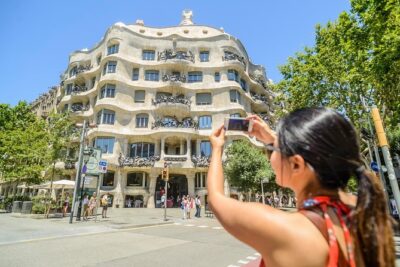
Barcelona e-Bike Tour: Gaudí & Old Town Small Group
Read our review →
Palm Springs Modernism Architecture & History Bike Tour
Read our review →
Munich 3-Hour Segway Tour: Nazi Munich & Royal Architecture
Read our review →
Barcelona: Old Port and Gothic Quarter Guided Segway Tour
Read our review →

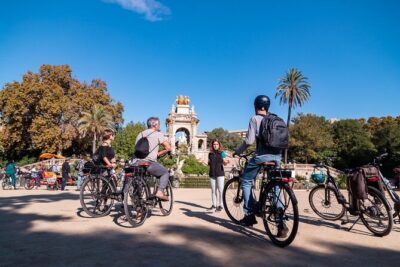
Barcelona Bike tour, Gaudí houses or beach bike or eBike tour
Read our review →Browse the lists this tour appears in