
Review · BARCELONA
Sant Pau Art Nouveau Site Skip The Line | Sant Pau Hospital
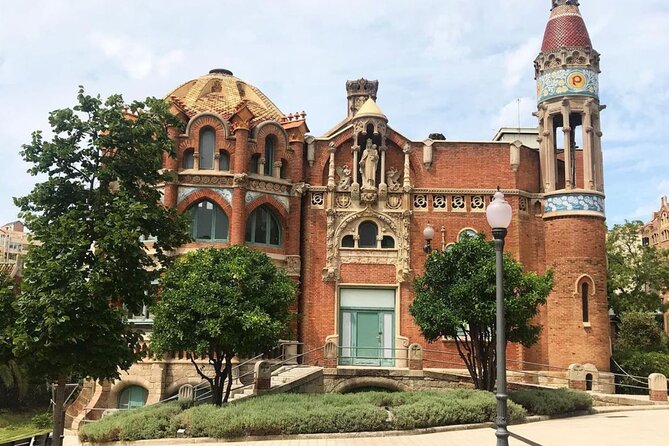
Sant Pau Hospital is one of Barcelona’s great architectural surprises. Just a short walk from the crowded Sagrada Família, this former medical complex opens into a calm world of colorful pavilions, gardens, tiled towers, and ornate interiors. It was designed as a place where sunlight, fresh air, beauty, and quiet could aid recovery.
I especially like the chance to explore without a scheduled group and the way the site reveals Barcelona’s Art Nouveau style beyond Gaudí. The underground tunnels and restored ward add useful context. The main drawback is that no guided tour is included, and the non-refundable ticket gives you little flexibility if your plans change.
Key points at a glance
- Sixteen pavilions: Walk through a large complex filled with domes, mosaics, stained glass, and sculpted details.
- A medical site dating to 1401: The modernist hospital grew from a much older Barcelona institution.
- Healing by design: Gardens, sunlight, ventilation, and peaceful courtyards were part of the treatment idea.
- Underground tunnels: See how the pavilions were connected below ground.
- A smart Sagrada Família pairing: The site is about a 10-minute walk along Avinguda Gaudí from the famous basilica.
- Independent admission: Skip-the-line entry is included, but there is no guide to explain the architecture or hospital story.
Why Sant Pau Hospital deserves your time
Barcelona is famous for Gaudí, but its Modernisme movement was much broader than one architect. Sant Pau Hospital gives you a fine look at the work of Lluís Domènech i Montaner, who designed the complex as both a functioning hospital and a humane place for healing.
The original institution reaches back to 1401. The modern complex was built between 1901 and 1930, and the hospital continued operating as a municipal hospital from 1912 until 2009. That long working life matters. This was not simply a decorative civic project. It was a real medical campus, planned around the needs of patients, doctors, and staff.
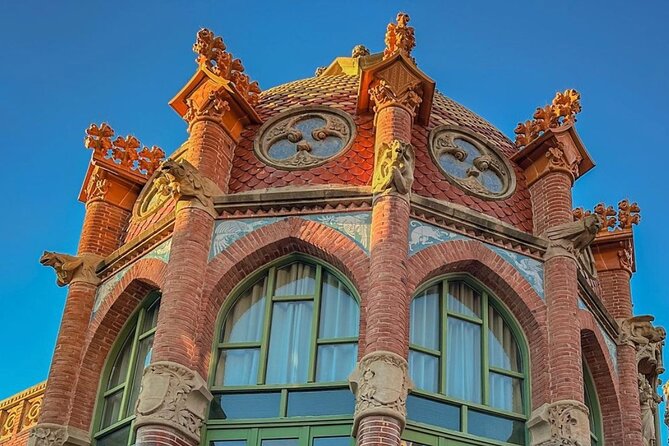
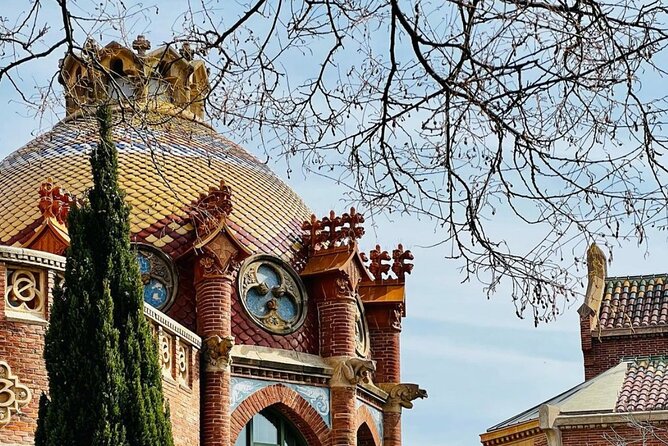
The site became a UNESCO World Heritage Site in 1997. You do not need to be an architecture specialist to enjoy it. The buildings are easy to appreciate at a glance, but the more time you spend looking, the more you notice: tiled roofs, floral motifs, sculpted stone, stained glass, domes, and small decorative touches that make the complex feel almost cheerful.
I find the contrast with central Barcelona especially appealing. The Sagrada Família can be crowded and visually overwhelming. Sant Pau gives you room to look up, step back, and enjoy the buildings without being pushed along.
More Art Nouveau tours in Barcelona:
- Barcelona: Art Nouveau & Gaudí Tour
★ 5.0 · 39 reviews - Ticket to Sant Pau Art Nouveau Barcelona
★ 5.0 · 2 reviews - Riga: Old Town Walking Tour with Art Nouveau Highlights
★ 4.7 · 332 reviews
Walking through sixteen pavilions
The visit centers on the large Sant Pau grounds, where you can explore 16 pavilions and the spaces between them. The exact route can vary, but the basic pleasure is the same: you move through a planned medical city rather than a single monument.
Each pavilion has its own character, yet the complex feels connected. The buildings are arranged around gardens and linked by underground passages. That layout helped separate different hospital functions while giving patients access to light and fresh air.
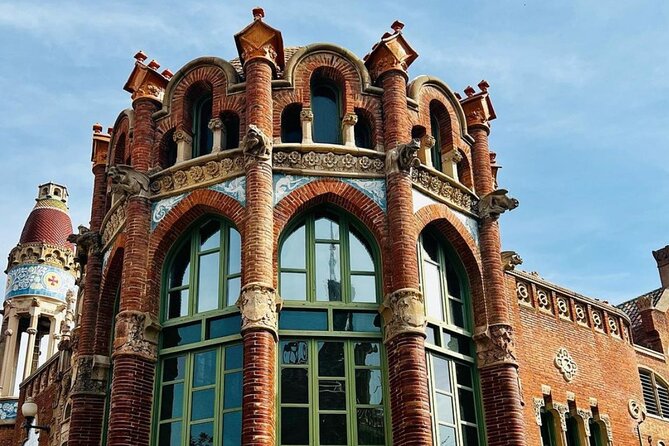
Look carefully at the façades. You might find colorful tiles, patterned brickwork, ornamental stone, turrets, and curved rooflines. The decoration is not limited to one grand entrance. It continues across windows, walls, roofs, and smaller architectural details.
The effect is joyful rather than severe. A hospital can easily feel institutional, but Domènech i Montaner used color and natural forms to create a more hopeful setting. Even if you only have a casual interest in design, you will notice how different this feels from a plain modern medical building.
Plan to walk slowly. A quick circuit will show you the scale of the complex, but a slower visit lets you compare the pavilions and spot details from different angles. The ticket is designed for independent exploration, so you can spend more time in the areas that catch your eye.
How the architecture was meant to help patients
Sant Pau was designed around the belief that a patient’s surroundings could support recovery. Gardens, open space, sunlight, ventilation, and attractive buildings were not afterthoughts. They were part of the hospital’s plan.
That idea becomes clear as you move through the grounds. The gardens provide breathing room between the pavilions, while the buildings create a sense of order without becoming cold. The original patients could rest away from busy streets, surrounded by greenery and carefully designed architecture.
Today, you can sit in the gardens and appreciate the calm that the architect intended. This is one of the best reasons not to rush the visit. The gardens are not merely a backdrop for photographs. They help you understand why the hospital was laid out in this way.
You may also notice how the decorative program uses flowers, plants, and other natural shapes. These motifs reinforce the connection between the medical purpose of the site and the restorative setting. The design is decorative, but it is not decoration for its own sake.
Underground tunnels and a restored ward
The underground tunnels are one of the more unusual parts of the visit. They helped connect the separate pavilions and made it possible to move around the hospital below ground. For you, they provide a change of pace from the bright courtyards and elaborate façades.
The tunnels also make the site easier to understand as a working hospital. From above, Sant Pau can look like a collection of beautiful buildings. Below ground, you begin to see the practical systems that allowed the campus to function as one institution.
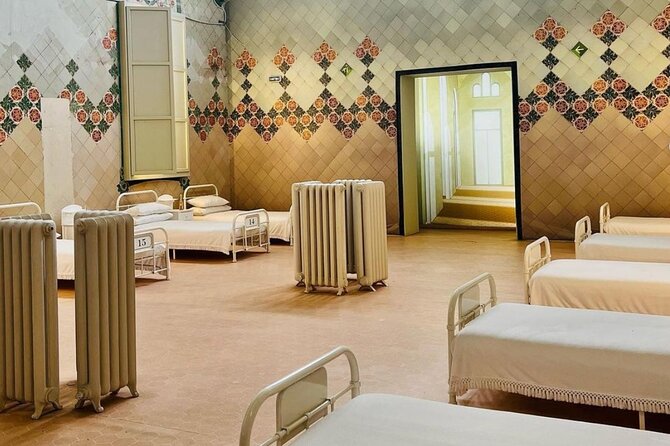
A restored ward offers another useful glimpse into hospital life. It recreates what an older ward looked like and includes a solarium visiting area. This is a valuable stop because it shifts your attention from architectural beauty to the people who once lived and worked here.
I would not treat the interiors as an afterthought. The exteriors draw you in, but the interior spaces explain how the hospital operated. If you are interested in social history, medicine, or everyday life in Barcelona, allow enough time to look beyond the most photogenic rooms.
More skip-the-line tickets in Barcelona:
- Barcelona: Sagrada Familia Skip-the-Line Entry Ticket & Tour
★ 4.8 · 12,789 reviews - Park Guell and Sagrada Familia Tour with Skip the Line Tickets
★ 5.0 · 6,384 reviews - Barcelona: Sagrada Familia Skip-the-Line Guided Tour
★ 4.3 · 5,365 reviews - Barcelona: Sagrada Familia Skip-the-Line Guided Tour
★ 4.8 · 3,824 reviews
Domes, stained glass, and the best photo opportunities
Bring your camera, but do not spend the entire visit looking through it. Sant Pau offers plenty of strong photo subjects: domes, tiled turrets, mosaics, stained glass, courtyards, and long views across the pavilions.
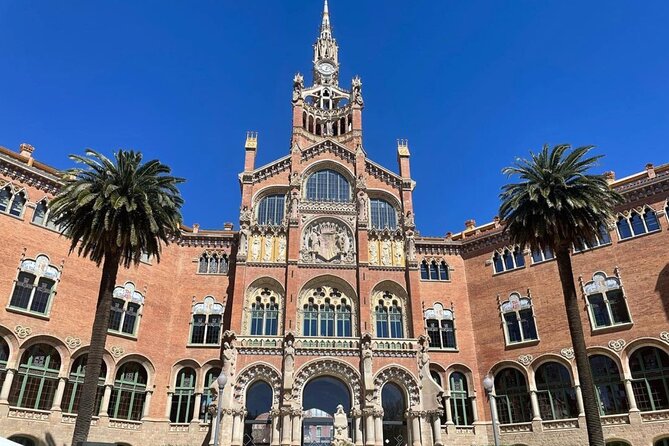
The architecture rewards wide shots first. Step back in the gardens to see how the buildings relate to one another. Then move closer for the smaller details. Stained glass and tilework can be easy to miss if you only photograph the main façades.
The site is also a good place to take pictures without the constant stream of people found at Barcelona’s biggest attractions. That does not guarantee complete solitude, but the complex generally gives you more breathing room than the Sagrada Família area.
Try looking upward as you walk. Rooflines and domes are a major part of the visual experience, and some of the best details sit above eye level. The light can also change how the colors appear, particularly inside the pavilions and around the stained-glass features.
Photography is not the only reason to visit, of course. The details work best when you connect them to the hospital’s purpose. A floral motif on a wall, a bright window in a ward, or a garden view from a pavilion all tell part of the story.
Pairing Sant Pau with the Sagrada Família
Sant Pau fits naturally into a day focused on Barcelona’s Modernisme. The complex is about a 10-minute walk down Avinguda Gaudí from the Sagrada Família, making it a practical second stop.
I suggest visiting the two sites in the same outing, but do not assume they offer the same experience. The Sagrada Família is a single, highly famous basilica with a powerful vertical interior. Sant Pau is a broad campus where the pleasure comes from moving among many buildings and noticing how they work together.
The short walk between them also gives you a useful transition. You move from one of Barcelona’s most crowded attractions toward a quieter setting with more open space. If you have just spent time inside the basilica, Sant Pau can feel like a welcome change of rhythm.
Allow at least one to two hours for Sant Pau itself. You can see the principal features faster, but a relaxed visit gives you time for the gardens, tunnels, ward, pavilions, and photographs. If you are combining it with the Sagrada Família, avoid squeezing both into an overly tight schedule.
What the $26.41 ticket is really buying
At $26.41 per person, this is not the cheapest short attraction in Barcelona. The value depends on how much you care about architecture, design, and historic buildings rather than how many hours you spend inside.
The ticket includes admission to the Sant Pau site and skip-the-line access. That can be worthwhile in Barcelona, where saving time at major attractions gives you more freedom for meals, neighborhoods, and other sights.
You are paying for access to a large UNESCO-listed complex, not just one room or one façade. The 16 pavilions, gardens, tunnels, and restored spaces give the visit more substance than a quick photo stop. I think the price is easier to justify if you take your time and pair the visit with the Sagrada Família area.
The value is less convincing if you only want a brief look at the exterior. You can admire parts of the architecture from outside, but the ticket matters because it brings you into the pavilions and the underground spaces.
There is no guide included. That keeps the visit flexible and lets you set your own pace, but it also means you will need to read the available information on site or do some preparation beforehand. A guided visit may suit you better if the medical history and architectural symbolism are the main reasons you are coming.
Timing, transport, and practical planning
The site is near public transportation, so you do not need to build an elaborate travel plan around it. Its location near Avinguda Gaudí also makes it easy to combine with other sights in the area.
Your confirmation is sent within 48 hours of booking, subject to availability. Make sure you have that confirmation before setting the visit firmly into a packed itinerary.
Most people can take part, and the visit lasts roughly one to two hours. Wear comfortable shoes, since you will be walking through a large complex and moving between indoor and outdoor areas.
The ticket is non-refundable and cannot be changed for any reason. I would book only after your Barcelona plans are settled. This is particularly important if you are coordinating it with another timed attraction.
One practical point deserves attention: do not assume you can leave and return on the same admission. A reported problem involved being charged for a new entrance after returning, so ask about re-entry before you exit. The safest plan is to complete your visit in one continuous stretch.
Who will enjoy Sant Pau most
I would choose this experience for you if you like architecture, photography, design, urban history, or unusual museums. It also suits anyone who wants a calmer attraction near the Sagrada Família.
Families may appreciate the open grounds and colorful buildings, though the visit is best when everyone is willing to walk and look closely. Art and design students will find plenty to study, especially in the tilework, stained glass, roof forms, and relationship between buildings and gardens.
The site also works well for repeat visitors to Barcelona. If you have already seen the city’s most famous Gaudí sights, Sant Pau shows you another side of Catalan Modernisme and gives you a better sense of how widely the style was used.
I would hesitate only if you need a fully explained tour or have very limited time. Without a guide, the meaning of the architecture may not be obvious at first. And if you have just enough time for one major stop, you may prefer the Sagrada Família for its more dramatic interior experience.
Should you book the Sant Pau Hospital visit?
Book it if you want an important Barcelona sight with space, detail, and a calmer pace. The combination of 16 pavilions, gardens, tunnels, restored hospital areas, mosaics, domes, and stained glass makes this far more than a quick exterior photo stop.
The strongest plan is to pair Sant Pau with the Sagrada Família, leave one to two hours for the hospital complex, and visit without rushing. Prepare for an independent visit rather than a guided history lesson.
At $26.41, the ticket offers fair value when you use the grounds fully. I would skip it only if your schedule is extremely tight, you require a guide, or your plans may change, since the admission is non-refundable and cannot be amended.
FAQ
What does the Sant Pau Hospital ticket include?
The ticket includes admission to the Sant Pau Art Nouveau Site, also known as the Sant Pau Hospital complex.
Is a guided tour included?
No. The admission is for independent exploration, and a guided tour is not included.
How long does the visit take?
The approximate duration is one to two hours, depending on how much time you spend in the pavilions, gardens, tunnels, and restored areas.
How many pavilions can I explore?
The complex includes 16 pavilions for you to explore.
Can I combine Sant Pau Hospital with the Sagrada Família?
Yes. The site is about a 10-minute walk along Avinguda Gaudí from the Sagrada Família, making the two attractions easy to pair.
Can I cancel or change the ticket?
No. The experience is non-refundable and cannot be changed for any reason.
Just added around Barcelona
- Love in the Gothic Quarter Barcelona: Self-Guided Romantic Walk★ 4.5 · 9 reviews
- Walking tour of the Gothic Quarter of Barcelona + Cathedral★ 5.0 · 8 reviews
- Wine tasting with a view of the Sagrada Familia★ 4.5 · 13 reviews
- Roman & Gotic & Gaudi in Barcelona: private walking tour★ 4.5 · 2 reviews
- Visit to the Modernist houses of the Americans★ 5.0 · 2 reviews
- Barcelona Jewish & Gothic Tour★ 5.0 · 18 reviews
- Self-Guided Audio Tour-The Surrealist Barcelona of Dalí and Gaudí★ 3.5 · 8 reviews
- Barcelona Gaudi Tour: Sagrada Familia, Casa Batllo & Casa Mila★ 5.0 · 4 reviews
Art Nouveau Tours, compared.
Riga: Old Town Walking Tour with Art Nouveau Highlights
Read our review →
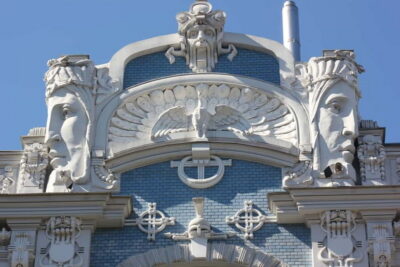
Riga: 2-Hour History of Art Nouveau Walking Tour
Read our review →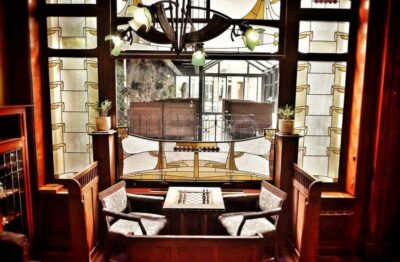
Brussels: Art Nouveau Pass – Entry to Three Locations
Read our review →
Small Group Tour in Ålesund: Art Nouveau, Sea Views & Insider Tips
Read our review →
Browse the lists this tour appears in