
Review · BARCELONA
Ticket to Sant Pau Art Nouveau Barcelona
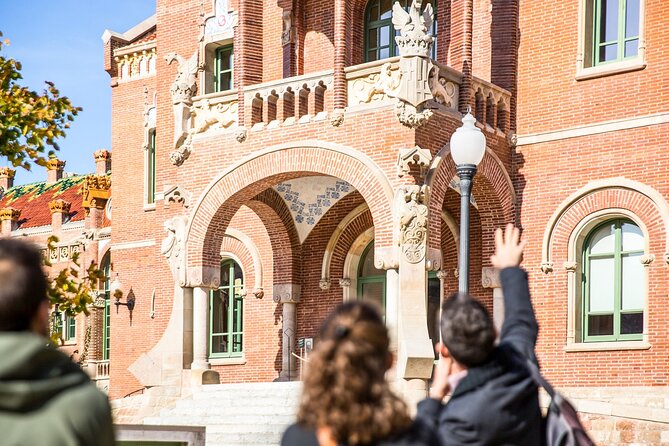
Sant Pau is not just an old hospital with pretty decoration. It is a carefully planned Art Nouveau complex, built when Barcelona needed a larger medical center, and it gives you a quieter, less familiar side of the city’s Modernisme. The site was designed by Lluís Domènech i Montaner, one of the key architects of Barcelona’s grand turn-of-the-century style.
I like two things here: you can enter with a prebooked ticket, and the visit is short enough to fit neatly beside other Barcelona plans. I also like the story behind the place, from six medieval hospitals merged in 1401 to a new complex funded by banker Pau Gil.
The catch is simple: this is a self-visit. No local guide or audioguide is included, so you need to bring your own curiosity and allow time to read the information provided on site. The voucher must also be exchanged for an entrance ticket at the entrance, a step worth noting before you arrive.
Key points to know before you go
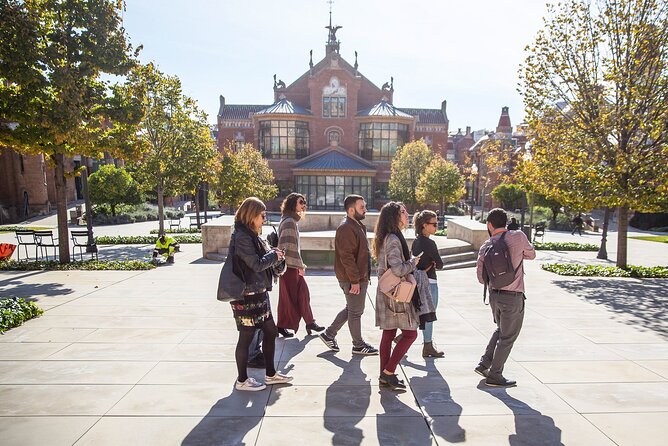
- A former hospital designed as a work of Art Nouveau: Sant Pau was created as a modern medical center, not merely as a decorative monument.
- A major Domènech i Montaner project: The architect designed the new complex, whose first stone was laid on January 15, 1902.
- A compact one-hour visit: The visit lasts about one hour, making it easy to fit into a morning in Barcelona.
- Self-guided entry only: The ticket includes admission, but no guide or audioguide.
- Prebooking helps with planning: The voucher is exchanged for a ticket at the entrance, so arrive with the booking details ready.
- A strict cancellation policy: The $32.41 ticket is non-refundable and cannot be changed after booking.
Why Sant Pau belongs on your Barcelona plan
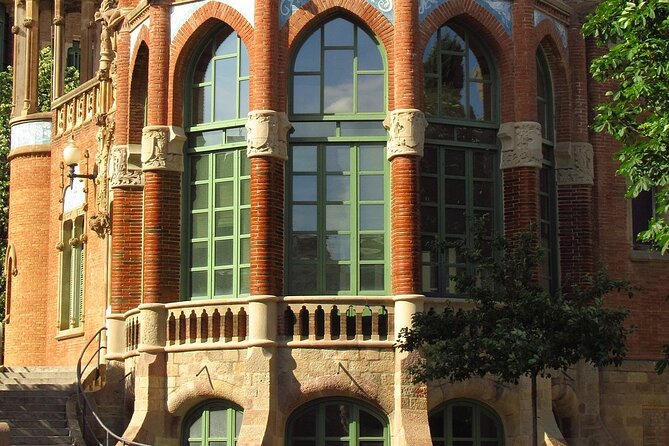
Barcelona is famous for Gaudí, but the city’s Modernisme movement was much bigger than one architect. Sant Pau gives you a chance to see the work of Domènech i Montaner, whose approach joined decoration, civic purpose, and practical design.
I find the hospital’s original purpose especially interesting. This was not a palace built for a wealthy family. It was a medical center created because Barcelona had grown and medicine had advanced beyond what the old hospital could handle.
That matters when you visit. The ornament is not the whole story. Behind the Art Nouveau surfaces was a serious attempt to build a better hospital for a growing city.
The complex also carries a long institutional story. The Hospital of La Santa Creu began in 1401 through the merger of six hospitals in Barcelona. By the end of the 19th century, that old facility had become too small. The new Sant Pau center was planned in response.
The first stone was laid on January 15, 1902. Construction took many years, and the new hospital was finally inaugurated in 1930. You can therefore read the site in two ways: as an Art Nouveau monument and as a record of Barcelona’s changing public needs.
More Art Nouveau tours in Barcelona:
- Barcelona: Art Nouveau & Gaudí Tour
★ 5.0 · 39 reviews - Sant Pau Art Nouveau Site Skip The Line | Sant Pau Hospital
★ 4.5 · 21 reviews - Riga: Old Town Walking Tour with Art Nouveau Highlights
★ 4.7 · 332 reviews
Arriving at Carrer de Sant Antoni Maria Claret
The meeting point is the Recinte Modernista de Sant Pau at Carrer de Sant Antoni Maria Claret, 167, in the Horta-Guinardó district. The activity begins at 10:00 am and ends back at the same meeting point.
I recommend treating the start time seriously. This is not a guided walk where a group leader can explain what to do if you arrive late. You need to get to the entrance, locate the ticket exchange point, and have your confirmation available.
One useful detail is easy to miss: the booking provides a voucher, but you exchange that voucher for the actual entrance ticket at the entrance. Plan a few extra minutes for this step. It is a small task, yet it removes the most likely source of confusion at the beginning of the visit.
The group limit is 45 people. Since your visit is self-guided, the number matters less than it would on a walking tour, but the site may still feel more active at the scheduled start time. A self-guided format gives you some freedom once inside, though the total visit is expected to last about an hour.
The 1401 hospital story
Before focusing on tiles, façades, and Art Nouveau details, take a moment to understand the institution behind the buildings. The Hospital of La Santa Creu was formed in 1401 when six existing hospitals were merged.
That merger tells you something about medieval Barcelona. Medical care was being brought together under one institution, creating a larger hospital with a wider civic role. Centuries later, the same institution faced a different problem: the city had expanded, and medical practice had changed.
By the late 19th century, the old hospital was no longer large enough. Barcelona’s population had grown, and advances in medicine demanded a newer setting. The decision to construct a new hospital was therefore practical as well as artistic.
Banker Pau Gil provided the key financial support through his legacy. His name became part of the institution’s identity, and his contribution made the new center possible. The first stone was laid in 1902, but the completed hospital did not open until 1930.
I like this background because it keeps the visit grounded. You are not looking at decoration without context. You are seeing a purpose-built hospital that took nearly three decades to reach its opening.
Domènech i Montaner’s Art Nouveau vision
The new hospital was designed by Lluís Domènech i Montaner. His name is important for anyone interested in Barcelona’s Modernisme, but you do not need a specialist’s knowledge to appreciate the site.
The useful thing to keep in mind is that the architect was designing an entire medical center, not a single showpiece building. That gave him room to plan a larger setting and to make the hospital feel ordered and intentional.
As you walk through the complex, pay attention to the way the decorative Art Nouveau identity belongs to the institution as a whole. The effect is different from visiting a private house, where the main focus is often the taste and wealth of one family.
Here, the artistic ambition was tied to a public function. The hospital needed to work as a place of care, while its design also expressed the importance of the institution and the city that supported it.
The supplied information does not specify every building or interior feature open during this visit, so I would not arrive expecting a detailed room-by-room tour. What you can count on is admission to Sant Pau Art Nouveau and the chance to experience Domènech i Montaner’s former hospital complex at your own pace.
More entry tickets in Barcelona:
- Barcelona: Sagrada Familia Entry Ticket with Audio Guide
★ 4.6 · 105,312 reviews - Barcelona: Sagrada Familia Skip-the-Line Entry Ticket & Tour
★ 4.8 · 12,789 reviews - Park Guell and Sagrada Familia Tour with Skip the Line Tickets
★ 5.0 · 6,384 reviews - Barcelona: Park Güell and Gaudí House Museum Entry Ticket
★ 4.5 · 6,326 reviews
What your one-hour visit is like
The visit is listed at approximately one hour. That is enough for a focused look, but not for a slow study of every detail or a long architectural investigation.
I would use the first few minutes to get oriented. Confirm where the self-guided route begins, read the basic information available, and decide how closely you want to follow the suggested path. Since there is no guide or audioguide, you control the rhythm.
A one-hour visit suits you if you want to see Sant Pau as part of a larger Barcelona day. It is also a good choice if you prefer not to commit to a long organized tour. You can take in the main architectural character, understand the hospital’s story, and move on without spending half a day indoors.
The same limit may disappoint you if you enjoy stopping at every detail. Art Nouveau buildings reward patience, and a short visit can feel brisk if you want to inspect decoration carefully. You can still make the hour count by reading the key signs and pausing at the areas that interest you most.
Because this is a self-visit, I would not expect the experience to answer every question that occurs to you. If you want a flowing explanation of Domènech i Montaner’s choices, the hospital’s medical development, or the meaning of specific decorative elements, you may need to do some reading before or after your visit.
What the ticket includes, and what it does not
The ticket includes self-visit admission to Sant Pau Art Nouveau. That is the central service, and it gives you access to the complex for an approximately one-hour visit.
It does not include a local guide. It also does not include an audioguide. Those omissions keep the format simple, but they also shape the experience.
I like self-guided sightseeing when the place has a clear visual impact and I want control over my time. You can pause when something catches your eye, move along when a section holds less interest, and avoid being tied to a guide’s pace.
The tradeoff is that the value depends partly on how much context you bring. If you know little about Barcelona’s Modernisme, read the basic story of the 1401 hospital, Pau Gil, and the 1902 foundation stone before you go. That preparation will help the building make sense rather than leaving you with decoration alone.
You should also remember that the admission is not a general guided tour of Barcelona. There is no wider city walk, no named guide, and no separate transport included. You meet at Sant Pau, visit the site, and finish at the same location.
Is $32.41 a fair price?
The price is $32.41 per person. That is not a bargain admission for a one-hour stop, so I would make the value decision based on your interest in architecture and on how much you value advance planning.
The ticket makes more sense if Sant Pau is high on your Barcelona list and you want the convenience of arranging entry before your visit. Prebooking can also help you build a reliable morning schedule, especially since the activity begins at 10:00 am.
The price makes less sense if you are looking only for a cheap indoor attraction or if you expect a guided explanation to be included. You are paying for admission and booking convenience, not for a personal interpreter.
I also advise caution because the booking is non-refundable and cannot be changed for any reason. That rule makes the ticket less flexible than some sightseeing options. Be sure your date and plans are firm before paying.
The strongest value comes from treating Sant Pau as an architectural visit with a clear historical purpose. If you appreciate Barcelona’s Modernisme and want to see work by Domènech i Montaner, the admission can be worthwhile. If you mainly want a quick photo stop, the cost may feel harder to justify.
Who should choose this self-guided visit?
I would recommend it most to people who enjoy architecture, city history, and unusual public buildings. You do not need to be an expert. A basic interest in how cities build hospitals, civic centers, and monuments is enough to make the visit rewarding.
It also fits independent planners. You receive confirmation at booking, meet at the stated address, and handle the visit without a guide. The one-hour format leaves room for other plans in Barcelona.
Families and mixed-interest groups may also appreciate the short duration. An hour is easier to manage than a long museum visit, although the absence of an audioguide means you may need to explain the site yourself to children or companions.
I would hesitate to recommend it to someone who wants a full guided lesson. The ticket does not provide that. I would also hesitate if your schedule is uncertain, since cancellation and amendments are not allowed.
Most people can participate, and the maximum group size is 45. The available information does not give detailed accessibility conditions, so you should confirm any specific mobility needs before booking rather than assume the route will suit every requirement.
A practical way to get more from Sant Pau
Before you arrive, remember three dates: 1401, when six hospitals were merged; 1902, when the first stone of the new center was laid; and 1930, when the new hospital opened.
Those dates give you a simple framework for the visit. First came the medieval institution, then the pressure created by Barcelona’s growth, and finally the long construction of a modern hospital designed by Domènech i Montaner.
Bring your booking confirmation and allow enough time to exchange the voucher at the entrance. Since you start at 10:00 am, I would avoid arriving at the last moment.
Once inside, resist the urge to rush from one decorative view to the next. Look at the site as a hospital complex first. Ask yourself how the artistic design changes the feeling of a public medical institution. That question adds meaning to the visit without requiring a guide.
If you have only one hour, focus on the overall design, the connection to the hospital’s purpose, and the key historical dates. You can always return to your notes later, but you cannot recover time lost to a confused arrival.
Should you book Sant Pau Art Nouveau?
Book this experience if you want a compact, self-guided visit to one of Barcelona’s major Art Nouveau sites and you are comfortable exploring without a guide. The combination of Domènech i Montaner’s design, the 1401 hospital foundation, and the 1902 to 1930 construction story gives the place real substance.
Think twice if you need a guide, an audioguide, or flexible cancellation. At $32.41, the ticket asks you to value the setting itself and the ease of having admission arranged in advance.
For an architecture-focused morning, I would book it. Arrive prepared to exchange your voucher, give the site your full hour, and treat Sant Pau as both a Modernisme monument and a working chapter in Barcelona’s medical story.
FAQ
Where does the Sant Pau Art Nouveau visit begin?
It begins at the Recinte Modernista de Sant Pau, Carrer de Sant Antoni Maria Claret, 167, Horta-Guinardó, 08025 Barcelona, Spain.
What time does the activity start?
The stated start time is 10:00 am.
How long does the visit last?
The visit lasts approximately one hour.
Is a guide or audioguide included?
No. The ticket includes self-visit admission only. A local guide and audioguide are not included.
Where does the activity end?
The activity ends back at the meeting point.
Can I cancel or change the booking?
No. The experience is non-refundable and cannot be changed for any reason.
Just added around Barcelona
- Love in the Gothic Quarter Barcelona: Self-Guided Romantic Walk★ 4.5 · 9 reviews
- Walking tour of the Gothic Quarter of Barcelona + Cathedral★ 5.0 · 8 reviews
- Wine tasting with a view of the Sagrada Familia★ 4.5 · 13 reviews
- Visit to the Modernist houses of the Americans★ 5.0 · 2 reviews
- Barcelona Jewish & Gothic Tour★ 5.0 · 18 reviews
- Roman & Gotic & Gaudi in Barcelona: private walking tour★ 4.5 · 2 reviews
- Self-Guided Audio Tour-The Surrealist Barcelona of Dalí and Gaudí★ 3.5 · 8 reviews
- Barcelona Gaudi Tour: Sagrada Familia, Casa Batllo & Casa Mila★ 5.0 · 4 reviews
Art Nouveau Tours, compared.
Riga: Old Town Walking Tour with Art Nouveau Highlights
Read our review →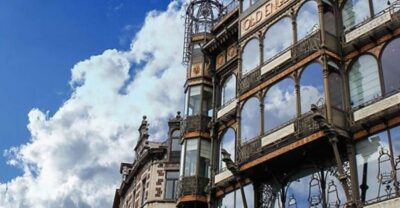
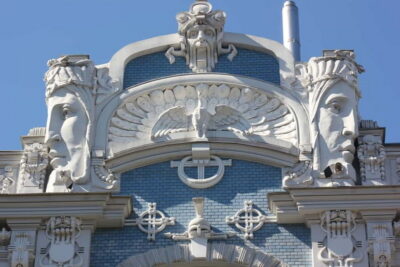
Riga: 2-Hour History of Art Nouveau Walking Tour
Read our review →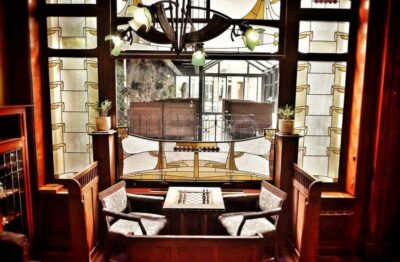
Brussels: Art Nouveau Pass – Entry to Three Locations
Read our review →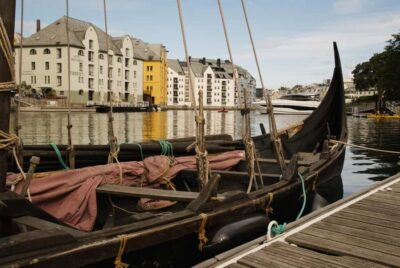
Small Group Tour in Ålesund: Art Nouveau, Sea Views & Insider Tips
Read our review →
Browse the lists this tour appears in