

Review · ARCHITECTURE TOURS
Helsinki: Architectural Highlights Guided Walking Tour
Helsinki tells its story through buildings, and this tour reads that story block by block. In three hours, you move from Senate Square and the National Library to Oodi, Amos Rex, and Kamppi Chapel, with a guide who explains how politics, culture, and daily Finnish life shaped the city.
I like the small groups of no more than six, which makes it easier to ask questions and get inside buildings a casual walk might miss. I also like the chance to request a particular style or period in advance, especially if you care about Aalto, Art Nouveau, Nordic Classicism, or modern design.
The main drawback is the distance: you walk 5 to 6 kilometers in all weather, and some stops may be less satisfying on weekends if office buildings are closed. This is not a quick photo stroll. It is a brisk, content-filled city walk.
Key points to know before you book

- A compact tour with a wide architectural range: See neoclassical, Gothic Revival, Renaissance Revival, Art Nouveau, Nordic Classicism, Functionalism, Modernism, and contemporary design in central Helsinki.
- A guide who connects buildings to Finnish life: The tour is led in English by a sociology PhD student, with guides identified in booking feedback as Zana.
- Several interiors are part of the experience: The National Library, Academic Bookstore, Oodi, cafés, and other public buildings help you see more than street façades.
- A useful introduction to Helsinki: The route links architecture with Finnish history, politics, culture, customs, food, and language.
- Personal interests can shape the walk: Tell the provider in advance if you want more attention on a particular architect, style, or period.
- Plan for weather and walking: The tour runs rain or shine, covers 5 to 6 kilometers, and is not suitable for wheelchair users.
Helsinki in buildings, from empire to modern design
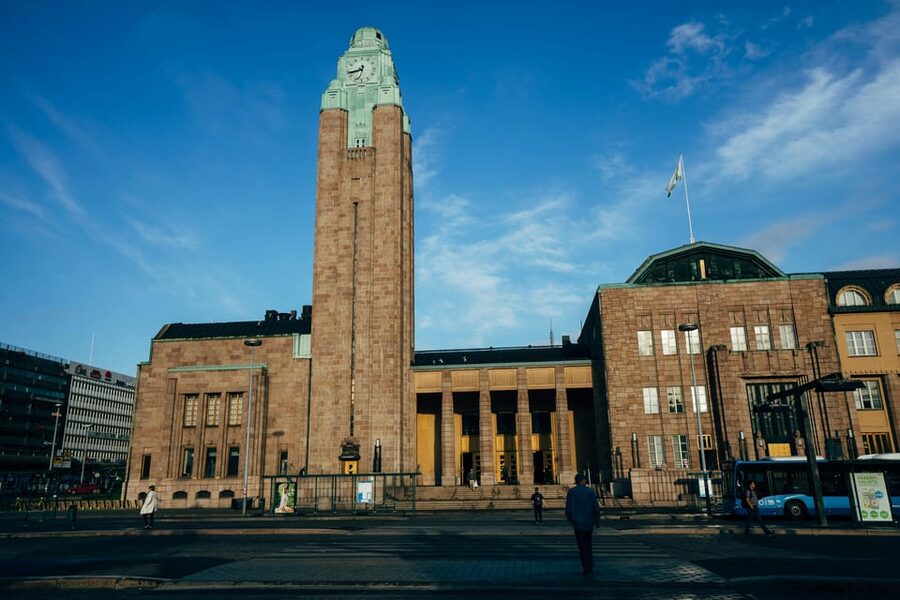
Helsinki is unusually good for an architecture walk because its central sights sit close together. In a short distance, you can compare the formal Russian Empire-era center, National Romantic details, polished early twentieth-century interiors, and bold new public buildings.
That range gives the tour its real value. You are not just looking at pretty façades. You are watching Helsinki change from a small capital built around government and trade into a city that uses libraries, museums, cafés, and public spaces as part of everyday life.
The guide brings in more than architectural labels. You can expect discussion of Finnish history, politics, culture, customs, and the way people use the city. That broader context matters, especially if this is your first visit and you want to understand why Helsinki feels different from many other European capitals.
The route begins at Fazer Café on Kluuvikatu. Meet your guide in front of the café. From there, the walk loops through the center and returns to the same general starting point, with no public transportation or meals included.
More architecture walks in the world:
- Lecce: Baroque Architecture and Underground Walking Tour
★ 4.6 · 1,248 reviews - Chicago in a Day: Food, History & Architecture Walking Tour
★ 5.0 · 1,153 reviews - Ramblas, Old Town, Gothic and Gaudi Architecture Walking Tour
★ 5.0 · 723 reviews
Senate Square and Helsinki Cathedral set the formal tone
Senate Square is the natural opening chapter. Its broad space and pale neoclassical buildings give Helsinki a clear civic center, with the cathedral rising above the square.
Your guide spends about 15 minutes here, which is enough time to explain the design of the square and its role in the city. This is one of the places where a guide earns their fee. On your own, you might take a few photos and move on. With context, the alignment of the buildings and the controlled symmetry become easier to read.
Helsinki Cathedral is covered briefly, with about five minutes and a pass-by rather than a long interior visit. That keeps the group moving, but it also means you should not book this walk expecting a detailed cathedral tour.
The contrast between the cathedral and the more decorative buildings that follow helps you see how Helsinki’s center developed. The tour is strongest when it places one style beside another instead of treating each building as an isolated stop.
The National Library reveals a quieter side of the city

The National Library of Finland receives about 15 minutes and is one of the more rewarding stops. Its importance is not only visual. Libraries in Helsinki often serve as active civic spaces, and this building lets you see how architecture can support study, public access, and national identity.
You may get to look inside, rather than simply admire the entrance. Several people who took the walk particularly valued entering buildings that they might otherwise have passed without noticing.
This stop also sets up a useful theme that returns later at Oodi: Finnish public buildings are not merely monuments. They are places designed for people to use.
Jugend details and Esplanadi’s elegant public spaces

Robert’s Coffee Jugend provides a 10-minute interior stop in a building associated with Helsinki’s Art Nouveau, or Jugend, style. The setting gives you a chance to study details at close range, rather than craning your neck at an upper-floor façade.
The tour then reaches Kappeli and Esplanadi. Kappeli is a short five-minute visit, while Esplanadi receives around 10 minutes. Together, these stops show a more social and commercial side of central Helsinki.
Esplanadi is not just a green strip through the center. It connects cafés, restaurants, monuments, and public life. The walk uses it as a pause between formal architecture and the city’s more polished commercial buildings.
You also stop at the monument to Johan Ludvig Runeberg. The five-minute visit is brief, but it adds a cultural layer to the route. Architecture here is not separated from literature and national identity. The city’s spaces carry memories of the people Finland has chosen to honor.
More guided tours in the world:
- Chicago River: 1.5-Hour Guided Architecture Cruise
★ 4.8 · 8,046 reviews - Charleston: History and Architecture Guided Walking Tour
★ 4.8 · 349 reviews - Vienna: Spanish Riding School Guided Architectural Tour
★ 4.8 · 333 reviews - Charleston History, Homes, and Architecture Guided Walking Tour
★ 5.0 · 267 reviews
Academic Bookstore and Rautatalo show Finnish modernism at work
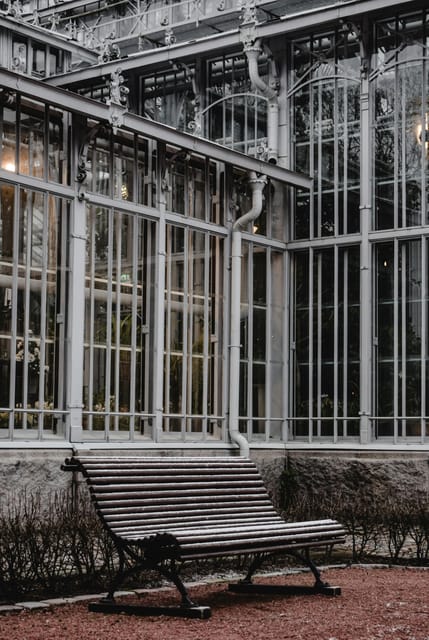
The Academic Bookstore receives about 10 minutes. This is one of the stops where an architect’s design becomes easier to appreciate from inside. Look for the way structure, light, and circulation shape the experience of shopping and reading.
Rautatalo follows with a shorter five-minute visit. Its name means Iron House, and the building adds another piece to the story of Helsinki’s twentieth-century commercial architecture.
The guide may point out carvings and small design features that are easy to miss. One especially memorable detail for some visitors is the ornament on a former bank building. These close observations are a strong reason to take the tour early in your stay, when you can use the guide’s suggestions for the rest of your time in Helsinki.
Helsinki Central Station connects grand design with daily travel

Helsinki Central Station gets about 10 minutes. It is a practical place, but also one of the city’s best-known architectural statements.
The station helps explain how public architecture works at a large scale. You see a building designed for crowds, movement, and ceremony, not just admiration. Its location also makes the point that Helsinki’s major buildings are tied closely to ordinary city life.
The tour does not turn the station into a long technical lecture. Instead, it uses the building as part of the larger sequence, moving from older civic forms toward the twentieth century and the contemporary city.
Sanomatalo and Kansalaistori lead into today’s Helsinki

Fazer Café in Sanomatalo is another short interior stop, about 10 minutes. The café setting gives you a practical break while keeping the focus on how modern Finnish buildings are used.
From there, the route reaches Kansalaistori, a public square that links several major cultural buildings. The square receives about 15 minutes, and its importance becomes clearer when you see it together with Oodi and the nearby museums.
This is where the tour shifts from historic center to modern civic Helsinki. The buildings are not trying to copy the old city. They use new materials, shapes, and public functions to express a different idea of the capital.
Oodi is the tour’s major modern highlight
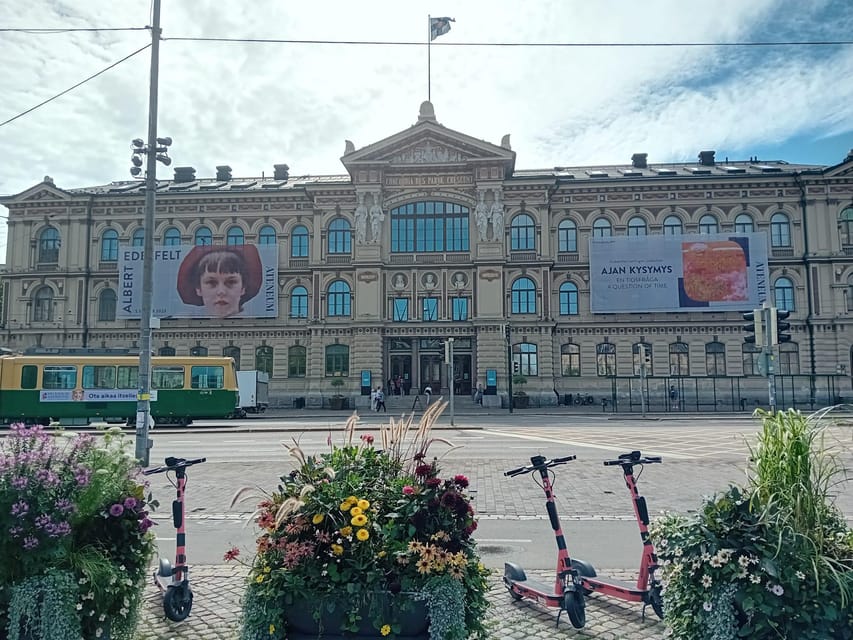
Central Library Oodi receives about 20 minutes, the longest single stop on the route. It is also the building most likely to make the strongest impression if you care about contemporary public architecture.
Oodi is more than a place to borrow books. Its wave-like form and large public spaces reflect the Finnish idea of a library as a community center. You may see areas designed for reading, meeting, working, and spending time without needing to buy anything.
The interior visit matters here. From outside, Oodi is an arresting shape. Inside, you can better understand how the building’s design supports daily use. The wave form is not just a visual trick. It helps create a broad public setting that feels different from the formal institutions around Senate Square.
Several people who took this walk singled out Helsinki’s libraries as a highlight. That makes sense. If your idea of architecture begins and ends with churches and old government buildings, Oodi may change your view of what belongs on a city sightseeing route.
Amos Rex and Kamppi Chapel bring art and silence into the walk

Amos Rex receives a short five-minute guided visit. The museum is known for its unusual contemporary design, and the stop shows how Helsinki has made room for bold cultural buildings within the historic center.
The visit is brief, so think of it as an introduction rather than a full museum experience. Your time is used to understand the building’s place in Helsinki’s modern design culture.
Kamppi Chapel follows with another five-minute stop and pass-by. Its quiet, rounded wooden form offers a sharp contrast with the open spaces and busy streets nearby.
This is a useful reminder that Helsinki’s contemporary architecture is not all about spectacle. Some buildings are designed to slow you down and create calm in the middle of the city.
Pohjola Insurance Building closes the architectural loop
The Pohjola Insurance Building is the final listed stop before you return to Fazer Café Kluuvikatu. It receives about five minutes, but its details can be rewarding if your guide draws attention to the carvings and decorative work.
This stop helps complete the tour’s movement through Helsinki’s styles. You have seen monumental civic architecture, commercial interiors, public libraries, museums, chapels, stations, and cafés. The city’s character comes from how these different buildings share a compact center.
The return to the starting area is useful if you want to continue exploring on your own. You finish near cafés and central streets, rather than being left at an unfamiliar edge of town.
What the small group and guide add
The group is limited to six people. That is a major advantage for an architecture tour because you can hear explanations more easily and ask about details as you go.
Guides identified as Zana have been described as patient, attentive, and eager to explain Finnish design and culture. The guide is a sociology PhD student, which fits the tour’s wider focus. You are not simply given dates and architect names. The discussion can connect buildings with Finnish society, politics, customs, language, food, and everyday life.
The guide may also take you into rooms and public interiors that are easy to overlook. That is one of the tour’s most useful features. A large group might stop outside and move on. A small group can spend a few minutes looking at a lobby, café, library, or shop interior.
The experience can also be adapted. If you want more emphasis on one period or style, contact the provider before the tour. Be specific. Ask for Art Nouveau, Nordic Classicism, Functionalism, Aalto, contemporary libraries, or another clear interest.
Do not assume every requested building will be open. Office access can be limited, especially on weekends. A weekday booking gives you a better chance of seeing working interiors, based on the way the route uses commercial and office buildings.
Is $56 a fair price for three hours?
At $56 per person, this is not the cheapest way to walk around Helsinki. You can see Senate Square, Esplanadi, Central Station, and Oodi without paying for a guide.
The value comes from the interpretation and access to interiors. You are paying for three hours of structured walking, an English-speaking local guide, a small group, and a route that links buildings many people would visit separately. If you are interested in architecture, history, or urban design, the price is reasonable.
It is also good value for a short stay. If you have only an afternoon in Helsinki, the walk gives you a quick survey of the center while showing you places you might miss alone.
The calculation changes if you prefer a slow pace or want to spend a long time inside each building. This route covers a lot of ground. Some stops last only five minutes, and the tour cannot provide a full visit to every museum, church, library, or landmark along the way.
Food and drinks are not included, though cafés appear along the route. You can buy something separately if the guide allows enough time, but plan to bring water and dress for the weather.
Walking conditions and who should choose this tour
You walk 5 to 6 kilometers over three hours. The pace is described as relaxed by some people, but the amount of ground still makes comfortable shoes essential.
The tour runs rain or shine. Helsinki weather can change quickly, so wear weather-appropriate clothing and bring protection from rain when needed. Indoor stops help break up cold or wet conditions, but you should not count on being inside for most of the route.
This experience suits you best if:
- You want architecture explained in plain language rather than simply photographed.
- You enjoy walking and can manage 5 to 6 kilometers.
- You want Finnish history and culture included with the buildings.
- You prefer a small group and the chance to ask questions.
- You have limited time and want a strong orientation to central Helsinki.
- You would like to request a particular architectural period or architect.
It is less suitable if you need step-free access, dislike walking in poor weather, or want a detailed interior tour of every landmark. The experience is not suitable for wheelchair users.
Should you book the Helsinki architecture walk?
I would book this if you want Helsinki to make sense as a city, not just a collection of postcard views. The route covers an impressive range, from Senate Square’s formal neoclassicism to Oodi’s wave-shaped public architecture, and the guide adds the social and historical links between them.
Book on a weekday if possible, especially if entering office or commercial buildings matters to you. Contact the provider before the tour with your preferred styles or architects. And wear shoes you can trust.
Skip it if you want a short, low-effort sightseeing loop or plan to spend most of the day inside museums. For an architecture-minded first look at Helsinki, though, the combination of small-group attention, varied buildings, and Finnish cultural context makes the $56 worthwhile.
FAQ
Where does the Helsinki architecture tour begin?
The meeting point is in front of Fazer Café Kluuvikatu. The guide waits in front of the café.
Where does the tour finish?
The route returns to the area of Fazer Café Kluuvikatu.
How long does the tour last?
The tour lasts three hours.
How far do you walk?
The tour involves approximately 5 to 6 kilometers of walking.
What language is the tour conducted in?
The live tour is conducted in English.
How large is the group?
The group is limited to six participants.
Can I request a particular architectural style?
Yes. You can contact the activity provider in advance and request a focus on a specific period, style, or architectural interest.
Is the tour suitable for wheelchair users?
No. The tour is not suitable for wheelchair users.
Just added around the world
- Wilmington History and Architecture Tour★ 4.8 · 18 reviews
- Washington, DC: Georgetown Architecture Walking Tour★ 5.0 · 8 reviews
- New Orleans : Garden District Architecture Walking tour★ 4.8 · 5 reviews
- Washington DC: Dupont Circle & Embassy Row Architecture Tour★ 5.0 · 6 reviews
- Vicenza: discovering the city of Palladio by e-bike★ 5.0 · 4 reviews
- Vicenza: Palladian Architecture Private Walking Tour★ 3.3 · 3 reviews
- Walk & Discover KL’s Architectural and Heritage Gems★ 5.0 · 7 reviews
- Unveiling Brno: History, Culture & Architectural Delights★ 5.0 · 2 reviews
Walking Tours, compared.

The Official Art Deco Walking Tour by The Miami Design Preservation League
Read our review →
Barcelona: Gothic Quarter Ghosts and Legends Walking Tour
Read our review →
Barcelona: Old Town and Gothic Quarter Walking Tour
Read our review →
Lecce: Baroque Architecture and Underground Walking Tour
Read our review →
Chicago in a Day: Food, History & Architecture Walking Tour
Read our review →

Ramblas, Old Town, Gothic and Gaudi Architecture Walking Tour
Read our review →
Chicago’s Secret Interiors Architectural Walking Tour
Read our review →Browse the lists this tour appears in