

Review · ARCHITECTURE TOURS
Dublin, in a day, on foot. History, culture & architecture!
Dublin reveals itself best on foot, and this private day with guide Dairine Nuttall gives you room to ask questions, change direction, and linger where the city catches your interest. You move from Georgian squares and literary landmarks to Dublin Castle, St Patrick’s Cathedral, and old pubs, rather than simply ticking off sights from a bus window.
I like the personal itinerary, especially for a first visit when you may not yet know which parts of Dublin deserve your time. I also like the local details: Sweny’s chemist shop, Oscar Wilde in Merrion Square, Marsh’s Library, and a possible stop for a proper pub meal. The main drawback is the amount of walking, along with extra admission charges at some sights.
Key points at a glance
- A private guide for up to 10 people: Your group gets Dairine’s full attention instead of following a large party.
- A literary start in Merrion Square: See Dublin’s museums, Oscar Wilde, Sweny’s, and possible treasures linked to Irish writers.
- A flexible central-Dublin route: The walk connects Grafton Street, heritage buildings, shops, restaurants, and atmospheric pubs.
- Two major historic interiors: Dublin Castle and St Patrick’s Cathedral are available, but admission is not included.
- A full eight-hour day on foot: This is designed to cover a lot, so comfortable shoes and sensible pacing matter.
- Good value for a group: At $520.57 for up to 10 people, the per-person cost drops sharply as your group grows.
Why a Private Walking Day Works Well in Dublin
Dublin is compact enough to explore on foot, but its story is spread across streets, squares, churches, museums, and small businesses. A guide helps connect those pieces. You are not just looking at a Georgian doorway or a statue. You can ask why it matters, who lived nearby, and how the city changed around it.
The private format is the real selling point. Dairine can shape the day around art, literature, architecture, Irish political history, or a mix of all four. If you want more time at a museum, less time shopping, or a quicker pace for a short visit, the route can change.
That flexibility also makes this useful for a family or a small group with different interests. One person can ask about James Joyce while another wants to see Dublin Castle. You will not be locked into a fixed group schedule.
The trade-off is that a private tour is expensive for one or two people. The $520.57 group price works out to about $260 per person for two, $130 per person for four, or about $52 per person for a full group of 10. For a couple, you are paying for time, planning, and direct attention. For a family or group, the price becomes much easier to justify.
More history tours in the world:
- Chicago in a Day: Food, History & Architecture Walking Tour
★ 5.0 · 1,153 reviews - Kuala Lumpur: Batu Caves & Historic Buildings Tour
★ 4.7 · 539 reviews - Charleston’s Best Highlights: History, Culture & Architecture
★ 5.0 · 422 reviews
Merrion Square: Georgian Dublin and Literary Characters

The morning begins around Merrion Square, one of the best places to understand Dublin’s Georgian quarter. This part of the city brings together museums, galleries, libraries, government buildings, and elegant streets of brick town houses.
The tour uses this district as more than a pretty backdrop. You can dip into museums and see selected highlights connected to Irish art, literature, and archaeology. Two unusual items mentioned for the route are a Nobel medal for literature and the passport of W. B. Yeats. Small objects like these can give a human scale to people who otherwise feel like distant names in a textbook.
Oscar Wilde is another memorable stop. His statue sits near his childhood home, giving the guide a natural opening to discuss the writer and the Dublin society that shaped him. This is the sort of detail that is easy to miss if you simply walk through the square with a map.
If James Joyce interests you, ask about Sweny’s. This chemist shop opened in 1847 and changed little over the years. It appears in Joyce’s Ulysses and now operates as a Joyce center run by volunteers. A song may even be offered during a visit, though that should be treated as a possibility rather than a scheduled part of the tour.
This first section can take around three hours, depending on what you choose to see. That is a long time for one district, but it makes sense if museums and Irish writers are high on your list. If they are not, tell Dairine early. The private format lets you give more time to the streets and major buildings that interest you most.
Grafton Street and the City’s Everyday Side
From Merrion Square, the walk takes an unusual route toward Dublin Castle through the central district. This is where the tour shifts from formal Georgian Dublin to the city people use every day.
Grafton Street is known for shops and street life, but the route also points out heritage buildings and Georgian interiors. Look up when you enter older buildings. Ceilings and interior details can be as telling as grand facades, and they are easy to miss when you are focused on getting from one sight to the next.
This part of the walk also gives you a chance to see Dublin as a living city, with restaurants, pubs, and small businesses mixed into the historic core. The guide can suggest places for food, and the schedule usually includes a break in an old pub that also serves meals.
Lunch is not included, so plan for that cost. The upside is that you are not being sent to a fixed restaurant selected for a large group. You can ask for a place that suits your taste and use the break to rest your feet.
One useful detail from the tour is the chance to stop outside Burdocks, Dublin’s famous fish and chip shop, on the way to St Patrick’s Cathedral. The shop has a long list of famous customers displayed outside. You do not need to eat there, but it offers a quick, distinctly Dublin pause.
Dublin Castle and the Story of British Rule
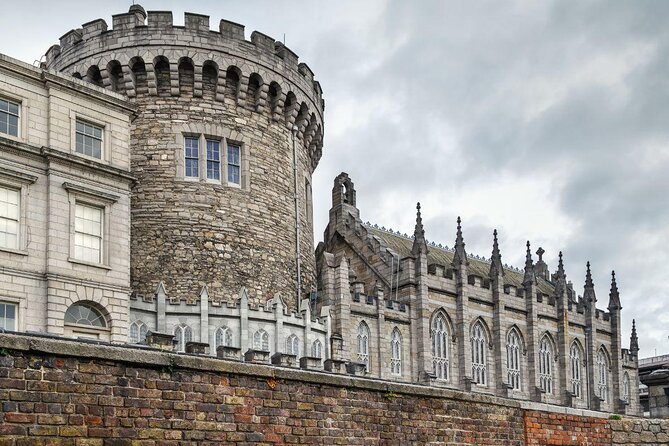
Dublin Castle was the center of British administration in Ireland for more than 700 years. Its buildings do not form one single medieval fortress, so do not arrive expecting a castle of towers and moats. The interest is in the complex of rooms, courtyards, government offices, and later additions.
A typical visit can include the State Apartments, the former throne room, and St Patrick’s Hall. St Patrick’s Hall is especially important because it is used for presidential inaugurations. Seeing the room gives you a direct link between Ireland’s colonial past and its modern state.
There is also a Revenue Museum for anyone interested in taxation. That may sound dry, but it is a useful reminder that government is built from paperwork, money, and administration as much as from grand ceremonies. You can ask Dairine whether it fits your interests.
The castle section is planned for about two hours, but admission is extra. This is one place where you should decide in advance how much interior sightseeing you want. If you enter the State Apartments and other attractions, the day becomes more structured. If you stay outside, you have more time for nearby streets and gardens.
The gardens behind the castle offer a quiet break from the city center. The Chester Beatty Library is nearby, with a popular restaurant, giving you another possible stop if art, books, and world cultures appeal to you. The exact choice depends on your interests and available time.
A few more architecture tours around the world worth a look
- Chicago Architecture River Cruise
★ 5.0 · 15,756 reviews - Chicago River 90-Minute Architecture Tour
★ 4.5 · 9,629 reviews - Chicago River: 1.5-Hour Guided Architecture Cruise
★ 4.8 · 8,046 reviews - Chicago Architecture Center River Cruise aboard First Lady
★ 5.0 · 5,536 reviews
St Patrick’s Cathedral and Jonathan Swift
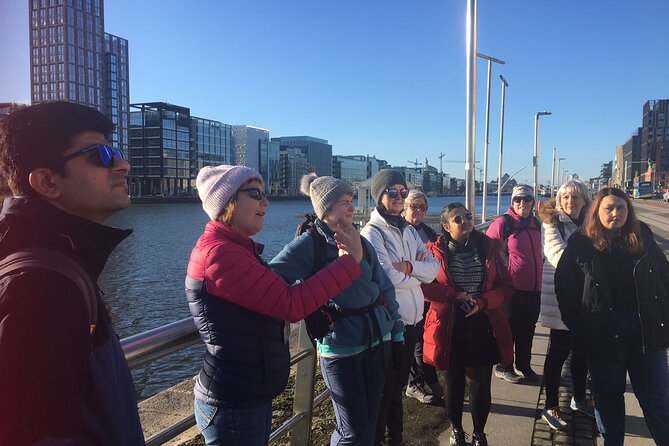
The walk continues toward St Patrick’s Cathedral, passing Dublin City Hall if it is open. City Hall adds another architectural layer to the day and helps show how civic power was expressed in the city.
St Patrick’s Cathedral dates from 1195 and is Ireland’s largest cathedral. The interior contains tombs, monuments, memorials, and reminders of both happy and painful chapters in Irish life. It is not just a pretty church. It remains a place of real importance to many Irish people.
Jonathan Swift, author of Gulliver’s Travels, served as dean here for many years and is buried in the cathedral. His connection gives the building a strong literary link, following the morning’s focus on Wilde, Yeats, and Joyce.
Admission is not included, and the visit is planned for about an hour. That extra cost is worth considering if you care about church architecture, Irish literature, or historic memorials. If religious buildings are not a priority, you may prefer to spend longer elsewhere.
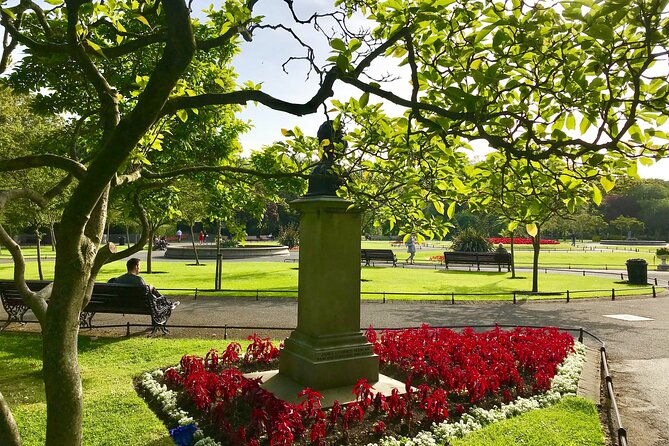
The route also passes through St Patrick’s Park, offering a little outdoor breathing room between city streets and the cathedral interior. After several hours on foot, that change of pace matters.
Marsh’s Library and a Quieter Route Back
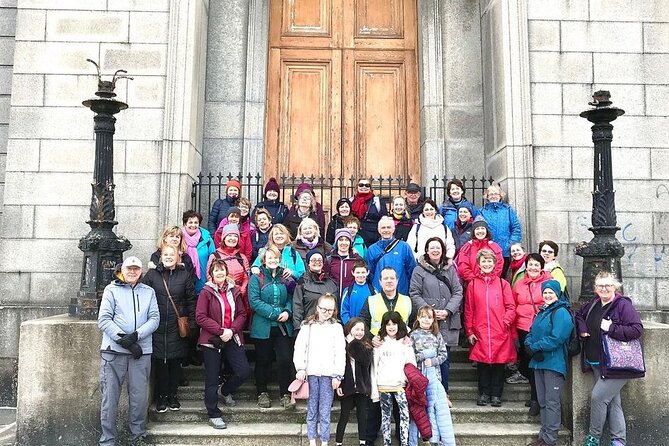
The return toward central Dublin includes Marsh’s Library, founded by Archbishop Narcissus Marsh. It is Ireland’s oldest public library, and its old reading rooms have a wonderfully unusual feature: cages where readers were once locked in while borrowing books.
That detail alone makes the library memorable. It also gives you a picture of how valuable and vulnerable books were treated in earlier centuries. The setting has an old, almost storybook atmosphere, but the appeal is grounded in the real work of preserving books and controlling access to them.
The final hour follows interesting streets back toward the central area and usually ends at Grafton Street, unless you prefer another destination. This flexible finish is helpful if you are heading to dinner, a hotel, or another Dublin sight.
Do not underestimate this final stretch. An eight-hour walking day can feel long, especially if you spend several hours inside museums and historic buildings. You can ask Dairine to adjust the pace, but you should still wear comfortable shoes and be ready for Dublin weather.
What the Guide Adds to the Day
Dairine’s role is not simply to lead you from one address to the next. The value comes from the stories between the official sights. Sweny’s, the famous fish and chip shop, Georgian ceilings, the library cages, and the personal items linked to Yeats give the day texture.
The private setting also makes questions easier. You can stop and ask about a building, an author, a ceremony, or a detail that catches your eye. That is particularly useful in Dublin, where political, literary, religious, and commercial stories often share the same few streets.
Past tour days have also included Dublin’s docks and fast-paced layover visits, which suggests the guide can adapt the day beyond this central route. Still, you should discuss your priorities before starting if you want a different focus.
Weather is another reason a private guide helps. A wet day does not cancel the city’s museums, cathedral, castle interiors, libraries, and pubs, though rain will make the outdoor walking less pleasant. Build in the pub or lunch break rather than treating it as an afterthought.
Price, Group Size, and Practical Planning
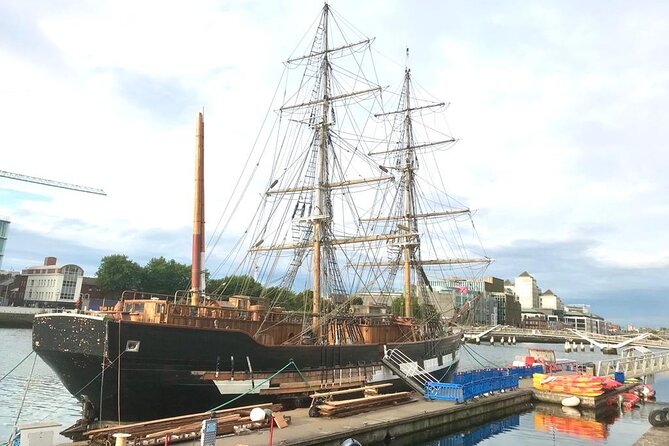
The tour costs $520.57 per group, with up to 10 people. It includes the guide but not admissions. Food, drinks, and any museum or historic-site tickets are also extra.
For a full group, this can be strong value. You receive roughly eight hours of private guiding, and the cost per person becomes modest when shared among family or friends. For two people, the value depends on how much you want a custom route and direct attention.
The meeting and usual finishing point is Grafton Street. The tour is offered Tuesday through Friday, from 9:00 a.m. to 5:30 p.m., during the stated operating period. It is near public transportation, uses a mobile ticket, and confirmation is provided when you book.
Most people can participate, and service animals are allowed. The practical concern is stamina rather than a special skill requirement. This is a long walking day with several historic interiors, so tell the guide if you need a slower pace or fewer stops.
Free cancellation is available up to 24 hours before the start time. Changes or cancellations inside that window are not accepted for a refund.
Who Should Book This Dublin Day
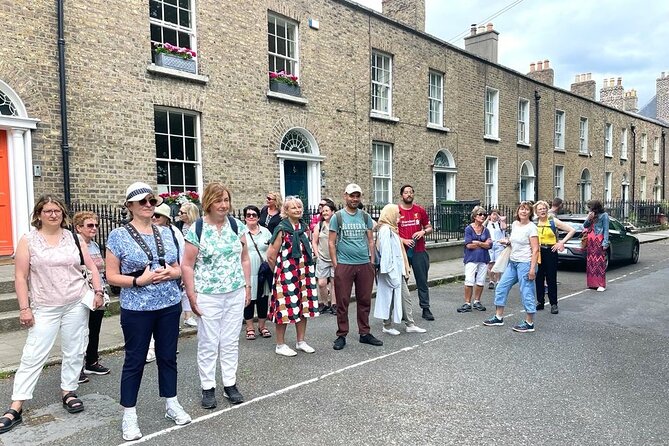
I would choose this tour if you have one day in Dublin and want both the major landmarks and the small details that make the city memorable. It is also a strong fit for first-time visitors who do not want to spend their limited time sorting out routes and opening hours.
Families and groups of friends get the best financial value. So do visitors with mixed interests, since the itinerary can balance museums, writers, churches, architecture, shopping streets, and food.
I would think twice if you dislike walking, want a tightly fixed schedule, or prefer a low-cost group tour. Admission fees and lunch add to the base price, and the day can feel full if you try to enter every possible sight.
Book it if you want Dublin explained by a local guide who can adjust the day as you go. Skip it if you would rather wander alone and choose only free outdoor sights. The strongest reason to reserve is not the number of stops. It is having Dairine connect them into one readable story, from Georgian Dublin and Irish writers to British rule, national independence, faith, and ordinary city life.
FAQ
Where does the tour start?
The tour starts on Grafton Street in Dublin, Ireland.
Where does the tour end?
It normally ends on Grafton Street, although another destination may be possible because the route is flexible.
How long does the tour last?
The experience lasts approximately eight hours.
How many people can join the private tour?
The private tour is available for one group of up to 10 people.
Is admission to Dublin Castle included?
No. Admissions, where applicable, are not included in the tour fee.
Is admission to St Patrick’s Cathedral included?
No. Admission to St Patrick’s Cathedral is not included.
Is lunch included?
No. Food and drinks are not listed as included, though the route usually allows time for a break in a pub that serves food.
Can I cancel for a full refund?
Yes. You can cancel at least 24 hours before the experience start time for a full refund. Cancellations or changes made less than 24 hours before the start time are not accepted.
Just added around the world
- Wilmington History and Architecture Tour★ 4.8 · 18 reviews
- Washington, DC: Georgetown Architecture Walking Tour★ 5.0 · 8 reviews
- New Orleans : Garden District Architecture Walking tour★ 4.8 · 5 reviews
- Washington DC: Dupont Circle & Embassy Row Architecture Tour★ 5.0 · 6 reviews
- Vicenza: discovering the city of Palladio by e-bike★ 5.0 · 4 reviews
- Vicenza: Palladian Architecture Private Walking Tour★ 3.3 · 3 reviews
- Walk & Discover KL’s Architectural and Heritage Gems★ 5.0 · 7 reviews
- Unveiling Brno: History, Culture & Architectural Delights★ 5.0 · 2 reviews
Historical Tours, compared.
Chicago in a Day: Food, History & Architecture Walking Tour
Read our review →
Kuala Lumpur: Batu Caves & Historic Buildings Tour
Read our review →
Charleston’s Best Highlights: History, Culture & Architecture
Read our review →
Palm Springs Modernism Architecture & History Bike Tour
Read our review →
Charleston: History and Architecture Guided Walking Tour
Read our review →
Historic Georgetown: History, Gossip, & Architecture Walking Tour
Read our review →
Charleston History, Homes, and Architecture Guided Walking Tour
Read our review →
Browse the lists this tour appears in