Review · ARCHITECTURE TOURS
Cholet Tour – Andean Architecture and Culture – El Alto
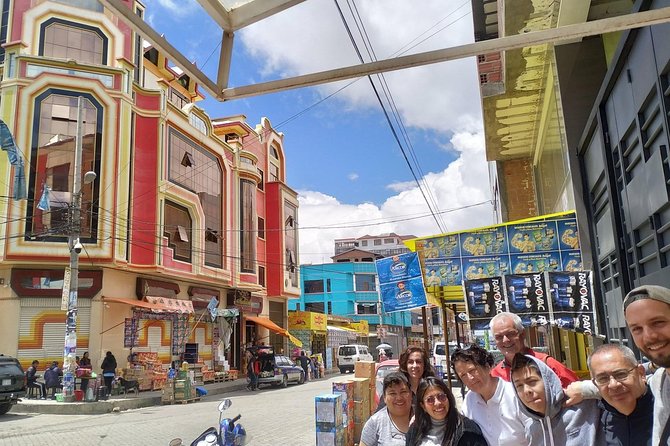
El Alto’s most striking feature is its colorful cholet architecture, where bold facades, large windows, and elaborate designs reflect the success and identity of Aymara families. This three-hour tour takes you above La Paz by cable car, then into El Alto with a local guide who explains what these buildings mean and how the city works.
I like the combination of Mi Teleférico and local transport, since you see El Alto the way residents move through it rather than from a tour bus. I also like the small group, limited to 12 people, which gives you a better chance to ask questions and keep up during the walking sections.
The main drawback is pace. One poor experience described too much quick walking and hopping on and off buses, while other visits praised guides such as Denise, Max, and Dani for making the tour clear and engaging. Your guide can make a real difference.
Key points to know before booking
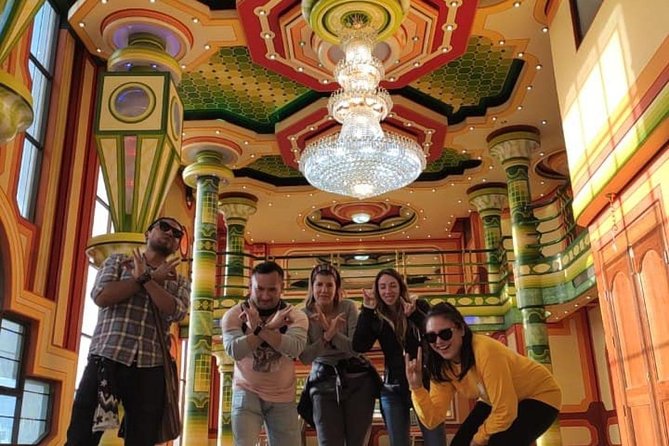
- Cholets are more than colorful buildings: Your guide explains their architectural style, purpose, and connection to Aymara identity.
- The cable-car ride is part of the experience: You’ll spend about 30 minutes using Mi Teleférico, with tickets included.
- El Alto requires a guide: The city’s streets and cholets are not always easy to understand or locate on your own.
- The group stays small: A maximum of 12 people keeps the outing more personal than a large city tour.
- The tour uses local transport: Expect more than walking, with some public transportation used to reach different buildings.
- Plan for a three-hour morning: The tour starts at 10 a.m. at Mi Teleférico’s Línea Morada, Estación Obelisco, and returns there.
Why El Alto’s cholets are worth seeing
El Alto is often treated as a place to pass through on the way to somewhere else. That misses the point. The city offers a direct look at modern Aymara identity, commerce, family life, and ambition.
The cholet is central to that story. These buildings often combine a family home, commercial space, event rooms, and rental areas. Their colors and decoration are not quiet or restrained. They announce achievement in a way that is easy to see from the street.
You may recognize some of the style from photographs, but photographs do not explain why the buildings matter. The useful part of this tour is the context. Your guide helps you see the difference between a merely colorful building and a traditional cholet, and explains how these structures connect to local traditions.
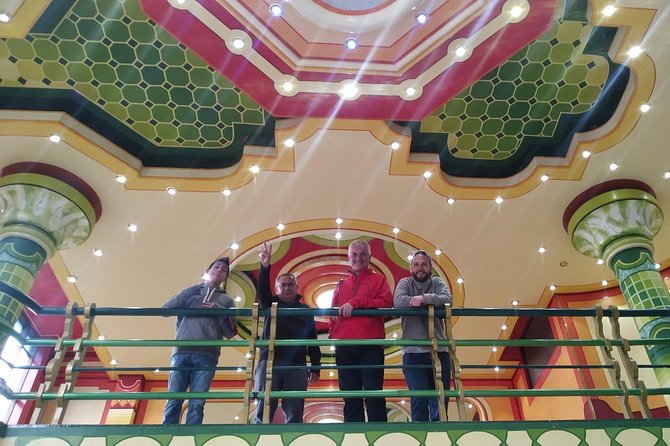
A visit inside one traditional cholet adds another layer. You are not limited to looking at the facade from the sidewalk. Access can vary, but the tour is designed to give you a chance to see the interior and understand how the building functions.
This is a cultural visit rather than a standard list of monuments. There may not be a single famous landmark waiting at the end of the street. Instead, you learn to read the city itself.
A few more architecture tours around the world worth a look
- Chicago Architecture River Cruise
★ 5.0 · 15,756 reviews - Chicago River 90-Minute Architecture Tour
★ 4.5 · 9,629 reviews - Chicago River: 1.5-Hour Guided Architecture Cruise
★ 4.8 · 8,046 reviews
The 10 a.m. meeting at Mi Teleférico
The tour begins at the Mi Teleférico Línea Morada, Estación Obelisco, in La Paz. You should arrive ready to begin at 10 a.m., since the experience returns to this same meeting point after the El Alto visit.
Starting at a cable-car station makes practical sense. La Paz and El Alto are connected by a steep, dramatic urban setting, and the cable car is one of the best ways to move between them. It also gives you an immediate sense of how the two cities are linked.
The meeting point is near public transportation, so it is suited to visitors who can make their own way across La Paz. The supplied details do not include hotel pickup, so do not assume that a hotel will be included as a pickup point. One booking problem came from a pickup expectation that had not been confirmed, so check the meeting instructions carefully before the day of the tour.
The group size is capped at 12 people. That is small enough for a guide to explain details without shouting, though the experience still involves public spaces and local transport rather than a private vehicle.
Riding the cable cars toward El Alto
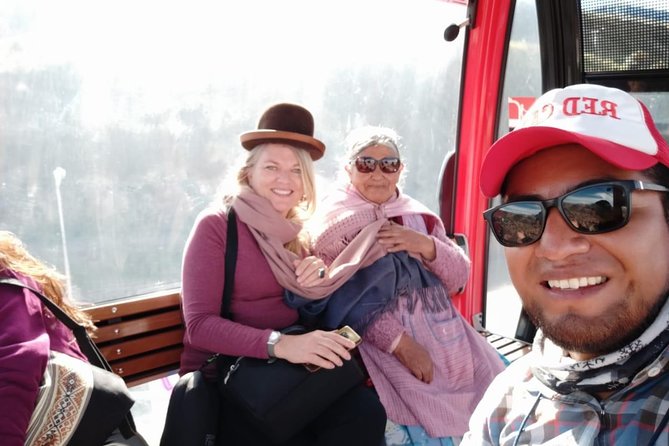
The first part takes about 30 minutes and includes tickets for the cable cars. You may ride several lines as the route connects La Paz with El Alto, making the journey part of the sightseeing rather than simply a transfer.
From above, you can see how the cities spread across the high plateau and steep slopes. The view is useful because it puts the visit in context. El Alto is not a decorative side trip. It is a major urban center with its own character, movement, and daily routines.
The cable car is also a practical introduction to local life. You are not sealed away in a tour vehicle. You move through a form of public transportation that residents use to get around. The ride is short, but it helps you understand why the cable system matters in a city where road travel can be slow.
Keep your expectations sensible. This is not a long scenic ride with a dedicated viewpoint stop. The cable-car segment lasts about half an hour and supports the cultural visit that follows. Its value comes from the view, the connection between the cities, and the chance to use the system with someone who can explain where you are going.
Walking through El Alto with a local guide
The main portion lasts about two hours in El Alto. You walk through colorful streets, stop to examine cholets, and use local transportation to reach more than one area.
This is where the tour earns its price. Finding a particular cholet may be difficult if you do not know the city, and seeing a facade without explanation leaves much of the story untold. A local guide can point out architectural details, explain the purpose of the buildings, and connect them to Aymara traditions.
The experience can also be physically active. One disappointing visit involved moving quickly from place to place and repeatedly getting on and off buses. That may have reflected the guide on that particular day, but it is still a useful warning. If you prefer long pauses for photography, ask at the start how much time will be available at each stop.
Other guide experiences were much stronger. Denise was praised for keeping the route organized and explaining the different types of cholets. Max was described as good company during a visit focused on local traditions and cable-car travel. Dani was singled out for explaining El Alto’s past and development clearly. Guides can change, so consider these names examples of the kind of leadership you want rather than a guarantee of who will lead your group.
The best approach is to stay curious and observant. Look at how the buildings use color, shape, and height. Notice how a cholet may serve several purposes at once. Then ask your guide to explain what you are seeing instead of treating the walk as a photo stop.
Same city, a completely different century:
- Chicago Architecture Center River Cruise aboard First Lady
★ 5.0 · 5,536 reviews - Chicago: Architecture River Cruise Skip-the-Ticket Line
★ 4.8 · 4,325 reviews - Chicago River 45-Minute Architecture Tour from Magnificent Mile
★ 4.5 · 2,924 reviews - Barcelona: Sant Pau Recinte Modernista Entry Ticket
★ 4.6 · 2,567 reviews
Going inside a traditional cholet
A chance to enter a traditional cholet is one of the most useful parts of the experience. From the outside, these buildings can look like grand private houses or unusual commercial blocks. Inside, their purpose becomes easier to understand.
The tour description does not promise access to every building or specify exactly which cholet you will visit. Entry may depend on the schedule and local arrangements. Still, the chance to see inside gives you something a street walk cannot provide.
Expect the interior visit to be explanatory rather than a formal museum tour. You are there to connect the architecture with family life, business, celebrations, and local status. The guide’s explanation matters as much as the building itself.
Be respectful with photography and ask before taking pictures indoors. The information provided does not set out a photography policy, so it is best to follow your guide’s instructions and treat the space as a working place rather than a display.
Understanding Aymara culture through architecture
The tour’s subject is not simply design. Cholets offer a way to discuss Aymara culture in present-day El Alto, including how tradition and modern success appear in public.
That is why a guide matters. A visitor walking alone might notice the bright colors and unusual shapes but miss the social meaning. The tour helps you connect the buildings with the people who commission them and the communities that use them.
Do not expect a lecture filled only with dates and names. The strongest version of this outing is visual and conversational. You see a building, hear how it is used, compare it with another, and gradually understand the pattern.
One very poor experience raised concern about the guide’s grasp of Indigenous and Aymara culture. That criticism should not be ignored. If cultural explanation is your main reason for booking, pay close attention to the guide’s introduction and ask questions early. A clear guide can make the tour memorable, while a rushed or uncertain guide can reduce it to a fast walk past colorful facades.
Snacks, transport, and the three-hour schedule
Snacks are included. The details do not specify what kind, so do not book this as a meal replacement. Have breakfast beforehand, especially if you prefer a substantial meal before walking and using public transportation.
The total duration is about three hours. Roughly 30 minutes are devoted to the cable-car portion, and about two hours are spent exploring El Alto. The remaining time allows for meeting, transfers, and changes between stops.
The transport mix is a strength for many people. You ride Mi Teleférico, walk through the city, and may use local buses or other public transport. This gives you a closer look at everyday movement than a private vehicle would.
It can also make the outing feel less polished. Public transport means you may have to move quickly, wait with the group, or adjust to crowded conditions. The experience is best for someone who wants contact with the city, not someone who needs a slow, perfectly controlled route.
Wear practical walking shoes and keep your belongings secure in the ordinary way you would in any busy urban area. The supplied information says most people can participate, but it does not give a detailed accessibility assessment. If stairs, uneven walking, or changing transport are concerns, ask the operator before booking.
Is $25.65 a fair price?
At $25.65 per person, this is a reasonable price for a three-hour guided outing that includes cable-car tickets, snacks, and access to a small group. You are paying not only for transportation but also for local orientation and cultural explanation.
The value is strongest if you would not feel comfortable finding El Alto’s cholets alone. A self-guided visit might cost less, but it would not necessarily help you identify the different architectural styles or understand the purpose of the buildings.
The value is weaker if your main goal is uninterrupted photography. The route may involve quick movement and local buses, and the tour does not promise long stops at every building. You are buying interpretation and access, not a private photo session.
The maximum group size of 12 improves the calculation. It is not a private tour, but it is small enough to make questions possible and keep the group together. A well-organized guide can use that format to good effect.
Who should book this El Alto experience?
I would recommend it to visitors who want to understand El Alto rather than simply look at it from a cable-car window. It suits first-time visitors to the city, architecture fans, and anyone curious about Aymara culture in a modern urban setting.
It is also a good match for people who enjoy public transportation and walking. The mix of cable cars, streets, and local buses makes the outing feel connected to daily life.
You may want a different format if you dislike changing transport, prefer a slow schedule, or need guaranteed hotel pickup. The experience begins and ends at the Obelisco station, and there is no stated promise of hotel collection.
The 97 percent recommendation rate and 4.8 rating suggest that the tour usually delivers a strong experience, but the range of guide feedback matters more than the numbers alone. Denise, Max, and Dani received especially positive comments, while one guide was criticized for limited cultural explanation and a rushed pace. Ask who is guiding the tour if that information is available, and confirm the meeting point.
You can cancel for a full refund up to 24 hours before the start time. Changes or cancellations made less than 24 hours before the start are not accepted for a refund, and the cutoff follows local time.
My verdict on the cholet tour
Book this tour if you want a guided introduction to El Alto’s cholets and Aymara identity, with the cable-car journey included. Its strongest feature is the connection between transport, architecture, and local culture. You do not just see colorful buildings. You learn why they are there and how they fit into the city.
Go in expecting a lively, active morning rather than a slow architectural walk. The guide matters, and the pace may vary. At $25.65, the tour offers good value when you want local context and a small group, especially if visiting El Alto alone would leave you unsure where to go or what you were seeing.
FAQ
Where does the tour start?
It starts at Mi Teleférico Línea Morada, Estación Obelisco, in La Paz.
What time does the tour begin?
The scheduled start time is 10 a.m.
Where does the tour finish?
The activity ends back at the same meeting point.
How long does the tour last?
It lasts approximately three hours.
Is the cable-car ticket included?
Yes. The cable-car portion includes an admission ticket.
How much time is spent on the cable cars?
The Mi Teleférico portion takes about 30 minutes.
How long is the El Alto visit?
The guided exploration of El Alto takes about two hours.
Will I enter a cholet?
The tour includes a chance to see inside a traditional cholet. Exact access can depend on local arrangements.
How many people can join the tour?
The maximum group size is 12 people.
Are snacks included?
Yes, snacks are included.
Can I cancel for a full refund?
Yes, if you cancel at least 24 hours before the experience start time. Cancellations made less than 24 hours in advance are not refunded.
Just added around the world
- Wilmington History and Architecture Tour★ 4.8 · 18 reviews
- Washington, DC: Georgetown Architecture Walking Tour★ 5.0 · 8 reviews
- New Orleans : Garden District Architecture Walking tour★ 4.8 · 5 reviews
- Washington DC: Dupont Circle & Embassy Row Architecture Tour★ 5.0 · 6 reviews
- Vicenza: discovering the city of Palladio by e-bike★ 5.0 · 4 reviews
- Vicenza: Palladian Architecture Private Walking Tour★ 3.3 · 3 reviews
- Walk & Discover KL’s Architectural and Heritage Gems★ 5.0 · 7 reviews
- Unveiling Brno: History, Culture & Architectural Delights★ 5.0 · 2 reviews
Architecture Tours, compared.



Chicago River: 1.5-Hour Guided Architecture Cruise
Read our review →
Chicago Architecture Center River Cruise aboard First Lady
Read our review →
Chicago: Architecture River Cruise Skip-the-Ticket Line
Read our review →
Chicago River 45-Minute Architecture Tour from Magnificent Mile
Read our review →
Barcelona: Sant Pau Recinte Modernista Entry Ticket
Read our review →