
Review · ARCHITECTURE TOURS
Bishkek : City Tour (History, Architects, Statues & Culture)
Bishkek’s city center is a lesson in contrasts: Soviet squares, Kyrgyz national heroes, grand government buildings, and reminders of nomadic life all sit within an easy walking route. This tour connects those pieces, beginning and ending at Ala-Too Square, the city’s main gathering place.
I like two things in particular. First, the guides, including Alex, Anna, Sofia, and Talgat, explain the stories behind the monuments rather than simply pointing them out. Second, the tour includes practical advice about local food, hotels, nearby nature, and other cities in Kyrgyzstan. The main consideration is the price: at $29 per person, it is fair for a private or well-led small-group walk, but one 2.5-hour outing can feel costly if you are comparing it with local walking costs.
Key points at a glance
- Soviet and Kyrgyz history in one walk: See Lenin, Manas, Kurmanzhan Datka, Parliament, the White House, and Soviet-era monuments.
- A useful first-day introduction: The route helps you understand Bishkek before heading into the mountains or other parts of the country.
- Strong guide-led storytelling: Alex, Anna, Sofia, Tareen, and Talgat are among the guides named for this experience.
- A compact central route: The tour lasts 2.5 hours and returns to Ala-Too Square.
- More than monuments: Expect discussion of the Kyrgyz flag, nomadic life, KSSR history, architecture, and city mosaics.
- Easy to book around changing plans: You can cancel up to 24 hours ahead and reserve without paying immediately.
Why Bishkek makes sense on foot
Bishkek is a city best understood by walking through its central spaces. A bus or taxi can carry you from one sight to the next, but it will not show you how the squares, statues, theaters, and government buildings fit together.
This route focuses on the city center and its public monuments. You are not signing up for a long excursion outside Bishkek. Instead, you get a concentrated introduction to Kyrgyzstan’s political story, Soviet past, national identity, and everyday city culture.
The tour also gives you a framework for later sightseeing. After hearing about Manas, Kurmanzhan Datka, the Kyrgyz flag, and the Kyrgyz Soviet Socialist Republic, you will recognize those names and symbols elsewhere in the country.
The walk is listed at 2.5 hours, with short guided stops and time for photographs. It begins and ends at Ala-Too Square, so you can easily continue with your own plans afterward.
More history tours in the world:
- Chicago in a Day: Food, History & Architecture Walking Tour
★ 5.0 · 1,153 reviews - Kuala Lumpur: Batu Caves & Historic Buildings Tour
★ 4.7 · 539 reviews - Charleston’s Best Highlights: History, Culture & Architecture
★ 5.0 · 422 reviews
Ala-Too Square and the Kyrgyz flag
Ala-Too Square is the natural starting point. It is the central reference point for Bishkek, and the large Kyrgyz flag gives the opening discussion a clear focus.
Your guide explains the flag and what it represents, then places it within the story of Kyrgyz national identity. The conversation also touches on nomadic life, an essential part of understanding Kyrgyz culture. This is a good early stop because it moves the tour beyond Soviet buildings and introduces the country on its own terms.
The opening section lasts about 20 minutes. Expect a safety briefing and a general orientation before the walk begins in earnest.
I would pay close attention here, especially if Bishkek is your first stop in Kyrgyzstan. The flag, national heroes, and nomadic traditions will keep appearing in later monuments and museums.
Kurmanzhan Datka and the national story
The Kurmanzhan Datka Statue gives the tour a chance to focus on one of Kyrgyzstan’s best-known historical figures. The stop lasts about 20 minutes and combines sightseeing with explanation of the country’s past.
This is one of the places where a guide adds real value. A statue alone can tell you who is being honored, but not why that person matters or how the figure fits into Kyrgyz memory. The tour is designed to explain those connections.
You will also see the State History Museum during this part of the route. The listed visit is short, about 10 minutes, and entrance fees are not included. Treat this as an exterior or brief museum-area stop unless your guide confirms that you will go inside.
That distinction matters. If you want a full museum visit, you should allow extra time and budget for your own entrance. The city tour is built around a walking overview, not lengthy indoor visits.
Victory Square and the memory of war
Victory Square adds a different tone. Its purpose is tied to wartime remembrance, and your guide discusses the monument and its place in Bishkek.
The scheduled stop is about 15 minutes. That is enough for the main explanation and photographs, though not for a long, quiet visit. The square works well in the sequence because it shows how public spaces can carry national memory.
You will see a different side of the city here than at Ala-Too Square. One space emphasizes national identity and civic life. The other reflects sacrifice and remembrance. Together, they show how Bishkek uses large open spaces to tell its story.
If you are visiting during hot weather, bring water. One direct account describes the walk as enjoyable despite the heat, while another praised the guide for adjusting the start time during heavy rain. The route is manageable, but weather can affect comfort.
Same city, a completely different century:
- Chicago Architecture River Cruise
★ 5.0 · 15,756 reviews - Chicago River 90-Minute Architecture Tour
★ 4.5 · 9,629 reviews - Chicago River: 1.5-Hour Guided Architecture Cruise
★ 4.8 · 8,046 reviews - Chicago Architecture Center River Cruise aboard First Lady
★ 5.0 · 5,536 reviews
The Opera and Ballet Theater
The Opera and Ballet Theater is one of the tour’s architecture-focused stops. You get about 10 minutes here, enough to discuss the building and its role in the city.
This is not a theater performance. The value is in seeing how the city’s cultural institutions were designed and positioned within the Soviet urban plan. Your guide can help you notice details you might otherwise pass without a second look.
The theater also breaks up the monument-heavy sections of the walk. Instead of only seeing statues and official buildings, you get a reminder that Bishkek’s center includes music, performance, and public culture.
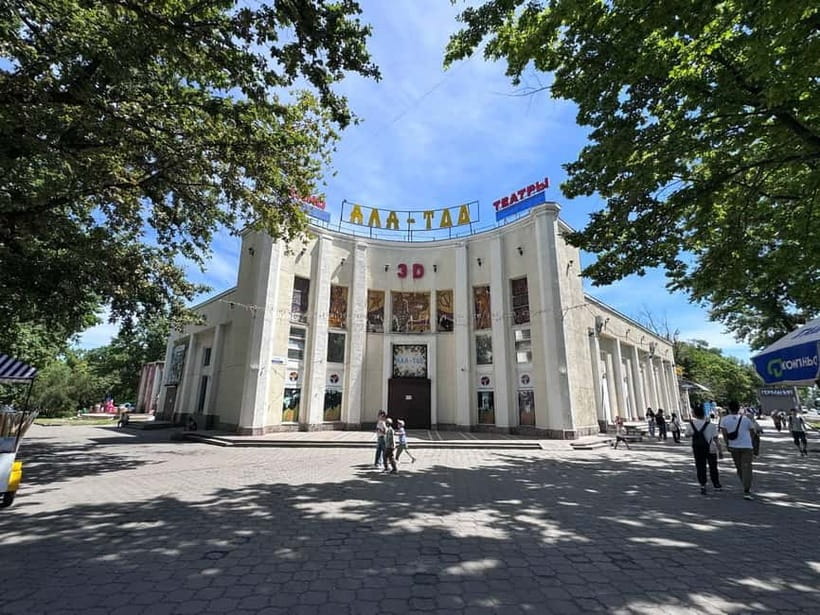
The Ala-Too Movie Theater is also included among the central city sights described for the route. Since the timing varies by guide and group, you should expect a concise exterior discussion rather than a formal cinema visit.
Lenin, Manas, and two political eras
The Vladimir Lenin Statue is one of the clearest reminders of Bishkek’s Soviet past. The stop is scheduled for about 15 minutes and gives your guide room to explain the city during the period of the Kyrgyz Soviet Socialist Republic.
This is an important part of the walk because Soviet influence is not confined to one statue. It appears in the city plan, public art, official buildings, mosaics, and monuments. The guide helps you read those details as part of a larger political story.
Later, the Manas Statue shifts the focus toward Kyrgyz national identity. This stop receives about 20 minutes, making it one of the longer points on the route.
Manas is central to Kyrgyz cultural tradition, and the statue provides a useful counterpoint to Lenin. Seeing both in the same city tour helps you understand how Bishkek presents its Soviet past alongside its Kyrgyz identity.
I like this pairing because it avoids a one-sided portrait of the city. You see the marks left by the Soviet period, but you also hear about the country’s own heroes, stories, and traditions.
Friendship, Parliament, and the White House
The Stele of Friendship of Peoples is another Soviet-era monument. Your guide explains its symbolism and how such monuments reflected the political language of the former Soviet Union.
The Government of the Kyrgyz Republic and the White House add a modern political layer. The White House stop is listed at about 10 minutes, while Parliament, known as the Jogorku Kenesh, is among the major buildings covered on the route.
These buildings are useful to see with context. Government architecture can look imposing anywhere, but a guide can explain which institutions matter and how the city’s central district was shaped around them.
The route also includes the Karl Marx and Friedrich Engels Monument, the National Academic Drama Theatre, and the National Museum of Fine Arts. Not every stop receives the same amount of time, so think of the tour as a guided city reading rather than a series of full visits.
Soviet mosaics and public art
One of the more unusual features is the attention to Soviet mosaics, including mosaics connected with a 100-year celebration. These works are easy to miss if you are walking alone and looking only for large landmarks.
Mosaics often show what a city wanted to celebrate: work, science, education, unity, or public progress. In Bishkek, they add color and visual detail to a route otherwise dominated by formal squares and government architecture.
The tour also promises historical monuments beyond the named stops. The exact mosaics and side streets can depend on the guide, weather, and pace of the group. If this is your main reason for booking, tell the guide at the start so the walk can give them proper attention.
That flexibility is one of the better features of a private or small-group format. Several guides are described as willing to answer questions, help with photographs, and adapt the pace.
What the guides add
The guide is the main reason to choose this experience instead of walking the same streets alone. Alex is described as friendly and clear when explaining history, politics, local life, and culture. Anna is known for a story-led approach and a warm sense of humor. Sofia has been praised for combining historical detail with an easy manner.
Talgat is another guide named for the experience, with strong English and useful advice about Bishkek and places outside the city. Tareen is described as patient and attentive, creating a comfortable atmosphere while answering questions.
Guide assignments can change, so you should not assume you will receive a particular person. Still, the repeated strength of the guide team is worth noting. The best moments on a city tour often come when you ask a simple question and receive a useful explanation rather than a memorized speech.
The guides also provide recommendations for natural places near Bishkek, local hotels, other Kyrgyz cities, and public transportation. That advice can save time, especially if you are just beginning a wider trip through the country.
Price, timing, and practical value
The listed price is $29 per person for 2.5 hours. At that rate, I see it as a reasonable orientation walk if you value a live guide and practical trip advice.
The value is strongest for a first visit, a private booking, or a small group that wants to ask questions. The price is less attractive if you want only quick photographs or if you already know Bishkek’s center.
One person specifically felt the cost was high by Kyrgyz standards for a short walk. That is a fair concern. You are paying for the guide’s time, language skills, route planning, and recommendations, not for transportation, meals, or included museum admission.
Entrance fees are not included, and personal purchases and insurance are also your responsibility. Public transportation is listed among the inclusions, but the main experience is described as a walking tour, so confirm with the provider if you expect transport between stops.
You can reserve now and pay later, and cancellation is free up to 24 hours before the start. The provider contacts you on WhatsApp to confirm the time and meeting point. That direct confirmation is useful, particularly when weather may affect the start.
Shoes, weather, and who should book
Wear comfortable closed-toe shoes. The tour involves walking between several central sights, standing during explanations, and spending time outdoors.
Do not bring oversize luggage or large bags. A small personal bag is more practical, and you should dress for the forecast. Rain and heat have both affected the experience for past groups, although guides have shown some flexibility with timing.
The tour is not suitable for people with altitude sickness or people over 95 years old. The information provided describes a comfortable walking environment, but it does not give a total distance or detailed accessibility specifications.
I would recommend this for:
- First-time visitors to Bishkek
- People interested in Soviet architecture and public art
- Anyone who wants Kyrgyz history explained through statues and city spaces
- Solo visitors who want local suggestions for the rest of their trip
- Small groups that prefer a private guide and flexible questions
I would look elsewhere if you want a museum-heavy tour, a food tour, or a vehicle excursion into the mountains. This is a central city walk, not a full introduction to the countryside.
Should you book the Bishkek city tour?
Book it if you want the city’s main monuments explained in a clear order, especially at the start of a Kyrgyzstan trip. The combination of Ala-Too Square, Lenin, Manas, Victory Square, Parliament, Soviet mosaics, and national history gives you a useful map of Bishkek.
The strongest reason to go is the guide. Alex, Anna, Sofia, Talgat, and Tareen are all named as guides who bring history and local advice into the walk. Ask about mosaics, nearby food, transport, and natural places while you have their attention.
Skip it if the $29 price feels high for a short walk or if you prefer to explore independently. For most first-time visitors, though, this is a sensible way to get oriented before setting off for the rest of Kyrgyzstan.
FAQ
Where does the Bishkek city tour start?
The tour starts at Ala-Too Square in central Bishkek.
Where does the tour end?
The walk returns to Ala-Too Square, the same central location where it begins.
How long does the tour last?
The tour lasts 2.5 hours.
What languages are available?
The tour is available in English and Russian.
Is the tour private?
A private group option is available.
What sights are included?
The route includes Ala-Too Square, the Kyrgyz flag, Kurmanzhan Datka Statue, State History Museum, Victory Square, Opera and Ballet Theater, Vladimir Lenin Statue, Stele of Friendship of Peoples, White House, Manas Statue, Parliament, and other central monuments and buildings.
Are entrance fees included?
No. Entrance fees are not included in the price.
What should I bring?
Bring comfortable closed-toe shoes. Oversize luggage and large bags are not allowed.
Can I cancel or pay later?
You can cancel up to 24 hours in advance for a full refund. You can also reserve now and pay later.
Just added around the world
- Wilmington History and Architecture Tour★ 4.8 · 18 reviews
- Washington, DC: Georgetown Architecture Walking Tour★ 5.0 · 8 reviews
- New Orleans : Garden District Architecture Walking tour★ 4.8 · 5 reviews
- Washington DC: Dupont Circle & Embassy Row Architecture Tour★ 5.0 · 6 reviews
- Vicenza: discovering the city of Palladio by e-bike★ 5.0 · 4 reviews
- Vicenza: Palladian Architecture Private Walking Tour★ 3.3 · 3 reviews
- Walk & Discover KL’s Architectural and Heritage Gems★ 5.0 · 7 reviews
- Unveiling Brno: History, Culture & Architectural Delights★ 5.0 · 2 reviews
Historical Tours, compared.
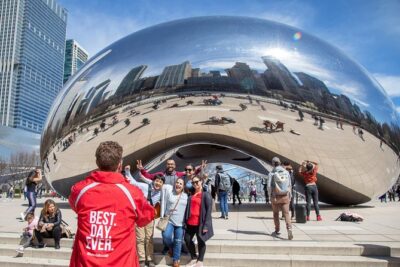
Chicago in a Day: Food, History & Architecture Walking Tour
Read our review →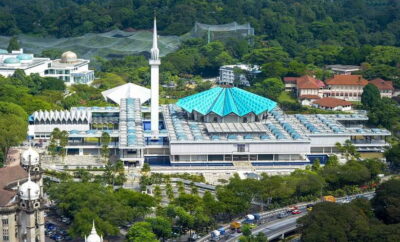
Kuala Lumpur: Batu Caves & Historic Buildings Tour
Read our review →
Charleston’s Best Highlights: History, Culture & Architecture
Read our review →
Palm Springs Modernism Architecture & History Bike Tour
Read our review →
Charleston: History and Architecture Guided Walking Tour
Read our review →
Historic Georgetown: History, Gossip, & Architecture Walking Tour
Read our review →
Charleston History, Homes, and Architecture Guided Walking Tour
Read our review →
Browse the lists this tour appears in