
Review · ARCHITECTURE TOURS
Tirana: Street Art & Modern Architecture Walking Tour
Tirana’s walls tell a sharper story than a simple city stroll. On this two-hour street art and architecture walk, you move through central streets and smaller lanes, reading murals, graffiti, bold new buildings, and signs of Albania’s changing identity. Guide K has been praised for clear English, strong knowledge, and an easy willingness to answer questions.
I like the balance between street art and modern architecture, and I like that the art is explained rather than treated as mere decoration. You also get useful context for Tirana’s political past and present-day growth. The main drawback is that the route is short, and street art can change, fade, or disappear, so this is better for interpretation than for a guaranteed list of famous works.
Key points
- Political art with a story: See murals and graffiti linked to Albania’s past, social issues, and changing identity.
- Modern Tirana in context: Learn why the city’s newer buildings look so different from its older streets.
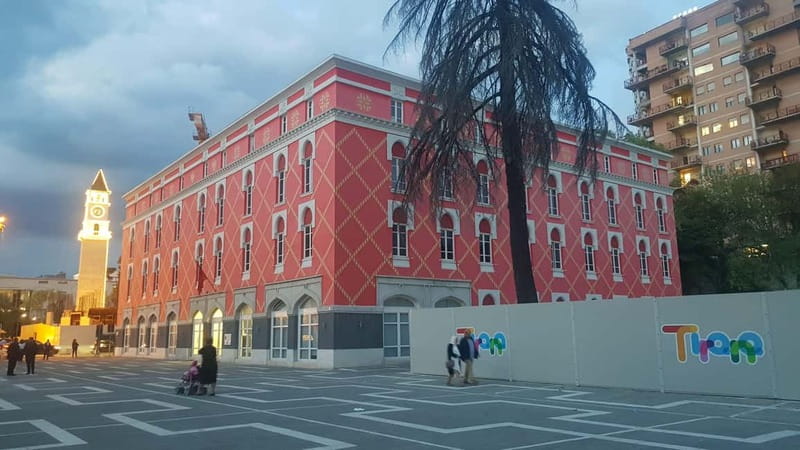
- A useful central meeting point: Guides wait at the steps of the Opera House in Skanderbeg Square.
- Small details matter: The tour encourages you to notice street signs, symbols, colors, and artwork you might otherwise pass.
- Good value at $14: Two hours with a local English-speaking guide costs little compared with a private architecture tour.
- Flexible booking: You can cancel up to 24 hours ahead for a full refund and reserve without paying right away.
Why Tirana’s walls deserve your attention
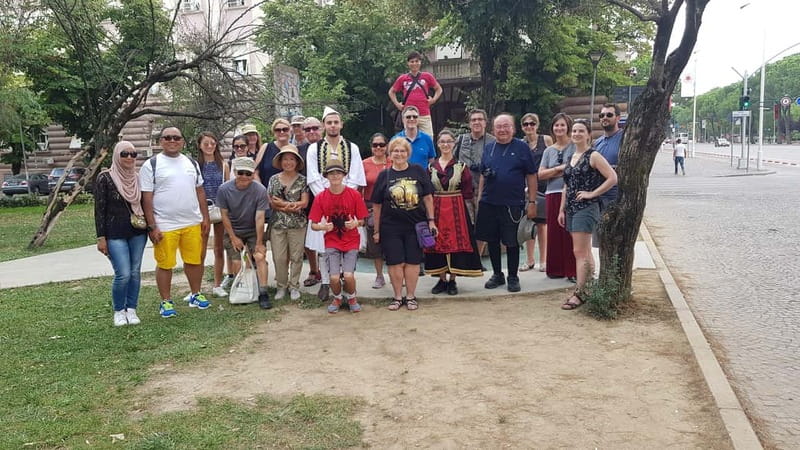
Tirana can seem like a city of quick contrasts. One block may show a colorful mural, another a gray Communist-era remnant, and another a polished new building in an unusual shape. This tour helps you connect those pieces instead of seeing them as random decoration.
The street art is not presented only as something pretty for your camera. Some pieces refer to political events, Albania’s difficult past, cultural traditions, or current social questions. Others are playful and bright. Taken together, they show how public art can shape a neighborhood and give people a way to speak in public.
I especially like this approach for a first visit because Tirana’s visual language is not always obvious. A painted wall may look simple until you understand the symbol or local reference. A modern building may seem odd until someone explains how the capital is changing and why new construction has become such a visible part of city life.
This is also a good reason to take the walk early in your stay. One person who joined after three days in Tirana found that the tour changed the way they looked at familiar streets for the rest of the week. That is a useful test of a city walk: it should keep working after the guide has gone.
More architecture walks in the world:
- Lecce: Baroque Architecture and Underground Walking Tour
★ 4.6 · 1,248 reviews - Chicago in a Day: Food, History & Architecture Walking Tour
★ 5.0 · 1,153 reviews - Ramblas, Old Town, Gothic and Gaudi Architecture Walking Tour
★ 5.0 · 723 reviews
Starting at the Opera House steps
The meeting point is at the steps of the Opera House in central Tirana. This is a practical place to begin, since the route starts and finishes at the same location. You do not need to arrange transport between stops, and the central setting makes it easy to fit the walk around other sightseeing.
The first minutes are likely to set the tone for the tour. Your guide introduces the city through what you can see around you, rather than beginning with a long classroom-style history lesson. Expect to look upward, across building fronts, and down side streets as the group begins tracing Tirana’s artistic character.
The guide speaks English, and K has been specifically praised for clear communication and a strong grasp of the subject. That matters here. Street art tours depend on explanation, especially when the meaning of an image is political, symbolic, or tied to a local event that you may not recognize.
The route is described as accessible for wheelchair users. Still, you should keep the nature of the experience in mind: it is a walking tour through city streets and alleys, so the exact ease of every surface can depend on the day’s route and current street conditions.
Skanderbeg Square and Tirana’s public face
Skanderbeg Square is the named stop on the route and includes about ten minutes of guided sightseeing and photo time. It is a useful place to consider Tirana on a larger scale before moving into tighter streets and smaller details.
The square gives you a broad public setting for the city’s changing identity. Here, you can take photographs and listen as the guide connects central Tirana’s buildings, public space, and symbols with the city’s past and present. The stop is brief, so it is not meant to replace a full city-center tour or a long historical visit.
I see the square as the visual anchor of the experience. Street art is often found in overlooked corners, but a major public space helps you understand how the city presents itself. The contrast between official architecture and unofficial wall art is part of the interest.
Bring your camera, but do not spend the entire ten minutes looking through it. The guide’s comments are likely to help you notice shapes, signs, and nearby buildings that you would miss while simply taking a wide shot of the square.
Side streets, murals, and the art between the landmarks
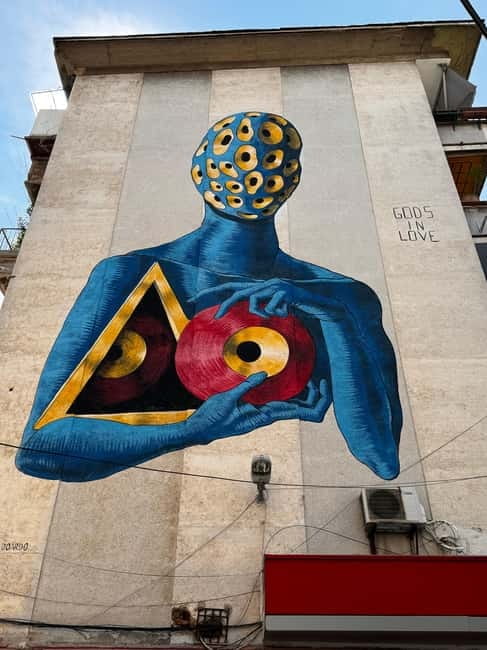
The most appealing part of the walk is the movement away from obvious sights and into less noticeable streets. The route includes alleys and neighborhood corners where murals and graffiti may be easy to miss if you are only following a standard sightseeing path.
You can expect a mix of large painted works, smaller markings, illustrations, and pieces with social or political meaning. Some art reflects Albania’s turbulent past. Some points toward cultural traditions. Some addresses current concerns. The tour’s value comes from learning how to read these differences.
I like that the experience does not reduce street art to a photo checklist. The guide helps you consider who made the work, what message it may carry, and how public art can encourage discussion. You may not agree with every message, but that is part of the point. Art in a public space can be playful, critical, or both.
Do not expect every wall to be polished or permanent. Outdoor art changes. Paint fades, new construction covers old work, and graffiti can appear without warning. That uncertainty is a limitation if you want a fixed collection of guaranteed sights, but it also makes the walk feel tied to the city as it is now.
The practical tip is simple: keep looking after the tour ends. One of the most useful takeaways from the experience is a new habit of watching for street signs and small painted details. Tirana rewards that kind of attention.
A few more architecture tours around the world worth a look
- Walking Tour of Houston: History, Architecture, Street Art
★ 5.0 · 59 reviews - Tirana: Street Art & Modern Architecture Tour
★ 5.0 · 18 reviews - Porto Tour: Street Art & Architecture Experience 3h
★ 5.0 · 4 reviews - Street Art and Architecture:Porto Speaks Through Its Streets
★ 3.0 · 2 reviews
Modern buildings beside older city memories
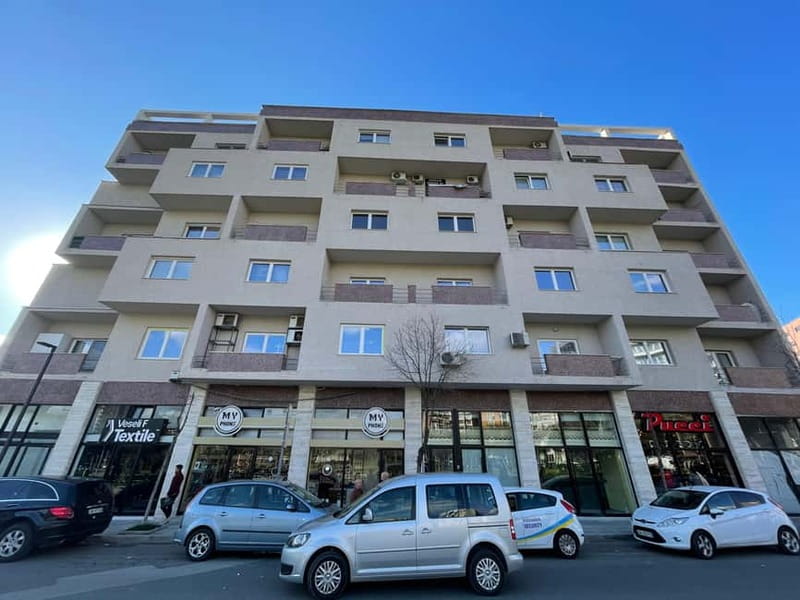
The architecture portion gives the walk more substance than a standard mural hunt. Tirana’s newer buildings are part of a visible shift in the city, and the guide explains how modern design fits into a capital with a complicated past.
You will see newer structures alongside older streets and public spaces. The point is not simply to decide which building is attractive. It is to understand what the new architecture says about development, ambition, and the city’s changing image.
A guide can also help you notice details that photographs flatten. Look at the way a building meets the street, how color is used, and how a modern facade changes the feel of the surrounding area. These details are easy to pass without context.
The balance between architecture and street art is one of the tour’s strongest features. If the walk focused only on murals, you might leave with good pictures but less understanding of Tirana’s broader changes. If it focused only on buildings, it could feel formal and distant. Combining the two keeps the experience lively and grounded in daily city life.
This is also where questions are useful. K has been praised for welcoming questions, so ask about a building, a symbol, or a piece of art that catches your eye. The tour works best as a conversation, not as a speech delivered while you hurry behind the guide.
What the $14 price gives you
At $14 per person, this is an inexpensive way to add local explanation to your time in Tirana. You are paying for two hours with a live English-speaking guide, not just a route on a map. For a visitor interested in art, design, and city change, the interpretation is the main value.
The price is especially fair if you are already planning to walk around central Tirana. You can cover some of the same general area on your own, but you would likely miss the connections between political art, new buildings, and the city’s changing public identity.
The tour is not a private experience, and the information provided does not promise a small group or a set number of participants. If you want complete control over the pace or unlimited time at each mural, an independent walk may suit you better. You can stop longer on your own, though you will lose the guide’s explanations.
There is also an unusual practical note: other people may join on a donation basis, while your booking secures a paid place and covers the guide’s work and platform fees. The typical donation is said to be similar to the $14 price. That means the cost is still modest, but it is worth understanding what you are paying for: a confirmed place and organized guiding.
Who will enjoy this walk most
I would choose this tour for anyone who wants to see Tirana through more than its main monuments. It suits first-time visitors who want an introduction to the city’s visual character, as well as people already staying several days who want to look again at streets they have passed.
It is a particularly good fit for:
- People interested in murals, graffiti, and public art
- Architecture fans curious about Tirana’s newest buildings
- Photographers who enjoy color, shapes, and unusual urban details
- Visitors who want political and historical context without a full museum visit
- Anyone who prefers a short two-hour activity
- People comfortable asking questions and walking through central streets
I would be more cautious if you want a formal architecture lecture, a guaranteed catalogue of specific murals, or a long historical tour. The walk is about seeing connections in the city, not covering every major sight in Tirana.
You also need to accept that the route may feel different from one date to another. Street art is temporary, and the city keeps changing. That is normal for this subject, but it means you should book it for the guide’s interpretation as much as for any single wall.
How to get the best two hours
Arrive at the Opera House steps with enough time to find the guide. The meeting point is in the city center, and the walk returns there, which keeps the plan simple.
Wear shoes you can walk in comfortably. The tour lasts two hours and includes streets and alleys, so comfort matters more than dressing for a formal cultural attraction. Since the route is outdoors, bring whatever you normally need for a city walk.
Keep your camera ready, but also take notes mentally. The strongest benefit is not only a collection of mural photographs. It is the ability to recognize themes, signs, symbols, and design choices later in your stay.
Ask questions. The guide is described as happy to discuss the art and architecture, and the subject invites conversation. If you see a building or wall that puzzles you, ask about it instead of waiting for the guide to bring it up.
Finally, consider taking the tour near the beginning of your visit. You will still enjoy it after several days, but the explanations can influence how you see the rest of Tirana. The city becomes more legible when you know what details to watch for.
Booking details worth knowing
The tour lasts two hours and is conducted in English by a live local guide. It begins at the Tirana Free Walking Tour meeting point, with guides waiting at the Opera House steps in the city center, and it returns to that same location.
The activity is listed as wheelchair accessible. You can reserve now and pay later, which keeps your plans flexible. Cancellation is free up to 24 hours before the start time for a full refund.
The overall rating is 4.9 from 31 ratings, with especially strong praise for the guide’s English, subject knowledge, and ability to explain both architecture and street art. The clearest pattern is balance: people value the way the tour treats buildings and wall art as connected parts of Tirana’s present-day story.
Should you book Tirana’s street art walk?
Book it if you want a low-cost, thoughtful way to see Tirana’s murals and newer architecture with context. The strongest reason to go is not one famous artwork. It is the chance to change how you read the whole city, from political symbols on a wall to a modern facade you might otherwise ignore.
Skip it if you want a long, highly structured history tour or a guaranteed set of permanent attractions. For everyone else, $14 is a sensible price for two hours of local guidance, photography opportunities, and a better eye for Tirana’s details.
FAQ
How long does the Tirana street art and architecture tour last?
The tour lasts two hours.
Where does the tour begin?
The guide waits at the steps of the Opera House in the city center, at the Tirana Free Walking Tour meeting point.
Where does the tour finish?
The tour returns to the Tirana Free Walking Tour starting point.
Is the tour offered in English?
Yes. It includes a live English-speaking local guide.
Does the tour visit Skanderbeg Square?
Yes. Skanderbeg Square is a scheduled stop with about ten minutes for a guided visit and photographs.
Is the tour wheelchair accessible?
Yes, the activity is listed as wheelchair accessible.
Can I cancel or pay later?
Yes. You can cancel up to 24 hours in advance for a full refund, and you can reserve now and pay later.
Just added around the world
- Wilmington History and Architecture Tour★ 4.8 · 18 reviews
- Washington, DC: Georgetown Architecture Walking Tour★ 5.0 · 8 reviews
- New Orleans : Garden District Architecture Walking tour★ 4.8 · 5 reviews
- Washington DC: Dupont Circle & Embassy Row Architecture Tour★ 5.0 · 6 reviews
- Vicenza: discovering the city of Palladio by e-bike★ 5.0 · 4 reviews
- Vicenza: Palladian Architecture Private Walking Tour★ 3.3 · 3 reviews
- Walk & Discover KL’s Architectural and Heritage Gems★ 5.0 · 7 reviews
- Unveiling Brno: History, Culture & Architectural Delights★ 5.0 · 2 reviews
Walking Tours, compared.

The Official Art Deco Walking Tour by The Miami Design Preservation League
Read our review →
Barcelona: Gothic Quarter Ghosts and Legends Walking Tour
Read our review →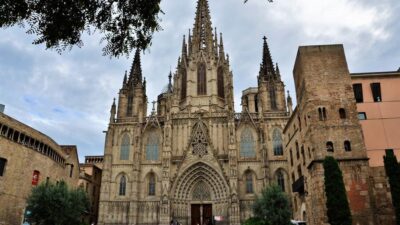
Barcelona: Old Town and Gothic Quarter Walking Tour
Read our review →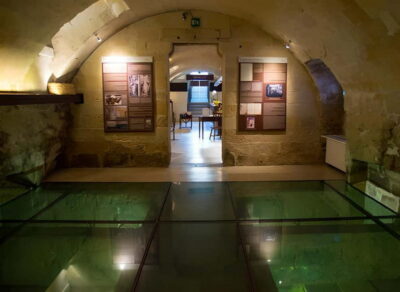
Lecce: Baroque Architecture and Underground Walking Tour
Read our review →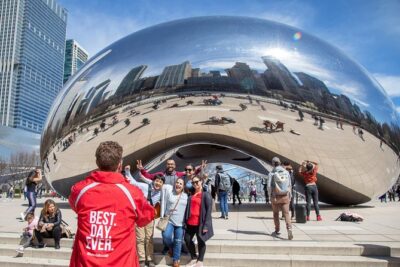
Chicago in a Day: Food, History & Architecture Walking Tour
Read our review →
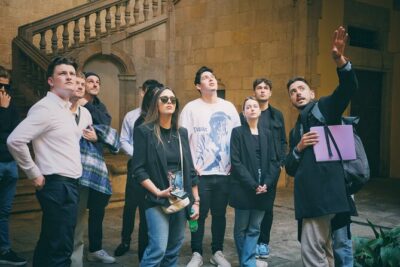
Ramblas, Old Town, Gothic and Gaudi Architecture Walking Tour
Read our review →
Chicago’s Secret Interiors Architectural Walking Tour
Read our review →Browse the lists this tour appears in