
Review · THE USA
San Francisco: Downtown Architecture & Public Art Tour
Downtown San Francisco is much more than a canyon of office towers. On this three-hour walk, you’ll read the city through its buildings, public art, and carefully planned open spaces, from the London Paris National Bank to the huge park above Salesforce Transit Center. Guide Jamie turns architecture into a conversation, not a lecture.
I especially like two things here: the wide range of building styles, which traces San Francisco’s growth from the aftermath of the 1906 earthquake to the tech era, and the public art program that places serious artwork in everyday spaces. The main consideration is simple: this is a two-and-a-half-hour walking tour, so comfortable shoes and decent weather matter.
- San Francisco’s growth in one walk: See buildings from post-earthquake reconstruction, the 1920s, the mid-century boom, and the current tech era.
- Public art without a museum ticket: Find works by George Rickey, Jenny Holzer, Frank Stella, Jonathan Borofsky, and Ugo Rondinone in office plazas and walkways.
- A roof garden above transit: Spend time at Salesforce Transit Center Park, with 600 trees, 16,000 plants, and gardens based on 13 ecosystems.
- A guide who welcomes questions: Jamie brings a relaxed, conversational style and connects local buildings with architecture in the United States and abroad.
- A useful finish at SFMOMA: End at the entrance to San Francisco Museum of Modern Art, one of the world’s major modern and contemporary art museums.
- A good value for architecture fans: At $44, the tour costs less than many museum-led experiences and gives you three hours of guided context outdoors.
Start at Mechanics Monument Plaza on Market Street
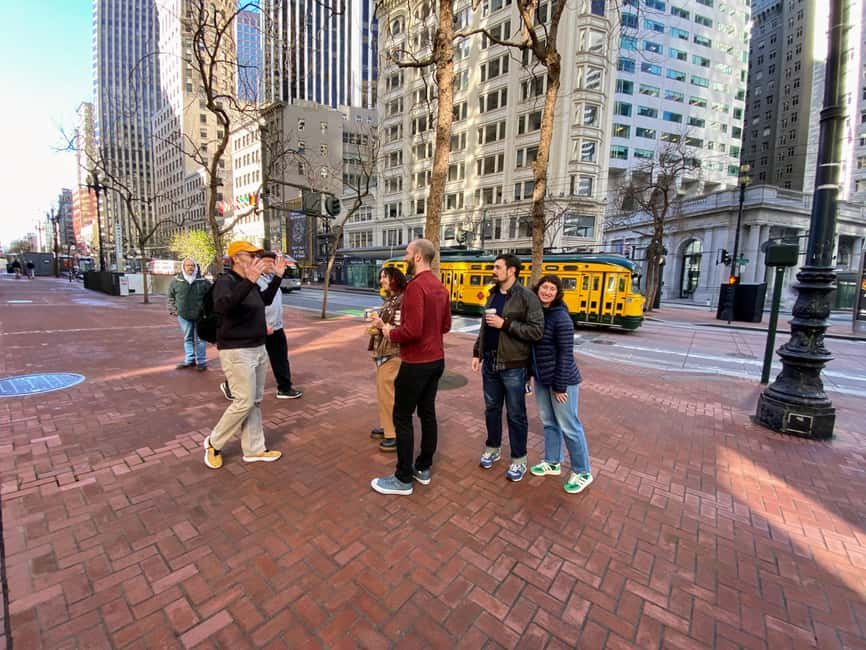
The tour begins in front of Mechanics Monument Plaza at 488 Market Street. This location puts you right at the edge of San Francisco’s Financial District, where older commercial buildings meet the newer towers of the city center.
That starting point is useful because the tour does not treat downtown as one uniform block. Instead, you begin with the idea that San Francisco has been rebuilt and reshaped in waves. Each period left behind a different architectural language, and the best part of the walk is learning how to spot those changes for yourself.
Bring shoes you can comfortably wear for several hours. The tour is described as a moderate walk, not a strenuous hike, but city walking means hard pavement, crossings, and plenty of time on your feet. Check the forecast before you go and dress for the day.
From earthquake recovery to grand downtown banks
One of the first major themes is San Francisco’s rebuilding after the 1906 earthquake and fire. The London Paris National Bank is a useful example of that period. It represents the push to restore a working commercial center after disaster, while also projecting confidence and permanence.
Buildings like this are easy to pass without a second glance if you are hurrying through downtown. With a guide, you get a reason to stop and look at the details, proportions, materials, and location. I like this approach because the tour is not only about famous architects. It also explains why a building appeared when it did and what the city needed at that moment.
That historical sequence gives the walk a clear shape. You are not simply collecting photographs of unrelated facades. You are watching the business district change as San Francisco recovered, expanded, and adopted new ideas about commerce and city life.
A few more architecture tours around the USA worth a look
- Chicago Architecture River Cruise
★ 5.0 · 15,756 reviews - Chicago River 90-Minute Architecture Tour
★ 4.5 · 9,629 reviews - Chicago River: 1.5-Hour Guided Architecture Cruise
★ 4.8 · 8,046 reviews
Art Deco energy at the Pacific Telephone Building
The Pacific Telephone Building brings you into the exuberant 1920s. Its Art Deco design reflects a period when new technology, growing businesses, and confidence in the future were written into the skyline.
This is one of the points where Jamie’s style seems particularly useful. The tour focuses on the stories behind the buildings, but it also gives you a way to understand what you are seeing. Art Deco is not just a decorative label. It can express speed, industry, modern communications, and the excitement of a changing city.
If you have visited San Francisco mainly for Victorian houses, cable cars, or the waterfront, this part of the walk adds a different side of the city. Downtown can look stern at first glance. Look closer, and the older towers often have plenty of visual drama.
The clean lines of mid-century San Francisco
The next architectural shift arrives with the International Style and the postwar economic boom. The Crown Zellerbach Building is a key example, with the sleek glass-and-steel look associated with mid-century corporate architecture.
This is a good point to think about how office buildings changed. Earlier structures often used ornament and heavy masonry to signal importance. Mid-century towers tended to favor clean surfaces, regular grids, and a lighter appearance. The change reflects new construction methods, new corporate ambitions, and a different idea of what a modern city should look like.
You may not fall in love with every glass tower on the route, and that is part of the value. Jamie does not ask you to admire everything blindly. He gives you context so you can decide what works, what feels dated, and what still looks fresh.
Southward growth and the tech-era skyline
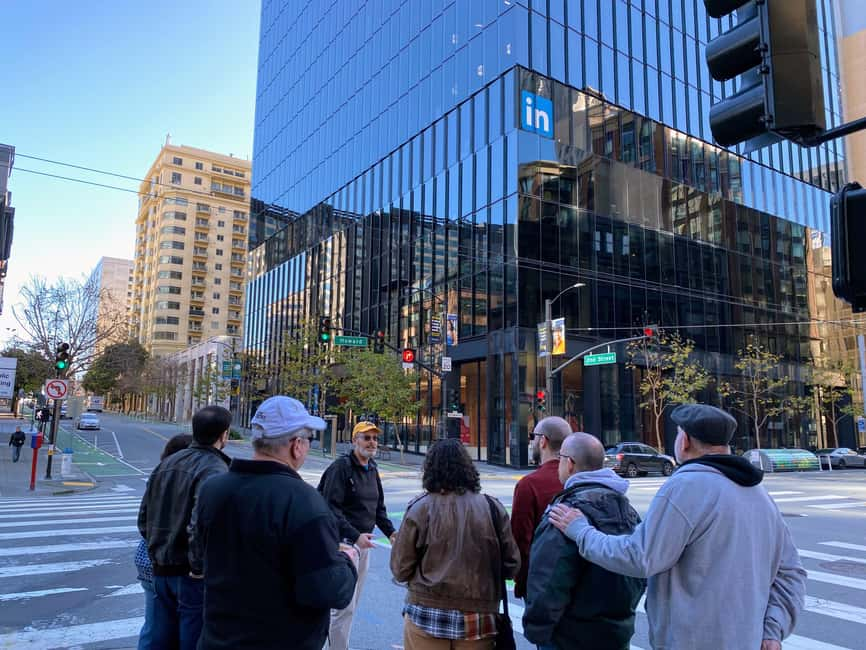
The JP Morgan Chase Building helps mark the Central Business District’s later movement south. San Francisco’s office center did not remain fixed around the oldest Financial District blocks. New development changed the scale and direction of downtown.
The walk then reaches more recent buildings designed by prominent international architects, including Cesar Pelli and Rem Koolhaas. This is where the tour connects San Francisco to broader architectural trends. You are not just looking at local construction. You are seeing how major cities compete for attention, investment, and office tenants through bold design.
That comparison is one of the strongest reasons to choose this tour. Jamie has been praised for connecting San Francisco architecture with work elsewhere in the United States and around the world. If you already enjoy architecture, you will get names and background that help you place these buildings in a larger story. If you are new to the subject, the explanations make the skyline easier to read.
Same city, a completely different century:
- Chicago Architecture Center River Cruise aboard First Lady
★ 5.0 · 5,536 reviews - Chicago: Architecture River Cruise Skip-the-Ticket Line
★ 4.8 · 4,325 reviews - Chicago River 45-Minute Architecture Tour from Magnificent Mile
★ 4.5 · 2,924 reviews - Chicago Lake and River Architecture Tour
★ 4.5 · 2,308 reviews
Downtown as an open-air art gallery
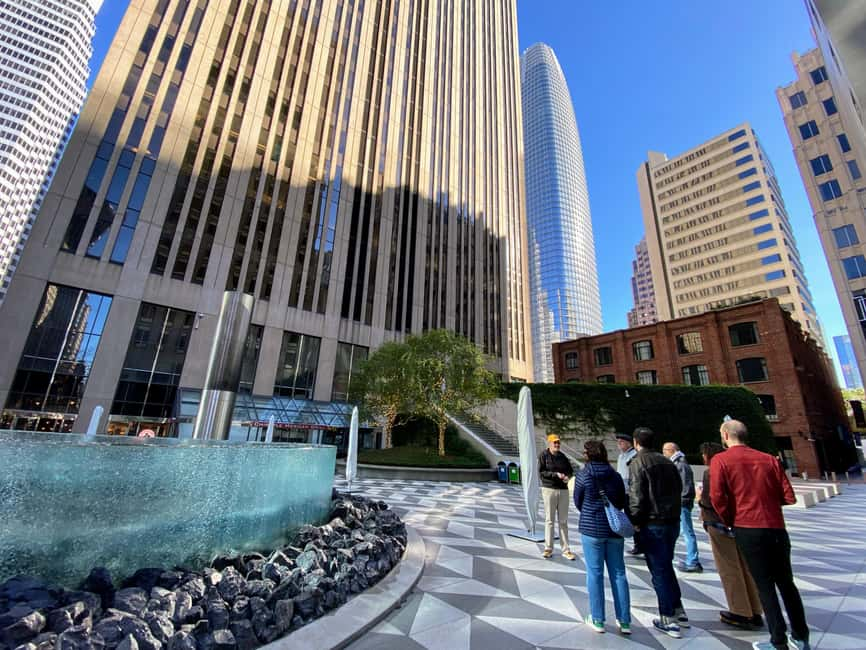
The public art is not an extra decoration tacked onto the architecture. It is one of the central ideas of the walk. For four decades, new downtown office buildings have set aside 1 percent of their construction budgets for public art.
That policy has produced work in spaces you might otherwise treat as shortcuts or waiting areas. Instead of buying a museum ticket and walking through a series of galleries, you encounter art between buildings, in plazas, and along the route of ordinary city life.
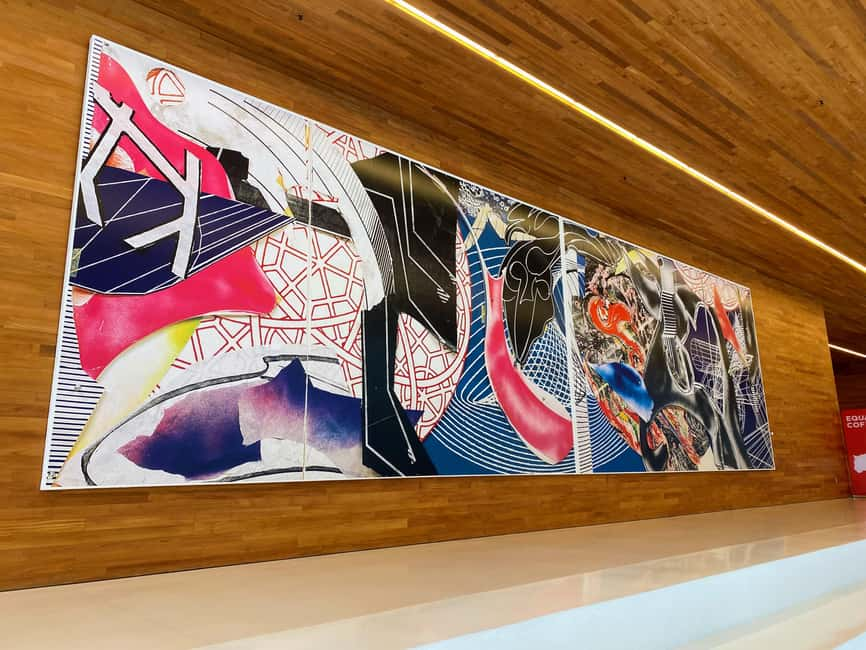
You can expect to see kinetic sculpture by George Rickey, digital art by Jenny Holzer, paintings by Frank Stella, and unusual installations by Jonathan Borofsky and Ugo Rondinone. The variety matters. Some works are bold and easy to spot. Others reward a slower look at the space around them.
I like this part of the experience because it asks you to consider who public art is for. It is not isolated from the city. Office workers, residents, shoppers, and people simply crossing downtown all encounter it. The art becomes part of the daily setting rather than a separate cultural stop.
The drawback is that outdoor art depends on your attention. If you prefer a quiet museum where every work has a label and a clear viewing area, this walk may feel less tidy. You are looking, listening, and keeping pace with the group at the same time. That is also what makes it feel connected to real city life.
Salesforce Transit Center Park, a roof above the city
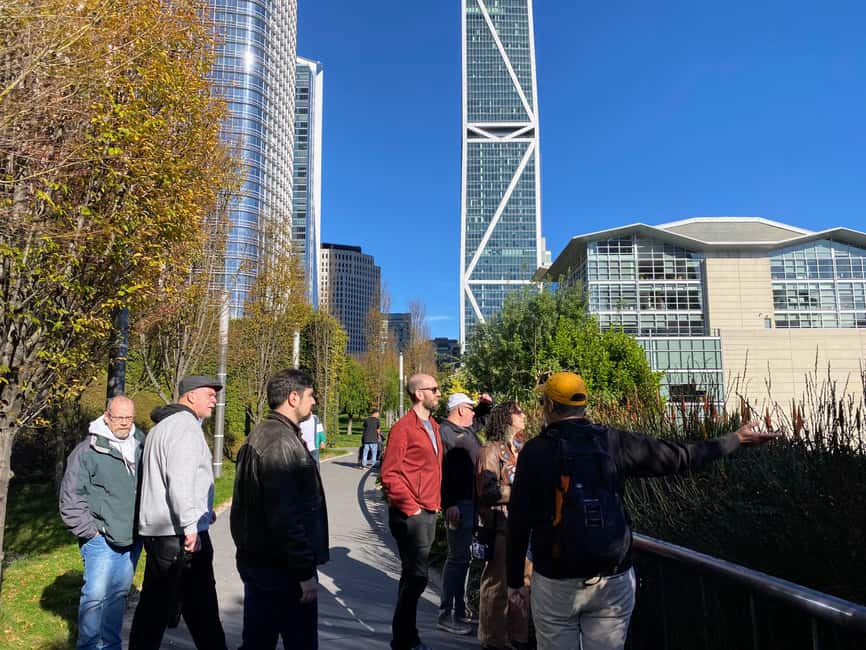
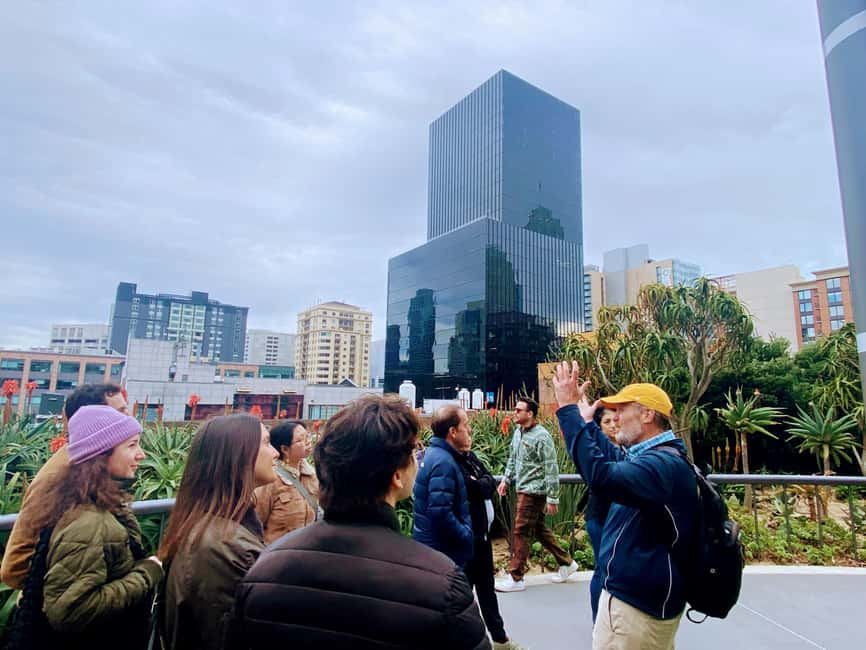
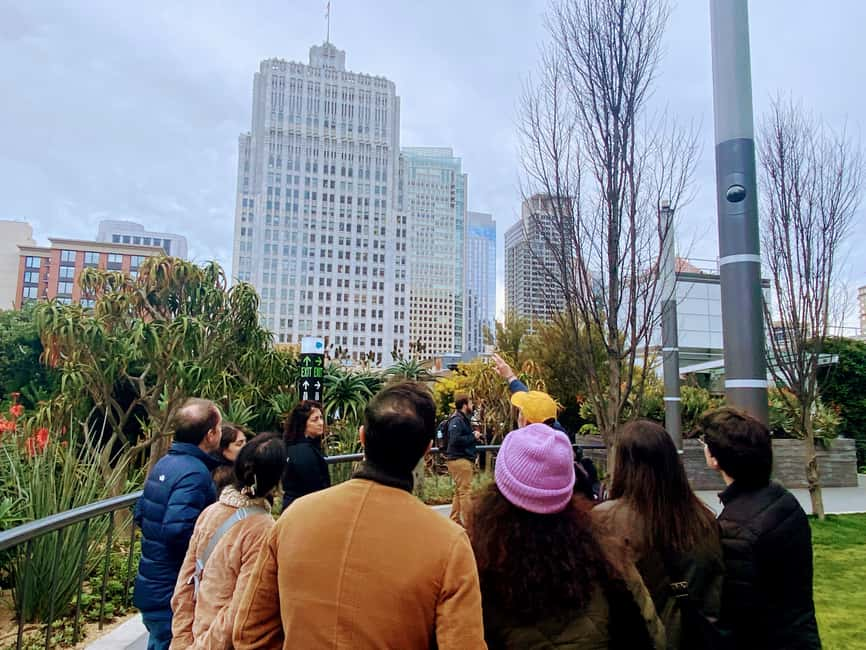
The tour’s biggest engineering and public-space surprise is Salesforce Transit Center Park. The park occupies four and a half city blocks and sits above an intermodal transit terminal. It created five and a half acres of green space in a part of downtown where open land was scarce.
The scale is hard to understand from street level. The park is longer than Salesforce Tower is tall, which gives you a sense of its reach through the district. It is not just a patch of plants on a roof. It includes quiet areas for reading, yoga classes, movie nights, concerts, and a beer garden.
The gardens are organized into zones representing 13 ecosystems. Together, they contain 600 trees and 16,000 plants. A fountain uses jets of water activated by buses moving through the transit terminal below, linking the machinery underneath with the public space above.
That connection between transport, architecture, planting, and public life is the reason this stop deserves time. You are seeing how a city can add open space by building over infrastructure rather than waiting for a vacant lot.
The park also gives you views of surrounding office and residential buildings built around the same period. This makes it an excellent place to pause and look back at the skyline with a better understanding of how the pieces fit together.
Conditions may affect how much you enjoy this stop. In poor weather, an open rooftop park is less comfortable, and the full walking route is not the right choice if you want a sheltered indoor morning. Still, the transit center is a strong example of modern urban planning, even for visitors who are not normally interested in landscape design.
A relaxed guide makes the difference
Jamie is the guide name associated with this experience, and the strongest feature of his approach is the conversational tone. You are encouraged to ask questions, and the tour is designed to feel like an exchange rather than a one-way speech.
That matters on an architecture walk. You may want to know why a tower uses a certain material, how a public plaza works, or what another building by the same architect looks like. A guide who can respond naturally makes the information easier to remember.
Jamie is also described as open about the limits of his knowledge. That is a small but valuable sign. No guide can know every detail of a city, and honest answers are more useful than forced certainty.
The experience has received a 4.9 rating from 17 reviews, with repeated praise for Jamie’s enthusiasm, relaxed manner, organization, and ability to explain both architecture and public art. Several people found the full three hours passed quickly, which is a good sign for a walking tour. Still, you should choose it because you enjoy looking closely and asking questions, not simply because the rating is high.
Ending at SFMOMA on Third Street
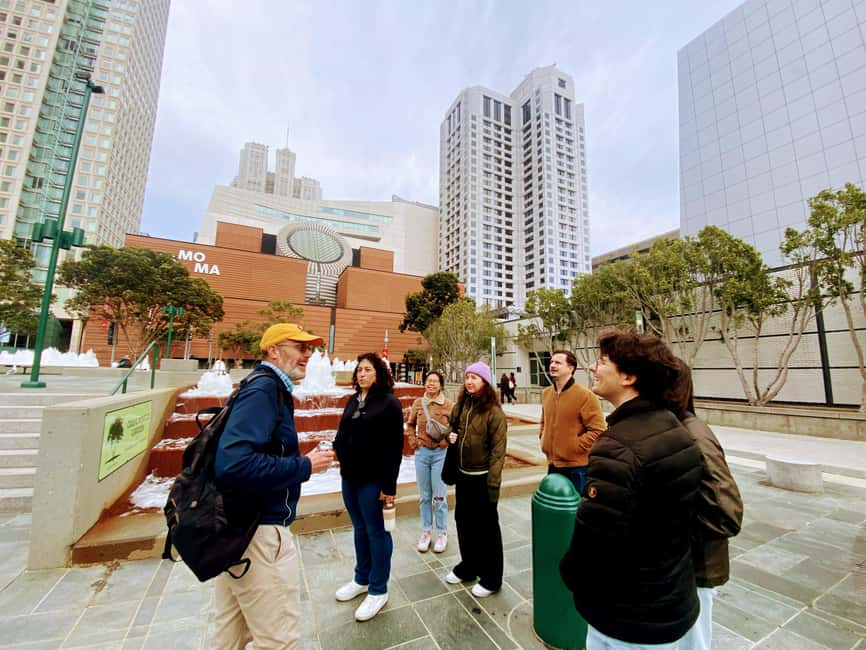
The walk finishes at the entrance to the San Francisco Museum of Modern Art. SFMOMA is one of the largest museums of modern and contemporary art in the world, and even its exterior contributes to the final architectural discussion.
The tour does not include a museum admission ticket. Think of SFMOMA as the endpoint and a useful next stop if you want to continue indoors. You can plan the rest of your day around the museum, though the tour itself focuses on downtown streets, buildings, public art, and public spaces.
Ending here makes sense. After seeing art placed around office buildings, you arrive at a major institution devoted to modern and contemporary work. The contrast helps you consider how art changes when it is displayed in a museum, on a plaza, or beside a transit system.
Is $44 a fair price?
At $44 per person, this is a solid value if you want interpretation rather than a simple orientation walk. You get a two-and-a-half-hour guided tour, an English-speaking expert, architectural history across several periods, public art, and time in Salesforce Transit Center Park.
The price is less compelling if you prefer to wander alone and read about buildings at your own pace. You can see the exteriors and public spaces without booking a tour, but you would miss the connections between them. You would also need to research the architects, artists, public-art policy, and development history yourself.
The tour is wheelchair accessible, and free cancellation is available up to 24 hours in advance. You can also reserve now and pay later. Parking is not included, so public transportation or a separate parking plan may be more practical than driving into the downtown core.
Who should book this downtown architecture tour?
I would choose this walk if you like cities as working places, not only as collections of famous sights. It suits architecture students, design fans, photographers, repeat visitors, and locals who want to see familiar blocks with sharper eyes.
It is also a good choice for anyone who thinks public art is easier to appreciate when someone explains its setting. The tour gives you a strong mix of history, design, sculpture, digital work, and urban planning without requiring a museum-heavy day.
I would be more cautious if you dislike walking, want a short sightseeing loop, or are hoping to enter SFMOMA as part of the experience. The tour ends at the museum, but the museum visit itself is not included. Also keep in mind that much of the value comes from listening and looking carefully, so it is not ideal for someone who wants a fast photo stop at each building.
FAQ
Where does the San Francisco architecture tour begin?
It begins in front of Mechanics Monument Plaza at 488 Market Street.
Where does the tour finish?
The tour finishes at the entrance to the San Francisco Museum of Modern Art.
How long does the walking portion last?
The guided downtown walking tour lasts two and a half hours, while the full activity duration is three hours.
What language is the tour conducted in?
The tour is conducted in English with a live English-speaking guide.
Is the tour wheelchair accessible?
Yes, the activity is listed as wheelchair accessible.
Is admission to SFMOMA included?
No museum admission is listed among the inclusions. The experience finishes at the entrance to SFMOMA.
What should I wear?
Wear comfortable walking shoes, check the weather forecast, and dress appropriately for a moderate amount of walking.
Should you book it?
Book this tour if you want downtown San Francisco to make more sense, not just look taller. Jamie’s relaxed, question-friendly approach, the wide sweep of architectural periods, and the unusual public-art stops give you plenty for $44.
The best reason to go is Salesforce Transit Center Park, paired with the chance to see serious art in ordinary public spaces. If you prefer architecture with context, public art with a city around it, and a walk that connects old banks to new towers, this is a smart addition to your San Francisco plans.
Just added around the USA
- Wilmington History and Architecture Tour★ 4.8 · 18 reviews
- Washington, DC: Georgetown Architecture Walking Tour★ 5.0 · 8 reviews
- New Orleans : Garden District Architecture Walking tour★ 4.8 · 5 reviews
- Washington DC: Dupont Circle & Embassy Row Architecture Tour★ 5.0 · 6 reviews
- Tulsa: Art Deco Walking Tour of Tulsa★ 5.0 · 8 reviews
- Castle to Capitol: Museums of the National Mall Architecture Tour★ 4.5 · 9 reviews
- Private Colonial Williamsburg Architectural Tour★ 5.0 · 5 reviews
- Monuments and Memorials Architectural Walking Tour★ 5.0 · 17 reviews
the USA Architecture Tours, compared.
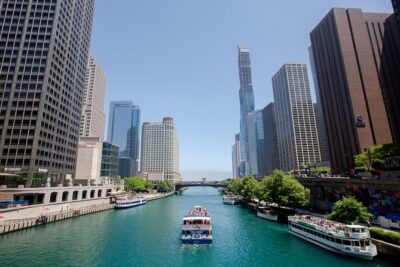
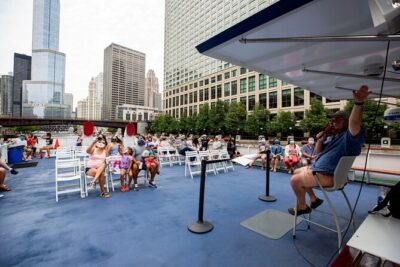
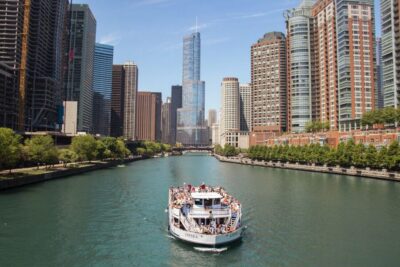
Chicago River: 1.5-Hour Guided Architecture Cruise
Read our review →
Chicago Architecture Center River Cruise aboard First Lady
Read our review →
Chicago: Architecture River Cruise Skip-the-Ticket Line
Read our review →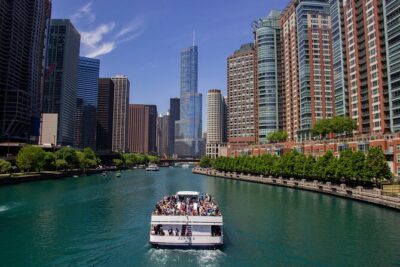
Chicago River 45-Minute Architecture Tour from Magnificent Mile
Read our review →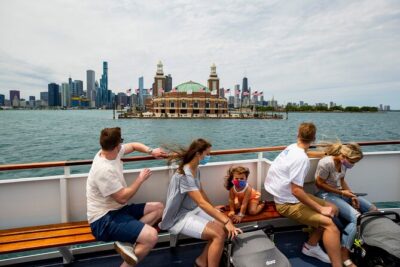
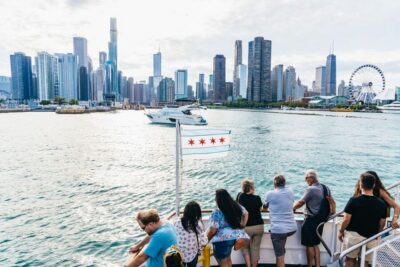
Chicago: 1.5-Hour Lake and River Architecture Cruise
Read our review →Browse the lists this tour appears in