
Review · ROTTERDAM
Rotterdam: Art and Architecture Highlights Walking Tour
Rotterdam makes the most sense when you see it as a city rebuilt through bold ideas. This 2.5-hour walk connects Central Station, Theater square, the Museum Quarter, the Cube Houses, and the Markthal, showing you how modern architecture and public art shape daily life here.
I like the postwar city story, which gives the buildings a clear purpose instead of treating them as isolated photo stops. I also like the open-air art collection, with works linked to Henry Moore, Rodin, Picasso, and Joep van Lieshout. The main consideration is pace: there is a lot to cover on foot, and the tour runs in all weather.
Key points
- Central Station sets the scene: Begin beneath the station clock and trace Rotterdam’s modern rebuilding from its main transport gateway.
- The Depot changes the museum idea: See the first accessible museum depot in the world from the Museum Quarter.
- Public art fills the route: Look for sculpture and memorial works connected to the city’s wartime destruction.
- Witte de Wit street adds street life: Visit Rotterdam’s best-known artsy strip, with galleries, bars, and a younger city feel.
- The Cube Houses are practical architecture turned upside down: See how the unusual tilted homes rethink the idea of a normal house.
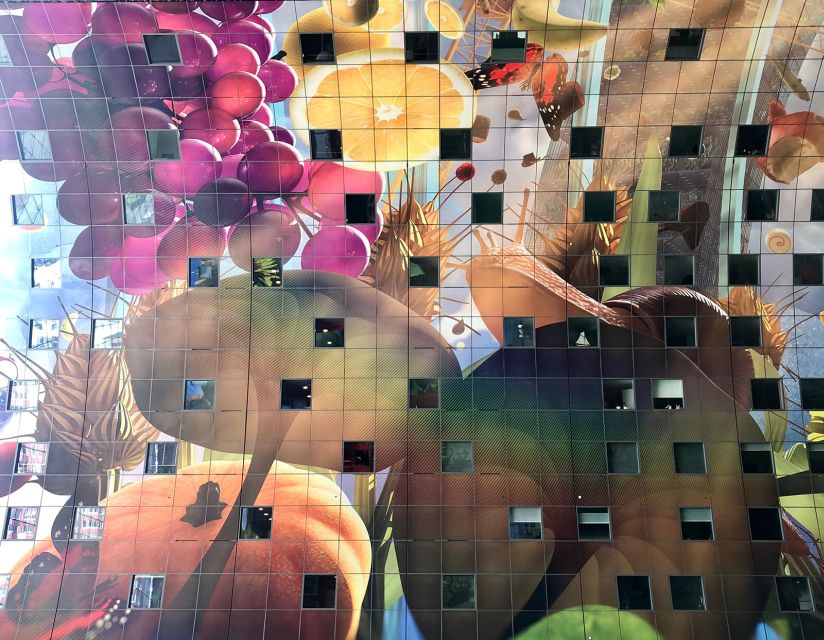
- Markthal makes a strong finish: End where a huge interior artwork and food market meet under one roof.
Why Rotterdam needs an architecture walk
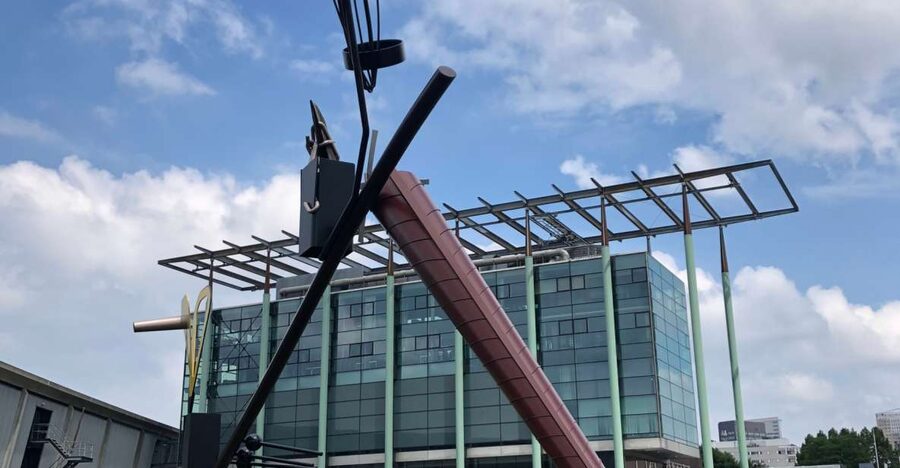
Rotterdam is not a city you understand from a list of old monuments. Its character comes from what happened after the wartime bombing and from the choices made during reconstruction. The result is a city of sharp angles, experimental homes, large public buildings, sculpture, and open spaces.
This tour gives you a useful framework for reading that city. Instead of simply photographing the Cube Houses or the Markthal, you can connect them to the larger story of Rotterdam’s rebuilding and its ongoing interest in new design.
The walk begins at Rotterdam Central Station, next to the main entrance under the station’s clock. That is an easy meeting point if you arrive by train, but Central Station is also a fitting first stop. It is one of the city’s major modern symbols, and the route uses it to introduce Rotterdam’s architectural direction.
An English-speaking guide leads the tour. One guide named in the experience information is Diana, who has been praised for explaining the city’s postwar planning and architecture from the new station onward. The tour is available as a private group, so you can check that option if you want a more personal format.
More architecture walks in the Netherlands:
- Rotterdam: Architectural Highlights Guided Walking Tour
★ 4.8 · 215 reviews - Rotterdam: Highlights, Gems, Architecture & History Walk
★ 5.0 · 191 reviews - Rotterdam Walk: Hilights, Gems, Architecture & WWII | 2 or 3hrs
★ 5.0 · 149 reviews
Central Station and Rotterdam’s new front door
Central Station is more than a place to meet. It is a major visual statement, and its setting lets you see how Rotterdam presents itself to people arriving from other parts of the Netherlands and beyond.
Your guide uses the station as a starting point for the city’s modern development. That context matters because Rotterdam’s architecture can otherwise feel like a collection of unrelated experiments. Here, the buildings begin to form a sequence: transport, public space, culture, housing, and food.
I like beginning here because it gives you an immediate sense of scale. You are not starting in a quiet historic lane. You are starting at a building designed for movement and a city known for looking forward.
Bring comfortable shoes. The tour lasts 2.5 hours, and the route continues through several central districts. There is no transportation included, so you should expect to stay on foot from the meeting point to the final stop.
Calypso building and Theater square
The route continues past the Calypso building and Theater square. These stops help show how Rotterdam mixes large modern structures with public spaces used for culture and everyday city life.
The Calypso building is one of the architectural markers on the route. Theater square adds a different scale, giving the guide a place to discuss how performance, gathering, and city planning fit together. You are not just looking upward at facades. You are also considering how people move through and use the spaces between them.
This part of the walk is useful for visitors who want more than a short photo tour. The buildings are the visible part of the story, but the guide’s explanation of planning helps you see why Rotterdam feels so different from Amsterdam, Delft, or other Dutch cities with older cores.
Do not expect a traditional old-town stroll here. The appeal is the modern city itself, with its hard surfaces, unusual forms, and large-scale planning. If your ideal walking tour centers on narrow lanes and historic houses, this will feel like a different kind of city experience.
Museum Quarter: Kunsthal, the New Institute, and the Depot
The Museum Quarter brings together some of Rotterdam’s best-known cultural buildings. The route includes the Kunsthal, the New Institute, and the Boijmans Depot.
The Kunsthal is part of the city’s modern cultural identity. The New Institute adds design and architecture to that picture. You see these institutions from the outside as part of the walk, and the guide places them within Rotterdam’s larger interest in art, design, and experimentation.
The Boijmans Depot is the most unusual stop in this group. It is described as the first accessible museum depot in the world. A museum depot is normally a behind-the-scenes storage and conservation space, but this building turns that function into something the public can see.
That idea gives the stop real value. You are not only looking at a museum facade. You are seeing a different approach to how collections are stored and shared. The building also adds a newer architectural marker to the Museum Quarter, showing that Rotterdam’s design story did not end with the postwar rebuilding.
Entry tickets are not included. The tour does not promise interior visits to the museums or the Depot, so you should think of this walk as an architectural and public-art tour rather than a museum admission package. If you want to go inside one of these institutions, plan that separately.
A few more architecture tours around the Netherlands worth a look
- Rotterdam Architecture Highlights Walking Tour
★ 5.0 · 66 reviews - The rise of Haarlem: Culture, History, Art and Architecture Walking Tour
★ 5.0 · 59 reviews - Rotterdam Must Do Tour: Highlights, History, WW2 and Architecture
★ 5.0 · 20 reviews - Rotterdam: Architecture Highlights Tour including the Depot
★ 4.6 · 17 reviews
Art connected to a bombed city
A particularly worthwhile part of the route is the outdoor art linked to the drama of Rotterdam’s destruction. The city’s public sculpture is not presented as decoration alone. It also records the shock of the bombing and the choices made during reconstruction.
The route includes a mix of memorial art, street art, and major works associated with artists such as Henry Moore, Rodin, Picasso, and Joep van Lieshout. That is a strong range, from established modern artists to newer and more urban forms of expression.
I like this section because it gives the city’s architecture an emotional layer. Concrete, steel, and glass can look impersonal when you see them without context. Public art helps explain how Rotterdam remembers its past while still making room for new work.
The exact amount of time spent at each piece can vary with the guide and group. Still, the route is designed to show art in the streets, where it forms part of Rotterdam’s daily setting. You do not need to enter a gallery to find something worth studying.
Witte de Wit street and the city’s artsy side
The walk then reaches Witte de Wit street, described as Rotterdam’s most vivid and artsy street. This is where the tour shifts from major civic buildings and museum architecture toward a more informal urban atmosphere.
The street is known for its mix of art venues and city nightlife. The experience information calls it a young, avant-garde art venue, so this stop gives you a feel for a different part of Rotterdam’s cultural life. It is less about one grand building and more about how a street gathers creative energy.
For me, this is an important balance in the itinerary. Rotterdam is not only a showcase of large architectural projects. It also has smaller cultural spaces and streets where art becomes part of an ordinary evening out.
The tour does not include food or drinks, so do not count on a café break as part of the booking. If Witte de Wit catches your interest, you can return later on your own and spend more time there.
Cube Houses and a new idea of home
The Cube Houses complex is one of Rotterdam’s easiest architectural surprises. The tilted homes look as if someone turned a group of ordinary houses on their sides, creating a cluster that challenges your idea of how a neighborhood should work.
Your guide explains the complex as part of Rotterdam’s futuristic architecture. The value of seeing it with a guide is not just the unusual shape. You also get a chance to consider the practical question behind the design: how do people live in a house that refuses to look conventional?
The stop works well for photographers, but it is more than a quick picture. It shows Rotterdam’s willingness to test new forms in a real city setting. These are homes, not only a temporary exhibition or a sculpture garden.
The unusual design can also make the area feel visually busy. Give yourself time to look at the relationship between the separate houses and the spaces around them. The guide can help you notice the planning idea instead of rushing straight to the next landmark.
Ending inside the Markthal
The tour ends at the Markthal, where architecture and art come together in a very different way. The building is known for its large interior artwork, and the market setting gives the final stop a lively, practical purpose.
This is a satisfying place to finish because it brings the tour’s themes together. You have seen public art outside, cultural buildings in the Museum Quarter, experimental housing at the Cube Houses, and now a large structure where food, design, and daily activity share the same space.
Food and drinks are not included, but ending here gives you the option to arrange your own meal or snack afterward. The tour itself does not provide a built-in tasting experience, so budget separately if you want to eat inside the Markthal.
The Markthal can be busy, and its scale may feel less calm than the Museum Quarter. That is part of its appeal, but it also means you should pay attention to the guide and keep track of your group near the end of the walk.
What the $65 price gets you
At $65 per person, this is not a cheap way to see Rotterdam’s main sights. You are paying for a live English-speaking guide, a planned route, and the explanation that connects the buildings to the city’s postwar development.
The price makes the most sense if you want context. You can walk past Central Station, the Cube Houses, and the Markthal on your own, but the tour gives you a clear order and a story that links them. It also adds public art stops that you might miss if you follow only the standard landmark route.
No entry tickets, transportation, food, or drinks are included. That keeps the tour focused, but it means you should not compare the price with a museum ticket or a food tour. Think of it as a guided orientation to Rotterdam’s architecture and art.
The tour has received a 4.9 rating from 10 reviews, with praise focused on clear information, a pleasant walk, and a helpful overview of the city. One French-language assessment rated it four out of five as a good first introduction, especially for understanding modern Rotterdam and its connection to art. That is a fair way to judge its value: it is strongest as a first look, not as a full museum day.
Timing, weather, and access
The walk lasts 2.5 hours. Starting times vary, so check availability before booking. Since the route is outdoors and takes place rain or shine, wear comfortable shoes and clothing suited to the season.
There is no hotel pickup or drop-off. You meet at Central Station, next to the main entrance under the clock, and make your own way there. Oversize luggage is not allowed, so arrive with only what you can comfortably carry.
The tour is wheelchair accessible, but the information says it is not suitable for people with visual or hearing impairments. That is important to consider before booking. The listed language is English, and a private group option is available.
Unaccompanied minors are not allowed. The activity is best for adults and groups who are comfortable walking through central Rotterdam for most of the scheduled time.
Who should book this Rotterdam walk
I would choose this tour for a first visit to Rotterdam, especially if modern architecture is a major reason for your trip. It is also a good fit if you want an introduction before deciding which museums or buildings deserve a separate visit.
Art fans get a useful spread of public work, from memorial pieces to street art and sculpture linked to major names. Design-minded visitors will appreciate the contrast between Central Station, the Museum Quarter, the Cube Houses, and the Markthal.
This is less suitable if you want a slow, food-focused outing, interior museum visits, or a historical tour centered on medieval and Dutch Golden Age buildings. It also may feel brisk if you prefer to linger at every stop for photographs.
Should you book the Art and Architecture Highlights Walking Tour?
Book it if you want Rotterdam to make sense as a modern city rather than a pile of unusual buildings. The strongest parts are the postwar planning story, the public art route, the Museum Quarter, and the final sequence through the Cube Houses to the Markthal.
The $65 cost is reasonable for a guided first orientation, but only if you value interpretation. You will need to pay separately for anything you eat or enter, and you should be ready to walk in changing weather.
If you want a practical starting point with a live English-speaking guide, this is a solid choice. Meet at Central Station, wear good shoes, and let the guide show you why Rotterdam’s boldest buildings belong to one larger city story.
FAQ
Where does the tour meet?
The meeting point is next to the main entrance of Rotterdam Central Station, under the station’s clock.
How long does the walking tour last?
The tour lasts 2.5 hours.
What language is the tour in?
The tour is conducted in English with a live guide.
Are entry tickets included?
No. Entry tickets are not included in the tour price.
Are food and drinks included?
No. Food and drinks are not included.
Is the tour wheelchair accessible?
Yes, the activity is listed as wheelchair accessible. It is not suitable for people with visual or hearing impairments.
What should I bring?
Bring comfortable shoes and clothing suited to the weather and season. The tour runs rain or shine, and oversize luggage is not allowed.
Just added around the Netherlands
- Rotterdam Must Do Tour: Highlights, History, WW2 and Architecture★ 5.0 · 20 reviews
- Private Rotterdam Walking Tour – guided by Architects★ 5.0 · 2 reviews
- Rotterdam Architecture and Highlights Walking Tour (TOP RATED)★ 4.5 · 14 reviews
- Escape Room – l’Architecte★ 4.5 · 13 reviews
- Maastricht Highlights, Architecture & Heritage Tour★ 5.0 · 7 reviews
- Gouda Private Walking Tour: History, Architecture & Cheese★ 4.5 · 8 reviews
- Amsterdam Walking Tour. All about History, Architecture, Traditions & Anecdotes.★ 5.0 · 2 reviews
- Walking Tour about Golden Age Architecture, private local guide★ 5.0 · 15 reviews
Walking Tours, compared.
The Official Art Deco Walking Tour by The Miami Design Preservation League
Read our review →
Barcelona: Gothic Quarter Ghosts and Legends Walking Tour
Read our review →
Barcelona: Old Town and Gothic Quarter Walking Tour
Read our review →
Lecce: Baroque Architecture and Underground Walking Tour
Read our review →
Chicago in a Day: Food, History & Architecture Walking Tour
Read our review →
Ramblas, Old Town, Gothic and Gaudi Architecture Walking Tour
Read our review →
Chicago’s Secret Interiors Architectural Walking Tour
Read our review →Browse the lists this tour appears in