
Review · ROTTERDAM
Rotterdam Architecture Highlights Walking Tour
Rotterdam rebuilt itself after World War II, and this two-hour walk shows you how that decision shaped the city you see today. You’ll move from the futuristic Centraal Station through public squares, OMA’s Timmerhuis, the Markthal, and finally the Maas waterfront, with an architect explaining both design and city planning.
I like the small group size, capped at 15, and the chance to walk with guides such as Tania and Silvia, both praised for making the tour personal and answering questions in detail. I also like the clear route between the railway station and the river, which gives you a useful first look at central Rotterdam.
The main caution is that this is not a pure technical architecture lecture. Social policy, reconstruction, and present-day city issues are part of the conversation. The Cube Houses may be seen from a distance rather than visited, and the walk can add up to roughly 12,000 steps.
Key points to know before booking
- Postwar Rotterdam is the main story: You’ll see how the city rebuilt after wartime destruction and chose modern design instead of simply recreating the old center.
- The route runs from station to river: Start at Rotterdam Centraal and finish at Boompjeskade, with no hotel pickup or return transfer.
- An architect leads the walk: Guides including Tania and Silvia bring professional design knowledge along with personal insight into Rotterdam.
- Small groups make questions easy: The maximum is 15 people, and some departures may feel almost private if few people book.
- Expect more than building facts: Architecture connects with city politics, public space, social use, and the challenges Rotterdam faces today.
- Wear practical shoes: It is a walking tour, weather matters, and the route may be longer in practice than the two-hour label suggests.
Why Rotterdam’s modern architecture makes a good walking tour
Rotterdam can feel unlike other Dutch cities. Instead of a continuous old center lined with narrow canal houses, you get bold towers, open plazas, unusual housing, and large public buildings. Much of this comes from the city’s destruction during World War II and the rebuilding that followed.
That rebuilding is what gives the tour its shape. You are not simply looking at unusual buildings and collecting their names. You are hearing why Rotterdam made room for new forms, how public spaces were planned, and how architecture affects daily life.
I find that context especially useful here because modern buildings can be harder to read than old ones. A medieval church often explains itself through age and ornament. A glass station, angular house, or huge market hall needs someone to point out the purpose behind its shape.
The tour also gives you a better sense of Rotterdam’s ongoing debate about the city. The discussion may include social activism, city politics, and the quasi-socialist role of some structures. If you want only details about construction methods and materials, this broader approach may feel slightly off target. If you want to understand how Rotterdam functions, it adds real value.
More architecture walks in the Netherlands:
- Rotterdam: Architectural Highlights Guided Walking Tour
★ 4.8 · 215 reviews - Rotterdam: Highlights, Gems, Architecture & History Walk
★ 5.0 · 191 reviews - Rotterdam Walk: Hilights, Gems, Architecture & WWII | 2 or 3hrs
★ 5.0 · 149 reviews
Starting at Rotterdam Centraal Station
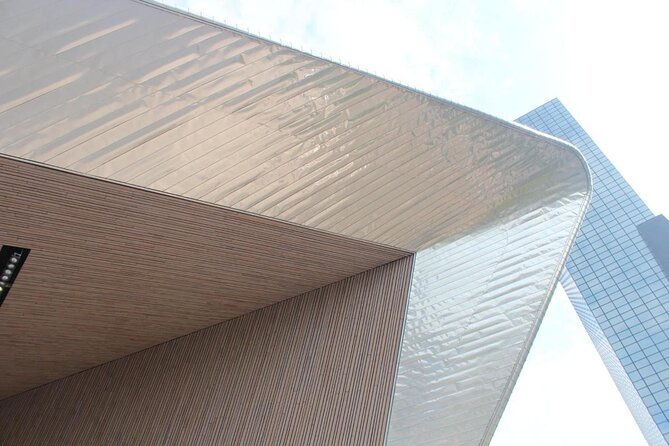
The meeting point is Rotterdam Central Station, at 3013 AJ Rotterdam. This is a practical place to begin because it is easy to reach by public transport and already offers one of the city’s most striking modern buildings.
The station serves as a new entrance to Rotterdam, and the tour spends about 10 minutes here. That may sound brief, but the building works well as an opening lesson: the station is not only transport infrastructure, it is also part of the city’s public face.
Your guide can set up the larger theme here. Rotterdam keeps changing, and its major buildings often have to handle both movement and identity. You’ll begin to see how a station can shape your first impression of an entire city.
One small practical point matters: confirm the exact meeting spot before you go. The listed address and map have caused some confusion, so allow a few extra minutes and look for your guide around the station area rather than arriving at the last second.
Schouwburgplein and the role of public space
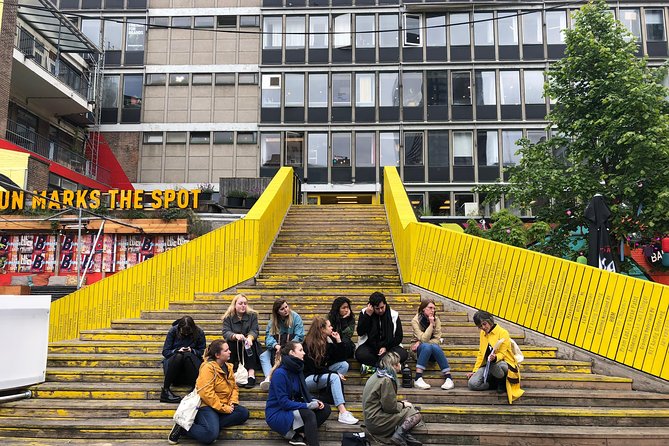
The next stop is Schouwburgplein, known as Rotterdam’s cultural podium square. You’ll spend about 10 minutes here, looking at a space designed for public activity rather than a traditional monument-filled plaza.
This is where the tour’s wider approach becomes clear. You are likely to hear not just about the square’s physical design, but also about how people use public places and how city planning can encourage gatherings, performances, or civic life.
For a visitor, Schouwburgplein helps explain why Rotterdam can feel open and experimental. The city center was not rebuilt as a museum piece. It was planned for modern urban life, with public areas that could serve many purposes.
If you prefer old streets and preserved façades, this stop may seem less immediately charming. Give it time. Its value lies in understanding the choices behind the space, not in finding a single postcard view.
Timmerhuis and OMA’s compact design statement
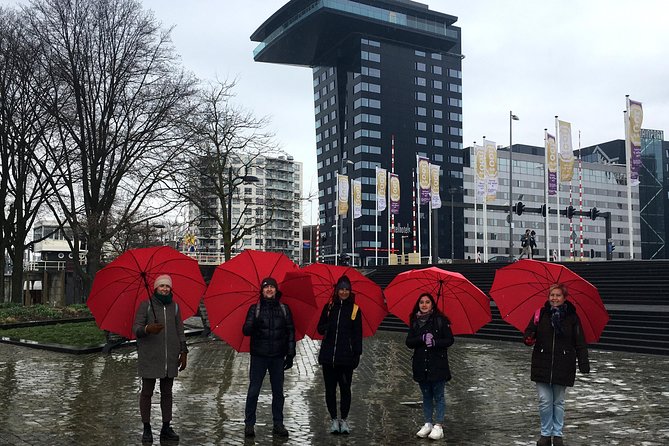
The tour then reaches Timmerhuis, designed by OMA. You’ll spend around five minutes here, though the short listed time does not necessarily mean the explanation is rushed. Guides have sometimes extended the walk when questions and discussion take longer.
Timmerhuis is presented as an architectural icon, and it gives you another chance to compare Rotterdam’s older building traditions with its newer design language. The building’s form is worth examining from several angles, which is one reason an architect guide can add more than a standard city orientation.
This stop may appeal most to people who enjoy seeing how architects respond to a crowded urban site. You can ask about the building’s design, its place in the center, and the thinking behind its shape. Just keep your expectations realistic. The tour is outdoors and does not promise an interior architectural inspection.
A few more architecture tours around the Netherlands worth a look
- The rise of Haarlem: Culture, History, Art and Architecture Walking Tour
★ 5.0 · 59 reviews - Rotterdam Must Do Tour: Highlights, History, WW2 and Architecture
★ 5.0 · 20 reviews - Rotterdam: Architecture Highlights Tour including the Depot
★ 4.6 · 17 reviews - Walking Tour about Golden Age Architecture, private local guide
★ 5.0 · 15 reviews
Markthal, where design meets daily life
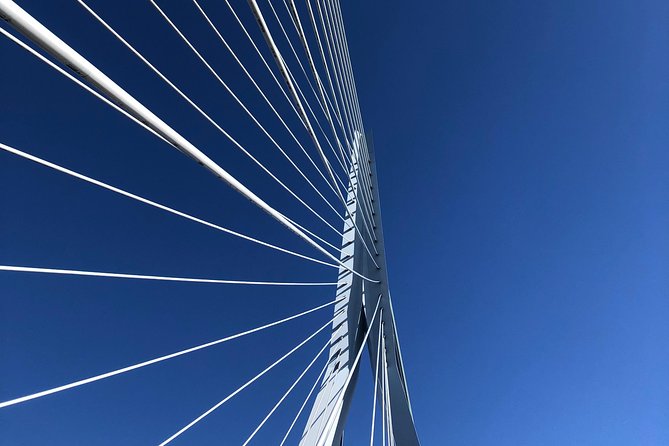
The Markthal receives about 15 minutes and is one of the strongest stops for first-time visitors. It is described as one of the world’s fanciest indoor markets, but the useful point is not simply its scale or visual impact. The building combines a market, housing, and a major public interior in one large urban project.
Here, you get a chance to see architecture being used rather than admired from a sidewalk. Food stalls and public activity give the building a different feel from an office block or station. Your guide can connect the market’s design to Rotterdam’s broader effort to create a modern center with reasons for people to linger.
This is also a good photo stop. The interior offers a very different view from the open spaces and sharp lines you have seen earlier. Since the scheduled visit is only about 15 minutes, do not expect a long food break or a full market visit. Think of it as part of the walking route, with time to look around and take pictures.
The Cube Houses, with an important expectation
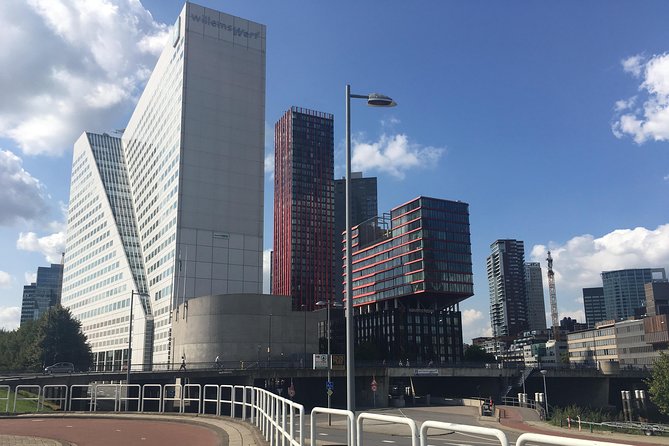
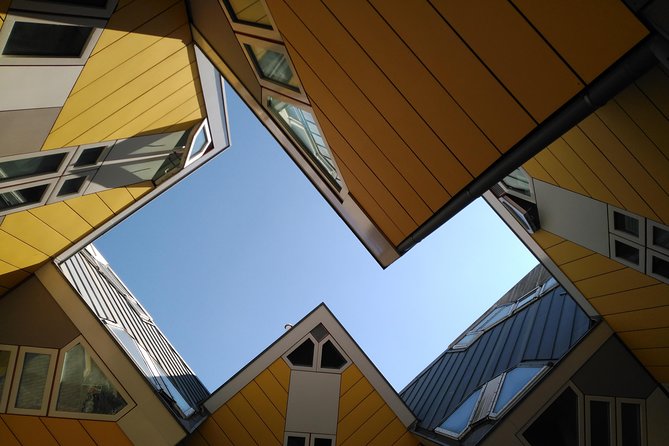
The Cube Houses are listed among the tour highlights, but the route details do not give them a separate stop. One detailed account says the group passed them at a distance rather than walking through them.
That distinction matters. If your main reason for booking is to enter a Cube House, this may not be the right tour by itself. You could still see the famous forms and hear how they fit into Rotterdam’s unusual housing experiments, but you should not assume interior access.
I would treat the Cube Houses as a possible bonus rather than the central promise of the outing. If you want a close look, plan separate time for them and check the day’s exact route with the guide at the start.
Boompjeskade and the final view across the Maas
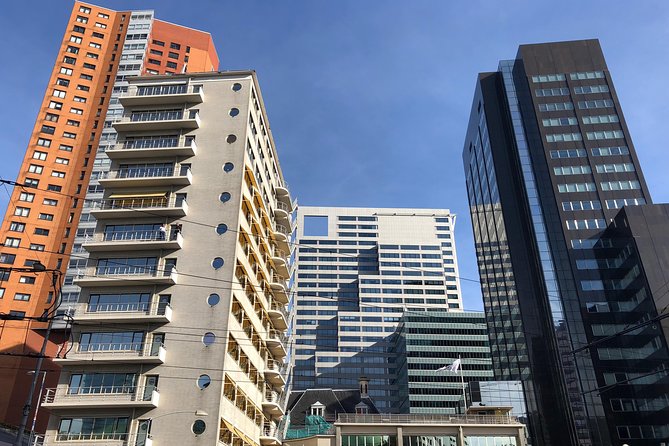
The walk ends at Boompjeskade, on the riverside. You’ll spend about 15 minutes here, taking in the Maas and the view toward Rotterdam’s South Bank.
This ending works well because it opens the city outward. You begin at the railway station, surrounded by movement and new construction, then finish beside the water with a wider view of Rotterdam’s growth. The river also gives the guide a natural place to discuss the city’s future and the challenges that come with continued development.
The waterfront can be especially appealing near sunset, when the light changes the look of the buildings. It can also be cold and windy, even when the city center feels comfortable. Bring a layer and check the forecast, especially in cooler months.
Because the tour ends here, you should plan your next move in advance. There is no hotel pickup or drop-off, and the experience does not return you to Centraal Station.
What the architect guides add
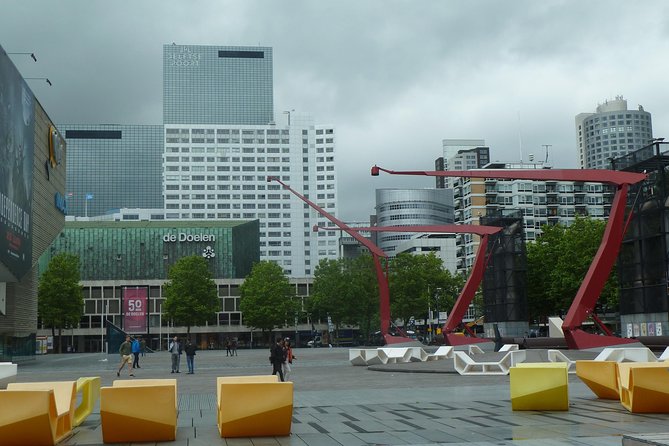
The strongest part of this experience is the guide. Tania and Silvia are named in the tour feedback, and both are described as architects who explain Rotterdam’s buildings with confidence and warmth.
Tania is praised for connecting architecture with the city’s postwar rebuilding, present-day challenges, and local stories. Silvia is noted for adjusting her explanations to the interests and nationalities in the group, while also answering detailed questions and offering restaurant suggestions.
That personal element matters. A printed guide can tell you that a building was designed by a major firm. A good guide can explain why the project mattered, how it changed the area, and what local people think about it now.
The tour may also be operated by a multilingual guide. It is offered in English, but the guide may have another main language. One account described a Spanish-speaking guide with good English, though it took some time for the group to adjust to her accent.
Group size, pace, and physical demands
The maximum group size is 15, which is small enough for questions without making the walk feel crowded. Some bookings may result in a much smaller group, and a few people have had what felt like a private tour when only two participants attended.
The pace is not described as rushed. Guides have sometimes spent extra time with the group, including about 30 minutes beyond the planned finish. That is a benefit if you enjoy conversation, but it means you should not schedule an immediate appointment after the stated two-hour end.
You should have a moderate level of physical fitness. The route is on foot, and one account estimated close to 12,000 steps. That is a meaningful amount of walking for a two-hour city tour, particularly if you are also exploring Rotterdam before or after it.
Wear comfortable shoes and dress for the weather. The tour requires suitable outdoor conditions, and the riverside breeze can be sharp. Service animals are allowed, and the route is near public transportation.
Is the $54.31 price good value?
At $54.31 per person, this is not the cheapest way to see Rotterdam’s center. You are paying for a two-hour guided walk with a professional architect, not for entry to a museum or a building interior.
I think the price is fair if you care about design and want the city explained rather than simply photographed. An architect can help you notice choices you might otherwise miss, and the small group gives you a better chance to ask about specific buildings or city policies.
The value is weaker if you only want a quick list of landmarks. The route includes several free outdoor sights, and you can walk past them on your own. You are paying for interpretation, structure, and conversation.
The tour is also useful early in a Rotterdam visit. It gives you a framework for later independent walks, especially if you want to return to the Markthal, Cube Houses, or riverfront at your own pace.
Who should book this Rotterdam walk?
I would recommend it to first-time visitors who want a clear introduction to modern Rotterdam. It suits architecture fans, students, urban planners, photographers, and anyone curious about how a city rebuilds after disaster.
It also works well as a day trip from Amsterdam. The start at Rotterdam Centraal makes the railway connection practical, though you should leave enough time to find the meeting point.
You may want another type of tour if you mainly want old Rotterdam, a food-focused outing, or a detailed technical discussion of construction. One person also felt the route missed the older area nearby, and that is a fair criticism. This walk is built around modern architecture and postwar planning, not a full survey of every period in the city’s past.
Book at least two people, since that is the minimum required. The tour has an average booking lead time of 47 days, so popular dates may need planning.
Practical details before you go
The tour lasts approximately two hours, begins at Rotterdam Centraal, and ends at Boompjeskade. The price is $54.31 per person, and group discounts may be available.
You will receive confirmation at booking. The tour is offered in English, though the guide may be multilingual. There is no hotel pickup or drop-off.
Free cancellation is available until 24 hours before the start time. Cancellations or changes made inside that window are not refunded or accepted. If poor weather cancels the tour, you can receive a full refund or choose another date.
The activity is recommended by 97 percent of participants and has a 4.8 rating from 66 reviews. Those numbers fit the main strengths here: strong guiding, an interesting route, and useful context about Rotterdam’s reconstruction.
Should you book it?
Book this tour if you want Rotterdam’s modern buildings explained by someone with architectural training, and if you are happy to discuss public life and city planning along with design. Tania and Silvia appear to bring the warmth, flexibility, and local perspective that make this kind of walk work.
Skip it if you need guaranteed entry into the Cube Houses, want a close technical study of every building, or would rather spend two hours indoors. For most first-time visitors with comfortable shoes and an interest in how cities change, this is a smart introduction to Rotterdam.
FAQ
How long is the Rotterdam Architecture Highlights Walking Tour?
The tour lasts approximately two hours, though the guide may spend extra time answering questions or finishing the route.
How much does the tour cost?
The listed price is $54.31 per person. Group discounts may be available.
Where does the tour start and finish?
It starts at Rotterdam Central Station, 3013 AJ Rotterdam, and ends at Boompjeskade on the riverside.
What buildings and places are included?
The route includes Rotterdam Centraal Station, Schouwburgplein, Timmerhuis by OMA, Markthal, and Boompjeskade. The Cube Houses are listed as a highlight, but they may be viewed from a distance rather than entered.
Is an architect the guide?
Yes. The tour includes a professional architect as guide. Guides named in the tour information include Tania and Silvia.
How large is the group?
The tour requires at least two people per booking and allows a maximum of 15 participants.
Is the tour suitable for children?
The minimum age is 12 years.
What happens if the weather is bad?
The tour requires good weather. If it is canceled because of poor weather, you can receive a full refund or choose a different date. Free cancellation is also available until 24 hours before the start time.
Just added around the Netherlands
- Rotterdam Must Do Tour: Highlights, History, WW2 and Architecture★ 5.0 · 20 reviews
- Private Rotterdam Walking Tour – guided by Architects★ 5.0 · 2 reviews
- Rotterdam Architecture and Highlights Walking Tour (TOP RATED)★ 4.5 · 14 reviews
- Escape Room – l’Architecte★ 4.5 · 13 reviews
- Maastricht Highlights, Architecture & Heritage Tour★ 5.0 · 7 reviews
- Gouda Private Walking Tour: History, Architecture & Cheese★ 4.5 · 8 reviews
- Amsterdam Walking Tour. All about History, Architecture, Traditions & Anecdotes.★ 5.0 · 2 reviews
- Walking Tour about Golden Age Architecture, private local guide★ 5.0 · 15 reviews
Walking Tours, compared.
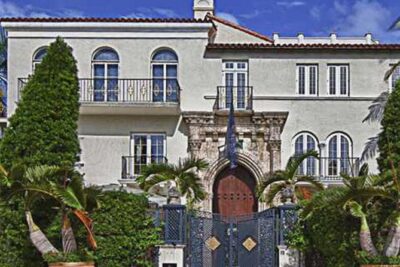
The Official Art Deco Walking Tour by The Miami Design Preservation League
Read our review →
Barcelona: Gothic Quarter Ghosts and Legends Walking Tour
Read our review →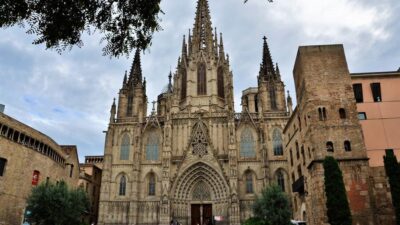
Barcelona: Old Town and Gothic Quarter Walking Tour
Read our review →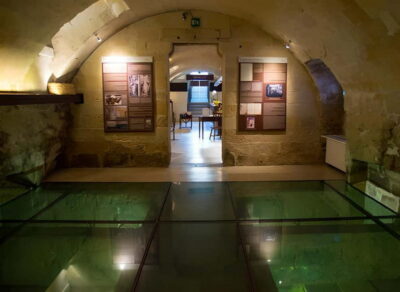
Lecce: Baroque Architecture and Underground Walking Tour
Read our review →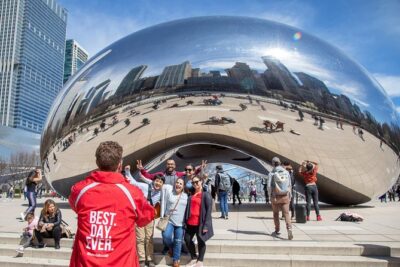
Chicago in a Day: Food, History & Architecture Walking Tour
Read our review →
Ramblas, Old Town, Gothic and Gaudi Architecture Walking Tour
Read our review →
Chicago’s Secret Interiors Architectural Walking Tour
Read our review →Browse the lists this tour appears in