
Review · LONDON
London: Modern Architecture & Building Guided Walking Tour
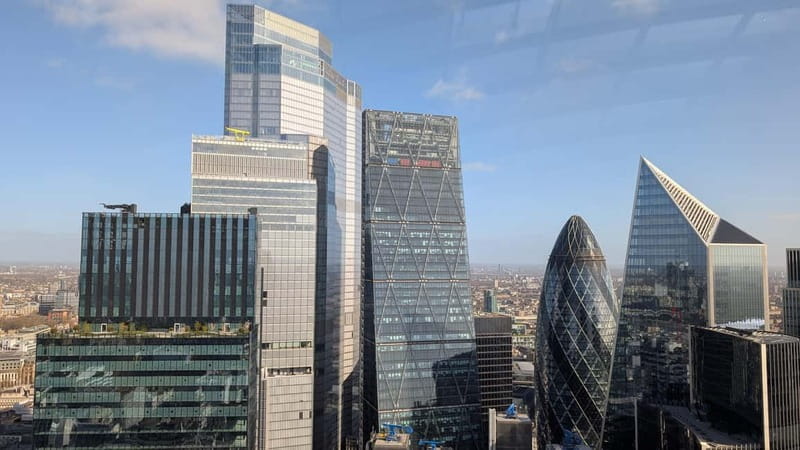
London’s modern skyline makes the most sense when you see it from street level. This two-hour walk links the Shard, Walkie Talkie, Gherkin, Lloyd’s of London, Cheese Grater, Barbican, and other major buildings while explaining the engineering and city planning behind them.
I like Sam’s construction background, which gives the tour more substance than a simple photo stop. I also like the route’s ending at the NLA, where you can view scaled models of London and see how current and future projects may change the city.
The main limitation is practical: the walk is not suitable for wheelchair users or people with mobility impairments. Also, the NLA is open Tuesday through Saturday until 17:00, so Sunday, Monday, and evening tours finish without that final indoor visit.
Key points at a glance
- Start beside the Tower of London: Meet at Sugar Quay Jetty on the north bank of the Thames, then begin with views toward City Hall and the Shard.
- See London’s modern icons up close: The route includes the Walkie Talkie, Lloyd’s of London, Cheese Grater, Gherkin, Can of Ham, Liverpool Street Station, and Barbican.
- Get a construction-focused explanation: Sam’s background in construction management helps explain building methods, engineering challenges, and what lies beneath London’s streets.
- Finish with skyline models: When the NLA is open, allow another 15 to 30 minutes to view scale models and development information.
- Expect a compact city walk: The tour lasts about two hours, with time for questions and photographs, but you should wear comfortable shoes.
- Pay for interpretation, not entry tickets: The $52 price covers the guided walk only. You do not enter the buildings along the route.
Why this London walk is different
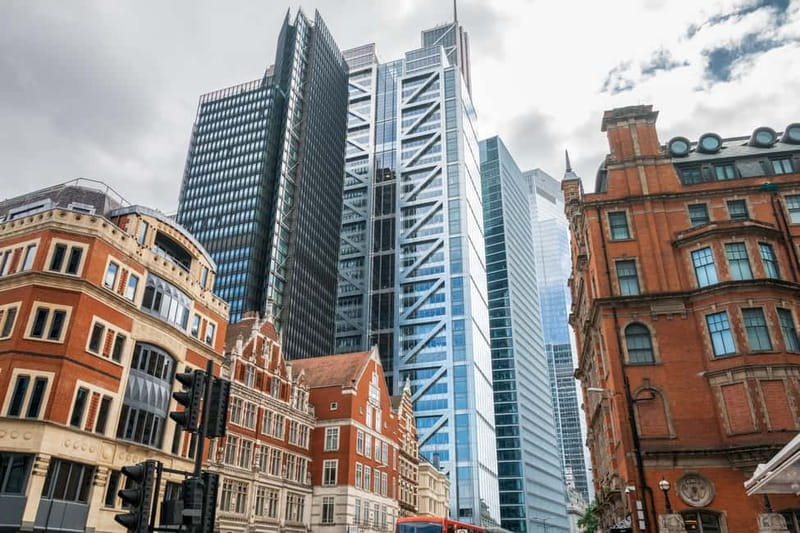
Many London sightseeing walks focus on kings, churches, and older monuments. This one asks a different question: how does a modern financial city get built, supported, and altered over time?
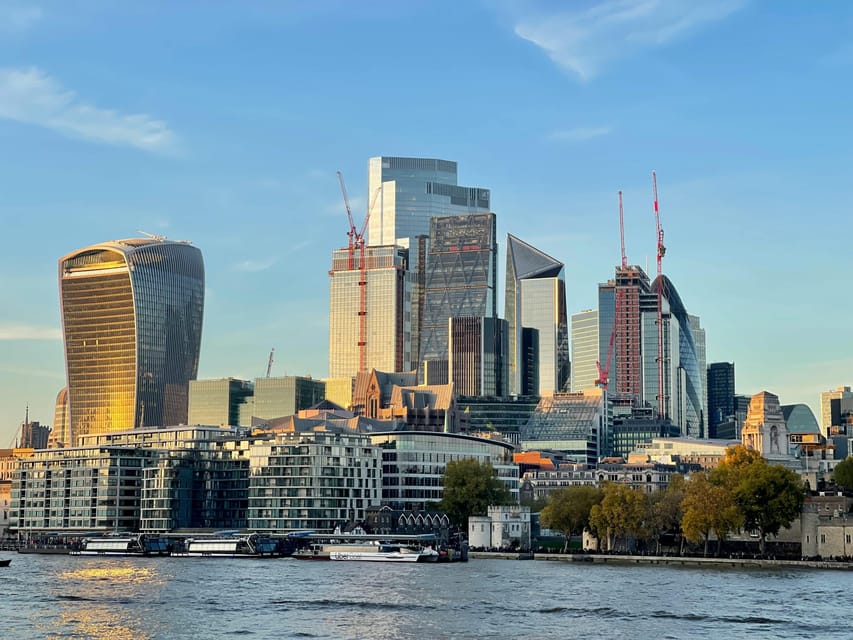
You move through the City of London, known as the Square Mile, while looking at towers that were designed for very different reasons. Some twist, some bulge, some taper, and some use unusual structural systems to fit tight sites. Sam connects those visual differences to the practical side of construction.
That matters because modern buildings can be hard to read from the pavement. You see glass, steel, and strange shapes, but not the decisions beneath them. This tour brings in the unseen work, including major engineering projects below London and the effect of construction on the city around it.
I also like the mix of famous and less familiar buildings. You will photograph the Shard and Gherkin, but you will also spend time with the Can of Ham, Liverpool Street Station, and the Barbican. The route gives you more than a checklist of skyscrapers.
The pace is designed for roughly two hours, and the available feedback points to a relaxed walk with room for questions. That makes it suitable for a person who has only a mild interest in architecture, not just someone who can name every major architect in London.
More architecture walks in the world:
- Lecce: Baroque Architecture and Underground Walking Tour
★ 4.6 · 1,248 reviews - Chicago in a Day: Food, History & Architecture Walking Tour
★ 5.0 · 1,153 reviews - Ramblas, Old Town, Gothic and Gaudi Architecture Walking Tour
★ 5.0 · 723 reviews
Starting at Sugar Quay and the Thames
The meeting point is Sugar Quay Jetty, near the Tower of London. This is a useful beginning because you start beside the Thames, with the historic heart of London close by and the newer financial district rising beyond it.
The first sightseeing stop is City Hall. From this part of the river, you can take in the contrast between older riverside London and newer civic and commercial buildings. The Thames also gives you a broader view than a narrow street can provide, which helps you see how the skyline is arranged.
The Shard is one of the early highlights. Its height and pointed form make it easy to recognize, but the value here is hearing how it fits into the city rather than simply taking a photograph. You see the building up close and consider the relationship between its height, its setting, and the surrounding streets.
This opening section also introduces one of the tour’s strongest themes: London is built in layers. Historic sites, transport routes, offices, public buildings, and new developments all compete for space. Looking across the river makes that pressure easier to understand.
The Shard and the changing riverfront
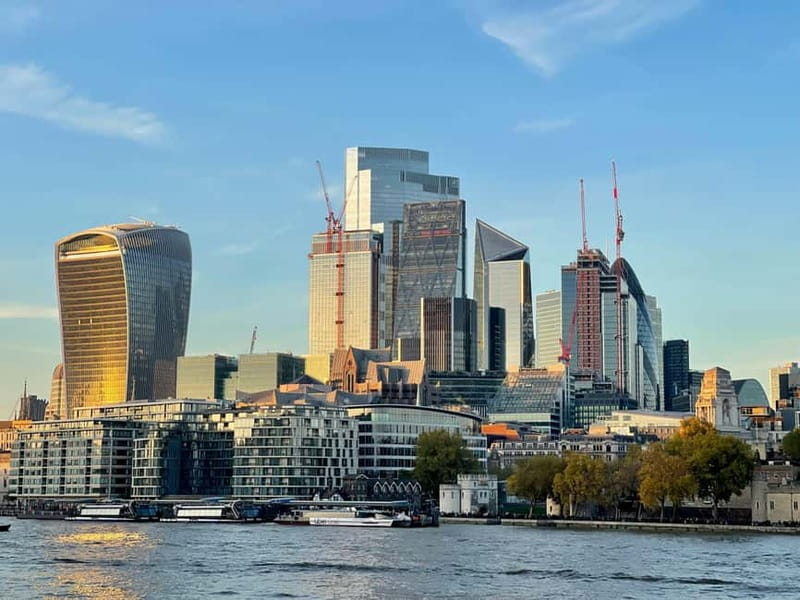
The Shard is an obvious crowd-pleaser, but it works well on this route because it gives you a reference point for the rest of the walk. Its form is very different from the buildings in the City of London, and seeing those towers in sequence helps you compare how each one responds to its site.
You do not go inside the Shard. Entry to every building on the route is excluded, so this is an exterior architecture tour. That keeps the walk moving and lets you cover more ground, but anyone hoping for a viewing deck visit will need to arrange that separately.
The early views across the Thames also give you a chance to take photographs before moving into denser streets. Bring a camera, but do not expect long photo sessions at every stop. With several buildings on the route, the guide has to keep the group moving.
The Walkie Talkie and London’s engineering problems

The Fenchurch Building, better known by its nickname the Walkie Talkie, is one of the most recognizable modern structures in the City. Its widening upper floors create an unusual profile and make it a natural subject for discussion about design, structure, and the demands of a crowded commercial district.
This is where the tour’s technical side becomes useful. Sam can explain construction and engineering in clear terms, while still keeping the walk accessible to people who are not specialists. One person can ask about building techniques, while another simply enjoys the odd shapes and city views.
The tour also looks below street level. London’s major engineering work is not limited to visible towers. Roads, stations, foundations, utilities, and other infrastructure shape what can be built above ground. You will hear about past and present projects beneath the streets and how those works affect the city’s growth.
That underground focus is a good reason to choose this walk instead of a standard architecture photo tour. It gives you a better sense of the problems that modern London must solve, not just the finished surfaces.
More guided tours in the world:
- Chicago River: 1.5-Hour Guided Architecture Cruise
★ 4.8 · 8,046 reviews - Charleston: History and Architecture Guided Walking Tour
★ 4.8 · 349 reviews - Vienna: Spanish Riding School Guided Architectural Tour
★ 4.8 · 333 reviews - Charleston History, Homes, and Architecture Guided Walking Tour
★ 5.0 · 267 reviews
Lloyd’s, the Cheese Grater, and the Gherkin
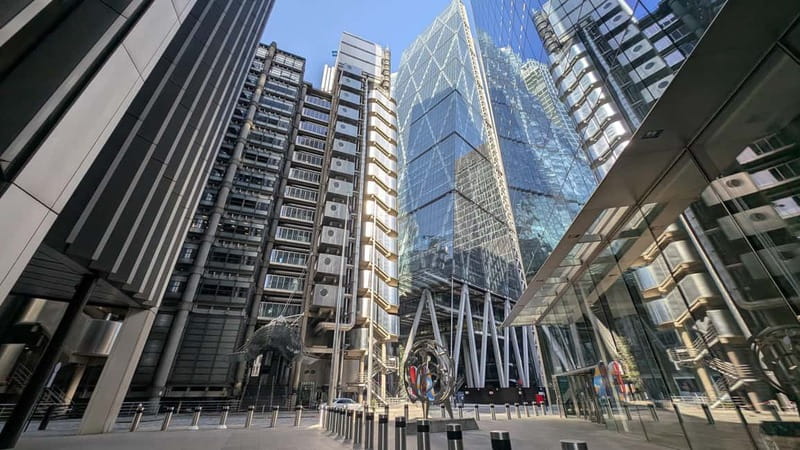
Lloyd’s of London is another major stop. Its exterior is packed with visible services and structural elements, giving it a very different appearance from the smooth glass towers nearby. It is a useful comparison point because the buildings around it do not follow one single idea of what a modern office should look like.
Next comes the Leadenhall Building, usually called the Cheese Grater. Its sloping form is especially striking when viewed from the surrounding streets. You can study how the shape changes your view of the building as you walk past it, rather than seeing it only from a distant skyline viewpoint.
The Gherkin at 30 St Mary Axe brings another distinct profile. Its rounded, tapering form is one of London’s best-known pieces of modern architecture. The tour uses it to show how a building can become a visual marker for an entire district while still responding to tight urban conditions.
I like this middle section because the buildings sit close enough together to make direct comparisons. You are not simply ticking off one famous tower at a time. You are seeing different answers to the same basic problem: how to add working space in a packed historic city without making every building look alike.
The Can of Ham, Liverpool Street, and the Barbican
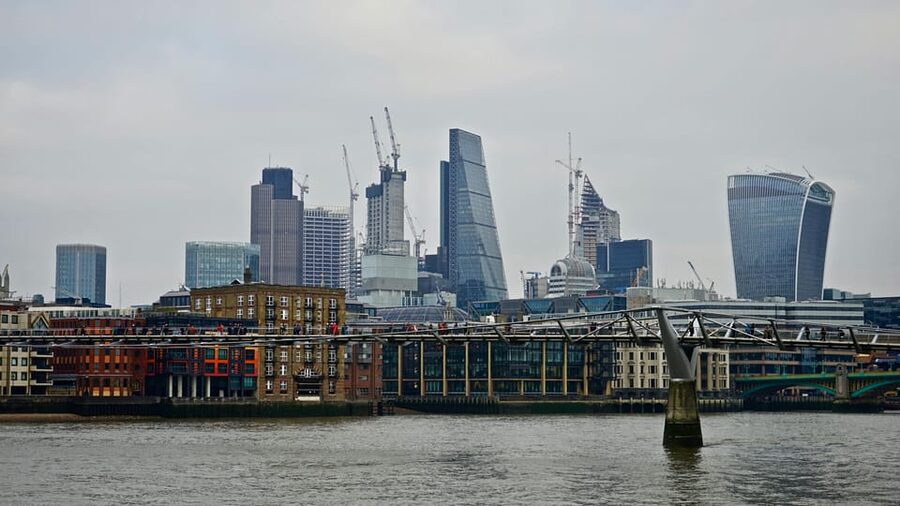
The route continues to 70 St Mary Axe, widely known as the Can of Ham. Its nickname makes it easy to remember, but the stop also reinforces the tour’s interest in less obvious buildings. You get a broader picture of the area than you would from visiting only the Gherkin.
Liverpool Street Station adds an important transport element. The station is part of the city’s daily working system, and its presence helps explain why development in this area is tied so closely to movement, access, and infrastructure.
The final listed stop is the Barbican. It offers a different kind of modern architecture from the glass towers in the financial district. Its large-scale residential and cultural complex shows how postwar planning approached housing, public space, and concrete construction.
For me, the Barbican is a valuable ending to the outdoor portion because it widens the subject. Modern London is not only about tall office buildings. It also includes homes, stations, cultural buildings, public spaces, and the planning choices that shape everyday life.
Ending at the NLA and seeing London in model form
The tour finishes at the NLA, within The London Centre. Entry is free, and this is more than a quick final stop when the center is open. You can look at scale models of London and read information about the city’s buildings and development.
Allow an extra 15 to 30 minutes here. The guided walk takes about two hours, but the models are worth seeing at your own pace. They help you understand how individual towers fit into the larger city and how future projects may alter familiar views.
The NLA visit depends on the day and time. It is open Tuesday through Saturday until 17:00. Sunday, Monday, and evening tours cannot include the indoor visit, so check the tour time carefully if the models are important to you.
This is one of the best value points in the experience because it provides context that is hard to get from street level. A tower can look isolated when you are standing beneath it. A city model shows its relationship to other buildings, transport routes, and planned development.
What the $52 price gets you

At $52 per person, this is not a cheap way to fill two hours in London. You are paying for a specialist-led walking tour, not admission to an attraction. There are no interior visits, observation decks, or transport rides included.
The value depends on how much you want explanation. If you are happy to walk through the City, take photographs, and read about buildings on your own, the price may feel high. If you want someone to explain construction decisions, engineering challenges, and the city’s future plans, the cost is easier to justify.
Sam’s professional background is important here. He has experience in construction management in London and Sydney, and that gives the walk a practical angle. The technical material is not limited to architect names or design dates. You can ask about building methods and receive answers aimed at both beginners and people with more detailed questions.
The strongest feedback about the tour points to Sam’s friendly manner, clear explanations, preparation, and ability to keep the pace comfortable. One useful detail is his use of a portable screen to show extra material during the walk. That can help when a detail is difficult to see from the pavement.
Who will enjoy this tour most

I would choose this for you if you want to see London through buildings and city planning rather than royal stories or traditional sightseeing. It suits architecture students, construction professionals, photographers, and curious visitors who want to understand what they are looking at.
It also works for couples or families with mixed interests. The guide’s explanations can be technical when needed, but the tour is designed to remain engaging for someone with only a mild interest in architecture.
You should be comfortable walking for two hours in central London. Wear supportive shoes, carry water, and dress for the forecast. The tour runs unless conditions are extreme, so rain or cold should not come as a surprise.
The experience is not suitable for wheelchair users or people with mobility impairments. If you need a step-free or low-walking activity, this is not the right choice.
A few practical points before you book
The tour is in English and uses a live guide. That makes the guide’s delivery important, especially when discussing technical subjects. The available feedback describes the explanations as clear and easy to follow, but you should still choose this only if an English-language walk works comfortably for you.
The meeting point is Sugar Quay Jetty near the Tower of London. Plan enough time to reach the riverfront, since the tour begins there and then moves through the City of London.
You will be outside for almost the entire guided portion. Weather-appropriate clothing is essential, and a camera is useful for the skyline views and close details on the buildings.
Free cancellation is available up to 24 hours before the activity, and you can reserve now and pay later. Those options are useful if your London plans are still shifting, but the main decision remains the content: this is a guided exterior walk, not a series of building entries.
Should you book the London modern architecture tour?
Book it if you want clear, practical explanations of London’s newer buildings and you like the idea of connecting visible towers with the engineering beneath the streets. Sam’s construction background, the direct comparisons between buildings, and the NLA models give the walk more depth than a standard skyline stroll.
Skip it if you need an accessible route, want to enter the buildings, or prefer historic London as your main subject. Also check the day and start time if the NLA is a priority.
For the right audience, $52 is fair value for two hours with a specialist guide and a useful final indoor stop when available. I would choose a Tuesday through Saturday daytime departure, wear good shoes, and leave another 15 to 30 minutes for the NLA.
FAQ
How long does the tour last?
The guided walking tour takes approximately two hours. You should allow another 15 to 30 minutes if you want time at the NLA.
Where does the tour begin?
The meeting point is Sugar Quay Jetty near the Tower of London, on the north side of the Thames.
Where does the tour finish?
The walk finishes at the NLA, within The London Centre.
Is the NLA visit included every day?
No. The NLA is open Tuesday through Saturday until 17:00. Sunday, Monday, and evening tours cannot include entry to the NLA.
Does the tour enter the buildings?
No. The activity includes a guided walking tour and exterior sightseeing. Entry into the buildings along the route is not included.
Which buildings can I see?
The route includes City Hall, the Shard, the Walkie Talkie, Lloyd’s of London, the Leadenhall Building or Cheese Grater, the Gherkin, the Can of Ham, Liverpool Street Station, and the Barbican.
What language is the tour in?
The live guided tour is conducted in English.
What should I bring?
Bring comfortable shoes, water, a camera, and clothing suitable for the weather. The walk proceeds in most conditions unless the weather is extreme.
Is the tour suitable for wheelchair users?
No. The activity is not suitable for wheelchair users or people with mobility impairments.
Just added around the world
- Wilmington History and Architecture Tour★ 4.8 · 18 reviews
- Washington, DC: Georgetown Architecture Walking Tour★ 5.0 · 8 reviews
- New Orleans : Garden District Architecture Walking tour★ 4.8 · 5 reviews
- Washington DC: Dupont Circle & Embassy Row Architecture Tour★ 5.0 · 6 reviews
- Vicenza: discovering the city of Palladio by e-bike★ 5.0 · 4 reviews
- Vicenza: Palladian Architecture Private Walking Tour★ 3.3 · 3 reviews
- Walk & Discover KL’s Architectural and Heritage Gems★ 5.0 · 7 reviews
- Unveiling Brno: History, Culture & Architectural Delights★ 5.0 · 2 reviews
Walking Tours, compared.

The Official Art Deco Walking Tour by The Miami Design Preservation League
Read our review →
Barcelona: Gothic Quarter Ghosts and Legends Walking Tour
Read our review →
Barcelona: Old Town and Gothic Quarter Walking Tour
Read our review →
Lecce: Baroque Architecture and Underground Walking Tour
Read our review →
Chicago in a Day: Food, History & Architecture Walking Tour
Read our review →

Ramblas, Old Town, Gothic and Gaudi Architecture Walking Tour
Read our review →
Chicago’s Secret Interiors Architectural Walking Tour
Read our review →Browse the lists this tour appears in